To teach a dog to come when called every time, you reward your dog for paying attention before you ever use the recall word, say that word once, mark the exact moment your dog reaches you, and pay generously. Then you repeat it in short daily sessions, adding distance and distractions only once the easy version is boring to your dog. Most dogs need a few months of that repetition, not a weekend.
I want to be straight with you about one thing first. A recall that is reliable at 95 percent is a finished skill. Dogs are not machines, and a dog that comes to you 19 times out of 20 in a park full of dogs and children has a recall you can actually rely on. Chasing perfection is what turns a good training plan into an unhappy dog and an exhausted owner.
What follows is the sequence I would use with a first-time dog: a quiet starting point, one verbal cue, a marker word, and a release word, all built up over a few weeks. It is not exciting, and that is the point. Recall is the most useful thing you will ever teach a dog, because it is what keeps them out of traffic, away from dogs they should not meet, and out of a bad situation with a car.
Table of Contents
- What You Need
- Step-by-Step
- Step 1: Choose One Recall Word and a Clear Marker
- Step 2: Reward Your Dog Before Calling
- Step 3: Call Your Dog and Mark the Arrival
- Step 4: Add a Release Word and a Calm Finish
- Step 5: Gradually Increase Distance and Distractions
- Step 6: Practice in Real-Life Settings
- Common Mistakes
- Frequently Asked Questions
- How long should I practice teaching a dog to come when called?
- What should I do if my dog ignores the recall cue?
- Should I use a whistle or a verbal recall word?
- How do I teach recall when my dog is on a leash?
- Can puppies learn to come when called?
- How do I stop my dog from hearing the recall cue repeatedly?
- Conclusion
What You Need
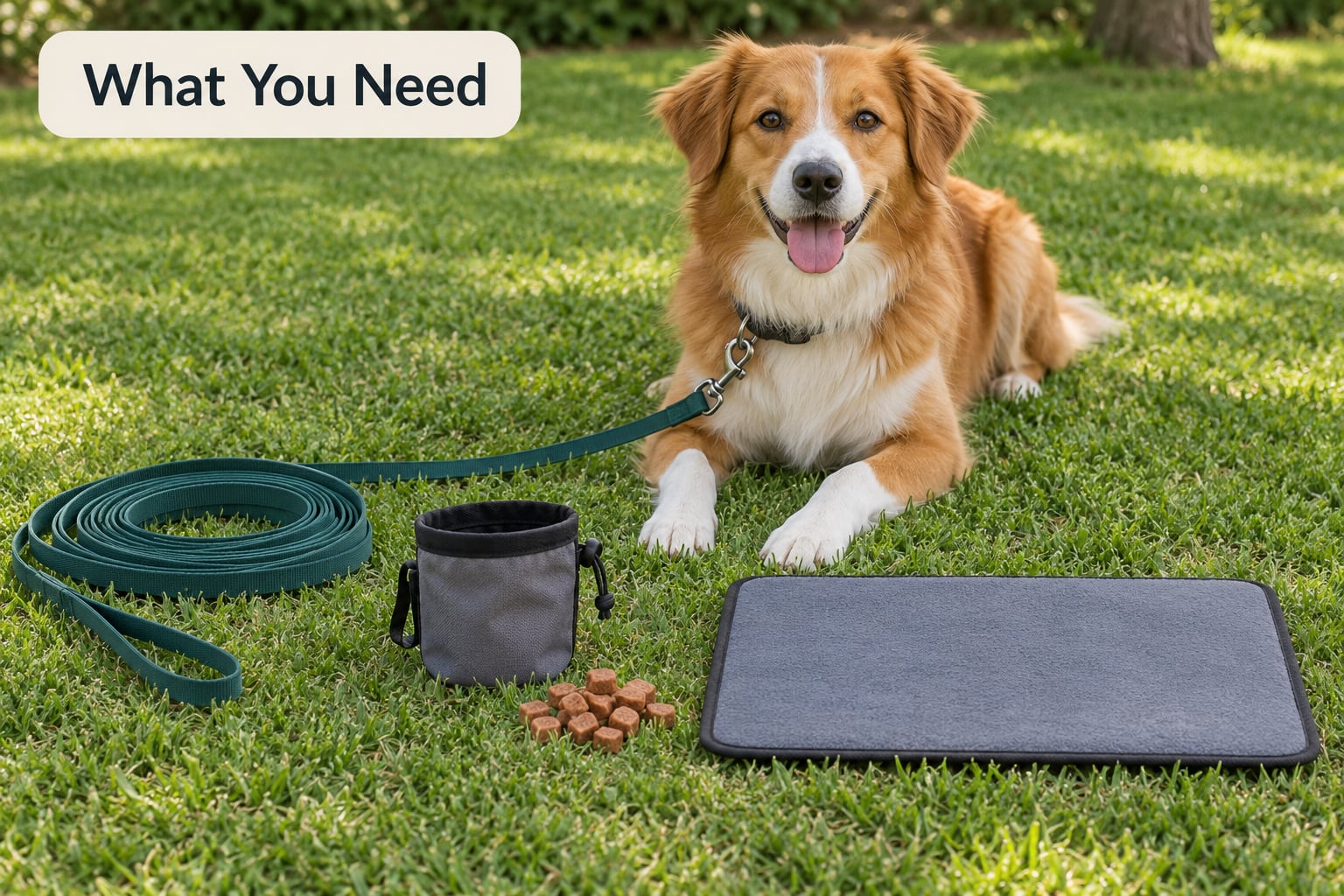
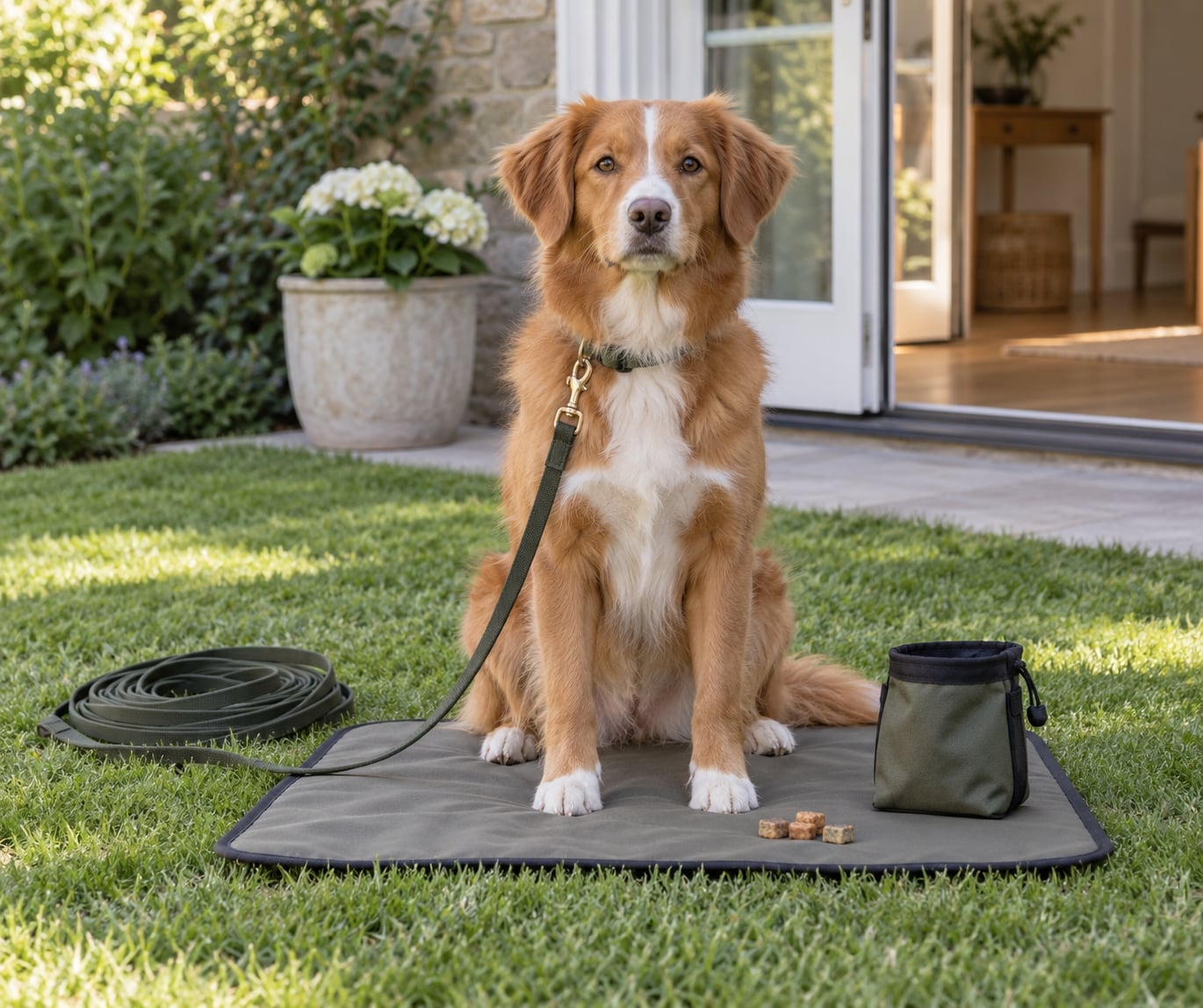
You need very little. Most of what people buy for recall training is decoration, and the useful kit fits in one bag.
- High-value treats. Small, soft, and smelly. Cooked chicken, liver, cheese, hot dog pieces, and dried fish all work far better outdoors than dry kibble, because they compete with what a garden or a park is offering. Cut them pea-sized so a session stays short.
- A treat pouch or a treat belt. It removes the fumbling pause when you need to pay, and that pause matters more than people expect.
- A reward marker. A clicker, a whistle, or simply a clear word like yes. It marks the exact instant your dog did the right thing, which is far more precise than your hand arriving with food half a second later.
- A 6-foot leash for indoor and close-range work, and a long line of 20 to 30 feet for outdoor proofing. A long line is the single piece of safety equipment that lets you train recall in real places before your dog is ready to be loose there.
- A training mat or a designated spot so your dog learns that this location is where you do your work together. It also makes the start of a session predictable.
- Ten minutes of the day, twice a day. Three short sessions beat one long one every time.
That is the whole list. No gadget replaces the mechanics of the six steps below, and none of them will shorten the process.
Step-by-Step
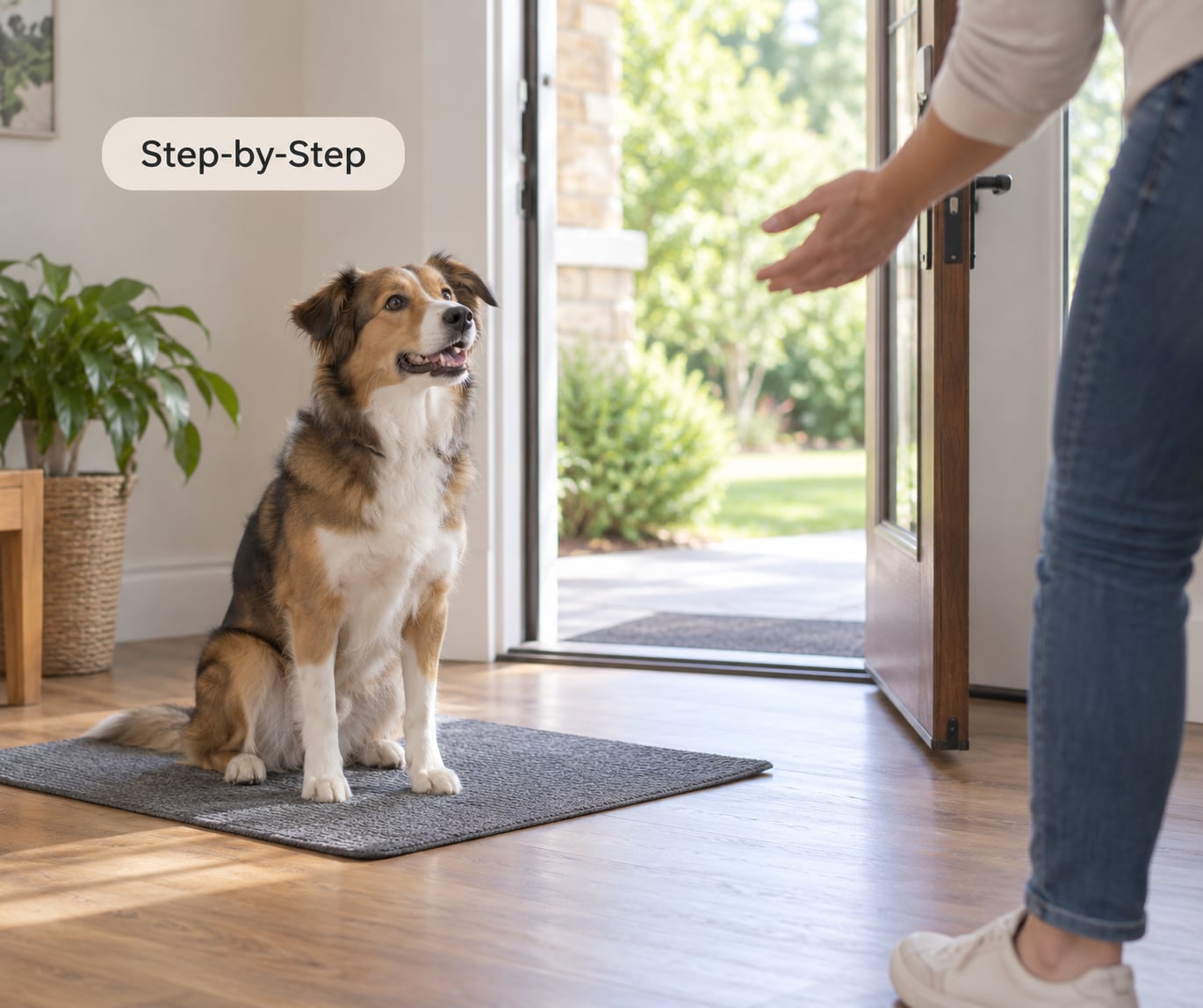
Work through these in order, and only move on when your dog is doing the current step easily. Progressing too early is the reason a lot of dogs learn a recall that works in a living room and nowhere else.
Step 1: Choose One Recall Word and a Clear Marker
Pick a single short word you will never use for anything else, and use the same marker word every time you pay. Many owners choose come or their dog’s name, and both are fine. What matters is that you never alternate between come, here boy, boy, and the dog’s name, because a dog cannot build reliability around a cue that keeps changing.
Do not use your dog’s name as a warning either. Owners who shout the name to get attention are quietly teaching the name to mean something unpleasant is about to happen, and then they wonder why the name alone produces an ear flick instead of a response. In the house, in the yard, and on walks, your dog’s name should mean only I am paying attention to you.
You will know this step is working when your dog can name-check and look at you before you have moved or reached for a treat.
Step 2: Reward Your Dog Before Calling
Pay your dog for looking at you before you use the recall word, every single time. This is the step that quietly fixes most recall problems, and the one that gets skipped when owners are in a hurry. If your dog has not looked at you yet, the cue cannot mean anything, because a cue only carries information if the dog is listening when you give it.
Over a few days, most dogs start offering you the behaviour on their own. They glance over, they check in, and they begin to wonder what they have to do to get the good stuff. That is when you start attaching the recall word to an existing behaviour, which is far easier than building a new behaviour from nothing.
You will know this step is working when your dog starts orienting toward you unprompted and holds your attention for a second or two.
Step 3: Call Your Dog and Mark the Arrival
Say the recall word once, in a bright, upbeat voice, then stop talking. As your dog moves toward you, mark the exact moment they reach you and pay. Marking before the food arrives is what sharpens the timing, so that a click and a treat become the same event in your dog’s mind.
Two details carry more weight than everything else here. First, say the word once. Repeating it teaches a dog that the first quiet attempt is not the one that matters, and the second shout is the one with a treat attached. Second, pay at the moment of arrival, not when your hand reaches your pocket.
Repeat this five or six times and then stop, while it is still going well. You will know this step is working when your dog turns and moves toward you from a sit or a lie-down without you repeating yourself.
Step 4: Add a Release Word and a Calm Finish
After the reward, send your dog back to what they were doing with a release word such as go play, go sniff, or off you go. This one step is what stops a recall from becoming the end of everything good. Without it, a dog learns that coming to you ends the fun, and you have quietly built a reason to ignore you.
The same logic applies to the moment you call your dog to leave the park or end a walk. If the recall word predicts a bath, nail trims, a harness going on, or a walk finishing, no amount of chicken will fix it, because you are fighting a prediction rather than a lack of motivation. Save a separate emergency cue for genuine emergencies and pay it extravagantly, but never spend the everyday recall on the bad stuff.
You will know this step is working when your dog turns and goes back to sniffing or playing after being paid.
Step 5: Gradually Increase Distance and Distractions
Increase three variables one at a time, never together: distance, distraction, and duration. This is often called the three D’s, and it is the whole progression. Step back a few feet first, hold the distraction steady, and only move further once the short version is easy.
Use your dog’s body as your gauge. A dog who can still take treats and think is learning. A dog who cannot eat, who is pulling towards a squirrel, or who is barking at another dog is over threshold, meaning too aroused to process anything you say. At that point, help: walk to your dog, reward a voluntary arrival, and shorten the distance for the next attempt. Forcing a recall in that state teaches the dog that the cue means stress, and this is where many owners first hear about teaching a dog to come when called every time going sideways in a field.
You will know this step is working when your dog comes from across a garden or a room without hesitating, and happily eats on arrival.
Step 6: Practice in Real-Life Settings
Generalisation is the slow part. A behaviour learned in a quiet kitchen has to be rehearsed in a hallway, then a busy kitchen, then a quiet garden, then a garden with other people in it. Practise in the places recall will actually be needed, and keep a backup plan while you do: a long line outdoors, a lead in a car park, and a solid grip if something goes wrong.
Do not drop the long line until your dog is winning in the environment you want him loose in. The test is not whether he comes in your garden, it is whether he comes in your garden with a distracted teenager throwing a ball nearby.
Expect a wobble around eight to eighteen months of age, when hormones and brain development can undo a lot of careful work for a few months. Owners often call this the phase where the brain falls out. It is temporary, and the fix is to drop back a step in difficulty rather than to add pressure.
If a dog who always responded suddenly stops, have your vet check hearing and vision first. A medical change can look exactly like a training problem, and training a dog who cannot hear you is a losing plan.
Common Mistakes
Nearly every recall that fails fails for one of the reasons below. The fix for each is quick; the hard part is doing them consistently while your dog is giving you puppy eyes.
- Repeating the cue. If you say come five times, your dog learns that none of the first four count. Say it once, wait, and go back to your dog to reward a voluntary arrival. One repetition trains the behaviour; five train you to shout.
- Paying late. A reward delivered twenty seconds late reinforces whatever your dog was doing at second twenty, which is usually sniffing the ground. Mark the arrival, then pay, every time.
- Practising too long. Two or three minutes, several times a day. Sessions on r/Dogtraining and r/puppy101 are consistent on this: the dogs who learn quickly are the ones whose owners stop while it is still fun.
- Chasing your dog. Running after a dog who is ignoring you turns the recall into a chase game, and you are the thing being chased. Walk away in the opposite direction instead; curiosity brings most dogs back, and owners on r/OpenDogTraining describe that as the moment it clicks for many dogs.
- Using punishment or calling for unpleasant things. A recall cue that predicts a bath, a vet trip, or the end of a walk becomes a cue to avoid. It is also the fastest way to make a dog hesitate at the last second.
- Calling when you know they will not come. Every failed repetition rehearses not coming. Call your dog when you are about 80 percent confident you will get a response, and go walk to them if you are not.
- Using a different word with every person in the house. A partner, a dog walker, and a teenager each inventing their own recall is the same as having no recall. Agree on one cue, one marker, and one rule for calling.
What a reliable recall actually unlocks is worth repeating: off-lead walks, a dog who can be called away from another dog at a park, a dog you can find in a wood, and an emergency stop near traffic. That is a bigger prize than a well-behaved dog in a kitchen, and it takes months, not a weekend.
Frequently Asked Questions
How long should I practice teaching a dog to come when called?
Two to three minutes, several times a day, is the sweet spot. Dogs learn in short bursts and most of them lose focus well before you run out of energy. Finish while the session is still going well instead of pushing through a fade-out, then train again later the same day rather than doing one long session.
What should I do if my dog ignores the recall cue?
Do not repeat the word and do not chase. Say the cue once, then walk away in the opposite direction, because most dogs follow out of curiosity. If they still do not come, walk to them and reward a voluntary arrival, then drop back to a quieter location and shorter distances.
Should I use a whistle or a verbal recall word?
Either works, and many households use both. A whistle carries over distance and background noise and stays consistent when several people train the same dog. A verbal word works in close quarters and gives you a quick everyday backup. Pick one, use only that one for a few weeks, and avoid adding a second cue too early.
How do I teach recall when my dog is on a leash?
Keep the leash loose and never use it to drag your dog to you. Walk away a few steps, call once, and the moment your dog moves toward you mark the arrival and pay. The leash is a safety net and a way to prevent rehearsing failure, not a tool for hauling your dog in.
Can puppies learn to come when called?
Yes, and the earlier you start the better. Puppies as young as eight weeks can learn the cue, though they will not be reliable until they are a few months old. Keep sessions short and easy, reward heavily, and socialise and train together, because a distracted pup cannot take information from you.
How do I stop my dog from hearing the recall cue repeatedly?
Say the word once and only once. Repetition teaches a dog that the first quiet attempt does not count. After one cue, wait, then go back to your dog and reward a voluntary arrival. Cue repetition matters most in the first few months and fades once the word reliably predicts something good.
Conclusion
Start with one action tonight. When your dog looks at you on its own, mark it, pay it, then say your recall word once and mark the moment he reaches you. Pay well, release him back to what he was doing, and stop there. Two minutes like that, most days, is how you teach a dog to come when called every time.