If you have a long haired dog, brush it daily, or at minimum three to four times a week. Knowing how often to brush a long haired dog comes down to coat type, and silky, curly, double-coated and mat-prone dogs need more frequent sessions than a healthy straight long coat. Length, season and skin condition push the number up from there.
Getting this right saves a lot of trouble later. Long coats shed constantly, and that loose hair catches on itself and on the undercoat until you have a mat sitting against the skin. Break down the schedule below, then check the table to find where your dog’s coat actually sits.
Table of Contents
- How Often to Brush a Long Haired Dog
- What Changes the Brushing Schedule?
- How to Brush a Long Haired Dog Without Causing Discomfort
- How often to brush a long haired dog before bathing
- Which Brush and Comb Should You Use?
- How to Find and Remove Small Mats Safely
- When to Ask a Vet or Professional Groomer for Help
- Common Brushing Mistakes to Avoid
- Frequently Asked Questions
- Should I brush my long-haired dog every day?
- How often should a long-haired double-coated dog be brushed?
- Is it better to brush a long-haired dog before or after bathing?
- How long should each brushing session be?
- What should I do if my long-haired dog has matted fur?
- Start With a Simple Brushing Routine
How Often to Brush a Long Haired Dog
Most long-haired dogs need brushing two or three times per week as a baseline, and daily is the safer target for anything curly, silky, double-coated or prone to matting. Treat three to four sessions a week as the floor rather than the goal, and adjust upward when the coat is thick, the weather is changing or your dog spends hours outdoors.
The table below breaks the frequency down by coat type, with breed examples, an approximate session length and the tool that suits each one.
| Coat type | Example breeds | Frequency | Session length | Best tool |
|---|---|---|---|---|
| Long and silky, fine | Maltese, Yorkshire Terrier, Havanese, Shih Tzu | Daily, or every other day at minimum | 5 to 10 minutes | Pin brush, then a wide-tooth comb |
| Long and curly or wavy | Poodle, Doodle, Portuguese Water Dog | Daily, every day during shedding | 5 to 10 minutes | Slicker brush plus a metal greyhound comb |
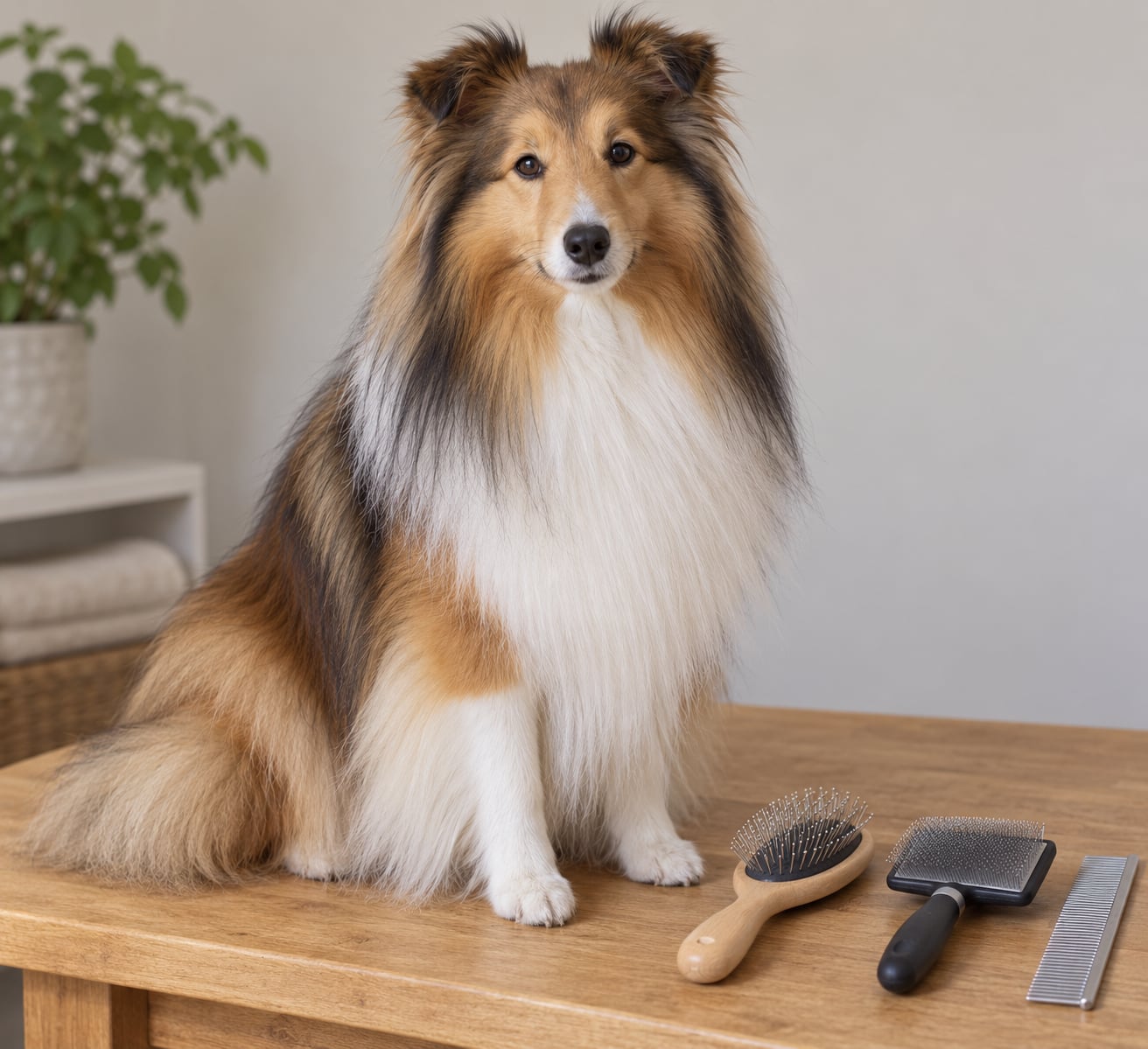
| Long and coarse with a heavy undercoat | Chow Chow, Collie, Sheltie, Old English Sheepdog | Daily, with extra passes twice a week | 10 to 15 minutes | Pin brush for the top coat, undercoat rake used gently |
| Long, heavy and low-shedding | Afghan Hound, Irish Setter, long-haired Dachshund | Three to four times a week | 10 to 15 minutes | Pin brush, finishing with a metal comb |
| Long, clipped or short-dipped | Clipped Doodle, shaved-spaniel type coats | Two to three times a week | 5 minutes | Rubber curry brush or a soft pin brush |
A simple rule of thumb that matches the table: coat length sets frequency. Hair at roughly 1 cm wants one full brush a week, 2 cm wants twice, 3 cm or more wants three times or more. Denser coats, and anything with an undercoat, need more again.
Watch for the signs your current schedule is too low. The coat parting visibly down the spine, clumps behind the ears, tangles at the tail base or under the collar, a rough or lumpy texture when you run your hand through it, or a dog who flinches when you touch a hip or a flank. Any one of those means increase the frequency now, not after the next appointment.
What Changes the Brushing Schedule?
Coat density and length come first. Thick, dense coats such as the Chow Chow or the Collie hold debris and loose hair in place, so they need more passes to the skin. Fine silky coats knot quickly but shed slowly, so a couple of short sessions often beat one long one.
Curl pattern matters just as much. Curly hair shrinks when it gets wet and springs back into tight clumps when it dries, which is why Poodles and Doodles mat in places you would not expect. Long-and-coarse double coats have an undercoat that traps shed hair underneath, so brushing only the surface leaves the bulk of the loose coat sitting against the skin.
Then there is shedding. Most dogs blow their coat twice a year, and during those weeks the required frequency roughly doubles. A dog that manages on three sessions a week in January may need a short session every day in spring. If you find yourself emptying the brush and it is still full, add a pass rather than a longer session.
Age and skin sensitivity change the answer too. Puppies should meet the brush while they are relaxed and comfortable, on their own terms. Senior dogs and dogs with joint pain may not be able to stand for a full session, so split the work into two or three short passes spread through the day. Sensitive or itchy skin needs softer pressure and a wider-toothed comb rather than a firm slicker.
Weather, dirt and lifestyle are the last inputs. Dogs that swim, run through burdock, dig or roll in wet grass bring in moisture, burrs and grit that speed up matting. Dry winter air and indoor heating pull moisture out of the coat, so the undercoat loosens faster. Dogs that stay indoors most of the day and never leave the garden genuinely need less, and their owners are not being lazy.
How to Brush a Long Haired Dog Without Causing Discomfort
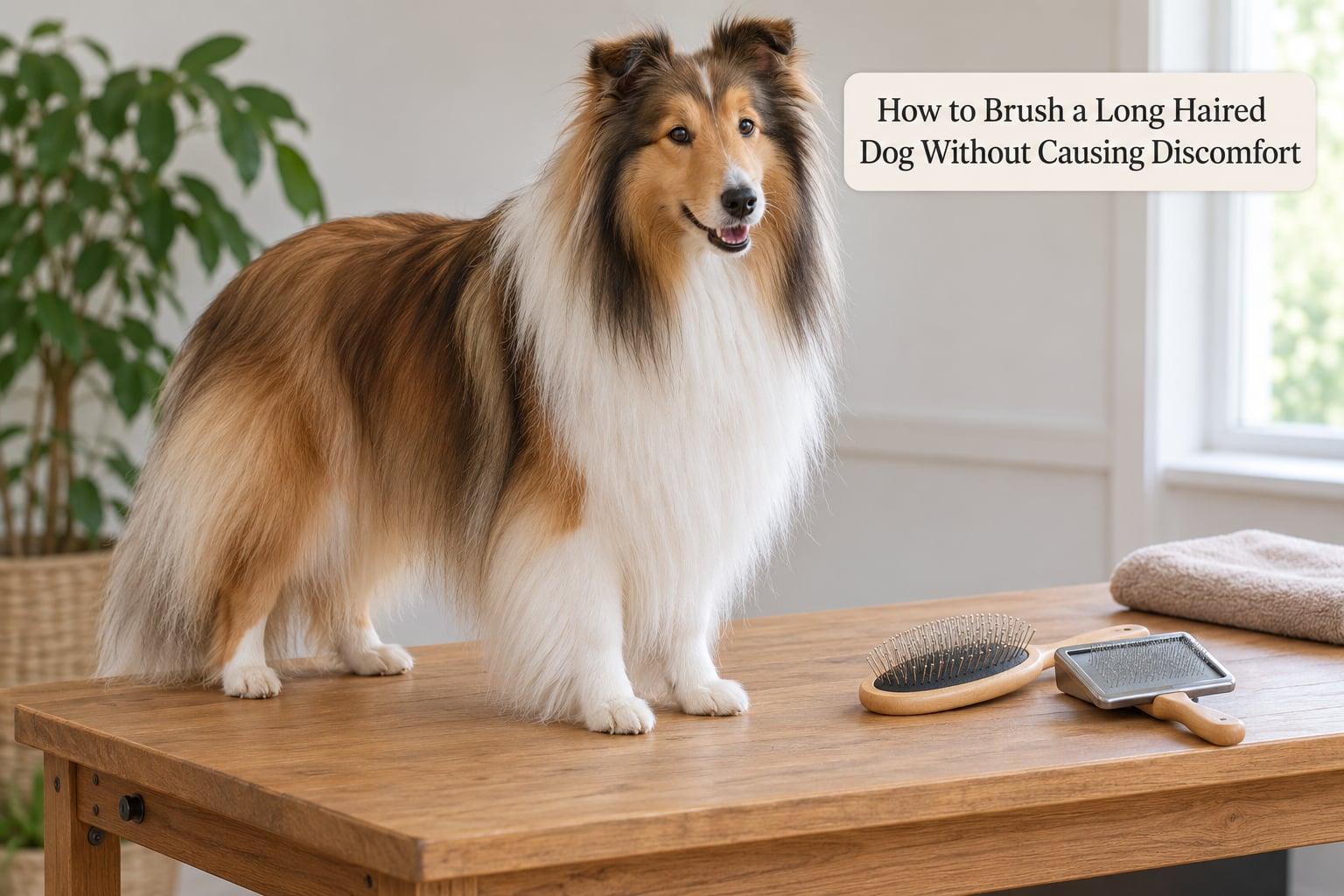
Keep sessions calm and boring. The goal is a dog that relaxes at the sight of the brush, not a thorough groom in a single sitting that ends with everyone exhausted and the coat half done.
- Pick the right tool and get it warm in your hand. A cold metal slicker on a sensitive dog starts the session badly. Let the brush sit for a minute first.
- Check the skin before you brush. Run your hands over the back, belly, armpits and inner thighs. Look for redness, scabs, lumps, fleas or a hot, damp patch. This is also how you catch a skin problem early, and it is the real reason to brush rather than just the tidy coat.
- Start where the coat is least tangled. The back, chest and flanks first, never the mats. Working easy areas first ends with a relaxed dog, which makes the hard parts bearable.
- Brush in the direction the hair grows. Long and drop-coated hair falls straight down, so brush down. Curly coats are the exception, where you work the hair apart in small sections to spread out the curl.
- Go down to the skin in layers. Lift a section, brush the underneath, lay it back, then take the top layer. Skipping the undercoat is why a coat can look brushed and still be full of tangles.
- Cover every friction zone. Behind the ears, under the collar, in the armpits, along the belly, between the hind legs, around the tail base and between the toes. These are the places owners skip and the places mats form.
- Watch your pressure. If the dog turns its head, leans away, lifts a paw or goes stiff, ease off. Use your free hand to hold the skin gently taut so the brush travels without dragging.
- Reward as you go. A treat every few minutes does more for a nervous dog than a long talk afterwards. Finish while your dog is still enjoying it, even if the coat is not perfect.
For a dog who is anxious or uncooperative, keep sessions to two or three minutes and stop before the dog objects. That sounds useless, but five short sessions across a week beats one twenty-minute struggle. Leave the brush out where the dog can sniff it, brush while the dog is settled after a walk, and never punish a dog for moving away from the brush.
How often to brush a long haired dog before bathing
Brush thoroughly the day before a bath, not on the morning of it. Out loose hair first, then the bath water carries the rest away instead of pressing it into the coat. Wet hair is weaker, stretches and tightens tangles as it dries, so a freshly washed matted coat becomes a tighter mat. Never bathe a heavily matted coat; deal with the mats or see a groomer first.
Dry the coat fully before brushing it out. Blowers and towels on their own just tangle long hair further. A quick rinse is fine between full baths, and after a swim, towel the coat down, brush the length straight with a wide-tooth comb and check behind the ears and at the tail base once the coat is dry.
Which Brush and Comb Should You Use?
Most owners get through with two tools, and forums like r/doggrooming agree on the same pairing: a firm-bristled slicker and a metal greyhound comb. Beyond that, match the tool to the coat.
- Pin brush. The everyday choice for long, straight, silky coats such as the Maltese, Shih Tzu or Afghan Hound. Long pins reach the undercoat; short pins only tidy the surface. The one caution: it drags through mats, so never use it on a knot.
- Slicker brush. The most versatile tool for curly and double coats. Use light pressure and work in small sections, because too much force makes the dog flinch and makes you rush. Firm bristles for a healthy coat, softer ones for sensitive skin.
- Wide-tooth comb. The gentle option for fine, silky hair, a nervous dog or a coat you are combing out after a bath. The spacing lets a knot pass through instead of tightening.
- Metal greyhound comb. The comb that actually removes a formed tangle. Its fine teeth catch the mat, and the wide base holds hair down so nothing pulls at the skin. Work it in small strokes from the edge inward.
- Undercoat rake or de-shedding tool. Useful in shedding season on a double coat, but more demanding than it looks. Keep it flat, use light pressure and never drag it over a knot; the blades catch mats and tighten them.
- Pet-safe clippers. A last resort for dense matting or a sanitary trim, not a substitute for brushing. Clipper blades heat quickly and pull the coat before they cut, and tight mats have to come off close to the skin. Leave this to a groomer unless you have done it before.
Rough guidelines for technique: a slicker or rake needs more care than a pin brush, and a metal comb needs the most, because a mat will fight you. If you are working through knots and the dog is complaining, stop and reassess rather than pushing.
How to Find and Remove Small Mats Safely
A tangle is a loose knot you can finger apart. A mat is a tangle that has tightened against the skin, usually with the skin pinched into it. That difference decides what you do next.
Find them by feel, not just by sight. Run your fingers behind the ears, under the collar, through the armpits, along the belly, between the hind legs and around the tail base. A mat in those spots often hides completely under otherwise straight hair.
To separate a small, surface-level mat: hold the hair above the knot with one hand so the skin stays loose, use your fingers or a wide-tooth comb to tease the outer edge into loose strands, and work in toward the centre in small passes. Keep sessions short, especially with a dog who is sensitive about the feet or the rear.
Stop and hand over to a groomer when the mat is tight, close to the skin, painful, smells damp, or when the hair will not separate with your fingers. Never pull a tight mat, never cut scissors flush against the skin, and never bathe it. Mats can be cut out by a groomer or, in a serious case, treated medically. Long-haired dogs often need a groom every four to eight weeks between home brushing; the interval depends on how fast your own dog mats.
When to Ask a Vet or Professional Groomer for Help
Some problems belong to a groomer, and some belong to a vet. A vet should look at red, raw, thickened or flaking skin, any wound, swelling or a hot spot, bald patches, a strong or musty smell, sudden shedding outside the normal season, or scratching that has broken the skin. Fleas, mites and ringworm all show up in the coat first, and they need treatment before more brushing will help. Use a vet-approved product only. Never apply human medication, creams or home remedies to a dog.
A professional groomer handles tight or widespread mats, a coat too dense to brush through at home, a sanitary trim around the rear, clippers on a sensitive skin, and a dog whose coat needs a proper bath, dry and style. The usual rule is that anything painful goes to a groomer and anything that looks like a health problem goes to a vet, sometimes both in that order.
One more case worth naming: a dog who suddenly refuses to be brushed. That is often pain rather than fussiness, and a check-up is the right first step.
Common Brushing Mistakes to Avoid
- Brushing a mat from its outside edge. Pulling from the top drags the knot tighter into the skin. Work from the edge inward in tiny sections, or stop and see a groomer.
- Yanking tender areas. The armpits, belly, inner thighs and behind the ears bruise easily under a mat. Hold the skin taut, brush the hair not the skin, and lift the mat away with your fingers before working the brush through.
- Using a metal comb on a tight matted coat. The teeth dig into the mat and into the skin. Use a wide-tooth comb on small surface knots, and leave tight ones to a professional.
- Brushing wet or damp hair. Wet hair stretches and shrinks. It tangles while drying and pulls out more healthy hair than any brush should.
- Using the wrong brush. A short-pin brush on a long silky coat never reaches the undercoat, and a stiff rake on fine hair pulls it out. Match the tool to the coat and change it when the pins start bending.
- Making sessions too long. Nobody brushes perfectly for forty minutes. Twenty-minute sessions with breaks, done often, beat one exhausting attempt once a month. Owners of Havanese and Poodle dogs often describe exactly this once a mat has formed: an hour of work in several pieces, with breaks.
- Treating a skin problem as a grooming problem. Greasy skin, scurf or a bald patch is a vet call, not something more brushing or a medicated shampoo will sort out.
Frequently Asked Questions
Should I brush my long-haired dog every day?
Yes, for most long-coated dogs daily brushing is the ideal target, and it is safe. Two or three minutes of gentle brushing beats a long session you dread. Curly, silky and double-coated dogs benefit most, because those coats mat near the skin where loose hair collects. Brush in the direction the hair grows, keep pressure light, and stop if the dog pulls away or the skin looks irritated. A groomer can advise on frequency if your dog has sensitive skin or a history of mats.
How often should a long-haired double-coated dog be brushed?
A long-haired double-coated dog, such as a Collie or a Chow Chow, should be brushed daily, with a deeper pass a couple of times a week. The outer coat hides loose undercoat that collects against the skin, so brushing only the surface leaves most of the shed hair in place. A pin brush for the top layer and an undercoat rake used gently and flat, with light pressure, covers both layers. During seasonal coat blowout, add a second short session on the same day.
Is it better to brush a long-haired dog before or after bathing?
Brush thoroughly the day before the bath and again once the coat is fully dry. Brushing first removes loose hair so the water rinses it away instead of pressing it into the coat. Wet hair stretches and tightens as it dries, so any tangle you left behind becomes a firmer knot afterwards. A quick rinse is fine between full baths, and after a swim, towel the coat down and comb the length straight with a wide-tooth comb once it is dry.
How long should each brushing session be?
Five to ten minutes is plenty for most long-haired dogs, and ten to fifteen minutes suits very dense or heavily undercoated coats. What matters more is consistency than length, so two short sessions on separate days beat one long one. If you are just starting, set a timer for two minutes and stop while your dog is still happy. For a nervous or senior dog, split the work into two or three short passes across the day.
What should I do if my long-haired dog has matted fur?
Separate a small, surface-level knot with your fingers or a wide-tooth comb, holding the hair above it so the skin stays loose, and work from the edge inward. Do not pull a tight mat, do not cut scissors flat against the skin, and do not bathe it, since water makes the knot tighten. A mat that is painful, close to the skin, damp or smelly needs a professional groomer, and one on irritated skin needs a vet first. Knowing how often to brush a long haired dog matters most here, because daily sessions stop small tangles becoming mats.
Start With a Simple Brushing Routine
Pick a start: two or three gentle sessions each week, five to ten minutes each, on the days you can actually manage. Then move toward daily if your dog’s coat is curly, silky or double, and add extra passes while the coat is blowing out in spring or autumn. Check the skin every time you brush, and look behind the ears, at the collar and around the tail base, where mats form first.
If you find a tight or painful mat, irritated or broken skin, bald patches, or a dog who suddenly flinches at the brush, stop and get help. A groomer handles mats and dense coats, and a vet handles anything that looks like a health problem. Neither is expensive compared with a coat pulled out at the skin.