Learning how to clean a dog’s wrinkles and skin folds safely is mostly about three things: lifting each fold, wiping it with lukewarm water and minimal pressure, and drying it completely. On a calm dog the whole job takes five to ten minutes, and doing it once a day prevents most redness, odor and infections. It is the drying that people skip, and it is the part that matters most.
The folds people forget are usually the problem ones. Owners scrub the face daily and never touch the tail pocket, the folds inside the ears, or the skin between the toes, and that is where the yeasty smell usually starts. Groomers and owners on r/doggrooming keep repeating the same lesson: a dog can be perfectly clean on the face and still smell because nobody cleaned the tail fold.
Breeds that need this most include English Bulldogs, French Bulldogs, Pugs, Shar Peis, Basset Hounds, Pekingese, Neapolitan Mastiffs, Bullmastiffs and Bloodhounds. Any dog that develops new folds as an adult needs it too, including overweight dogs. This article is general care information, not a treatment plan, and anything that looks painful, weeping or infected belongs with your veterinarian.
Table of Contents
- What You Need
- Step-by-Step: How to Clean a Dog’s Wrinkles and Skin Folds
- 1. Check the folds before cleaning
- 2. Calm your dog and use lukewarm water
- 3. Loosen dirt and clean each fold
- 4. Remove residue without scrubbing
- 5. Dry the folds completely
- 6. Recheck and set a routine
- Common Mistakes
- Frequently Asked Questions
- Can I use baby wipes to clean my dog’s skin folds?
- How often should I clean my dog’s wrinkles?
- Why does my dog’s skin fold smell bad even after cleaning?
- What should I do if my dog’s wrinkles are red or moist?
- Should I clean a dog’s ears when cleaning facial wrinkles?
- When does a skin fold problem need a veterinarian?
- Conclusion
What You Need
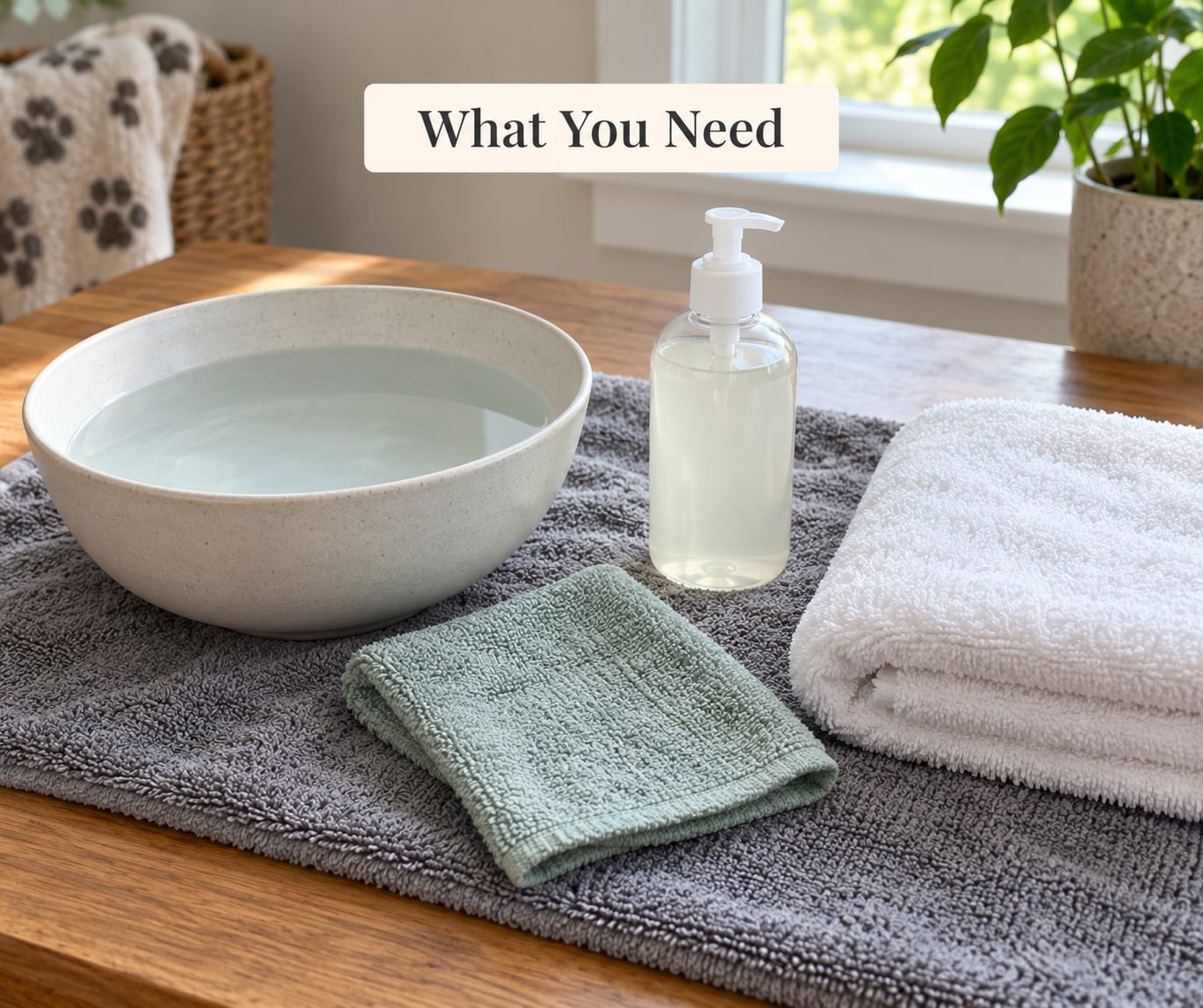
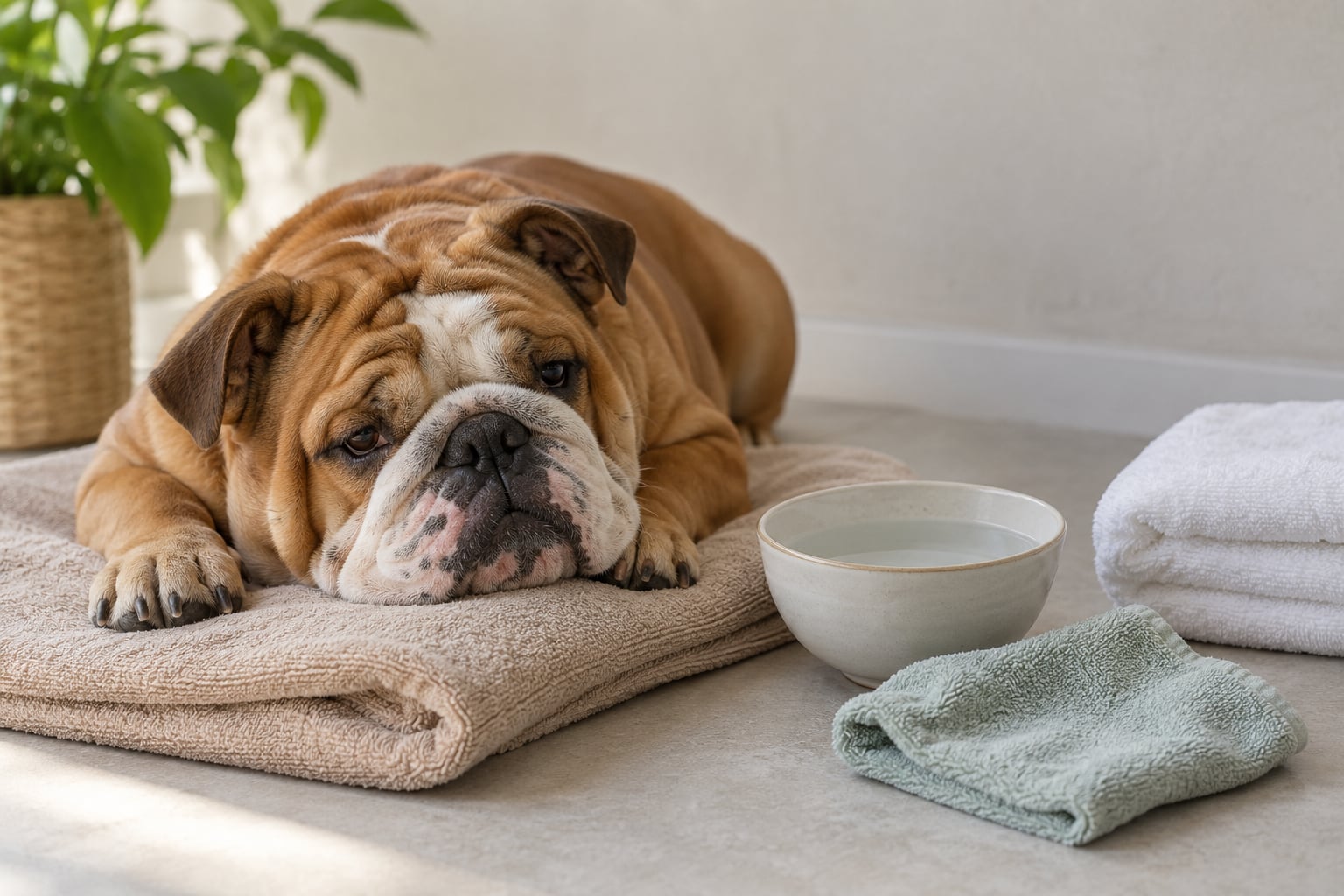
You need very little: lukewarm water, a clean soft cloth, dry towels, a few high-value treats, and a dog-safe cleanser if plain water is not enough. That is the whole kit, and it fits in a bathroom drawer.
For the cloth, use something soft and freshly washed. Microfiber cloths work well because they pick up moisture without scrubbing, and an old cotton t-shirt works nearly as well if you have nothing microfiber. Keep a second cloth for rinsing so you are not dragging dirt back across the skin.
On cleansers, read the label rather than the front of the bottle. You want a product that says it is safe for dogs, that is fragrance-free, and that does not list alcohol or harsh detergents. Veterinary-strength wipes containing chlorhexidine or an antifungal ingredient are useful for an irritated fold, but they are a targeted tool, not a permanent daily replacement for water and a cloth. If you are unsure, ask your vet before starting one.
Skip these no matter how good they smell: baby powder, essential oils, alcohol-based wipes, undiluted hydrogen peroxide, and anything made for human skin. Talc carries an inhalation risk for dogs, essential oils can burn thin fold skin, and hydrogen peroxide at full strength kills healthy cells along with the bacteria. Plain water is enough on most days.
Before you start, put a towel on a stable surface at the height where your dog can stand comfortably. Have your treats ready and decide on a time of day your dog is usually mellow, often right after a walk or a meal when he is settled rather than wired.
Step-by-Step: How to Clean a Dog’s Wrinkles and Skin Folds
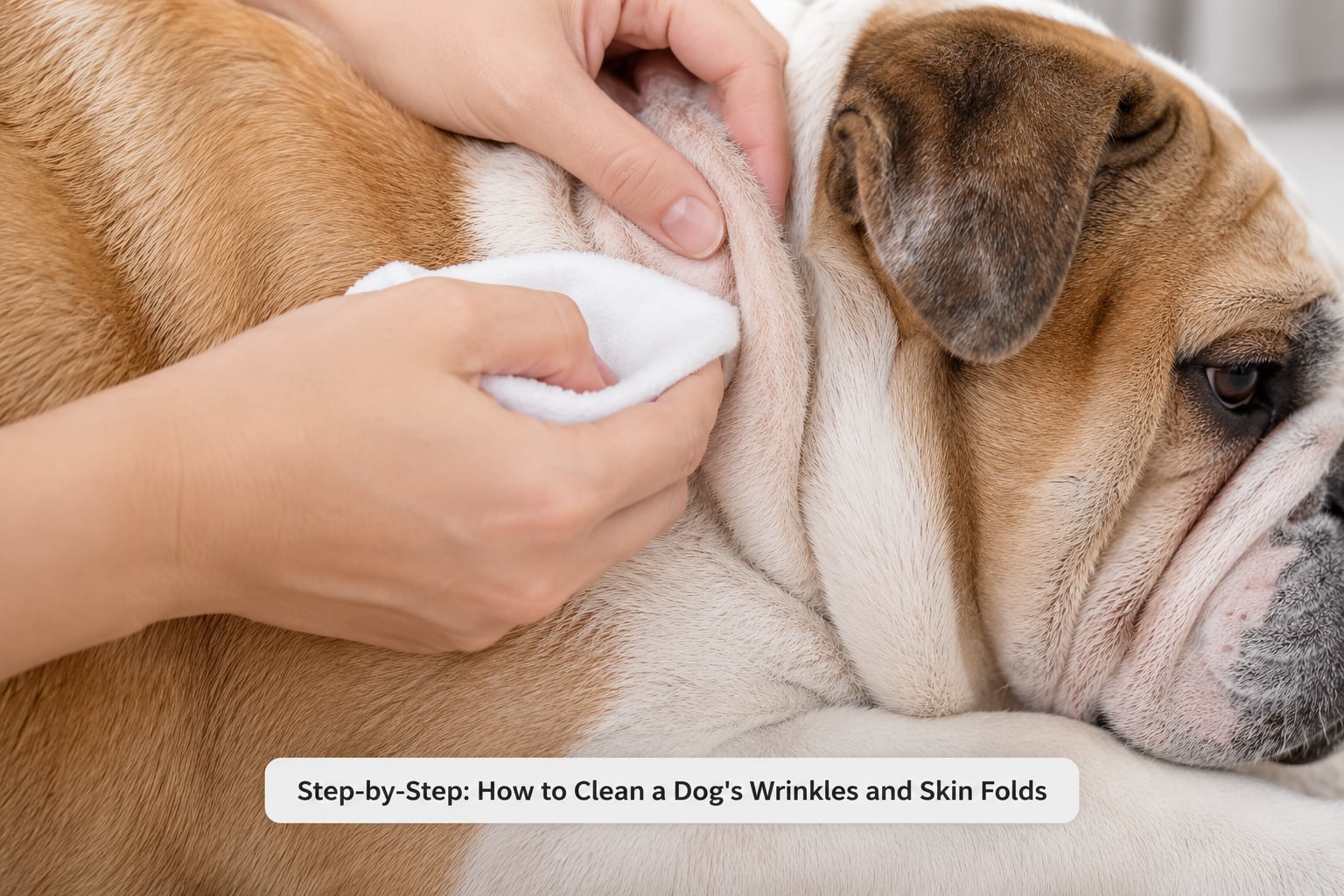
The routine below takes about five minutes on a cooperative dog and works the same way for the face, the neck, the tail pocket, the ear flaps and the folds between the toes.
1. Check the folds before cleaning
Look before you wipe. Part the hair and lift each fold with your fingers, then check the skin inside for redness, a strong or sour odor, discharge, dampness, crusts, hair loss, small cuts, stuck debris or moving insects. Do the same for the tail pocket, between each set of toe pads, the crease at the back of the knee, the armpits, the belly and the inner ear flap.
If you find bleeding, swelling, pus, a deep wound or a heavy infestation, stop and contact your veterinarian instead of cleaning harder. Gentle cleaning supports healthy skin, and it does not fix an infection that has already taken hold.
2. Calm your dog and use lukewarm water
Have the cloth damp and warm in your hand before you touch the skin, not hot. Water hot enough to be comfortable on your hand is fine; water you would hesitate to put on your own wrist is too hot for a thin, sensitive fold. Keep the session short and end it while your dog is still cooperating. Feed a treat, or two, between folds so the whole thing reads as a reward rather than a struggle.
If your dog squirts, growls or snaps, stop for the day and start over with short, boring sessions where he only has to hold still. A grooming mat or a partner holding treats at head height keeps a squirming dog still without force. Never punish a dog for resisting, and never push through a growl. A face fold is a small price to pay for a bite wound or a dog who learns to hate being handled.
3. Loosen dirt and clean each fold
Work from the outer edge toward the inside of the fold, not the reverse. Open the fold gently, take the damp cloth, and wipe in short strokes with almost no pressure. Let the cloth do the work; you are lifting debris, not polishing.
Dirt that has hardened onto the skin can be softened first. Hold the damp cloth against the spot for a few seconds before you move it, or use a clean damp cotton ball in the narrow creases near the nose tail and the eye corners. A cleanser is justified when water leaves a film, when the fold is sticky with dried mucus, or when the smell lingers after a plain wipe. A dog-safe, fragrance-free product applied to the cloth, not poured into the fold, is plenty.
4. Remove residue without scrubbing
Take the second clean cloth, dampened again, and wipe the same fold once more to lift whatever cleanser or loosened debris is left. Rinse the cloth between folds so you are not moving debris from one area to another.
Rubbing back and forth is the mistake here. Friction on damp, delicate skin causes micro-abrasions, and that damage is exactly what bacteria and yeast are looking for. Wipe, lift, and start again with a clean section of cloth.
5. Dry the folds completely
Pat every crease with a dry soft towel until the skin feels dry to your fingertips, then part the hair and check the deepest part of the fold one more time. Trapped moisture is the single most common reason a clean fold goes bad within days, because warm damp skin that touches itself is the ideal setup for skin fold dermatitis, bacterial infection and yeast overgrowth.
You can use a hair dryer on the cool or low setting, held at a distance and kept moving, but heat can dry and irritate thin skin, so check with your vet first if you plan to. Many owners dry with unscented facial tissues or paper towels instead, which is why some of them have abandoned wipes. After a walk in wet grass or a swim, the tail pocket and the between-the-toe folds deserve the same careful pat-down.
6. Recheck and set a routine
Look at every fold again once the skin is dry. A fold that stays pink, or shows a darker pigmentation, is not always infected; some breeds simply have pigmented skin, and many owners panic over a normal-looking fold. What matters is whether the redness, smell or discharge comes back after cleaning. That is the signal, not the color.
Then set a frequency from what you see rather than from a fixed calendar. Once a day suits most wrinkly dogs. Add a wipe after meals, after walks, after swimming and after the dog comes in from rain. Puppies and seniors, overweight dogs, dogs with allergies and dogs recovering from surgery usually need more frequent attention and more gentle products. If odor, redness or itching keeps returning despite regular cleaning, ask your vet about a plan instead of escalating to stronger products on your own.
Common Mistakes
Cleaning only the face. The tail pocket, the ear flaps and the interdigital folds between the toes are where moisture sits longest, and skipping them is why a clean-faced dog still smells. Add a full-body check to the routine and take a minute per area.
Using hot water or harsh products. Scalding water and strong soap strip the oils that protect fold skin, and alcohol-based wipes sting and dry it out. Lukewarm water plus a dog-safe cleanser is the whole formula.
Scrubbing a red fold. Redness means the skin is already inflamed, and friction makes it worse. Back off, use a softer touch, and let a vet look if the redness does not settle within a day or two of gentler cleaning.
Leaving folds damp. This is the number one error. Drying is not the last step, it is the step that prevents the next problem.
Ignoring odor. A yeasty or sour smell that returns within hours is a symptom, not a cleanliness failure. The owner who cleaned the tail fold, not just the face, is often the one who solved the yeasty smell their bulldog kept getting.
One tip for narrow creases: a clean damp cotton ball or a soft wrapped finger reaches the deep nose tail and the eye corners far better than a flat cloth, and it is gentle enough for the skin right beside the eye. Hold the dog’s head still for a moment rather than chasing the spot.
Frequently Asked Questions
Can I use baby wipes to clean my dog’s skin folds?
Unscented, alcohol-free baby wipes work for a quick wipe of the face folds, and many owners use them daily without trouble. Check the ingredient list for alcohol, fragrance and parabens first, and never use scented or wet-cleaning wipes near the eyes or the nose tail. A damp soft cloth with plain lukewarm water is still the safest default, since wipes can leave a residue that traps moisture against the skin.
How often should I clean my dog’s wrinkles?
Most wrinkly dogs need their folds checked and wiped once a day. Add a cleaning after every meal, after walks, after swimming and whenever the dog comes in from rain, since those are the moments food, saliva and water get into the creases. Puppies, seniors, overweight dogs and dogs with allergies often need more frequent attention. Persistent odor or redness despite daily cleaning is a reason to call your vet, not a reason to scrub harder.
Why does my dog’s skin fold smell bad even after cleaning?
A smell that comes back within hours usually means moisture, yeast or bacteria are still living in a fold you did not clean, most often the tail pocket, the ear flaps or the skin between the toes. It can also mean a yeast or bacterial infection is established, which home cleaning will not clear. Check every fold, dry them thoroughly, and if the smell returns the same day, book an appointment so the right treatment can be chosen.
What should I do if my dog’s wrinkles are red or moist?
Stop using friction and stronger products. Clean the fold once with lukewarm water and a dog-safe cleanser, pat it completely dry, and keep it clean while you wait. No scrubbing, no alcohol wipes, no undiluted peroxide. If the redness spreads, the skin is warm, swollen, weeping or your dog is in pain, contact your veterinarian the same day, since that pattern points to an infection rather than a cleaning problem.
Should I clean a dog’s ears when cleaning facial wrinkles?
Yes, check them, but keep it gentle. The inner ear flap is a skin fold too, and it holds the same trapped moisture and debris as the face. Wipe the visible flap and the crease behind it with a damp cloth, and never push anything into the ear canal or pour cleaner into the ear. Brown discharge, a strong smell, head shaking or scratching at the ears needs a veterinary exam.
When does a skin fold problem need a veterinarian?
See a vet when you see bleeding, swelling, pus or watery discharge, crusts, spreading redness, hair loss, pain when the fold is touched, or an odor that returns hours after cleaning. Daily cleaning prevents irritation, but it does not treat an infection that has already developed, and those signs usually need prescription treatment. Puppies, senior dogs and dogs on immune-suppressing medication should be checked sooner, and sooner again if things do not improve in a day or two.
Conclusion
Start tonight: lift every fold, look at the skin inside it, wipe gently with a cloth dampened in lukewarm water, and pat it dry until it feels dry. Do the tail pocket and the ears too, because that is where the smell usually lives. Five focused minutes a day is enough for a healthy dog whose folds stay clean and dry.
If the odor comes back the same day, if the skin stays red or moist, or if there is discharge, pain or bleeding, stop cleaning and call your vet. Those are signs of a skin, dental or infection problem that gentle home care cannot fix, and treating them early is far easier than treating them late.