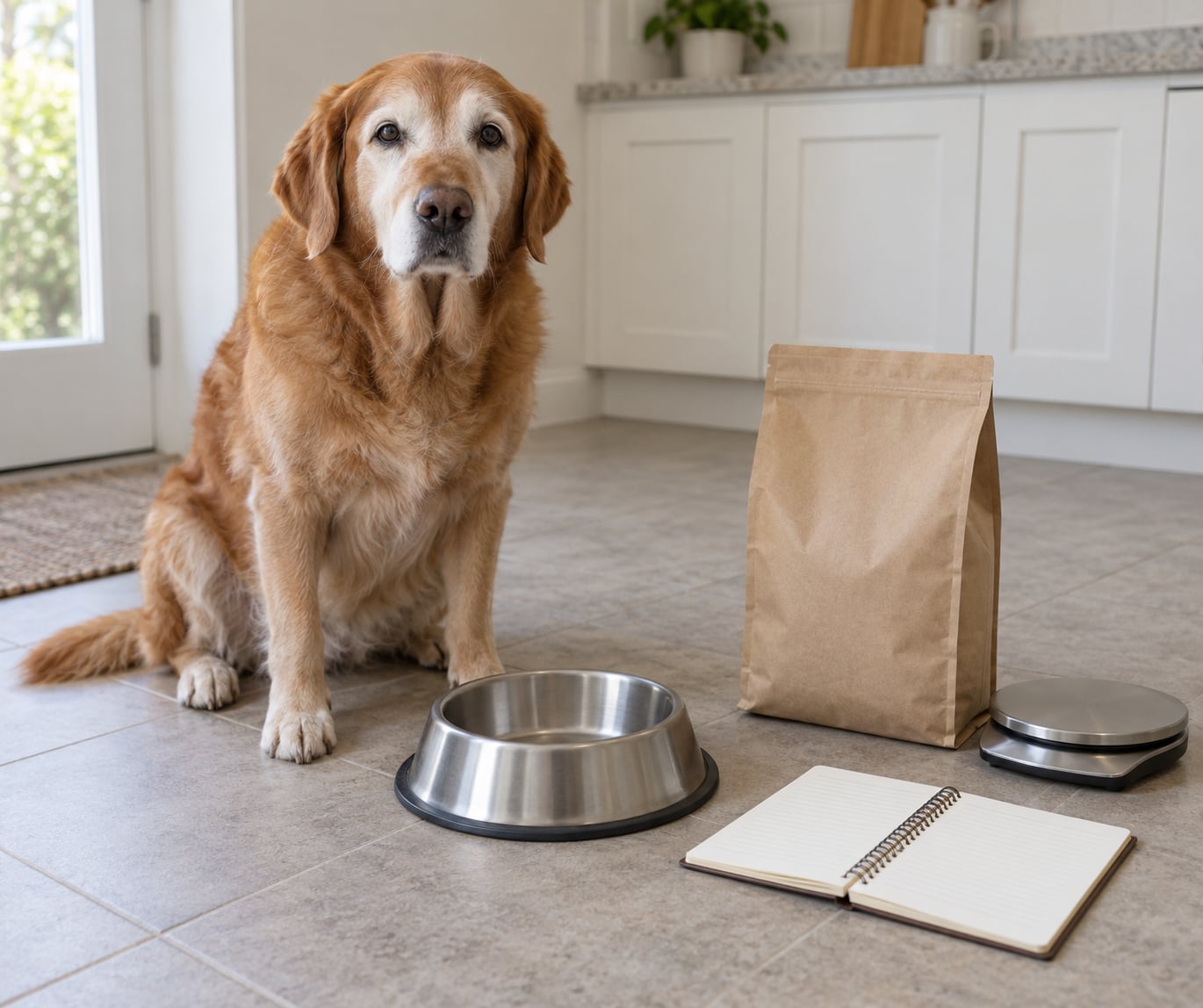
Most dogs move to senior food somewhere in the last quarter of their expected lifespan, which works out to roughly 5 to 7 years for giant breeds, 6 to 8 for large breeds, 8 to 10 for medium breeds, and 10 to 12 for small and toy breeds. Health and body condition matter more than the number itself, so when you switch a dog to senior food depends on what you see at the bowl, on the scale, and in how your dog moves.
A careful switch takes seven to ten days and costs nothing but attention. This guide walks through what to gather first, how to know your dog is ready, how to compare two foods side by side, and when a diet swap is the wrong move and a vet appointment is the right one.
Table of Contents
- What You Need
- Step-by-Step
- Step 1: Get a Veterinary Health Check
- Step 2: Know When to Switch a Dog to Senior Food
- Step 3: Compare the Two Foods Carefully
- Step 4: Transition the Food Gradually
- Step 5: Monitor Appetite, Weight, Digestion, and Comfort
- Common Mistakes
- Frequently Asked Questions
- At what age should a dog switch to senior food?
- Can a healthy adult dog eat senior food?
- How long does it take to change a dog’s food?
- Should senior dog food be lower in protein and fat?
- What symptoms mean I should stop changing my dog’s food?
- Conclusion
What You Need
Before you buy anything, put seven things in place. Skipping any one of them is how transitions turn into a week of loose stools.
- A veterinary assessment. A recent check-up, including bloodwork if your dog is due, so you know the current baseline before you change the diet.
- The current food label and feeding schedule. Note the brand, the exact recipe, the cup size, and the daily amount your dog eats now.
- The proposed senior food. Ideally the senior version of the food your dog already eats and tolerates well.
- A gradual transition plan. Written down, with the day-by-day ratios, so nobody improvises at 6pm when the dog is staring at the bowl.
- Fresh water. Separate bowls, changed daily, so you can tell drinking changes from food changes.
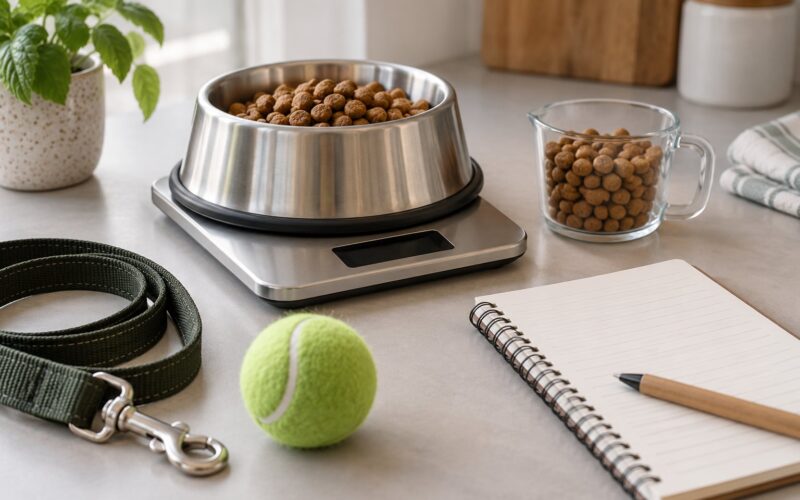
- Measuring equipment. A kitchen scale for portions and a scale or weight tape for monthly weigh-ins. Senior portions get small and easy to eyeball badly.
- A symptom and stool log. A notebook or phone note for appetite, stool quality, vomiting, water intake, and weight. Two weeks of notes beats two weeks of memory.
Step-by-Step
Step 1: Get a Veterinary Health Check
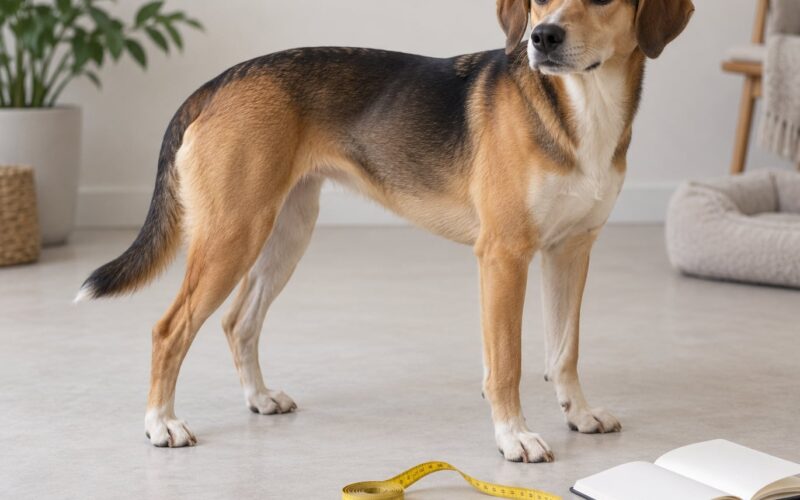
Ask your vet to look at the whole picture: age, weight trend over the last year, body condition, teeth, appetite, digestion, mobility, and any diagnosed conditions or medications. That single visit answers the question the food label cannot, which is whether your dog needs senior nutrition at all.
Be clear about one thing. Senior food is preventive nutrition, not treatment. It does not manage kidney disease, diabetes, dental disease, heart conditions or arthritis on its own, and it is not a substitute for a therapeutic or prescription diet chosen for a diagnosed condition. If your vet identifies one of those, the conversation moves to a prescription formula and a specific plan.
Step 2: Know When to Switch a Dog to Senior Food
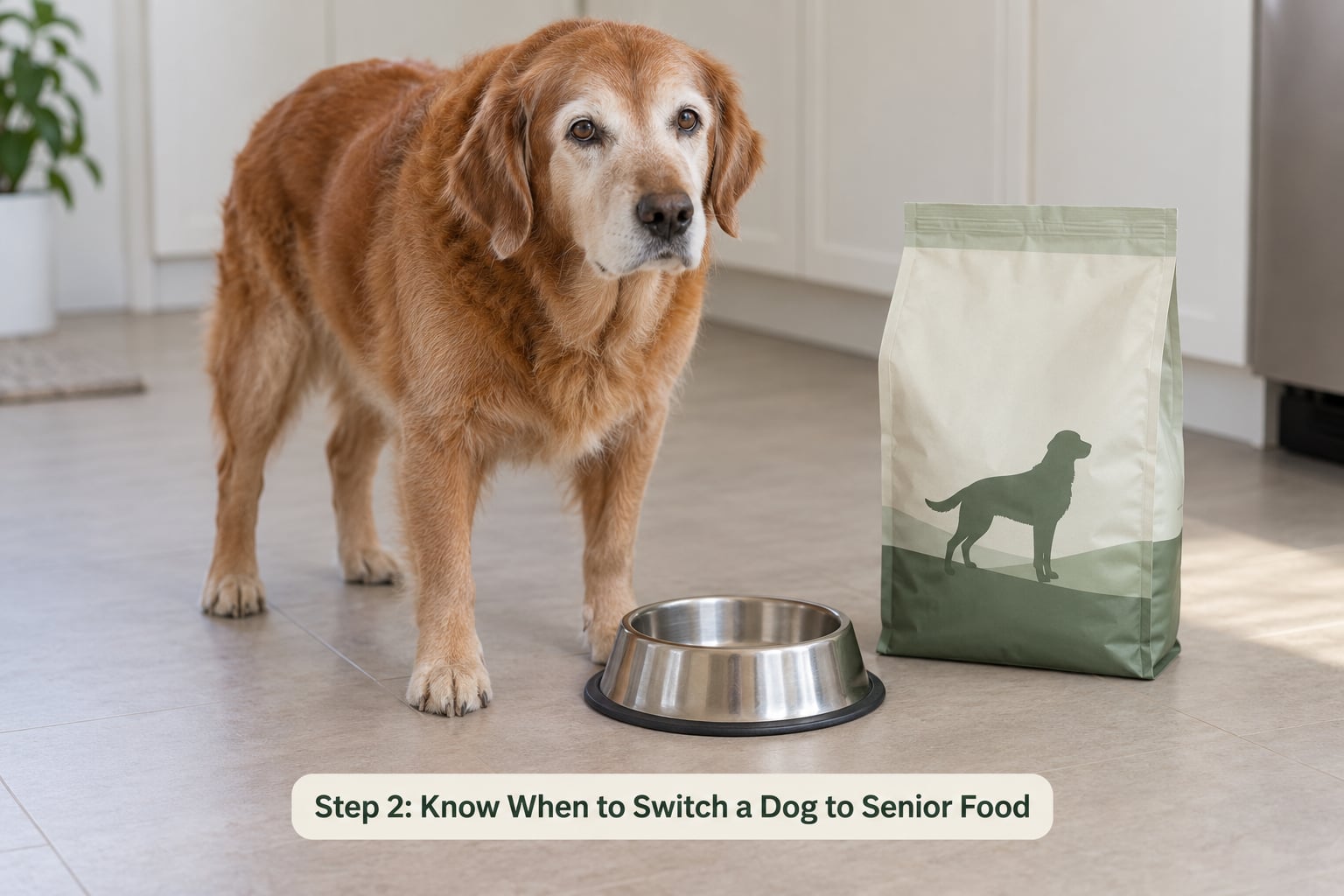
There is no universal age, because size, breed, body condition and health all shift the threshold. A ten-year-old Labrador is well past it. A ten-year-old Chihuahua may have years left. Start with the size band, then adjust for what you actually see at home.
Readiness tends to show up as a cluster of small changes:
- Weight climbing on an unchanged portion, even a portion you have measured for years.
- Slower to rise, hesitant on stairs, or stiff after resting.
- Shorter walks, less enthusiasm for the usual route, less play.
- A graying muzzle, thinning coat, duller coat condition.
- Difficulty chewing, dropping kibble, favoring one side of the mouth.
- A gradual drop in appetite or a dog that seems full sooner.
- Drinking more water than usual, or urine changes.
- Hesitation on jumps, a new reluctance to go up steps, a changed gait.
- Already on joint chews or omega-3 supplements, which tells you age-related support is on your radar.
- Reduced vision or hearing, which affects how a dog navigates daily routines.
One sign on its own is thin evidence. Several together, especially weight change plus mobility change, mean it is time to have the conversation with your vet.
Step 3: Compare the Two Foods Carefully
Put both bags side by side and read labels, not packaging. Senior formulas typically lower calories per cup and fat, keep protein at a similar or slightly higher level to protect muscle mass, add functional nutrients such as glucosamine and chondroitin for joints and DHA or EPA omega-3s for brain and coat, and may reduce sodium and phosphorus.
Here is what to check on each bag:
- Complete and balanced statement. Senior foods are usually formulated for adult maintenance, so that phrase should appear on the label.
- Calories per cup. This number matters more than the bag size, because it is what determines your dog’s actual portion.
- Protein and fat percentages. Look at them on a dry matter basis when the label provides it.
- Fiber level and added functional ingredients. More fiber can firm up stools but adds bulk to the meal.
- Texture and kibble size. Relevant if the teeth are going. Large-breed kibble designed for big jaws will not work for a small senior dog with missing teeth.
- Feeding cost. Compare cost per day, not cost per pound, since your dog will eat fewer calories of the senior formula.
One label detail is worth knowing: there is no separate regulatory standard called “senior.” Senior formulas are certified complete and balanced for adult maintenance, like the adult food you feed now. The difference is formulation choice, not a different nutritional rulebook.
If your dog takes daily medication, mention it to your vet before you buy. Some formulas change mineral levels enough to matter, and a mineral supplement or a different formula may be the better call.
Step 4: Transition the Food Gradually
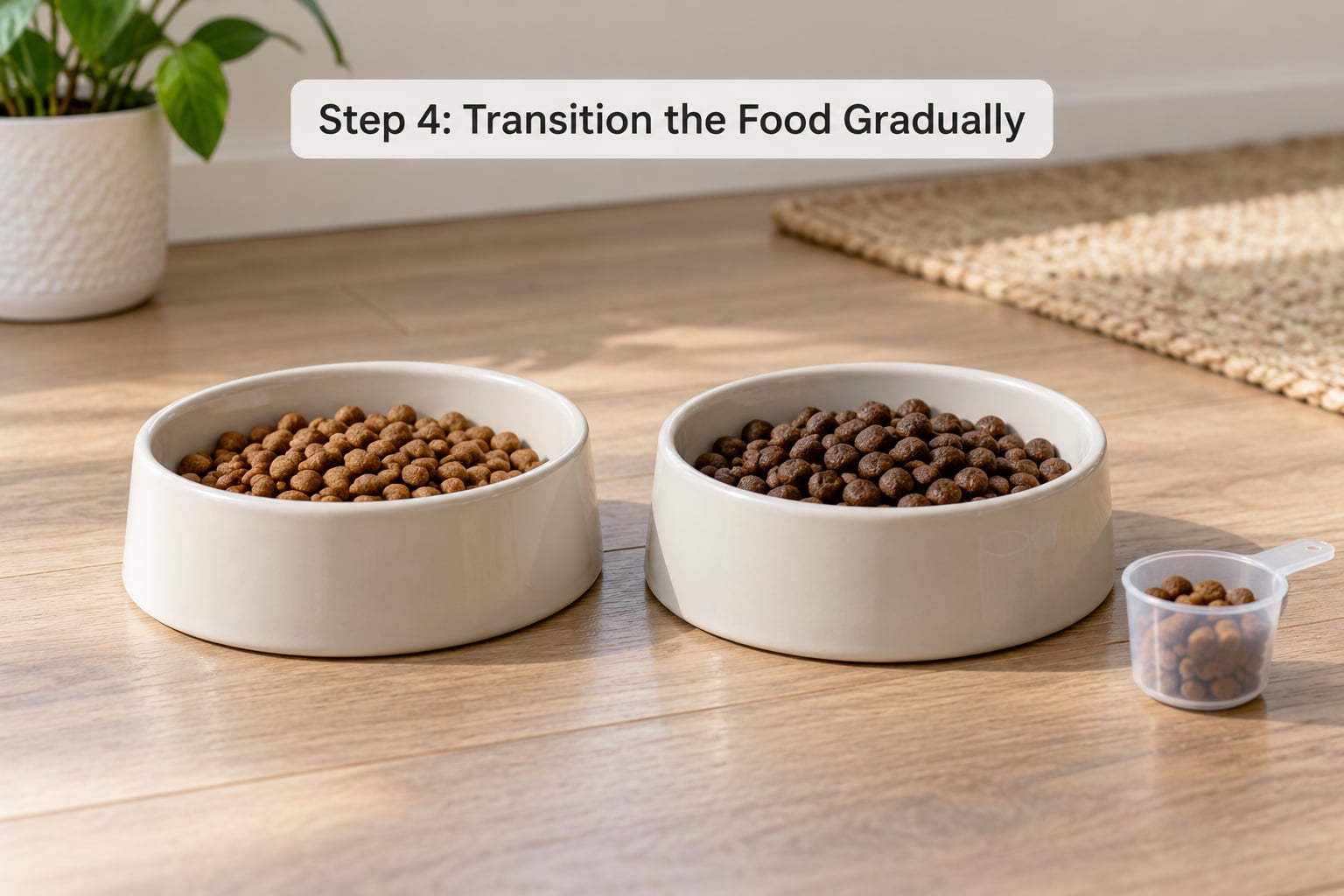
Sudden switches are the most common reason dogs refuse food or get diarrhea. Spread the change over at least seven days, and ten to fourteen if your dog has a sensitive stomach.
- Days 1 to 3: 75 percent old food, 25 percent new food.
- Days 4 to 5: 50 percent old, 50 percent new.
- Days 6 to 7: 25 percent old, 75 percent new.
- Day 8 onward: 100 percent new food.
Measure with the scale instead of scooping. Senior dogs often need noticeably less than the previous portion, and guessing at the bowl is how dogs quietly gain two pounds.
If chewing is the problem, soften the kibble with warm water or switch to a canned or textured senior recipe. A senior formula in wet form usually carries the same functional nutrients. Feeding smaller meals two or three times a day often works better than one large meal, and many senior dogs manage a portion well but refuse a full bowl.
Slow down or stop if you see vomiting, diarrhea, refusal to eat, or itching. Hold at the previous ratio for a few extra days, and call your vet if the symptoms continue.
Step 5: Monitor Appetite, Weight, Digestion, and Comfort
The first month is where you find out whether the switch worked. Log what your dog eats, how much, stool quality, water intake, energy level and any vomiting. Weigh weekly with the same scale at the same time of day.
Adjust portions on a rule rather than a feeling. If the weight is climbing and the vet has not flagged a condition needing extra calories, cut the daily portion by roughly ten percent and recheck in two weeks. If the weight is dropping despite a good appetite, do not cut anything; ask your vet about a higher-calorie option, because thin seniors often need more calories, not fewer.
Weight in the first two or three days can shift with water and bowel changes, so give the new food a fair run before you judge it. The realistic gains owners notice by week three are steadier energy, firmer stool, easier rising and a better-conditioned coat. Coat texture and mobility rarely change in a month, and owners who expect that tend to abandon a food that is actually working.
Common Mistakes
- Switching food and brand at the same time. If something goes wrong you will not know which change caused it. Fix: move to the senior version of the current brand first.
- Choosing based on the package. Terms like “mature,” “aged” and “senior” mean nothing legally. Fix: read calories, protein, fat and the complete and balanced statement.
- Changing food for every aging sign. A limp, a graying muzzle and appetite loss have different causes. Fix: get a diagnosis before you treat with a diet change.
- Ignoring dental problems. A dog that drops kibble is not being fussy. Fix: have the teeth checked, then soften kibble or move to wet food.
- Overfeeding a lower-calorie food. Fewer calories per cup does not mean more cups. Fix: weigh the daily portion.
- Adding treats on top of a tighter budget. Senior dogs gain weight easily, and treats count. Fix: cut the daily total down when the food changes.
- Stacking supplements you no longer need. If the senior food already supplies glucosamine and omega-3s, doubling up wastes money. Fix: ask your vet to review everything your dog takes, including what you give in the bowl.
- Ignoring persistent symptoms. Weight loss, repeated vomiting, drinking more than usual and appetite loss lasting more than a few days are vet questions, not food questions.
Frequently Asked Questions
At what age should a dog switch to senior food?
Most dogs count as senior in the last quarter of their expected lifespan: about 5 to 7 years for giant breeds, 6 to 8 for large breeds, 8 to 10 for medium breeds, and 10 to 12 for small and toy breeds. Use that as a starting point rather than a deadline. Body condition, teeth, mobility and appetite often matter more than the number on the birthday card.
Can a healthy adult dog eat senior food?
Yes, and it is generally safe for an adult dog to eat a complete and balanced senior formula. Nothing in it is inappropriate for a younger dog, because senior foods are formulated for adult maintenance like any other adult food. That said, a healthy lean adult usually has no need for the lower calorie density, so there is little point switching before your dog reaches its size-based threshold or shows a change.
How long does it take to change a dog’s food?
Most dogs adapt in seven to ten days if you increase the new food gradually, starting with about 25 percent on day one and reaching the full new food around day eight. Sensitive stomachs do better with ten to fourteen days. If your dog develops vomiting, diarrhea or refuses to eat, hold at the previous ratio for a few days and slow down. Call your vet if it continues.
Should senior dog food be lower in protein and fat?
Senior formulas usually lower calories and fat while keeping protein at a similar or slightly higher level, because older dogs need good protein to hold muscle mass even as activity drops. Lowering protein is not a goal in itself. If your dog has kidney disease or another diagnosed condition, protein and phosphorus levels are a vet decision, not something to judge from the label.
What symptoms mean I should stop changing my dog’s food?
Stop the transition and keep the dog on its current food if you see repeated vomiting, diarrhea, refusal to eat for more than a day, or new itching and hair loss. Do not push through it. Once your dog is stable again, restart the transition more slowly, and talk with your veterinarian, since these signs can also point to illness rather than a food change.
Conclusion
Start with the vet, not the bag. A health check tells you whether your dog needs senior nutrition, a therapeutic diet, or nothing at all, and once you know that, the breed-size age bands tell you when to act.
Compare the two foods on calories, protein, fat and the complete and balanced statement rather than the front of the bag, move over gradually across a week or two, and keep a short log so you are reading a trend instead of a bad afternoon. Then watch the individual dog, because that is the only one the decision is really about.