The safest way to help a dog lose weight is a gradual, vet-guided calorie deficit: reduce total daily calories by roughly 20 to 25 percent, add suitable daily activity, and aim for a loss of about 1 to 2 percent of body weight per week. Faster results look encouraging on the scale and are the wrong target for a dog.
Most overweight dogs do not need a prescription diet or a specialist programme. They need someone to measure what is actually going into the bowl, cut it slightly, and keep the change steady for months. The whole plan fits on one page, but the consistency does not.
Two things come before any diet change. First, a vet needs to rule out medical causes of weight gain or loss, because a dog that is losing weight for the wrong reasons is a different problem entirely. Second, you need a baseline: today’s weight and a body condition score you can repeat the same way in four weeks.
Table of Contents
- Quick Plan at a Glance
- Veterinary check and goals
- Portion control and diet
- What You Need
- A vet appointment and the dog’s records
- Food information you can actually measure
- Weighing tools
- Activity options that suit your dog
- A record you will actually keep
- How to Help a Dog Lose Weight Safely, Step by Step
- How to Help a Dog Lose Weight Safely With a Veterinary Plan
- Set Realistic Feeding Goals
- Reduce Portions Without Leaving the Dog Hungry
- Replace High-Calorie Treats With Practical Alternatives
- Increase Daily Activity Safely and Gradually
- Track Weight and Body Condition Instead of Looking Only at Scale Numbers
- Common Mistakes
- Crash dieting or skipping meals
- Free-feeding
- Rewarding exercise with extra calories
- Treating food as a meal replacement
- Making abrupt food changes
- Counting only the bowl
- Using human medication or supplements
- Ignoring warning signs
- Frequently Asked Questions
- How quickly should an overweight dog lose weight?
- How much should I feed my dog to help it lose weight?
- Should I put my dog on a weight-loss diet before seeing a vet?
- Can I give my dog diet food or human meals to help it lose weight?
- When should weight loss in a dog be considered urgent?
- Conclusion
Quick Plan at a Glance
Veterinary check and goals
- Get a vet visit before cutting calories, especially for senior dogs, puppies, and dogs with joint, heart, respiratory or diabetic conditions.
- Ask for an ideal body weight and a body condition score target, then write both down.
- Confirm the safe rate of loss for your dog’s age, health and mobility: 1 to 2 percent of body weight per week.
Portion control and diet
- Put every daily food source on the same page: meals, treats, chews, dental sticks and flavoured medication.
- Weigh portions on a kitchen scale using the target dog’s ideal weight, not its current weight.
- Hold treats to about 10 percent of daily calories, and 5 percent for a dog that is actively losing weight.
- Change food gradually over 7 to 10 days and increase activity in small steps alongside it.
What You Need
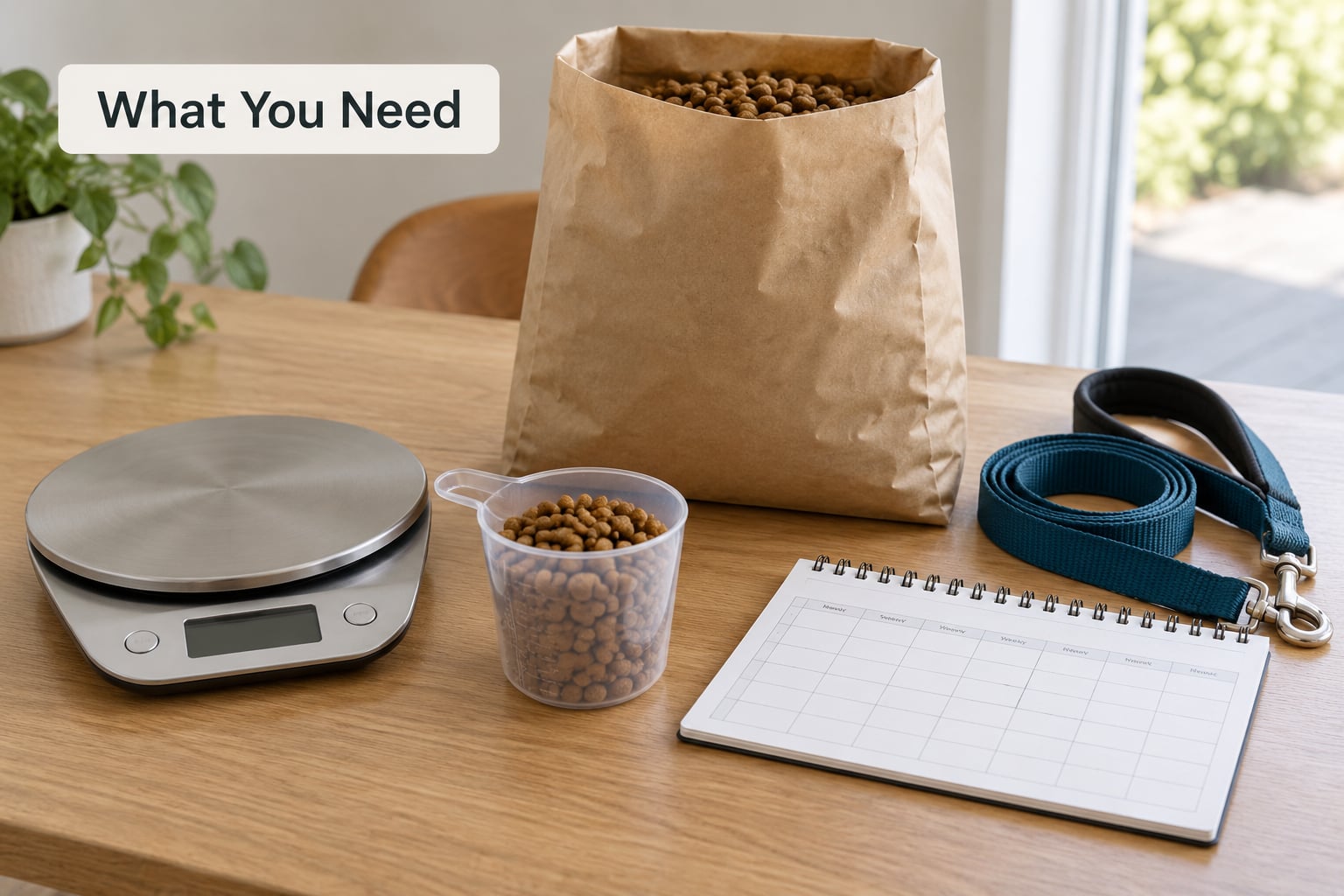
You do not need much to run this properly. You need accurate information and a way to repeat the measurement, because a plan you cannot verify is a guess.
A vet appointment and the dog’s records
Ask for the current weight, an ideal body weight estimate, a body condition score, and a note of anything that limits activity. Vaccination, medication and past surgery records all matter when you’re about to change what goes in the bowl.
Food information you can actually measure
You need the bag or tin in front of you, not a memory of it. Most labels list calories per cup or per kilogram, which is the only number that lets you scale a portion accurately.
Weighing tools
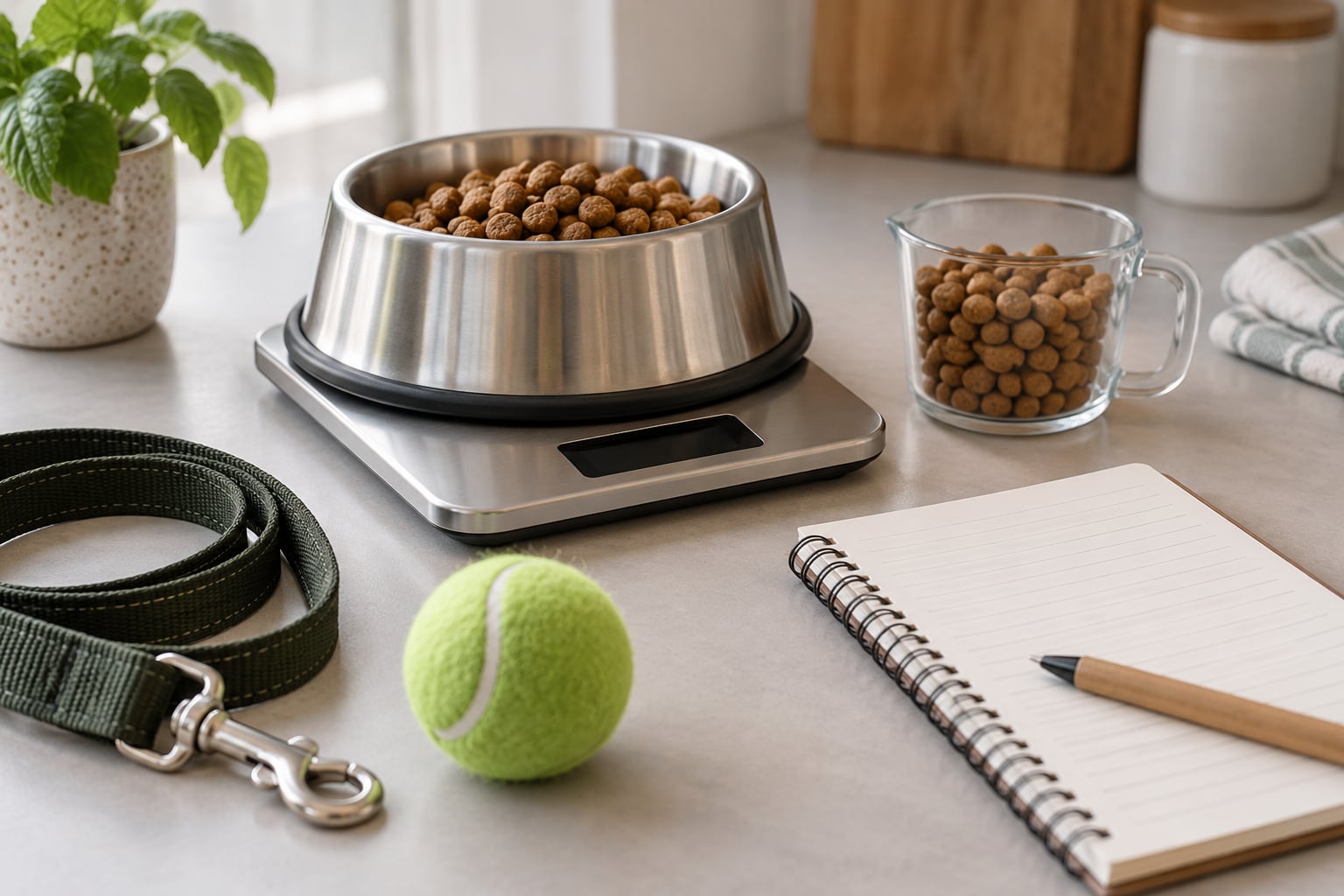
- A kitchen scale that reads grams, for weighing kibble and small treat pieces.
- A proper measuring cup if you feed wet food, since the scoop included in the bag is often oversized.
- A bathroom scale or a vet-clinic scale for the weekly weigh-in, plus a notepad or phone note to record it.
Activity options that suit your dog
Long-lead walks at a steady pace, a harness and lead, floating toys or a ball for retrievers, a shallow pool or hose play in warm weather, and food puzzles for indoor days. Anything your dog enjoys and can do comfortably counts; anything that causes pain or breathlessness does not.
A record you will actually keep
A weekly line with the date, weight, and a note on waist and energy is enough. Most people manage this for a month or two and then stop, which is exactly when the plan stops working.
How to Help a Dog Lose Weight Safely, Step by Step
How to Help a Dog Lose Weight Safely With a Veterinary Plan
The vet visit is not paperwork. A dog can be losing weight because of hypothyroidism, Cushing’s disease, diabetes, dental pain or a gut problem, and none of those are fixed by feeding less. A blood panel and a physical exam rule those out and give you a starting weight you can trust.
The timeline depends on the dog. Age, existing joint disease, how much weight there is to lose and the dog’s overall condition all change how fast loss can safely happen. A fit young dog at a 6 on the body condition scale is on a completely different schedule from a senior with painful hips.
Two groups should not start a calorie deficit on their own at all. Puppies under 12 months, and large-breed dogs under 18 months, are still growing, and restricting them can damage growth plates. Ask your vet about weight control for growing dogs instead.
Set Realistic Feeding Goals
Your target is the dog’s ideal body weight, not its current weight. That distinction matters more than any brand on the bag, and it is the single most common mistake in home attempts.
To set the goal:
- Start from the vet’s ideal weight estimate and a body condition score of 5 out of 9, which describes a dog with a visible waist, a slight abdominal tuck and ribs you can feel under a thin layer of fat.
- Use the feeding guide on the food as a starting reference, then scale it to the ideal weight rather than the current one.
- Set the pace at 1 to 2 percent of current body weight per week, and expect months, not weeks.
A 40-pound dog losing at the top of that range is dropping about half a pound to nearly a pound a week. If your dog has 12 pounds to lose, that is roughly five months at a steady, durable pace.
Reduce Portions Without Leaving the Dog Hungry
Cut calories gradually. Many clinics start with a 10 percent reduction and hold there for a few weeks before going further, because a dog that feels deprived at the start tends to raid bins and demand more from the table, which undoes the plan.
Weigh the daily portion on a scale and split it into two or three meals. Dogs that eat fast do better with the same calories spread out and delivered through a slow feeder bowl, a snuffle mat, or a puzzle feeder, which also gives them something to do instead of begging.
Keep the diet complete and balanced while you do this. Cutting a dog’s food down to a fraction of a normal ration without veterinary guidance risks losing muscle along with fat, and muscle loss makes the weight harder to keep off later.
Change food over a week to ten days by mixing increasing amounts of the new food into the old, unless your vet has told you to do something different. A sudden switch plus a sudden cut is a rough combination on the gut.
Replace High-Calorie Treats With Practical Alternatives
The 90/10 rule is the widely used shorthand: around 90 percent of daily calories come from meals and about 10 percent from everything else. For a dog that is overweight, many vets tighten that to 5 percent. Either way, the allowance stays the same each day rather than being open-ended.
Measure treats into a small container at the start of the week so the daily amount is visible. Then spend it deliberately: a few tiny pieces for training during a walk are worth more to a dog than one large biscuit handed over at the door.
For volume, low-calorie fillers work well. Plain green beans, carrot pieces and cucumber are the ones owners report most often for a hungry dog, and they add bulk without adding much. Any new food goes in small, and you watch for stomach upset, because a change that causes diarrhoea will not help the plan.
Keep these away from your dog entirely: chocolate, grapes and raisins, anything containing xylitol, onions, garlic, alcohol and macadamia nuts. This matters even more during a diet, when people reach for shareable snacks.
Increase Daily Activity Safely and Gradually
Add activity in stages, not all at once. Start with a slightly longer walk or a second short one, hold that for a week, and only add more if the dog is comfortable the next morning. Warm-up and cool-down walks count as part of it.
Use what suits the dog:
- Healthy adult dogs: longer walks split into two or three, plus fetch or tug for a few minutes at a time.
- Arthritic or stiff dogs: walking on grass rather than pavement, swimming where permitted, and dividing exercise into several short sessions instead of one long one.
- Flat-faced breeds and dogs that overheat easily: early morning and late evening walks only, on the ground, with water and a cooling plan for hot weather.
- Senior dogs: the same rule as arthritic dogs. Comfortable movement in small blocks, no forced mileage.
- Post-surgical dogs: follow your vet’s rehabilitation plan exactly. Weight comes off through food control while movement is restricted.
Pain is the trap here. A dog whose joints hurt walks less, gains weight, and then hurts more, and no amount of encouragement breaks that loop. If your dog limps, hesitates at stairs or is slower to rise, treat the pain with your vet and keep moving gently in the meantime. More exercise on damaged joints is not safer, it just delays things.
Track Weight and Body Condition Instead of Looking Only at Scale Numbers
Weigh in on the same day of the week, at the same time, on the same scale. For a dog that refuses the scale, weigh yourself holding the dog and subtract your own weight, or ask your vet clinic to weigh in at check-in visits.
Home scales are useful for spotting a trend, not for reading an exact number. A bowl position or a full bladder can move things more than a week of dieting does.
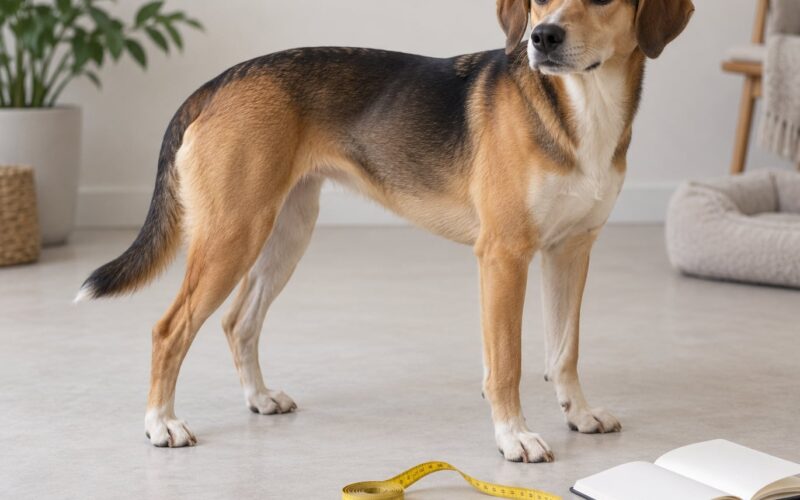
Record a body condition score at the same time as the weigh-in, using the same person and the same three checks: waist visible from above with a slight indentation, a slight abdominal tuck from the side, and ribs you can feel with a light layer of fat over them. Waist, rib palpation, energy and how easily the dog stands and climbs are all progress markers in their own right.
Review every 2 to 4 weeks. If four weeks pass with no change, go back to your vet rather than cutting harder yourself. Plateaus often mean the food has quietly changed, treats have crept in, or there is a medical reason that was missed the first time.
Common Mistakes
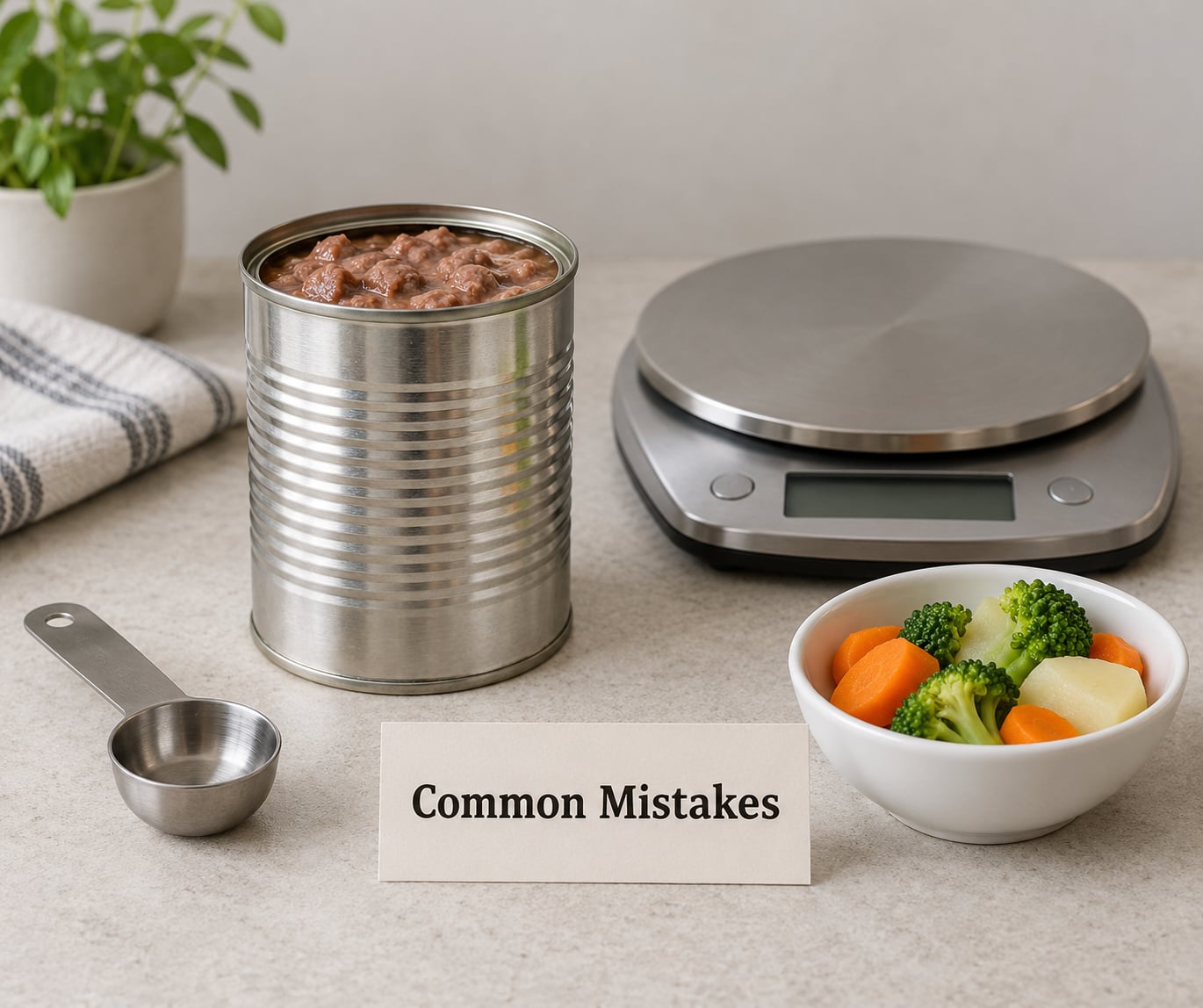
Almost every stalled weight loss traces back to one of these. Each has a straightforward correction.
Crash dieting or skipping meals
Starving a dog produces fast loss, much of it lean muscle, and it is the wrong answer. Correct it by going back to a measured daily ration and accepting the slower pace.
Free-feeding
A bowl left full all day makes intake impossible to know or adjust. Correct it by feeding set meals, measured on a scale, twice or three times a day.
Rewarding exercise with extra calories
A biscuit for every walk, plus a bigger bowl at dinner, quietly erases the deficit. Correct it by keeping the treat allowance fixed and training with part of the daily ration instead.
Treating food as a meal replacement
Training a dog all day with bits of cheese or lunchmeat adds calories without adding balance. Correct it by using part of the measured ration for training and cutting table scraps entirely.
Making abrupt food changes
Switching to a new food the same week you cut calories upsets digestion and hides whether the plan is working. Correct it by transitioning over 7 to 10 days.
Counting only the bowl
Chews, dental sticks, flavoured medication, food in another pet’s bowl and counter scraps all count. Correct it by writing down everything for a week before making any cuts, since most owners are guessing at the real total.
Using human medication or supplements
Never give a dog human medication, and never add a weight-loss supplement without a vet. Some human products are dangerous to dogs, and appetite-suppressing products are not something you trial on your own.
Ignoring warning signs
Vomiting, diarrhoea, lethargy, weakness, poor appetite, limping or laboured breathing all mean stop and call your vet. So does a dog losing weight without trying. Correct it by treating those as medical events, not diet-adjustment data.
The fix for all of these is the same: go slower, measure more, and change one thing at a time. Dogs lose weight on consistency, and consistency is boring, which is why it works.
Frequently Asked Questions
How quickly should an overweight dog lose weight?
The generally accepted safe rate is about 1 to 2 percent of body weight per week. That sounds slow, but it preserves muscle and is far easier to keep off. Faster loss usually means too few calories, and it comes with the risk of muscle loss, fatigue and, in vulnerable dogs, liver problems. Your vet sets the exact pace based on age, health and how much weight there is to lose.
How much should I feed my dog to help it lose weight?
Start from your dog’s ideal body weight rather than its current weight, use the food’s calories per cup to work out the portion, then cut total daily calories by about 10 percent at first and up to 20 to 25 percent if your vet agrees. Everything counts toward that total: meals, treats, chews, dental sticks and flavoured medication. Measure with a kitchen scale and split the ration into two or three meals.
Should I put my dog on a weight-loss diet before seeing a vet?
No, not without a vet’s guidance. Weight change can come from hypothyroidism, Cushing’s disease, diabetes, dental pain or gut problems, and a prescription weight-management diet is not the right answer for every dog. A quick appointment also gives you an accurate starting weight and a body condition score target, so the plan is built on a real baseline instead of a guess.
Can I give my dog diet food or human meals to help it lose weight?
Human meals are not balanced for dogs and vary wildly in calories, so they are a poor tool for weight loss. Human table foods also carry real risks: chocolate, grapes and raisins, xylitol, onions and garlic are all dangerous for dogs. If you want a food designed for weight loss, ask your vet about a therapeutic weight-management diet rather than choosing one yourself.
When should weight loss in a dog be considered urgent?
Call your vet the same day if your dog is losing weight without any diet change, especially with vomiting, diarrhoea, increased thirst, a poor appetite or lethargy. Unintended weight loss is a symptom, not a diet problem. It is also urgent if a dog on a weight plan stops eating, seems weak, limps or struggles to breathe, since the plan may have gone too far.
Conclusion
If you take five things from this, make them the next five days. Book the vet appointment and ask for an ideal weight and a body condition score. Write down everything your dog eats, including chews and treats, and cut that total by 10 percent rather than more. Add activity the dog can do comfortably, in small increases. Weigh in on a fixed weekly schedule and record the waist and rib check alongside the number.
Keep the pace slow and the record honest, and how to help a dog lose weight safely stops being a monthly battle and turns into ordinary feeding. Check in with your vet at every review, and go back sooner if something changes.