Drop it and leave it are two separate cues, and teaching them well is how you get a dropped pill, a stick or a chocolate wrapper back instead of swallowed. Leave it tells your dog to walk away from something they do not have yet; drop it tells them to open their mouth and let go of what they already have. Both are built the same way: catch the behaviour your dog already offers, mark it, and reward it on the spot. Two or three sessions of three minutes a day, starting in a quiet room, will get you a reliable cue in two to six weeks for most dogs.
Table of Contents
- What You Need
- Step-by-Step
- 1. Condition the cue before the lure
- 2. Build eye contact and a hand target
- 3. Add the trade
- 4. Put the word one second before the treat
- 5. Keep the toy in the game
- 6. Teach leave it, which is a different job
- 7. Trade with toys and, if needed, freeze
- 8. Raise the distraction in stages
- Common Mistakes
- Frequently Asked Questions
- Can puppies learn to drop it and leave it?
- How do I teach a dog to drop food or treats?
- What if my dog will not release a toy?
- How long should I train drop it and leave it each day?
- How do I stop my dog from picking up things during walks?
- When should I get help for resource guarding?
- Conclusion
What You Need
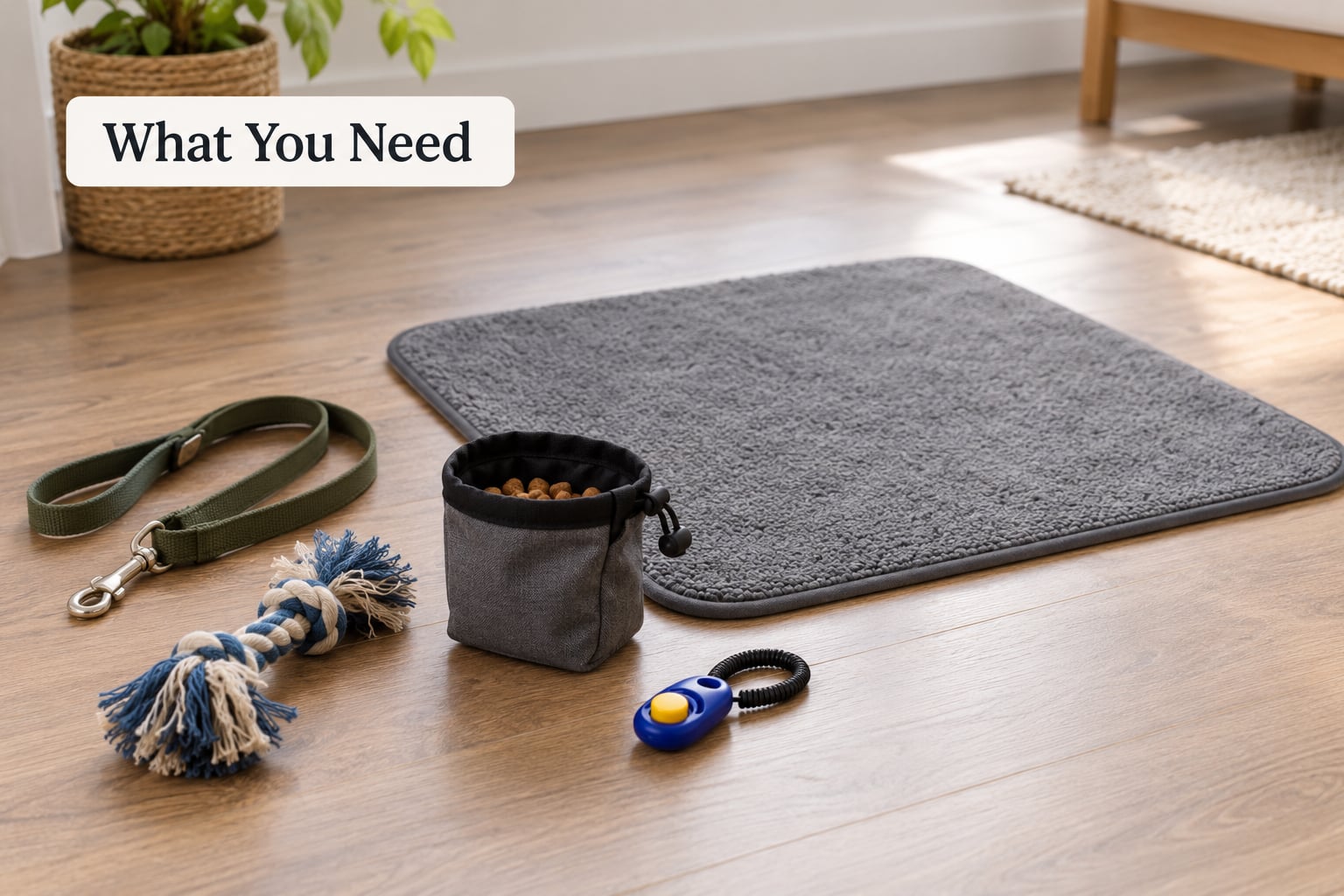
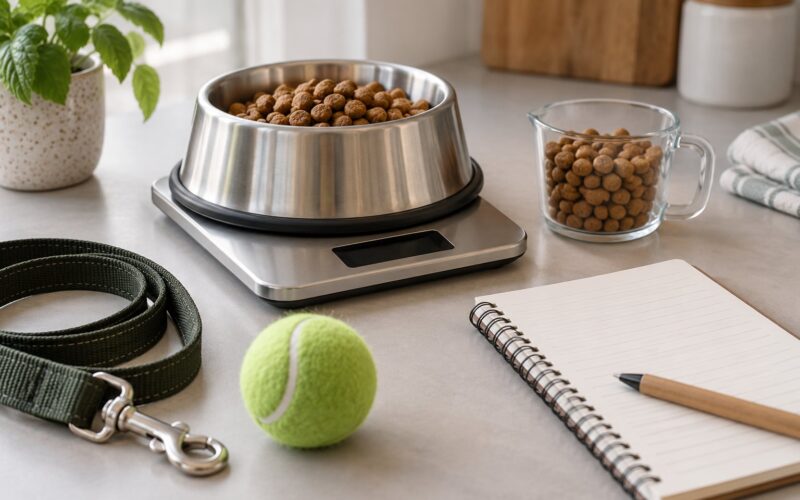
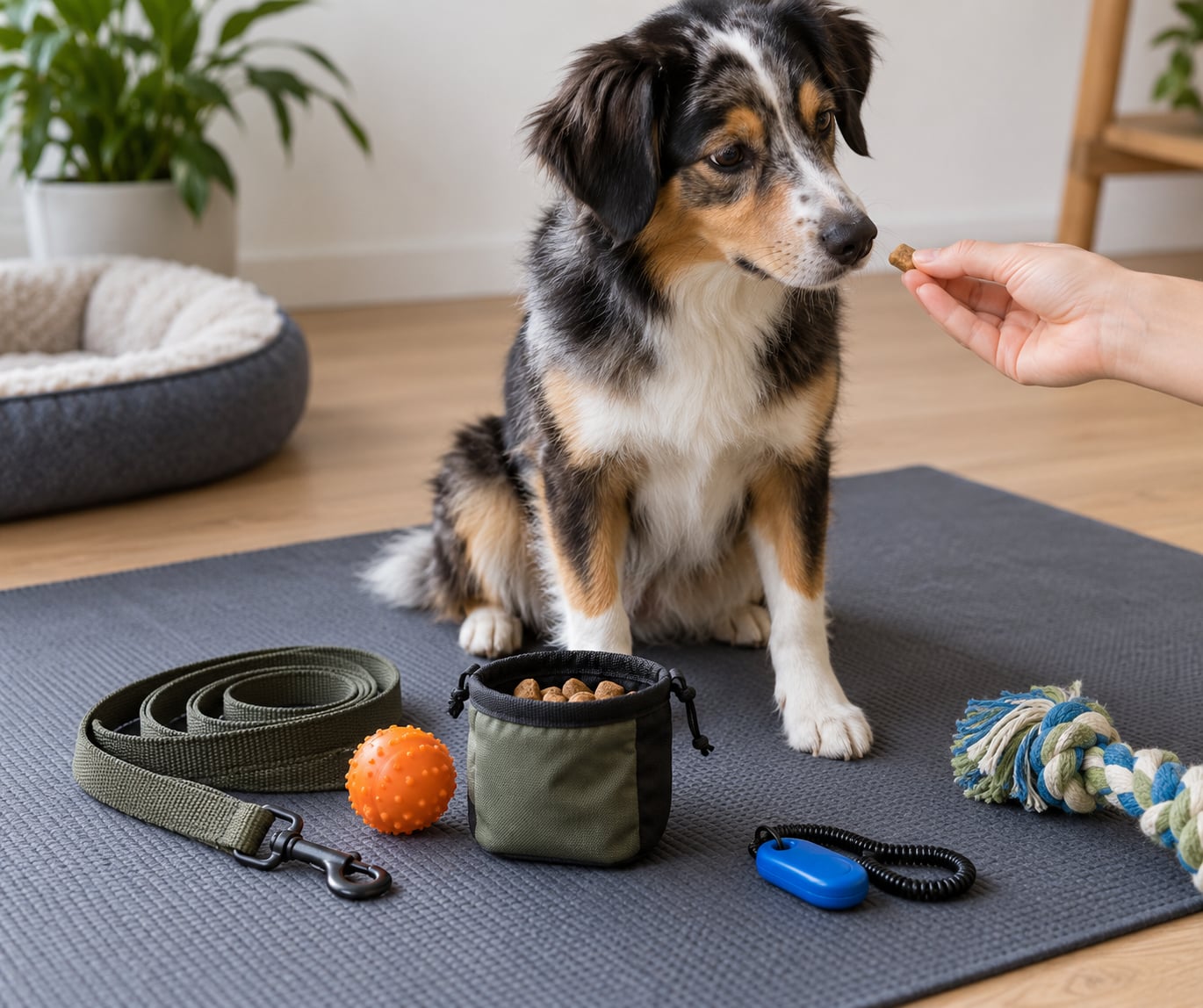
You need very little, and none of it is expensive. Here is the kit I keep next to the kitchen door.
Have 20 to 30 small, soft, high-value treats within reach. Cut-up cooked chicken, plain cooked liver, cheese, hot dog bits and dried jerky all work better than dry kibble, because the dog has to be motivated to give something up. Pea-sized pieces keep the session quick and avoid a dropped jaw.
Pick one toy your dog genuinely likes and a second one for trading. The second toy is not a luxury; it is how you pay a dog who is not food motivated, and it is how you return the toy so the game can go again.
A 6-foot leash gives you control without choking, and a long line lets you proof the skill outdoors later. A treat pouch on a belt keeps the treats out of sight, which matters more than most people expect, since a dog who can see food will not learn the word.
A clicker, or a marker word like “yes” if you are not ready for a clicker, tells your dog the exact moment the behaviour happened. It removes the timing problem when a dog releases the object and grabs the treat in the same movement.
Finally, use a quiet room with no other pets, no television and no people walking past for the first week. You will move to the garden and then the street later.
Step-by-Step
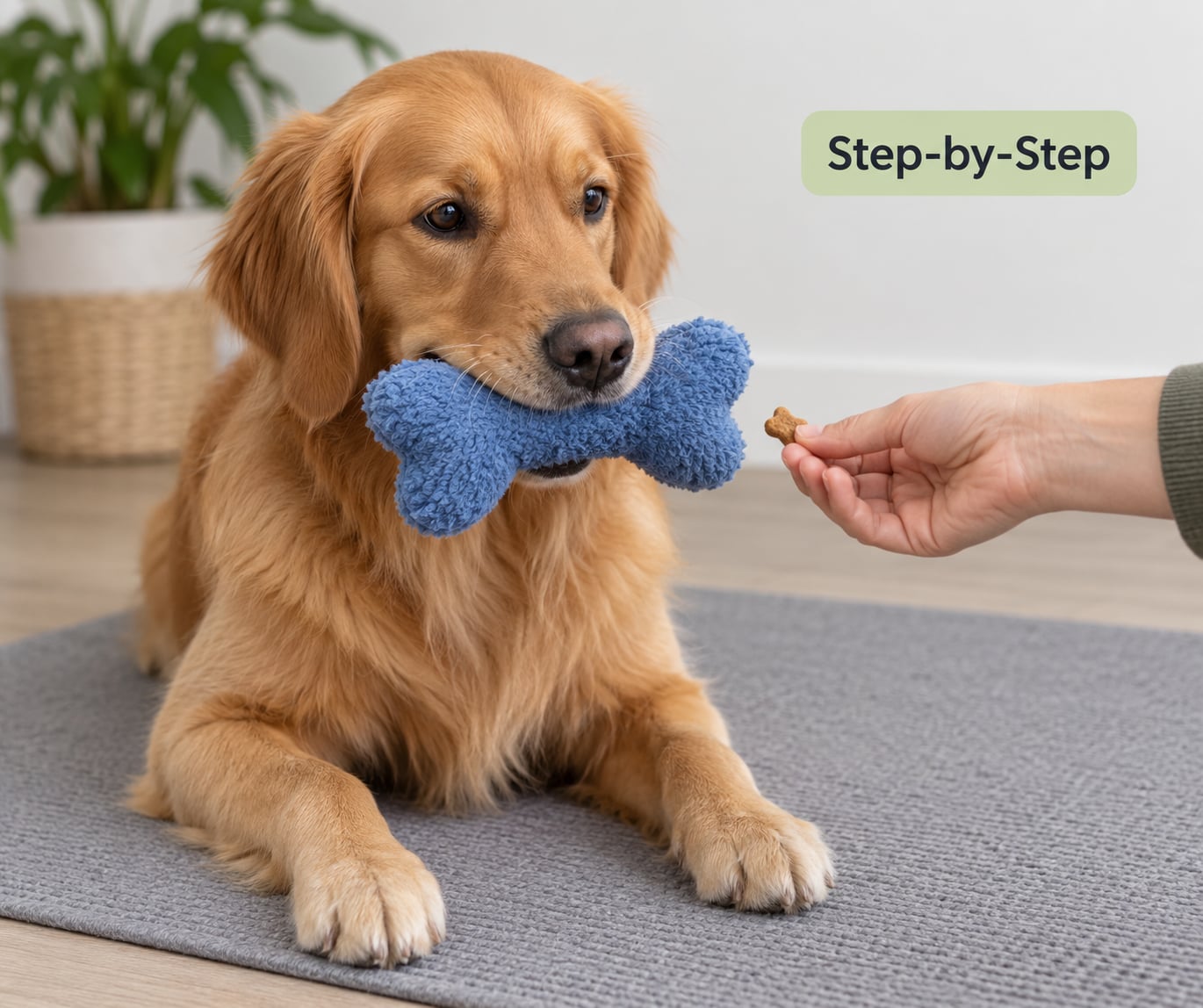
Work in this order, and do not skip ahead. The cue has to mean something before the dog needs it.
1. Condition the cue before the lure
Say the word “drop it” once, out loud, then scatter three or four treats on the floor. Say it again, scatter treats again. Repeat five or six times. Your dog is learning that the sound predicts food appearing, with no mouth and no toy involved.
How do you know it worked? On day two or three, say the word and your dog will look toward the floor where the treats land.
2. Build eye contact and a hand target
Hold a treat at your knee and wait. When your dog looks up, say “yes” and give it the treat. When they take it from your hand, say “yes” and give another. This is the hand target, and it is the foundation everything else uses, because a dog who will not engage with your hand cannot be taught a release.
3. Add the trade
Give your dog the toy. Once they are happily holding it, show a treat right at their nose. The moment the mouth opens and the toy drops, say “yes” and hand over the treat. Then pick the toy up and give it straight back, so the exchange costs your dog nothing and the toy is returned for another round.
Repeat ten times. You are looking for a fast release, ideally within two seconds of the treat appearing.
4. Put the word one second before the treat
This is the mechanic that fixes the most common complaint, which is a dog who drops the toy only while the treat is visible. Say “drop it”, wait a full second, then show the treat. That gap forces your dog to connect the word to the behaviour rather than to the sight of food. It feels too slow at first, and it is the single change that moves training forward.
5. Keep the toy in the game
Trade three or four times, then return the toy instead of taking it away. Owners who do this get repeat reps in one session. One rule: never return something your dog stole. If it came out of the bin or off the street, it goes in your pocket, and you trade it back later in a training game.
6. Teach leave it, which is a different job
Hold a treat low in your closed hand. When your dog sniffs it, let one drop to the floor and say “leave it”. As they move toward it, say “yes” and let them have it. Gradually show less of the treat, so the word is doing the work, not the bait. Once the dog steps back when your hand drops, add the cue word first and wait the same one second before the treat appears.
Then add a watch command. Ask for a “touch” on your hand or a “sit”, and reward that instead. Your dog needs an alternative behaviour to do, not just a prohibition.
7. Trade with toys and, if needed, freeze
For a dog who will not drop anything for food, hold a second toy out, shake it, and the dog will usually release so they can grab the better one. Tug owners use a freeze: play tug for a few seconds, hold the toy completely still, say the cue, and the dog releases because the game has paused. The still toy reads as paused, not over.
8. Raise the distraction in stages
Start with an empty room. Then work in a room with the television on, then in the garden, then outdoors on a long line near a pavement. Only add the next level when your dog is giving the release in three out of four tries at the current one. Two or three good repetitions end the session. A five-minute session where your dog wins is worth more than twenty minutes of repetition.
Common Mistakes
Almost every stuck dog is doing one of these things.
Chasing the dog to retrieve something. Running after a dog that grabbed an object turns the theft into a chase game, and the behaviour gets stronger. Instead, call the dog to you, reward the recall, ask for a trade, and pick the object up yourself.
Prying the mouth open. You risk a bite, and the dog learns to swallow faster, which is the opposite of what you want.
Saying the cue after the treat appears. The dog learns to respond to the food, not the word, and then ignores the word when the food is gone. Always cue, pause one second, then deliver.
Repeating the cue. Saying “drop it, drop it, drop it” teaches that the first one did not work and invites the dog to hold on longer. Say it once. If the dog does not drop, you are too far from the first rep, or the treat value is wrong.
Practising too long. Most dogs lose focus after three to five minutes and start making sloppy mistakes that you then reward. Short sessions, two or three a day, beat one long one.
Punishing after the fact. Scolding, grabbing at the collar or reaching for the item teaches a dog to hide objects, not to release them. Nothing in this method needs force.
Testing before the cue is reliable. Once your dog is dropping on the word four times out of five in a quiet room, then you try it in the park. If it is not reliable, keep the distance low and the environment quiet.
Rewarding barking, grabbing or rushing. If the dog grabs the object before you ask, drop your hands and wait. Reward the release, not the snatch.
Two habits keep the rest of the household consistent. Everyone who walks the dog uses the same words, and every session ends on a successful repetition while the dog is still enjoying itself.
Frequently Asked Questions
Can puppies learn to drop it and leave it?
Yes, and young puppies often learn this faster than older dogs because they are still in the chewing stage and practise constantly. Keep the sessions very short, three minutes at a time, and use tiny soft treats so a puppy does not fill up in four repetitions. A puppy under four months does not need to learn the distraction step yet; condition the word, trade a soft toy, and add the garden once the recall is holding.
How do I teach a dog to drop food or treats?
The same trade mechanic works, with more care. Say the cue, present a higher-value item at the nose, and when the food drops, mark and reward. The dropped treat is then yours. If the food is toxic, such as chocolate, grapes or anything sweetened with xylitol, do not reach for a treat trade. Use the emergency version: shout the cue once, call the dog to you, reward heavily for arriving, and take the item. Contact a veterinarian straight away if it is swallowed.
What if my dog will not release a toy?
Almost always the trade is not worth enough, or the release is being rewarded too late. Try three fixes in order: use a more valuable reward, deliver it one second after the cue so the word is doing the work, and mark at the exact instant the toy leaves the mouth. If your dog is not food motivated, shake a second toy in front of the nose or use the tug freeze, where you hold the toy completely still and the game stopping is the reward.
How long should I train drop it and leave it each day?
Two or three sessions of three to five minutes, most days of the week. That is enough for a puppy and enough for an adult dog, because repetitions matter more than minutes. Stop while your dog is still winning, not when it starts sighing. Expect a young dog to respond reliably in a quiet room within about a week and to hold that response in public places after several weeks of daily practice.
How do I stop my dog from picking up things during walks?
You cannot prevent the picking up, so train the release first and the avoidance second. Walk with a long line in quiet areas, let your dog pick up an object, then cue and trade it back. Add leave it on a closed-fist hand, waiting the one second before the treat. Over time, reward a glance at you rather than an automatic pickup. For roadsides, wildlife and bins, a long line does more work than any cue you can teach.
When should I get help for resource guarding?
Stop training yourself and call a qualified force-free trainer or behaviourist the moment your dog stiffens, freezes, growls, snaps or shows teeth over an object, or if guarding is new or worsening. Do not punish, wrestle or pry. Talk to your veterinarian first, since pain or a sudden behaviour change can cause guarding, and ask whether a referral to a veterinary behaviourist is appropriate.
Conclusion
Start tonight with the easiest part: sit down in a quiet room, say “drop it” and scatter a few treats on the floor. That is the whole first session, and it takes two minutes.
From there the path is short and always the same shape. Get a hand target, trade a treat or a second toy for the object, add the word one second before the reward, and only then add “leave it” with something better to do. Practice two or three times a day for a few minutes, raise the distraction slowly, and return training toys to the dog while keeping anything it stole.
If your dog guards an object, growls, freezes or shows teeth, stop and speak to a qualified force-free trainer or behaviourist, and check in with your veterinarian first, because sudden changes in behaviour can point to pain. That is the only situation in this whole method where a person with more experience should take over.