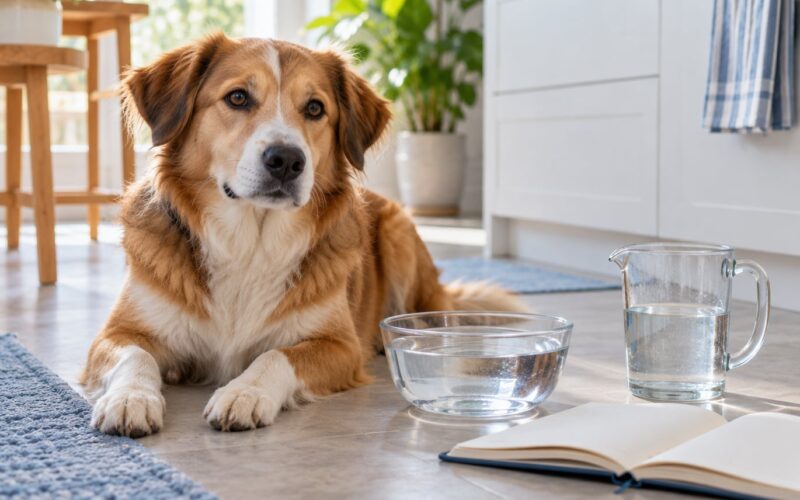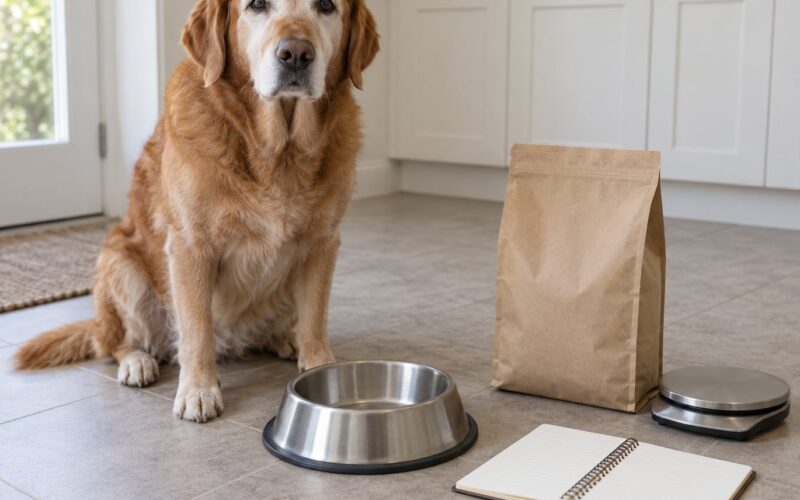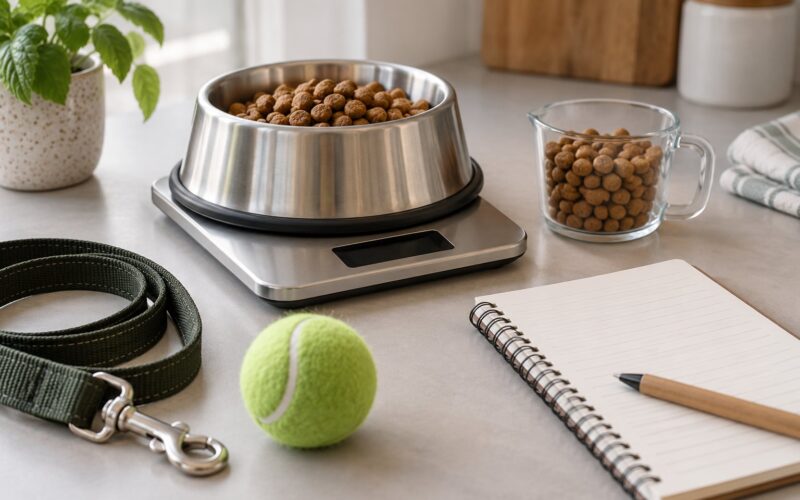
A dog that panics in the bath is usually reacting to slipping on a wet floor, the noise of running water and getting water in the face and ears, not to water itself. Learning how to bathe a dog that hates water comes down to removing one trigger at a time: traction underfoot, lukewarm water poured rather than sprayed, and a treat for every calm second.
A careful home bath takes 15 to 25 minutes once you are set up, plus about half an hour of prep beforehand. It is not physically hard, but it does ask for patience, and with a large or strong dog a second pair of hands makes the difference between a wash and a wrestling match.
Table of Contents
- What You Need
- Step-by-Step
- Prepare before the tub
- Let the dog investigate the bath area
- Introduce the water gradually
- Wash in small sections
- Rinse without startling the dog
- Dry slowly and offer a reward
- Bathing a large or strong dog on your own
- Common Mistakes
- Tips for making future baths easier
- Frequently Asked Questions
- What temperature water should I bathe a dog in?
- Why does my dog hate baths but like water?
- What do I do if my dog scratches or bites during the bath?
- How can I clean a dirty dog without water?
- How often should I bathe a dog that hates baths?
- How do I bathe a large dog that hates water when I am on my own?
- Conclusion
What You Need
None of this is exotic. Every item below exists to remove one specific reason a bath goes wrong, so gather everything before the dog comes near the room.
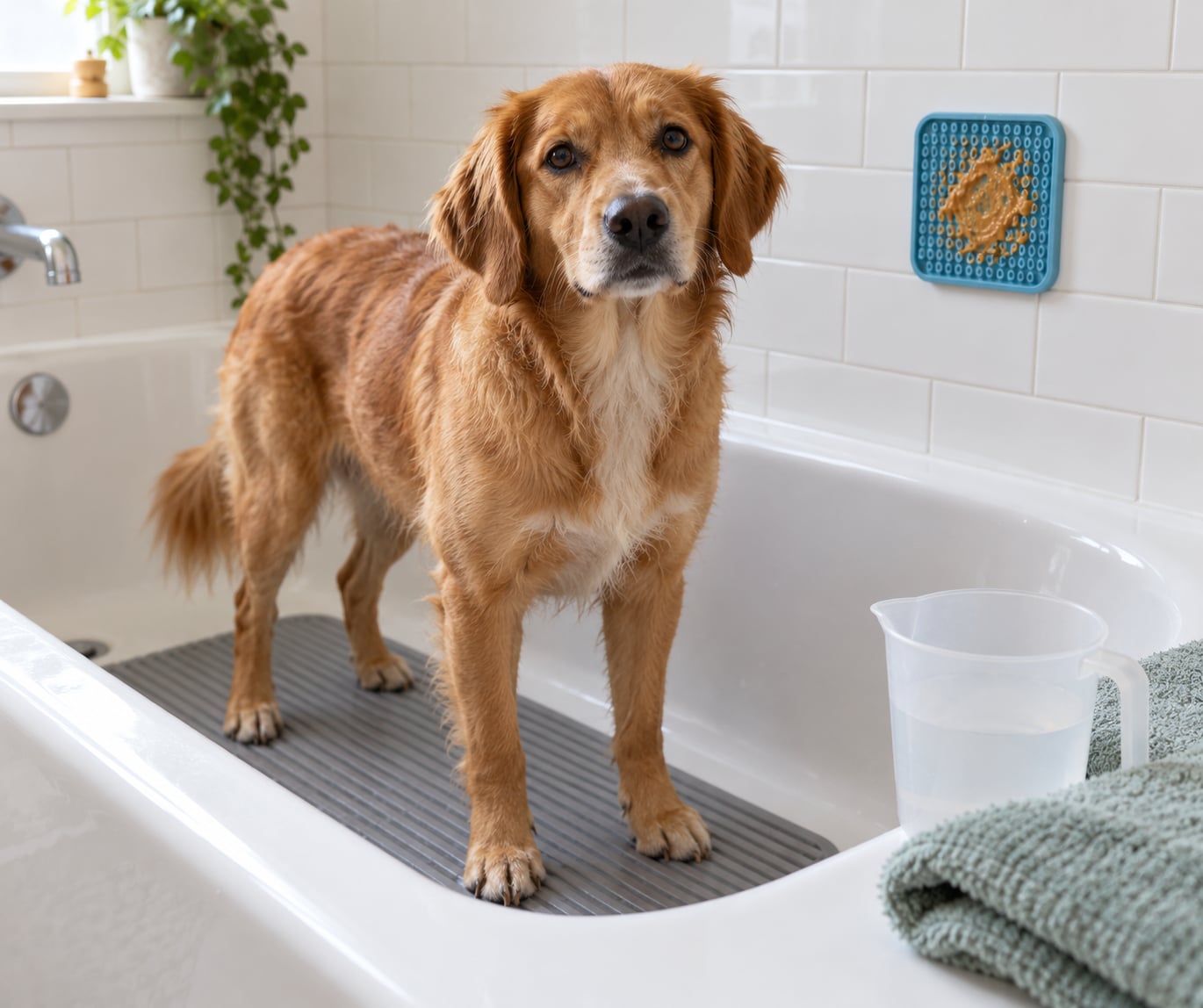
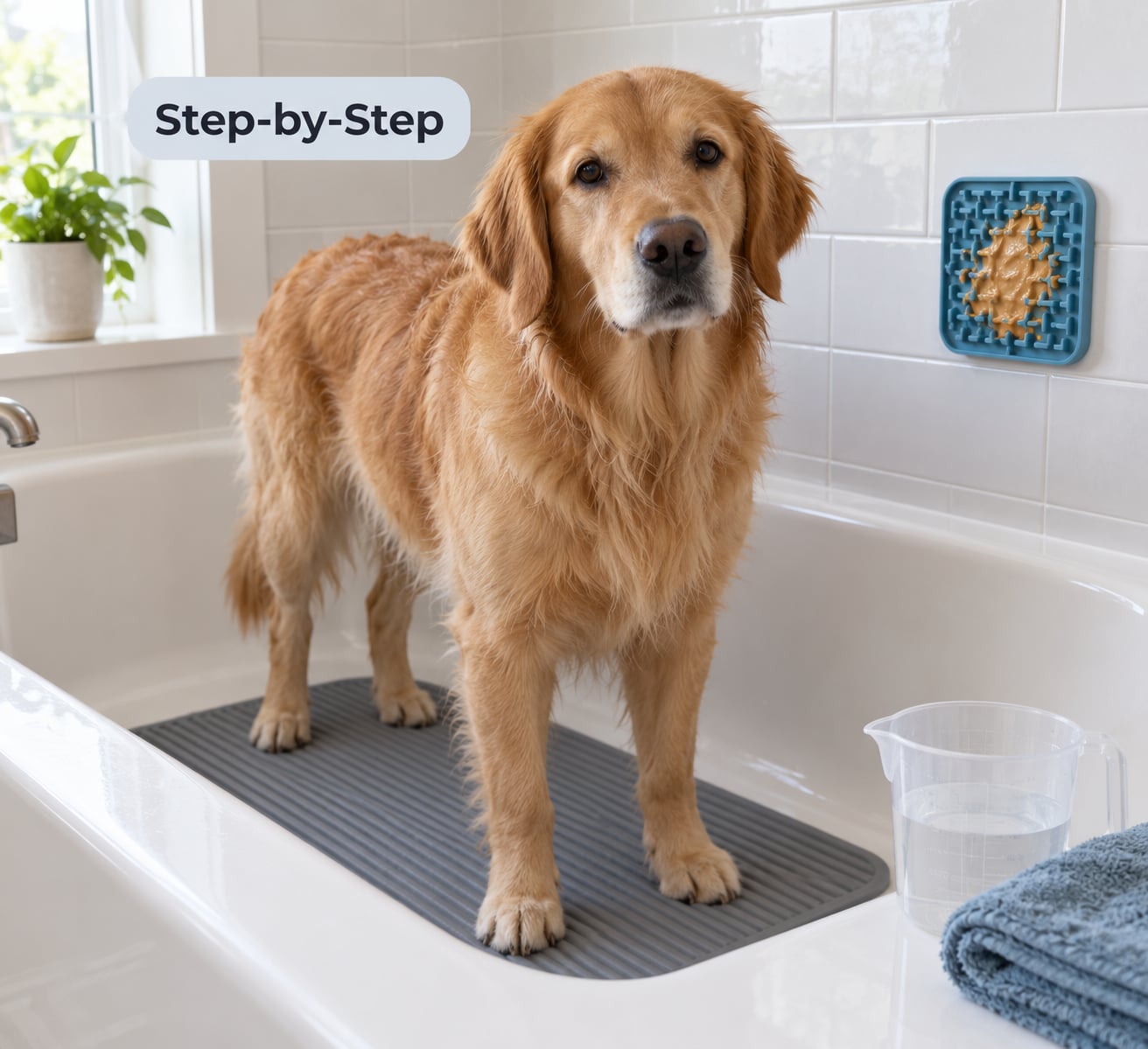
- Non-slip rubber mat. A plain porcelain or fiberglass tub floor is the single most common trigger. Owners consistently report the biggest change in behaviour once grippy matting is down. A bath mat for people is not enough; you want a ribbed rubber mat sized to the tub floor.
- Lukewarm water at about 100°F (38°C). Test it on the inside of your wrist, the way you would test a baby bottle. If it feels neutral rather than cool or hot, it is right.
- Dog shampoo, not human shampoo. Dog skin sits around pH 6.5 to 7.5 while human skin is roughly 4.5 to 5.5, so human shampoo is too acidic and leaves skin dry and itchy, which makes the next bath worse. Unscented formulas suit scent-sensitive dogs better.
- High-value treats. Cooked chicken, small bits of cheese or a lickable treat you reserve only for bath sessions. Ordinary kibble loses its power once the dog knows what is coming.
- Lick mat and a small bowl. Smear peanut butter on a lick mat stuck to the tub wall above the dog’s head height, or put a small bowl of food in the dry tub. Both keep the dog’s mouth and attention busy.
- Two absorbent microfiber towels. You blot with them, never rub. Rubbing tangles a wet double coat and the dog feels the pulling long after you are done.
- Handheld low-pressure sprayer, plus a cup or ladle. You will use the cup far more than the hose. Water poured from a cup is quiet and controllable; a hose is loud and aimed at a face.
- Cotton balls and a soft washcloth. Cotton balls sit loosely in the ear canals so water does not travel down them. The washcloth handles the face, muzzle and paws.
- Slicker brush or comb. Brushing out tangles beforehand prevents matting that tightens in water.
- Low, warm dryer (optional). Only if your dog already tolerates the sound. If the dryer is new, skip it and towel-dry instead.
Step-by-Step
Prepare before the tub
Take the dog for a brisk walk first. Pent-up energy turns a bath into a fight, and a tired dog with a full bladder is a dog that can hold still.
Brush out any tangles, lay the non-slip mat in the dry tub, and place the towels, shampoo, cup and treats where you can reach them without turning around. Fill the tub only a few inches deep and leave the tap off. If you fill it and switch the water on, the sound and the sight of a full tub are already a warning.
How do you know it worked: the dog enters the bathroom and pauses instead of heading for the door.
Let the dog investigate the bath area
Walk into the bathroom, sit down, and ignore the dog. Toss a treat onto the floor near the tub, then a second one closer, then one inside the tub. Let the sniff, step in, step back out. It helps to feed the whole meal in the room, in pieces, over a few days, before you ever turn a tap on.
Never lift or push the dog in. Being carried into a body of water is how most bath fear starts, and one forced entry can undo weeks of patient work.
Signs it is working: the dog lies down in the tub, or settles to eat there without looking back at the exit.
Introduce the water gradually
With the dog standing in the tub, dip the cup in and let a little water hit your hand first so it can hear the trickle before anything lands on it. Then wet one back paw. Pause and reward. Move to the other paw, then up the legs, then the chest, and leave the back and head for later.
Keep the water volume low and the pressure gentle. If you have a sprayer, hold it under the body and let the water run down the coat rather than aiming across the coat.
Signs it is working: the dog still accepts treats and can take food while water is running. If the dog stops eating, freezes, or leans away, you have gone past the point where learning happens. Back off one step and stay there for several sessions.
Wash in small sections
Put the shampoo in your hands and lather it first, then work it into one area at a time: a shoulder, the belly, one flank. Massage down to the skin rather than scrubbing the coat.
Avoid the eyes, ears and face unless the dog is genuinely dirty there, and use the damp washcloth with a little shampoo for the muzzle and paws instead. If your dog has skin folds, a collar or long double fur, wipe those areas dry right after the wash; trapped moisture is what leads to yeast infections and hot spots.
Signs it is working: the dog shifts its weight but keeps eating, and does not thrash when you touch a new area.
Rinse without startling the dog
Rinse with the cup first, working down the coat with one hand so the dog feels where the water is coming from. Use the sprayer only for the coat, low pressure, never over the head. Squeeze the fur down and let the water run out instead of rinsing right into the face.
Check for shampoo by running a hand along the coat and looking for suds or a slimy feel. Leftover residue is one of the most common reasons a dog scratches for days after a bath, and that itching teaches the dog that baths are bad.
Wipe between the toes and inside the ears with the damp cloth, and dry the ear flaps rather than pushing anything into the canal.
Dry slowly and offer a reward
Lift the towel and press it into the coat, then change to a dry section. Blotting removes far more water in one pass than rubbing does, and rubbing is what creates tangles and sore skin.
Use a dryer only if the sound is already familiar: lowest heat, cool-to-warm, kept moving, and aimed at the coat from a distance. Double-coated dogs such as huskies, retrievers and shepherds can need 20 to 40 minutes to dry fully, so work section by section while they dry.
End every session on something good: praise, a treat, a game of chase in the yard. A lot of dogs get their best recall and their happiest zoomies right after a bath, and that memory does more for next time than anything you do during the wash.
Bathing a large or strong dog on your own
If the dog weighs more than you can lift safely and you are alone, do not attempt it alone. Many owners describe a second person as the difference between a clean dog and an injured one, and a fall in a wet bathroom injures humans more often than dogs.
A grooming restraint, a well-fitted harness that you can grip, or a helper holding the lead low and short gives you both hands free. Offer a muzzle as a conditioned reward, not as punishment, and train it separately with treats so it is not a signal that the bath is starting.
If nobody is available, book a professional rather than improvising. Fear-free certified groomers are trained for exactly this dog.
Common Mistakes
Almost every bad bath comes down to one of these seven. Each has a simple correction.
- Starting at the face. Water in the eyes, nose and ears is the single most common panic trigger. Start at the back of the body and work forward, saving the head for last, if at all.
- Bathing on a slippery floor. No mat means slipping, and slipping means injury and panic. Fix the floor before you fix anything else.
- Spraying the dog directly. A hose aimed at the body sounds and feels like an attack. Use a cup, and if you use a hose, hold it low and let water run down the coat.
- Forcing a nervous dog. Dragging, holding down or lifting a dog into the tub teaches the dog that your hands are dangerous. It makes the next bath harder and the one after that harder still.
- Using human shampoo. Wrong pH leaves skin dry and itchy. Use a shampoo formulated for canine skin and skip essential oils on the coat unless your vet recommends one.
- Combining baths with nail trims or ear cleaning. If your dog learns that the bathroom means restraint, you have removed every good association you built.
- Rushing the dry. Damp skin under a thick coat leads to itching, yeast and hot spots. If you cannot get the dog fully dry, wash a smaller area instead of a whole body.
Tips for making future baths easier
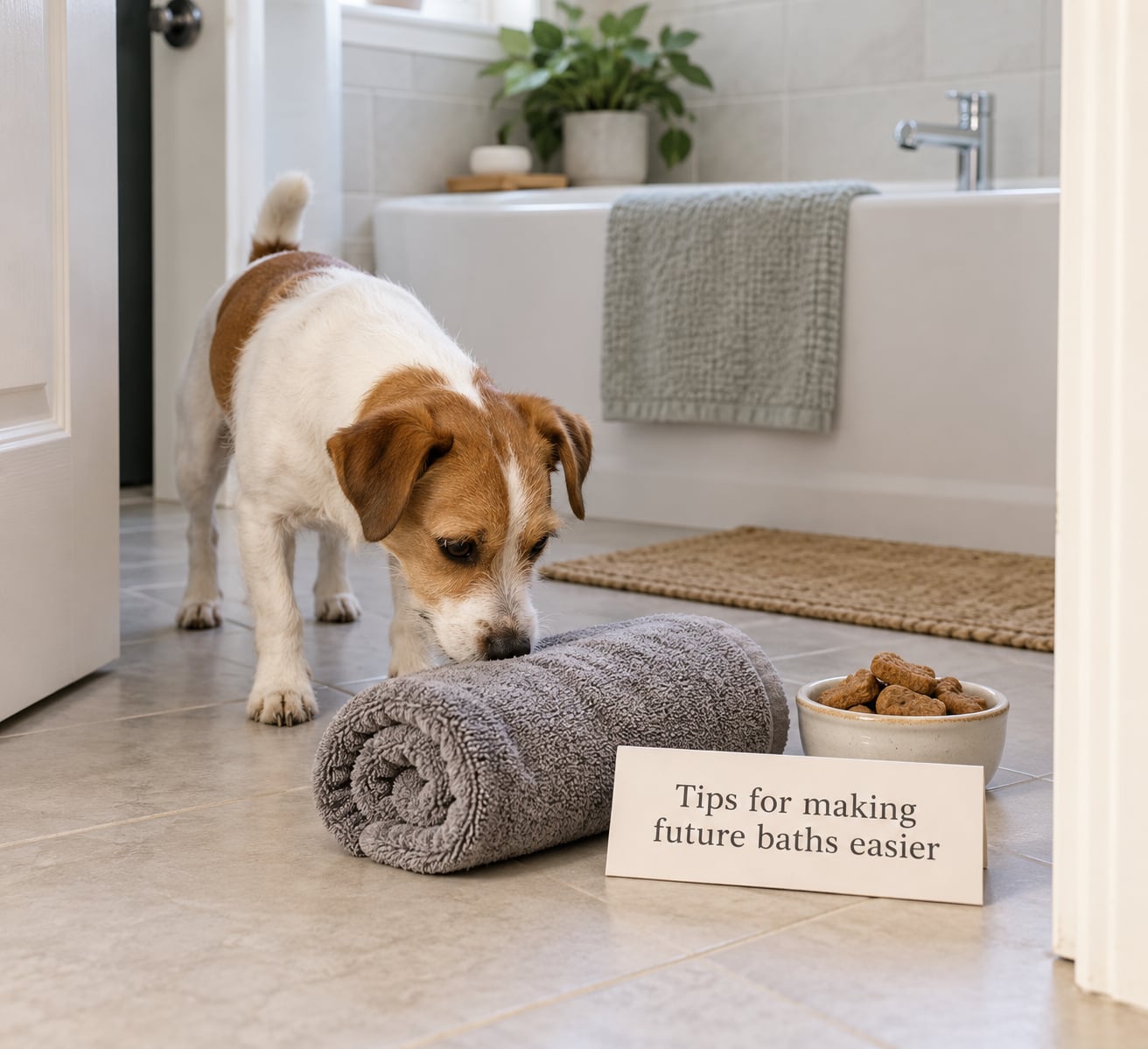
Desensitization is the part that actually fixes the problem, and it is slow in a way that surprises people. Aim for four to six weeks of short, boring sessions rather than one heroic bath every two months.
A simple ladder: in week one, feed meals in the bathroom with the tap closed. In week two, feed on the dry non-slip mat in the tub. In week three, run the tap in another room and toss treats into the bathroom while it runs. In week four, be in the bathroom with the tap running and the dog eating on the floor. In week five, wet one paw. In week six, do a full paw and leg wash. Hold each stage for several days longer if your dog is still tense; there is no prize for rushing up the ladder.
Between baths, keep the associations alive. Put a lick mat on the bathroom floor, practice touching and drying one paw with a towel, and let the dog nap there once the room becomes boring rather than frightening.
If progress stalls after several weeks, stop adding water and go back to the stage the dog handled calmly. Many owners hit a flat patch at the point where water first touches the coat; the wall there is usually sound and sensation, not volume, so return to the sounds for another round.
Some situations need professional help. Call a veterinarian if the water fear appeared suddenly, comes with pain, limping, skin sores, scratching, ear scratching, a foul smell or hair loss, or if your dog is suddenly avoiding being touched anywhere. Those signs point at a medical problem that bathing will not fix and may make worse. A veterinary behaviourist or a fear-free certified groomer is the right call when the dog bites, scrambles dangerously, panics at the sound of the tap alone, or has been frightened or mistreated before.
A few coat and season notes. Double coats take far longer to dry and hold more water than you expect. Dry winter air flatters a coat but leaves skin prone to flaking, so rinse and moisturise well. After a lake or beach swim, rinse salt or algae off even if you skipped the bath at home, and dry between the toes.
Regulate yourself too. Owners who are anxious transmit it within seconds, and a dog that has learned to watch your body language reads that as danger. Breathe slowly, keep your voice flat and boring, and stop the session at calm rather than pushing toward completion.
Frequently Asked Questions
What temperature water should I bathe a dog in?
Aim for lukewarm water, about 100u0026deg;F (38u0026deg;C), and test it on the inside of your wrist before the dog goes anywhere near it. It should feel neutral, not cool and not hot. Cold water makes many anxious dogs tense and shivers, while hot water strips oils, irritates skin and can scald thin-skinned or senior dogs. If you want a number rather than a guess, an inexpensive bath thermometer will confirm it.
Why does my dog hate baths but like water?
Most dogs that play in water are not afraid of water itself, they are afraid of the bath around it. Splashing happens on their terms outdoors, but a bath means being trapped, handled, soaked and unable to escape, often on a slippery floor with loud water running. Once those elements are removed, plenty of water-loving dogs settle quickly. Treating it as fear of handling rather than fear of water is what makes the gradual approach work.
What do I do if my dog scratches or bites during the bath?
Stop immediately. Do not wrestle, and do not punish, because a fight tells the dog that hands are dangerous and makes the fear stronger. Exit the room, let the dog settle, then return to a much earlier stage of the ladder with treats only. Use a grooming restraint or grooming loop so you are not using your hands to hold them, and arrange a second person or a professional groomer. Any bite, even a small one, deserves a conversation with your vet about behaviour support.
How can I clean a dirty dog without water?
A damp washcloth with a no-rinse dog shampoo handles muddy legs, a grubby face and most everyday dirt. A dry shampoo foam or bath mitt works well for absorbing oil and odour between washes, though it mostly deodorises rather than cleans. Pet wipes are quick but leave residue if used repeatedly. Coconut oil on a cloth lifts sticky messes such as vomit or faeces. None of these replace a full bath forever, but they buy you weeks while you build confidence.
How often should I bathe a dog that hates baths?
For most healthy adult dogs, every two to three months is plenty, unless they roll in something or have a double coat that needs regular flushing. Bathing a water-fearing dog more often than that makes the fear grow faster than the dirt does. Spot cleaning between full baths stretches the interval comfortably. Ask your vet for a schedule if your dog has allergies, a yeast infection, oily skin or a breed that needs frequent washing, since medical skin conditions change the answer.
How do I bathe a large dog that hates water when I am on my own?
Do not try to lift a large dog into a tub alone; back injuries and wet-floor falls are the real danger here. Put the non-slip mat down first, use a grippy grooming harness or grooming restraint to hold the dog safely, and keep the tub shallow with a cup instead of a hose. If you have nobody to help, book a professional groomer experienced with fearful dogs. They have the equipment and the second pair of hands that a home bath with a strong dog requires.
Conclusion
Start with the space, not the dog. Lay down a rubber mat, gather your supplies within reach, leave the tap off and reward your dog for calmly walking into the bathroom and standing in a dry tub. Then add one back paw of lukewarm water, keep the pressure low and the noise minimal, and reward the calm rather than the activity.
Add a little more at each session until a full bath takes five minutes of actual washing. If the fear stops improving after several weeks, step back down the ladder and give your vet a call, because pain and skin problems look a lot like bath anxiety at the start. The whole thing gets easier, but only if every bath ends before the dog wants to run.