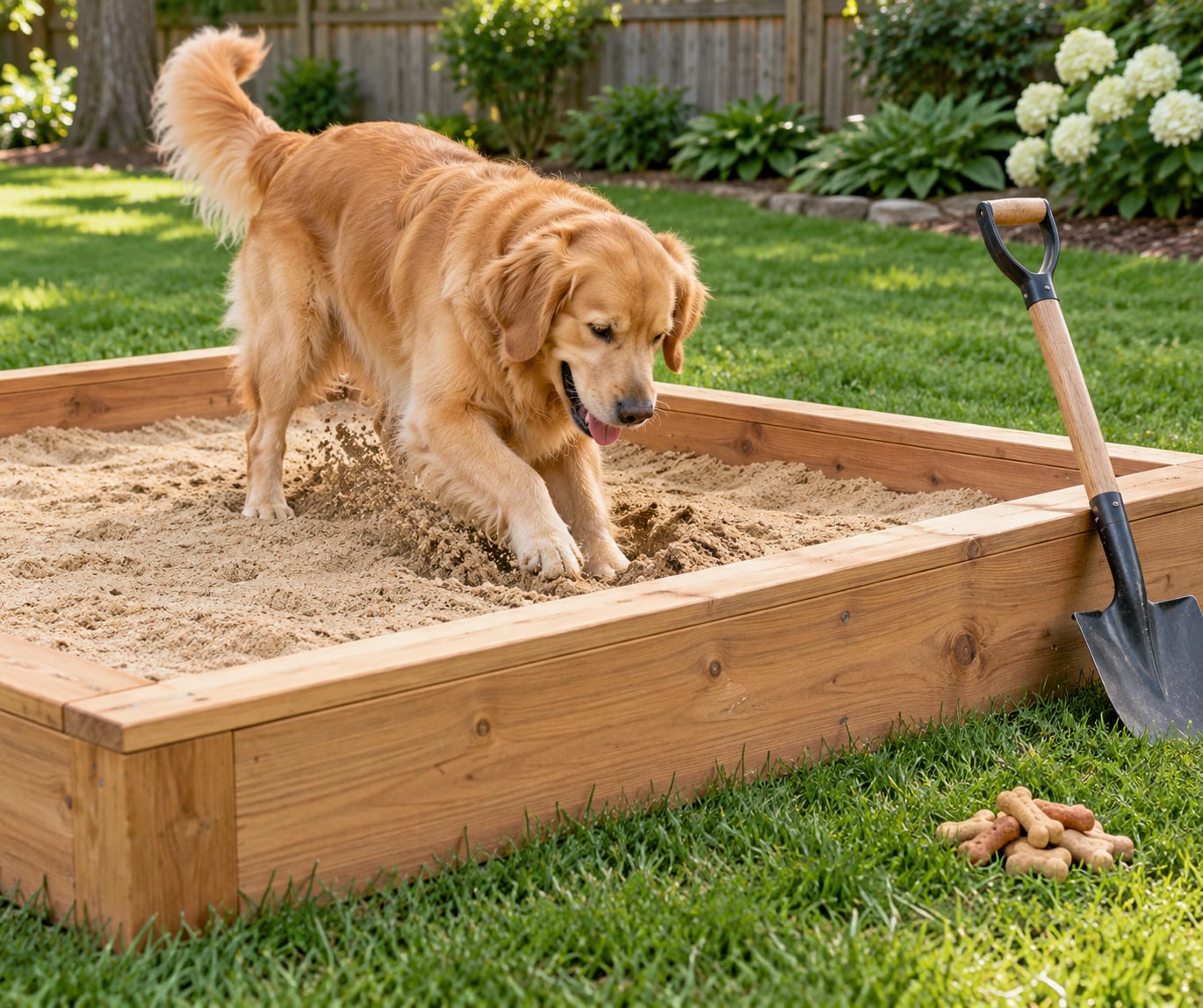
To stop a dog from digging in the yard, you first work out what is driving the behavior, then either give that drive somewhere acceptable to go or make the digging spot unrewarding. Punishment almost never works, because by the time you spot the hole your dog has no idea what you are upset about.
With a consistent plan, most dogs improve within two to four weeks. Here is the order that works: read the signs, interrupt the dig calmly, build a digging pit your dog is allowed to use, tire the dog out properly, and then protect the parts of the yard you care about.
Table of Contents
- What You Need
- Step-by-Step: How to Stop a Dog From Digging in the Yard
- Step 1: Figure Out Why Your Dog Is Digging
- Step 2: Interrupt the Digging Without Punishment
- Step 3: Redirect to a Digging Area
- Step 4: Meet Your Dog’s Exercise and Enrichment Needs
- Step 5: Protect the Yard and Stop the Habit Returning
- Common Mistakes
- Frequently Asked Questions
- How do I stop a puppy from digging in the yard?
- Why is my adult dog suddenly digging more than usual?
- Should I punish my dog for digging?
- How long does it take to stop a dog from digging?
- What can I put on the soil to stop my dog from digging?
- When should I call a vet about my dog’s digging?
- Conclusion
What You Need
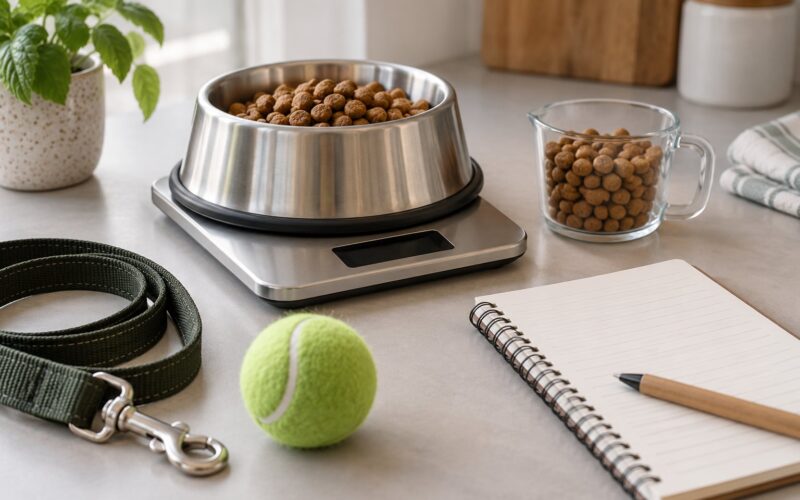
None of this needs a specialist or an expensive gadget. You need a few ordinary items and about ten minutes of attention every day for a couple of weeks.
- A long line (15 to 30 feet of rope or a fixed-length outdoor lead) so you can keep the dog with you in the yard without clipping them to a tree.
- A treat pouch or a bucket of small training treats you can reach with one hand while the other hand holds the leash.
- A spade, a bucket and cedar or redwood planks if you are building a digging area rather than a sandbox frame.
- Play sand or screened topsoil, about 6 to 10 inches of fill for the dig area.
- Pavers, flat gravel or chicken wire for the one or two hot spots you are not willing to give up.
- A garden hose or sprinkler for a safe, immediate interruption.
- A note on your phone or a notebook to log when and where the digging happens.
That last item matters more than people expect. Two days of notes tells you whether the digging is boredom, escape or prey drive, and those three need completely different fixes. Guessing usually means fixing the wrong thing for a month.
Step-by-Step: How to Stop a Dog From Digging in the Yard
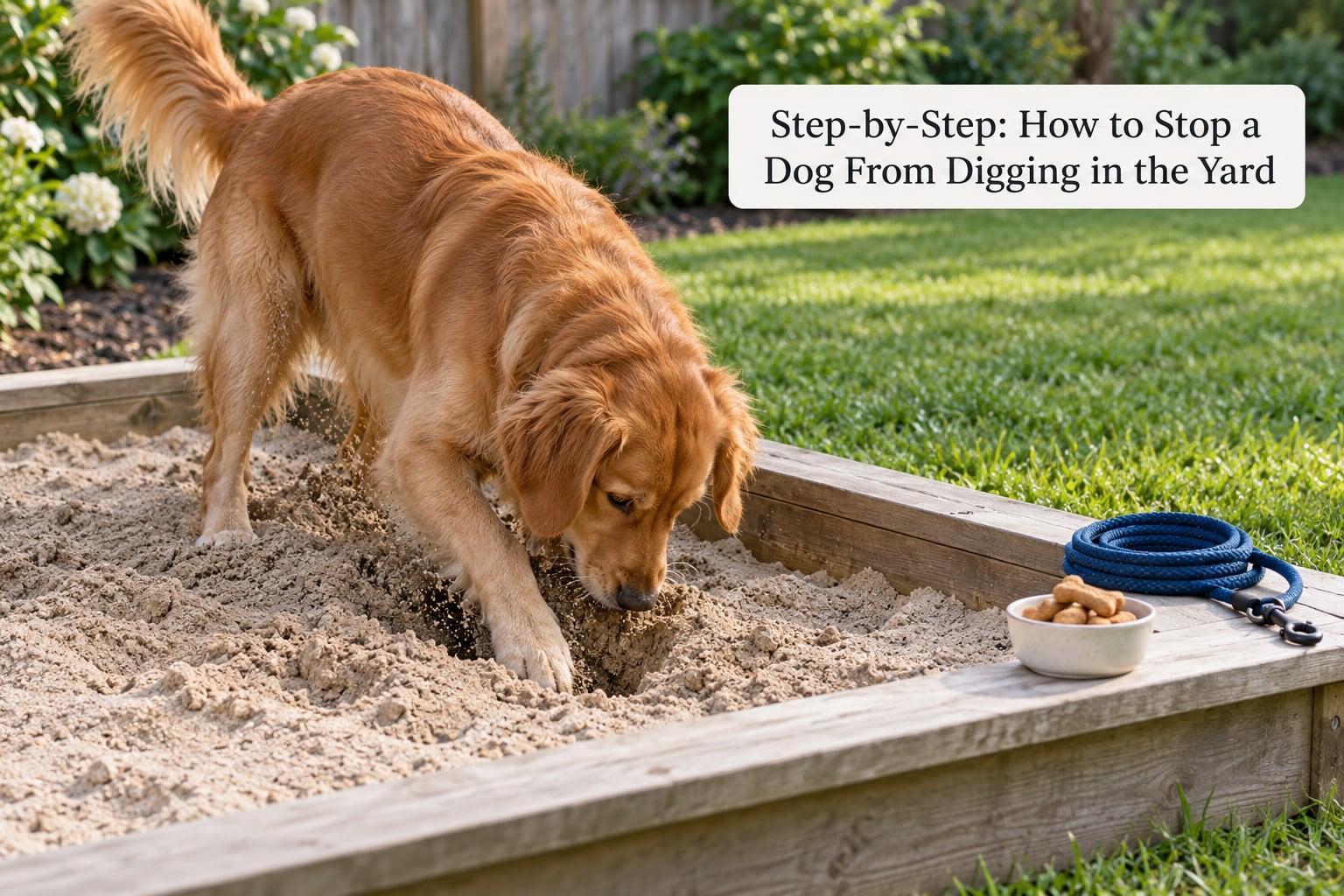
Digging is instinct, not defiance. A dog that digs is doing something that has worked for thousands of years, so the goal is redirection rather than obedience. The plan below works when the whole household follows it and when you expect progress in weeks, not days.
Step 1: Figure Out Why Your Dog Is Digging
Watch where the digging happens, and when. Your dog is telling you the reason every single time, and the reason decides the fix.
- Boredom or excess energy: digging starts the moment you go inside, after long spells alone, or right after a walk. The fix is a digging area plus more sniffing and mental work.
- Prey drive: the dog digs in one specific spot with its nose down and ears forward, often along mole tunnels or a fence line. The fix is covering that ground and giving the dog something scent-driven to do instead.
- Escape: digging happens at the fence line, usually when nobody is watching. Treat this as a safety problem first, not a training problem.
- Cooling down: digging in full sun or straight after exercise in warm weather. Cool soil is genuinely useful to a hot dog, so offer shade, water and a dig area in a shadier corner.
- Burying food: digging near where you keep treats, or repeating in the same spot over and over. Keep food indoors, and scatter feed meals on the lawn instead of using a bowl.
- Anxiety or stress: digging begins when you leave, after visitors arrive, or whenever the dog is left with another dog it does not like. This is a veterinary and behavior conversation, not a sterner-owner conversation.
- Fresh soil: newly seeded grass, new mulch or fresh fertilizer is magnetic. That is a landscaping fix, and chicken wire under the sod solves it faster than any training.
Most dogs show two of these at once. A busy terrier digging at the fence on a hot afternoon is chasing something and trying to get cool, and the fix has to cover both.
Step 2: Interrupt the Digging Without Punishment
Walk calmly to the dog, say no once in a flat voice, and lead the dog away by the collar or harness. No shouting, no grabbing the paws, no pointing at the hole afterwards. The dog cannot connect a scolding to a hole it dug four minutes ago, so the message lands on nothing and the trust takes the damage.
A hose or a sprinkler works well as a mild interruption. Turn the water on as you walk over, let the dog find it mildly unpleasant, then praise the moment they move off the spot. Owners on training forums rate this the most reliable in-the-moment technique, and it is the one worth trying first.
You know it worked when the dog leaves the spot within a few seconds and looks at you instead of looking back down. If the dog keeps digging, you are too far away or too late, so get closer sooner next time.
Step 3: Redirect to a Digging Area
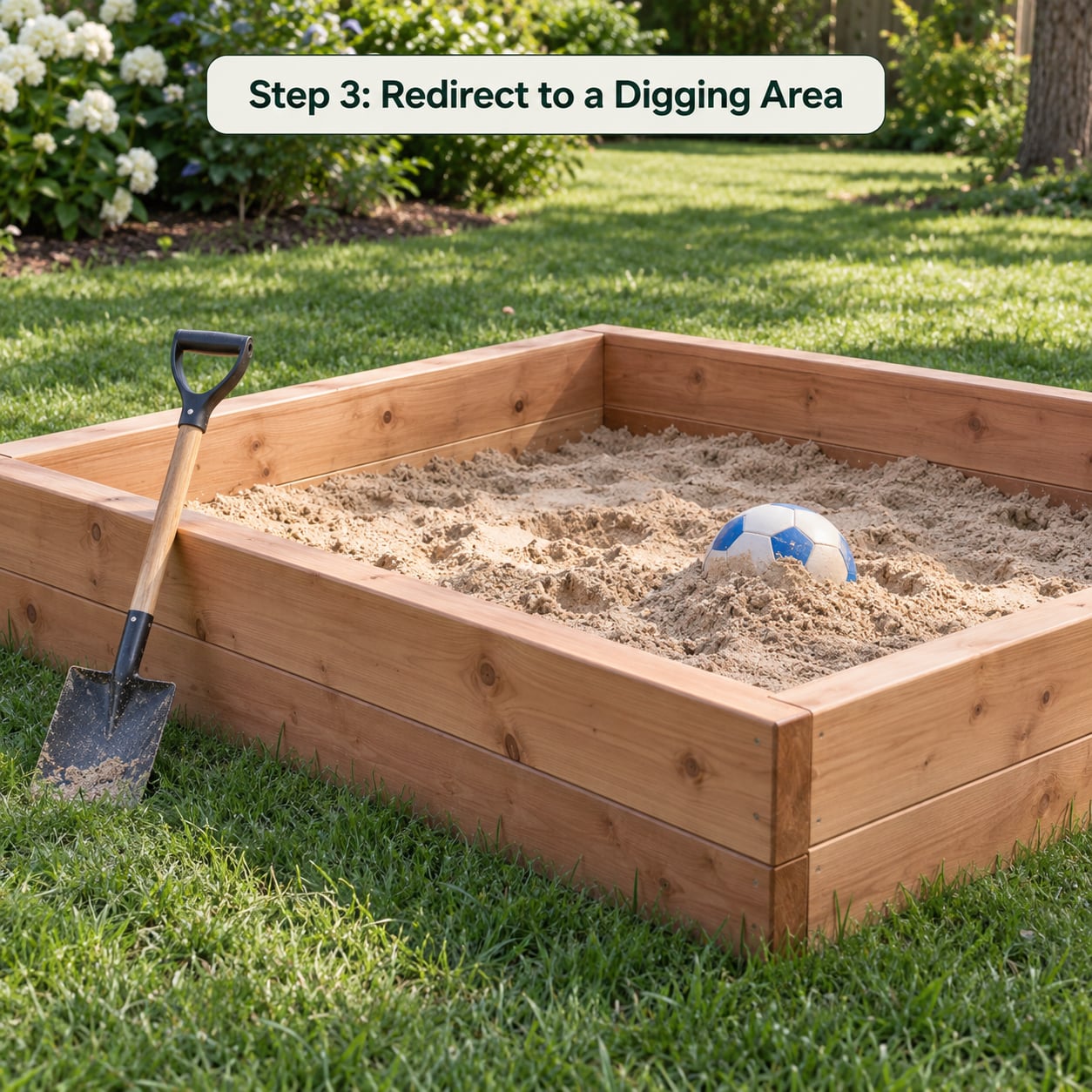
This is the single most effective change most owners make, and it works because the digging drive still gets an outlet. Build the area in a corner away from plants, irrigation lines and the path you walk to the door.
- Clear an area roughly 3 by 4 feet and frame it with cedar or redwood planks so the edges stay visible.
- Excavate about 10 to 12 inches and add roughly 6 inches of play sand or screened topsoil. Loose fill is the point, since packed soil does not feel worth digging.
- Bury a favorite toy and a few high-value treats, then let the dog dig while you sit close by. Cheer and let it finish without interruption.
- Use the area for at least a week with someone watching every single session. Then step back a little at a time until you are only nearby.
- Drop a ball or a tug toy into the area regularly so it stays interesting, and refresh the buried treats when the digging there slows down.
If your dog digs at the fence, put the digging area right on that fence line. You are not training the behavior out of the dog, you are moving it two feet over and giving it a better version of the same game.
Step 4: Meet Your Dog’s Exercise and Enrichment Needs
A genuinely tired dog digs far less, and this is where owners get the biggest return. A sniff walk where the dog spends ten minutes investigating one hedge beats a fast walk that covers the block twice.
Other options that work: scatter feeding, which spreads a meal across the lawn and keeps the dog busy and self-directed; a stuffed and frozen Kong or similar puzzle toy for the hours you are at work; a puzzle feeder for meals indoors; and two or three minutes of training such as a reliable recall and a leave it. Rotating the activity matters more than making any one of them fancy.
Puppies are a special case. They dig because they are exploring and because it soothes sore gums, so expect more of it, keep sessions short, offer a frozen chew at the same time, and keep sessions in a puppy-safe part of the yard. An eight-week-old puppy digging a hole in ten minutes is not being naughty.
Step 5: Protect the Yard and Stop the Habit Returning
Some areas are not negotiable, and those get physical. Lay chicken wire flat under the sod or the new seed with the ends turned upward, cover flower beds with pavers or flat gravel, and move any compost pile, fertilizer bag or buried treat cache out of reach. Along a fence, bury wire in a trench or add a solid kickboard down to soil level, because digging under a fence means a lost or injured dog, and that is the one problem on this list worth solving today.
Home deterrents are popular, so here is the honest version. Coffee grounds give a bitter smell and owners report mixed results. Vinegar diluted heavily works for some dogs but will burn grass if you use it straight. Citrus peels smell unappealing to many dogs. Anything spicy, including cayenne and chili, is not worth the risk because it can irritate paws and stomach. Commercial deterrent sprays are the most consistent option of the group, though they fade in the rain.
The part nobody tells you: deterrents move the digging rather than stop it, and that is the most repeated complaint on dog training forums. Your dog will dig ten inches to the side and start again. So treat every deterrent as a temporary patch on one spot and put your effort into the digging area and the daily exercise instead.
Once the holes exist, repair them properly. Fill with topsoil, press in a piece of sod, and water it. For a seeded patch, cover the seed with straw and keep the dog off it until the grass is up, otherwise you are starting over every week.
Common Mistakes
Scolding after the fact. By the time you find the hole, the digging is over and the connection is gone. Interrupt during the dig, or prevent the dig entirely.
Allowing it one day and stopping it the next. Every allowed dig teaches the dog that the yard is available. Everyone in the house, including visitors, needs the same rule, or the dog will find the person who does not have one.
Rewarding the wrong behavior. If you call your dog back while it is digging and then let it carry on at the hole, you have just paid it for digging. The recall only works if the dog leaves the spot when you call it.
Punishing hard. Yelling, shaking, pushing the dog into the hole or filling the hole with waste makes the yard a stressful place without teaching anything. It can also turn a curious dog into an anxious one that digs harder.
Never cleaning up the holes. An open hole is an invitation. Fill, water and press them down until the surface is level, and a dog with a full yard usually moves on.
Expecting a single fix to work in a day. Two to four weeks of consistency is normal. Digging that intensifies after two weeks of effort usually means the exercise is too short or the household is inconsistent, not that the method is wrong.
In a multi-dog home, watch which dog starts first, since one digger triggers the rest. Supervise the first dog, and separate the others during the correction part of the session so nobody learns that digging brings the whole pack together.
Frequently Asked Questions
How do I stop a puppy from digging in the yard?
Puppies dig because they explore and because digging soothes sore gums, so manage it rather than punish it. Keep a puppy on a long line in the yard, build a small sand area they are allowed to dig in, bury a treat there often, and praise them for using it. Puppies under one year need short sessions, extra exercise, and a frozen chew at the same time you are training.
Why is my adult dog suddenly digging more than usual?
A change in an adult dog points at a change in circumstances: more hours alone, less exercise, a new dog or new neighbors, anxiety, or soil that was just reseeded or freshly mulched. If the digging appeared out of nowhere and is intense, that is worth a call to your vet, particularly if your dog also seems restless, loses appetite, or is licking itself more than usual.
Should I punish my dog for digging?
No. Your dog cannot connect a scolding to a hole it dug minutes earlier, so punishment teaches nothing and damages trust. Interrupt calmly during the dig, redirect to a designated digging area, and reward the behavior you want. The one rule that matters is that everyone in the household allows digging in the dig area and nowhere else.
How long does it take to stop a dog from digging?
Expect two to four weeks of consistent effort before the holes stop, and longer if the digging is driven by escape or anxiety rather than boredom. Older dogs and strong prey drive can take a couple of months. If the digging increases after two weeks, your dog is probably under-exercised or the plan is not being applied consistently by everyone.
What can I put on the soil to stop my dog from digging?
Coffee grounds, heavily diluted vinegar, citrus peels and commercial deterrent sprays are the usual answers, and none of them is a permanent fix. Avoid anything spicy such as cayenne, which can irritate paws and stomach, and never use undiluted vinegar since it damages grass. Expect your dog to dig nearby instead, so treat these as a cover for one hot spot rather than a solution.
When should I call a vet about my dog’s digging?
Call your vet if digging starts suddenly, gets much more intense, seems painful, or comes with other changes such as appetite loss, restlessness, excessive licking, weight loss or a hunched posture. Repetitive digging that ignores food and rest can point to anxiety or a medical issue. Also call before using any deterrent, and never give your dog human medication.
Conclusion
Start with observation: note when and where the digging happens for a couple of days, and match it to one of the causes above. Then interrupt calmly the moment the paws go down, lead the dog to a sand digging area you have stocked with toys and treats, and reward that instead.
Fill the holes, protect the flower beds with wire or pavers, and add daily sniffing and puzzle work so the dog has nowhere to put the energy. If the digging is sudden, intense, painful, or paired with other behavior changes, talk to your vet rather than escalating at home. It is one of the easiest dog behaviors to fix, but only when everyone agrees on the plan.