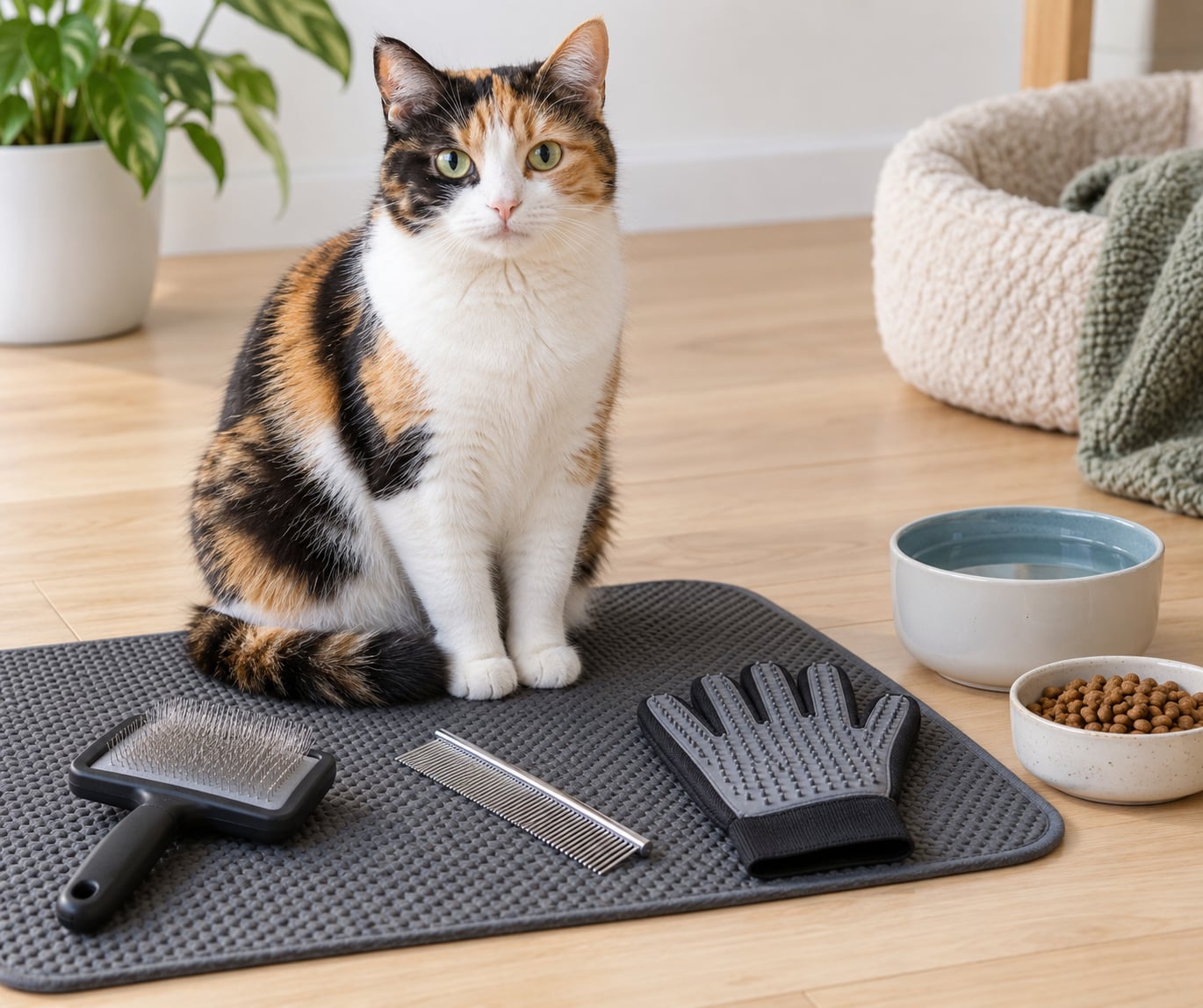
The short answer is that you prevent hairballs in cats by catching loose fur before your cat swallows it: brush on a schedule that matches the coat, keep food and water steady so the gut keeps moving, and cut back on hair that ends up in carpets and bedding. Most cats need ten minutes a few times a week. Long-haired breeds need a bit more.
A hairball is a clump of partially digested hair. Cats groom constantly, and the papillae on that rough, sandpaper-like tongue catch dead hair and loose fur with every pass. Most of it travels through the digestive tract and exits unnoticed. Some of it collects in the stomach, forms a ball, and comes back up.
Occasional hairballs are normal, especially in spring and autumn when cats shed heavily. Trouble starts when they become frequent, when the coat thins in patches, or when the vomiting turns out not to be a hairball at all. This guide covers the everyday routine, and it covers the moment you should stop reading and call your vet.
One thing worth knowing up front: cats groom themselves for up to half of their waking hours, according to the Cornell Feline Health Center. You cannot brush that habit away. You can only reduce how much hair is lying loose when they start.
Table of Contents
- What You Need
- How to Prevent Hairballs in Cats: Step-by-Step
- How to prevent hairballs in cats with regular brushing
- How to reduce swallowed hair during shedding periods
- How to support hairball prevention with food and water
- How to recognize when a hairball may need veterinary attention
- What overgrooming tells you
- Common Mistakes
- Frequently Asked Questions
- Are hairballs normal for cats?
- How often should I brush my cat to reduce hairballs?
- Do hairball gels and pastes actually work?
- Can hairballs cause an intestinal blockage in cats?
- How do I know if my cat is vomiting hair or something else?
- Can pumpkin puree or cat grass help with hairballs?
- How to Start a Hairball Prevention Routine Today
What You Need
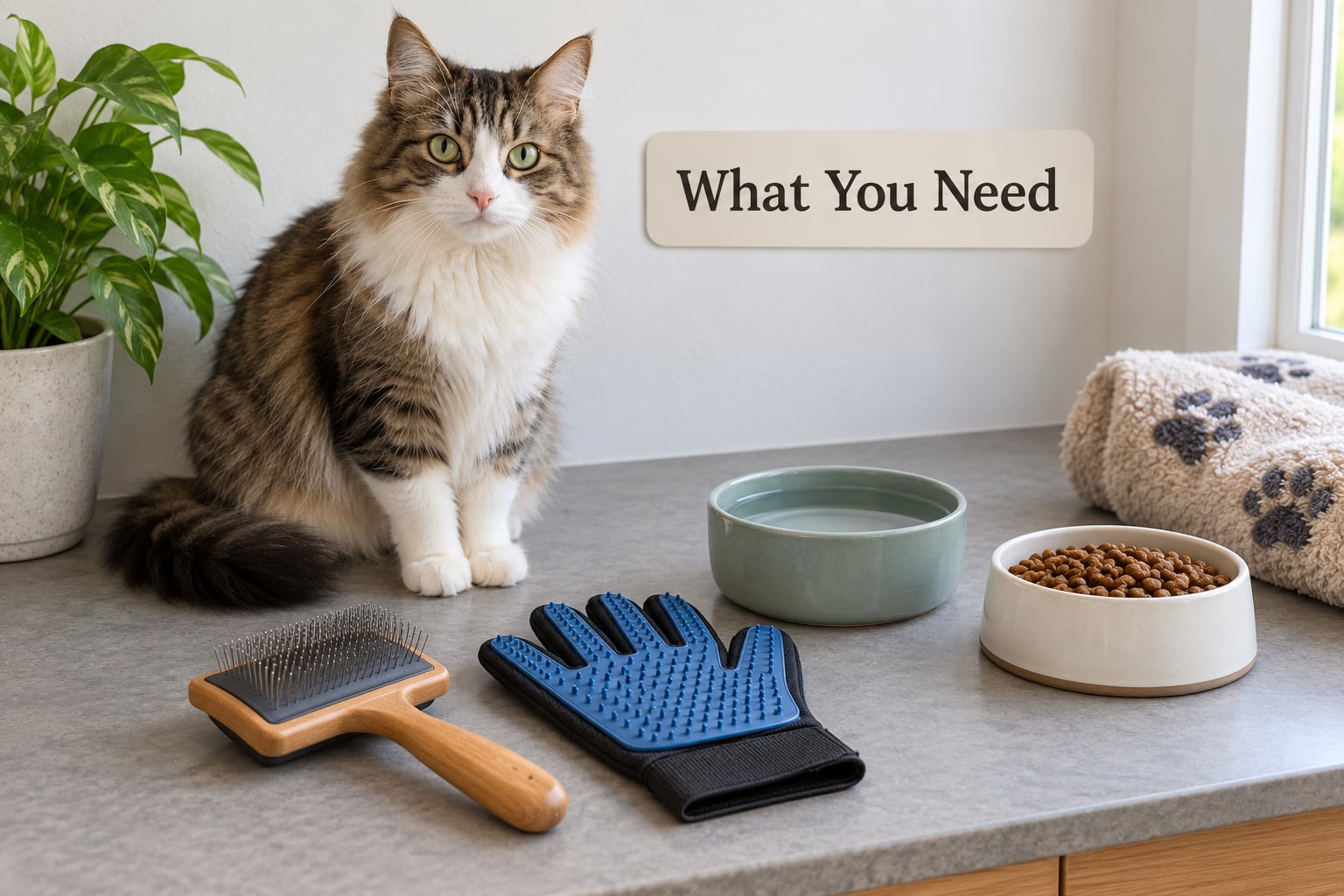
Nothing exotic. Routine hairball prevention is a small kit and a bit of consistency, and the cost of getting it wrong is a cat who swallows more hair than they should.
- A brush matched to the coat. A rubber grooming glove or a boar-bristle brush works for short coats. Long and double coats need a slicker brush or an undercoat rake.
- A second tool for tangles. A metal comb catches what the brush misses around the armpits, belly and hind legs.
- Cat-only grooming products if you use them. Never a human shampoo, never a dog shampoo, and no essential oils.
- Fresh water in more than one place. A bowl in the room the cat actually uses beats a fountain the cat ignores.
- The cat’s usual complete and balanced food. No change is required for prevention, so there is no reason to disrupt the diet mid-week.
- A quiet spot and a towel. Five minutes on a non-slip surface beats a wrestling match on the carpet.
- A lint roller or fabric roller for your own furniture and clothes. You cannot brush the sofa, but you can de-fuzz it weekly.
That is the whole list. No medication, no supplement, and no special device is needed for routine prevention. Anything beyond this belongs in a conversation with your vet.
How to Prevent Hairballs in Cats: Step-by-Step
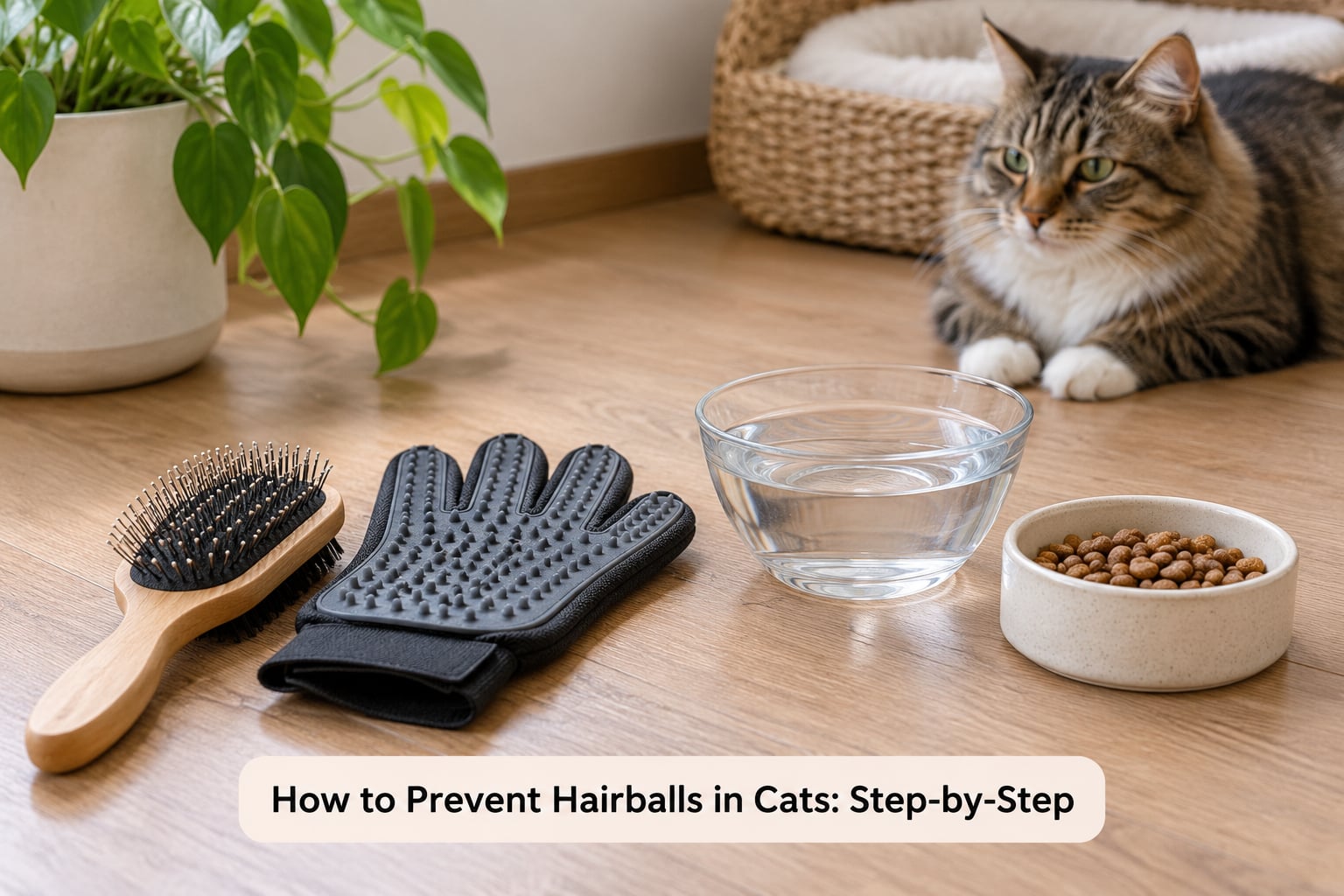
Run the routine in this order. Brushing comes first because it is the step that removes the hair before it is swallowed, and everything else supports that work.
How to prevent hairballs in cats with regular brushing
Match the frequency to the coat, not to a generic rule.
- Long-haired and double-coated cats (Maine Coons, Birmans, Ragdolls): brush daily. These coats mat behind the ears, in the armpits and along the britches, and those are exactly the places you check first.
- Medium coats: two or three sessions a week.
- Short coats: once a week is usually enough, plus extra during a shed.
- Kittens and senior cats: handle them more often but more gently. Kittens need handling they learn to accept, and older cats with tender skin and mobility issues do not tolerate a hard session.
Work from the skin outwards, in the direction the hair grows, in short strokes. Start at the shoulders and chest where most cats accept touch, then move to the belly and back legs once they are settled. A slicker brush needs light pressure, not force; you are removing loose hair, not scraping.
Two signs tell you the coat needs attention. If the brush is coming away full of fur after a couple of passes, the undercoat is loosening and you are in shed season. If you are catching on the comb rather than gliding through, the coat is matting and daily sessions have slipped.
Spend a couple of minutes on the places cats cannot groom themselves well: the back of the hind legs, the base of the tail, under the chin. Those spots collect dead hair that the cat then licks off later.
How to reduce swallowed hair during shedding periods
Shed seasons are when hairballs spike, usually in spring and autumn. Indoor cats shed on a softer version of the same cycle because the light barely changes.
During those weeks, raise the brushing to the schedule for that coat type and add a second pass in the evening when grooming peaks. Grooming right after the cat eats works for some cats, because they settle down rather than fight the brush.
Then work on the environment. Wash the cat’s bedding on a hot cycle weekly and keep it somewhere the cat does not sleep while it dries, or you will have wet fur everywhere. Run a fabric roller over the sofa cushions, the cat tree, and your curtains. A shared bed means loose hair goes straight back onto your clothes, where you will find it later.
What not to use: essential oils, diffusers, and essential-oil diffusers in particular, which many cats find aversive and which can cause skin and breathing irritation. Skip human hairball remedies, human laxatives, and any string, ribbon, or yarn left within reach.
If you want an aid rather than a treatment, cat grass is harmless and some cats chew it. Owners on r/cats report it works as a mild help, with the honest caveat that the cat may still vomit and the grass may not do much at all. Never rub coconut oil into the coat. It does nothing for the hair inside the gut, and it can make the coat greasy and the cat ill if licked in quantity.
How to support hairball prevention with food and water
Hair that reaches the stomach should have an easy route out. That is what fibre and moisture do, and it is why diet matters as the second layer of the routine.
Feed a complete and balanced diet, given as consistent meals at roughly the same times each day. Predictable meals mean predictable gut movements, and steady digestion is what moves a swallowed hair along instead of letting it sit and ball up. Wet food contributes water as well as protein, which helps some cats take in more moisture overall than a dry-food-only diet does.
Offer clean water in more than one location. Cats drink differently depending on where they are and what is happening around them, so a bowl in a quiet spot and another near the food dish covers more bases than one fountain placed in the middle of a busy room. Some owners add a little salt-free bone broth to wet food; keep it plain and unseasoned.
Specialized hairball-control foods exist and they are worth trying if your cat is on a dry diet and hairballs keep recurring. Be honest about what they do. They are formulated to support digestion and passage of hair. No food prevents hairballs on its own, and no food guarantees an answer. Treats marketed as hairball chews work the same way: by adding fibre or lubricant, not by removing hair.
Before you change anything, ask your vet. Food switches upset digestion, and a cat with a diagnosed allergy, a sensitive gut, or a history of urinary problems may react badly to a new formula. The r/CatAdvice forum has owners with poultry allergies who found that hairball-specific treats were nearly impossible to source, and their workable answer was always a plain high-fibre food and more brushing instead.
How to recognize when a hairball may need veterinary attention
Not every lump of hair a cat brings up is a hairball, and this is the part most care guides soften. Call your vet promptly if you see:
- Vomiting more than once a week, or a clear step up in how often hairballs appear.
- Repeated dry retching where nothing comes up at all.
- Inability to keep food or water down, or vomiting that contains blood or bile repeatedly.
- Signs of abdominal pain: hunching, belly tight to the floor, or crying when picked up.
- Lethargy, hiding, or refusing food for more than a day.
- A sudden change in elimination, particularly constipation or no bowel movements at all.
- A swollen or hard belly, retching without progress, or laboured breathing.
- Bald patches, a thinning tail, or fur that does not grow back after a patch.
These signs point to an intestinal blockage, severe constipation, or an underlying illness such as an allergy, parasite infection, or digestive disease. A cat that swallows a small amount of hair and passes it normally is fine. A cat with enough hair to obstruct the gut is an emergency, and dry retching without producing anything is the classic presentation.
Fur does grow back once the cause is treated and the skin is healed, but it takes weeks to months, depending on the extent of the patch. Persistent licking over the same spot means the trigger is still there.
What overgrooming tells you
Grooming that turns into compulsive licking is a medical signal, not a habit to correct. Watch for these signs:
- Over-groomed patches. Hair missing from the belly, inner thighs, chest, or tail base in a symmetrical pattern.
- Skin that looks angry. Redness, scabs, crusts, or open sore spots where the cat has licked.
- Sudden change. A cat that has groomed calmly for years suddenly licking for hours.
- Constant movement. Swallowing quickly, or gulping, with no grooming of the coat itself.
Common triggers are flea allergy, food allergy, atopic dermatitis, pain, stress, and boredom. Flea control is the first thing to rule out, and it is cheap compared with treating a skin infection. Home remedies do not fix overgrooming, but they reduce the damage: enrich the environment with scratching posts, play sessions, and quiet resting spots, and keep parasites on a strict schedule. Then let your vet work out the underlying cause.
Common Mistakes
Brushing hard enough to hurt. A slicker brush on a sensitive cat teaches avoidance, and you end up with less brushing, not more. Use light pressure and shorter sessions. Two calm minutes daily beats one painful twenty-minute battle.
Waiting until you can see fur on the furniture. By the time the coat is shedding visibly, most of the loose hair is already swallowed. Set the schedule by coat type and stick to it through the quiet months too.
Giving human medication. Human hairball remedies, laxatives, and over-the-counter medicines are not formulated for cats and can be dangerous. This is the fastest way to turn a routine problem into a vet emergency. Nothing goes in the mouth that your vet has not approved for that specific cat.
Buying every product on the shelf. Gels, pastes, chews, and specialised foods all work the same basic way. Using three at once adds cost and constipation rather than prevention. Pick one approach, use it at the interval on the label, and watch for a change over the following weeks.
Using remedies daily for months without checking in. Lubricating products are meant for periodic use. If hairballs are frequent enough that you need them continuously, that is the signal to book an appointment rather than to increase the dose.
Assuming every vomit is a hairball. Owners often tell themselves it must be hair because the cat sheds a lot. Track what actually comes up. Repeated vomiting with no hair in it, especially with weight loss, needs investigating.
Waiting too long. If the pattern has changed in a month, go sooner. A coat that stops growing back, a belly that looks swollen, or a cat that stops eating is not a grooming issue.
Frequently Asked Questions
Are hairballs normal for cats?
Yes, and how often they happen depends on coat length. Short-haired cats typically have a hairball once a month or less, while long-haired and double-coated cats may produce one about monthly. More than one per week is not normal, and it usually points to heavy shedding, overgrooming, or an underlying health problem rather than a hairball issue alone. Most swallowed hair passes through quietly and never reaches your floor.
How often should I brush my cat to reduce hairballs?
Long-haired and double-coated cats benefit from daily brushing, medium coats need two or three sessions a week, and short coats usually do fine with once a week. During spring and autumn shed, increase whatever schedule you are already on rather than starting something new. Short sessions on a regular day work better than a long one every few days, because loose hair collects daily.
Do hairball gels and pastes actually work?
They help some cats and do nothing for others. Most work as a lubricant or mild laxative that helps ingested hair move through the gut instead of sitting in the stomach. The commonest practical problem is getting the cat to accept it, and owners on r/cats report that a small dab smeared on a front paw works because the cat licks it off. Check with your vet before long-term or daily use.
Can hairballs cause an intestinal blockage in cats?
Yes, and it is the reason the red flags matter. Most hairballs leave the stomach by vomiting or passing through the intestines, but a large one that moves into the gut can obstruct it. Warning signs include repeated dry retching with nothing coming up, a swollen or hard belly, inability to keep food or water down, lethargy, and no bowel movements. Dry retching without progress needs a veterinarian urgently, not a home remedy.
How do I know if my cat is vomiting hair or something else?
Look at what comes up and how often. A hairball is usually a firm, dark, sausage-shaped clump, often with a little food or bile around it. Vomiting that contains food only, happens repeatedly, or comes with weight loss, appetite changes, or diarrhoea points elsewhere. If the pattern changes or you cannot be sure, book a check rather than assuming. Treating the wrong problem delays the right one.
Can pumpkin puree or cat grass help with hairballs?
Plain, unsweetened pumpkin puree adds fibre and softens stool, so it can help move hair along. Use only the plain cooked or canned pumpkin with no sugar, spice, or added sweetener, and ask your vet about the right amount for your cat’s weight before giving it regularly. Cat grass is harmless and some cats chew it, though many owners report it makes little practical difference. Neither replaces brushing.
How to Start a Hairball Prevention Routine Today
Pick the brush that suits the coat and brush tonight, before the furniture has a chance to. Put fresh water in a second spot and keep the meal times as they are. Then take five minutes with a fabric roller on the sofa and the bedding, and wash the cat’s blanket this week.
That is the routine. If hairballs still arrive more than once a week, if a patch of fur will not grow back, or if the cat retches without producing anything, book a veterinary check. A visit answers the question in ten minutes that months of guessing will not.