Nighttime meowing usually comes from three things: a cat whose body clock is wired for dawn and dusk hunting, hunger that has become a cue for food, or a learned habit where loud crying gets a door opened. Knowing how to stop a cat from meowing at night comes down to the same four moves: rule out illness first, move the meal and the play earlier, build the same wind-down routine every evening, and stop giving any response at all to the noise. It takes two to three weeks of the same routine before most cats adjust.
That last part is where most people give up. The first few nights usually get worse, not better, and a cat that has been getting up at 4am for a year will not change overnight. What you are really doing is teaching one new habit to replace another, and that takes patience rather than cleverness.
None of this works by scolding, spraying, or shutting the cat out of a room. Those approaches raise stress, and a stressed cat vocalizes more. Cats are crepuscular rather than truly nocturnal, which means the low-light hours around dusk and dawn are when their hunting instincts fire hardest, and a cat sitting in a dark quiet house with that energy has nothing to do but use its voice.
Table of Contents
- What You Need
- Step-by-Step: How to Stop a Cat from Meowing at Night
- 1. Rule out pain, illness, or an urgent need
- 2. Record the pattern for one week
- 3. Create a consistent evening routine
- 4. Give attention before the cat starts demanding it
- 5. Use calm redirection instead of punishment
- 6. Make the nighttime environment predictable and comfortable
- 7. Review progress and get veterinary help when needed
- Common Mistakes
- Frequently Asked Questions
- Why does my cat meow at 3am every night?
- Do cats stop meowing if you ignore them?
- Can I shut my cat out at night?
- Is there anything I can give my cat to calm down at night?
- Why does my cat walk around meowing at night?
- Conclusion
What You Need
You do not need special equipment. You need four things before you change anything, and the first one matters most.
A predictable schedule. Pick fixed times for the last meal of the day, for play, and for lights-down, then hold them steady for at least two weeks. Cats read the clock by routine far better than by the wall clock, so an evening that looks the same every night does most of the work for you.
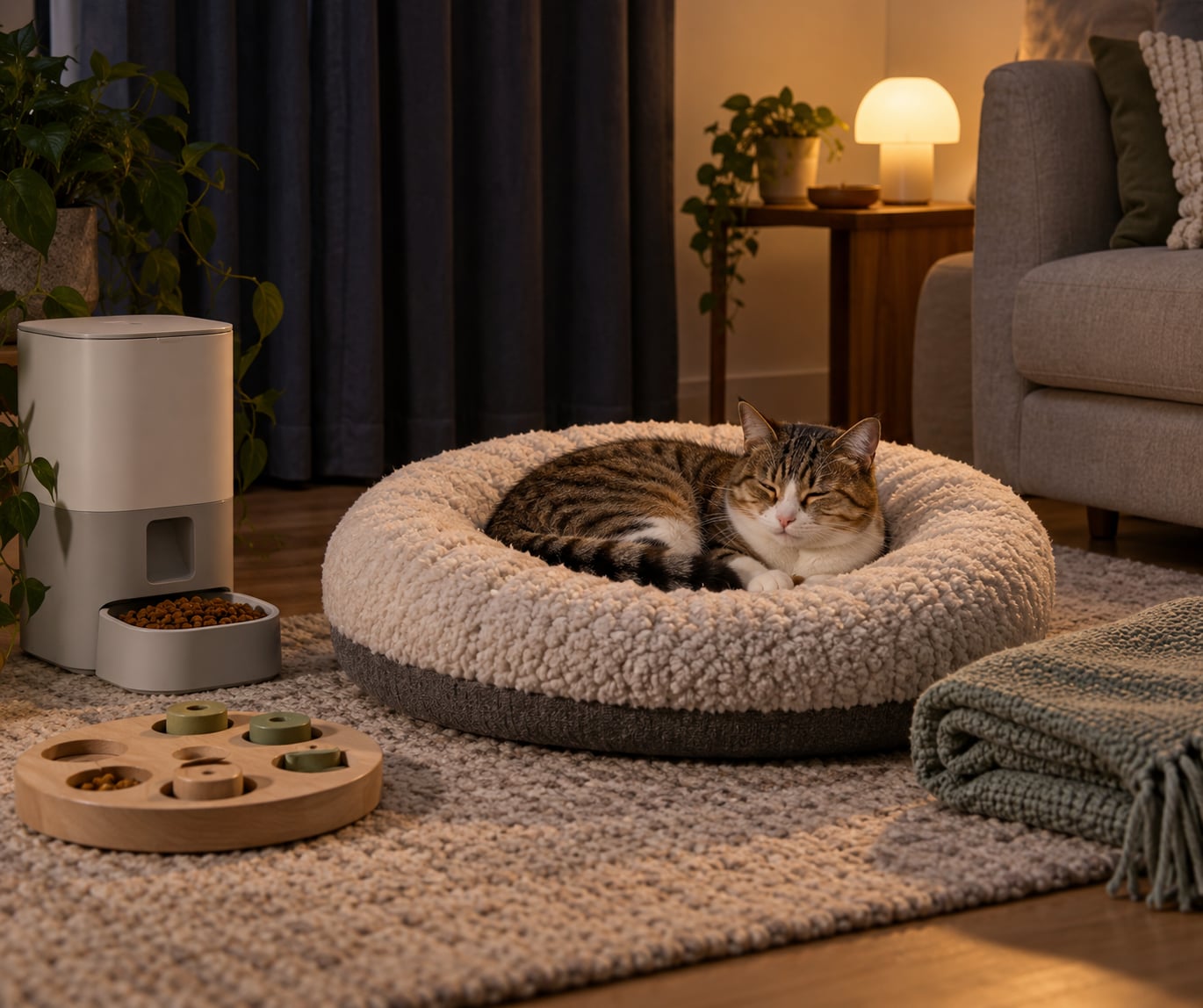
A safe and comfortable nighttime area that is not your bedroom. A bed in a quiet corner with fresh water nearby, a clean litter box, and a couple of safe things to chew or bat at. Older cats do better with a low, warm bed and a night light so they can find their way without stumbling into furniture in the dark.
One week of honest observations. Before you adjust anything, write down when the cat starts, how long it lasts, which room it happens in, and what happened in the hour beforehand. Guessing at the cause is the most common reason people fix the wrong problem.
Access to a veterinarian, if the behavior started suddenly or comes with other changes. If you are not sure whether this is a behavior problem or a pain problem, that phone call is worth more than any amount of routine-building.
Step-by-Step: How to Stop a Cat from Meowing at Night
1. Rule out pain, illness, or an urgent need
A cat that has meowed its whole life and a cat that started suddenly are two different problems. Sudden, louder, or more intense vocalization deserves a vet visit rather than a training plan, because the same behavior means something different in each case.
Warning signs that call for veterinary advice the same day or the next morning:
- Vocalizing that started in the last few days or weeks with no obvious trigger
- A yowl that is deeper, longer, or more distressed than the cat’s usual voice
- Hiding, flinching when touched, or reluctance to jump or use stairs
- Appetite change, weight loss, or drinking noticeably more water than usual
- Any change in litter box habits, straining, or accidents outside the box
- Loss of vision, bumping into things, or disorientation in a familiar room
Senior cats vocalize at night more often because of pain, declining hearing and vision, or cognitive changes, and all three are treatable or manageable once identified. Kidney disease, hyperthyroidism and high blood pressure show up in cats with behavior changes long before anything else looks wrong.
Whatever you do, never give a cat human medication. Painkillers meant for people, sedatives and melatonin products can be dangerous for cats, and some are fatal. If you want something to take the edge off at night, talk to your vet about what is safe for your cat’s age, weight and health.
2. Record the pattern for one week
One week of notes will tell you more than a month of guessing. Each time the cat vocalizes, jot down five things: the time, roughly how long it lasted, where the cat was, and whether food, litter box use or play happened in the previous hour.
Then match the pattern to a likely cause. The location is the fastest clue. Meowing that starts at the bedroom door and stops when it opens is attention-seeking. Meowing aimed at the food bowl or the kitchen is hunger or a cat that has learned to wake you for a meal. Meowing that starts in the litter box points at a box that is too small, unclean, or painful to use. Loud caterwauling that comes with a tense posture, rolling and mounting behaviour in an unneutered cat is a heat cycle.
Pattern matters as much as cause. A cat that has always done this at 5am is following its hunting clock. A cat that only does it after you recently changed work hours, moved furniture, or brought home a new person is responding to change.
3. Create a consistent evening routine
The sequence that works best follows a natural hunting pattern: chase, catch, eat, groom, sleep. Most cats have had an unfinished hunt by evening, and an undirected hunt turns into pacing and howling.
A workable evening runs about an hour. Spend ten to fifteen minutes on interactive play with a wand toy, letting the cat catch the toy at the end rather than chasing it forever. Serve the final meal straight after, ideally from an automatic feeder set for a fixed time. Then do a litter box check, a short quiet grooming or affection session, and settle the cat somewhere comfortable while the household gets quiet.
The key is that the play ends in success. Cats that never catch anything during the day carry that frustration into the night, so let the toy be a catch several times before you put it away.
4. Give attention before the cat starts demanding it
Every interaction your cat gets at 4am teaches it that 4am works. Two people in a house who respond even once create a very persistent cat, because the behavior clearly pays off now and then.
Move that same attention earlier instead of removing it. Two structured play sessions a day, one of them in the hour before bed, satisfies most cats far better than twenty minutes of fussing at midnight. Then reduce late-night contact gradually, so the change reads as a calmer evening rather than a punishment.
Expect a rise in noise over the first few nights. This is called an extinction burst, and it is the single biggest reason people conclude that ignoring does not work. The cat is escalating because the old method stopped paying, not because the new method is failing. Hold the line for two to three weeks and it drops off.
5. Use calm redirection instead of punishment
Yelling, water pistols, noise-making devices and spray bottles do not teach a cat to be quieter. They teach it that the evening is unpredictable and sometimes frightening, which adds stress and usually makes the problem worse.
When the meowing starts, do not raise your voice. Silence works better than noise, because attention of any kind is what the cat is asking for. If it is safe to do so, quietly redirect the cat to a toy or a food puzzle and walk away without a word. No eye contact, no answering, no pushing the cat off the bed.
You can also train the opposite behavior. Once a day, spend a few minutes clicker training the cat for being quiet, using a small treat when it pauses and a click at the right moment. It takes patience and every person in the household has to play along, but it gives you something concrete to work toward.
6. Make the nighttime environment predictable and comfortable
Most of the sleep problems come down to a boring, dark room with nothing to do. Fix the environment and the vocalizing often drops on its own.
- Put out a second bowl of fresh water before lights-down so thirst is not the reason for a 3am wake-up call
- Scoop the litter box in the evening, and keep one box per cat plus one spare, in a quiet location
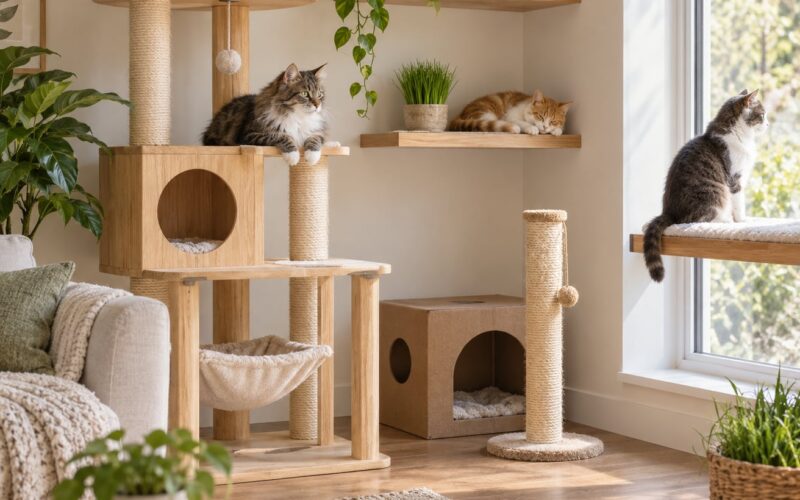
- Add daytime enrichment: a window perch, a climbing tower, cardboard boxes, and rotating toys so nothing stays boring
- Use a night light or leave a hallway light on for senior cats who get disoriented in total darkness
- Block outdoor triggers with blackout curtains and add steady white noise or a radio if a neighbour’s cat or passing traffic sets your cat off
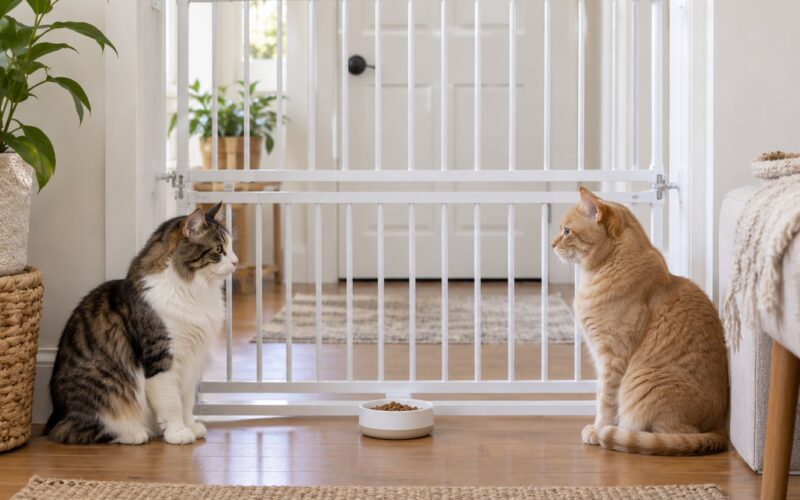
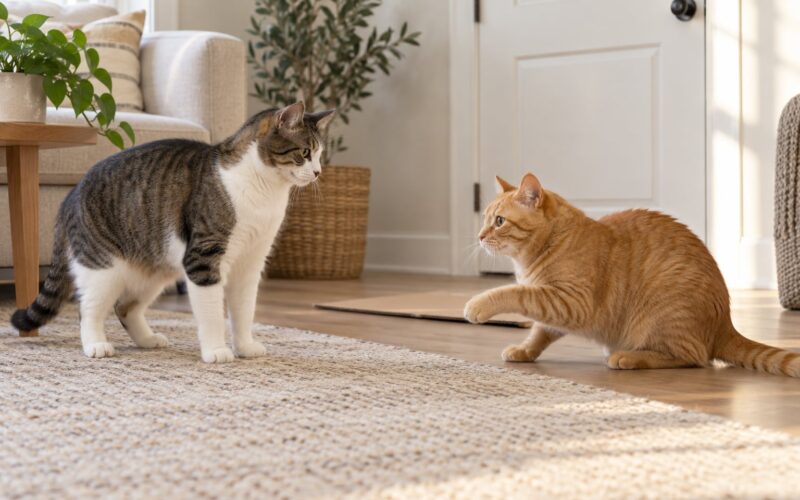
- Give each cat in a multi-cat household its own food, water, bed and litter box, so one cat waking the others is not about comfort but competition
Giving a new cat a small closed room for the first week or two with food, water, a litter box and a place to hide often speeds up the adjustment. Once it eats and uses the box calmly on its own, open the door a little wider each day. Expect a full two weeks before the whole house feels normal, and longer if the cat has never lived indoors.
7. Review progress and get veterinary help when needed
Compare your notes from week one with week three. A realistic goal is fewer episodes and quieter ones, not total silence. Most cats improve noticeably in two to three weeks, and some take a couple of months, particularly older cats who have meowed at night for years.
If nothing has shifted after four to six weeks of consistent routine, book an appointment. Cats that meow at night are not being stubborn or manipulative, they are either acting on instinct, reacting to discomfort, or doing what reinforced behavior taught them to do.
Go sooner rather than later if you notice distress, hiding, appetite changes, weight loss, or altered litter box use. Mention the vocalization itself to your vet, since it is a symptom with several possible causes rather than a quirk of personality.
Common Mistakes
Getting up to open the door. This is the mistake that keeps the whole problem alive. Once the door opens a few times, the 4am wake-up is confirmed and gets louder over time.
Getting angry or reactive. A cat that gets shouted at may stop for a minute, then escalate, and often learns that loud noises mean the room is active and worth repeating.
Changing the routine every few days. If meals move around, play times shift and the door policy keeps changing, the cat never learns what the evening looks like. Pick a plan and give it two solid weeks.
Feeding on demand at 3am. Handing over food in the middle of the night teaches hunger as a lever for getting you awake. If you must feed overnight, use an automatic feeder set in advance rather than getting up yourself.
Using sprays, scents or startling devices. Many cats find these aversive rather than instructive, and some simply redirect their frustration into more vocalizing or litter box problems.
Assuming every nighttime meowing is normal. It is common, but a sudden change in a previously quiet cat is a health question until a veterinarian has checked it.
Giving human sleep aids or pain relievers. This one is dangerous rather than merely ineffective. Cats metabolise common human medications differently, and some combinations are lethal.
Frequently Asked Questions
Why does my cat meow at 3am every night?
Three causes cover most cases: the cat’s crepuscular hunting instinct firing in the dark, hunger that has become a learned cue for food, or attention that your cat learned to request by calling. If the pattern started suddenly, the volume changed, or your cat is also hiding or off its food, treat it as a health question and call your veterinarian before changing anything at home.
Do cats stop meowing if you ignore them?
Usually, yes, but not quickly. Expect the meowing to get louder for several nights first, known as an extinction burst, because the cat is trying harder at a method that stopped working. If you hold complete consistency for two to three weeks, most cats drop off noticeably. If your cat screams, strains, or shows signs of pain rather than just calling, stop and speak to a vet.
Can I shut my cat out at night?
You can, but only with a room prepared properly: food, water, a clean litter box, a comfortable bed and something safe to play with. Shutting a cat out without enrichment just raises stress, and many cats scratch at the door for hours. A better option is keeping the cat out of your bedroom entirely and feeding it a late meal in its own space, which builds a calmer association with the room.
Is there anything I can give my cat to calm down at night?
Never give human medication, including over-the-counter sleep aids, melatonin or painkillers, because several are toxic to cats. Calming supplements and pheromone diffusers help some cats with stress-related vocalizing, but evidence for them is limited and they are not a substitute for routine changes. If a medication or diet is going to help, ask your veterinarian what is safe for your cat.
Why does my cat walk around meowing at night?
The pacing usually means the cat is searching, and where it searches tells you the cause. Circling the litter box points at a box that is dirty, small or painful to use. Waiting by a door or the bed points at attention-seeking. Circling the food area points at hunger or a learned schedule. Loud calling that comes with rolling and restlessness points at an unneutered cat in heat.
Conclusion
Start with a health check, not a training plan. If the vocalizing is new, louder or paired with any other change, talk to your veterinarian and never reach for human medication.
If the cat has always done this, write down one week of notes, then build the same evening every single night: play that ends in a catch, the last meal straight after, a litter check, quiet affection, and a settled cat somewhere safe. Give the cat plenty of attention earlier so the night feels quiet by default, and do not reward a single call at 3am. That nightly sequence, repeated without wavering, is the whole of how to stop a cat from meowing at night for most households. Two to three weeks of consistency is usually where people notice the change. Reviewed for 2026.