If you’re searching for how to introduce cats that hate each other, here’s the short version: you have to go back to zero. Full separation, scent first, sight through a barrier, then short supervised meetings, and only then shared time in the house. Most pairs need two to four weeks, and some take several months.
Cats are solitary territorial hunters, not pack animals. They don’t need to like each other to live together, and forcing a face-to-face meeting only teaches both cats that the other one ends in a fight. The plan below rebuilds recognition one sense at a time.
This guide follows the same behaviour principles vets and animal behaviourists use, and it is written for 2026. It’s general information rather than a diagnosis, so check with your own vet if anything changes suddenly.
Table of Contents
- What You Need
- Which Cat Goes in Which Room
- Step-by-Step: How to Introduce Cats That Hate Each Other in Five Stages
- Set Up Separate Safe Rooms
- Exchange Scent Without Direct Contact
- Allow Controlled Sight Through a Barrier
- Hold Short, Supervised Meetings
- How to Introduce Cats That Hate Each Other in Person
- Increase Contact Gradually
- Know When You Need Professional Help
- Common Mistakes
- Frequently Asked Questions
- How long does it take to introduce cats that hate each other?
- Can scent-swapping help cats that hate each other?
- Is hissing always a bad sign when introducing cats?
- Should I let cats share a litter box while they are getting along?
- Why does one cat chase the other after introductions start?
- When should I call a vet about cats that hate each other?
- Conclusion
What You Need
Most of the equipment is cheap and already in the house. Set it all up before you start, because mid-introduction shopping is how introductions stall.
- Two rooms that close properly. Doors that latch, ideally in opposite corners of the home so the cats aren’t sharing a hallway.
- One litter box per cat, plus one spare. Spread them out. Two boxes in one room still count as one location to the cat that matters.
- Separate food and water stations. Fed cats have less to argue about.
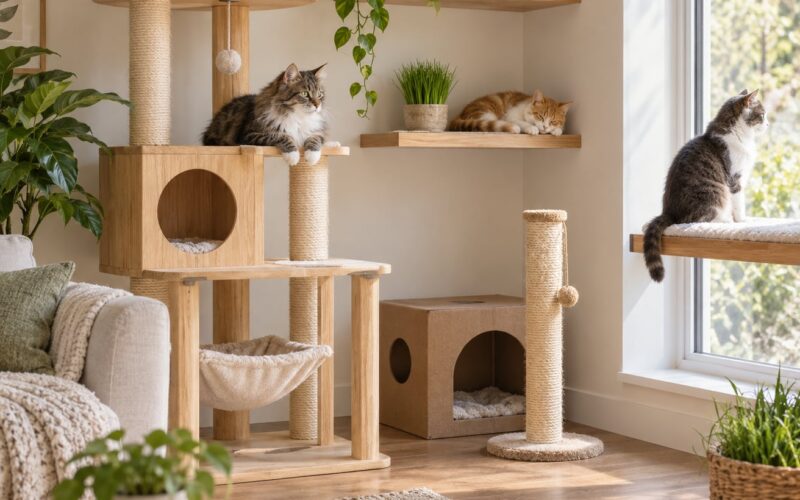
- Hiding places in every room the cats will share. A covered bed, a cardboard box, or a shelf unit where a cat can sit high and observe.
- Own bedding for each cat. This is your scent-exchange material later, so use blankets and soft items rather than everything being washed.
- A sturdy barrier. Two baby gates stacked to make a fence, a screen door, or a doorstop for a gap you can widen in stages.
- High-value treats and a wand toy. Chicky treats, not the everyday kibble. One wand toy per cat for parallel play.
- A thick blanket or cushion. For getting between two cats without using your hands.
- A notebook. Meals, litter box use, and body language each day. Without notes, progress is invisible and people give up early.
Which Cat Goes in Which Room
Usually the cat that started the aggression or that was most territorial stays in the room with the run of the house, and the other one goes into the sanctuary room. If the aggressor is also the most frightened and won’t eat behind a closed door, swap them. A cat that hides for three days straight is in the wrong room, no matter who started it.
Keep the doors closed enough that neither cat can see the other. Visual contact during the first days undoes most of the scent work you’ll do later.
Step-by-Step: How to Introduce Cats That Hate Each Other in Five Stages
Each stage has to be quiet before you move to the next one, and moving back a stage costs you nothing except time. Moving forward too early costs weeks.
Set Up Separate Safe Rooms
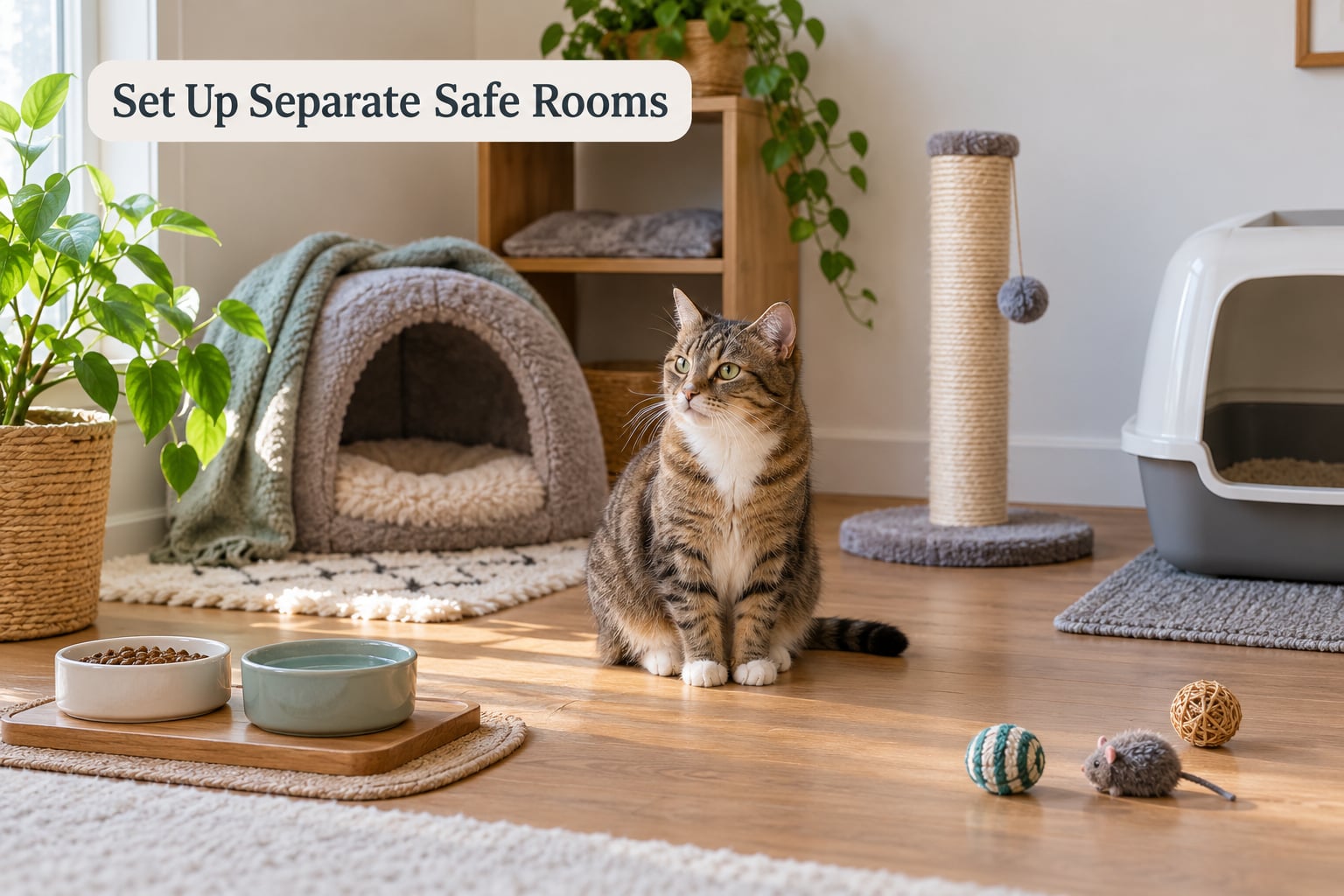
Give each cat its own room for a minimum of two to three days. Fill it with food, water, a litter box, something to scratch, somewhere to hide, and bedding that smells like home.
During this time you’re watching for one thing: normal behaviour behind a closed door. Regular meals, normal elimination, grooming, and settled posture. A cat that won’t eat or stops using its box in a safe room is stressed or unwell, and neither is fixed by speed.
Remove anything that could cause a fight later. In a two-cat home, that usually means two litter boxes in different rooms, two feeding spots far apart, and at least two resting heights in every shared room.
Exchange Scent Without Direct Contact
Scent is how cats recognise each other, so smell comes before sight. Rub a soft cloth on each cat’s cheeks and body, where the scent glands are, and drop one cat’s cloth in the other’s room. Swap bedding and toys the same way.
Then run meals on opposite sides of the door that separates them. Two bowls, ten or fifteen minutes of food, the door shut. The point is that each cat learns the other one smells like dinner rather than trouble.
Keep the bowls a step further apart at each meal, not closer. Move them at the speed of the calmer cat. If one cat stops eating or slams down at the door, back up and stay there a few days.
Allow Controlled Sight Through a Barrier
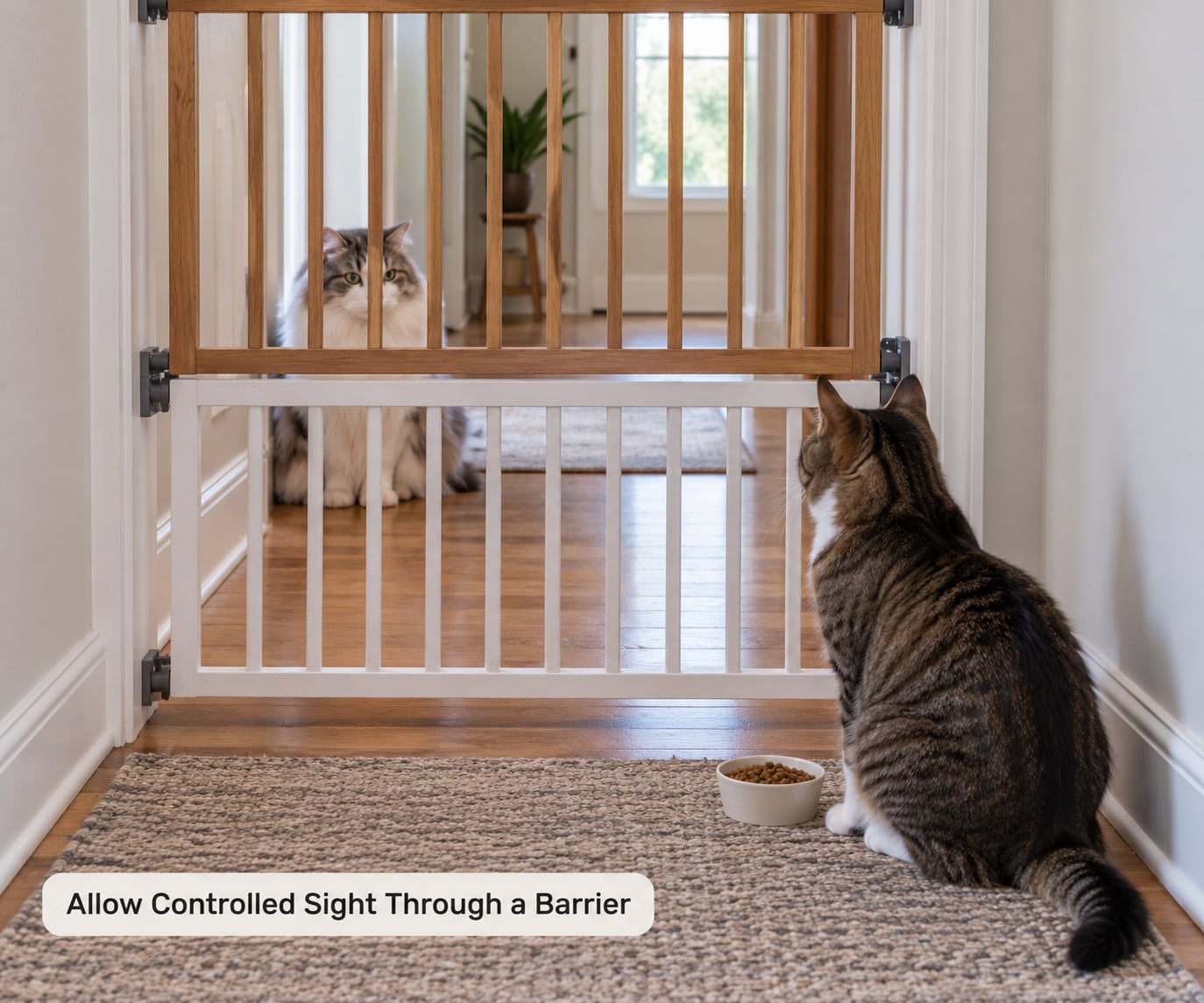
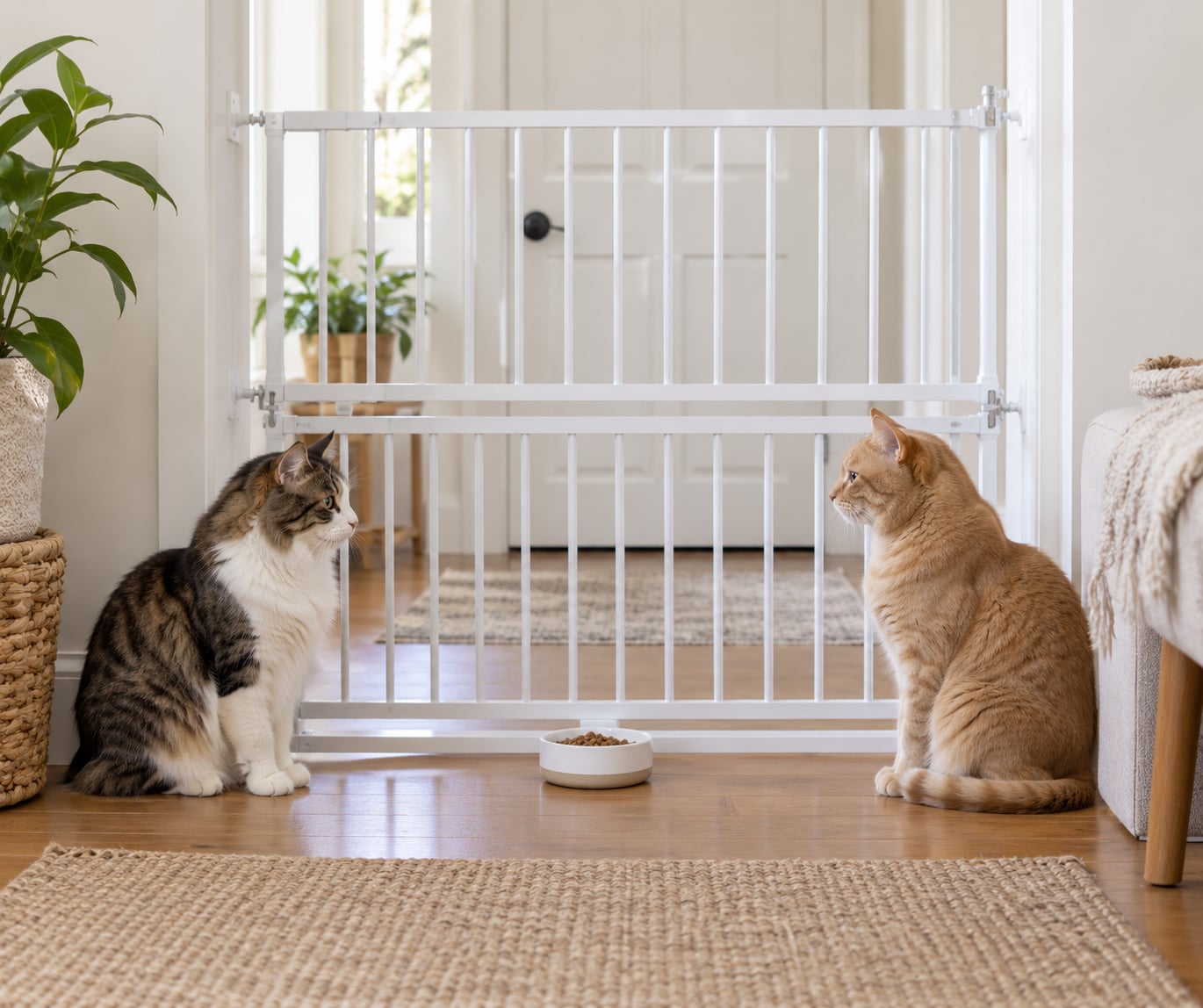
Once meals on either side of the door stop causing any reaction, let them see each other without touching. A screen door works well, two baby gates stacked make a fence across a hallway, or a doorstop holds a gap you widen by a few inches each session.
Start with three to five minutes and end on a calm note. Sit with both cats, scatter treats, and reward anything that looks like curiosity: looking without freezing, eating while the other cat is visible, moving closer.
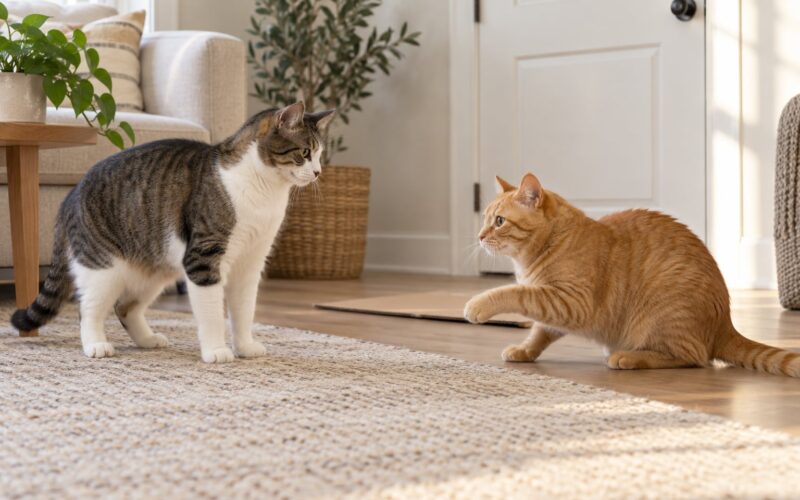
Then watch for the early warnings. Flat or crouching posture, ears flat or turned sideways, a tail lashing hard, pupils blown wide, a slow crouch or a stalk. Those mean stop, not push through.
If either cat freezes, stalks, charges, or runs off and hides every time, put the barrier back up and go back to scent work. That’s a normal setback, not a failure of the plan.
Hold Short, Supervised Meetings
Only move past the barrier when both cats eat calmly near the scent barrier and show interest rather than fear. Then pick a neutral room both cats enter on their own terms, not the room the aggressor owns.
Set the room up before you open anything: two hiding spots, two exits, something to climb, two bowls placed far apart, treats ready. A cat that feels cornered will fight, so make leaving easy.
Start with one to three minutes of contact, separate them while everything is still fine. Repeating short successful sessions teaches more than one long chaotic one. Stay in the room the entire time; this is not a stage to check on from the sofa.
Use wand toys to give each cat something to do at the same time, which is what owners often report finally working. End each session early. Ending on a good moment matters more than squeezing out the extra minute.
How to Introduce Cats That Hate Each Other in Person
Once meetings pass regularly without hissing, you can leave the cats in the house together for short stretches, still with you present and the doors between your two areas open so either cat can retreat.
Keep the resources spread out. Two litter boxes plus one, separate food and water, and at least two resting spots per room at different heights. A cat with an escape route and a high perch does almost no fighting.
Give them parallel activities every day: two toys, two people, five minutes each. Wand play burns off the arousal that turns curiosity into a chase.
Stop the session the moment you see a cat crouch, stalk, or refuse to stop tracking the other one, and don’t wait for the swat. Separating early is the whole skill.
Once your cats can share a room for an hour without incident, extend it to a few hours, then a full day, always with you home for the first few overnights. The test for leaving them alone is simple: have you seen a full week of calm when you were watching? If not, keep supervising.
Increase Contact Gradually
Lengthen supervised time a few minutes at a time, only after each session has been calm. The popular 3-3-3 rule — three days of separation, three days of scent and feeding at the door, three weeks of gradual contact — is a floor, not a schedule. Your cats’ behaviour decides the pace, not the calendar.
| Stage | Typical timeframe | On track | Slow down |
|---|---|---|---|
| Separate rooms | 2-3 days minimum | Both eating and using their boxes normally | Hiding for days, off food, or won’t settle |
| Scent exchange and feeding at the door | 3-10 days | Eating without reacting to the door | Slamming, growling, refusing food |
| Visual contact through a barrier | 1-3 weeks | Curiosity, eating while visible | Freezing, stalking, charging, constant hiding |
| Supervised meetings | 1-3 weeks | Brief sessions that end calmly | Swatting, blocking, one cat hides constantly |
| Unsupervised shared time | 2 weeks to several months | They ignore each other or share space | Stalking, spraying, fights when you’re not there |
Some pairs plateau for months. r/CatAdvice owners report three months of correct technique before anything changed, and a case shared on TheCatSite took fourteen months before two cats would share a bed. That’s the honest range.
Expect regressions. A vet visit, a move, a new baby, or an outdoor cat visible through the window can reset everything, and the usual culprit is smell. After any vet visit, rub a cloth on your resident cat and leave it in the returning cat’s carrier before you open it, so the returning cat arrives already covered in familiar scent.
Know When You Need Professional Help
Get veterinary advice if the aggression came on suddenly with no obvious trigger, since pain, illness, and urinary problems are behind more “sudden hate” cases than owners expect. Straining in the litter box, hiding, or a change in urination is a vet appointment, not a behaviour problem.
Book a certified applied animal behaviourist or a vet with behaviour qualifications when the fights cause injury, when one cat blocks the other from food or the litter box, or when you’ve made steady progress for weeks and nothing changes. Cats that fight can bite deeply, and puncture wounds abscess.
Never give a cat human medication or someone else’s prescription for aggression. Medication has a place in severe cases, but only your vet decides that.
Common Mistakes
Rushing the stages. The fix: if you’re unsure, stay where you are a week longer. Slow progress is easy to fix, fast failure is slow to undo.
Trying a nose-to-nose meeting. Carrying one cat to the other for a sniff is the single most common way people set the process back. Cats have to build up to that, not be dropped into it.
Treating every hiss as a failed introduction. Occasional hissing and short swats during barrier contact are normal communication. Continual growling, freezing, and stalking are the real stop signals.
One shared litter box. Even cats that get along guard boxes. One box per cat plus one, in separate locations.
Leaving them together unsupervised too soon. A calm hour with you present can go wrong in a minute when you’re asleep. Keep sessions supervised until weeks of calm have passed.
Punishing the hissing. Yelling or spraying water makes a cat associate you with the tension, and the problem gets worse. The answer is a thinner margin, not louder words.
Over-managing every minute. Once the base room, separate resources, and a barrier are working, owners on Reddit often find that calmer cats resolve things faster on their own than under constant supervision. Let there be quiet, boring hours together.
Ignoring the outside cat. A stray in the garden can trigger redirected aggression that has nothing to do with the other cat inside. Block the view while you reintroduction.
Frequently Asked Questions
How long does it take to introduce cats that hate each other?
Most pairs reach relaxed supervised contact in two to four weeks, but two to six weeks is common for cats that were hostile for years. Long-running cases can take months, and one fourteen-month case is widely reported by owners. Judge progress by behaviour, not dates: relaxed eating near the other cat, curiosity through the barrier, calm sessions that end well. If there is no change after a few weeks of correct technique, get a behaviourist involved rather than pushing harder.
Can scent-swapping help cats that hate each other?
Yes, and it is usually the stage that decides whether the rest works. Cats recognise each other by smell far more than sight, so swapping bedding, toys, and a cloth rubbed over the cheeks and body rebuilds familiarity before either cat has to look at the other. Combine it with feeding on opposite sides of a closed door, bowls a step further apart each meal, and you give the second cat a scent linked to food. Keep going until both cats eat calmly with no reaction at the door.
Is hissing always a bad sign when introducing cats?
No. Short hisses and a single swat during barrier or supervised contact are normal warnings, not a failed introduction. Separate them calmly and repeat the step for a few days. Continuous growling, a cat that freezes or crouches, blown pupils, hard tail lashing, stalking, or blocking access to food or the litter box are the signs to separate and go back a stage. If hissing escalates into charges or contact fights, that is the point to call a vet or behaviourist.
Should I let cats share a litter box while they are getting along?
No. Even cats that tolerate each other often guard boxes, and a litter box conflict escalates fast because the cat has nowhere to go while using it. Provide one box per cat plus one extra, and place them in different rooms rather than side by side. If you are not sure where to start, put the extra boxes away from food and in quiet corners, since a busy spot is easier to defend. Once your cats ignore each other peacefully, you can test dropping one box and watch for a week.
Why does one cat chase the other after introductions start?
Chasing is usually play arousal or predatory interest that has nowhere to go, and both are worse in a home with no escape routes. Give each cat a high perch, two hiding places, two exits from every room, and two toys so they can play at the same time without contact. Sessions that end while both cats are still excited teach the wrong lesson, so calm them with wand toys first. If the chase ends in pursuit bites or the chased cat hides for hours, shorten the session and step back a stage.
When should I call a vet about cats that hate each other?
Call a vet promptly if the aggression appeared suddenly and has no obvious cause, or if you see straining in the litter box, blood in the urine, hiding, appetite loss, or limping. Pain and urinary disease are common reasons cats that used to get along turn on each other, and only a vet can rule them out. Also call if fights cause wounds, one cat blocks the other from food or water, or weeks of careful work produce no change. Never give a cat human or off-label medication.
Conclusion
Start tonight: put each cat in a room that closes properly, and remove every shared resource. From there, swap scent and feed on opposite sides of the door, and do nothing faster than your cats’ behaviour allows.
Move to the next stage only when both cats show relaxed signals: eating near the other one, curiosity through a barrier, sessions that end without a swat. Peaceful coexistence is a real success, even if they never become friends. If the aggression is sudden, or involves wounds, straining in the litter box, or no progress after a few patient weeks, talk to your vet or a certified behaviourist.