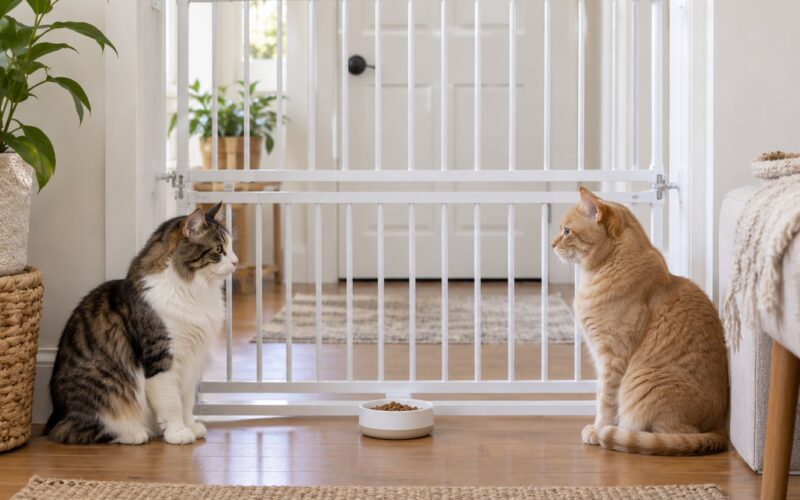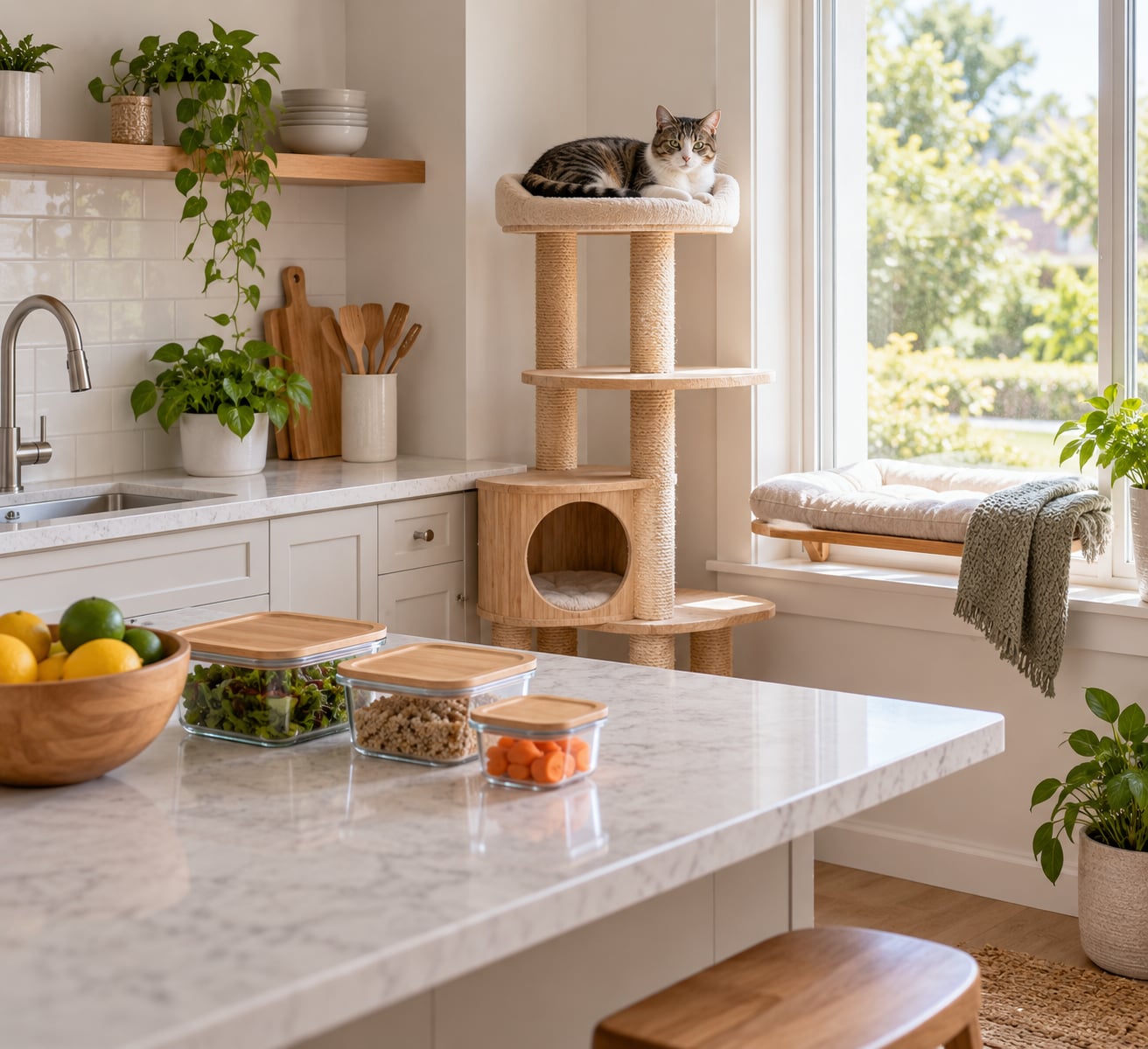
The fastest way to learn how to keep a cat off the kitchen counter is to stop paying your cat for the counter and start paying for the alternative. Clear the food, make the surface unappealing, set up a high spot a few steps away, and mark the exact moment your cat uses it. Cats are creatures of habit, so consistency matters more than any gadget.
Three moves do most of the work, and most guides mix them together. Keeping them separate makes the method easier to follow.
- Remove temptations: no food left out, no crumbs, no dishes in the sink, counters wiped down after every use.
- Make surfaces unappealing: double-sided tape or foil along counter edges where paws land.
- Provide high alternatives: a cat tree, shelf, or window perch close to the kitchen, not across the room.
Give it two to three weeks of short daily sessions. Some cats pick it up in a few days. Adopted adults with a long counter-surfing history take longer, but they do get there.
Table of Contents
- What You Need
- Step-by-Step: How to Keep a Cat Off the Kitchen Counter
- 1. Identify Why Your Cat Is on the Counter
- 2. Remove Tempting Food and Access
- 3. Redirect the Cat to an Approved Spot
- 4. Use Positive Reinforcement
- 5. Add Height, Comfort, and Enrichment
- 6. Test the Plan and Prevent Backsliding
- Common Mistakes
- Frequently Asked Questions
- How do I stop my cat from jumping on kitchen counters if it has already learned the habit?
- Should I spray or shout at my cat when it gets on the counter?
- What can I put on a kitchen counter to stop a cat from jumping there?
- Why is my cat suddenly interested in the kitchen counter?
- Is it normal for a kitten to climb on kitchen counters?
- When should I take my cat to the vet about counter-climbing?
- Conclusion
What You Need
None of this is expensive or complicated. Gather it all before you start training so you are not digging through drawers while your cat is on the counter.
- Small, high-value treats. Use a soft, smelly treat your cat would not get any other way. Break a larger treat into pea-sized pieces.
- A clicker or a marker word. A clicker makes the timing cleaner, but a short consistent word works too.
- Double-sided tape and a few sheets of aluminum foil. Used along the edge of the counter, not across the whole surface.
- A secure place for food. A cupboard with a latch, a lidded bin, or a door that stays shut.
- A comfortable alternative spot. A sturdy cat tree, a wall shelf, a window perch, or a cushioned chair.
- A notebook or your phone. Three days of notes will tell you more about your cat than a week of guessing.
Keep one bottle of cat-safe enzymatic cleaner nearby too. Vinegar and ammonia smell strong to cats, but ammonia is toxic if they lick a wet surface, so never use it on counters where food is prepared.
Step-by-Step: How to Keep a Cat Off the Kitchen Counter
1. Identify Why Your Cat Is on the Counter
Almost every cat that counter-surfs wants one of five things, and your cat is after one of them specifically. Food comes first for most. Height comes second, because a counter is a lookout point where a cat can watch the room and feel safe. A warm stovetop or a sunlit patch of granite ranks high for older cats and for short-haired ones. Running water in the sink pulls some cats in. And a few cats want the attention that follows when you shout.
Watch and write it down for three days. Note the time, what was happening, and what the cat did immediately before jumping up. A cat that goes up at 7am every morning while the coffee brews is food-motivated. A cat that goes up when the dishwasher runs is prey-motivated and probably hunting insects around the drain.
Then match the fix to the motive. A food-motivated cat needs tighter food management. An athletic cat needs vertical space and a toy it can chase. A cat that wants company needs attention paid on the floor before you start cooking, not after it climbs.
2. Remove Tempting Food and Access
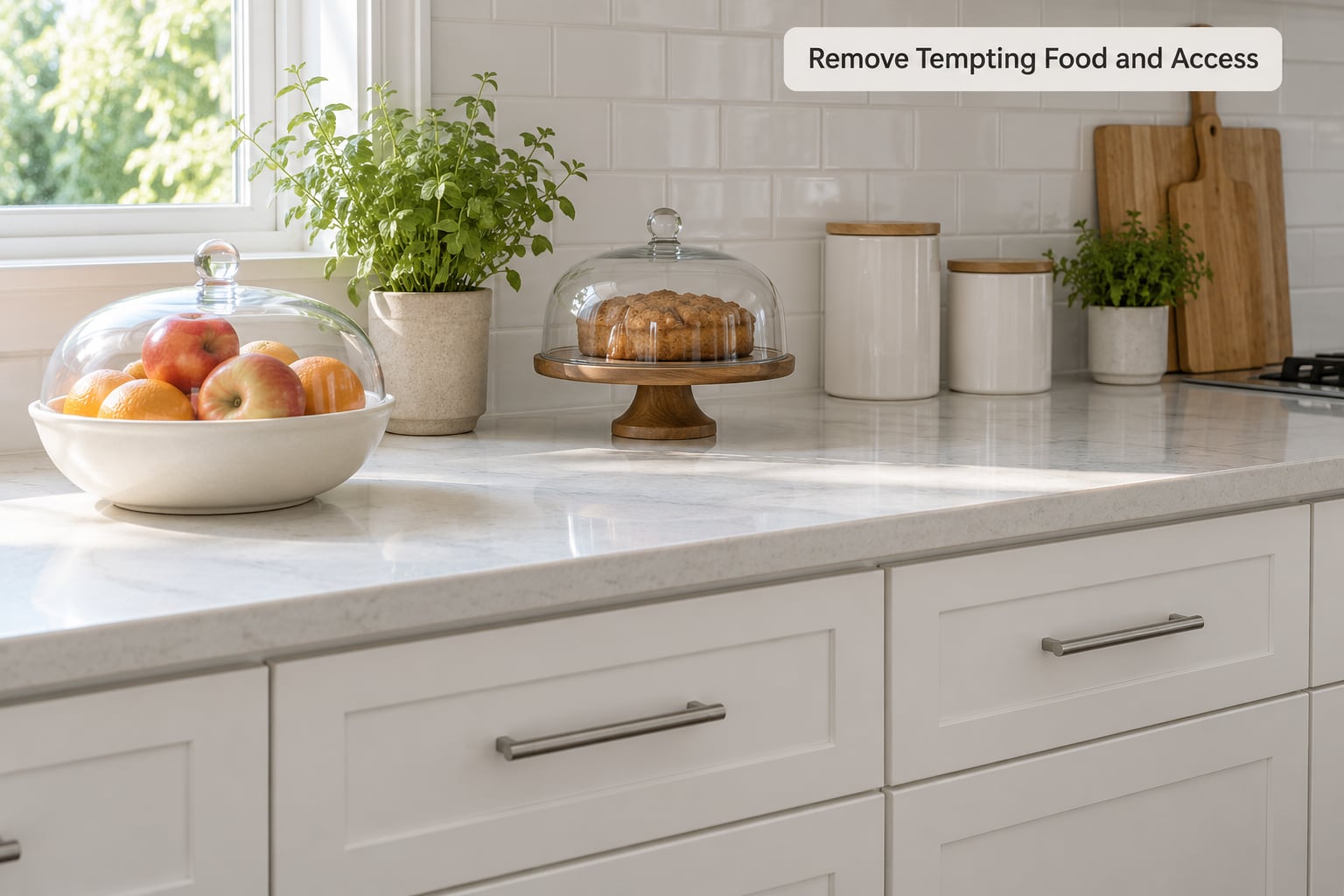
You cannot train a cat away from a reward that is still being delivered. Wipe counters and stovetops right after use, sweep crumbs into a lidded bin, and put dishes in the dishwasher or a closed cupboard rather than the sink.
Store dry food in a hard container with a clip lid or a lidded bin. Cats have learned to work latches, so a loose lid is a delay, not a solution.
Close the kitchen door while you cook when you can. A door you can shut with the cat outside it is worth more than an hour of training. If the kitchen is the only place your cat gets attention, spend five minutes on the floor with it before you start.
While you are clearing counters, look for hazards. A hot burner is the reason most urgent. Chocolate, onions, garlic, grapes, raisins, caffeine, alcohol, and raw dough with yeast are all toxic to cats, and a counter is the easiest place for a dog or a visiting guest to drop something. Check with your veterinarian about anything you are unsure of, and never give a cat human medication.
3. Redirect the Cat to an Approved Spot
When you catch your cat on the counter, stay calm. Do not chase it, grab it, or yell, because that turns the counter into the most exciting place in the house and teaches it that your reaction is the reward.
Walk over quietly, block it from the counter without force, and guide it down with your hand or a treat. As soon as all four paws are on the floor, click and give a treat. Most cats learn the pattern within days: counter means nothing, floor means snacks.
Say a firm, quiet no once, then move on. One sharp word carries far enough. Repeating it for two minutes teaches nothing except that you are upset.
4. Use Positive Reinforcement
Clicker training is what makes the new habit stick. Click at the instant your cat’s paws touch the floor or the approved perch, then deliver the treat. The timing matters far more than the number of treats, so aim for the first second of the correct behavior.
Keep sessions short. Three minutes a day beats twenty minutes of half-paying attention. When your cat jumps up mid-session, let it down without comment and start again when it is down. Repetition across two or three weeks does the real work.
Say the word you want to attach to the behavior, such as “off”, right as you mark the landing. Soon the word alone carries meaning, which is what you want on a busy morning when you have both hands full.
5. Add Height, Comfort, and Enrichment
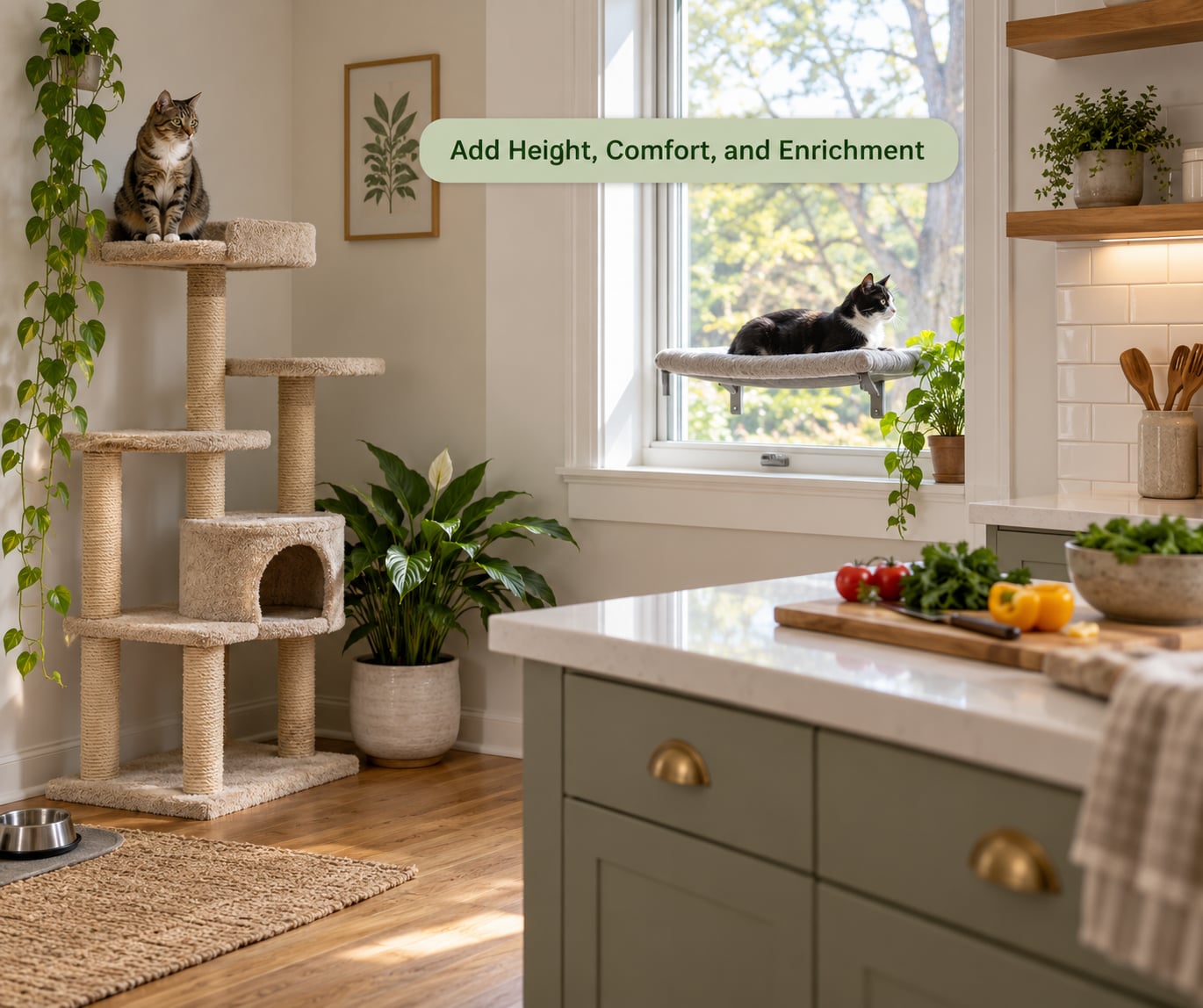
A cat with a good lookout spot rarely bothers with the counter. The key word is close. A tree in the living room does almost nothing for a cat whose entire motivation is watching you cook, so place the alternative within sight of the kitchen.
Pick one option and make it comfortable. A window perch gives a cat a view of the street, which is the whole reason many cats climb in the first place. Wall shelves work if you anchor them properly and space them so the cat can pass without jumping blind. A raised feeding station in another room takes counter-level interest and moves it to meal times.
Boredom is a common hidden cause. A puzzle feeder, a wand toy used for five minutes before dinner, or a cardboard box on its side gives the cat something to hunt that is not your dinner.
Adjust for who is in the house. In a multi-cat home, add more than one perch so nobody is forced to share a spot with a cat they do not like. For a senior cat, skip tall shelves and start with a low, wide step or a sturdy chair, since jumping gets harder with age.
If your cat is newly adopted, expect a settling period rather than instant rules. The 3-3-3 rule is a rough guide many shelters use: about three days to decompress, three weeks to settle into the routine, and three months to feel fully at home. Training usually starts comfortably inside that middle window.
6. Test the Plan and Prevent Backsliding
Track it for a week. Count how many times a day your cat goes up, and whether the taped edges still work. Most progress looks slow and then suddenly arrives, so judge the plan on the weekly trend rather than on a single bad evening.
If the tape stops working, the cat has learned that it can step over it. Widen the strip or move it to the exact spot where paws touch down. If foil does nothing, your cat is either indifferent to sound or determined enough to walk over it. Several owners on r/CatAdvice report foil failing completely, which is common with confident cats and with cats that ignore noise. Switching the taps for sticky paper, a plastic mat, or a scat mat with an air puff sometimes works where sound-based methods do not.
If the cat improves and then relapses, look at what changed. A busy week, guests, a new routine, or someone else feeding treats on the counter will undo weeks of work in a day. Agree on the rules with everyone in the household before you start, and remind them kindly when they forget.
Finally, never punish a cat after the fact. A cat that gets yelled at an hour after the jump cannot connect the two, so it only learns to be wary of you.
Common Mistakes
- Spraying or shouting. It produces fear, not learning, and some cats simply wait until you leave the room. Fix: skip the punishment and pay the cat for going to the floor instead.
- Saying no five minutes too late. Delayed corrections confuse your cat about what you actually dislike. Fix: mark and reward the right choice at the moment it happens.
- Inconsistent rules. One family member lifts the cat down gently while another shouts. Fix: get everyone to follow the same routine, including visitors.
- Putting the alternative far away. A tree in another room does not compete with a counter in the kitchen. Fix: place the perch within sight and reward use of it heavily for the first two weeks.
- Free-feeding on the counter. It teaches the exact behavior you want gone. Fix: move meals to a raised feeder or a slow feeder in another room.
- Relying on one deterrent. Cats learn textures quickly. Fix: layer deterrents with the real fix, which is a better alternative and less food access.
- Setting the bar too high too fast. Expecting an adopted adult with years of counter surfing to stop in two days leads to frustration. Fix: reward the smallest step, like standing on the floor near the counter, and build from there.
Be patient with the whole process, and keep a spare perch in reserve. Cats that get older or lose interest in climbing often return to counters unless there is another option on offer.
Frequently Asked Questions
How do I stop my cat from jumping on kitchen counters if it has already learned the habit?
Start by removing the reward and adding a better option in the same room. Clear and wipe counters, move food to a latched container, then set a stable perch near the kitchen and pay your cat generously for using it. Redirect calmly every time it goes up and never punish. Expect two to three weeks of daily sessions before the new habit takes over.
Should I spray or shout at my cat when it gets on the counter?
No. Spray bottles and shouting create fear rather than learning, and they can make your cat anxious around the kitchen instead of keeping it off. Many owners on cat forums report that spray stopped the behavior for an hour and made the cat hide. Redirect without force, wait for all four paws on the floor, then click and treat at that exact moment.
What can I put on a kitchen counter to stop a cat from jumping there?
Double-sided tape and aluminum foil along the counter edge are the two most common options. Tape feels strange underfoot and foil startles with sound and texture. Cats learn to step over both within days, so widen the strip and combine it with an alternative perch. Avoid essential oils, which are toxic to cats when they are licked or inhaled, and skip anything you would not want near food.
Why is my cat suddenly interested in the kitchen counter?
New interest usually points to a change. Common triggers include a new food smell, more people in the home, boredom, insects near the sink, or a switch to a taller piece of furniture. Senior cats may seek warmth from a sunlit counter. If the interest appears with weight loss, drinking changes, or restlessness, book a veterinary appointment rather than training through it.
Is it normal for a kitten to climb on kitchen counters?
Yes, it is completely normal and it is also the easiest time to change the habit. Kittens explore high surfaces as part of learning where they are in the home. Keep counters clear of food, supervise closely, and reward the kitten for using a cat tree or window perch. A kitten that is never allowed on the counter rarely tries to sneak onto it later.
When should I take my cat to the vet about counter-climbing?
Call your veterinarian if the behavior starts suddenly, comes with appetite or weight changes, or if your cat seems unsteady, hesitant to jump, or unable to land normally. Those signs point to pain, arthritis, or a neurological issue rather than a behavior problem. A vet can also rule out hyperthyroidism and other conditions that make a previously calm cat restless near food.
Conclusion
Start tonight with the boring part. Put the food away, wipe the counters, and set up a perch your cat will genuinely like in the room where you cook. Then click and treat the first time your cat chooses the perch instead of the counter, and repeat it every day for the next few weeks. That combination works far better than anything you can buy.