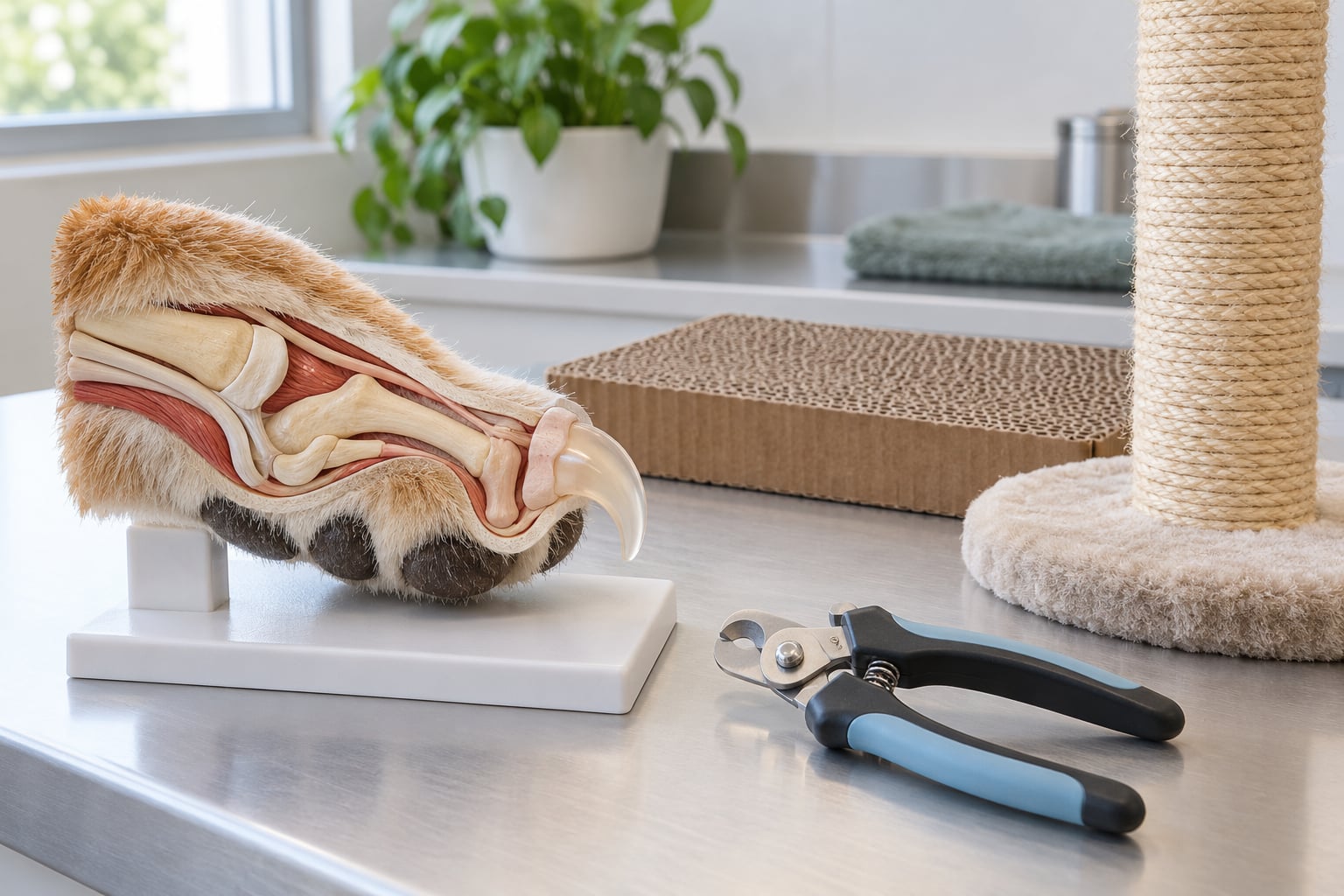
Yes, declawing a cat is harmful. The procedure, called onychectomy, amputates the last bone of every toe rather than trimming a nail, and it can leave a cat with lasting paw pain, altered footing and new behavior problems. Most major veterinary groups advise against it as a routine procedure, and workable scratching alternatives exist for nearly every situation.
If a vet has suggested it to you, it helps to know what the surgery actually involves, what research has found afterward, and what you can do instead. That is what this guide covers.
Table of Contents
- Is Declawing a Cat Harmful? What the Procedure Involves
- Why the procedure was ever considered routine
- What Physical Problems Can Declawing Cause?
- Can Declawing Change a Cat’s Behavior?
- Why Do Cats Scratch, and Why Shouldn’t That Need Solving?
- What Are the Best Alternatives to Declawing a Cat?
- Scratching posts, pads and cat trees
- Horizontal scratchers for low and senior cats
- Regular nail trimming
- Nail caps
- Deterrents and pheromone products
- Play and environmental enrichment
- Ruling out medical causes first
- How Can You Stop Furniture Scratching Without Declawing?
- When Should You Talk to a Veterinarian About Claw Problems?
- How Do You Choose a Humane Solution for Your Cat?
- Frequently Asked Questions
- Is declawing a cat the same as trimming its nails?
- Does declawing cause long-term pain for cats?
- Can a declawed cat still scratch?
- Why is my cat scratching the furniture so much?
- What can I do if scratching is damaging my furniture?
- The Safer Choice for Your Cat
Is Declawing a Cat Harmful? What the Procedure Involves
Declawing is not a manicure. A cat’s claw grows from a bone called the third phalanx, the same way a human fingernail grows from the last knuckle of a finger. Onychectomy removes that whole bone at the last joint, so one cat loses ten tiny amputations, one per toe.
It is worth being precise about the difference. Claw trimming removes a small keratin hook, exactly as you would cut your own nails, and the claw grows back normally. Declawing cuts away bone, tendon, ligament and nerve at the final toe joint. That is why it is classified as major surgery rather than routine grooming.
The claw also retracts normally when a cat walks, so it does not drag on the floor. Cats walk on their toes, which means losing the toe bone permanently changes how a foot lands. Veterinary associations have moved firmly against the procedure for cosmetic or convenience reasons, though it is occasionally still performed for medical reasons under narrow circumstances.
Why the procedure was ever considered routine
Declawing spread through pet ownership in the last century, largely because indoor cats were increasingly valued for furniture protection and landlords worried about damage. Owners accepted it as a cosmetic convenience rather than a medical treatment, and it was performed far more often than it is today.
Attitudes have shifted since then, supported by post-operative studies that documented physical and behavioral complications at rates well above what owners were led to expect.
What Physical Problems Can Declawing Cause?
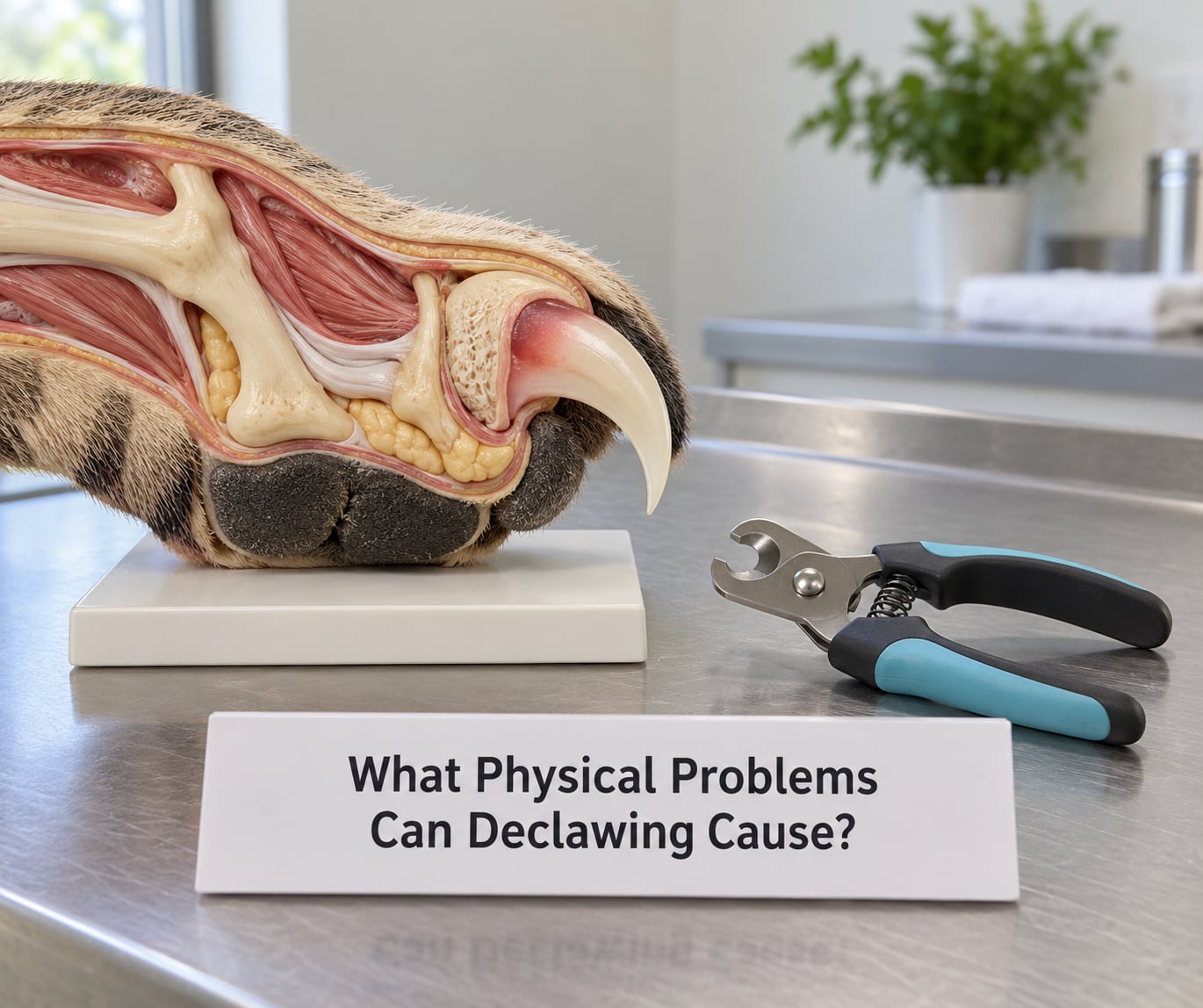
Research on declawed cats has found both immediate complications and problems that surface months or years later. Post-operative studies reported bleeding in a large share of cases and leftover bone fragments in roughly two thirds of paws examined, though figures vary by study and surgical method.
The immediate category covers bleeding that does not stop, swelling, wound separation where the incision opens, and infection at the toe. Cats hide pain well, so an owner often sees only that the cat is hiding, off food, or lame for the first few days.
The longer-term category is where owners are most often surprised. Residual bone fragments can re-emerge under the skin as a hard, painful lump, sometimes called a sequestrum. Nerve damage can leave a toe that is hypersensitive or oddly numb. Altered weight-bearing frequently produces a flat-footed, palmigrade stance that shifts strain to the wrist, elbow and shoulder, and many owners first notice their cat sitting lower or developing stiffness as it ages.
Not every declawed cat develops all of this. But the risk is real, the problems are hard to reverse surgically, and they tend to compound with age. Chronic discomfort in the paws is reported often enough that it is now treated as a foreseeable outcome rather than a rare surprise.
See a veterinarian promptly if your cat shows ongoing pain, swelling, discharge, wounds that reopen, a paw that looks deformed, or any change in how it walks or jumps. Those signs deserve an exam, not a wait-and-see.
Can Declawing Change a Cat’s Behavior?
Yes, and this is the part owners are least prepared for. A declawed cat keeps the instinct to scratch but loses the ability to perform it, and researchers have observed a rise in aggression and litter box avoidance in declawed cats compared with intact cats.
The mechanism is reasonably intuitive. With no claws to retract and extend, the bite becomes the cat’s remaining weapon, and some cats guard their feet more fiercely because the paws hurt. Reduced claw sensation also changes how the cat tests and uses surfaces, which can leave it less willing to use the litter box if the substrate feels uncomfortable on sensitive feet.
Common reported changes include biting that was not there before, hiding, avoiding being handled near the feet, and urine or stool outside the box. Litter box problems that start after surgery are a common reason owners contact their vet about a cat they adopted declawed.
Again, this is not universal. Plenty of declawed cats live comfortably and do not develop a single behavior problem. The fair way to put it is that declawing raises the odds of these issues and removes the cat’s normal way of handling stress.
Why Do Cats Scratch, and Why Shouldn’t That Need Solving?
Scratching is not misbehavior. It is one of a cat’s core routines, and it serves several purposes at once: trimming the claws as they grow, stretching the shoulder and spine after a nap, marking territory with scent glands in the paw pads, and releasing tension when a cat feels overstimulated.
That last part matters. A cat locked in an apartment with no outlet for a normal behavior ends up performing it on the nearest sofa corner, usually right where the household walks. Owners read that as defiance when it is really just a cat with nowhere else to put it.
So the goal is not to stop scratching. It is to redirect it. A home with several appealing scratching surfaces usually gets scratched furniture damage down to almost nothing, because the behavior still gets done, just on something you own rather than something you regret.
What Are the Best Alternatives to Declawing a Cat?
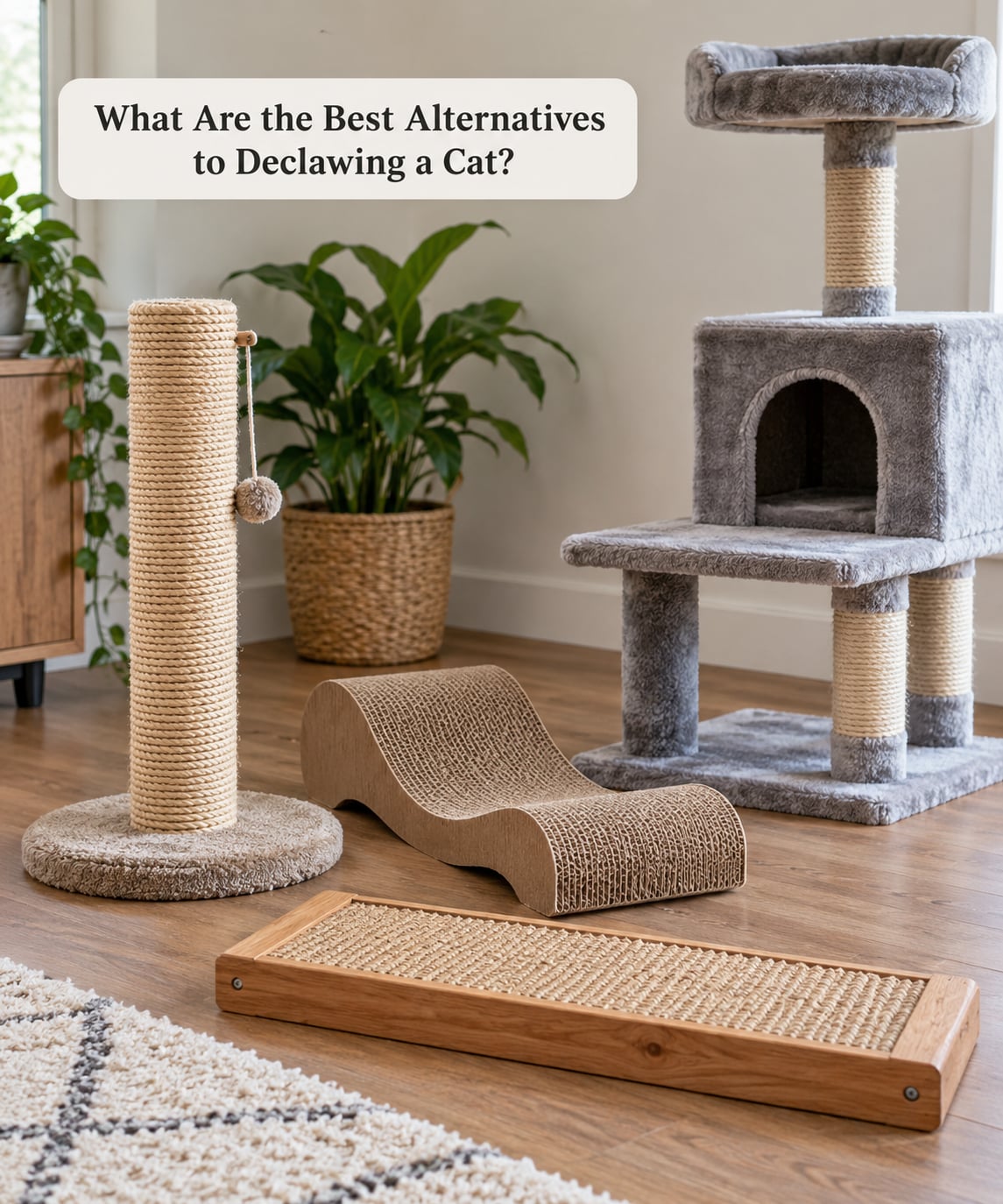
The alternatives fall into two groups: outlets that redirect the behavior, and products that protect the surfaces you care about. Most homes need a combination of two or three.
Scratching posts, pads and cat trees
These are the single most effective option, and the details matter more than owners expect. A post should be tall enough for the cat to stretch fully, at least three feet for most cats, and heavy enough not to wobble, because a scratching post that tips gets abandoned. Sisal, cardboard and rough wood each work; some cats prefer a continuous sheet they can rake in long strokes rather than a wrapped rope post they bump against.
Horizontal scratchers for low and senior cats
A cat that avoids tall posts because of arthritis or age will happily use a flat cardboard or wooden scratcher on the floor. This is worth trying if your cat is older, hesitant on the sofa, or has been ignoring everything you have put up so far.
Regular nail trimming
Trimming keeps claws blunt and manageable and takes a few minutes every couple of weeks. You only need to cut the translucent hook well clear of the pink quick, in small slices. A styptic pencil or cornflour on the tip handles the occasional quick you catch, and treats turn a struggle into a routine. Start young if you can, and keep sessions short and calm.
Nail caps
Soft plastic caps fit over each claw and are held on with a safe adhesive. They blunt the scratch without removing anything and are usually reapplied every four to six weeks, or sooner if the cat grooms them off. They work best on cats that tolerate handling, and application often takes two people.
Deterrents and pheromone products
Double-sided tape or plastic sheeting on a favored sofa corner stops scratching there quickly, and a spray applied to the furniture works similarly. Pheromone products, available as room diffusers or sprays, aim at the stressed behavior itself, though the evidence for them is mixed, so treat them as one tool rather than a cure. Any tape, spray or topical product should be used exactly as its label directs and kept out of reach of your cat.
Play and environmental enrichment
A cat with somewhere to hunt, climb and chase is a cat with less leftover energy and fewer reasons to rearrange your living room. Rotating a few toys, adding a perch by a window and spending ten minutes on wand play a day often reduces scratching problems more than any single product.
Ruling out medical causes first
Scratching that is sudden, obsessive or paired with licking, bald patches, limping or a hunched posture is not a behavior problem. It needs a veterinary exam, because parasites, allergies, arthritis, anal gland issues and nerve pain all drive cats to scratch. Check with your vet before treating a scratching cat with anything.
How Can You Stop Furniture Scratching Without Declawing?
When a cat ignores every post you own, the fix is almost always placement and reinforcement rather than the product itself. Work through this sequence.
1. Find the favorite spots. Look for clawed fabric, often at sofa corners, door frames or the arm of a chair. Those are the spots your cat already chose, and the ones worth targeting.
2. Put a scratching surface right beside them. A post placed a foot away from the sofa arm gets used. One across the room competes with the couch and usually loses.
3. Add more than one option. Offer two or three surfaces in different styles, vertical and horizontal, in different rooms. Cats that claim one post as territory often need a second.
4. Protect the surface in the meantime. Apply double-sided tape or pet-safe deterrent sheeting to the damaged area, following the product directions exactly.
5. Reward the right choice. As soon as your cat scratches the new post, treat or praise immediately. A short session at the right spot teaches faster than a long session anywhere.
6. Make the post appealing. A light sprinkle of catnip, or silvervine if your cat responds to it, near the base usually doubles interest. Keep it topped up every couple of weeks.
7. Rotate rather than remove. If interest fades, swap the location or style instead of giving up on scratching surfaces entirely. Rotation keeps the option fresh.
If you rent, talk to your landlord about the damage in writing and offer to install protective sheeting and a dedicated post. Most landlords are far more interested in a solution than in your cat’s surgery, and many leases that mention pets never require declawing at all.
When Should You Talk to a Veterinarian About Claw Problems?
Book an appointment rather than waiting when you notice limping, favoring a paw, reluctance to jump or climb, constant licking of the feet, open wounds, discharge from a toe, or a nail that looks split, curved or grown at an odd angle. Sudden changes in scratching or in litter box habits also deserve a look.
Ask your vet directly about nail caps, safe nail trimming for a resistant cat, and pain management if your cat is already declawed and uncomfortable. Older cats with thick or brittle nails often need more frequent trims and a softer approach, and a vet or technician can demonstrate a technique that works for that particular cat.
One firm rule: never give a cat human pain medicines or human topical products. Many common over-the-counter painkillers are dangerous for cats, and things marketed for people can burn their skin or paws.
Declawing itself is illegal or restricted in a growing number of countries and cities, so check the rules where you live before it even comes up in a conversation.
How Do You Choose a Humane Solution for Your Cat?
A simple order of operations gets most households to a workable answer. Watch where and how often your cat scratches, rule out pain or illness with a vet visit, then set up two or three scratching outlets near the spots your cat already uses. Protect the furniture you care about with tape or deterrent sheeting while that takes hold, reward the post every single time, and trim or cap claws on a schedule.
Declawing sits at the end of that list, if it appears at all, and never as the first move. It removes a normal behavior rather than redirecting one, and it can leave problems that last for the cat’s whole life. If someone in the household still wants it, it helps to bring them to a vet appointment rather than argue at the kitchen table.
Frequently Asked Questions
Is declawing a cat the same as trimming its nails?
No, they are very different. Trimming removes the keratin hook only, and the claw grows back normally over a few weeks. Declawing amputates the third phalanx, the last bone of each toe, along with attached tendon, ligament and nerve. One cat loses ten amputations, which is why declawing counts as major surgery and trimming counts as routine grooming.
Does declawing cause long-term pain for cats?
It can, and the discomfort is often long lasting. Post-operative research found leftover bone fragments in many paws, along with bleeding and infection at the toe. Over time, altered weight-bearing can produce a flat-footed stance and strain on the wrist, elbow and shoulder, and some cats develop sensitive or hypersensitive toes that hurt when touched or walked on.
Can a declawed cat still scratch?
They scratch, but differently. With no claw to extend, the scratching motion is often reduced to a flat, dragging motion, and some cats also bite more. The instinct to scratch usually remains, so providing posts and other outlets still helps. Many owners also notice litter box avoidance, which is worth raising with your vet if your cat stops using the box after surgery.
Why is my cat scratching the furniture so much?
Scratching is normal cat behavior, used to trim claws, stretch, mark territory and manage stress. Cats that have no better outlet perform it on furniture, usually where people walk. Sudden or obsessive scratching is different, though, and can point to parasites, allergies, arthritis or nerve pain, so a veterinary exam is the right first step in that case.
What can I do if scratching is damaging my furniture?
Cover the affected area with double-sided tape or pet-safe deterrent sheeting, and place a sturdy scratching post directly beside the spot your cat prefers, ideally three feet or taller so it does not wobble. Offer two or three different styles, add catnip or silvervine, and reward your cat every time it uses them. Add play and climbing options to absorb the leftover energy.
The Safer Choice for Your Cat
Start by watching where your cat scratches for a week and noting which spots it returns to. Put two or three scratching surfaces next to those spots, protect the furniture with tape while the new habit forms, and reward every correct use. Then trim or cap claws on a routine and add daily play.
If your cat shows pain, a limp, wounds, discharge, or a sudden change in behavior or litter box habits, talk to a veterinarian. That is also where you can ask about nail caps, safe trimming techniques, and managing discomfort in a cat that is already declawed. Redirecting scratching is slower than surgery and far easier on the cat.