To prepare a dog for surgery and anesthesia, follow the fasting and medication instructions from your own veterinary hospital, get the pre-anesthetic tests they require, and set up a quiet recovery space at home before the procedure. Most of the work happens in the seven days before the appointment, and most of it is paperwork rather than anything physical.
This guide is general information, not veterinary advice. Your dog’s age, weight, breed, current conditions and the procedure itself all change what is safe, so the hospital’s written instructions always win over anything you read online, including this page.
Owners who are most prepared tend to do the same three things: they ask for the fasting cutoff in writing, they arrive with a complete list of every supplement and prescription, and they have a quiet corner of the house ready the day they bring the dog home. Below is the whole process in order.
Table of Contents
- What You Need
- Step-by-Step
- Step 1: Confirm the Procedure and Veterinary Instructions
- Step 2: Review Your Dog’s Health and Medication History
- Step 3: Follow the Veterinary Fasting Instructions
- Step 4: Prepare a Calm Home and Transport Plan
- Step 5: Ask What Happens at the Hospital
- Step 6: Set Up Safe Post-Surgery Care
- Common Mistakes
- Frequently Asked Questions
- Can I give my dog food or water before surgery?
- What should I do if my dog takes medication every day?
- How early should I arrive with my dog for surgery?
- What can I feed my dog after anesthesia and surgery?
- How do I know when my dog’s surgical recovery needs veterinary attention?
- Conclusion
What You Need
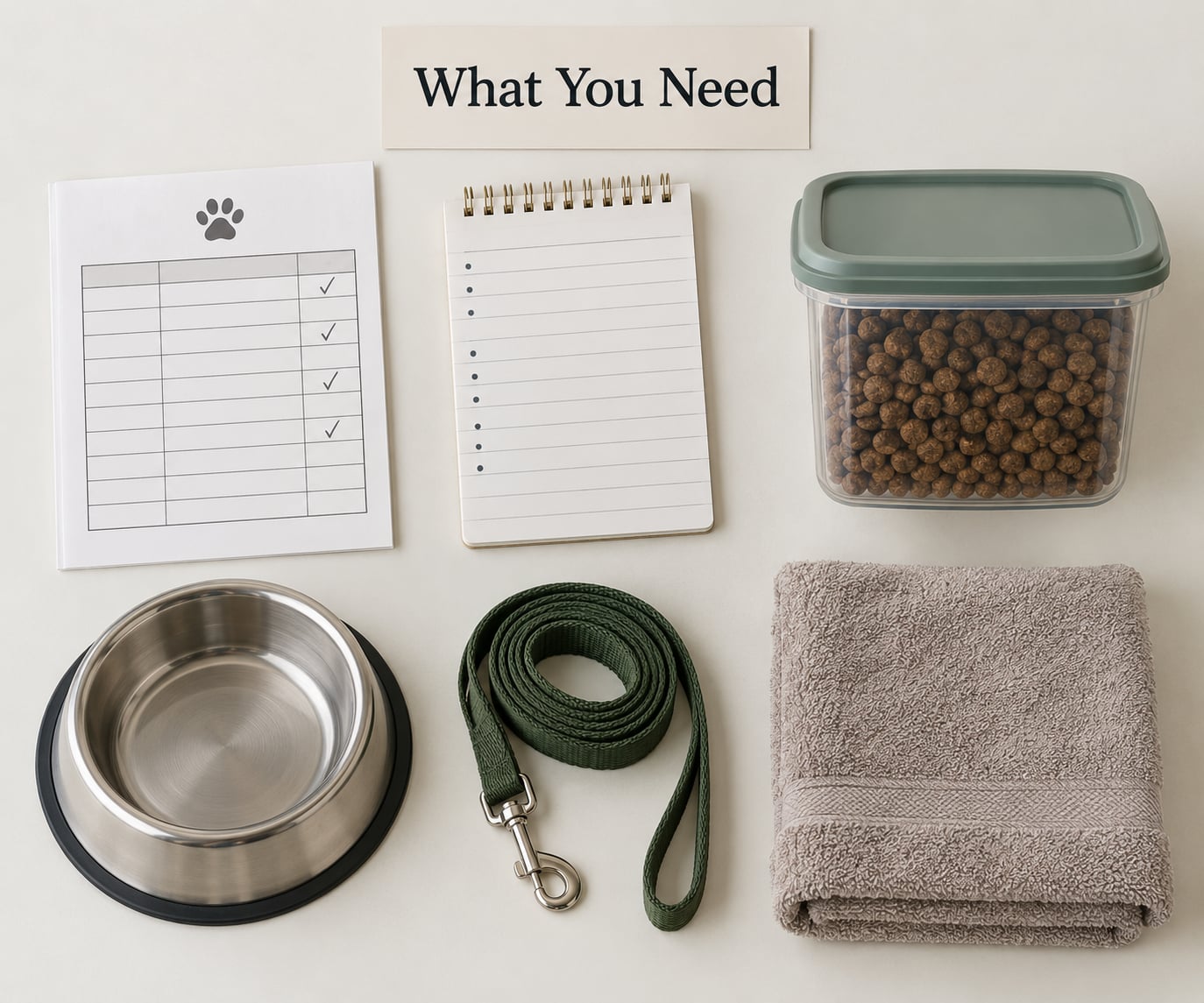
Start by confirming what your veterinary hospital actually requires. Fasting rules quoted in owner forums range from eight hours to twelve, and only your clinic can tell you which applies to your dog and how they count it.
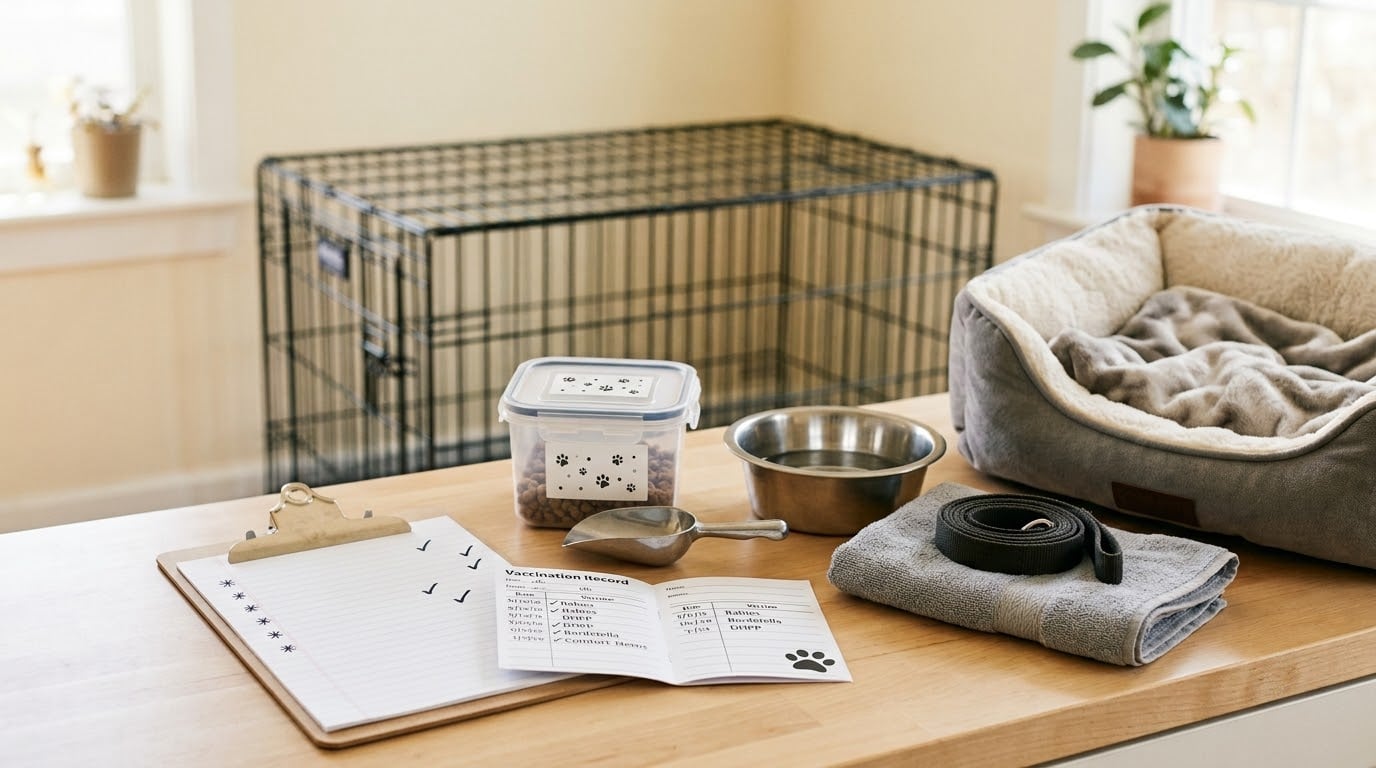
- Your dog’s records: vaccination history, past surgeries, current diagnoses, and the name and phone number of the regular vet.
- A written medication list: every prescription, every supplement, the dose, and how often it is given. Include the flea and tick treatment.
- The fasting instruction in writing: food cutoff, water cutoff, and the scheduled arrival time.
- Transport: a secure crate, a harness and leash, or a carrier your dog is already comfortable in.
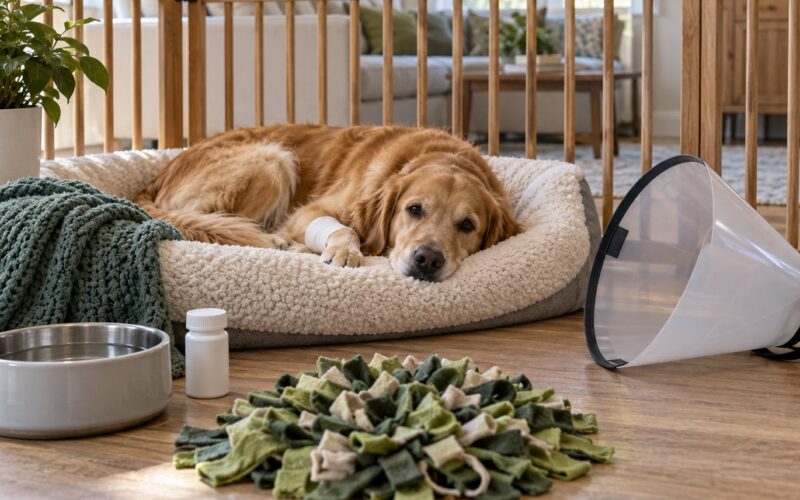
- Recovery supplies: washed bedding, a cone or surgical recovery suit if the hospital recommends one, and the prescribed pain medication and bland diet waiting at home.
One more thing worth having: a charged phone and a plan for who picks up your dog if you cannot be there when they are ready to go home.
Step-by-Step
Step 1: Confirm the Procedure and Veterinary Instructions
Call the hospital and get the surgery date, the exact procedure, the arrival time and the fasting cutoff confirmed in writing. Ask what happens if the dog is sick on the morning of surgery, who to call after hours, and whether you should feed a normal dinner the night before.
Write the answers down. Owners who arrive with a short list of questions get far better information than owners who try to remember everything at the front desk.
Step 2: Review Your Dog’s Health and Medication History
Assemble a short history: current symptoms, recent changes in appetite or drinking, known allergies, past reactions to anesthesia, and every medication and supplement by name. Mention anything new in the last month, including anything bought at a pet shop.
Do not stop or change any medication on your own. Some drugs need to be held before anesthesia because they affect blood pressure, bleeding or liver function, and others must continue or the dog risks withdrawal. That decision belongs to your veterinarian, and the list of what to hold versus what to continue is different for nearly every dog.
Step 3: Follow the Veterinary Fasting Instructions
Most hospitals ask for no food from the evening before and no water for a couple of hours before the scheduled start of anesthesia, and many use the 2-4-6 rule as a guide: nothing to eat for about six hours before, water allowed until roughly two hours before, and any oral medication given about four hours before. Treat that rule as a conversation starter, not a standard, because puppies, small dogs, diabetic dogs and flat-faced breeds often need a different plan.
The reason for fasting is aspiration. Under general anesthesia a dog’s protective airway reflexes switch off, so anything left in the stomach can be vomited and drawn into the lungs, which can cause aspiration pneumonia. An empty stomach removes that risk.
| Task | Timing relative to the scheduled start of anesthesia |
|---|---|
| Last meal | Usually the evening before, with nothing after midnight |
| Water access ends | Often 2 hours before, but many hospitals allow free water until then |
| Oral pre-medication, if prescribed | Often 2 to 3 hours before travel |
| Leave for the hospital | Arrival time given by the clinic, often 30 to 60 minutes early |
Several clubs and online groups treat the 2-4-6 rule as fixed advice. It is not a published standard, and applying it to a puppy or a dog under 2 kg can mean a dangerously long fast.
Step 4: Prepare a Calm Home and Transport Plan
Set up a quiet spot on the floor level, away from stairs, other pets and foot traffic, with washed bedding. If you have gates or a crate, have them ready before you bring the dog home, because a groggy dog cannot be trusted with stairs or furniture.
Keep the ride calm and secure. Use a crate if the dog is comfortable in one, otherwise a harness clipped in the back seat. Skip the car if the dog vomits or panics in it, and tell the hospital so they can prescribe a pre-medication.
Step 5: Ask What Happens at the Hospital
Ask what the pre-anesthetic exam includes, what bloodwork is run and when the results are reviewed, whether your dog will receive IV fluids, and what monitoring is used during and after anesthesia. Bloodwork typically looks at liver and kidney values, blood sugar and clotting ability, and it is often the thing that reassures owners most.
Also ask what the discharge criteria are, how pain is managed at home, and which symptoms should make you call immediately rather than wait until morning.
Step 6: Set Up Safe Post-Surgery Care
Before the procedure, decide who will be home with the dog, because groggy dogs need to be carried and watched in the first hours. Have the discharge instructions printed if you can, and know the after-hours number before you leave the hospital.
Follow the restrictions you are given on activity, licking and food. Watch the incision as instructed, keep it clean and dry, and log basic observations such as eating, drinking, vomiting and the color of urine. A daily note is more useful than memory when you are deciding whether to call.
Common Mistakes
- Fasting for an assumed number of hours. Forum advice ranges from eight to twelve hours. Ask your clinic for their number and count back from the start of anesthesia, not from when you leave home.
- Withholding water because it seems safer. Many hospitals allow water right up to the cutoff, and dehydration makes anesthesia harder. Never take water away without confirmation.
- Giving human medication. Ibuprofen, acetaminophen and similar drugs are dangerous for dogs. Only give what the hospital prescribed, at the dose on the label.
- Leaving supplements off the medication list. Fish oil, joint chews, CBD and herbal drops all belong on it, even when they seem harmless.
- Exercising too early. Dogs often feel better a few days in and then hurt themselves. Follow the restricted activity period you were given.
- Relying on generic online advice. A forum thread, a breeder’s blog or a chart you found in search results cannot account for your dog’s airway, weight or heart.
Owners also mention the hardest part is emotional: you cannot explain to the dog why they are being left, and the waiting is hard. Owners who ask for the bloodwork results and for a call when the procedure is finished report feeling considerably less helpless.
Frequently Asked Questions
Can I give my dog food or water before surgery?
Only follow your hospital’s instructions. Most clinics ask for no food after midnight the night before and cut water access around two hours before the scheduled start of anesthesia. The reason is aspiration: under anesthesia the airway reflexes switch off, so food or water in the stomach can be vomited into the lungs. Puppies, diabetic dogs and flat-faced breeds often get different instructions, so confirm the cutoff with your clinic rather than assuming.
What should I do if my dog takes medication every day?
List every medication and supplement, with doses and timing, and hand it to the veterinary team before the procedure. Do not stop or skip anything on your own. Some drugs are usually held before anesthesia because they affect blood pressure, bleeding or liver function, while others must continue to avoid withdrawal. Your veterinarian decides which category each one falls into.
How early should I arrive with my dog for surgery?
Follow the arrival time your clinic gives you, which is often 30 to 60 minutes before the scheduled procedure. Early arrival lets the team run the pre-anesthetic exam, place an IV catheter, review bloodwork and give any pre-medication without rushing. If you are running late, call ahead rather than hoping, because the schedule may have changed.
What can I feed my dog after anesthesia and surgery?
Wait for your discharge instructions, because the answer depends on the surgery. After anesthesia the stomach is often sensitive and some dogs are given an anti-nausea medication first, so food may be withheld for a few hours. Many procedures come with a bland diet for several days. Introduce the normal food slowly and tell the clinic if your dog refuses food, vomits or seems painful.
How do I know when my dog’s surgical recovery needs veterinary attention?
Call your vet the same day for loud whimpering, no interest in food after the first day, swelling that grows, discharge that smells or opens up, a licking or chewing dog despite the cone, repeated vomiting, or straining to urinate. Emergency signs include collapse, pale gums, heavy bleeding, difficulty breathing, a distended hard abdomen, or being unable to stand. When in doubt, call; the clinic would rather hear from you early.
Conclusion
Four things to do first. Get your hospital’s fasting cutoff and arrival time in writing, then tell them every medication, supplement and current symptom. Follow that fasting plan exactly rather than a number you found in a forum thread, and prepare a quiet, floor-level recovery space before the day of surgery.
Everything else on this list is detail you can fill in with your veterinarian, because they know your dog’s weight, airway and history. Last reviewed for October 2026.