Caring for a senior cat day to day is mostly about removing friction. Put the food and water on the floor, swap in a low-sided litter box, offer three or four small meals instead of two, and take ten unhurried minutes to watch how your cat moves, eats and eliminates. That routine takes about fifteen minutes of your morning and again at night.
Most vets treat a cat as senior somewhere around 10 to 11 years, and that is when the day-to-day details start to matter: duller sense of smell, stiffer joints, thinner muscle, teeth that hurt. Ageing itself is not a disease. Weight loss in an older cat is not a normal part of getting older either, which is why a written log beats a fuzzy memory.
This guide is general information for home care. It is not a diagnosis or a treatment plan. Anything involving medication, dental pain, chronic kidney disease, arthritis or a sudden change in behaviour belongs with your veterinarian, and for anything urgent, that means the same day.
Table of Contents
- What You Need
- Step-by-Step: How to Care for a Senior Cat Day to Day
- Step 1: Check for Daily Changes
- Step 2: Serve Easy-to-Eat Meals
- Step 3: Make Water and the Litter Box Accessible
- Step 4: Support Gentle Movement and Rest
- Step 5: Groom Without Creating Stress
- Step 6: End the Day Safely
- Common Mistakes
- Frequently Asked Questions
- How much food should a senior cat eat each day?
- How much water should a senior cat drink each day?
- Is 13 old for a cat?
- How often should a senior cat see the vet?
- Can you train an older cat to use a litter box?
- What are the signs my senior cat is not feeling well?
- Start Tonight, Not Sometime This Month
What You Need
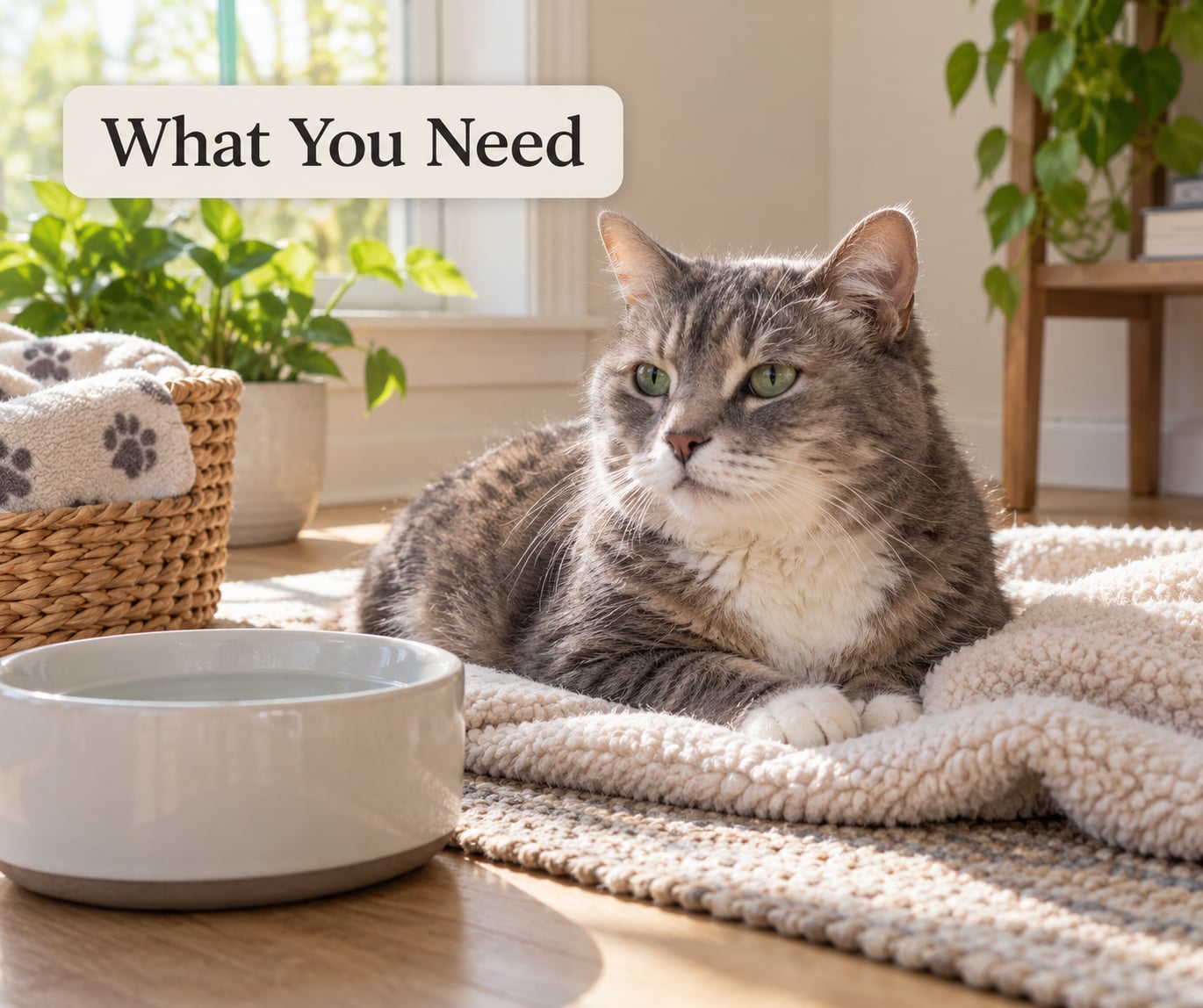
Start by gathering the basics. Most owners already own most of this list and simply have not arranged it for an older body.
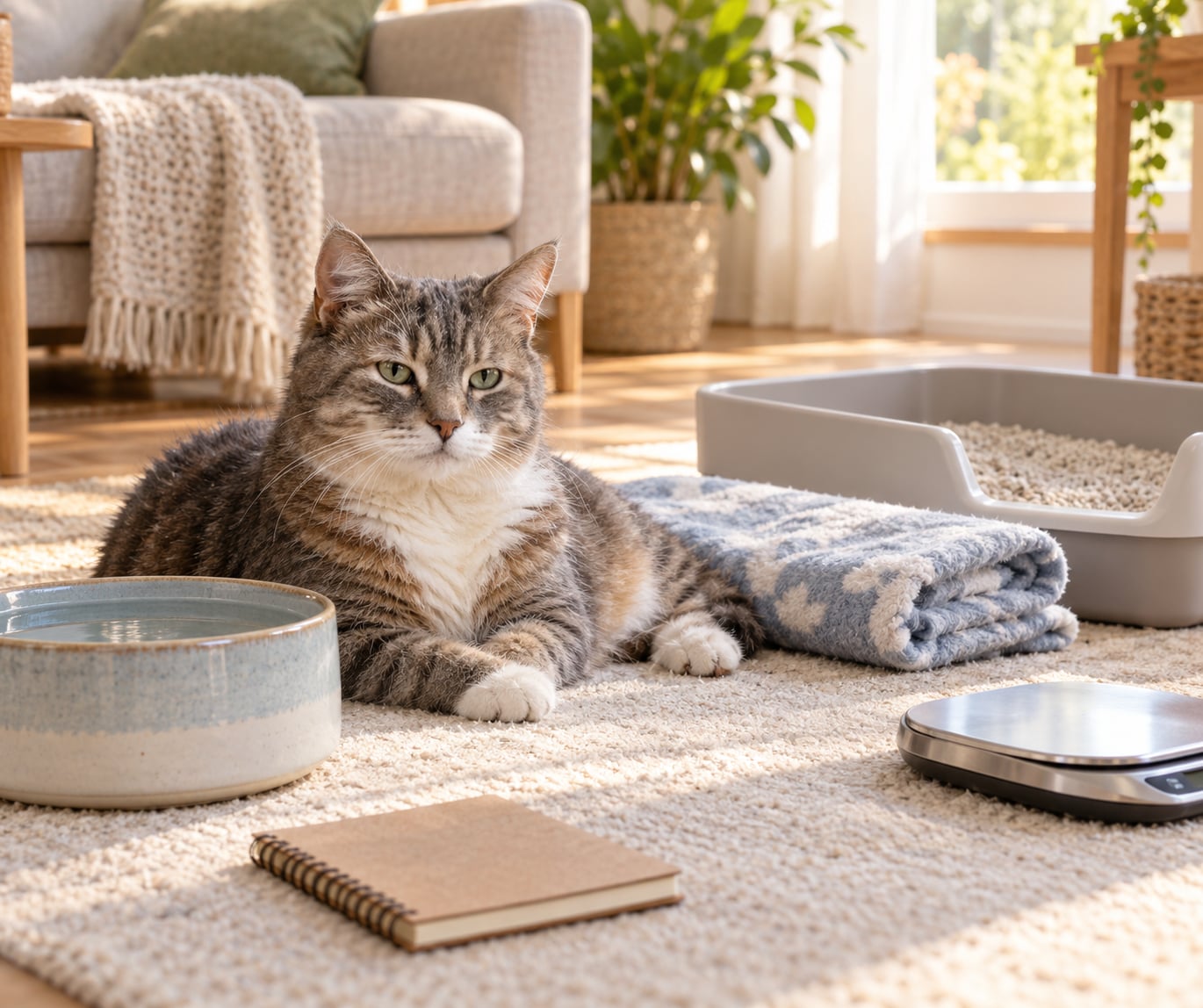
- Food your cat already eats. Keep the familiar kibble or wet food unless your vet has prescribed a renal, weight or urinary diet. Familiar food matters more than a marketing label during a period of change.
- Several water stations. Wide, shallow ceramic or glass bowls placed on the floor, on different rooms, plus a fountain if your cat prefers moving water. Bowls next to a washing machine or a litter box get avoided.
- A low-sided or open litter tray. A standard covered box with a hood entrance is often too much for a cat with sore hips. Add one box per cat plus one extra, spread across floors.
- Soft, warm bedding. At least three resting spots, on the floor or low surfaces rather than up on furniture. A folded towel over a heating pad set to low gives many older cats a favourite place.
- Grooming kit. A soft brush suited to the coat length, a towel you can wrap around the body for support, blunt nail clippers, and paw balm for cracked pads.
- Ramps, steps and non-slip runners. Cardboard or wooden ramps to the sofa or bed, and runners or yoga mats on slippery floors. Cheap versions work as well as expensive ones.
- A health log and a kitchen scale. A notebook by the food cupboard or a notes file on your phone: date, meals eaten, water level, litter box, weight, anything unusual.
- A medication plan from your vet. Written out, with the dose, the time and the delivery method, plus pill pockets or a syringe if fluids are involved. Never give a cat human medication.
Step-by-Step: How to Care for a Senior Cat Day to Day
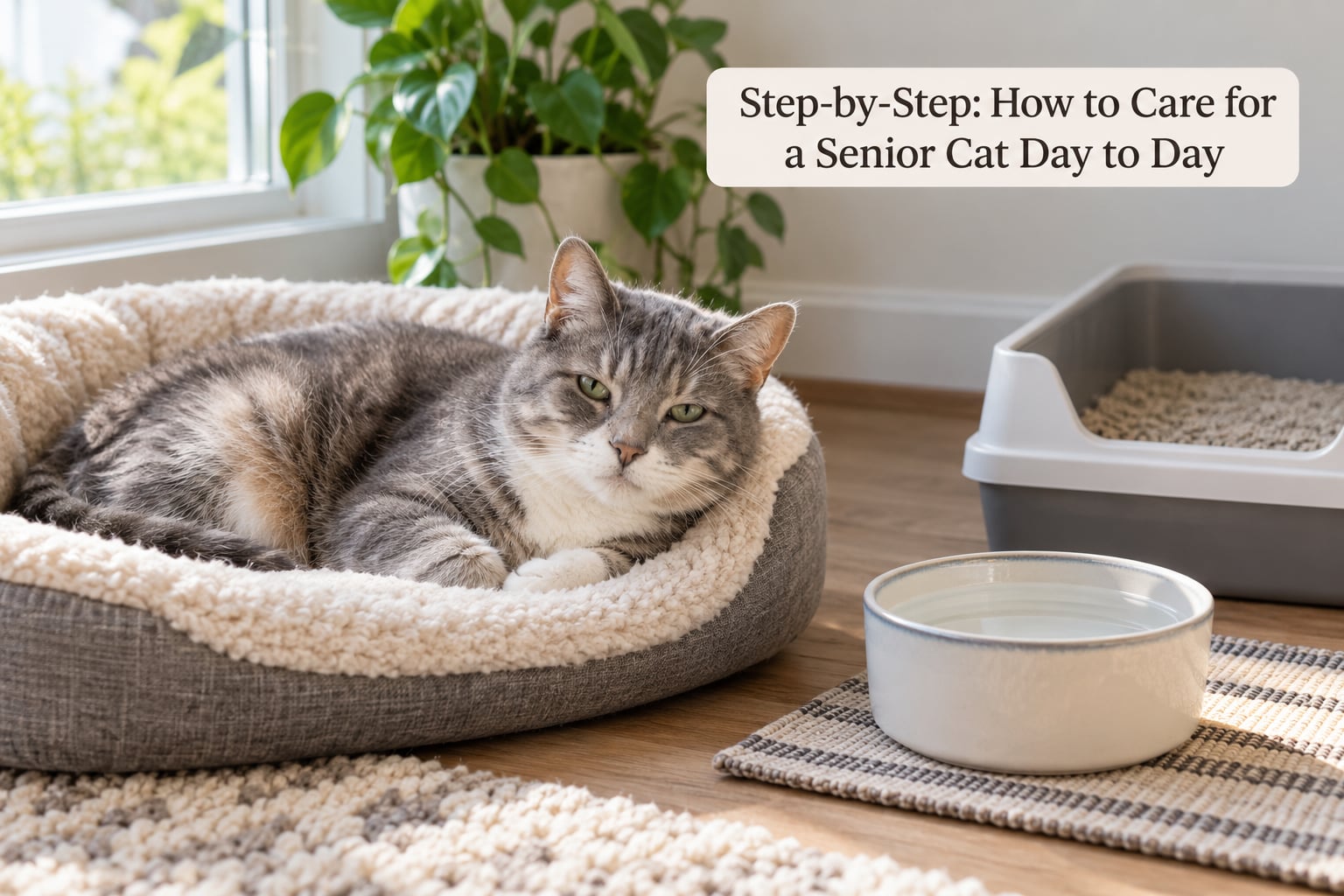
A workable routine fits around six short blocks rather than one long session. Cats are creatures of pattern, so keeping the order the same most days matters more than doing anything clever.
Step 1: Check for Daily Changes
Watch your cat before you do anything else, while they are still sleepy and honest about it. Look at appetite, water level, litter output, breathing, how they rise and walk, and the eyes and nose. Run a hand along the coat and check the eyes for cloudiness or discharge.
Write down what differs from yesterday, not just what seems off. A cat that ate two thirds of breakfast and used the box once is describing a change in a way that activity level alone never will. Note it and keep going; two days of a real shift is your cue to call.
Step 2: Serve Easy-to-Eat Meals
Serve the food warm when you can. Warming wet food in the microwave for a few seconds releases aroma, and older cats rely on smell more than they used to. Offer three or four small meals at consistent times, in a quiet room away from the queue at a multi-cat feeding spot.
Keep to the food your cat is used to and change it gradually over a week or more, mixed a little at a time. If your vet has prescribed a new diet, follow their schedule instead. You know it worked when the bowl is finished and the cat comes back for seconds, and the weight in your log holds steady.
Step 3: Make Water and the Litter Box Accessible
Put water and litter boxes on the same floor as wherever your cat spends most of the day. A senior cat that has to negotiate stairs to reach a bowl upstairs will quietly drink less and may have accidents simply because the route hurt. Refresh the water daily, and scrub the bowls weekly, because a slimy surface turns a cat off.
Check the litter box twice a day in the morning and evening. Scoop it, look for changes in the shape or size of the clumps, and wipe the bottom and sides. Low sides, a wide entry and a non-slip mat in front of the tray solve most of the misses that owners blame on bad behaviour.
Step 4: Support Gentle Movement and Rest
Aim for five to fifteen minutes of low-impact play, not a workout. A wand toy with a feathered end, a paper ball rolled along the floor or a treat tossed a short distance keeps joints moving without asking for leaps. Watch the cat’s breathing and stop while they are still interested. Two short sessions usually beat one long one.
Then give them places to rest at different heights, with soft surfaces that do not slide. If your cat used to leap onto a sofa and no longer does, treat that as a mobility signal to mention at the next visit rather than a personality change. You know the setup works when your cat uses the box reliably and still seeks out company.
Step 5: Groom Without Creating Stress
A cat that cannot reach their back or groom between their toes needs help. Brush a few strokes at a time, in the direction the fur grows, and stop at the first sign of a struggle. Pull mats apart with your fingers or work them out in small sessions rather than with scissors near stretched skin.
Trim nails every two to three weeks, a few nails at a time, with treats. Check the paws for cracked pads, check the ears for dark debris or a strong smell, and gently look at the eyes and skin. If your cat is painful, unusually resistant or suddenly hides when touched, stop and ask a veterinarian to look instead.
Step 6: End the Day Safely
Close the day the way you opened it. Do a final litter box check, offer a small meal if your vet’s plan calls for it, refresh the water, and settle your cat somewhere warm, quiet and away from draughts. A dim night light on the route to the box helps a cat with poor eyesight or mild cognitive change.
Then reread the log. If something changed today, note it while you remember. New night-time vocalising, wandering at odd hours or staring into corners is worth mentioning at the next appointment, since disorientation is treatable when it is found early.
Common Mistakes
Most problems in senior cat care come from a handful of habits that look harmless.
- Assuming slower is normal. A change in activity is expected; weight loss, a new thirst or a change in litter habits are not. Treat any of those as a reason to call.
- Forcing exercise. Chasing a kitten around the house or encouraging big jumps can worsen joint pain. Short, low sessions on the floor are safer and more useful.
- Swapping food overnight. A sudden change often brings refusal or stomach upset in a sensitive older cat. Move across gradually and keep the bowl they are used to.
- Using human medication. Ibuprofen, paracetamol and many common painkillers are dangerous for cats. Only give what your veterinarian prescribed, at the dose they gave.
- Leaving mobility barriers in place. A jump to a favourite windowsill or a bed three steps up is a small wall once the hips hurt. Bring the resources down instead.
- Waiting for the annual visit. Twice-yearly checks catch kidney, thyroid, dental and blood pressure changes while they are still manageable. Once a cat is 10, six months is the sensible interval.
Two habits cover most of the rest. Weigh the cat on the same scale once a week and write the number down, because a slow half-kilo loss is invisible from the sofa. And keep the routine boringly predictable, since a familiar sequence lowers stress for a cat that now finds everything a bit harder.
Frequently Asked Questions
How much food should a senior cat eat each day?
Most older cats do best on their usual daily calories split into three or four small meals, with wet food included to help hydration. Portions follow the food’s label and your cat’s target body condition, not the cat’s current appetite. Weight loss in a cat over ten is never normal, so track a weekly weight rather than judging by the bowl. Ask your veterinarian about a senior or renal diet if kidney disease, diabetes or dental pain is involved.
How much water should a senior cat drink each day?
There is no single number for every cat, but drinking more than usual in an older cat deserves a vet call, since kidney disease and hyperthyroidism both show up as increased thirst. Offer wide shallow bowls in several rooms, refresh them daily and try a fountain if your cat likes moving water. Wet food meals count toward the total. Moving all water onto the same floor as your cat often gets more water into the bowl than any fountain.
Is 13 old for a cat?
Yes, 13 is well into the senior range, since most vets use around 10 to 11 years as the threshold and roughly 15 as geriatric. It is not a verdict, and plenty of 15-year-old cats are bright and interested. What matters is the trend in your own cat’s weight, appetite, mobility and litter habits, compared with how that same cat was six months ago.
How often should a senior cat see the vet?
Every six months once your cat passes about ten years, and more often if there is a diagnosed condition. Each visit should include a physical exam, weight, bloodwork to check kidneys, thyroid and blood pressure, and a look at the teeth. Cats over seven are generally recommended dental assessment too. Bring your health log to those appointments, because trends you have noted are more useful than any single measurement.
Can you train an older cat to use a litter box?
A cat missing the box at fifteen usually has a physical reason, not a training problem, so start with the tray itself. Switch to an open or low-sided box, add a non-slip mat, and place it on the floor near where the cat already spends time. Give one box per cat plus one extra. If accidents continue, mention it to your veterinarian, because pain, constipation or kidney disease may be the cause.
What are the signs my senior cat is not feeling well?
Watch for weight loss, a reduced or changed appetite, drinking noticeably more, vomiting, diarrhoea, stiffness or a limp, hiding more than usual, a dull or greasy coat, breathing that sounds laboured, and new night-time vocalising or disorientation. Cats mask illness well, which is why a daily log beats waiting for obvious distress. Call the same day for a sudden change; treat laboured breathing, collapse or not eating as an emergency.
Start Tonight, Not Sometime This Month
Put a notebook by the food tonight and write down what your cat ate, drank and left in the box. Weigh them on a kitchen scale while they stand there, swap the covered litter tray for an open one, and move a bowl to the floor.
Then keep the six-block rhythm going, because caring for a senior cat day to day is mostly repetition: same order, same spots, same notes. Take that log to the next vet visit. The routine is simple on purpose, and the consistency is what catches a change early and keeps an older cat comfortable for longer.