If your cat strolls past a scratching post every single day and claws the sofa arm instead, nothing is wrong with your cat. So why does my cat not use the scratching post? Almost always the post loses to the sofa on one of five things: where it stands, whether it wobbles, how tall it is, what it is covered in, or how it sits at an angle.
Table of Contents
- Why Does My Cat Not Use the Scratching Post? Easy Fixes
- What Does It Mean When a Cat Ignores a Scratching Post?
- 7 Reasons Your Cat May Not Use the Scratching Post
- 1. The post is in the wrong place
- 2. The post wobbles or tips over
- 3. The surface is the wrong texture
- 4. The post is too short, too small or wrong for its size
- 5. The style does not match how the cat scratches
- 6. Other pets block it, or nothing connects the post to a reward
- 7. Fear, stress or a change in the household
- How to Make Your Cat Use a Scratching Post
- Scratching Post Texture and Style: Which One Does Your Cat Prefer?
- How to Choose the Right Location for a Scratching Post
- When Should You Ask a Veterinarian About a Cat That Will Not Scratch?
- Frequently Asked Questions
- What to do if your cat won’t use a scratching post?
- Why did my cat stop using the scratching post?
- How do I encourage a cat to use a scratching post?
- How do I get an older cat to use a scratching post?
- Do cats ever stop clawing furniture?
- How tall should a cat scratching post be?
- Start With the Location and Surface
Why Does My Cat Not Use the Scratching Post? Easy Fixes
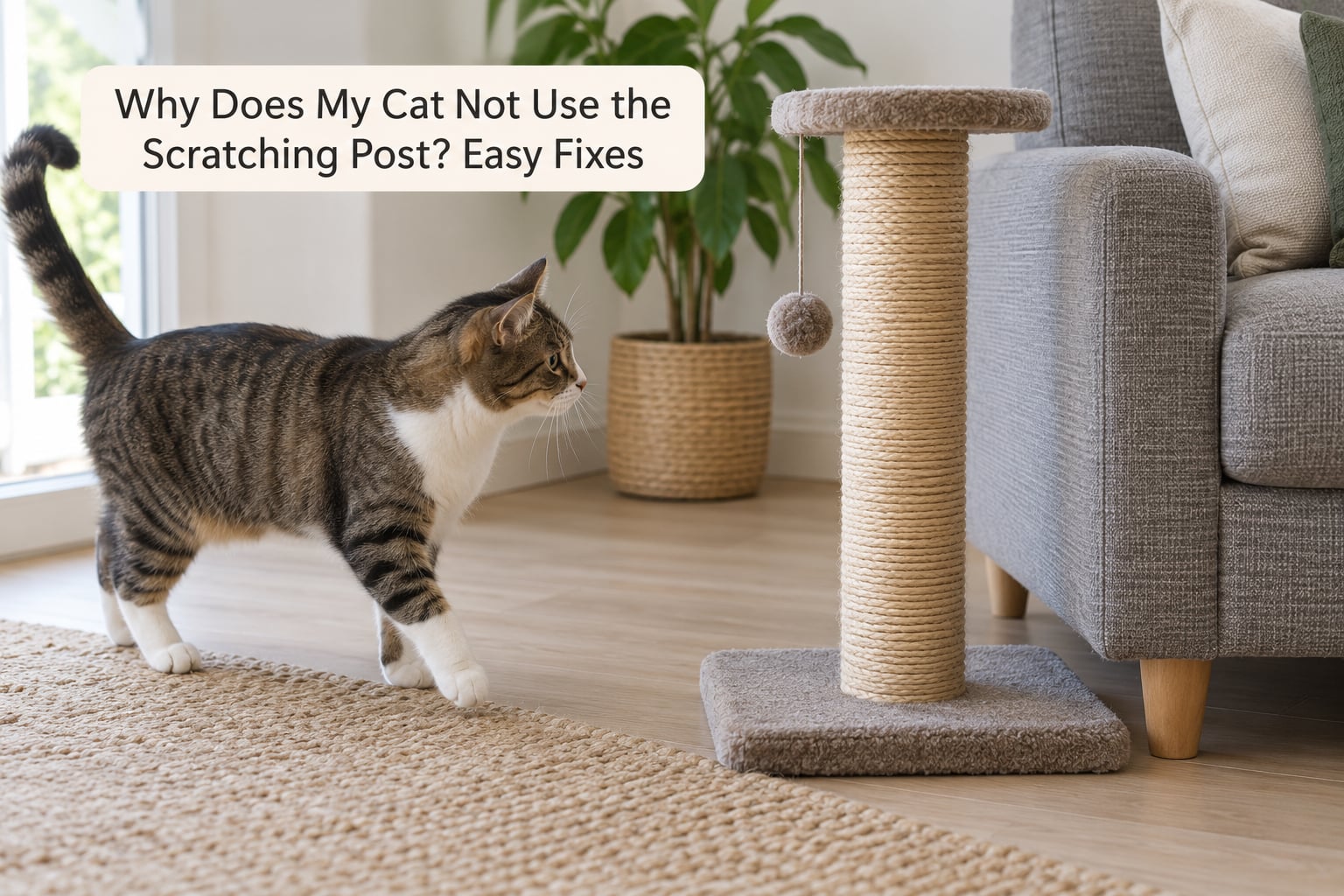
Your cat is not ignoring you. It is picking the surface that already does the job better. Cats scratch to keep claws trimmed, to stretch the muscles in their shoulders and back, and to leave scent from the glands in their paw pads on a spot they want everyone else to notice. The surface they settle on is the one that does all three without argument, and a brand-new post in a hallway rarely competes with the arm of a sofa they have used for three years.
One more thing worth saying plainly: a post that is never touched is not a behaviour problem to punish. It is a mismatched object. Most owners solve it in an afternoon once they know which variable to change first, and the changes cost nothing more than moving a piece of furniture.
What Does It Mean When a Cat Ignores a Scratching Post?
Scratching is a normal, healthy feline behaviour that kittens start in the first weeks of life. A cat that ignores one particular post is not a cat without instincts. It is a cat with a different opinion about where, how and how high to scratch.
Look at what your cat chooses when the post is not an option, because that tells you exactly what the post has to match:
- Sofa and armchair fabric with visible loops pulled into long threads
- Carpet, rugs and stair treads scratched flat in one spot
- Door frames and wall corners at sitting height or higher
- Beds and blankets, especially in a favourite sleeping place
- Cardboard boxes torn at one corner, which double as a scratcher
Owners on CatAdvice and PetForums forums report one pattern over and over: the cat scratches the carpet a couple of inches away from a cardboard scratcher and not the scratcher itself. That is not defiance. The spot was chosen for the texture first, the post simply happens to be nearby, and the carpet won the comparison.
The practical takeaway is simple. You do not need to change your cat’s mind about scratching. You need to build a post that beats the sofa on the five things cats actually care about.
7 Reasons Your Cat May Not Use the Scratching Post
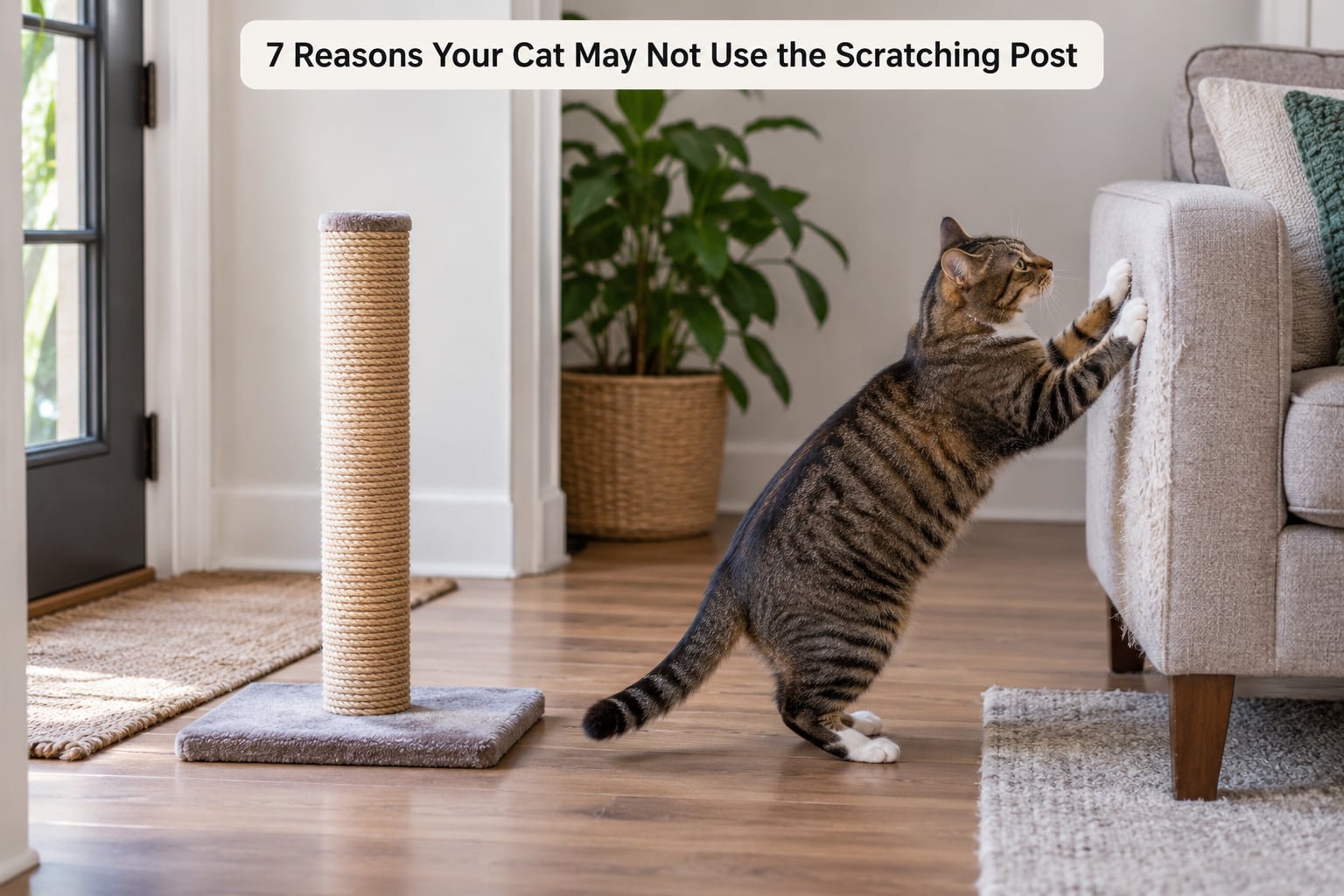
Seven causes account for nearly every ignored scratching post. Work through them in order, because the first four cost nothing to test and solve most cases on their own.
1. The post is in the wrong place
A post parked in an empty corner of the living room is out of sight and out of the routine. Cats scratch where they spend their time and where other cats pass, so the spot has to be somewhere the household actually moves through, not somewhere it is tidy.
2. The post wobbles or tips over
A cat puts its whole weight into a scratch with claws hooked in. If the base shifts, the whole thing goes over, and many cats then avoid that corner completely out of sheer startle. A wide, heavy base or a post fixed to the wall is not a nicety, it is a requirement.
3. The surface is the wrong texture
Fabric and burlap covers are rejected far more often than anything else. Sisal rope, jute, corrugated cardboard, leather and bare wood are the textures most cats reach for. If your cat digs at the post with its claws and steps away, the cover is wrong, not the behaviour.
4. The post is too short, too small or wrong for its size
A vertical post should be at least 32 inches tall so a cat can stretch to the top and scratch downward without leaving the surface. Horizontal pads need to be big enough for the cat to lie down on and work with both front paws, or they get pushed across the floor as a mat.
5. The style does not match how the cat scratches
Some cats reach up and pull down, some rake sideways across a flat surface, some lie flat and stretch out with both front legs. An angled or wave-shaped scratcher that tips when stepped on is the worst option of all, because the cat learns quickly not to trust it.
6. Other pets block it, or nothing connects the post to a reward
In a multi-cat home one confident cat can own the only scratching station and the other one goes back to the sofa. Separately, if the post has never been linked to a treat, a game or an interesting scent, it is just furniture and your cat has better furniture.
7. Fear, stress or a change in the household
A loud new baby, a moved sofa, a redecorated room or a cat that is generally unsettled will make your cat scratch more, not less, and usually close to a person rather than on a post. When stress is the cause, the post can be perfect and still stay unused.
How to Make Your Cat Use a Scratching Post
Change one variable at a time, in this order, and give it several days before moving on. Owners who get results usually run this list top to bottom rather than buying another product.
Step 1: Put it where the scratching already happens. Find the sofa arm, the rug edge or the door frame with the damage on it and place the post directly beside that spot, close enough that one step reaches it.
Step 2: Make it immovable. Test it with your own weight before you hand over the treats. If it shifts or rocks, wedge it against furniture or mount it to the wall.
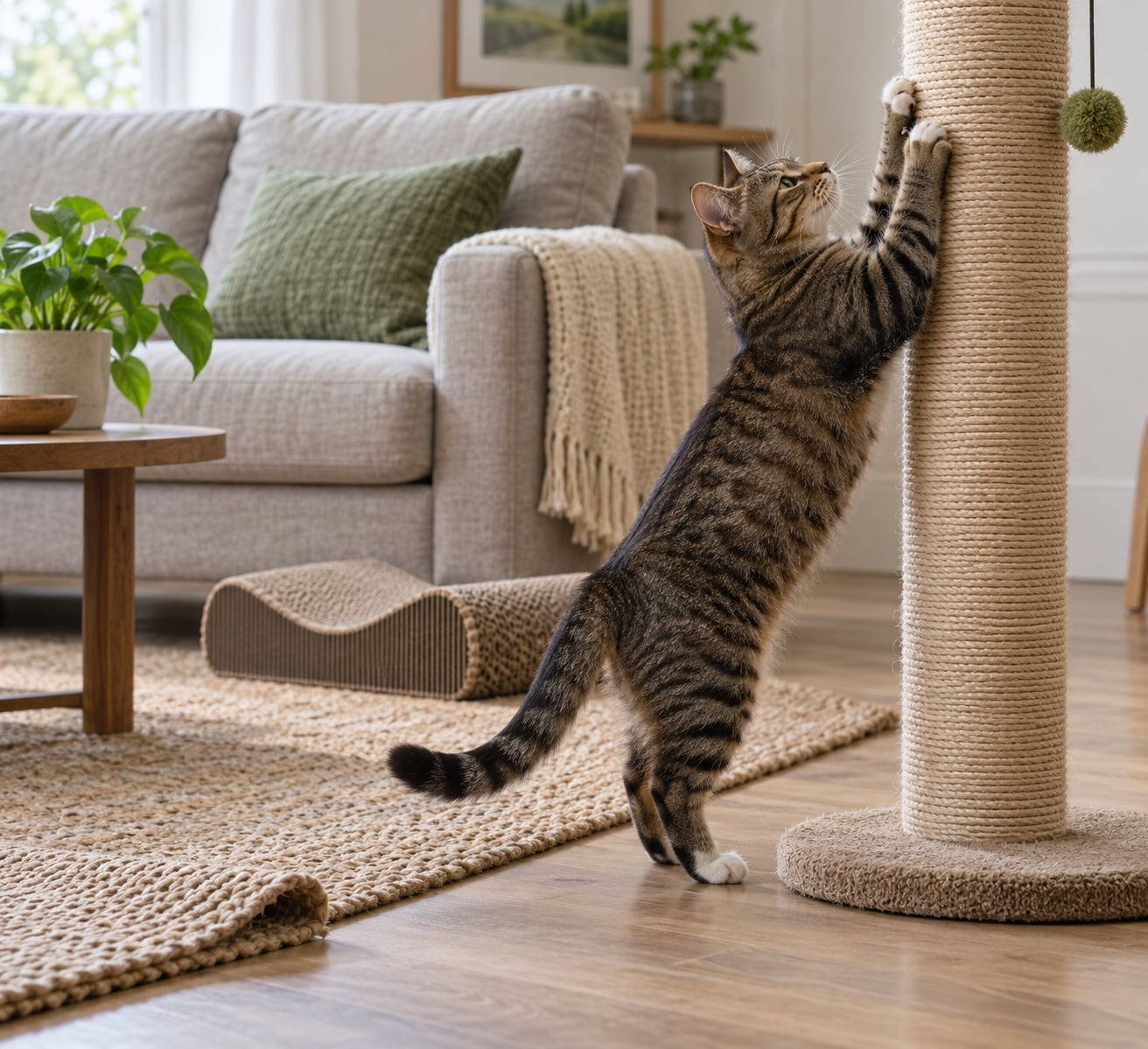
Step 3: Match the height. For vertical scratching, 32 inches is the useful minimum and taller is better for large breeds such as Maine Coons and Ragdolls. For a cat with stiff joints, drop the surface to shoulder height or switch to a wide horizontal pad.
Step 4: Change the surface. Re-rope a tired sisal post or replace the cover with sisal, cardboard or wood. Forum owners regularly revive a scratched-up cat tree this way instead of buying a new one.
Step 5: Reorient it. If your cat rakes the carpet, offer a horizontal pad or a mat. If it reaches up the sofa back, offer a tall post. If it works sideways along a corner, an angled board will match that motion.
Step 6: Make it rewarding. Leave a treat on the post for a couple of weeks, and play the wand toy against the base and up the side so the post becomes part of the game.
Step 7: Redirect without punishing. When the cat scratches the sofa, calmly pick it up, say nothing, and place it on the post. Protect the furniture in the meantime with clear plastic protectors or double-sided tape on the arm.
Two habits cause more damage than an unused post. Never spray water at a cat, shout at it or hold its paw down on the surface, which turns the sofa into a place where punishment happens. And never consider declawing, which removes the behaviour at the cost of the claw and the toe bone.
Scratching Post Texture and Style: Which One Does Your Cat Prefer?
Most cat owners buy the wrong texture first, so test cheaply before buying much. Stand a piece of spare sisal rope, a strip of corrugated cardboard and a scrap of bare wood on the floor near the sofa arm and leave them for a week. Your cat will tell you its preference by scratching one and ignoring the rest.
Once you know the material, match the shape to the motion. Vertical posts suit a cat that stands up, stretches and pulls down, and they double as a lookout spot. Horizontal pads and mats suit a cat that lies flat, rakes forward and stretches out. Angled boards suit the cat that works sideways along a corner, and wall-mounted panels suit small spaces where a standing post will not fit.
Cardboard scratchers suit many cats but only when they are large enough to lie on and shaped so they cannot flip up underfoot. Small wave-style pads get dragged across the room and abandoned.
How to Choose the Right Location for a Scratching Post
Use the damage already in your home as the placement guide. Your cat has already voted for the right spot and the right height in every one of these cases.
| Where your cat scratches now | Where to put the post |
|---|---|
| Sofa arm or back | On the floor beside that arm, or a tall post touching the sofa |
| Carpet, rug or stair tread | Flat horizontal pad or mat on the same floor |
| Door frame or wall corner | A vertical post next to the door, where cats pass daily |
| Bed, blanket or cushion | A low, wide pad next to the bed |
| Cardboard boxes | Replace them with a proper cardboard scratcher on that spot |
| Inside a wardrobe or window seat | A wall panel or post inside the same room |
Two rules override everything else. Put the post where your cat can see and hear you, because a social animal will scratch near its people, and put at least one in a quiet room as well, since a dominant cat may block the busy one.
Moving an adopted cat’s post is fine, just move it a short distance at a time over a week or two so the cat keeps recognising it. Re-roping a post that is still in the right place is better than relocating one that is not.
When Should You Ask a Veterinarian About a Cat That Will Not Scratch?
Call your vet if scratching stops altogether, or nearly stops, especially if it changed suddenly over a few days. Scratching is a full-body movement that uses the shoulder, wrist and spine, and pain anywhere along that chain from arthritis, an injury, an abscess or a nail problem will end it quickly. Older cats with arthritis often stop without telling you why, and owners on cat forums describe the only clue as claws that have grown long and hooked.
Other signs that need a veterinary visit rather than a new scratcher include limping, licking a paw repeatedly, hiding more than usual, a change in appetite or litter habits, and any change in behaviour that starts the same week a new pet or new routine begins.
Ask your vet about pain management, and never give a cat human painkillers, which are toxic to them. Your vet can also rule out the medical reasons and confirm that a low, wide scratcher with a non-slip surface is the right call for a cat with joint trouble.
Frequently Asked Questions
What to do if your cat won’t use a scratching post?
Start by moving the post to the exact spot your cat already scratches, then anchor it so it cannot rock. If the surface is wrong, try sisal, cardboard or bare wood instead of fabric. Reward the first scratch with a treat or a wand toy session, and give it a few days to a couple of weeks before the habit settles.
Why did my cat stop using the scratching post?
A post going suddenly untouched is a different problem from one that was never chosen. Cats stop when something changed, such as a new pet or moved furniture, or when pain, illness, age or medication affects the muscles used for scratching. A vet visit rules out the medical reasons before you buy anything new.
How do I encourage a cat to use a scratching post?
Play the wand toy against the base and up the side of the post, then leave a treat resting on it so your cat links the post to something good. A light spritz of catnip or silvervine helps many cats, though plenty ignore it and that is normal. Keep the treats there for two to three weeks to build the association.
How do I get an older cat to use a scratching post?
Older cats usually need a lower, wider option instead of a tall tower, such as a horizontal pad or an incline scratcher at roughly shoulder height. Check the claws first, because overgrown nails make scratching uncomfortable, and a firm non-slip surface often matters more than the product itself.
Do cats ever stop clawing furniture?
Some do, and often for good reasons. Many cats scratch less as they settle into a calmer adult routine, and a post they genuinely use takes most of the attention off the sofa. If scratching drops to almost nothing while other behaviour changes too, treat that as a health signal rather than as progress.
How tall should a cat scratching post be?
For a vertical post, aim for at least 32 inches so your cat can reach the top, stretch fully and pull down without stepping off. Add 6 to 10 inches for large breeds such as Maine Coons and Ragdolls. A shorter post only works if your cat can rear up and scratch at the highest point without stretching.
Start With the Location and Surface
If you do one thing this week, stand the post beside the spot your cat already scratches and take it away from the middle of the room. Then push down on it with your full weight and swap the cover for sisal, cardboard or wood if your cat digs at it and walks off.
Most ignored posts are fixed by those two changes within a week. If scratching stops completely rather than just staying on the sofa, book a vet appointment instead, because pain and illness end scratching long before anything else does.