If your cat turns its nose up at the water bowl, the answer is usually not coaxing — it is moisture. The most reliable way of knowing how to get a cat to drink more water is to add fluid to the food it already loves, then widen the choice of bowls and stations until one appeals. Most cats on wet food need very little extra; most cats on dry kibble need a lot.
This guide walks through a six-step process you can start today, at almost no cost, and explains which signs of dehydration mean a phone call to your veterinarian rather than a new bowl.
Table of Contents
- What You Need
- Step-by-Step: How to Get a Cat to Drink More Water
- 1. Establish the Cat’s Current Baseline
- 2. Add Water to a Familiar Wet Food
- 3. Offer More Wet-Food Meals to Get a Cat to Drink More Water
- 4. Set Up Several Water Stations
- 5. Try a Cat Fountain if the Cat Prefers Moving Water
- 6. Monitor Comfort, Appetite, and Urination
- Common Mistakes and Helpful Extras
- Frequently Asked Questions
- How much water should a cat drink each day?
- How can you tell if your cat is dehydrated?
- Is dry food a problem for my cat’s hydration?
- Does milk help a cat drink more water?
- When is a sudden change in drinking an emergency?
- What to Do First
What You Need
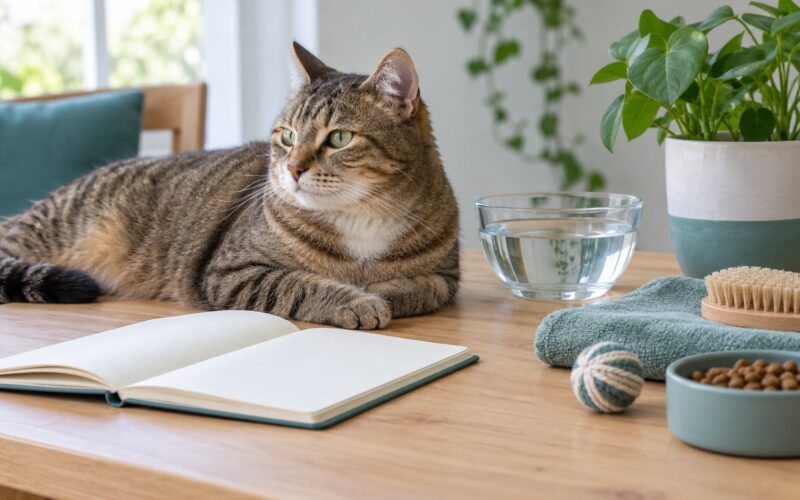
Nearly everything here is free or already in your kitchen. Before you change anything, gather the cat’s usual wet food, a measuring cup or a set of tablespoons, and clean drinking water.
- One wet food the cat already eats happily. This is your delivery vehicle for water, and it is much easier than changing brands.
- Two or three wide, shallow bowls. A ceramic saucer or a low-rimmed dish from your own cupboard works better than most purpose-made pet bowls, because whiskers need room.
- A notebook or your phone. Three or four days of notes on how the cat eats, drinks and urinates give you a baseline you can compare against.
- Clean tap or filtered water. The same water your cat already drinks at the kitchen sink is the one to use.
Skip anything labelled for humans that is not food-grade, and skip pet water additives for now. Flavouring is a later step, and it needs to be done carefully.
Step-by-Step: How to Get a Cat to Drink More Water
The order below matters. Start with food, because food is the one thing that reliably reaches your cat every single day. Change bowls and fountains only after the food changes have had a few days to settle.
1. Establish the Cat’s Current Baseline
For three to four days, write down what you see: which food, where the bowl sits, how often the cat drinks, and roughly how much urine is in the litter box each day. Scoop size is a good enough proxy — most owners underestimate it.
Do not turn these notes into a rigid target. Visible intake varies a lot between cats and even between days, and a number you invented on a Tuesday is not a medical goal. The notes are there so you can see direction: less than before, or more.
2. Add Water to a Familiar Wet Food
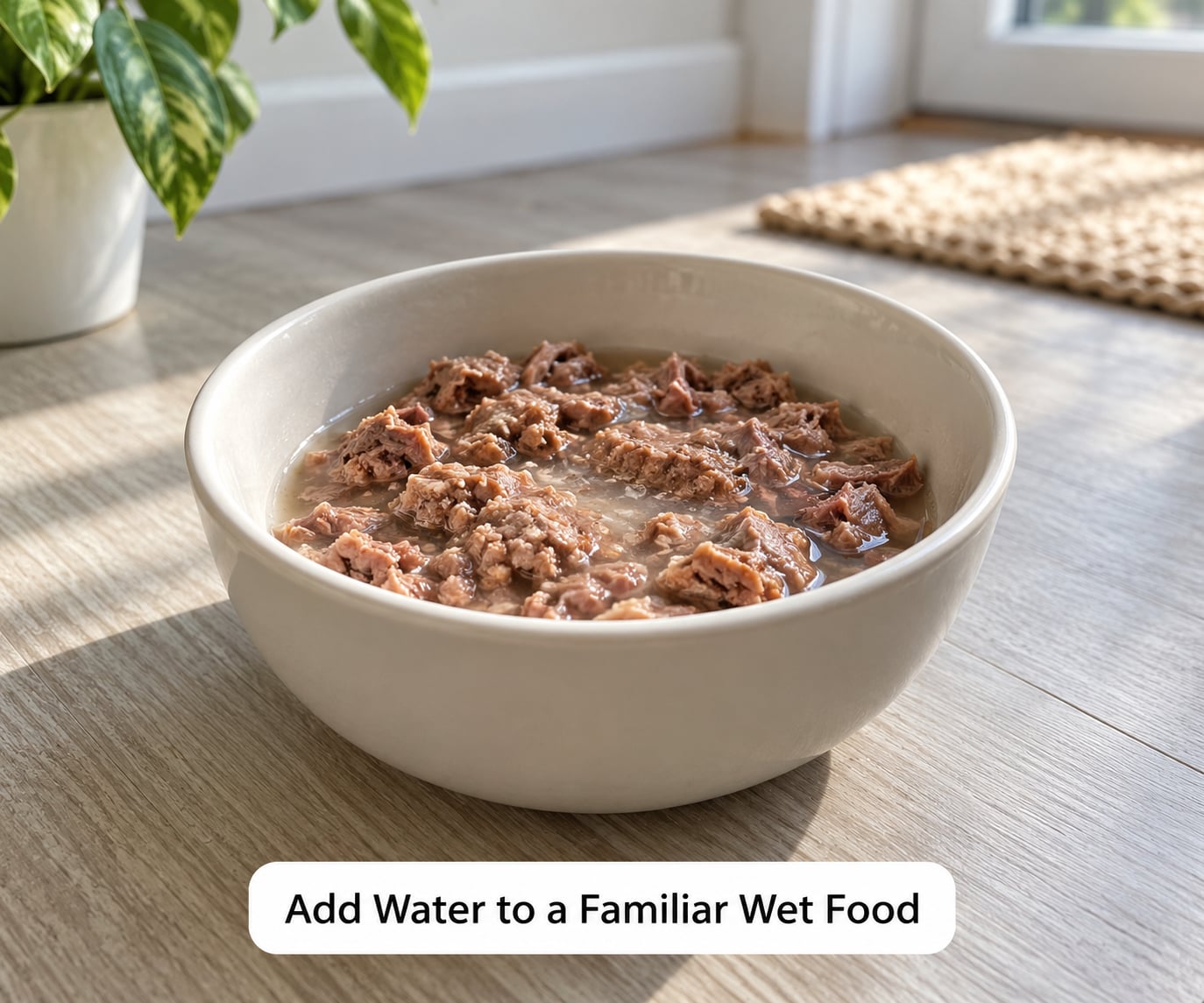
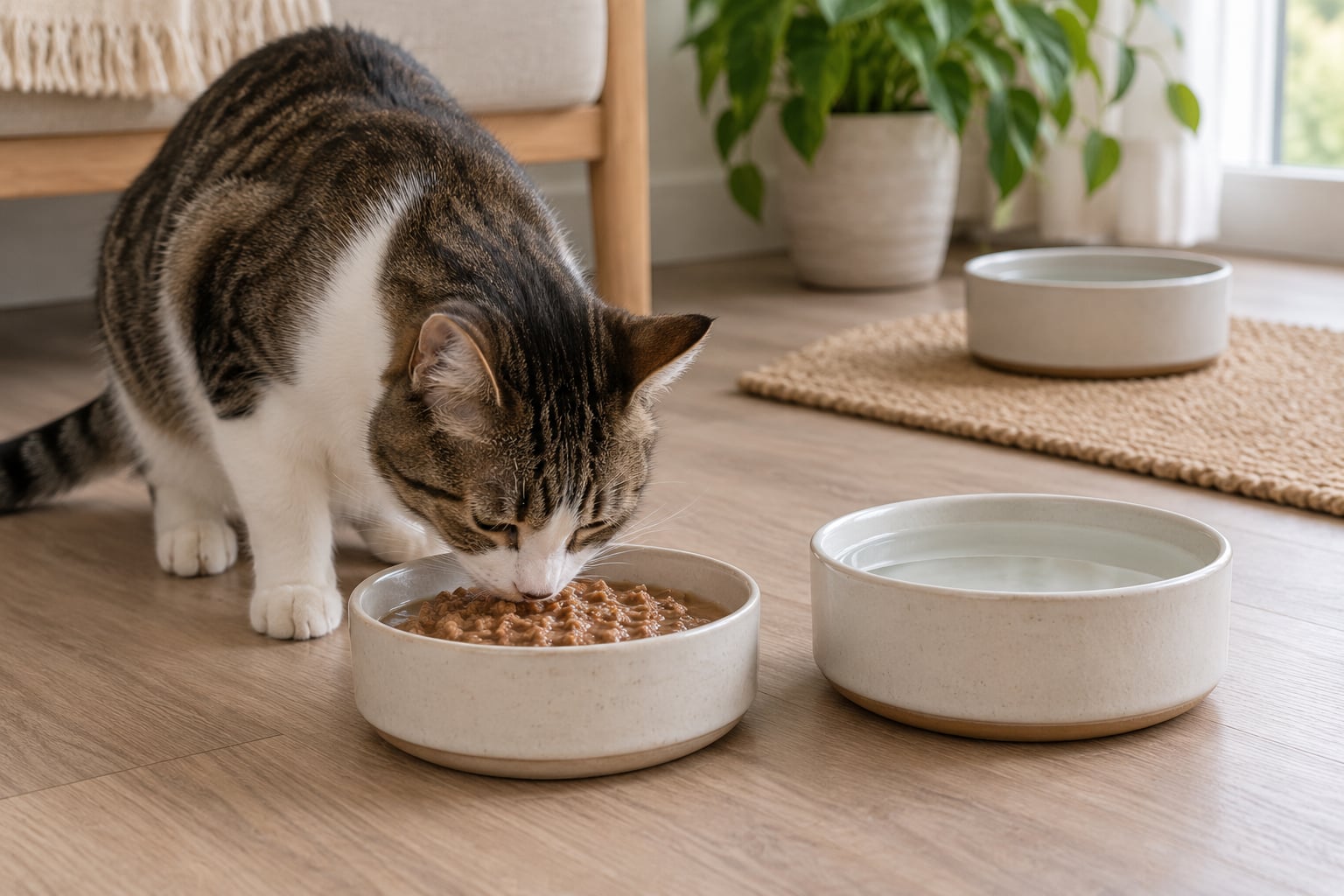
Put a small splash of fresh water into a portion of the wet food your cat already finishes, mix it lightly, and serve. Start with a teaspoon or two. Two to three tablespoons per wet meal is what many owners report as an easy win, since a typical wet meal is only around 75% water to begin with.
How do you know it worked? The bowl gets emptier and the litter box clump gets bigger. If your cat walks away from a wet meal it used to love, you added too much — halve it and build back up over a few days.
3. Offer More Wet-Food Meals to Get a Cat to Drink More Water
Split the same daily wet food into three or four smaller meals instead of two. Every gram of wet food is roughly four grams of water already inside it, so dividing the day changes the hydration without changing the diet, the calories or your cat’s preferences.
This is the step most people skip because they assume the cat is full. Small, frequent meals are eaten more willingly than two large ones by a surprising number of cats, and an appetite that improves is itself a sign the plan is going well.
4. Set Up Several Water Stations
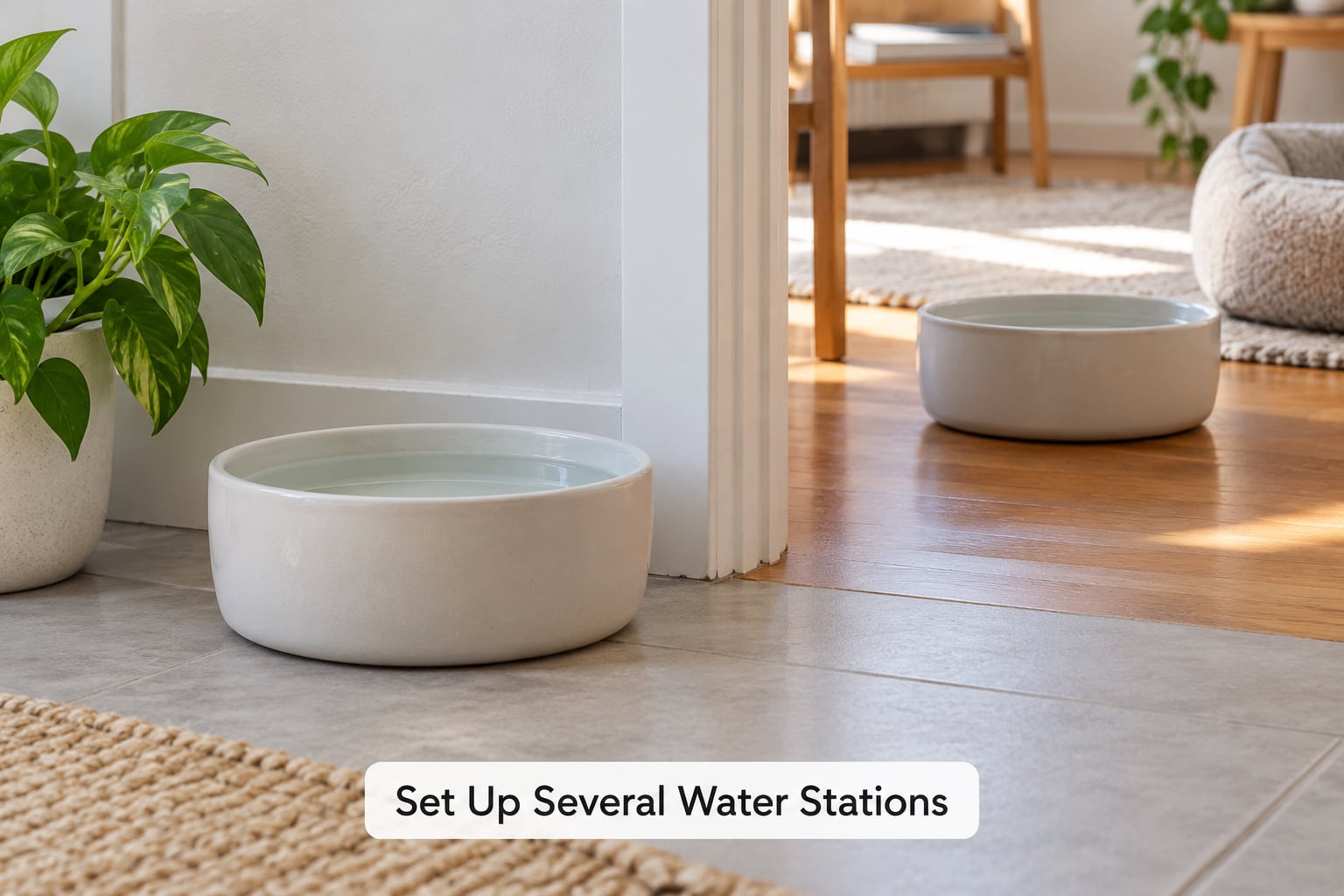
Cats do not like drinking where they eat or where they use the toilet. Put bowls in quiet, accessible rooms that are neither the kitchen nor beside the litter tray, and spread them out so one cat does not guard the only option.
Wide and shallow beats narrow and deep. When a cat’s whiskers touch the sides of a deep bowl on the way to the water, the pressure is uncomfortable enough that many cats paw at the water and then drink from somewhere else entirely. Fill bowls to the brim and refresh them at least twice a day; a bowl sitting out for a day goes stale, and many cats reject stale water outright.
You know it worked when you catch your cat drinking from a station you had almost forgotten about.
5. Try a Cat Fountain if the Cat Prefers Moving Water
Place a fountain beside the familiar bowl rather than replacing it, so nothing is taken away. Run it with fresh water and leave it on the floor where the cat can approach from any side, not on a counter or shelf.
Give it a week. Fountain rejection is common, and the reasons are usually the pump noise, the moving surface scaring a cat that startles easily, or a slim spout that makes whiskers touch the sides. If your cat hides from the sound or paws at the stream without drinking, turn it off and keep the plain bowls. A fountain you have to leave switched off is just another bowl to wash.
Check with your veterinarian before buying a filter or replacement pump, and ask which parts the brand actually sells — pump failures with no available replacements are a common complaint in owner forums.
6. Monitor Comfort, Appetite, and Urination
Keep the notes going for another week. You are watching four things: willingness to drink, litter box output, appetite, and general energy. Tighter or smaller urine clumps, a dry-looking coat, sunken-looking eyes, gums that feel tacky rather than slick, and a skin tent that stays raised after you pinch it lightly at the scruff are all signs worth reporting.
Urine colour is a quick check you can use without any equipment. Pale straw yellow usually means good dilution; dark amber that you cannot see through suggests concentrated urine, which is exactly what you want to change.
Call your veterinarian the same day if drinking drops sharply, the cat stops eating, or there is vomiting, diarrhoea or straining in the litter box without producing urine. Straining with no output is an emergency in cats, particularly males, and needs an emergency clinic rather than a next-day appointment.
Common Mistakes and Helpful Extras
Most failed attempts come down to the same handful of mistakes. Each has a simple correction.
- Pouring on too much water at once. A flooded meal is a new and unfamiliar food, and cats reject novelty before they accept it. Start with a teaspoon.
- Holding the cat up to the bowl. Forcing creates an association between you and water that is hard to undo. Place it and walk away.
- A narrow, unstable bowl. Use a wide dish with a non-slip base, and set it on a flat surface.
- Leaving bowls out for days. Wash bowls with hot soapy water at least weekly and scrub them, since film builds up in scratches.
- Switching from dry to wet overnight. Sudden diet changes upset digestion. If you want to change food type, do it gradually over one to two weeks alongside the water additions.
- Expecting a change the same evening. Interest in a new bowl or fountain often takes several days to show.
Helpful extras: a second bowl in a different room, a few moist treats that carry water with them, or mixing a small amount of water into the dry food itself. If you want to flavour water, use plain, unsalted, onion-free and garlic-free broth or cooking water from unseasoned meat, a spoonful at a time, and discard anything left out longer than a couple of hours. Onion and garlic are toxic to cats, and heavily salted broth is not a treat.
Frequently Asked Questions
How much water should a cat drink each day?
Vets commonly use a rough guide of 50 to 60 ml of total fluid per kilogram of body weight per day, counting water from bowls, wet food and broth together. A 4 kg cat works out to roughly 200 to 240 ml of total fluid. A wet-food cat may reach much of that from food alone, while a dry-food cat has to drink most of it. Treat any figure as a starting point for a conversation with your vet, not a precise prescription.
How can you tell if your cat is dehydrated?
Check the gums first: slick and pink suggests good hydration, while tacky or pale gums point the other way. Lift the skin gently at the scruff and watch how fast it springs back, look at the eyes for sunken appearance, and notice whether the urine clumps in the litter box are smaller and darker than usual. Panting, lethargy and a refusal to eat are later signs. If several of these appear together, contact your veterinarian.
Is dry food a problem for my cat’s hydration?
Dry kibble contains only around 10% water, while wet food is roughly 75% water, so a cat eating only kibble must drink far more to reach the same total. That is normal for the species and many cats manage it, but it leaves less margin for error, especially for cats with urinary or kidney history. Adding water to meals, splitting wet food into smaller servings, and offering several bowls all reduce the gap without changing the diet itself.
Does milk help a cat drink more water?
No. Most cats are lactose intolerant to some degree, and cow’s milk can cause diarrhoea and vomiting, which makes hydration worse rather than better. Plain water is the right drink. If your cat likes the taste of something, use a small amount of plain unsalted, onion-free and garlic-free broth instead, and introduce it slowly.
When is a sudden change in drinking an emergency?
Call a veterinarian the same day if your cat suddenly drinks noticeably less or noticeably more, stops eating, vomits, or produces small frequent amounts of urine. Treat repeated attempts to urinate with nothing produced as an emergency, especially in male cats, because a urethral blockage can develop within hours. Weakness, collapse, pale gums and a very dry mouth need an emergency clinic immediately, not a wait to see how the evening goes.
What to Do First
Do one thing tonight: add a small splash of fresh water to a serving of the wet food your cat already finishes, and leave out a second wide, shallow bowl in a room that is not the kitchen or the litter area. Then watch for three days.
You are looking for bigger litter clumps, a cat that clears the bowl, and no change in mood or appetite. If nothing moves, add the next step — more wet meals, then a fountain — rather than piling on every change at once. And if drinking drops sharply or the cat strains without producing urine, stop experimenting and call your veterinarian.