To help an overweight cat lose weight, you need a veterinarian’s calorie target, measured meals instead of free feeding, short daily play sessions, and weekly weigh-ins. Most cats should lose no more than 1 to 2 percent of their body weight per week, which for a 15-pound cat is roughly a quarter to a third of a pound every seven days. Faster than that and a cat that stops eating can develop hepatic lipidosis, a serious and sometimes fatal liver problem.
I know that number sounds unbearably slow. It is also the difference between a cat who trims down over a few months and a cat who ends up in an emergency clinic. Take photos at the start, keep a small notebook, and expect the visible change to show up long after the scale starts moving.
Most of the work is done in the kitchen, not the playroom. Food adjustment accounts for the majority of the change, and cats who are already overweight rarely lose weight through exercise alone. Everything below is general information for adult cats; your own cat’s plan, pace, and food choice come from your veterinary team.
Table of Contents
- What You Need
- Step-by-Step: How to Help an Overweight Cat Lose Weight
- Step 1: Get a Veterinary Weight and Health Check
- Step 2: Establish a Realistic Baseline
- Step 3: Feed a Measured, Balanced Diet
- Step 4: Add Gentle, Low-Impact Activity
- Step 5: Track Progress and Adjust Slowly
- Common Mistakes
- Frequently Asked Questions
- How fast should an overweight cat lose weight?
- Is wet food better than dry food for a cat losing weight?
- How do I stop my cat begging and waking me at night?
- How do I exercise an older cat that does not jump anymore?
- How do I know when my cat has lost enough weight?
- What symptoms mean I should stop dieting and call the vet?
- What to Do in the First Week
What You Need

Gather these before you change anything, because the first week is mostly measurement and paperwork.
- A veterinary appointment. A weight and health check, ideally with a body condition score recorded in writing so you have a baseline number that is not just a guess.
- A reliable scale. A bathroom scale works for most cats if you weigh yourself, pick the cat up, and subtract. A small kitchen scale gives you far better accuracy for food portions.
- A complete and balanced cat food. The package should state that it is complete and balanced for the cat’s life stage. Light and weight-management recipes exist in both wet and dry form.
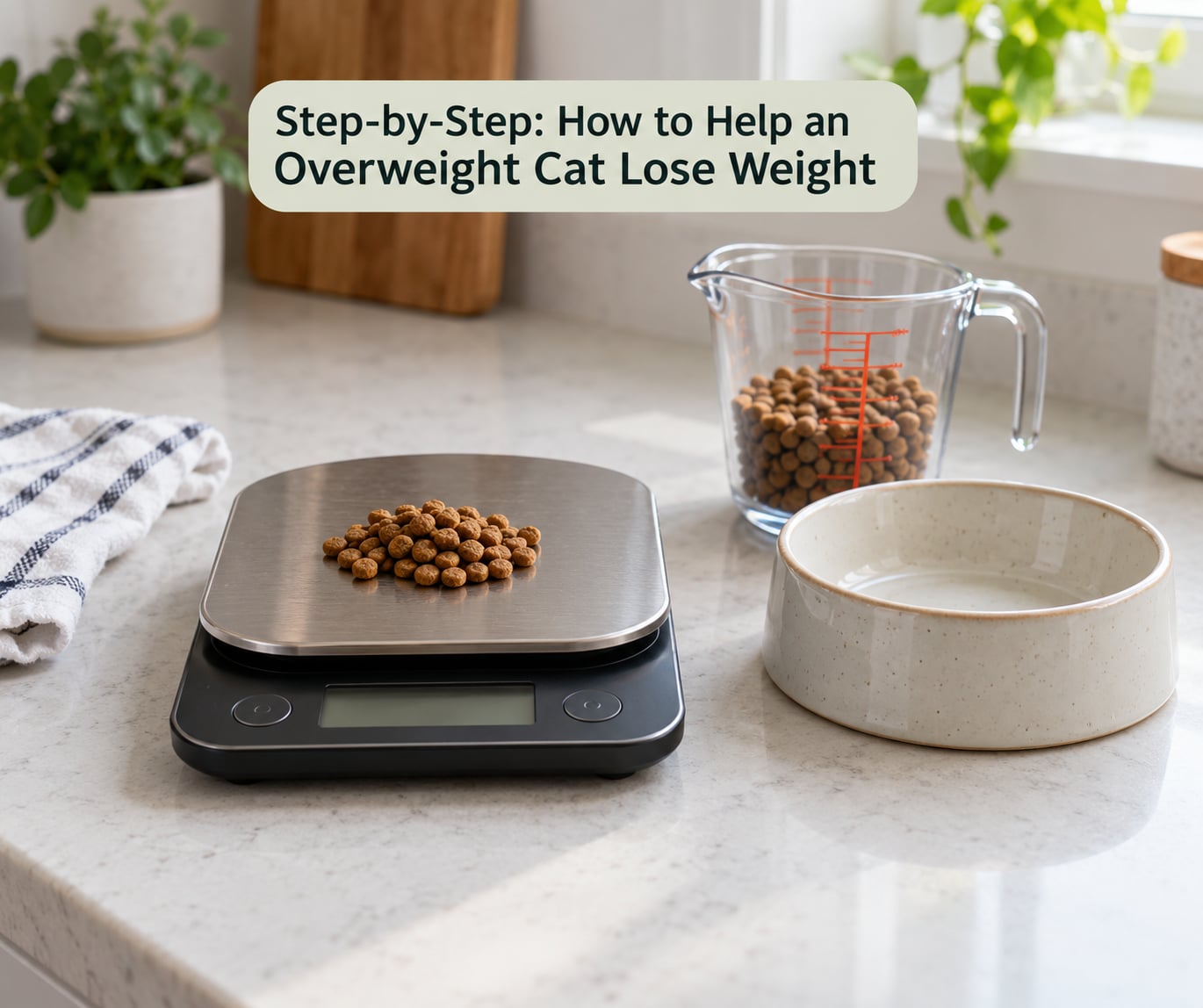
- A measuring setup. A gram scale for food, or a measuring cup marked for the food’s calories per cup. Cups vary wildly between brands, so grams are more honest.
- A feeding area. Somewhere the cat can eat without being interrupted, and in a multi-cat home, a way to keep the others out of the bowl.
- A log. A notebook or a note on your phone. Daily weights, meal amounts, treats, and any vomiting or refusal go in it.
Also decide now who else feeds the cat. In a shared household the single biggest obstacle is usually a well-meaning person handing out a second breakfast, so talk to everyone in the house before the plan starts.
Step-by-Step: How to Help an Overweight Cat Lose Weight
Step 1: Get a Veterinary Weight and Health Check
Book the appointment before the first diet change. Your vet weighs the cat, assigns a body condition score, checks teeth and joints, and asks about medications, appetite, and litter box habits. That information is what turns a general plan into your cat’s plan.
The visit also rules out the medical side of weight gain. Some cats put on weight because of thyroid problems, pain that stops them moving, Cushing’s disease, or diabetes, and those cats need treatment rather than a smaller bowl. You are not expected to work this out at home, and you should not attempt to.
Ask for three specific things: the target weight, the daily calorie number, and the pace your vet is comfortable with. Then ask what should make you call back. A clear answer to that last question saves a lot of panic later.
Seek prompt veterinary advice, rather than waiting for a scheduled visit, if your cat has gained weight quickly, has become less active, is drinking more than usual, is vomiting, or is having any change in breathing. Rapid weight shifts and breathing changes are not dieting questions.
Step 2: Establish a Realistic Baseline
Write down the starting numbers while they are fresh: weight in pounds, body condition score, age, whether the cat is indoor or outdoor, current food and treat brands, and roughly how much goes in the bowl each day. Include the spay or neuter date if you have it, since metabolism often shifts afterwards and owners frequently notice the weight months later.
Use the same scale and similar weighing conditions from here on. Weigh the cat at the same time of day, before the meal, ideally once a week rather than daily, because daily numbers jump around with water and litter box use and make people quit early.
Appearance is a poor measuring tool. A cat can look heavier from above while being thin from the side, so run your hands along the ribcage and look across the top of the hips as well. Those two checks cost nothing and catch changes months before a scale does.
Step 3: Feed a Measured, Balanced Diet
This is where the weight actually comes off. When you help an overweight cat lose weight, the goal is a small daily calorie deficit, not an empty bowl and a hungry cat.
Follow the calorie number your vet gives you and split it across two or three meals. Weigh every portion, including the treats, and count treats as part of the total. A piece of cheese or a couple of kibbles adds up fast, and small treats are the easiest place for a plan to quietly fall apart.
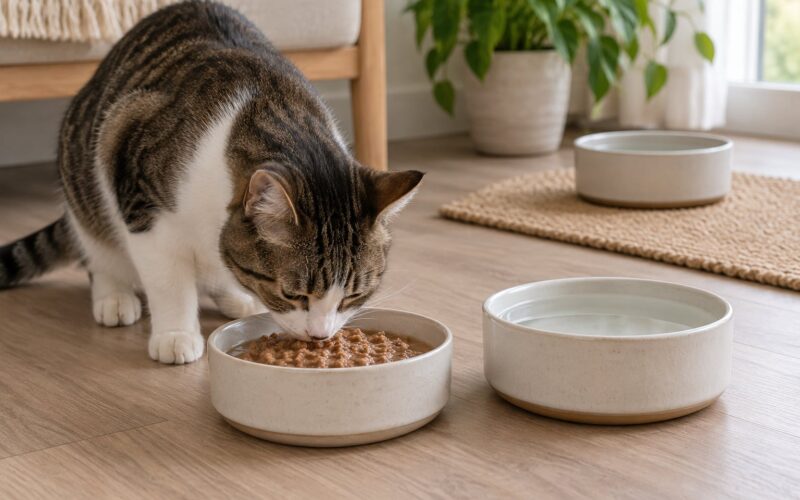
Wet food, dry food, or a veterinary weight-management diet can all work. Wet food is often easier for weight loss because it is moisture-rich and more filling for the same calories, and many cats are simply hungry on dry food because it is energy-dense. If your cat refuses wet food, dry food is fine. What matters is that the portions are measured and the total matches the plan.
Switch foods over 7 to 14 days, mixing a little of the new food in at first and increasing the ratio each day. A sudden switch is the most common reason a weight plan ends at the litter box.
Three things to avoid: crash diets, fasting without veterinary direction, and any human weight-loss product or medication. Cats are not small dogs metabolically, and a cat that refuses food for more than a day or two is a veterinary call, not a challenge to push through.
Step 4: Add Gentle, Low-Impact Activity
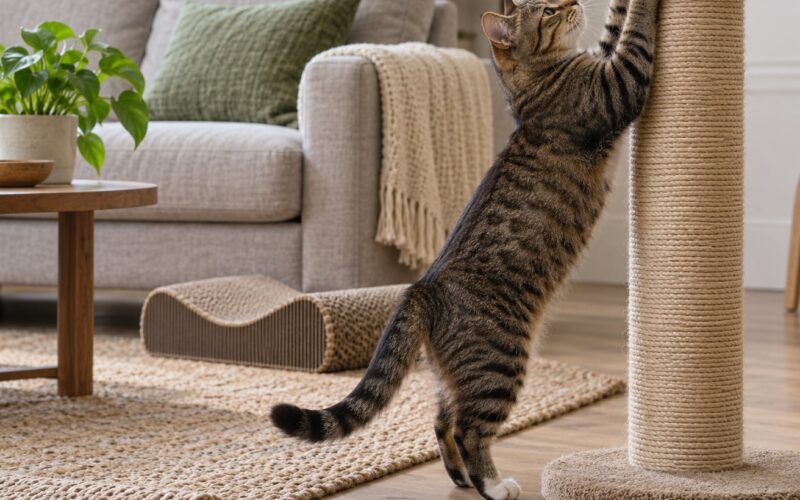
Two or three short sessions a day beat one long one. A wand toy with a feather or a stringer, chased up and down a hallway, gets a cat moving in a way that a food-filled puzzle never will. Five to ten minutes at a time is plenty to start.
Movement can be built into the environment rather than into your schedule. Cat trees, shelves, and window perches raise the amount of walking a cat does simply to get around. A puzzle feeder or a scatter of a portion of the meal across a mat adds movement and stretches the meal out, which also helps with the boredom that drives begging.
Slow the ramp up. If the cat pants heavily, stops mid-session, limps, hides afterwards, or seems unusually tired the next morning, cut back and check in with your vet. For an older cat or one with stiff joints, three minutes of chasing a crinkle-ball is a good starting effort.
Resist the temptation to overcorrect. Trying to exhaust a cat every evening usually produces a stressed animal that hides during the day and then raids the bowl at 2 a.m.
Step 5: Track Progress and Adjust Slowly
Compare weights every week, not daily, and use the same scale. Look for a slow downward line. A cat losing weight at the right pace still has some fat to burn before you see it in the mirror, which is why the photos and log matter more than your eyes.
Your vet decides whether the plan needs adjusting and how. Small tweaks to portions are usually enough, and any change should be gradual enough that the cat does not object. A plateau of several weeks with no change at all is a good reason to go back to the clinic for a recheck rather than a fresh blood panel or a new prescription on your own.
Call the vet between appointments if the cat stops eating, vomits repeatedly, seems suddenly thirsty, gets weak, or you notice breathing changes. These are the signals that a weight loss plan has become something that needs medical attention.
Once your cat reaches its target, do not simply go back to the old feeding routine. Most cats regain the weight quickly without a maintenance plan, and the long-term feeding amount is often different from the weight-loss amount. Ask your vet for the number to switch to and recheck body condition every few months.
Common Mistakes
Leaving the bowl down all day. Free feeding is the reason many overweight cats stay overweight, and it is also the reason they beg. Pick the bowl up after the last meal and give the cat measured meals instead. If that is a big change at once, move to a rough schedule first, then to precise portions over a week or two.
Not counting treats and scraps. Treats can be a meaningful share of a cat’s daily calories without looking like it. Decide a small number of treats, weigh them, and subtract them from the meal total. The same goes for commercial cat treats with high fat content, dental chews, and anything dropped on the floor.
Changing food overnight. Sudden switches cause stomach upset, and a cat that feels sick after eating will associate your plan with something unpleasant. Mix foods gradually over one to two weeks instead.
Using your own diet products or medication. Human weight-loss drugs, appetite suppressants, and supplements are not for cats and can be dangerous. Some are outright toxic to cats. Anything beyond a change in food amount and activity goes through a veterinarian first.
Expecting exercise to do the heavy lifting. Indoor cats are built for short bursts and long naps, and no amount of wand play fully offsets unrestricted feeding. Adjust meals first, then add play to support the plan and keep the cat’s joints and mood in good shape.
Trusting appearance or a once-a-month weigh-in. A cat can gain or lose several ounces from water alone, and monthly checks mean you find out late. Weigh weekly and pair the number with a hands-on check of the ribs and hips.
Expecting visible results in two weeks. A coat that looks the same in week two is normal and does not mean the plan failed. Keep going to the rate your vet set and trust the scale and the log.
Two situations need their own approach. In a multi-cat household, separate feeding stations, a closed-door meal, or a microchip-activated feeder that only opens for the cat you are dieting usually works better than hoping everyone eats the right amount. For a senior cat, muscle loss can hide fat loss, so ask your vet to check both body condition and muscle condition, and make sure the diet has enough protein to protect lean mass.
Frequently Asked Questions
How fast should an overweight cat lose weight?
Most veterinarians aim for 1 to 2 percent of body weight per week. For a 15-pound cat that is roughly a quarter to a third of a pound over seven days, so a target of 5 pounds usually takes several months. Cats that lose weight faster can develop hepatic lipidosis, a serious liver condition triggered by eating too little, which is why the pace is set by your vet and not by how disappointing the scale feels.
Is wet food better than dry food for a cat losing weight?
Neither one is automatically better. Wet food is higher in water and often more filling for the same calories, which many cats appreciate on a weight loss plan, and plenty of cats do well on measured dry food. The thing that matters most is that the daily total matches the calorie target your vet gives you, portions are weighed, and treats are counted inside that total rather than on top of it.
How do I stop my cat begging and waking me at night?
Pick the bowl up when the meal ends, feed measured portions at set times, and ignore the vocalising from the first few nights, because it usually fades once the pattern holds. Moving to scheduled meals takes about a week to two for most cats. A puzzle feeder or a small portion of the meal tossed for the cat to find adds interest. In a multi-cat home, feeding in separate rooms or with a closed door prevents the other cats from setting off the whole household.
How do I exercise an older cat that does not jump anymore?
Keep sessions very short and low to the ground. Crinkle balls, a wand toy dragged slowly along the floor, and a treat you roll across a room all work for a cat that will not chase or climb. Two or three five-minute sessions a day is a realistic goal, and adding a low ramp or a shallow step gives a stiff cat an easier route to a favourite spot. Stop if you see panting, limping, or a cat that hides afterwards.
How do I know when my cat has lost enough weight?
Weigh weekly on the same scale and use your hands as well as the number. Run your fingers along the ribs, look across the top of the hips, and check for a visible waist from above. Those checks catch changes before the bathroom scale does. Your vet can record a body condition score and tell you when the cat has reached the target they set, which is usually better than a number you estimate yourself.
What symptoms mean I should stop dieting and call the vet?
Call your vet if your cat refuses food for more than about a day, vomits repeatedly, becomes weak, seems unusually thirsty, or shows any change in breathing. Those signs can point to an underlying illness or to a problem with the plan, and a cat that stops eating is at risk of hepatic lipidosis, which needs prompt veterinary care. Extra thirst, rapid weight change, and reduced activity are also worth a call rather than another week of waiting.
What to Do in the First Week
Book the vet appointment. Everything else on this list depends on the calorie target and pace you get there, and the sooner you have them the sooner the measured meals can start.
Once you have that number, weigh the food, pick the bowl up after each meal, and start the weekly log on the same day. Two short play sessions a day is plenty to begin with. Slow, boring progress at the vet’s recommended rate is what keeps a cat healthy while the pounds come off, and that steady line is the whole goal.