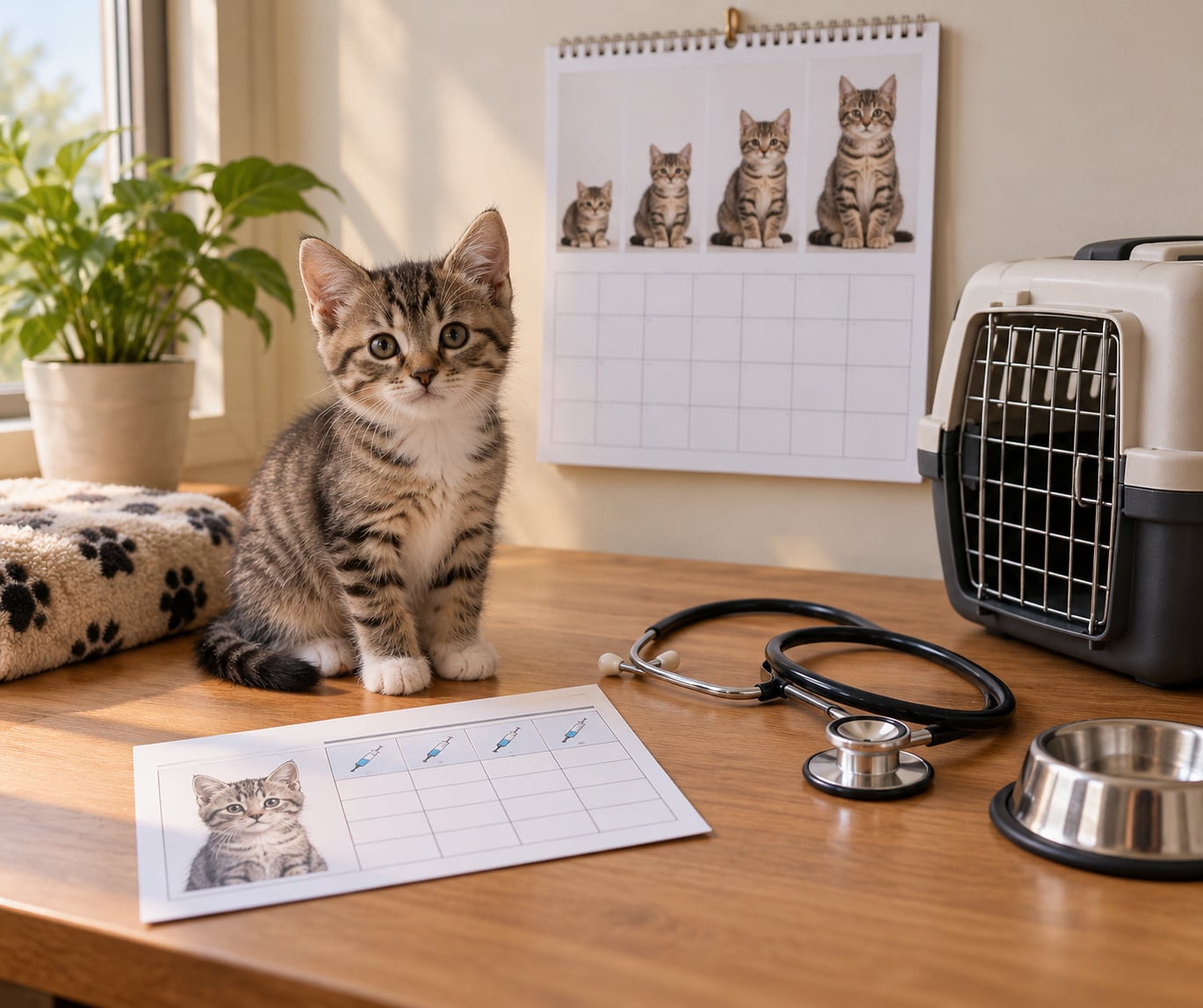
If you are mapping out the cat vaccination schedule for indoor cats, the short version is this: every kitten starts a vaccine series at 6 to 8 weeks of age, repeats it every 2 to 4 weeks until about 16 weeks, gets a single rabies dose at 12 to 16 weeks, and then moves onto boosters every 1 to 3 years for life. The core vaccines are the FVRCP combination and rabies; feline leukemia (FeLV) is recommended for kittens and depends on your cat’s situation once they are grown.
That is the general shape of it. The dates are not a fixed rule, because your cat’s age at first visit, previous records, local rabies law and lifestyle all shift the plan. This guide walks through the timeline, the vaccines and the questions to bring to your veterinarian so you leave the appointment with a written plan rather than a vague memory. Last reviewed October 2026.
Table of Contents
- Cat Vaccination Schedule for Indoor Cats at a Glance
- Which Vaccines Do Indoor Cats Usually Need?
- FVRCP, the combination that does the heavy lifting
- Rabies, the vaccine with a legal side
- FeLV, the one most indoor owners argue about
- What the indoor cat vaccination schedule leaves out
- Where the schedule differs from an outdoor cat’s
- What Is the Cat Vaccination Schedule for Indoor Cats?
- Kitten series, 6 to 16 weeks
- The six-month booster
- Adult stage, one year and beyond
- How Do Kitten Vaccinations Work?
- Do Adult Indoor Cats Need Booster Shots?
- What the 3-3-3 rule means
- What changes a booster interval
- When a booster interval is longer than a year
- What to do when the records are lost
- Does Being Indoors Mean a Cat Can Skip Vaccines?
- Normal reactions versus reasons to call the vet
- What Should You Bring to the First Vet Visit?
- How Can You Keep Track of Your Cat’s Vaccinations?
- Frequently Asked Questions
- What shots are recommended for an indoor cat?
- How often do indoor cats need vaccines?
- What is the 3-3-3 rule of cats?
- My cat slipped outside before finishing the kitten series. What now?
- Is it normal for a cat to be quiet or sore after a vaccine?
- Does an indoor cat still need the FeLV vaccine?
- Conclusion
Cat Vaccination Schedule for Indoor Cats at a Glance
| Age | What happens | Typical vaccines |
|---|---|---|
| 6 to 8 weeks | First vet visit and first dose of the kitten series | FVRCP, FeLV after a negative test, deworming |
| 10 to 12 weeks | Second series dose, about 3 to 4 weeks after the first | FVRCP, FeLV, sometimes rabies depending on local law |
| 12 to 16 weeks | Final series dose and rabies vaccination | FVRCP, rabies; FeLV if not already covered |
| 16 to 20 weeks | Extra dose for kittens in higher-risk situations such as a shelter, cattery or multi-cat home with unknown FeLV status | FVRCP |
| About 6 months | Booster that closes the window where maternal antibodies can interfere | FVRCP, and rabies where the local product label requires it |
| 12 months | First adult booster, a year after the series finished | FVRCP, rabies |
| Every 1 to 3 years after that | Risk-based boosters, more often for higher-risk cats | FVRCP, rabies, FeLV where still relevant |
Two things drive every row above: how old the cat was when the first dose landed, and how much risk the cat actually carries. A strictly indoor cat on the low end of the risk scale usually needs fewer repeat doses than a cat that goes outside, boards, or lives with an outdoor cat.
Which Vaccines Do Indoor Cats Usually Need?
An indoor cat usually needs two core vaccines: the FVRCP combination and rabies. Everything else is a risk-based decision you make with your veterinarian, and the honest answer is that not every vaccine on the shelf belongs in your cat’s plan.
FVRCP, the combination that does the heavy lifting
FVRCP is one injection covering three diseases, and all three are hard to avoid indoors.
- FHV-1 (feline herpesvirus type 1) causes feline viral rhinotracheitis, the sneezing, blocked nose and eye crusting most owners recognise.
- FCV (feline calicivirus) causes most feline upper respiratory infections, with mouth sores and a feverish, off-food cat.
- FPV (feline panleukopenia, called feline distemper) is the severe one: vomiting, severe diarrhoea, dehydration and a high death rate in kittens and unvaccinated adults.
The AAHA and AAFP feline vaccination guidelines treat FVRCP as core for every cat, indoor or not, and WSAVA guidance in the same direction.
Rabies, the vaccine with a legal side
Rabies is core and zoonotic, and rabies vaccination is required by law for cats in most US states and in many countries. The interval depends on the vaccine product and the law where you live, so one to three years is the real range, not one fixed answer. It is also the vaccine with the harshest consequences if something goes wrong, which is why it is not optional in most places.
FeLV, the one most indoor owners argue about
Feline leukemia spreads mainly through sustained close contact, so a single-cat household with no outdoor contact is a low-risk situation. The reason most vets still recommend it for kittens is escape: cats get out, they get into fights, and one infected cat in a neighbourhood is enough. After a negative FeLV test, many owners continue it through the first year and then discuss dropping it.
What the indoor cat vaccination schedule leaves out
There is no general feline infectious peritonitis vaccine currently recommended for routine use in the United States, and several other products on the market do not have a place in a standard indoor plan. Veterinary professionals on pet forums consistently advise skipping the FIP vaccine and sticking to the core vaccines.
Where the schedule differs from an outdoor cat’s
Mostly in the booster interval, not the starting point. An outdoor or boarding cat usually sits in the higher-risk bracket, which means more frequent boosters, a stronger case for FeLV, and often a rabies interval set by the product label rather than by the lowest legal option.
What Is the Cat Vaccination Schedule for Indoor Cats?
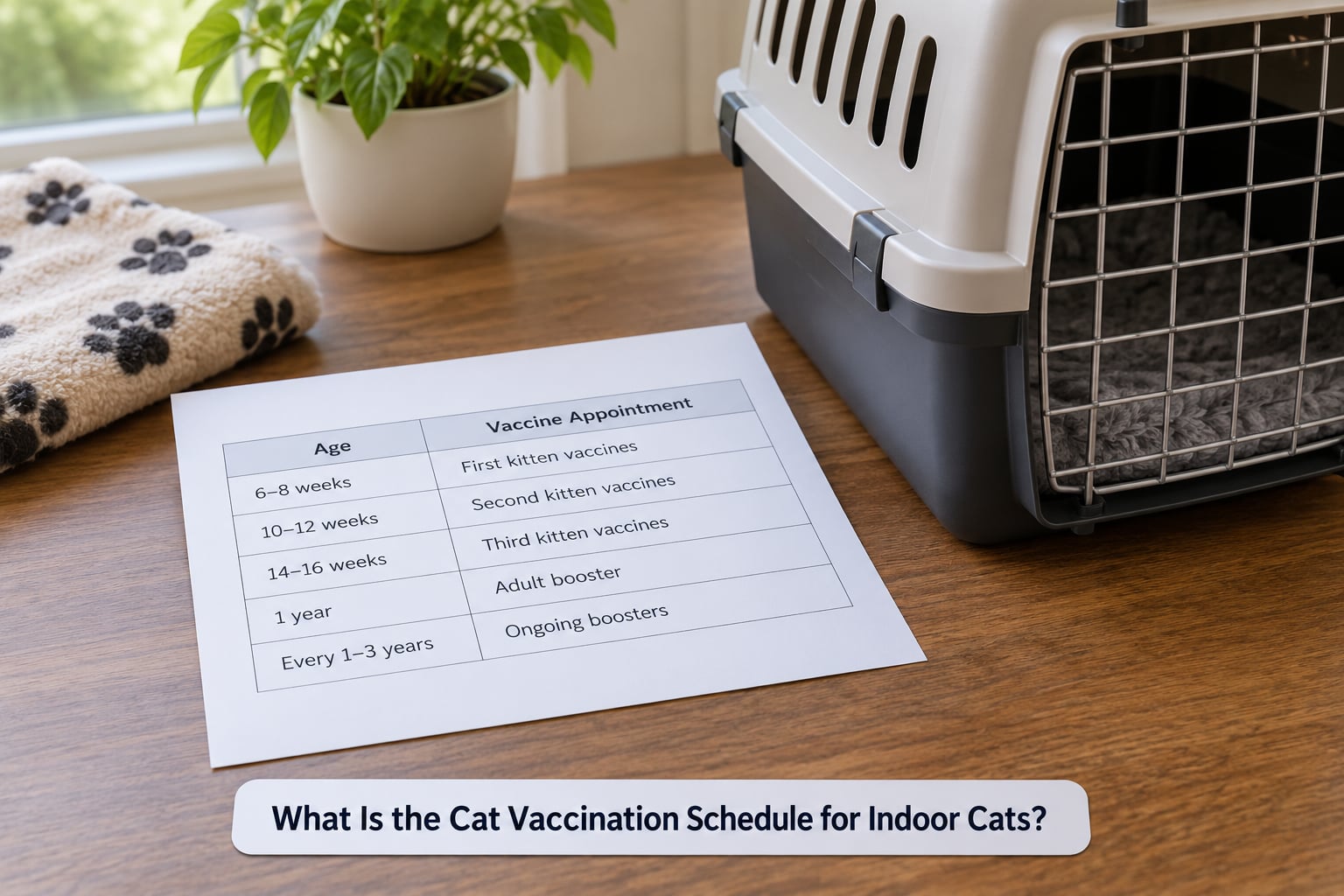
Here is how the schedule actually runs, age by age.
Kitten series, 6 to 16 weeks
Kittens receive FVRCP starting at 6 to 8 weeks of age, repeated every 2 to 4 weeks until they reach 16 weeks of age. Rabies is a single dose at 12 to 16 weeks, subject to the age threshold in your jurisdiction. Higher-risk kittens, such as those in a shelter or a home with unknown FeLV status, may need the series extended to 20 weeks.
The six-month booster
Many practices recommend an FVRCP booster at about six months of age. The reason is maternal antibodies: a kitten whose mother passed on antibodies may still have enough of them at 16 weeks to block the vaccine, and the six-month dose closes that gap.
Adult stage, one year and beyond
After the series, the first adult booster comes about a year later. From there, low-risk indoor cats are commonly revaccinated against FVRCP every three years, while rabies follows the interval allowed by local law and the vaccine used. Cats with more exposure get boosters more often.
How Do Kitten Vaccinations Work?
The reason a kitten needs several doses instead of one is simple: the vaccine cannot work until the mother’s antibodies are out of the way.
Kittens absorb antibodies through colostrum in the first day or so of life. Those maternal antibodies protect a newborn from the diseases in the environment, but they also block a vaccine. Until they fade, a dose given on schedule may produce no immunity at all, which is why a kitten that received only one shot at eight weeks can still get panleukopenia at twelve.
Each repeat dose acts as a second chance, and the series keeps going until the window where maternal antibodies interfere has passed. Spacing matters too: doses given days apart behave almost like one dose, so the 2-to-4-week interval is not a rough suggestion. Most modified-live products also need a second dose to prime the immune memory properly.
Beyond 16 weeks, the picture changes. An adult cat with an unknown or incomplete history gets treated as susceptible, because there is no way to measure what maternal antibodies did years ago.
Do Adult Indoor Cats Need Booster Shots?
Yes, most of them, but on a longer clock than kitten vaccines. Guidance has moved away from giving every vaccine every year, toward intervals set by the vaccine type, the cat’s risk level and local law.
What the 3-3-3 rule means
The 3-3-3 rule is a quick way owners describe a vaccine’s useful life: it may take three years to reach full protection, last about three years at that protection, and take roughly three more years to fade. For a healthy, strictly indoor adult cat, it is the reasoning behind a three-year FVRCP interval. It is a rule of thumb, not a legal standard, so your veterinarian still decides the actual date.
What changes a booster interval
- Records. A complete history lets a vet extend intervals confidently; a missing one usually means starting again.
- Age and health. Senior cats and cats with immune or chronic illness may be scheduled differently.
- Lifestyle. Boarding, travel, a new cat joining the home, or an escape history all raise the risk level.
- Local rabies law. In some places the legal interval is stricter than the veterinary recommendation.
When a booster interval is longer than a year
Longer intervals are normal for a low-risk indoor adult, but they are not universally accepted. Boarding facilities, groomers and pet sitters often require proof of rabies vaccination within the past year, and sitters report liability problems when a client’s cat has no rabies certificate. If you plan to board, check the facility’s rules before your cat’s next appointment rather than after.
What to do when the records are lost
Common with adopted adults. Many vets treat an unknown history as unvaccinated for the core vaccines and build a catch-up plan, which is safe but not cheap. Antibody testing can sometimes show whether a cat has responded to a prior FVRCP or rabies vaccination, and it does help in some cases, but it is not a substitute for the series in every situation and a positive result does not cover FeLV. Ask your vet whether testing is worth it before you agree to a full restart.
Does Being Indoors Mean a Cat Can Skip Vaccines?
No. Indoor living lowers the risk substantially, but it does not remove exposure, and rabies remains a legal requirement in most places. The most honest argument for indoor vaccines is not that the cat will never be exposed, but that the consequences of being wrong are severe.
Real routes of exposure for a strictly indoor cat include:
- Shoes, hands and clothing. Fomites, meaning contaminated objects, carry feline viruses in from outside. A visitor’s shoes or a jacket on the back of a chair is a documented route.
- Open windows and doorways. A bat or other wildlife getting into a screened or unscreened room is a real, if uncommon, rabies exposure.
- Escape. Cats that bolt through an open door have no vaccine protection at all, and this is the single most persuasive argument owners on forums make.
- New cats. A kitten or foster cat brought home, or a cat that returns from a vet visit, introduces exposure the household did not choose.
- Boarding, travel and grooming. Any facility with other animals will ask for current records first.
Normal reactions versus reasons to call the vet
Owners report that vaccine reactions in cats are uncommon and usually mild, with tiredness, reduced appetite or soreness lasting 24 to 48 hours. That is the expected pattern after an injection.
Call your veterinarian the same day if the cat refuses food for more than a day, is markedly lethargic, develops a persistent swelling or abscess at the injection site, vomits repeatedly, or shows facial swelling or breathing difficulty. Difficulty breathing, collapse or facial swelling are emergencies. Your vet should tell you which reactions they consider urgent for your cat before you leave the clinic.
What Should You Bring to the First Vet Visit?
Bring anything that helps the vet set the schedule correctly, and bring your questions written down.
- Any vaccination records you have, including a partial card, shelter paperwork or a previous owner’s notes.
- A health history: age or estimated age, where the cat came from, current weight, past illnesses, parasites and any current symptoms.
- Medication and supplement details, including flea and tick products, because timing around some of those affects what can be given safely.
- Honest lifestyle answers. Does the cat go outside at all? Is there a cat door? Do you board or travel? Is a new cat arriving?
- Your questions: which vaccines are core for this cat, whether FeLV is worth it, when the next booster is due, and what reactions should make you call.
Ask for the next due date in writing before you leave. Vet clinics are busy, and a date written on a card at the desk saves a lot of guessing later.
How Can You Keep Track of Your Cat’s Vaccinations?
Keep one record and keep it somewhere you will actually find it. A phone photo of the certificate is a good backup; a paper copy in a folder is the one that works when a sitter or shelter asks.
- Log each dose on the day it happens, with the vaccine name, the date and the clinic’s certificate number.
- Set two reminders, one at the due date and one a month before, so you can book rather than react.
- Store the certificate digitally and on paper. The rabies certificate is the document other people ask for.
- Check the record before boarding or travel. Facilities often require vaccines given one to two weeks in advance, not the day of arrival.
- Pass the history along. If your cat is ever boarded, fostered or adopted, whoever looks after them should get the file.
Ask the clinic about reminder services too. Many send a notice before a booster is due, which is easier than tracking three-year intervals in a calendar yourself.
Frequently Asked Questions
What shots are recommended for an indoor cat?
For a strictly indoor cat, the core vaccines are FVRCP, which covers feline herpesvirus, calicivirus and panleukopenia, plus rabies. Feline leukemia is usually given to kittens after a negative test, then discussed again for adults. There is no routine feline infectious peritonitis vaccine recommended in the United States. Your vet sets the final list after asking about escape risk, other cats, boarding and travel.
How often do indoor cats need vaccines?
After the kitten series, a low-risk indoor adult typically gets an FVRCP booster one year later and then every three years, with rabies every one to three years depending on the vaccine product and local law. Higher-risk cats, including ones that board, travel or go outdoors, are revaccinated more often. A second kitten dose at about six months closes the window left by maternal antibodies.
What is the 3-3-3 rule of cats?
It is a shorthand for how long a vaccine’s protection tends to last: about three years to reach full immunity, three years of solid protection, and roughly three years for it to fade. That is the reasoning behind a three-year FVRCP interval for a healthy, low-risk indoor cat. It is a guide rather than a rule, and rabies intervals are set by law and product label instead.
My cat slipped outside before finishing the kitten series. What now?
Tell your vet right away rather than waiting for the next appointment. Depending on how long it was exposed and which doses were already given, your vet may move the next dose forward, restart the series, or continue the schedule and add a booster. Keeping your cat indoors until the series is complete matters, because the doses given so far may not have produced immunity yet.
Is it normal for a cat to be quiet or sore after a vaccine?
A tired cat that eats less or avoids jumping for a day or two is a common, mild reaction, and owners report this most often. Call your vet if the cat skips food for more than a day, stays unusually flat, vomits repeatedly, or develops swelling or an abscess at the injection site. Breathing difficulty, facial swelling or collapse are emergencies needing immediate care.
Does an indoor cat still need the FeLV vaccine?
It depends. Feline leukemia spreads mainly through close contact, so a single indoor cat with no outdoor exposure is low risk. Most vets still recommend it for kittens, because a kitten that gets out may meet an infected cat, and one or two doses are inexpensive against that risk. For an adult indoor cat, talk with your vet about whether to continue or stop.
Conclusion
Start by booking a veterinary consultation, and bring any records you can find along with honest answers about how your cat lives. From there, write the schedule down: the next dose dates, the rabies certificate location, and the reminder you want set in your phone.
Everything above is general information based on the AAHA and AAFP feline vaccination guidelines and WSAVA guidance. Your veterinarian has to examine the cat before confirming any of it, and for anything medical, a vet is the only person who should make the call.