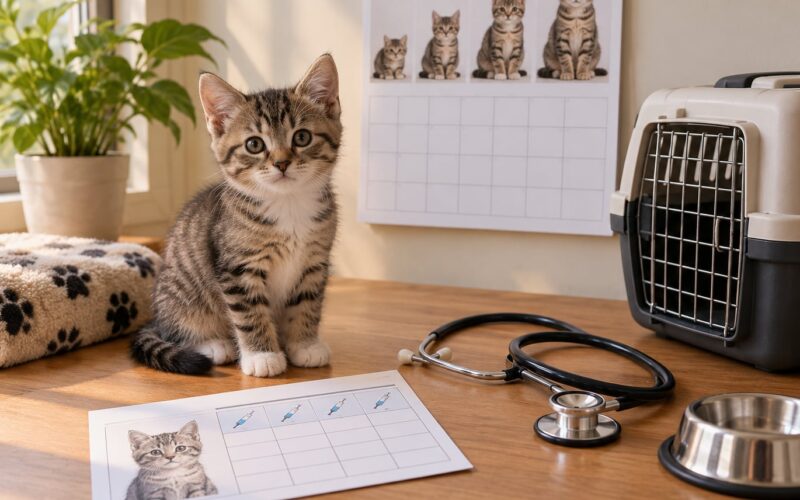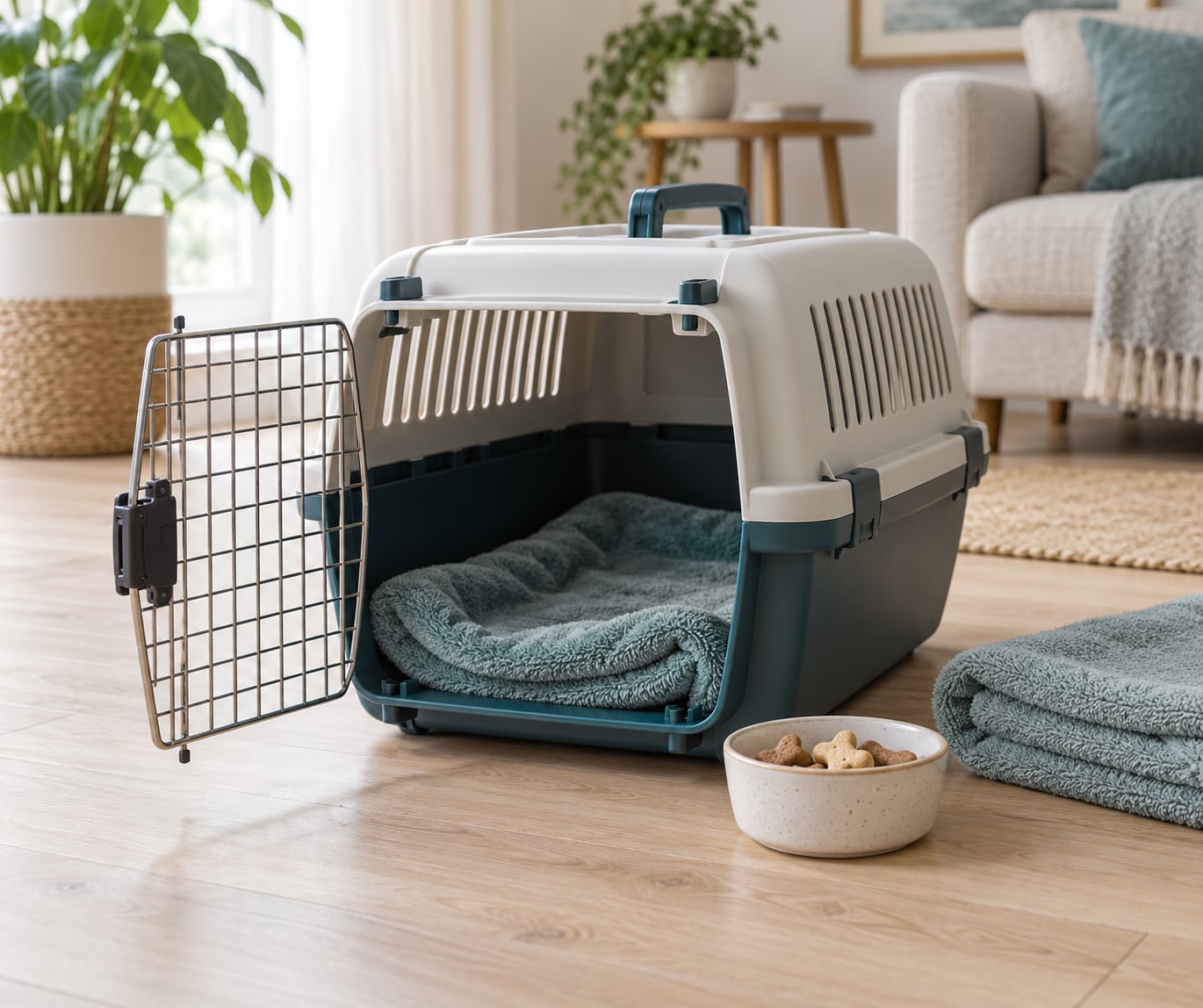
Most cats do not hate the carrier itself. They hate what it predicts: the car, the waiting room, the cold table, the needle. The easiest way to get a cat into a carrier calmly is to stop using the carrier as a storage item and start using it as ordinary furniture, feeding and treating around the open door for two to four weeks until walking in feels boring rather than alarming.
This guide covers the slow version, the two-week version, and what to do tonight at 11 pm when the emergency vet is closing and you have twenty minutes. Follow the slow path when you have time. Skip to the handling section when you do not.
Table of Contents
- What You Need
- Step-by-Step: How to Get a Cat Into a Carrier Calmly
- Choose a Safe, Familiar Carrier
- Place the Carrier Before Training
- Reward Interest Without Rushing
- Encourage Voluntary Entry
- Gentle Handling: How to Get a Cat Into a Carrier Calmly When Training Stalls
- Secure the Carrier and Check the Cat
- Common Mistakes and What to Do Instead
- Frequently Asked Questions
- What is the easiest way to put a cat in a carrier?
- How long does carrier training take?
- Should I feed my cat in the carrier?
- What size carrier does my cat need?
- How do I stop my cat from freaking out in the carrier?
- What is the 3-3-3 rule for cats, and does it apply to carriers?
- Conclusion
What You Need
You do not need much, and most of it is already in the house. The point of each item is to remove one reason for the cat to bolt.
- A carrier that stays out. Hard-sided with a top that lifts off is the most forgiving option for a nervous cat, because nothing has to pass through a small front door.
- High-value treats. Use the ones your cat normally gets nothing of: lickable treats, small fish-shaped chews, or whatever smells strongest. Ordinary kibble will not carry a training session.
- Something that smells like home. A worn t-shirt of yours, the blanket from the cat bed, or a towel the cat has slept on. Scent does more work here than any gadget.
- A towel that the cat has already accepted. You need this for the wrap technique, and it has to be a familiar towel, not the one you brought home last week.
- A pheromone spray. Sprayed into the carrier 15 minutes before, it reads as the cat’s own comfort pheromone at a concentration your nose cannot detect.
- Cleaning supplies. Not for the carpet. More on that below, in the mistakes section, because a carrier that smells like the vet visit becomes a vet visit in the cat’s head.
One optional item changes the game: a second carrier. Households with two cats should skip this and read the multi-cat note in the mistakes section first.
Step-by-Step: How to Get a Cat Into a Carrier Calmly
Choose a Safe, Familiar Carrier
Carrier choice decides how much of this article you actually need. A cat that fights a small front door may walk calmly into a top-loading carrier without complaint, so fix the door problem before you blame the cat.
- Hard plastic with a removable top. Heavy, easy to clean, hard to scratch through, and the top opens wide so you can lower a treat in or lower the cat in. This is the best choice for a scared cat and the easiest to disinfect after a vet visit.
- Soft-sided carrier. Light and collapsible, comfortable enough for short car trips if the cat already tolerates fabric. Many cats collapse the front or squeeze through a zipper seam, so inspect the zippers before every use. Buy the kind with a rigid base and a firm rim, not the floppy pop-up kind.
- Backpack carrier. Hands-free and useful for walking a cat to a clinic, but it still needs the same desensitization as everything else. A cat who has never seen one will not accept one in a single afternoon.
- Top-loading or “easy entry” model. Worth hunting for specifically if your cat is difficult. Owners of hard cats describe these as the single change that turned loading from a two-person job into a ten-second job.
On size, aim for a carrier your cat can stand up in, turn around in, and lie down in. That is roughly one and a half times the cat’s length. Small is the most common mistake, because a cramped carrier smells of confinement on top of everything else the cat already dreads.
Check three things before training starts. The door latch should hold if you tug it hard with one hand. There should be enough ventilation that a warm carrier does not feel like a trap. And the base should not slide, because a carrier that shifts when a cat leans into the door teaches the cat that the door is going to open unexpectedly.
Place the Carrier Before Training
Put the carrier in a quiet, low-traffic room where the family spends time, not in the garage and not next to the loud front door. Leave the door open or lift the top off. Add the bedding that smells like your cat.
There is one failure mode here that quietly ruins months of work: if the carrier sits beside the litter box, some cats treat it as a second litter tray. Once that association forms, the whole project is finished before it started. Keep them in separate rooms and clean bedding every few days.
How do you know this step worked? The cat starts choosing the carrier the way it chooses a sunny spot: sitting in it, sleeping in it, or flicking at the door flap when nothing is happening.
Reward Interest Without Rushing
Now start delivering value near the opening. Toss a treat just outside the door, then just inside, then a little deeper. The cat does not have to go in at any point in the first few sessions.
Three things widen this stage. Feed part of the meal right next to the carrier or inside it, so the food schedule itself starts including the carrier. Use play to end with a toy delivered through the opening, so the carrier connects to hunting, not restraint. And spray the pheromone product into the carrier about 15 minutes before you sit down, every session for the first fortnight.
Check progress by watching where the cat sits, not by whether it enters. Sitting beside the carrier without looking away is the milestone. Then sniffing the opening. Then a paw inside. Rushing to the finish line here is what teaches a cat that this object appears, and then something bad follows.
Encourage Voluntary Entry
Once the cat looks relaxed near the opening, use a wand toy or a trail of treats to draw it inside, and reward it in place with a treat at floor level. Do not attach food to the cat, and do not shut anything.
Choose a target based on your actual time. Three honest timelines, built from what owners report:
- Three days, emergency only. You get the carrier open, the bedding in, meals served inside, and a pheromone spray going. Most cats will step in within this window out of curiosity, but treat it as a bonus, not a plan.
- Two weeks, standard. Daily sessions of five minutes, treats at the door, then inside, then a closed door with a treat visible through the mesh, then a treat through the mesh at the front. This is the timeline that works for most cats.
- One month, thorough. The two-week plan plus lifting the carrier a few inches, carrying it to another room, carrying it to a parked car, and setting up a second carrier so one is always “the carrier” and the other is “the car.”
Owners often assume they rushed it and start over from scratch. There is no reset needed. Go back one step in the plan and hold there for another three days. Progress that looks like a staircase is normal, and so is a week where nothing seems to happen.
Gentle Handling: How to Get a Cat Into a Carrier Calmly When Training Stalls
Some days there is no time for stages. A cat is bleeding, or the clinic closes at six. In that case the goal changes from calm to fast and safe, and there are three techniques that work far better than chasing the cat around the house.
- Top-loading drop-in. Set the carrier upright, remove the top, place treats at the bottom, and stand behind the cat. Most cats walk in on their own once they realise the opening is above them rather than in front of them.
- Towel wrap, sometimes called the purrito method. Use a towel the cat already accepts. Place it over the shoulders, wrap the body snugly but not tight, leave the head out, and carry the cat straight to the carrier. Never wrap tightly around the chest or neck, and never wrap a cat that is breathing hard or overheated.
- Two-handed scoop. Slide one hand under the chest and the other under the hindquarters, keeping the body level and supported, then lower the cat into the carrier feet first. Do not pick a cat up by the scruff of the neck, and do not use the scruff as a grip, whatever the size of the cat.
Say something calm and boring. Chasing, cornering, or shoving a cat toward the opening teaches that your hands and that door are a threat, and it can leave you with scratches and a cat that bolts from the carrier room for weeks.
One more trick owners swear by for emergencies: shut the cat in the room with the carrier and sit down. Not the cat, you. Wait quietly with a book. Many cats, once they stop perceiving a chase, walk over and investigate the thing that is not chasing them.
Secure the Carrier and Check the Cat
Once the cat is inside, talk softly and let it settle for a minute before latching the door. Check that the door or top is fully secured and that no clip or strap is loose. Latch from outside, never reaching in past a paw.
Inside, healthy and calm looks like this: the cat settles, breathing returns to normal within a couple of minutes, and there is no repeated escape attempt. Get help now, not after the appointment, if the cat is open-mouth breathing, panting, collapses, becomes unresponsive, or goes quiet and stiff rather than vocal. Those signs in a stressed cat in a carrier are an emergency, and you should call the clinic from the car.
After the trip, clean the carrier before you put it back on the floor. Warm water and a mild soap, dried fully, bedding washed or replaced. A carrier that still smells like the clinic is a carrier the cat will spot from across the room next time, and that is how one difficult appointment becomes a year of difficult appointments.
Common Mistakes and What to Do Instead
Almost every stuck cat is doing one of the following. Find your situation and use the fix.
- The cat hides the moment it sees the carrier. Owners on r/CatAdvice describe this as the top complaint: the cat spots the routine, bolts under the bed, and the ten minutes are gone. Instead, store the carrier out of sight between sessions and bring it out only for training, so appearance stops being the trigger.
- Training only happens before vet visits. The carrier comes out twice a year, and both times it means the same thing. Instead, keep it out permanently, per the steps above.
- Punishing the cat after the trip. Spraying, throwing a towel, or scolding afterward confirms that the carrier means unpleasant things. Instead, clean quietly and put a treat in the carrier the same evening.
- Chasing the cat. Everyone loses, including the cat. Instead, use the towel wrap, the top-loading drop-in, or the sit-and-wait method.
- Using low-value treats. Cats learn fast. If the response dies after a couple of sessions, the treats have lost their power. Switch to something smellsier, break them into smaller pieces, or move the treat deeper into the carrier.
- The cat pees or poops in the carrier. This is fear, not spite. Never scold and never remove the bedding in front of the cat. Instead, clean it out with an enzyme cleaner, leave the carrier open with fresh bedding, and stop advancing the plan until the cat is going in and out without distress.
- Forcing two cats into one carrier. Owners report learning this the hard way after a fight broke out in transit. Use two carriers side by side with a gap, secure both with seat belts, or cover one with a light towel so they cannot see each other.
- Lifting an older or arthritic cat like a kitten. Pain makes handling worse. Support the chest and the rear end, keep the body level, and ask the vet about a pain plan or a medication plan at the same time.
- Treating the towel like a medical restraint. Some cats are suspicious of fabric entirely. If the wrap fails, do not escalate to force, and try the top-loading approach instead.
And if your cat is genuinely in crisis, ask a veterinarian about medication before the appointment rather than after. Gabapentin is prescribed for situational stress before travel or a clinic visit, and a vet can tell you whether the dose they suggest suits your cat’s age, weight, health and the length of the trip. Use human medication only if a vet explicitly tells you to, never on your own.
Frequently Asked Questions
What is the easiest way to put a cat in a carrier?
Leave the carrier out permanently with the door open, put familiar bedding inside, and feed part of the cat’s meal there for two to four weeks. Most cats walk in on their own before the deadline. If you are out of time, remove the top of a hard carrier, drop treats in the bottom, and stand behind the cat.
How long does carrier training take?
Most cats show real change in two weeks and reliable entry in a month. Cats who only see the carrier twice a year often need longer, because they are learning from scratch every time. If nothing changes after two weeks of daily sessions, step back one stage in the plan rather than pushing forward.
Should I feed my cat in the carrier?
Yes, feeding part of a regular meal in the carrier is one of the strongest associations you can build, because a cat works hard for food. Move from treats at the doorway, to treats inside, to part of the meal inside, to the full meal inside. Do not hold the door shut to force the point.
What size carrier does my cat need?
Choose one your cat can stand up in, turn around in and lie down in, which is roughly one and a half times your cat’s length. Cramped carriers add to the stress because they smell like confinement. If you are between two sizes during travel, take the larger one.
How do I stop my cat from freaking out in the carrier?
Cover the carrier with a light breathable towel or shower curtain to reduce visual stimulation, secure it with a seat belt, keep the car quiet and cool, and speak in a low calm voice. For severe cases, ask your veterinarian about a prescribed pre-visit or pre-travel medication such as gabapentin before the trip.
What is the 3-3-3 rule for cats, and does it apply to carriers?
The 3-3-3 rule describes settling into a new home: about three days to decompress, three weeks to begin normal routines, and three months to feel at home. It applies to environment rather than to carriers, but the principle carries over: go slowly, on the cat’s timeline, and expect weeks rather than days for a full change.
Conclusion
Start tonight. Put the carrier in a quiet room with a familiar blanket in it, leave the door open, and drop a few treats near the opening for five minutes each evening. Do not close it, do not put the cat in, and let the cat set the pace from there. Once eating near the opening stops being an event, start moving the treats deeper, and you will have solved most future vet-visit battles before they start.