The three signs most owners notice first in diabetes in cats are more thirst, more urination, and a bigger appetite, usually alongside weight loss. Insulin care basics come down to this: prescribed insulin, a steady routine, a written record, and a veterinarian who confirms the plan. This guide explains what to watch for and how daily care works. It is educational only and never replaces a veterinary consultation.
Anything on this page that concerns your own cat belongs in a conversation with your vet. Do not start, stop, or adjust insulin, food, or medication based on a web article, including this one.
Table of Contents
- Diabetes in Cats Symptoms and Insulin Care Basics: What to Notice
- What Are the Most Common Diabetes Symptoms in Cats?
- Can a Cat Have Diabetes Without Looking Very Sick?
- How Is Diabetes in Cats Diagnosed and Monitored?
- What Does Insulin Care in Cats Usually Involve?
- How Can Insulin Be Given Safely at Home?
- What About Food, Treats, and a Cat’s Daily Routine?
- Which Signs Need Urgent Veterinary Attention?
- Frequently Asked Questions
- What are the first signs of diabetes in cats?
- Can cats with diabetes live normal, active lives?
- How often do cats with diabetes need veterinary checkups?
- Can I give my cat insulin without veterinary training?
- Should I change my cat’s food if diabetes is diagnosed?
- What happens if a cat with diabetes stops eating?
- Conclusion: Start With Safe, Consistent Care
Diabetes in Cats Symptoms and Insulin Care Basics: What to Notice
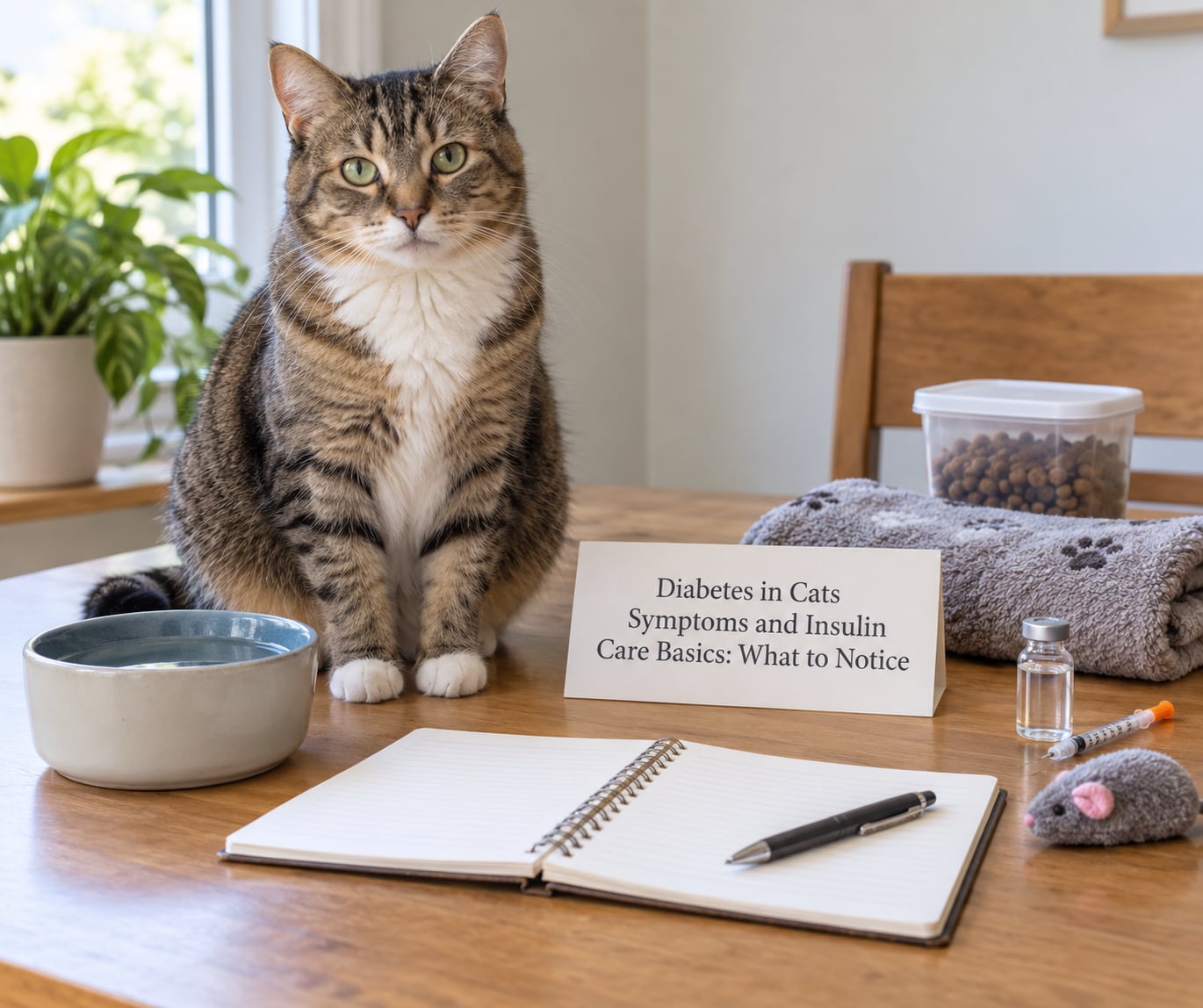
Cats rarely get sick all at once. The changes creep in over weeks or months, and owners often blame age, weather, or a new bag of food. Writing things down turns a vague impression into something your vet can actually use.
What Are the Most Common Diabetes Symptoms in Cats?
Veterinary references describe the classic trio as the three Ps: polydipsia, polyuria, and polyphagia. Here is what those look like in a real home, plus the changes that get missed most.
- Thirst that will not settle. Bowls refill faster than usual, or the cat drinks straight from a tap.
- More trips to the litter box. Clumps are noticeably larger than they used to be, or the box needs scooping twice as often.
- Accidents outside the box. A house-trained cat urinating on bedding or floors is a common first alarm.
- Constant hunger. Food disappears fast and the cat still seems interested in dinner within the hour.
- Weight loss despite that hunger. This combination is the single most telling pattern in cat diabetes symptoms, because the body cannot use the sugar it is eating.
- A dull or greasy coat. Skin and coat condition often change once the cat is not using its food properly.
- Recurring urinary infections. Repeated infections can be the reason some cats are diagnosed.
- Cloudy eyes or a sudden personality shift. Both are worth mentioning at the appointment even if they seem unrelated.
None of these on their own confirm anything. A urinary infection, kidney disease, and hyperthyroidism can produce overlapping signs, and only testing sorts them out.
Can a Cat Have Diabetes Without Looking Very Sick?
Yes. Early on, a cat with diabetes may look entirely normal apart from drinking and filling the litter box a bit more than usual. Cats are good at hiding discomfort, and a cat eating well and playing will not seem unwell to most people.
That is why a symptom log matters more than a snapshot impression. Note the date, what changed, how much the cat drank, roughly how much food went in, and the state of the litter. Four weeks of notes give your vet something concrete, while a fuzzy memory does not.
Other health changes often travel with feline diabetes, including pancreatitis and, later on, hind-leg weakness. Many owners only reach the vet because something unrelated changed first, which lines up with what veterinary guidance says about diabetes often showing up alongside other conditions.
How Is Diabetes in Cats Diagnosed and Monitored?
Diagnosis combines a physical exam, your history, and blood and urine testing, usually followed by a second visit so stress-related readings do not mislead anyone.
A stressed cat can have a raised blood glucose that looks like diabetes and resolves the moment the cat calms down. That is why vets often test a settled patient, repeat values over days, and lean on a protein-bound glucose marker such as fructosamine, which reflects weeks of glucose rather than a single stressful moment.
Urinalysis matters too. Glucose spilling into urine, along with ketones when the body is burning fat for fuel, gives your vet a clearer picture. Your vet will also record a body weight and a body condition score, since tracking weight over time is one of the most useful things you can do at home.
Ongoing monitoring usually means regular rechecks, sometimes with a glucose curve taken over several hours in the clinic. Home meters and continuous sensors exist, and some owners find them useful while others describe them as a hassle. Ask your vet whether they would change anything you decide.
What Does Insulin Care in Cats Usually Involve?
Insulin care for a diabetic cat has four parts: the prescribed product, a dependable schedule, the right equipment, and storage that keeps the insulin effective. Your vet chooses the product and the dose. Nothing about that changes without them.
There is no oral insulin commonly used in cats, so injections are the standard route. Never substitute a human medication for what your vet prescribed, and never use a product from another country or an unlabelled vial.
Ask your practice for hands-on training. Watching a technician handle the syringe, the skin, and the cat once is worth more than any written description, and most clinics repeat it as often as you need.
Equipment is simple: the syringes your vet specifies, a sharps container for used needles, and somewhere fridge-freezer-safe to store the product as the label instructs. Insulin that has frozen or sat in heat can stop working without looking any different, so store it exactly as directed and check with the clinic if a bottle has changed color or formed a clump.
How Can Insulin Be Given Safely at Home?
Safe home administration comes down to a fixed routine you repeat at the same times every day. Your veterinary team should teach you the technique in person; this list is a preparation habit, not a technique lesson.
- Give the dose your vet prescribed, at the times your vet set, using the syringe they specified.
- Give it consistently. A predictable schedule makes readings far easier to interpret than an irregular one.
- Pair the injection with something the cat likes, such as a small treat or a few seconds of play.
- Rotate the sites you use, and note them in your log.
- Write down every dose immediately: date, time, dose given, and whether the cat ate.
- Wash your hands and dispose of used needles in a sharps container.
Timing the injection shortly after the cat eats tends to make the whole routine easier to manage, because the cat is alert and settled instead of getting a needle mid-swaddle. Run your own version past your vet before settling into it, and keep a written schedule somewhere visible for anyone who helps you.
What About Food, Treats, and a Cat’s Daily Routine?
Consistent meals matter more than any single ingredient, because insulin dose and food intake are matched to each other. When the food changes on day three, the numbers on day four will be confusing.
Diet changes should follow your vet’s plan, including the timing of meals around injections. Ask them how tightly your cat’s routine should track the schedule, and how to adjust if a meal is late or skipped.
Treats count. A few calories twice a day are part of the day’s intake, and in some cats they are what makes the injection routine workable. Tell your vet exactly what your cat eats, including treats, chew items, and anything it gets from other people in the house.
Keep human food out of the picture. Shared meals, flavored dairy, and sugary treats push glucose up and work against the plan. If your cat stops eating for a day, tell your vet before giving or skipping anything.
Which Signs Need Urgent Veterinary Attention?
Some signs in a cat with diabetes mean call your vet today. Others mean go in now. In both cases, do not treat at home first.
Same-day concerns include refusing food for most of a day, vomiting more than once, drinking almost nothing, or weakness in the back legs that makes jumping or standing difficult. Cats with diabetes can develop diabetic neuropathy, and the hind legs may look stiff with the hocks dropped to the floor.
Emergency concerns include collapse, laboured breathing, rapid or open-mouth breathing, a fruity or acetone smell on the breath, gums that are very pale, dry or tacky, or a cat that cannot keep water down at all. These can point to dehydration or diabetic ketoacidosis, which is life-threatening without treatment.
Suspected low blood sugar also needs a call. Cats that seem disoriented, unusually weak, wobbly, or restless, especially soon after an injection, may have hypoglycemia. Only your vet can confirm it and tell you what to give and when to bring the cat in. If a diabetic cat collapses, skips a day of insulin, or eats almost nothing, that is a call to make immediately rather than a situation to watch.
Frequently Asked Questions
What are the first signs of diabetes in cats?
The first signs are increased thirst, increased urination, and increased appetite, usually with weight loss despite eating more. Many owners also notice larger urine clumps in the litter box, accidents outside the box, a dull coat, or repeated urinary infections. Cats hide discomfort well, so keep a written log of drinking, eating, weight, and litter habits and bring it to a veterinarian for proper testing.
Can cats with diabetes live normal, active lives?
Most cats that are well managed do keep a good quality of life and remain active and engaged for many years. That depends on consistent insulin, a steady feeding routine, weight control, and regular rechecks so the plan can be adjusted as the cat changes. Some cats need more insulin over time and some reach a point where medication is not helping, so the ongoing relationship with your veterinarian matters as much as the daily routine.
How often do cats with diabetes need veterinary checkups?
Frequency depends on how well the cat is doing and on what your vet is monitoring, and your veterinarian will set the schedule. Newly diagnosed cats are usually rechecked more often so the plan can be adjusted, while stable cats may need fewer visits between routine wellness exams. Contact your clinic sooner than the next appointment if appetite changes, the cat seems thirsty or weak, or you cannot get a dose in on schedule.
Can I give my cat insulin without veterinary training?
No. Ask your clinic for hands-on training before giving a first dose, and have a technician demonstrate the syringe, the skin, and how to handle your cat until you are comfortable. Written instructions alone are not enough for this task, and a mistake can send the cat low. Keep the appointment with your vet for any question about dose, timing, equipment, or storage, and never change a dose on your own.
Should I change my cat’s food if diabetes is diagnosed?
Change the diet only as part of the plan your veterinarian gives you, because food and insulin are matched to each other. If you switch suddenly, the glucose readings become hard to read and the dose may need adjusting. Tell your vet exactly what your cat eats, including treats, and ask how closely meal times need to line up with injections. Keep human food and sugary treats out of the picture.
What happens if a cat with diabetes stops eating?
A cat that does not eat needs a call to your veterinarian before you give or skip anything, because skipping food while giving insulin can send the blood sugar dangerously low. Explain how long the cat has refused food or water, whether it is vomiting, and when the last dose was given, then follow the specific instructions your clinic gives you. A cat that eats nothing for a day, or vomits repeatedly, needs to be seen the same day.
Conclusion: Start With Safe, Consistent Care
Start with three things: write down what you have noticed and when, book an appointment so the signs can be tested properly, and ask for hands-on training before you touch a syringe. From there, follow the prescribed plan exactly and keep logging doses, meals, weight, and any change in behavior.
Insulin care is a routine rather than a guessing game, and most cats do well when the routine holds. This guide was reviewed in 2026 and is meant to help you have better questions for your veterinarian, not to answer them in place of your vet.