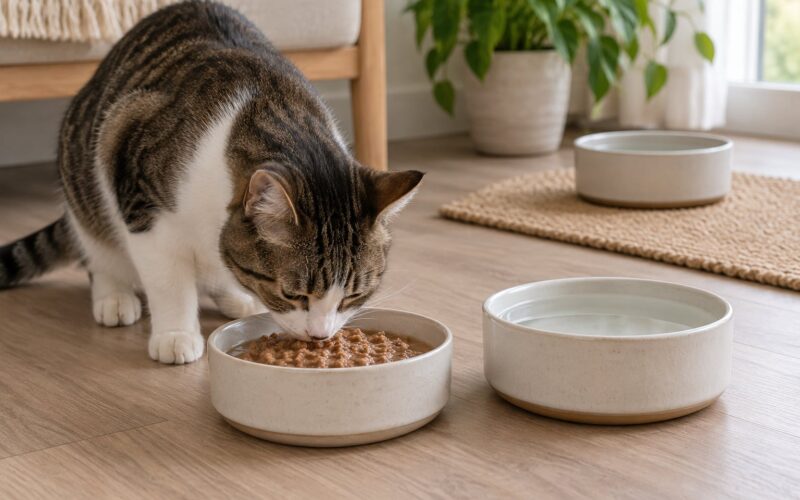
Most cats need 7 to 10 days to move onto a new food, and the switch is done by mixing the two foods in a shifting ratio rather than swapping one bowl for the other. Start with about a quarter of the new food on day one, step up every couple of days, and only reach 100% new food once your cat’s stool and appetite look normal. The whole process takes less than two weeks of ordinary meal prep, and the only real difficulty is patience when your cat sorts the bowl and eats the familiar half.
Table of Contents
- What You Need
- Step-by-Step
- Step 1: Start Slow With Small Amounts of the New Food
- Step 2: Increase the New Food Slowly
- Step 3: Make the New Food the Main Food
- Step 4: Complete the Transition and Watch for Problems
- Common Mistakes
- Frequently Asked Questions
- How long does it take to transition a cat to new food?
- What is the best way to transition my cat to new food?
- What happens if you don’t gradually switch cat food?
- What is the 3-3-3 rule for new cats?
- Can I mix wet and dry cat food during the transition?
- When should I call the vet during a food transition?
- Conclusion
What You Need
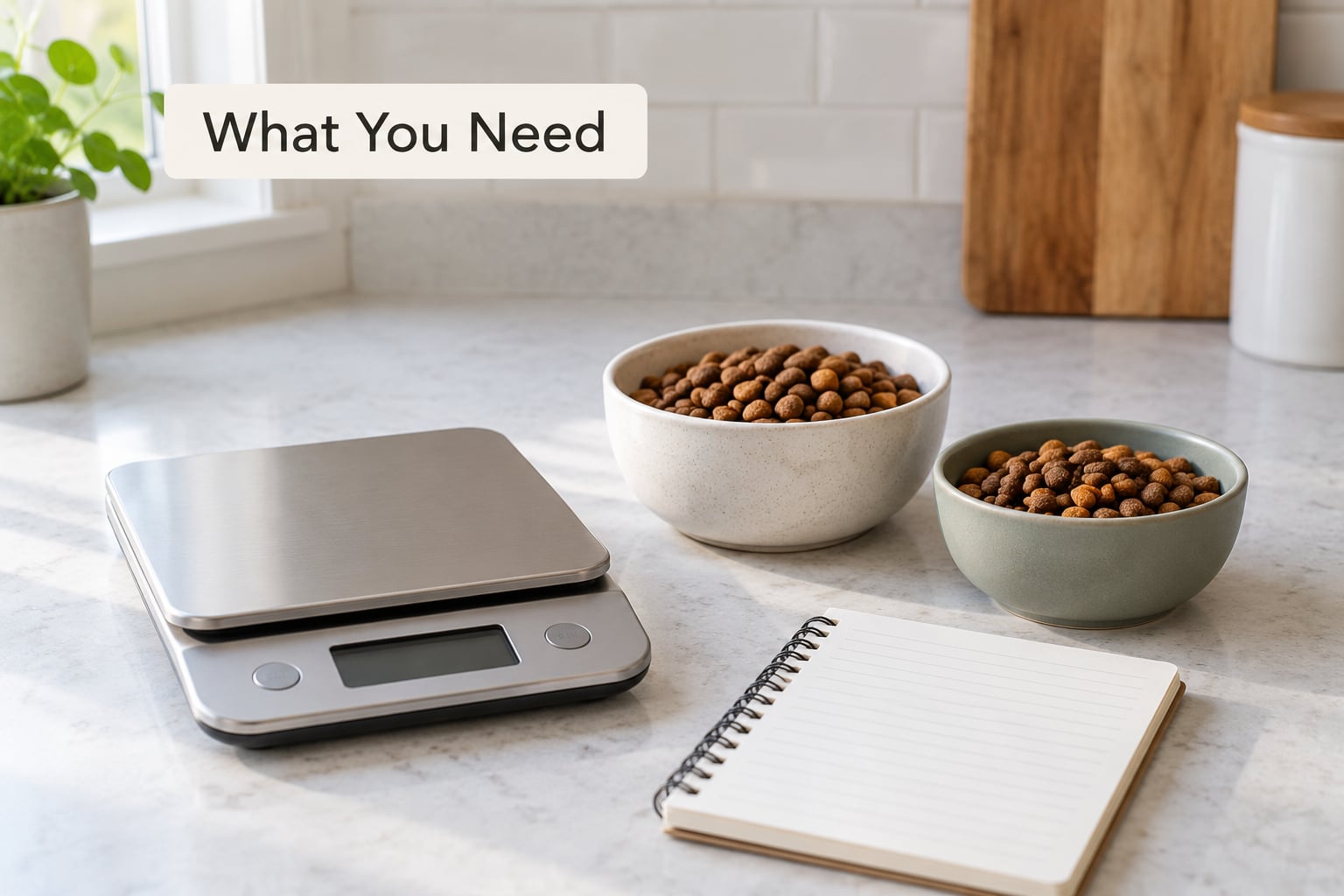
Having both foods open before day one removes the panic of a cat staring at an empty bowl because you forgot to buy the old kibble. It also lets you measure properly instead of eyeballing.
- The food your cat eats now. Keep at least a week’s worth, plus extra if the transition runs long.
- The new food. Buy enough for the whole switch so you are not halfway through when the bag runs out.
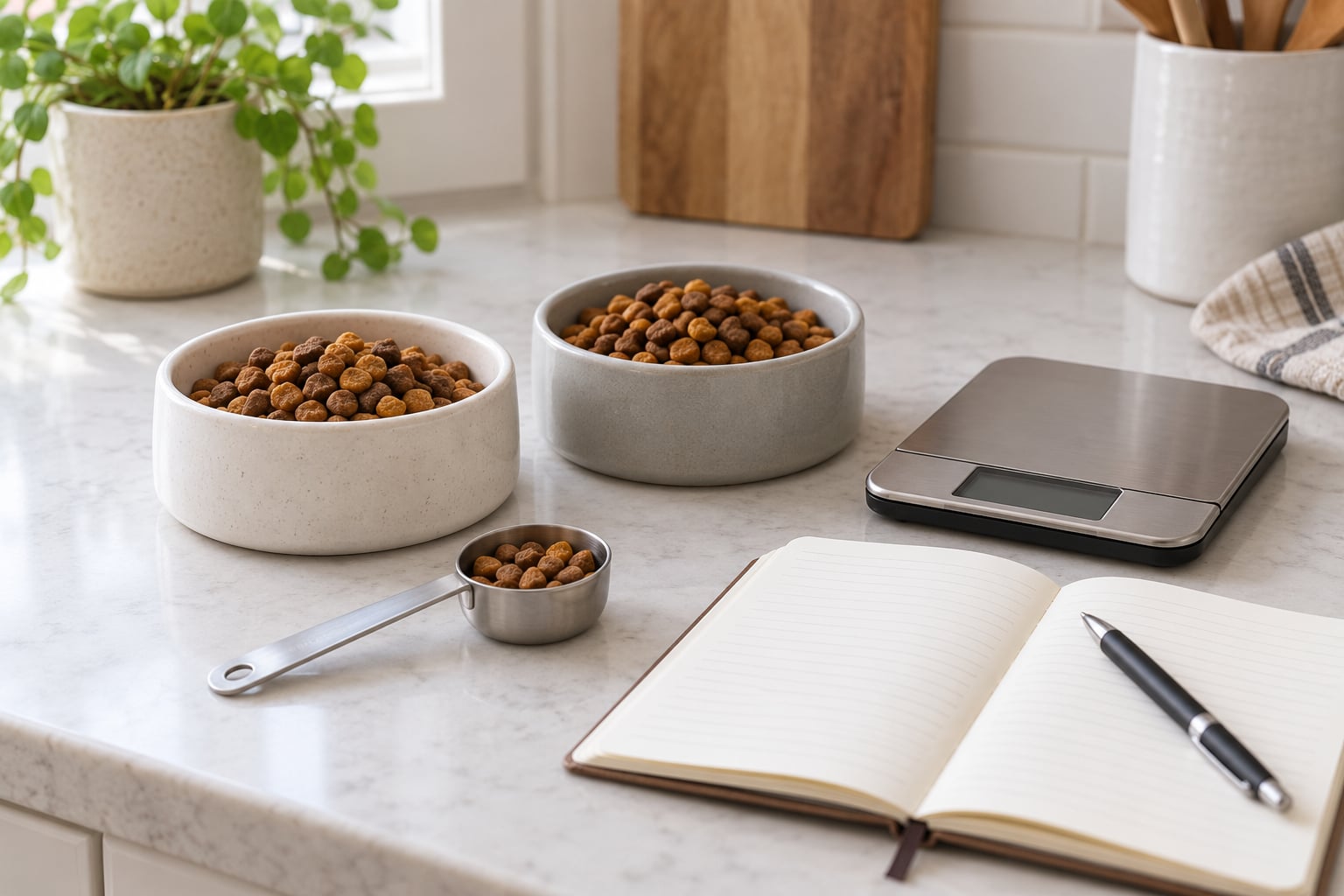
- A kitchen scale or a measuring cup that shows grams or ounces. Dry food volume is a poor guide because kibble shapes differ so much between brands.
- The calorie count for both foods. The kcal figure per cup or per can is printed on the label and it is the only number that matters for portions.
- Fresh water and a clean, quiet feeding spot. Some cats eat better in a room away from dogs or other cats.
- A notebook or your phone. A line a day with what the cat ate and what the stool looked like is the simplest way to spot trouble early.
For multi-cat households, feed separately during the transition. A cat that gets the food its bowl-mate already finished will not test anything new.
Step-by-Step
Step 1: Start Slow With Small Amounts of the New Food
For the first 48 hours, serve roughly three quarters of your cat’s normal portion as the old food and one quarter as the new food. Small portions matter here because a hungry cat sniffs unfamiliar food more readily than a cat handed a full bowl of it.
Watch the bowl, not the food. Many cats will sniff the new portion, walk away, then come back for the familiar kibble. That is normal and it is still progress, because the first few bites are what introduce the new ingredients to the gut.
Check the litter box the next morning. Formed stool means you are on track. Slightly softer stool also means you are on track. Loose, watery stool or vomiting means the step was too big, and the fix is to go back one step.
Step 2: Increase the New Food Slowly
This is the standard 7-day cat food transition chart. Each step lasts two days so that you get four checkpoints, and the portions stay constant in calories even as the ratio changes.
- Days 1 to 2: 75% old food, 25% new food. Watch for curiosity and no change in stool.
- Days 3 to 4: half old, half new. You want a full bowl eaten and stool still formed.
- Days 5 to 6: 25% old, 75% new. Some picking at first is fine, vomiting is not.
- Day 7 onward: all new food. Steady weight and a normal litter box.
If your cat is hesitant, slow down. Stay on one ratio for an extra two days rather than pushing ahead. Some cats need 14 days for the same four steps, and a slow switch that takes two weeks is far better than a fast one that ends at the vet.
Owners running a dry-to-wet switch report that offering the two foods in separate bowls, side by side, works better than blending them. Plenty of cats will happily eat a bowl of wet food next to their kibble but refuse a mixed bowl that looks wrong.
Step 3: Make the New Food the Main Food
Once you are at 75% new food, switch from free-feeding to two or three scheduled meals. Cats that graze all day have no appetite left at mealtime, and hunger is what convinces a hesitant eater to try. Warming the new food to room temperature in the fridge for a few minutes and running a short play session before the bowl goes down both help.
Recalculate portions by calories before you finish. A cup of dry kibble and a 5.5 ounce can of wet food are very different amounts of energy, even when they look similar in the bowl. Use this simple approach: divide the daily calorie target by the calories per cup or per can, and weigh that amount out.
A wet-food switch also changes how full the cat looks. A cat moving to wet food may seem to eat less by volume while eating the same number of calories, which is normal and not a reason to speed up.
If the new food is a prescription or therapeutic diet, keep the schedule but start slower, around 10 to 14 days, and tell your vet the day you begin. Do not dilute the diet with extra food to make it more palatable, because the nutrient balance is the point of it. Cats on an elimination diet are a special case: the trial only works if nothing else goes in the bowl, so any treat topper has to come from your vet.
Step 4: Complete the Transition and Watch for Problems
Drop the old food once your cat finishes two or three days at 75% to 100% new food with normal stool. Keep a small amount of the old food in a sealed container for a week. If something goes wrong, a familiar food plus your vet’s advice gets you back on track faster than buying something new again.
A day or two of slightly softer stool during the middle of a transition is normal adaptation. Here is how to read it:
- Slightly soft but formed stool: hold the current ratio for another two days.
- Watery stool or vomiting once: step back one stage and slow down.
- Loose stool or vomiting that keeps repeating for more than 24 hours: stop the change, go back to the old food, and call your vet.
- A cat that eats nothing for 24 hours: call your vet the same day. Cats that stop eating can develop hepatic lipidosis, or fatty liver disease, which is serious and largely preventable when caught early.
- Weight loss, hiding, or a hunched posture after meals: book an appointment rather than waiting for the next stage.
Two slower schedules are worth knowing. For a sensitive stomach, a senior cat, or a switch to a high-fat food, stretch each step to seven days and expect the whole thing to take 28 days. AAHA guidance notes that some cats can take up to 40 days, so if your cat is stable and eating, patience is still the right call. Newly adopted cats with an unknown food history also belong in the slow group.
Common Mistakes
Switching foods overnight. This is the big one and the cause of most transition-related vet visits. Fix: go back to the old food for two days, then restart at 25% new food.
Changing the food and the water at the same time. You then have two variables and no idea which one caused the problem. Fix: change one thing, wait until the cat is settled, then change the other.
Ignoring stool. Owners check whether the cat ate and forget the litter box. Fix: glance at the litter box every morning. It is the earliest signal you get, usually a day before appetite changes.
Introducing too many things at once. A new flavor, a new bowl, a new room and a new food all at the same time makes a refusal impossible to read. Fix: one change per week.
Falling back on human food. Cheese, lunch meat and butter can make a cat feel ill, and human diets are not balanced for cats. Fix: if you want a boost, ask your vet about a small amount of plain cooked chicken or use a cat-specific topper.
Starving the cat to force the issue. Cats are not built to go without food for long, and fasting to force acceptance risks hepatic lipidosis. Fix: keep feeding on schedule and solve the refusal with aroma, warmth and timing instead.
Beyond that, treat and topper calories count toward the daily total. Some owners feed the new food in two or three smaller meals a day, and others add a plain, unsweetened topper for the first week. Free-feeding stays off the table during the switch, since it removes the hunger that makes a new food worth trying.
Two more trip-ups come up a lot. Mixing a large portion of new food into a small portion of old food produces a bowl that looks like the old food but smells like the new one, and many cats will then avoid the whole bowl, including the kibble they liked yesterday. The fix is to mix each portion evenly and keep the ratio honest.
The other is jumping ahead because the cat seems fine for a day. Adaptation is not linear, and a cat that handles 50/50 on Tuesday can have loose stool on Thursday when the fiber, fat and protein content all move at once. Treat every step-up as a two-day checkpoint, not a single day.
Frequently Asked Questions
How long does it take to transition a cat to new food?
Most cats finish a transition in 7 to 10 days, following a ramp from 25% new food to 100% over four steps of about two days each. Sensitive stomachs, senior cats, high-fat diets and prescription foods usually need 10 to 14 days, and some cats take up to 28 days or even 40 days. If your cat is stable and eating but stool softens, hold at the current ratio for another two days rather than rushing ahead.
What is the best way to transition my cat to new food?
Mix the current food with increasing amounts of the new one: 75/25 for days 1 and 2, half and half for days 3 and 4, 25/75 for days 5 and 6, then all new food from day 7. Serve fixed meals instead of free-feeding, weigh portions by calories rather than volume, and check the litter box each morning before stepping up.
What happens if you don’t gradually switch cat food?
A fast switch commonly causes diarrhea, vomiting, gas, and a reduced appetite. The more serious risk is that one bad experience teaches your cat to associate that bowl with feeling ill, and it may refuse the same food later even when its stomach is fine. Some cats also develop food aversion that lasts well beyond the digestive episode, which is why slowing the change down is faster in the end.
What is the 3-3-3 rule for new cats?
The 3-3-3 rule is a shelter decompression approach, not a feeding rule: three days to settle into a new room, three days to start eating and using the litter box, and three days to begin gentle interaction. Food transition is a separate process that still follows a percentage ramp over 7 to 10 days. A newly adopted cat with an unknown food history usually needs the slowest version of that ramp.
Can I mix wet and dry cat food during the transition?
Yes, and many owners do. Mixing wet food into dry kibble softens the kibble and adds aroma, which helps a dry-only cat accept a wet diet. Just recalculate daily calories so the added wet food does not push your cat over its calorie target. Some cats refuse a blended bowl, so offering both in separate bowls side by side is a good fallback.
When should I call the vet during a food transition?
Call your vet if your cat has not eaten for 24 hours, if vomiting or diarrhea continues beyond 24 hours, or if you see blood in the stool. Cats that stop eating can develop hepatic lipidosis, or fatty liver disease, which becomes urgent quickly. Also call before starting a prescription diet, and anytime your cat is elderly, very young, or already has a sensitive stomach.
Conclusion
Keep your cat’s current diet stable for the first couple of days, add about a quarter of the new food, and step up only when the litter box looks normal. If your cat eats nothing for 24 hours, or vomiting and diarrhea continue past a day, stop the change and call your veterinarian.