To train a cat to use a scratching post, put the post in a room your cat already spends time in, choose one tall and stable enough to stretch against fully, and reward every scratch within about three seconds. Most cats are scratching it properly inside two to six weeks. Nothing here involves force, and nothing works faster.
Scratching is not a bad habit you have to train out. Cats scratch to keep their claw sheaths trimmed, to stretch the muscles in their back and shoulders after a nap, and to leave scent from the glands in their paw pads on the things they consider part of their territory. A post simply gives them that outlet somewhere you approve of.
The gap between a sofa that survives and one that does not usually comes down to two things: where the post stands, and how fast the treat arrives. Get those right and the rest is repetition.
Table of Contents
- What You Need
- Step-by-Step
- How to Train a Cat to Use a Scratching Post Step by Step
- Encourage Your Cat to Scratch the Post
- Reward Every Correct Use
- Add a Light Scratching Guide
- Keep the Routine Consistent
- Redirect Scratching Elsewhere
- Common Mistakes
- Frequently Asked Questions
- What type of scratching post is best for a cat?
- Where should I put a new scratching post?
- How long does it take to train a cat to use a scratching post?
- Should I hold my cat’s paws on the scratching post?
- Can I use a cardboard box instead of a scratching post?
- Why is my cat still scratching the sofa after training?
- Conclusion
What You Need
You need very little, but the post itself matters more than anything else you buy.
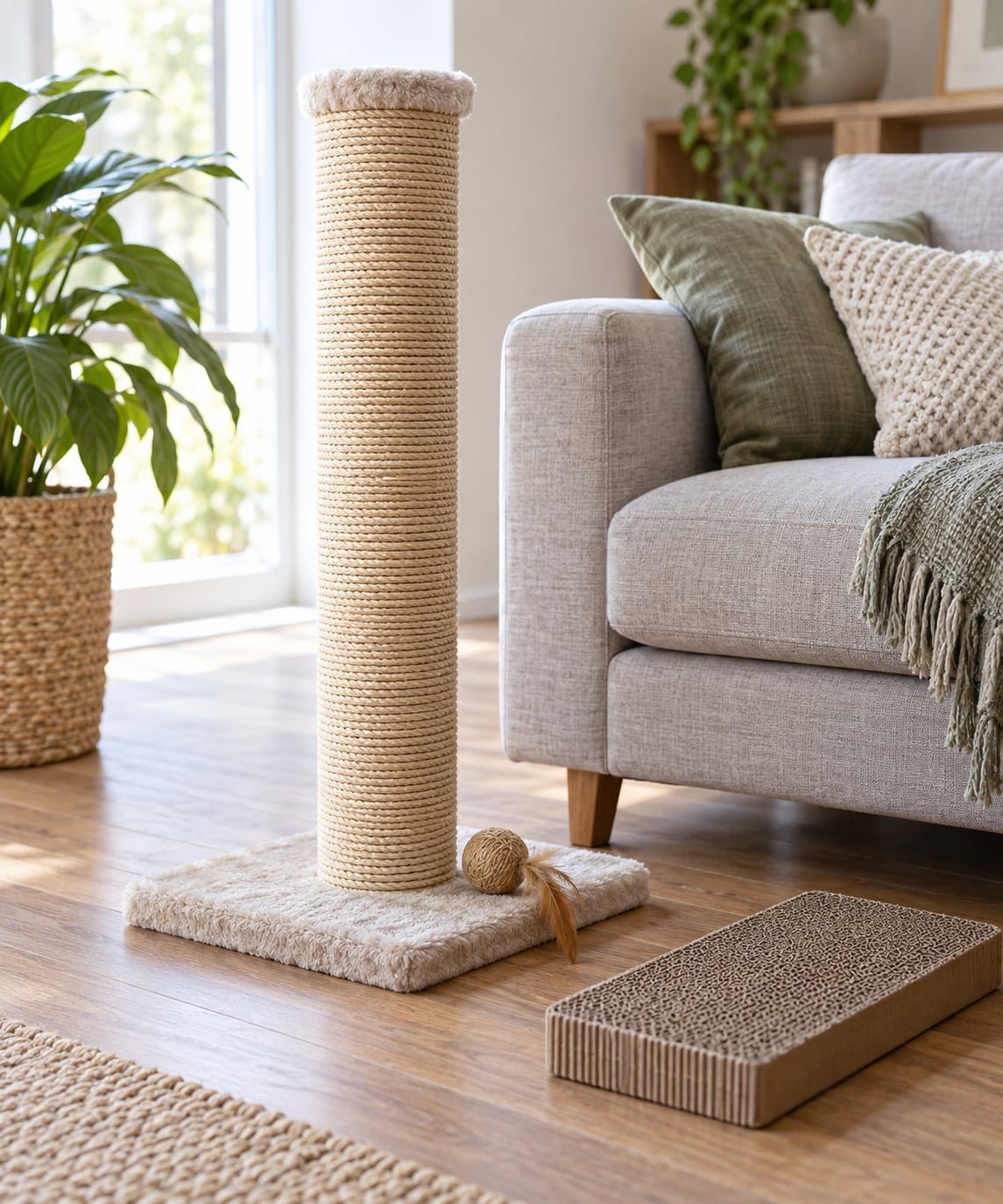
- A scratching post. Sixty centimetres (24 in) tall is the floor for an adult cat, and 75 to 80 cm (30 to 32 in) is better because it lets them stretch fully with their back legs braced. Kittens can start smaller and move up as they grow.
- A base that does not move. A heavy plate or a non-slip pad under a tall post stops the wobble that ends most first attempts.
- Sisal with a vertical weave. Vertical strands catch in the claw so the cat can pull downward. Rope wrapped in a spiral loosens and frays once a big cat works at it, and torn loops snag claws.
- Small treats. Use a few pieces per session, or count them as part of the day’s meal so training never turns into overfeeding.
- One toy. A wand toy or a dangly ball gets the cat to the post without you carrying it there.
- A second post in a multi-cat home. The rule of thumb is one post per cat plus a spare, placed apart, so nobody has to share.
Optional extras: a cardboard box and a roll of sisal rope if you want to build your own post, double-sided tape and a scent deterrent spray for the furniture corner the cat has already claimed, and felt strips to re-cover sisal once it flattens.
Step-by-Step
How to Train a Cat to Use a Scratching Post Step by Step
Start by moving the post to the spot where the scratching already happens. If the damage is on the left arm of the sofa, stand the post about 30 cm (12 in) from that arm. Once the cat is using it consistently, move it a little further away each week until it sits where you actually want it.
Put the post somewhere the cat passes daily: beside the sofa, near the bedroom door, in the room the cat naps in. Advice online conflicts on this, with some sources saying quiet corner, others saying busy room, and in practice a busy room wins because the post has to be visible and available. A spot the cat only passes when it is hiding is a poor choice.
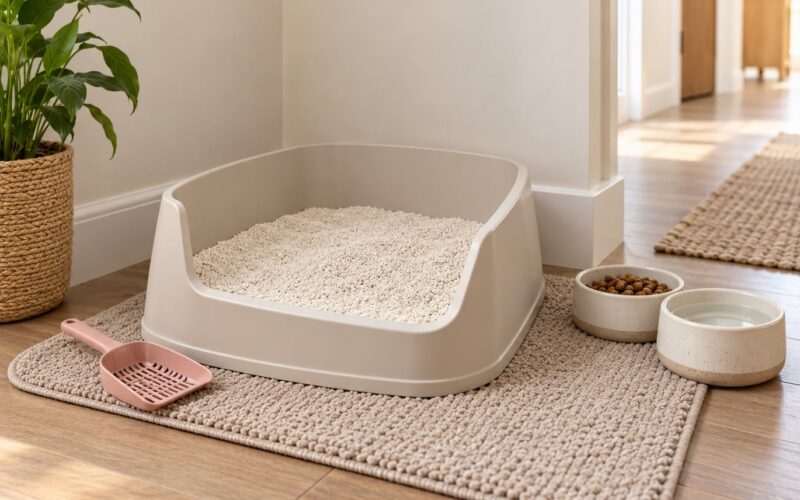
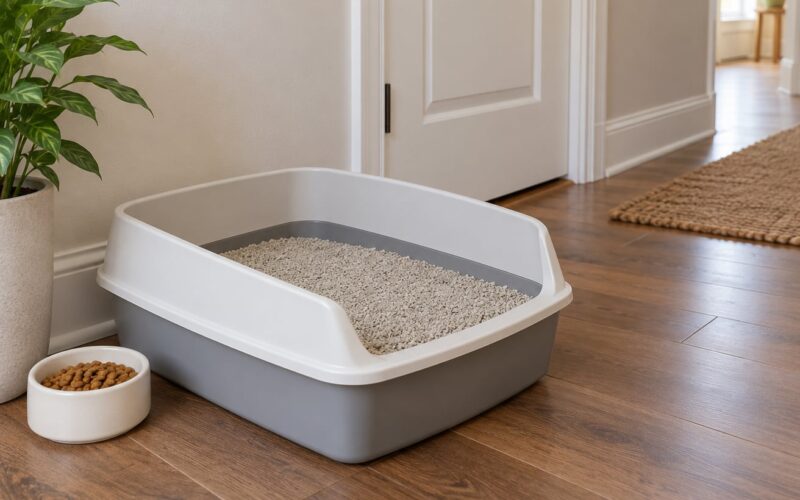
Never beside the litter tray. That combination reliably trains your cat to scratch in the wrong place at the wrong time.
Leave the post there and let the cat investigate. Sniffing it, sitting next to it or tapping it with one paw is progress. Do not pick the cat up and put it on the post on day one.
Encourage Your Cat to Scratch the Post
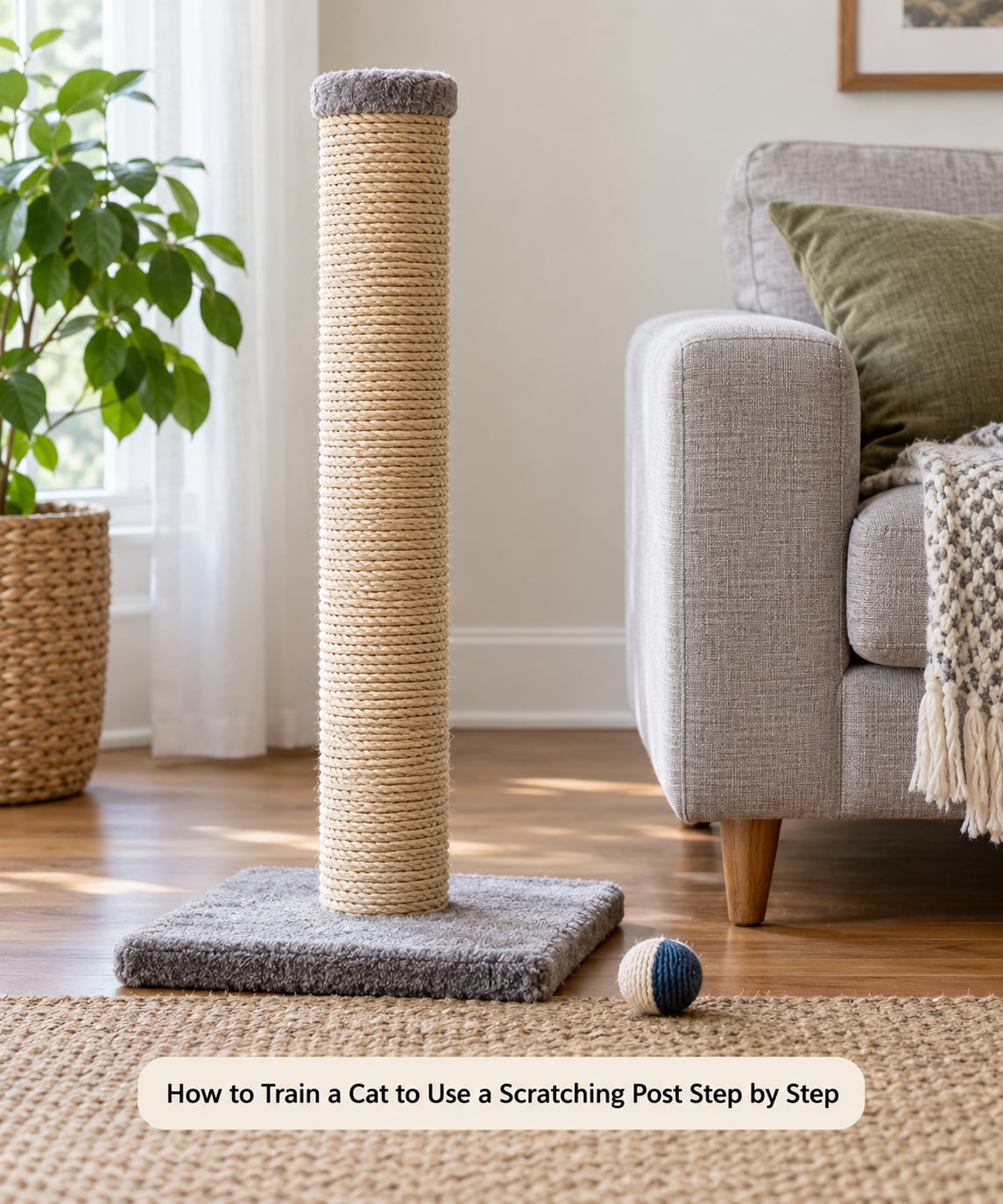
Sprinkle a pinch of catnip over the sisal and let it sit for a minute so the scent settles. Then swing a wand toy around the post or roll a ball along its base so the cat comes over to investigate. Owners on cat forums report that playing the toy up and down the post, rather than leaving it sitting there, is what brings the cat up and down the surface.
Reward any contact with the post straight away, even a sniff or a single tap with a claw. You are not waiting for a full scratch. You are paying the cat for noticing the post exists.
Reward Every Correct Use
This is the rule that decides whether training works: praise and treat within three seconds of the scratch. Later than that and the cat cannot connect the treat with what it just did.
Say something short and consistent, such as good scratch, then give one treat. For a cat that climbs, leave the treat on the top platform so it has to go up for it. Say nothing at all during the scratch itself, since a cat that is scolded mid-scratch will start avoiding the post.
Keep the portions small. Two or three training treats twice a day is plenty, and subtracting them from the daily ration keeps the calorie count unchanged.
Add a Light Scratching Guide
Some cats need a hint. When your cat is already pawing at the post, run a finger lightly down the sisal in the direction it scratches, moving its paw with the motion. Owners on Reddit’s r/CatAdvice describe gently guiding a paw onto the surface as the fastest method they found.
Keep it light and stop at the first sign of irritation. Never hold a cat down, never press its body onto the post, and never force its claws into the rope. A cat that gets restrained next to a scratching post learns to avoid that post.
Keep the Routine Consistent
Short sessions beat long ones. Two minutes of watching, a couple of rewarded scratches and a treat left near the base at the end of the day is enough to build the habit.
Leave the post in one place for two to four weeks. Moving it to a tidier corner of the room is the single most common reason weeks of progress disappear, because the cat has to find the whole routine again.
Redirect Scratching Elsewhere
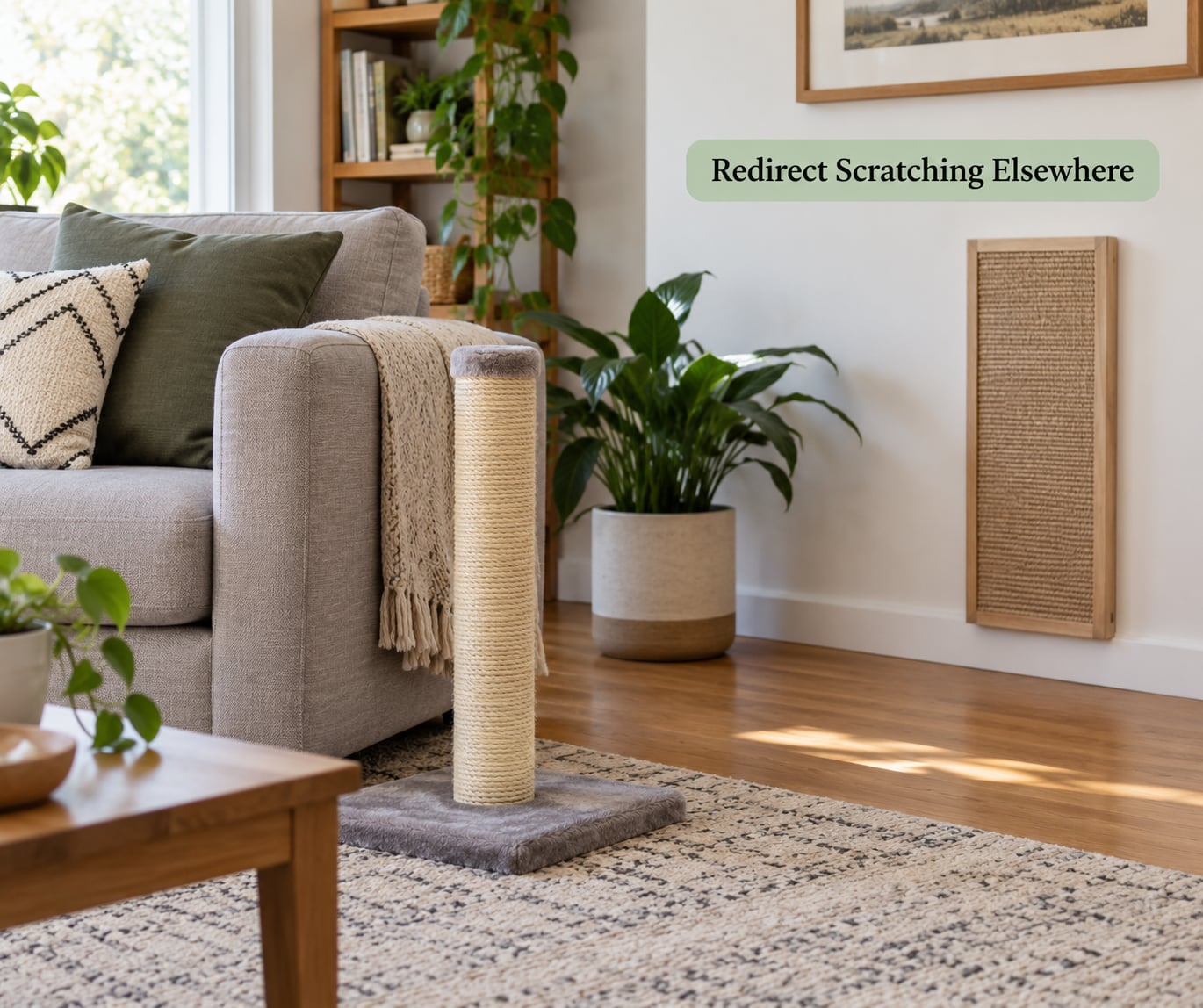
When you catch the cat on the sofa, stay calm and interrupt the motion rather than the cat. A firm no followed by walking away works better than shouting, and your voice is the one thing that can make a cat associate a place with danger.
Then guide it to the post, or toss a treat onto the sisal to draw it there, and reward the first scratch. Cats on forums also pair double-sided tape with deterrent spray on the furniture corners, though some cats treat tape as a toy and try to peel it off, so check it daily and use the widest roll you can find.
If your cat scratches both the post and the sofa, treat the post as the win. Partial success is normal, and the furniture scratching usually fades once the post becomes the easier option.
Common Mistakes
Punishing the post. Clapping, spraying water or putting the cat’s face near the sisal teaches the cat that the post is where trouble happens. The fix takes ten seconds: stop doing it, and let every good scratch pay out instead.
Moving the post around the house. Pick one location and keep it for a month before you judge it.
Rewarding late. If you notice the scratch, then go to the kitchen, then come back with a treat, the connection is gone. Keep treats in the room where the training happens, not in the kitchen cupboard.
Choosing a wobbly post. Push the top of it with one hand. If it moves or rocks, fix it with a non-slip mat or a heavier base before you try again.
Expecting it this week. Most cats take two to six weeks, and adult cats with no scratching history take longer than kittens. A cat that has never used a post is not being difficult, it just has no reason to think this object matters yet.
One thing worth separating out: a cat that suddenly starts scratching much more, alongside over-grooming, bald patches, hiding or a change in litter box habits, should see a vet. Sudden-onset behaviour like that is more often stress, pain or a skin problem than a scratching post problem. Never give a cat human pain relief or medication of any kind.
Frequently Asked Questions
What type of scratching post is best for a cat?
A tall vertical post with a heavy base and vertical sisal weave suits most cats, because it matches the way they stretch up and pull downwards. A cardboard pad works well for cats that scratch carpets and rugs low to the ground, and a wide scratching board suits flat scratchers. Skip posts with rope wrapped in a spiral, which fray and snag claws once a large cat works at them.
Where should I put a new scratching post?
Put it where your cat already is: beside the sofa or armchair it scratches, near a bedroom door, or in the room where it naps. It needs to be visible and reachable every day, not tucked into a corner the cat only visits when it is hiding. Keep it well away from the litter tray, and in a multi-cat home give each cat a post in a different part of the home.
How long does it take to train a cat to use a scratching post?
Expect two to six weeks for most adult cats, and often less for a kitten that has never had anywhere else to scratch. Look for small signs rather than a finished routine: a sniff in the first few days, a paw tap in week one, a real scratch by week two, and using it without prompting by week four or so. Some older cats take longer, and that is normal.
Should I hold my cat’s paws on the scratching post?
Never hold a cat down or force its claws into the surface. A light guiding touch on a paw when the cat is already pawing at the post is a helpful hint, but restraint teaches the cat to avoid that spot. If your cat tenses, pulls away or growls, stop immediately and go back to rewards for simple contact with the post.
Can I use a cardboard box instead of a scratching post?
Yes. Corrugated cardboard in a shallow box with a few strips of sisal rope glued or tied across the top makes a serviceable scratcher for a kitten or a cat that works low to the ground. Many cats that ignore sisal posts will happily use cardboard. It shreds faster and needs replacing, but it costs almost nothing and is a good first test of whether your cat scratches at all.
Why is my cat still scratching the sofa after training?
Most often because the post is not in the spot the cat prefers, so the sofa is simply more convenient. Move the post beside the exact spot being scratched and reward heavily there for a few weeks, then drift it across the room. If your cat has no scratching history at all, check the post height and stability, and rule out stress or a health problem with your vet.
Conclusion
Do one thing today: stand a stable post about 30 cm from the spot your cat scratches most, sprinkle a little catnip on it, and keep a few treats in that room. The moment there is any contact with the post, praise the cat and pay up within three seconds. Two to six weeks of short, calm sessions does the rest.
If your cat turns out to be one of the many that ignore catnip entirely, a wand toy around the post works just as well, and once the habit is established the scent hardly matters. And if the scratching ramps up suddenly alongside hiding or over-grooming, book a vet visit rather than buying another post.