Most first-time owners underestimate the first year because they budget it as twelve equal months, and it never works that way. To budget for the first year with a dog, split spending into five buckets, price the setup items before the dog arrives, and set an automatic monthly transfer for everything irregular. Building the whole plan takes an afternoon with a calculator, a piece of paper and your last few bills.
The good news is that a budget makes the first year boring. You know what each month costs, you know which bills are coming in a lump, and you know how much sits in the emergency pot when your dog swallows a sock at 9pm on a Sunday.
Table of Contents
- What You Need
- Step-by-Step: How to Budget for the First Year With a Dog
- 1. Estimate Your One-Time Adoption and Home-Setup Costs
- 2. Build a Monthly Care Budget
- 3. Plan for Medical and Preventative Care
- 4. Create an Emergency Fund
- 5. Set Aside Annual and Seasonal Costs
- 6. Review and Adjust the Budget Monthly
- Common Mistakes
- Frequently Asked Questions
- How much should I keep in an emergency fund for my first dog?
- Should I budget for pet insurance during my dog’s first year?
- How can I cut dog expenses without skipping necessary care?
- What one-time costs should I expect when bringing home a dog?
- How often should I review my dog’s monthly budget?
- Conclusion: Start With the First 30 Days
What You Need
Gather five things before you open a spreadsheet. Without them, any number you write down is guesswork.
- A twelve-month calendar. Mark the month the dog comes home, then mark the months you already know are expensive: travel weeks, your annual checkup window, the anniversary of the adoption.
- Current invoices or local price checks. The price of a wellness exam, a bag of food and a nail trim in your city is the real input. Ask your vet’s receptionist for their fee sheet and check two grocery stores for the food you plan to feed.
- A pet-care checklist. One page, grouped into setup items, monthly items and once-a-year items. Everything you do not write down becomes something you forget at month seven.
- A separate savings or emergency-fund account. Keep it apart from your day-to-day checking so a surprise vet bill does not swallow the rent money.
- A spreadsheet or budgeting app. One tab per cost bucket, one column for planned and one for actual. A phone note works fine for the first three months; it stops working around the time you need to prove what you actually spent in April.
Step-by-Step: How to Budget for the First Year With a Dog
The system below splits everything into five buckets: setup costs you pay once, recurring monthly care, annualized bills spread across the year, an emergency reserve, and costs that depend on where you live. Every dog cost you will have this year lands in exactly one of them.
1. Estimate Your One-Time Adoption and Home-Setup Costs
Start with the day you bring the dog home, because this bucket is front-loaded and it is the one that breaks people. Shelter and rescue adoption fees commonly fall somewhere between 50 and 300 dollars depending on the organisation and whether the dog is neutered. Breeders run a completely different range, often four figures, and that number lands entirely in this bucket.
Then price the equipment. A crate sized for the adult the dog will become, a bed, food and water bowls, a leash and harness, an ID tag, a microchip if the shelter has not already done one, an enzyme cleaner, and a few toys to start. Add a gate or a crate if you are crate training, because that purchase arrives in week two more often than week one.
For an adult rescue dog, this bucket usually lands lower than people expect. Owners on adoption forums describe their first year with a rescue as cheap by puppy standards, often well under a thousand dollars once the fee and the basics are covered.
Renters need one extra line here: ask your landlord for the pet policy in writing before you sign anything. Pet deposits in the range of 300 to 500 dollars and monthly pet rent in the range of 25 to 50 dollars are common in some markets, and plenty of leases cap the number of pets you may keep. Add the deposit to setup costs and budget the monthly rent as recurring.
Write this bucket as one number. It is the lump sum that has to exist in your account before pickup day, and it is the number that tells you honestly whether you can afford this particular dog right now.
2. Build a Monthly Care Budget
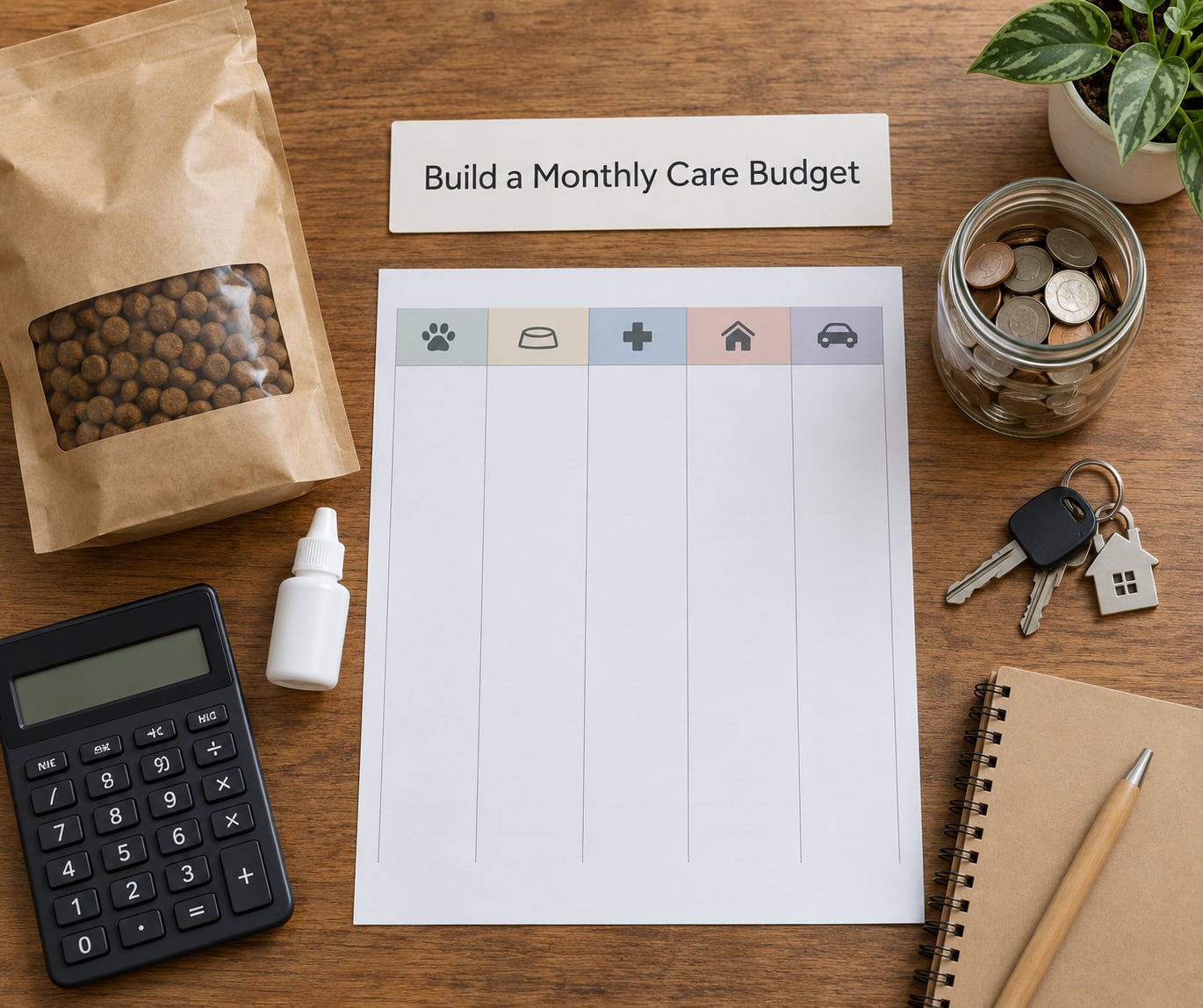
Now the recurring part. Food is the anchor, and you can size it from the label rather than from a website article: check the feeding guide on the bag, match it to your dog’s weight and activity level, then multiply by what a bag costs locally and divide by the number of days in it. A 25-kilo dog eats a lot more than a 7-kilo dog, and this is the single biggest reason two identical households produce completely different monthly numbers.
Prevention is the second line. Heartworm, flea and tick treatment is usually a monthly or quarterly charge that people budget for in month two and forget in month nine. Put it in writing next to the food line.
Third, list the smaller recurring items:
- Routine veterinary care beyond emergencies, including the annual wellness exam and any bloodwork
- Grooming, either a professional visit every six to eight weeks or a home routine and tools
- Training classes, usually a group class series in the first few months
- Cleaning supplies, enzyme cleaner and replacement pads or bags if your dog is still house-training
- Enrichment: toys, puzzle feeders, a class or two, replacing whatever the dog chews through
- Walking help, boarding, daycare or a pet sitter for the weeks you travel
Coat type changes the grooming line more than size does. Owners of shedding and doodle-type coats report paying 75 to 120 dollars per professional visit every six weeks, plus their own trimming in between. A short-coated dog costs close to nothing here.
Boarding is the line almost nobody plans. Owners without family nearby describe it as their most expensive single line item, often 35 to 50 dollars per day. Multiply by your real number of days away per year and add it to the monthly figure even if you never board the dog.
Add insurance here if you are buying it, since the premium is monthly. Pet insurance premiums vary widely by breed, age and location, so get three quotes and compare deductibles and reimbursement percentages rather than price alone.
Your vet is the person to ask which preventative care your dog’s age and lifestyle actually call for. Write their answers straight onto the monthly line instead of guessing from a generic chart.
3. Plan for Medical and Preventative Care
This is the bucket where owners get surprised, and it is the reason a written plan matters. In year one a puppy usually needs a vaccine series with several visits before it is fully protected, plus a wellness exam, parasite testing and often a spay or neuter surgery. An adult dog skips most of that and goes straight to an exam, updated vaccines and parasite prevention.
Owners on dog care forums are blunt about the pattern: the expensive part of a dog is the vet bill, and it is usually illness or injury rather than day-to-day upkeep. One owner described roughly 700 dollars in first-year emergencies for one dog and about 200 for another. Same household, same year, entirely different outcome. Budget for the average and accept that you will not hit it exactly.
Low-cost vaccine clinics and veterinary teaching clinics are the single best saving here. They run the same core vaccines and spay or neuter procedures at subsidised rates, often for a fraction of private-practice fees, and most humane societies also run voucher programmes worth checking before you schedule surgery.
Do not plan a specific medical outcome here. Confirm current preventive-care needs, ask about insurance and payment options, and check whether your clinic offers instalment plans before any procedure.
4. Create an Emergency Fund
Routine care, urgent care and major unexpected expenses are three different budgets. Money in your checking covers routine care. An emergency fund covers urgent and major problems. Insurers reimburse after the fact, so a plan with a high deductible still leaves you paying the first several hundred dollars out of pocket, which is exactly when a savings pot matters.
Pick a starter target you would actually reach. A sensible approach is one thousand to two thousand dollars as a floor, then keep growing it toward three thousand or more. Whatever you choose, automate a transfer on the same day you get paid so the fund grows without a decision every month.
Stress-test the plan before you need it. Ask three questions: if my dog needed surgery tomorrow, could I pay the deposit today. If I lost income for a month, would the fund plus my buffer cover food and preventives. If I moved cities, would I still have a clinic within an hour. If the answer to any of these is no, that is a budget problem this month rather than an emergency next month.
One number worth knowing: owners have reported single emergency surgeries costing more than three thousand dollars out of pocket. That figure is the whole argument for buying insurance early.
5. Set Aside Annual and Seasonal Costs
Some bills only arrive once a year, which is exactly why they get missed. Divide each annual figure by twelve and pay it into a small sinking fund every month.
- The annual wellness exam and any scheduled bloodwork
- Dental cleaning, often needed on a one-to-three-year cycle depending on the dog and your vet’s advice
- Refill or renewal of parasite prevention for the full year at once
- Professional grooming visits booked as an annual allowance rather than a surprise
- Licence or registration fees where your area requires them
- Replacement of worn-out gear: collars, beds, bowls, toys and a chewed crate
Seasonal items get their own line if they apply to you. Flea and tick treatment often switches products with the season, and boarding costs spike in July and December when everyone travels at once. Booking summer boarding early is cheaper than booking it late, and cheaper than paying emergency rates.
6. Review and Adjust the Budget Monthly
Spend twenty minutes on the same day each month with a short checklist. Compare actual spending to planned spending in every bucket. Update the food price, because it moves more often than people assume. Check whether your dog’s size, age or activity level has changed enough to shift a category. Move money between buckets when something runs long rather than dipping into the emergency fund.
Revise the plan itself when three things are true at once: a single category is more than about fifteen percent off for two months running, a new recurring cost shows up, or your income changes. One expensive month is variance. Three expensive months is a budget that needs rewriting.
Keep receipts for anything you might claim, and photograph the vet’s printed estimate before you agree to anything non-routine. It takes ten seconds and it changes the conversation at payment time.
Common Mistakes
Almost every first-year budgeting error comes from the same root: treating an irregular bill as if it will never happen.
Forgetting boarding and pet sitting. If you travel, this is a real line item, not a maybe. Count your actual days away and multiply.
Budgeting dental care as never. Most dogs need professional dental work at some point. Ask your vet when they recommend the first cleaning and put it in the sinking fund.
Leaving parasite prevention out of month two. It is a small monthly charge that disappears from memory. Automate it with the food purchase.
Treating the emergency fund as optional. If it exists, it gets used and then refilled. That is the system working, not failing.
Buying insurance after a diagnosis. Pre-existing conditions are excluded, so the policy you buy after a diagnosis pays nothing for the thing you bought it for. Enrol before you have a reason to.
Cutting food quality to save money. Cheap food is not automatically cheaper once vet bills are counted. Owners who switched to a cheaper diet and paid more in later visits are a common story. Change portion discipline and purchasing, not nutrition.
Ignoring breed-specific costs. A heavy-coated dog has a permanent grooming line. A large-breed puppy eats more for its whole life. One hour of research per breed saves a year of surprises.
Two habits fix most of these. Automate your transfers so the good months pay for the bad ones, and review receipts monthly so the plan stays a plan instead of a guess.
Frequently Asked Questions
How much should I keep in an emergency fund for my first dog?
Most owners start with one thousand to two thousand dollars and work up to three thousand or more. That fund covers urgent visits and major unexpected problems, which routine care should not touch. Set it up as an automatic transfer on payday so it grows without a monthly decision. Check whether your insurance plan has a high deductible, because you still pay that amount before reimbursement starts.
Should I budget for pet insurance during my dog’s first year?
Budget for it as a monthly line, because you should enrol before any diagnosis exists. Policies exclude pre-existing conditions, so a dog seen as symptomatic before the policy starts may be excluded for that problem for the rest of its life. Compare deductibles and reimbursement percentages across several quotes rather than price alone, and remember that you still pay the deductible at the time of treatment.
How can I cut dog expenses without skipping necessary care?
Save on the things that scale and keep the things that protect. Buy food in larger bags, use manufacturer coupons, buy a used crate, learn basic grooming yourself between professional visits and group training instead of private sessions. Do not economise on vaccines, parasite prevention, identification, or a food that suits your dog’s actual needs. Ask your vet about low-cost clinics and voucher programmes for spay or neuter.
What one-time costs should I expect when bringing home a dog?
Expect the adoption fee, plus a crate, bed, bowls, leash and harness, ID tag, microchip if needed, cleaning supplies and a few toys. Adult rescue dogs usually land well under a thousand dollars for all of it. Puppies and breeder purchases cost far more. Renters should also expect a pet deposit and monthly pet rent. Write the whole list down before pickup day and fund it first.
How often should I review my dog’s monthly budget?
Once a month, on a fixed day, for about twenty minutes. Compare actual spending with planned spending in each bucket, update prices that have moved and move money between categories when something runs long. Revise the whole plan when a category stays about fifteen percent off for two months running, a new recurring cost appears, or your income changes.
Conclusion: Start With the First 30 Days
Learning how to budget for the first year with a dog comes down to three moves in order. List every one-time purchase, including the crate and the pet deposit, and get that sum in the bank before pickup day. Set a realistic recurring monthly figure built from your dog’s weight, your local food price and the preventative care your vet confirms is due. Open a separate emergency fund and automate the transfer so the money arrives before the bill does.
Only then add the optional extras: classes, toys, insurance. Doing it in that order keeps a well-meaning purchase from eating your emergency reserve in the same month.