Bleeding from a dog’s paw looks far worse than it usually is. Paw pads and nail beds carry a dense network of small blood vessels, so a cut the size of a grain of rice can leave a surprising smear on your floor.
Most of these injuries are minor and settle at home in about 10 to 15 minutes of firm, uninterrupted pressure. The whole job takes a few calm minutes once you know the order of the steps, and you need nothing more complicated than clean gauze, clean water and something to wrap the paw loosely.
The catch is doing it correctly. Peeking at the wound every thirty seconds restarts the clotting you just achieved, and a bandage pulled tight enough to stay on can cause a second injury. Below is the sequence I give friends and family: keep the dog still, press, clean only once the bleeding has slowed, then wrap lightly and watch for infection.
This guide covers minor surface bleeding. Deep cuts, embedded glass, torn pad flaps, bite wounds and anything that has not slowed after 10 to 15 minutes of pressure need a veterinarian, not a home remedy.
Table of Contents
- What You Need
- Step-by-Step
- 1. Restrict the Dog’s Movement Safely
- 2. Check the Paw and Control the Bleeding
- 3. Look for a Thorn, Glass or Other Debris
- 4. Clean Around the Injury
- 5. Apply a Styptic Product if Needed
- 6. Bandage the Paw Correctly
- 7. Monitor the Dog and Arrange Follow-Up Care
- Common Mistakes
- Frequently Asked Questions
- How long should I press a dog’s paw to stop bleeding?
- Can I use human antiseptic or pain medicine on a dog’s paw?
- Should I bandage a cut on my dog’s paw pad?
- When does a bleeding paw wound need emergency vet care?
- How can I stop my dog from licking a bandaged paw?
- Conclusion
What You Need
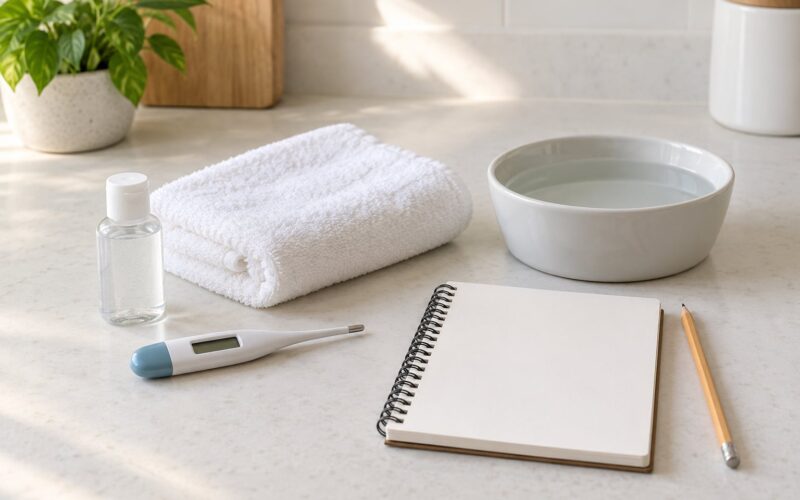
Gather everything before you touch the dog. Reaching for a missing roll of gauze while the paw keeps bleeding is the most common way a small mishap becomes a real one.
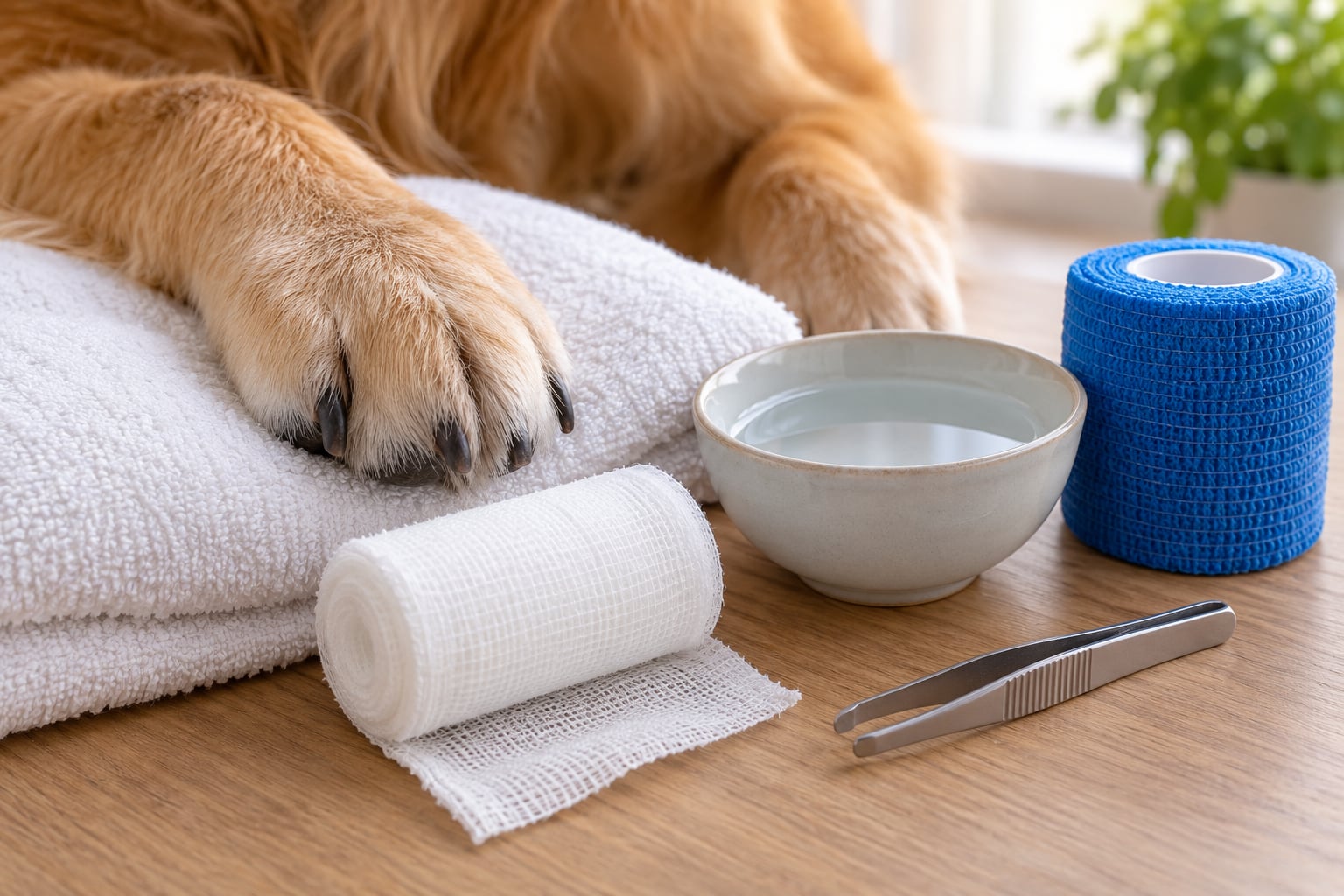
- Sterile gauze pads or clean folded cloth, such as a clean cotton sock or a washcloth. Several, so you can add a fresh layer without removing the first.
- Clean lukewarm water, or sterile saline if you keep it in the house.
- Styptic powder made for dogs, or plain cornstarch as a backup for a bleeding nail tip.
- Non-stick wound pad or a small piece of petroleum gauze so dressing material does not stick to the wound when you change it.
- Self-adhesive pet bandage wrap, the stretchy kind that clings to itself. Paper tape pulls hair and skin off when you peel it.
- Blunt-tip tweezers for debris sitting on top of the pad.
- Blunt scissors, a small bowl for the rinse water, and a towel to set the paw on.
Keep these away from the paw: human pain relievers such as ibuprofen, naproxen or paracetamol, which are toxic to dogs; rubbing alcohol and hydrogen peroxide; human creams and antibiotic ointments unless your vet has specifically told you to use one; liquid bandage products that dogs can chew off and swallow; and household adhesive bandages, which block circulation within minutes.
Step-by-Step
1. Restrict the Dog’s Movement Safely
Sit the dog on a non-slip surface, or on a towel over a floor you do not mind staining. Ask a second adult to hold the collar if the dog is anxious, because a dog in pain may snap out of reflex rather than aggression.
Keep the injured paw supported in your hand with gentle pressure around the leg, never on the wound itself. If the dog is genuinely distressed and you cannot get close safely, skip the home care and go straight to the clinic.
2. Check the Paw and Control the Bleeding
Part the fur with your fingers and look at the pad, the webbing between the toes and the base of each nail. You are looking for a cut or scrape on the pad, a flap of skin, a split nail, or a dark speck of glass or thorn.
This is how to stop minor bleeding on a dog’s paw: place a clean gauze pad over the wound and press with firm, unbroken pressure for 10 to 15 minutes. Set a timer. Do not lift the gauze to peek, because every look pulls the forming clot away and the bleeding starts over.
You will know it is working when the gauze shows a small, firm stain rather than a spreading wet patch. Blood soaking through the first pad within a minute or two is common and just means you add a second pad on top without removing the first.
3. Look for a Thorn, Glass or Other Debris
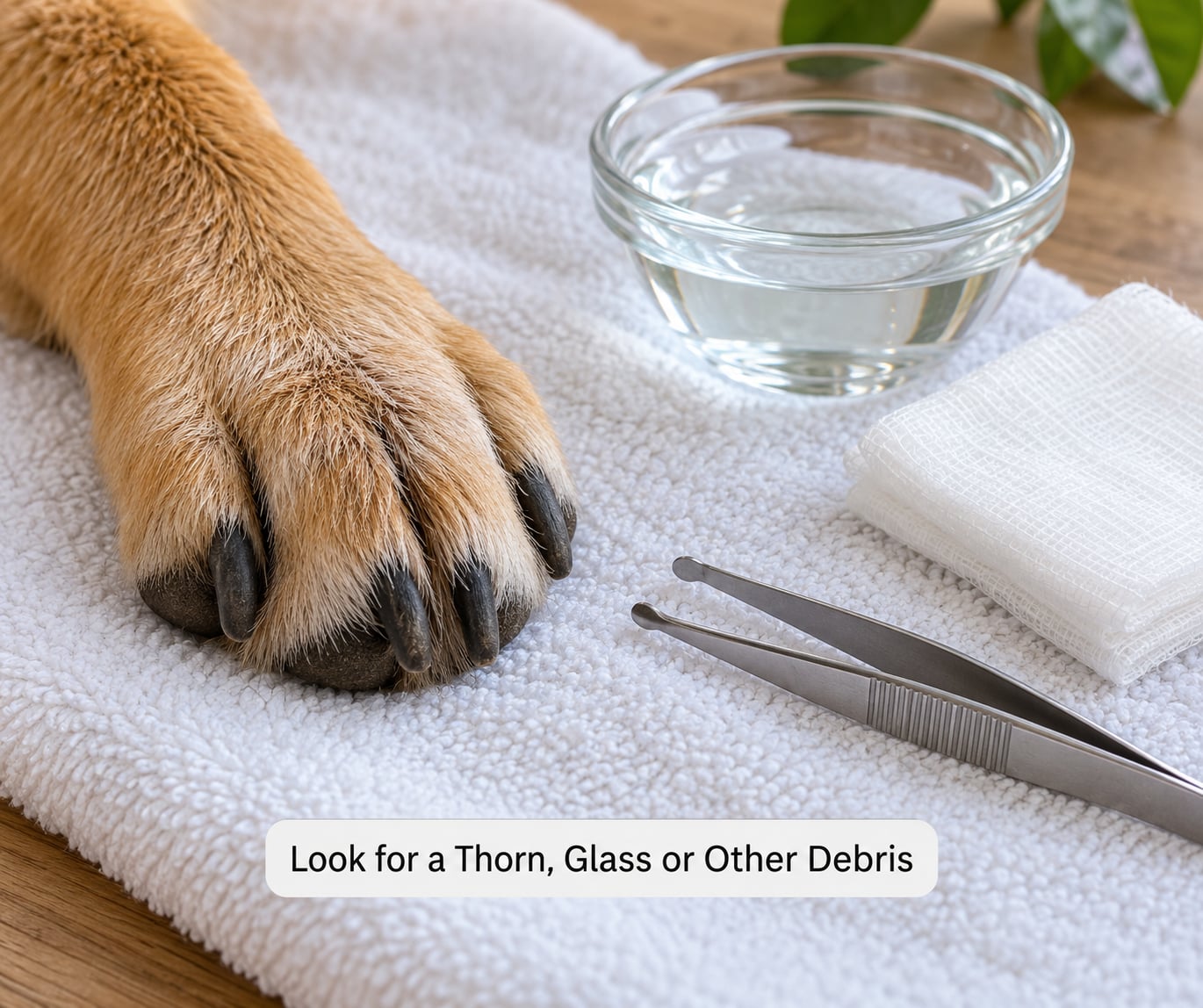
Once the bleeding slows, check again. Use the blunt tweezers to lift away only debris that is sitting loose on the surface and can come away with a single gentle pull.
Do not dig, chase a fragment under the pad, or pull on something that resists. Anything embedded, any glass you cannot see the end of, or a pad that is torn and lifting needs professional care, often with sedation so the object comes out without more damage. Rinse the paw after removal and expect a small amount of renewed bleeding, which is normal.
4. Clean Around the Injury
Holding the paw over the bowl, rinse loose dirt away with clean lukewarm water or saline. Let the water flow over the wound and off the toes rather than scrubbing it. Pat the surrounding fur dry with a clean cloth.
Skip alcohol, peroxide and antiseptic wipes. They sting, they damage the tissue that is trying to heal, and peroxide can keep a wound from closing. If a very dilute chlorhexidine rinse has been prescribed for your dog, use only that product and only as directed.
Stop immediately if cleaning brings the bleeding back or the dog pulls away hard. That is a signal the wound is deeper than the surface.
5. Apply a Styptic Product if Needed
Styptic powder or plain cornstarch works well on a split nail that keeps dripping, and on a small surface cut that is still seeping after the pressure step. Press a small amount onto the damp tip of the nail and hold gentle pressure for a minute or two. Use only a pea-sized amount.
Do not use flour, which carries a risk of contamination, or any powdered human medicine. If a bleeding nail has not settled in 10 to 15 minutes, stop trying and call a vet, because the blood may be coming from deeper than a surface dressing can reach.
6. Bandage the Paw Correctly
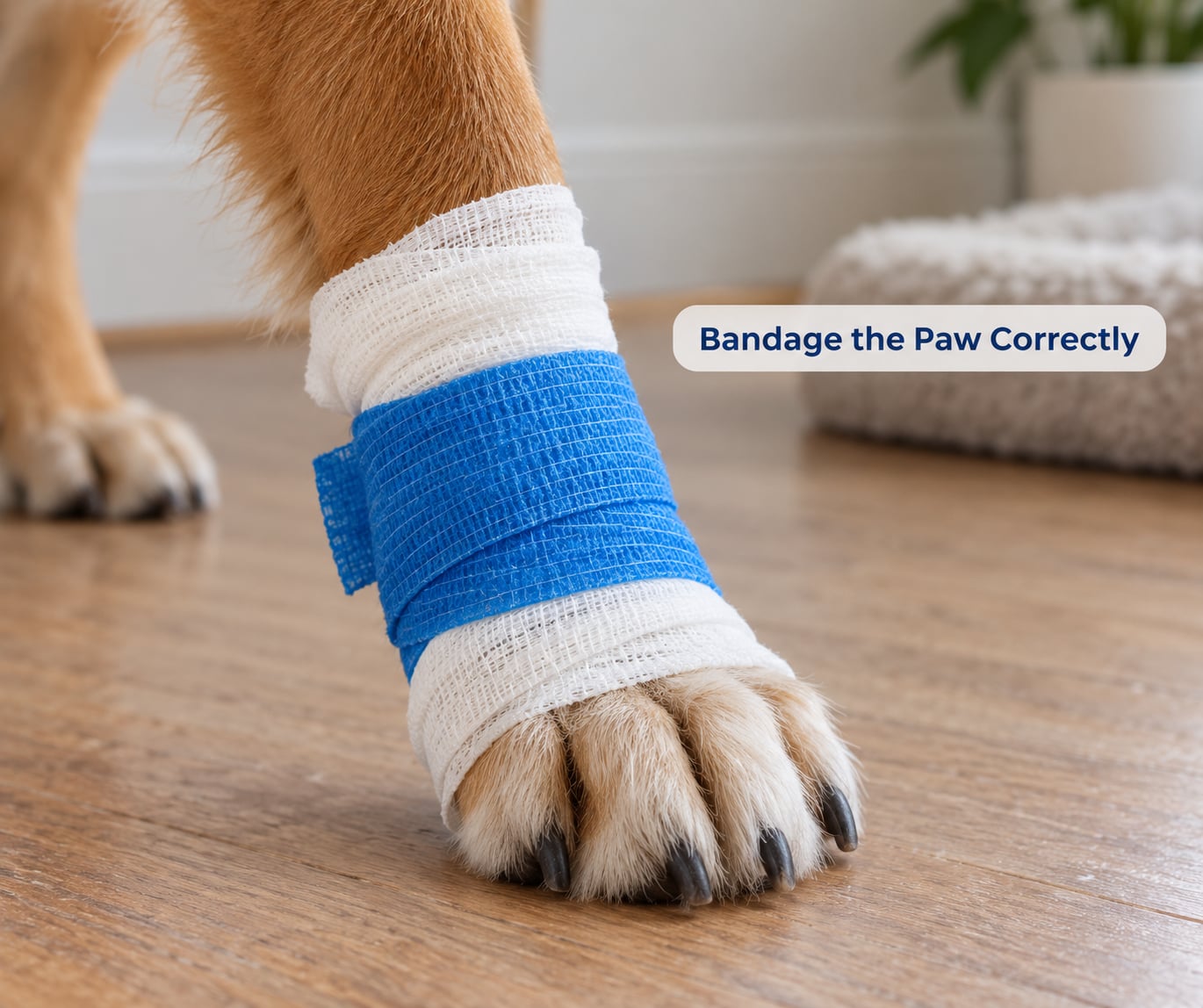
Place the non-stick pad over the injury. If the wound sits between the toes, tuck a small piece of cotton between them so moisture and grit do not collect there, but keep the toes visible at the end of the job.
Wrap the self-adhesive bandage from the top of the foot downward, overlapping about half the width each turn, with two or three turns past the pad onto the leg. You want firm enough to stay on and loose enough that a finger slides under the last turn. Poor circulation shows up within minutes as toes that are swollen, dark, hot, cold, or that smell unpleasant.
Check the toes every 30 to 60 minutes for the first few hours. If the wrap is too tight, remove it and start again rather than trying to fix it with more layers. A bandage that keeps soaking through with blood, or a professional dressing for a deep or pad-level wound, belongs in the hands of a vet or a vet nurse.
7. Monitor the Dog and Arrange Follow-Up Care
For the next few hours, keep activity low. Short lead walks on soft ground for toilet breaks only, no stairs, no jumping, and no running on gravel or grass that seeds the wound.
Watch for swelling, warmth, redness spreading up the leg, discharge that smells bad, a feverish lethargy, or a dog who will not put the paw down at all. Any of those within a day or two means a vet visit, because paws pick up infection quickly.
Contact a vet the same day if the bleeding returns every time you remove the wrap, if the wound gapes open, or if there is no improvement within 24 hours. A blood-soaked bandage is not a home-care success and neither is a limp you are hoping will settle.
Common Mistakes
These are the errors that turn a minor cut into a vet bill, and every one of them has a simple correction.
- Lifting the gauze to check. The clot forms against the fabric in the first few minutes and you break it every time you peek. Hold for the full 10 to 15 minutes, then check once.
- Rinsing a wound that is still bleeding. Water dilutes and washes away the clot you just built. Clean only after the bleeding slows.
- Using human pain medicine or ointment. Ibuprofen, naproxen and paracetamol can be fatal to dogs, and over-the-counter creams are formulated for human skin. Never apply either unless your vet directs it.
- Wrapping too tightly, or leaving a wrap on overnight. A tight bandage causes swelling that leads to a second injury once it is removed. Two fingers should fit under the final turn.
- Ignoring a pad flap or a wound between the toes. These sit against the ground with every step and reinfect constantly. A vet should clean and assess them.
- Using a household adhesive bandage. It goes on fast, restricts circulation and gets chewed off. Use pet wrap and check it often.
To reduce rebleeding, keep the dog on soft ground for a few days and hold off on long walks until the pad has closed over. Check paws after every walk in summer and winter: hot pavement in the middle of summer, ice and road salt in the middle of winter. A quick rinse of grit and a monthly look at the pads catches problems before they bleed at all.
Frequently Asked Questions
How long should I press a dog’s paw to stop bleeding?
Hold firm, uninterrupted pressure on a clean gauze pad for a full 10 to 15 minutes, using a timer. Do not lift the gauze to check partway through, because pulling at the forming clot restarts the bleeding. If the wound is still bleeding steadily when the timer ends, do not start over from zero. Add a fresh pad on top, keep pressing, and contact a veterinarian, especially if the pad, a torn flap or a nail bed is involved.
Can I use human antiseptic or pain medicine on a dog’s paw?
No. Rubbing alcohol and hydrogen peroxide damage tissue and can slow healing, and human pain relievers such as ibuprofen, naproxen and paracetamol are dangerous for dogs. Plain clean water or sterile saline is the right rinse for a minor paw cut. Over-the-counter antibiotic ointments should only be used if your veterinarian has specifically recommended one for your dog, and never on a deep or infected wound.
Should I bandage a cut on my dog’s paw pad?
For a shallow cut that has stopped bleeding, light cover helps keep dirt out and discourages licking, so a loose non-stick pad with a self-adhesive wrap is reasonable. Leave deep cuts, pad flaps, punctures and anything still seeping for a vet. The wrap must be loose enough that a finger slides under it, and you should check the toes every 30 to 60 minutes for swelling, heat or discoloration.
When does a bleeding paw wound need emergency vet care?
Go to an emergency clinic if bleeding has not slowed after 10 to 15 minutes of firm pressure, if it soaks through several pads, or if the wound gapes, bleeds when the leg is untouched, or spurts rather than oozes. Bite wounds, embedded glass or thorns, torn pad flaps, severe pain, numbness, a cold or pale paw, or a dog that will not bear weight all need same-day professional assessment.
How can I stop my dog from licking a bandaged paw?
Supervision works best in the first few hours. A cone collar or an e-collar sized to reach past the tip of the nose blocks licking without blocking eating, and a pet bootie over the wrap absorbs licking and keeps the paw cleaner. A bitter-tasting deterrent sprayed on the outside of the bandage adds a deterrent but never replaces supervision. If your dog is still chewing through the bandage within an hour, ask your vet about a bootie fitted for the injury.
Conclusion
The first three things to do are always the same: keep the dog still, cover the wound with clean gauze, and press without lifting for a full 10 to 15 minutes. That single step stops the large majority of minor paw bleeds before anything else comes out of the cupboard.
After that, rinse with clean water or saline, use styptic powder or cornstarch only for a stubborn nail tip, wrap loosely with pet bandage, and check the toes often. Home care is reasonable when the bleeding is light, the wound is shallow and surface-level, debris came out easily, and the dog will use the paw.
Stop and go to a veterinarian if the bleeding has not slowed after 10 to 15 minutes of pressure, if it keeps soaking through the bandage, if there is a pad flap, embedded glass, a bite wound, severe pain or numbness, or if redness, swelling and discharge appear in the days that follow. When in doubt, a same-day look costs far less than an infected pad that needs surgery.
Reviewed for accuracy against mainstream veterinary first-aid guidance. Every dog is different, so your own vet’s advice comes first.