If you are searching parvo symptoms in puppies and why it spreads, here is the short version: the first signs are usually tiredness and refusing food, followed fast by vomiting, watery or bloody diarrhea, and dehydration. Parvo spreads so easily because a sick dog sheds enormous amounts of virus in feces and vomit, and that virus stays alive in soil, carpet, bowls and on hands for months after the dog itself is gone. None of this is a diagnosis. Only a veterinarian can confirm parvo with a fecal test, and every day of delay changes how the case ends.
What follows is general information for puppy owners, fosterers and rescuers, not medical advice. When in doubt, call your vet, because the difference between parvo and a harmless upset is something blood work and a fecal test decide in minutes.
Table of Contents
- Parvo Symptoms in Puppies: What to Watch For
- Early parvo symptoms in puppies to watch for
- When a puppy needs urgent veterinary care
- Why Parvo Spreads So Fast and So Easily
- How parvo moves between dogs
- Places, dogs, and routines with the highest risk
- What to Do If a Puppy Has Symptoms or Has Been Exposed
- How to Limit Further Spread in Your Home
- How Vaccination Helps Prevent Parvo Outbreaks
- Frequently Asked Questions
- How long after exposure do parvo symptoms appear?
- Can I tell if my puppy has parvo from the smell of the diarrhea?
- Can a vaccinated puppy still get canine parvovirus?
- Can humans catch parvo from a sick puppy?
- When is it safe to see other dogs after a suspected or confirmed case?
- Conclusion: Recognize the Signs and Act Quickly
Parvo Symptoms in Puppies: What to Watch For
Canine parvovirus type 2 (CPV-2) is a small, tough virus that singles out the fastest dividing cells in the body, which means the intestinal lining and the bone marrow where white blood cells are made. That attack is what produces the vomiting and diarrhea, and it is also what quietly strips away the ability to fight secondary infection.
Because the damage happens in two places at once, a puppy can look merely a bit off for a day and then deteriorate in a single evening.
Early parvo symptoms in puppies to watch for
The earliest signs are vague on purpose, which is why so many owners tell the story of ignoring them until it was nearly too late:
- Lethargy — a puppy who normally bounces and nuzzles now sleeps through playtime and ignores familiar cues.
- Refusing food — turning away from a favorite meal, or eating a little and stopping.
- Vomiting — sometimes projectile, sometimes bile-yellow, and it starts before the diarrhea does.
- Watery diarrhea — loose stool that quickly becomes voluminous, pale or gelatinous.
- Blood in the stool or vomit — the change that moves people from watching to calling the clinic.
- Abdominal discomfort — a hunched posture, a tucked-up belly, or a puppy who cries when you pick him up.
- Fever or weakness — warm to the touch early on, then shivering and wobbly legs.
Not every puppy shows all of these, and plenty of puppies with worms, a swallowed object, or stress-related colitis show a very similar picture. That is exactly why testing matters more than guessing.
When a puppy needs urgent veterinary care
Call your veterinarian immediately, without waiting to see whether the next hour is better, when you notice any of these:
- Vomiting that repeats and a puppy who cannot keep water down.
- Severe diarrhea, or any blood in the stool or in vomit.
- Collapse, extreme weakness, or a puppy who is unresponsive to your voice and touch.
- Pale, white, blue or brick-red gums.
- Signs of dehydration: sunken eyes, dry tacky gums, skin that tents when lifted, or a very long time between urinations.
- Laboured breathing, a swollen abdomen, or a puppy who seems to be fading between one hour and the next.
Veterinarians generally report that survival depends on how quickly a puppy reaches treatment, especially in the first few days of symptoms, which is a good reason to stop debating and start driving.
Why Parvo Spreads So Fast and So Easily
Two properties explain almost everything about parvo transmission: the dose needed to infect a dog is tiny, and the virus is remarkably stable outside a body. An infected puppy can shed billions of virus particles in a single bowel movement, and those particles remain infectious in the environment for a long stretch afterward. Owners often assume a dog must have met a sick animal directly, when in practice a patch of ground a sick dog used weeks earlier can be enough.
How parvo moves between dogs
Transmission is almost always fecal-oral, but the routes it travels through are more varied than people expect:
- Fecal-oral contact — licking or stepping in infected stool, which is common in a puppy exploring everything, including another dog’s rear end.
- Contaminated objects — bowls, bedding, crates, toys, grooming brushes, collars, and shared water or food dishes.
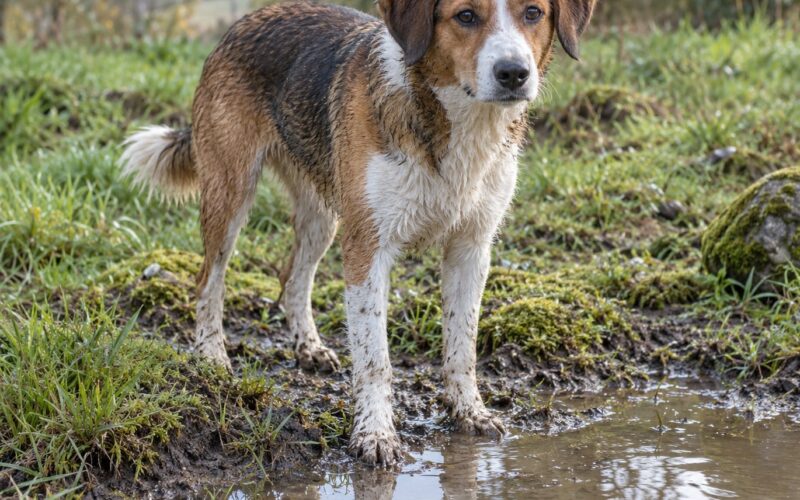
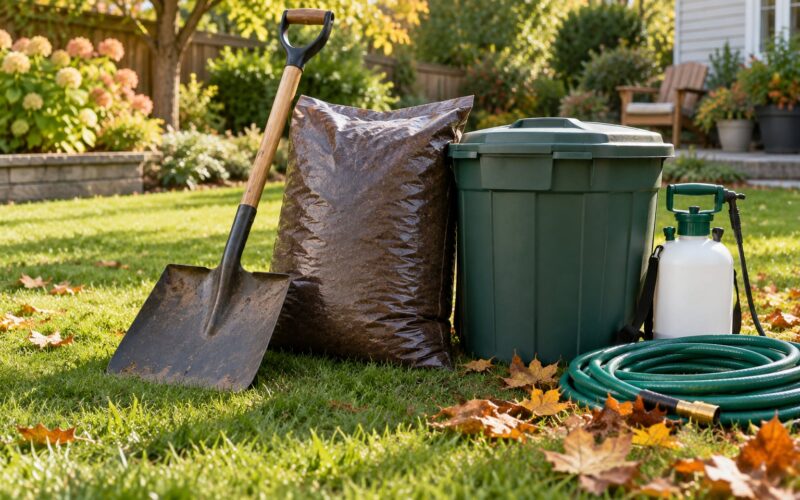
- The environment — soil, grass, mulch, carpets and shaded damp corners where virus particles can shelter from sun and drying.
- People — hands, shoes and clothing can carry the virus from one location to another, and boots that walked through a contaminated yard do not stay at home.
- Dogs who look perfectly healthy — an infected dog can shed virus before symptoms appear, and it can keep shedding for a while after recovering.
Places, dogs, and routines with the highest risk
Risk concentrates wherever many dogs share ground that cannot be cleaned between them, and wherever a puppy’s immune system has gaps. Unvaccinated puppies and dogs with an incomplete vaccine series are at the top of the list, along with dogs recovering from parvo, which is a mistake people make because the puppy looks well again.
Shelters and rescue homes, veterinary waiting rooms, boarding kennels, dog parks, pet shops, and group training classes all put puppies in contact with floors other dogs have used. So does a home where a sick dog lived recently, especially if carpets, rugs or fabric bedding were involved.
That said, contact is not the same as infection. A vaccinated adult walking past a parvo-positive case has a very different risk than an eight-week-old puppy with no doses yet, and how much virus reaches the dog matters more than how many dogs were nearby.
What to Do If a Puppy Has Symptoms or Has Been Exposed
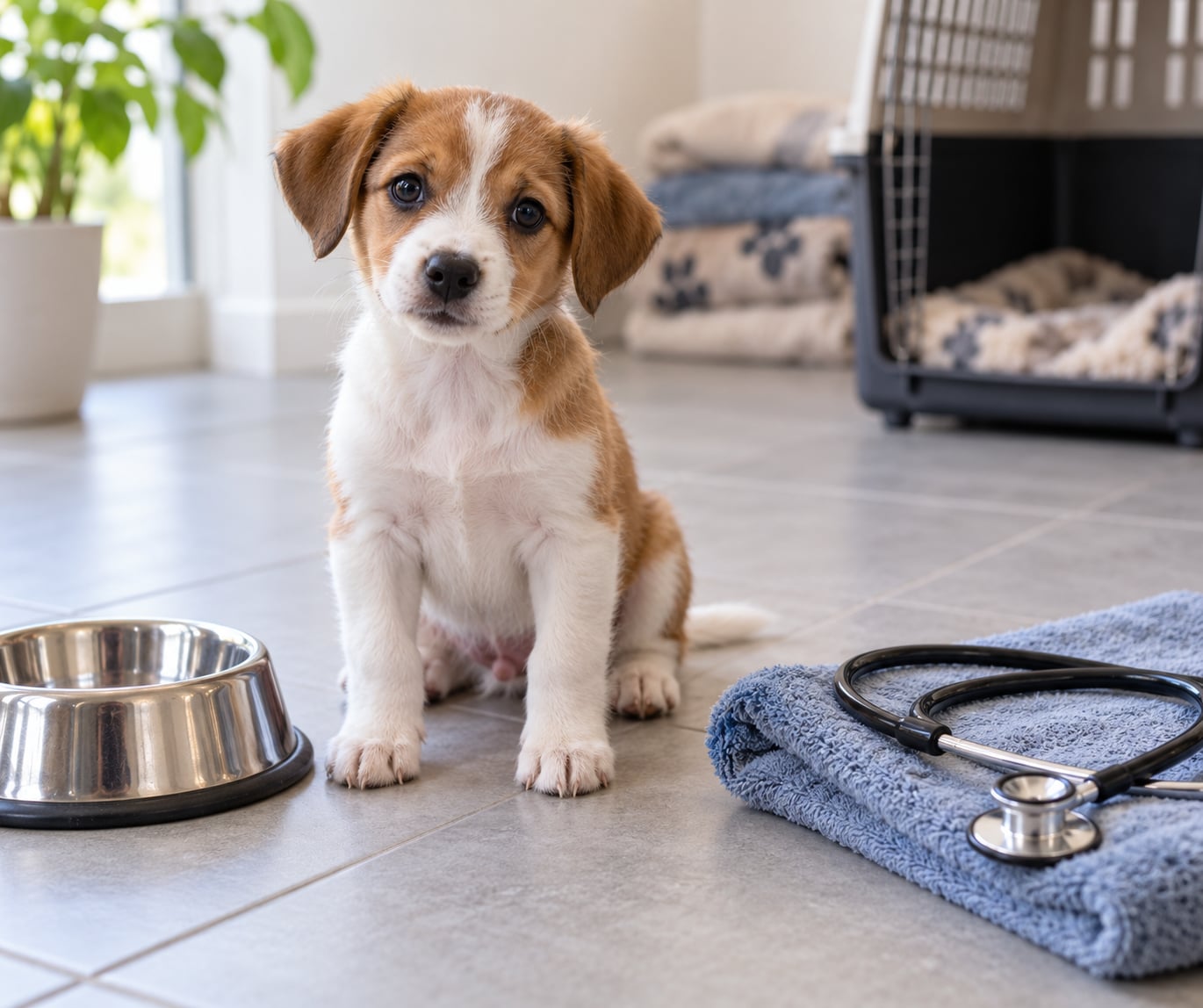
Call your vet before doing anything else, and describe the signs you have seen and when they started. If the puppy has been exposed to a known case, say so even if the puppy seems fine, because testing before symptoms begin is more reliable than testing after.
Most clinics will want to see the puppy, run a fecal antigen test (often called a rapid or SNAP test) and a complete blood count. The antigen test can read as negative early in an infection when little virus is being shed, so a repeat test a few days later is normal practice rather than a sign that anything was missed. Your vet will also want to check for worms and other causes of vomiting and diarrhea, since those need very different treatment.
Keep the puppy away from other dogs until your vet advises otherwise, including dogs that appear completely healthy. Do not try to treat suspected parvo at home with leftover antibiotics, human anti-diarrhea medicine, or diets you found online; wrong treatment costs days. Supportive care in a clinic, mainly fluids given intravenously plus anti-nausea medication, antibiotics when secondary bacterial infection is suspected, and careful nutrition, is the standard approach and the reason so many sick puppies now recover.
How to Limit Further Spread in Your Home
If a sick puppy is in your home, treat every surface it touched as contaminated until you have professional advice on cleaning it.
- Wash hands with soap and water after handling the puppy, its bedding, its bowls or anything it vomited on. Alcohol gel alone is not the answer here.
- Pick up stool promptly and bag it before it dries, since dried stool scatters particles when disturbed.
- Use dedicated bowls, bedding and equipment for the sick puppy and wash them separately from the rest of the household’s items.
- Handle the puppy last when you also have healthy dogs, and change clothes and wash hands before you touch them.
- Ask your vet or animal-health professional which disinfectant is effective against canine parvovirus, and what concentration and contact time it needs on your specific surfaces, including fabric and flooring.
- Wash bedding and towels on a hot wash and dry them fully, and be cautious with paw prints tracked across the house.
Persistent damp, shaded areas such as carpets, concrete runs and soil can hold the virus far longer than dry indoor surfaces, which is worth raising with your vet if an outdoor area is the concern.
How Vaccination Helps Prevent Parvo Outbreaks
Vaccination is the most effective tool owners have. When the series is given on schedule, protection against severe parvo disease is close to complete, which is a fair description of why well-vaccinated dogs rarely appear in parvo case lists.
The confusion starts with maternal antibodies. A puppy inherits antibodies from its mother through colostrum, and those antibodies protect it in the first weeks of life. They also block vaccine response, so a dose given too early can be neutralised and count for nothing. That creates a window of several weeks when the puppy has lost its borrowed protection and has not yet built its own, and it is a window where exposure matters more than usual.
Schedules vary with the puppy’s age, health, litter and local veterinary guidance, but they generally involve a series of doses a few weeks apart rather than one shot, with boosters later to maintain protection. Ask your vet when your puppy is protected enough for dog parks, pet shop floors and group classes, and treat that answer as specific to your puppy rather than as a general rule.
One more point that comes up often: a vaccinated puppy can still test positive if exposed before the series is finished, or if maternal antibodies interfered with the doses. That is a reason to ask about antibody testing and to finish the schedule on time, not a reason to skip vaccines.
Frequently Asked Questions
How long after exposure do parvo symptoms appear?
Symptoms usually show up 3 to 7 days after a puppy is exposed, though the window can be shorter or longer depending on how much virus got in and whether the puppy had partial immunity. During that window the puppy may already be shedding virus. If you know a puppy was around a sick dog, ask your veterinarian about testing rather than waiting for signs to appear.
Can I tell if my puppy has parvo from the smell of the diarrhea?
A strong, metallic or bloody smell is a common clue, but it is not a test. Parvo stool is often watery, pale or gelatinous, sometimes with visible blood, and the odor comes from blood and tissue damage rather than from the virus. Worms, stress colitis and a sudden diet change can smell similar. A fecal antigen test at the clinic settles the question.
Can a vaccinated puppy still get canine parvovirus?
Yes, though it is far less common in a puppy who has completed the series on schedule. Two things account for most cases: the puppy was exposed before the series finished, or maternal antibodies from the mother neutralized the early doses. A vaccinated dog that was exposed during that gap can still infect other dogs, so ask your vet about antibody testing and completing boosters on schedule.
Can humans catch parvo from a sick puppy?
No. Canine parvovirus does not infect humans, and people do not need to worry about catching it from a dog, its stool or a contaminated room. Humans can still carry the virus mechanically on hands, shoes and clothing, which means they can move it between a sick puppy, a healthy dog and the yard in between. That is a good reason to wash hands after handling a sick puppy.
When is it safe to see other dogs after a suspected or confirmed case?
Treat the puppy as contagious from the first signs and keep it away from other dogs until your veterinarian says otherwise, which is often after repeat testing rather than a fixed number of days. Dogs that have recovered can keep shedding virus for a while, and it survives in the environment long after that. Ask your vet about cleaning and about when vaccination can resume safely.
Conclusion: Recognize the Signs and Act Quickly
Watch for the combination, not a single sign: a tired puppy who stops eating, then vomits, then has watery or bloody diarrhea. Treat it as urgent, call your veterinarian the same day, keep the puppy away from other dogs, and follow professional guidance on testing, disinfection and when it is safe to see other dogs again.
Protecting the puppy next door is the other half of it. Wash your hands, keep the sick puppy’s gear separate, and remember that a dog can look completely recovered and still be shedding. Getting this right is what stops one case from becoming an outbreak.