Kennel cough symptoms usually start with a dry, goose-honk cough a few days after a dog is exposed to an infected dog, and most healthy dogs recover within 10 to 14 days. Kennel cough recovery time stretches past three weeks when a puppy, a senior, or a dog with a weakened immune system catches it, or when a secondary bacterial infection turns into pneumonia.
This is general information, not a diagnosis. If your dog is struggling to breathe, has blue or grey gums, or won’t eat or drink, contact a veterinarian today rather than reading further.
Last updated: 2026
Table of Contents
- What Are the Main Kennel Cough Symptoms?
- How Long Does Kennel Cough Usually Last?
- Kennel Cough Recovery Time by Situation
- How Is Kennel Cough Spread Between Dogs?
- How Long Is a Dog Contagious With Kennel Cough?
- Can You Speed Up a Dog’s Recovery?
- Remedies to leave alone
- When Should You Call a Veterinarian?
- How Can You Tell Kennel Cough From Other Illnesses?
- Why Vaccinated Dogs Still Get Kennel Cough
- When Can My Dog Go Back to Daycare, Dog Parks, and the Kennel?
- Frequently Asked Questions
- How long should a dog cough with kennel cough?
- Is a dog with kennel cough still contagious after the coughing stops?
- Should I exercise my dog while they have a cough?
- Can puppies and senior dogs recover from kennel cough?
- Can human cough medicine be given to a dog with kennel cough?
- What to Do First
What Are the Main Kennel Cough Symptoms?
The cough is the giveaway. It is dry, forceful and non-productive, and it often sounds like a goose honk or a honking bark. It tends to fire in clusters every few minutes, then the dog goes quiet for a while before the next round.
Common kennel cough symptoms include:
- A dry, hacking or goose-honk cough, often worse when excited, exercised or when the throat is touched
- Gagging, retching or bringing up white foam right after a coughing fit
- Sneezing, sometimes with a wet or snotty nose
- Clear to yellow discharge from the eyes
- Slightly low energy for a day or two
- A reduced appetite, usually mild and short-lived
- Sensitivity when you press on the neck or throat
Owners often mention that the cough started overnight with no obvious exposure that day. That is normal. The incubation period is usually two to five days, so the dog can have met an infected dog at a groomer or a boarding kennel a week earlier without noticing.
What you will not always see: a fever, obvious lethargy, or a big appetite drop. Plenty of dogs keep eating, keep playing, and cough through the whole illness. That is why a cough alone is easy to write off as a throat gag from pulling on a collar or eating too fast.
How Long Does Kennel Cough Usually Last?
Most dogs with uncomplicated kennel cough improve within one to two weeks and stop coughing entirely within about three weeks. The cough itself often fades to an occasional honk first, and that last stretch is the part owners worry about most.
Here is how recovery time typically lines up by situation.
| Situation | Typical time to noticeable improvement | Typical time to fully clear |
|---|---|---|
| Healthy adult dog, mild cough, treated early | 3 to 7 days | 10 to 21 days |
| Healthy adult dog, moderate cough | 7 to 10 days | 2 to 4 weeks |
| Puppy under 4 months old | Variable, often slower | 2 to 6 weeks |
| Senior dog or dog with chronic lung or heart disease | Variable, often slower | 3 to 6 weeks or longer |
| Secondary bacterial infection or pneumonia | Needs veterinary treatment | Several weeks with medication |
| Post-infectious cough after the infection clears | Occasional honking continues | 2 to 3 extra weeks |
One thing worth saying plainly: there is no fixed day. If you read one page that says ten days and another that says six weeks, neither is wrong. They are describing different dogs.
Kennel cough recovery time depends on the dog, not the calendar. A mild case in a healthy adult and a case in a brachycephalic breed with a collapsed trachea are the same label but completely different problems.
Kennel Cough Recovery Time by Situation
Age is the biggest factor. Puppies have immature immune systems and narrow airways, and seniors often carry underlying heart or lung disease that turns a surface infection into something deeper.
Other things that push the timeline out:
- Heavy exposure. Lots of dogs in a kennel, daycare or dog park can mean a heavier pathogen load and co-infections rather than a single bug.
- Severe coughing. Repeated hard coughing inflames the trachea, which then keeps triggering more coughing even after the infection is under control.
- Delayed veterinary care. A dry cough that turns wet or productive usually means bacteria have moved past the upper airways.
- Flat-faced breeds. Pugs, bulldogs and Frenchies have crowded airways and struggle more with any airway inflammation.
- Other illness. Dogs already dealing with asthma, an existing cough or a weakened immune system take longer to clear the same infection.
Owners on pet forums describe recovery as the cough fading but never fully disappearing for weeks. That is a fair description of the tail end, where a dog looks completely normal between fits.
How Is Kennel Cough Spread Between Dogs?
Kennel cough spreads through respiratory droplets and secretions. A sick dog coughs or sneezes, and the virus or bacteria lands in the nose, mouth or airway of a dog standing close enough, breathing it in, or sniffing a contaminated surface.
It also moves through anything that touches a wet nose. Shared water bowls, food bowls, bedding, toys, treats, kennel walls, crates, grooming tables and vehicle interiors all count. Air circulation matters too, which is why poorly ventilated indoor playrooms and busy boarding facilities are higher-risk settings.
High-exposure places: boarding and kennel facilities, dog parks, daycare, group training classes, puppy socialization, grooming salons, dog-walking groups with multiple dogs, and homes where a new dog just arrived.
Owners should hold off on dog parks, daycare, grooming appointments and group training for the duration of the illness. Keep walks to short potty trips alone, and separate the coughing dog from housemates.
How Long Is a Dog Contagious With Kennel Cough?
A dog is typically contagious from the first signs of coughing until about two weeks after the cough stops. That means the contagious window usually outlasts the recovery window, which surprises a lot of owners.
The practical rule: two full weeks of no coughing before the dog goes back to daycare, boarding or the dog park. Some facilities set their own rules, so ask before you return.
Owners ask if they can still cuddle with a coughing dog. Yes, with basic hygiene. Wash your hands after contact and avoid letting the dog lick your face. Humans rarely catch kennel cough, though anyone immunosuppressed should be more cautious, since people with weakened immune systems have been reported to pick up the bacteria.
A coughing dog at the boarding facility mid-trip means the kennel has to know right away. Honest notification lets them separate your dog from the others. Most facilities have seen it before and would rather hear from you than discover it.
Can You Speed Up a Dog’s Recovery?
No, and honestly — you should not try. There is no safe way to clear kennel cough faster from home. What you can do is stop the dog making it worse and keep them comfortable while their own immune system does the work.
What helps:
- Isolate. A separate room with a separate bowl, bed and toys, away from other dogs and away from cats sharing the same air space where possible.
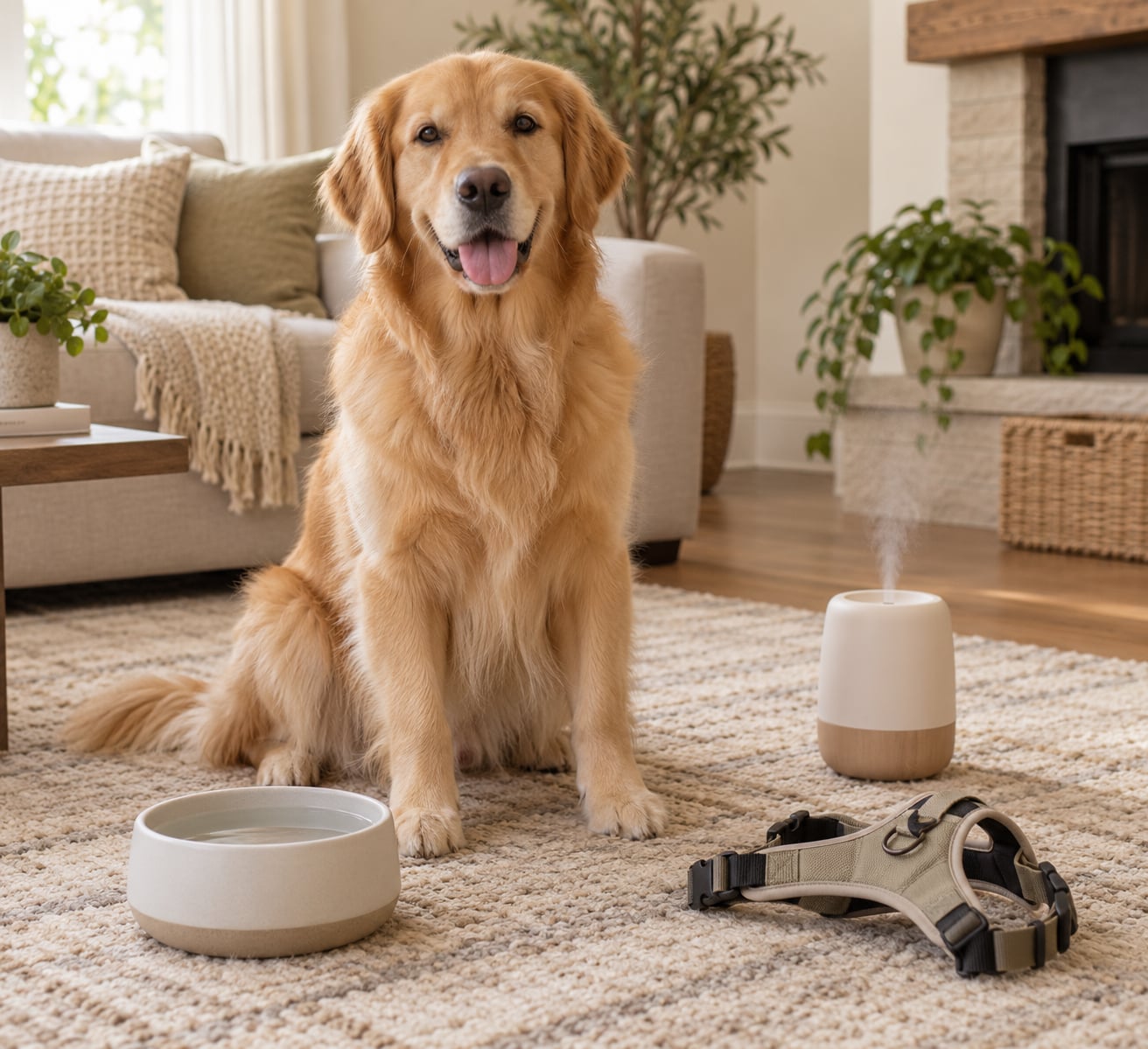
- Swap the collar for a harness. Pressure on the throat from a collar sets off coughing. A body harness or head collar takes that pressure off the trachea.
- Keep fluids up. Offer fresh water often. Some owners add a little warm water to the bowl to encourage drinking.
- Keep meals regular. Feed on schedule. Warm the food slightly or soften it if the throat is sore and the dog turns away.
- Add some humidity. A cool-mist humidifier in the dog’s room, or sitting in a steamy bathroom for a few minutes, calms raw airways. Keep the room comfortably warm, not hot.
- Cut exertion. No rough play, no stairs marathons, no dog parks. Walks are potty-only and on a quiet route.
- Wash hands and surfaces. Bedding, bowls, crates and floors. Then wash your own hands before you touch the other pets.
- Ask your vet about medication. Antibiotics, anti-inflammatories and cough suppressants have a place when a vet decides they do. You cannot judge that yourself.
Remedies to leave alone
Human cough syrup is the big one. Dextromethorphan, the active ingredient in many over-the-counter cough medicines, can be toxic to dogs and has caused serious reactions. Cough drops, throat lozenges, antihistamines and combination cold products carry the same problem. Never give any of them without explicit veterinary instruction.
A spoonful of honey is a popular home remedy. It is not a treatment, and it is not proven to shorten the illness, but a small amount is generally harmless for most adult dogs. Puppies, diabetic dogs and small breeds are different questions, so check with your vet first.
Keep the pantry medicine cabinet out of reach for the next two weeks. Owners reach for it precisely when they are tired and worried at two in the morning, which is the worst possible time to dose the wrong thing.
When Should You Call a Veterinarian?
Call a vet right away if you see any of these:
- Rapid, noisy or laboured breathing, or breathing that looks like effort
- Panting at rest while also showing a cough, or a cough with chest movement
- Blue, grey or very pale gums
- Collapse, extreme weakness or inability to stand
- Coughing that causes the dog to choke or to gasp afterwards
- Bloody or coloured discharge from the nose or mouth
- A wet, productive cough, or yellow-green nasal discharge
- A fever, or a warm nose and shivering with lethargy
- Not eating or drinking for more than a day
- Symptoms that keep getting worse instead of settling after about a week
- Symptoms that show no improvement at all past 10 days
Some dogs sound alarming while actually being fine: the retching and white foam at the end of a coughing fit is common, because a dog cannot clear its throat the way a person can. That foam on its own, with normal breathing and normal appetite, is not an emergency.
The change to watch for is the cough going wet. A dry cough stays dry. A productive cough with phlegm, fever, and low energy points toward secondary bacterial infection or pneumonia, and that does need medication.
Call early — the same day — for puppies under four months, senior dogs, dogs with heart or lung disease, flat-faced breeds, and dogs on immune-suppressing medication. They have far less margin for waiting.
How Can You Tell Kennel Cough From Other Illnesses?
You often cannot, and that is fine. Kennel cough is usually a presumptive diagnosis based on the cough, the discharge and the exposure history, because lab tests are slow and costly. A veterinarian has to be the one deciding what it is.
Still, some patterns point elsewhere.
| Condition | How it differs from typical kennel cough |
|---|---|
| Collapsed trachea | Chronic dry cough that gets worse with excitement or pressure on the neck, often in small breeds, with no recent exposure history |
| Heart disease | Cough mainly at rest or at night, low energy, blue or pale gums, weight loss, swollen belly |
| Lung disease or asthma | Persistent cough with wheezing, faster breathing, often worse in the morning |
| Canine influenza | Marked lethargy, high fever, thick discharge, poor appetite, much worse overall than a mild cough |
| Distemper | Cough plus eye and nose discharge, vomiting or diarrhoea, gum disease, poor coat, sometimes skin lesions or tremors |
| Foreign body | Sudden coughing after eating or chewing, retching, gagging, drooling, breathing trouble |
| Lungworms | Cough with weight loss and poor condition, often with no obvious exposure to other dogs |
Sudden-onset coughing after a meal or a session of chewing points toward an obstruction, not an infection. Coughing that shows up with no exposure to other dogs at all, in a small breed, points toward the trachea.
That is why the history you give your vet matters more than anything you can describe about the sound of the cough.
Why Vaccinated Dogs Still Get Kennel Cough
Because the kennel cough vaccine usually covers only the Bordetella bacterium, while several viruses and other bacteria produce the same symptoms: canine parainfluenza, canine adenovirus, canine herpesvirus, Mycoplasma and Streptococcus among them.
Vaccinated dogs who still get it tend to have a shorter, milder course. That is a reasonable outcome, not a sign the vaccine failed.
When Can My Dog Go Back to Daycare, Dog Parks, and the Kennel?
Not on the day the cough stops. Plan on two full weeks of symptom-free coughing first, and ask the facility about its own policy, since some require a negative test or a vet letter.
Until then, walks stay short and solo. Other dogs do not need the risk, and a puppy or an older dog at the park is exactly the dog this infection can hurt most.
Frequently Asked Questions
How long should a dog cough with kennel cough?
Most dogs with kennel cough improve within 10 to 14 days and stop coughing completely within about three weeks. The cough often gets noticeably better in the first week and then tapers into occasional honking. A cough that is still going strong after 10 days, or any wet cough, fever or laboured breathing at any point, needs a veterinarian rather than more waiting.
Is a dog with kennel cough still contagious after the coughing stops?
Usually yes, for a couple of weeks. Dogs shed the bacteria and viruses in respiratory secretions, and the contagious window commonly extends to about two weeks after the last cough rather than ending the day it stops. Keep the dog away from dog parks, daycare, boarding and group training until two full weeks have passed with no coughing at all.
Should I exercise my dog while they have a cough?
Skip it. Exertion and excitement set off coughing and keep the airways irritated, so no running, stairs, rough play or group training. Keep walks to short potty-only trips on quiet routes, away from other dogs, and switch from a neck collar to a body harness so nothing presses on the throat. Rest is the fastest thing you can give a coughing dog.
Can puppies and senior dogs recover from kennel cough?
They recover, but recovery takes longer and carries more risk. Puppies have immature immune systems and narrow airways, and senior dogs often have underlying heart or lung disease. Expect a slower course, sometimes several weeks. Contact a vet early rather than waiting, because the same cough that stays mild in a healthy adult can turn into pneumonia in these groups.
Can human cough medicine be given to a dog with kennel cough?
No. Dextromethorphan, found in many over-the-counter cough syrups and combination cold products, can be toxic to dogs and has caused serious reactions. Cough drops, throat lozenges and antihistamines carry the same risk. Never give human medication without explicit veterinary instruction. If your dog is struggling, call your vet instead of reaching for the medicine cabinet.
What to Do First
Watch the cough and the rest of the dog together. A cough alone, with normal breathing and a normal appetite, is usually not an emergency — but a wet cough, a fever, laboured breathing or pale gums is.
Meanwhile, isolate the dog from other pets, cut walks to potty-only, move them to a harness, and keep food and water coming. Do not give human cough medicine, and do not try to push the recovery faster.
Call a veterinarian promptly if you cannot tell what is causing the cough, if symptoms are worsening rather than settling, or if the dog has not clearly improved by about day 10.