If a dog in your home has had canine parvovirus, you can learn how to disinfect a yard after parvo by removing every trace of feces and vomit first, then applying an EPA-registered disinfectant that stays effective on grass and soil. Most of the work is a weekend project for a normal yard; extensive properties or heavily soiled ground usually need a professional. A sick dog still needs veterinary care, and cleaning the yard does not replace that.
Canine parvovirus, or CPV, is extraordinarily durable in the environment. It survives in soil, grass, mulch and gravel for roughly five to six months, and it shrugs off sunlight, rain and freezing temperatures. Any unvaccinated dog that walks through a contaminated yard is at real risk, especially puppies under 16 weeks.
The reason most yard cleanups fail is simple: people spray first and clean later. Organic matter — feces, vomit, soil, decaying leaves — chemically neutralizes almost every disinfectant before it can reach the virus. Clean first, disinfect second, and give the product its full label contact time.
Table of Contents
- What You Need
- Step-by-Step: How to Disinfect a Yard After Parvo
- 1. Keep the dog away from the contaminated area
- 2. Remove visible feces and contaminated debris
- 3. Wash the yard before applying disinfectant
- 4. Disinfect hard surfaces using the product label
- 5. Treat soil, grass, bedding and porous materials carefully
- 6. Dry, inspect and reduce the risk of reinfection
- Common Mistakes
- Frequently Asked Questions
- Can sunlight alone disinfect a yard after parvo?
- Can I save my grass after a dog with parvo has used the yard?
- Will rain wash away the parvo contamination from my yard?
- How long should my dog stay away from the yard after parvo?
- Do I need a professional company to disinfect a yard after parvo?
- Conclusion
What You Need
Gather everything before you start. Halfway through a cleanup with no spare bags left, people stop, and stopping halfway is worse than not starting.
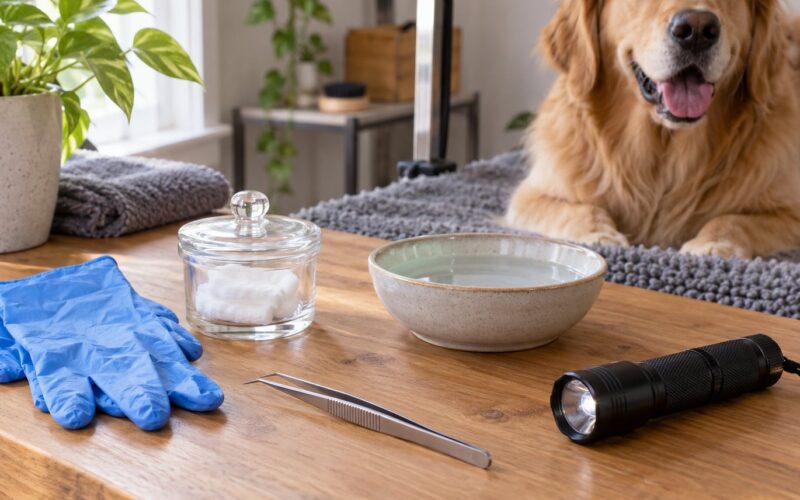
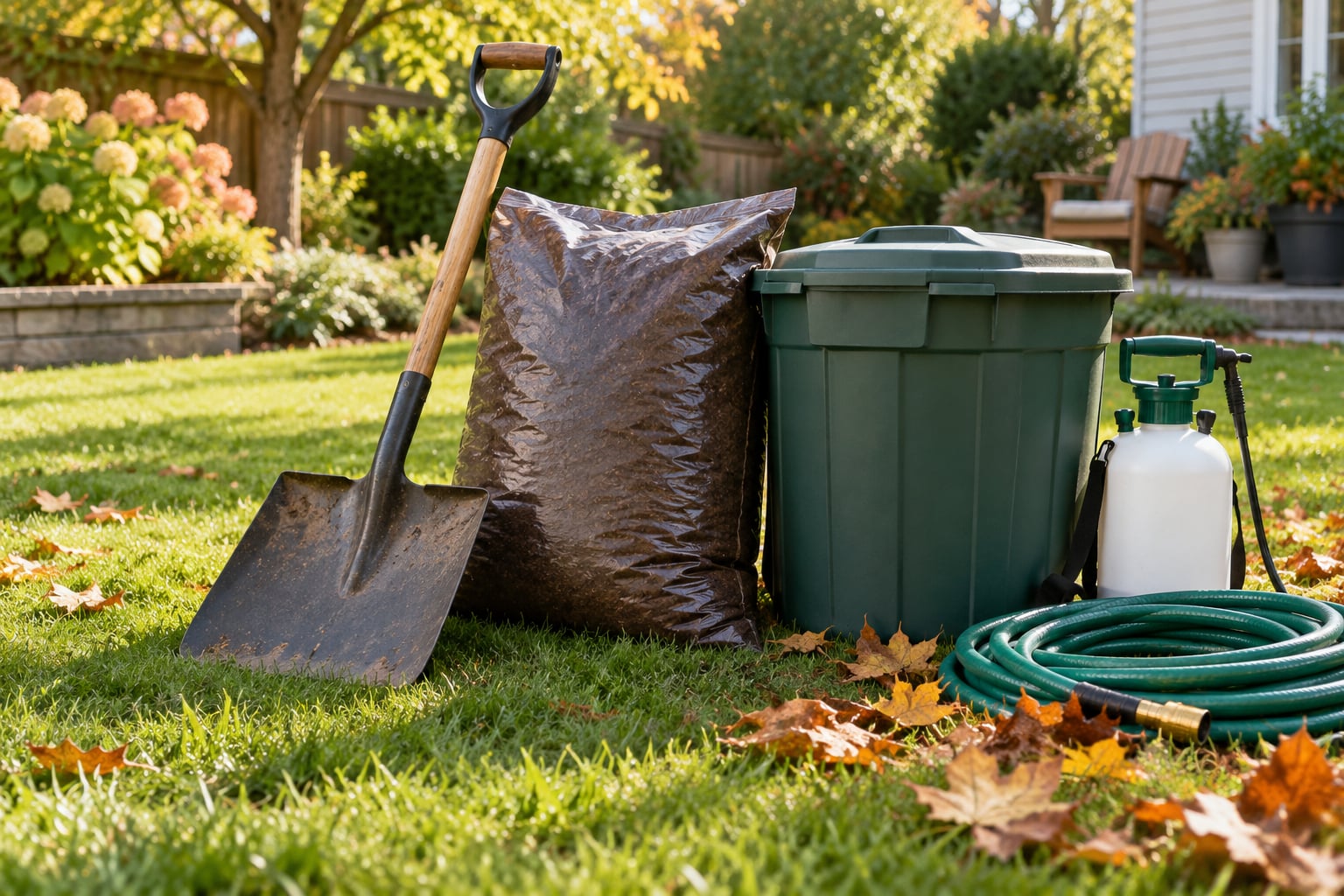
- Disposable gloves and old clothing you can throw away afterwards
- Sturdy shoes or waterproof boot covers you can scrub down at the end
- A shovel, spade or scoop wide enough to lift sod and soil without scattering it
- Heavy-duty bags that seal shut, plus a lidded bin so nothing leaks or gets picked open by animals
- A stiff broom and rake for breaking up debris before application
- A garden hose for washing and rinsing
- An outdoor disinfectant labeled effective against canine parvovirus and approved for the surfaces you have
Read the label before you buy. Dilution ratios are not interchangeable, and mixing bleach with vinegar, ammonia or another cleaner produces toxic gas. Ventilate any enclosed area, keep children and pets out while you work, and never apply a product to plants or water where its label prohibits it.
Step-by-Step: How to Disinfect a Yard After Parvo
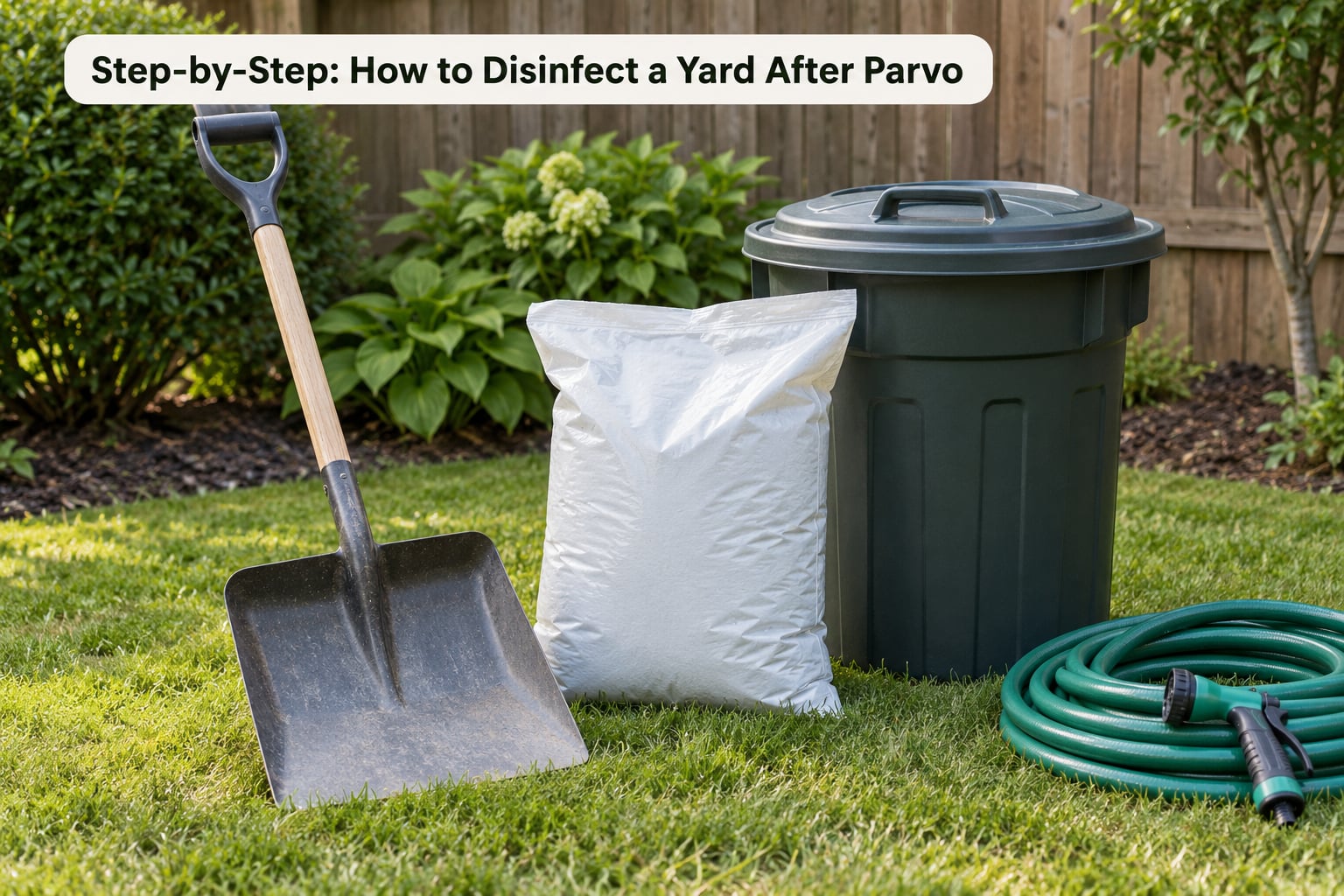
Work in this order and do not skip ahead. Each step depends on the one before it.
1. Keep the dog away from the contaminated area
Move any dog that has been in the yard to a space you can disinfect later — a tiled room, a concrete run you can hose off, a boarding kennel if your vet recommends it. Fully vaccinated household dogs carry much less risk, but limit their access until the yard is done anyway.
Set up a shoe station at the yard edge. Leave outdoor shoes or boot covers there, and change into clean indoor shoes before walking back into the house. Wash hands and forearms with soap and water right after the job, and launder the clothing you wore on a hot cycle.
Do not rake or shovel “just to check” before the cleanup starts. Every pass through contaminated soil drags virus further, including into areas that were fine five minutes ago.
2. Remove visible feces and contaminated debris
Pick up every piece of feces with a bag or shovel tip and drop it straight into a sealed bag. Do not shake out a rake or use a leaf blower, which aerosolizes material and spreads it across the yard and onto your house. Double-bag the waste, then disinfect or dispose of the outer bag.
Remove fallen leaves, dead plant matter, straw, mulch and loose bedding. Organic debris is a reservoir for the virus, and anything porous that cannot be washed should go in the trash rather than a compost pile.
Look closely at favorite spots, sleeping areas, kennel corners and the ground under feeders. If soil there is saturated, dark and loaded with feces, note the area — you may decide later to remove the top layer.
3. Wash the yard before applying disinfectant
Hose down the whole area with plain water to move surface contamination downward and toward drainage. Rinse buckets, bowls, toys, hoses and feeders too, since detergent and water remove more virus than any spray applied over visible filth.
Loosen crusted soil with the shovel edge and rake away clumps and roots. You want the disinfectant to reach the soil, not sit on top of a dry crust. Keep runoff away from garden beds, storm drains, ponds and neighboring property where the label or local rules advise it.
4. Disinfect hard surfaces using the product label
Concrete patios, porch steps, kennel walls, metal fencing, rubber mats, stainless bowls and plastic toys are all straightforward. Sweep or wash them first, apply the disinfectant at the dilution the label states, and keep the surface visibly wet for the full contact time — most products need about ten minutes.
Never rinse a disinfectant away early, even when it looks dry. Re-wet the area if the label contact time has not elapsed, and rinse afterward only if the label says to.
Pick a disinfectant whose label names canine parvovirus. Products based on accelerated hydrogen peroxide, chlorine dioxide or potassium peroxymonosulfate are commonly chosen for outdoor and organic surfaces because they keep working when organic soil is present. Household bleach works on clean, nonporous hard surfaces at about a 1:32 dilution, but it loses potency fast on soil and grass, corrodes some metals and washes away with rain.
Check the label for the specific organism claim. Many common household Lysol products and most quaternary ammonium sprays carry no parvovirus claim, so they are not a dependable choice here.
5. Treat soil, grass, bedding and porous materials carefully
Separate what can be cleaned from what has to go. Concrete, tile, plastic and stainless steel can be disinfected. Bedding, rugs, fabric toys, wooden dog bowls and soil-heavy carpet usually cannot be reliably disinfected — replace them, or wash them with hot water and detergent and dry them completely in sunlight.
For grass and soil, mow the area short, collect the clippings, then apply an organic-capable disinfectant with a pump sprayer fitted with a fan nozzle so coverage reaches the sides of grass blades rather than just the tops. Mulch and rock beds need extra work: turn them with a rake, wet the lower layers, apply, and repeat over several days because the virus sits buried.
For heavily soiled ground, removing the top few inches of sod and replacing it is often more reliable than any chemical. Ask your veterinarian whether the contamination is severe enough to justify that.
6. Dry, inspect and reduce the risk of reinfection
Let treated areas dry and air out as the label directs, and remove any residue the label says to remove. Wash your tools with detergent, disinfect them, and clean the boots before they come inside. Bag the clothing and gloves with the waste.
Keep the dog out until surfaces are fully dry and the product’s re-entry instructions are satisfied, which some labels spell out and others leave vague. Then check the yard again in a week for fresh feces and repeat the cleanup if you find any.
If the affected area is large, hard to reach, next to a waterway, or a puppy who has never been vaccinated is about to use it, talk with your vet before letting a dog back in. Some vets will suggest a professional decontamination service or a longer waiting period.
Common Mistakes
- Disinfecting before cleaning. Feces, soil and debris neutralize the active ingredient before it works. Remove organics first.
- Using a solution that is too weak. Dilute exactly as the label states. Guessing at a ratio either wastes product or fails to kill the virus.
- Rinsing too early. Wiping or rinsing the surface before the contact time ends undoes the entire application.
- Cleaning only what you can see. Virus sits in soil, under leaves, along fence lines and inside rock beds where nothing looks wrong.
- Reusing bedding, rugs and fabric toys. Porous items hold virus and rarely come clean. Replace them.
- Letting runoff move toward plants or drains. Diluted disinfectant carried across the yard spreads contamination instead of reducing it.
- Bringing the dog back too soon. Wet, untreated or still-soiled ground can re-infect a recovering dog in minutes.
- Mixing chemicals. Bleach with vinegar, ammonia or peroxide releases toxic gas. Use one product per application.
- Walking through the yard in indoor shoes. This is the most common route of reinfection into the house, and the cheapest one to prevent.
Frequently Asked Questions
Can sunlight alone disinfect a yard after parvo?
No. Ultraviolet light and drying reduce the amount of virus in exposed soil, which is why sunny, open yards fare better than shaded ones. But CPV survives for months in ground, shade and root systems, and a single sunny week will not clear an infected area. Use sunlight as a support measure alongside removal of waste, washing and a labeled disinfectant, not as a substitute for it.
Can I save my grass after a dog with parvo has used the yard?
Usually yes, if the yard is not saturated with feces. Mow it short, bag the clippings, remove all waste, wash the area and apply a disinfectant that stays effective on organic surfaces, repeating applications over several days for mulch or rock beds. Severely soiled ground may need the top layer of sod removed and replaced. Have your vet assess a heavily affected yard before you invest in either option.
Will rain wash away the parvo contamination from my yard?
No. Rain dilutes and moves virus rather than removing it, carrying it into low spots, drains and nearby soil where it can still infect an unvaccinated dog. Apply disinfectants on a dry day and keep treated ground out of reach until surfaces have dried and the label re-entry time has passed. Check the yard again after storms, since runoff often exposes fresh contamination that was buried.
How long should my dog stay away from the yard after parvo?
Keep your dog out until the yard is cleaned, disinfected and completely dry, and until the product’s label re-entry requirements are met. For a dog recovering from parvo, ask your vet when to resume outdoor access based on how ill the dog was. Before letting a new or unvaccinated puppy onto treated ground, get your veterinarian’s opinion, since soil contamination can persist for five to six months.
Do I need a professional company to disinfect a yard after parvo?
For a typical suburban yard you can do it yourself in a weekend with the right product and real effort. Hire a professional when the affected area is large, wooded or hard to reach, when soil is heavily saturated, when you cannot remove porous items, or when an unvaccinated puppy is involved and you want documented clearance. Ask what product they use, its contact time and what they recommend for grass and soil.
Conclusion
Start by removing every bit of feces, vomit and decaying debris, then wash the ground so the disinfectant can actually reach the virus. Apply a product whose label names canine parvovirus, keep surfaces wet for the full contact time, and replace bedding and fabric items rather than trying to clean them.
Change your shoes at the edge of the yard, keep the dog out until everything is dry, and expect soil contamination to linger for months. And if your dog is showing signs of parvo right now, call your veterinarian today — no amount of yard cleaning substitutes for treatment.