Orange tabby cat facts and personality come down to two very different things. The coloring is real genetics: an orange coat, produced by reddish pigment, paired with the striped or blotched markings nearly every domestic cat carries. The personality part is mostly individual. Coat color does not make a cat friendly, lazy, clever or fat. It only makes the cat easier to pick out of a crowd of kittens.
That distinction matters more than it sounds, because shelters routinely list orange tabbies as if the color were a breed and buyers arrive with a fixed idea of what they are getting. Here is what the coat actually tells you, what it does not, and how to work out the rest by watching the cat in front of you.
Table of Contents
- Orange Tabby Cat Facts and Personality: What They Really Mean
- Why Are Most Orange Cats Male?
- What Patterns and Colors Count as Orange Tabby?
- Are Orange Tabby Cats Usually Friendly?
- Orange Tabby Cat Facts and Personality: Evidence and Common Myths
- How to Tell What Your Cat’s Personality Is
- Health Facts Every Orange Tabby Owner Should Know
- How to Care for an Orange Tabby Cat
- Orange Tabby Cat Myths That Can Lead to Misunderstandings
- Frequently Asked Questions
- Can female cats have orange tabby coats?
- Why does my orange tabby cat eat so quickly?
- Are orange tabby cats more aggressive than other cats?
- Do orange tabby cats get along better with dogs?
- Should an orange tabby cat be kept indoors?
- Conclusion
Orange Tabby Cat Facts and Personality: What They Really Mean
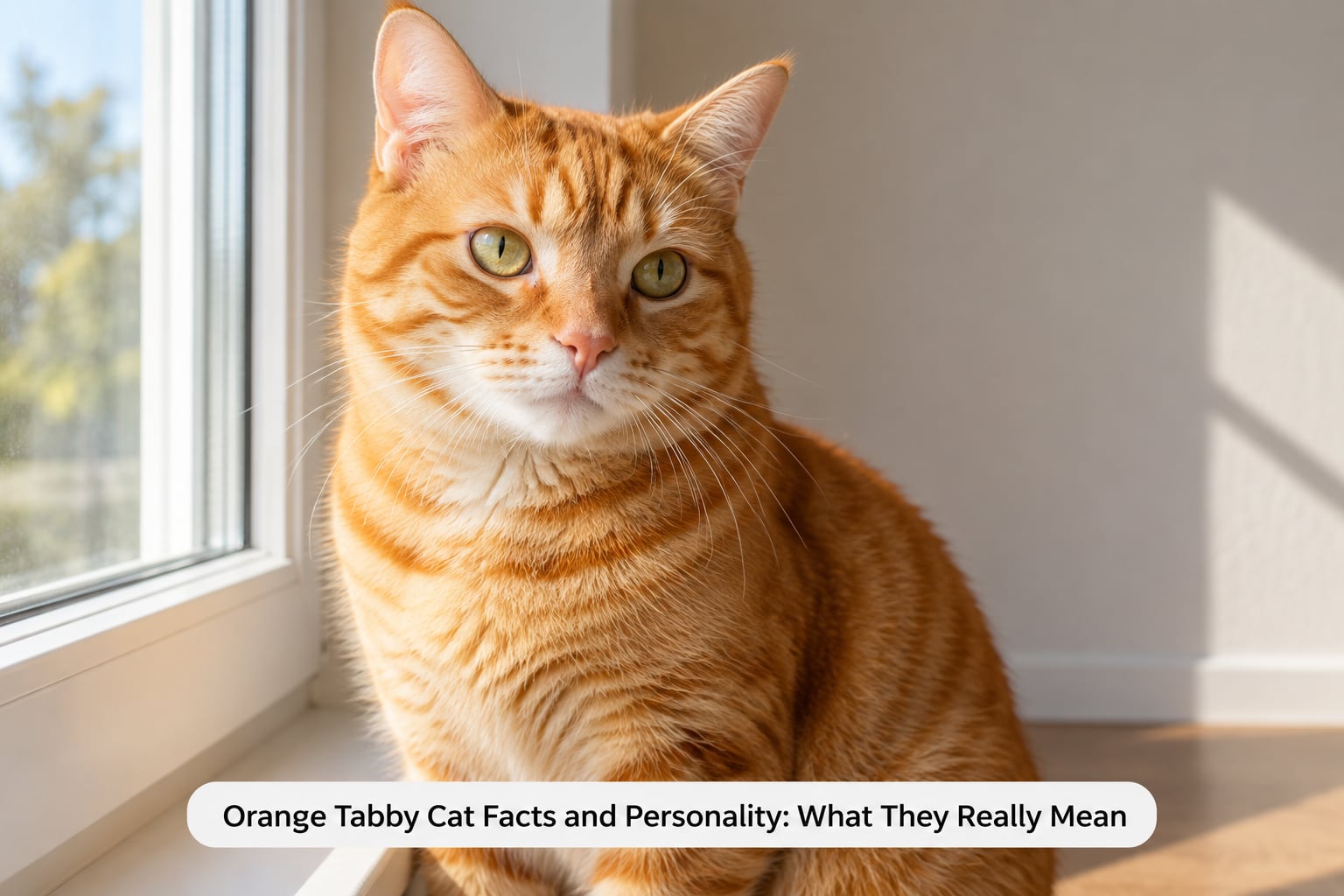
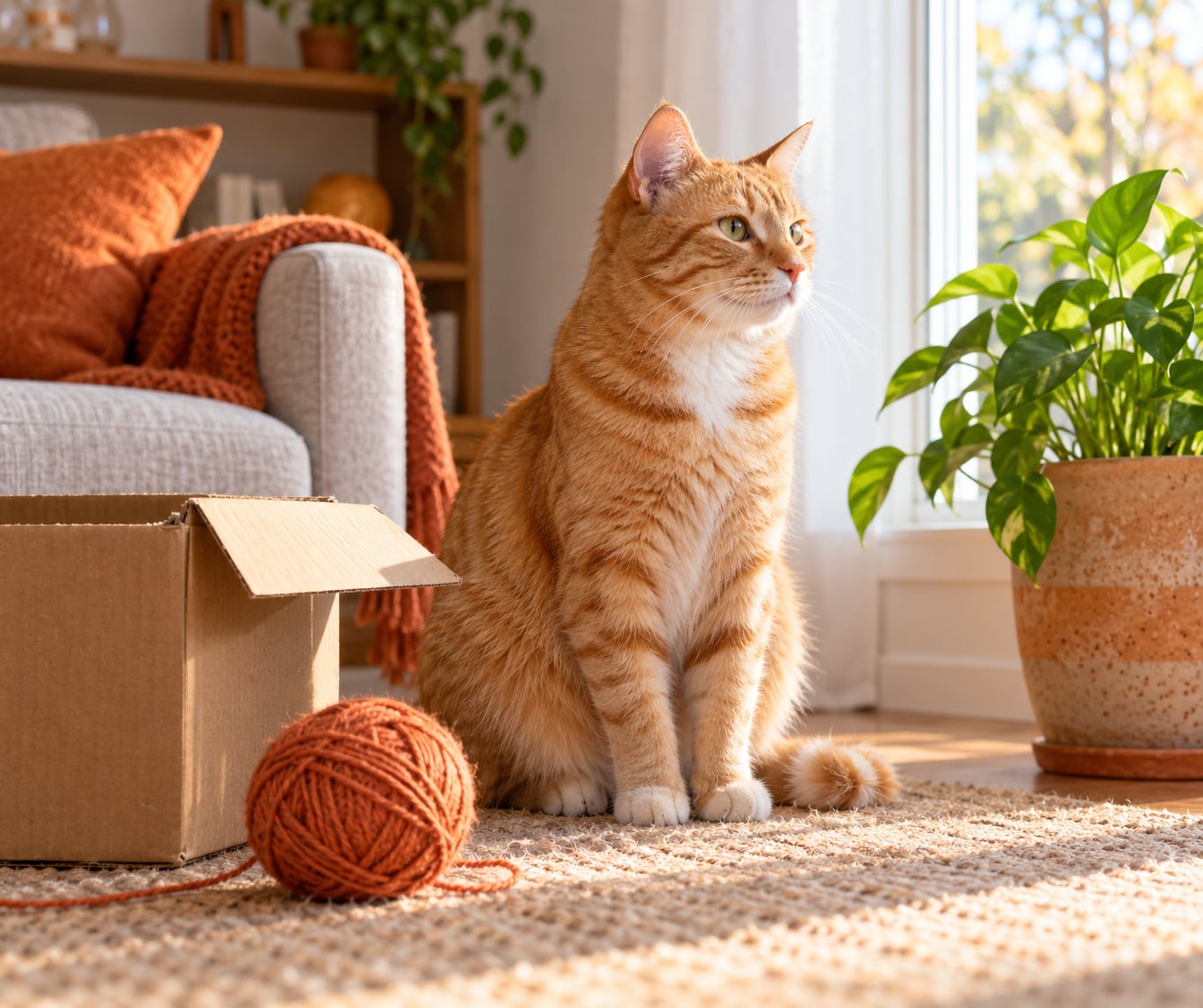
Orange tabby is a coat description, not a breed. Orange, red, ginger, marmalade and yellow are all names for the same reddish pigment. Tabby is the pattern on top of that color: stripes, spots, swirls or ticked flecks. A pedigree Maine Coon and a mixed-breed barn cat can both be orange tabbies, and they may behave nothing alike.
Here is the useful split. Some of these orange tabby cat facts are solid genetics you can rely on. Others are stories that repeat so often they start to feel like measurements.
| Claim you hear often | What is actually supported |
|---|---|
| Almost all orange cats are male | About four in five are male, because the orange gene sits on the X chromosome. Female orange cats are unusual, not impossible. |
| Orange cats are solid-colored | No truly solid orange cat exists. If the pigment is orange, tabby markings always show through, at least faintly. |
| Cream cats are a separate color | Cream and pastel cats are diluted orange, carrying an extra copy of the dilution gene. |
| Orange cats are always chubby | Orange is a coat color, not an appetite. Weight depends on breed, age, activity, neutering and diet. |
| Orange cats are always friendly | Individual cats vary far more than color groups. Owners also tend to describe orange cats in warmer terms. |
| Every orange cat has an M on its forehead | Most do. It is a tabby marking that can appear on any coat color, not an orange-specific trait. |
| Orange cats are louder than other cats | Some owners report very vocal cats. Vocalization varies widely and is shaped by individual experience. |
The bottom line: the pattern and pigment are predictable, the temperament is not. A cat DNA test can tell you the color genes with confidence. It cannot tell you whether your cat will be cuddly.
Why Are Most Orange Cats Male?
Because the gene for orange fur sits on the X chromosome. Males have one X and one Y, so a single copy of the gene is enough to make the whole coat orange. Females have two X chromosomes and normally need a matching copy on both, which happens much less often.
That is why the familiar four-to-one ratio shows up again and again. The mechanism runs through pigment cells themselves. The gene switches the cells from producing dark brown or black pigment to producing a reddish-orange pigment instead, and since pigment cells are scattered through the hair as it grows, the result is coat-wide rather than patchy.
Researchers have now pinned the change down at the molecular level: a regulatory deletion of roughly 5.1 kilobases near the ARHGAP36 gene, described by two independent groups in Current Biology. Before that work, orange coat color had been described in textbooks but never identified at this level of detail.
Female orange cats exist because of how chromosomes get switched off. In cells holding two X chromosomes, one is largely deactivated early in development, and which one stays active varies from cell to cell. That process, called X-inactivation, is why female orange cats tend to show patches of orange and black instead of one solid color. Most female orange cats are therefore also patched, often called torbies.
Some female orange cats exist with no visible dark patches, which requires unusual genetics: two different orange variants, or an orange gene paired with a mutation that removes the pattern. A DNA test is the reliable way to confirm a female orange cat.
What Patterns and Colors Count as Orange Tabby?
Orange describes the pigment. Tabby describes the markings. The two are set by different genes, and the pattern gene decides what shape the markings take over that orange base.
| Pattern | What it looks like | Note |
|---|---|---|
| Mackerel | Narrow vertical stripes running down the sides from the spine, like fish bones | The most common pattern overall |
| Classic, swirled or blotched | Broad spirals on the flanks and a bullseye on each shoulder, often with a lighter neck | Strongly associated with the Taqpep gene |
| Spotted | Scattered dark spots on an orange ground instead of lines | Common in breeds like the Ocicat and Egyptian Mau |
| Ticked | Individual hairs banded light to dark, giving an even sandy look with faint ghost striping | Classic in Abyssinians and Somali |
| Patched or torbie | Irregular patches of orange and black, sometimes with white | Almost always a female, given X-inactivation |
Two shades that confuse people deserve a mention. Cream, ivory and pastel cats are diluted orange, produced by an extra copy of the dilution gene that lightens the pigment. And a cat that looks plain orange in bad lighting usually has faint markings on its legs, tail or underside, which show clearly in daylight or in photographs.
Orange tabbies come in short, medium and long coats, and in everything from a slight tabby domestic shorthair to a heavy-boned Maine Coon. Breed, not color, decides most of what you see in a shelter row.
Are Orange Tabby Cats Usually Friendly?
Many orange tabbies are affectionate, but there is no reliable rule connecting coat color to friendliness. What owners describe as a distinct orange temperament may partly reflect the cats themselves and partly how people read them. A ginger cat sprawled on a lap looks like a story about warmth; a black cat doing the same thing looks like a coincidence.
Owners on cat forums and breed communities describe orange cats as unusually affectionate, following people room to room, sleeping on them and greeting visitors at the door. Some describe cats that walk on a harness, come when called or ride in a car. Those are real observations from real homes. They are also observations of individual cats who happened to be orange.
Factors with much stronger evidence behind them include early socialization, whether the cat was handled gently as a kitten, its health, its age, how it was treated when adopted, the presence of other animals, and plain individual choice. A shy rescue that turns into a lap cat after a few weeks is a common story, and it has nothing to do with pigment.
Orange Tabby Cat Facts and Personality: Evidence and Common Myths
Claim: orange cats are more sociable. Evidence: owners report it often, and some studies suggest people judge orange cats more favorably than other colors before interacting with them. That is a perception effect, not a temperament measurement. Treat the sociability as something to discover in your own cat.
Claim: they are food-motivated and prone to begging. Owners on r/OneOrangeBraincell and other cat forums consistently describe cats that wake people up for food, eat through plastic packaging and become inventive about reaching counters. Food interest is common across all cats and increases with boredom, so it is a management problem more than a color trait.
Claim: orange cats are less intelligent. There is no evidence for this. What does appear in the literature is variation in problem-solving ability within tabby cats, and plenty of variation in how interested a given cat is in puzzles. One viral video of a cat failing at a task says nothing about the breed or the color.
Claim: they are better mousers. Some owners report orange cats bringing in lizards, snakes, insects and other small finds. Hunting drive tracks with prey drive and confidence rather than coat color, though a bold cat is more likely to hunt and more likely to leave you presents.
Claim: they are laid back and calm. Some are. Others are described by their owners as reckless, climbing into cupboards, escaping through gaps and pushing things off tables. The word that comes up most often in owner accounts, from what I have read, is not calm. It is confident.
How to Tell What Your Cat’s Personality Is
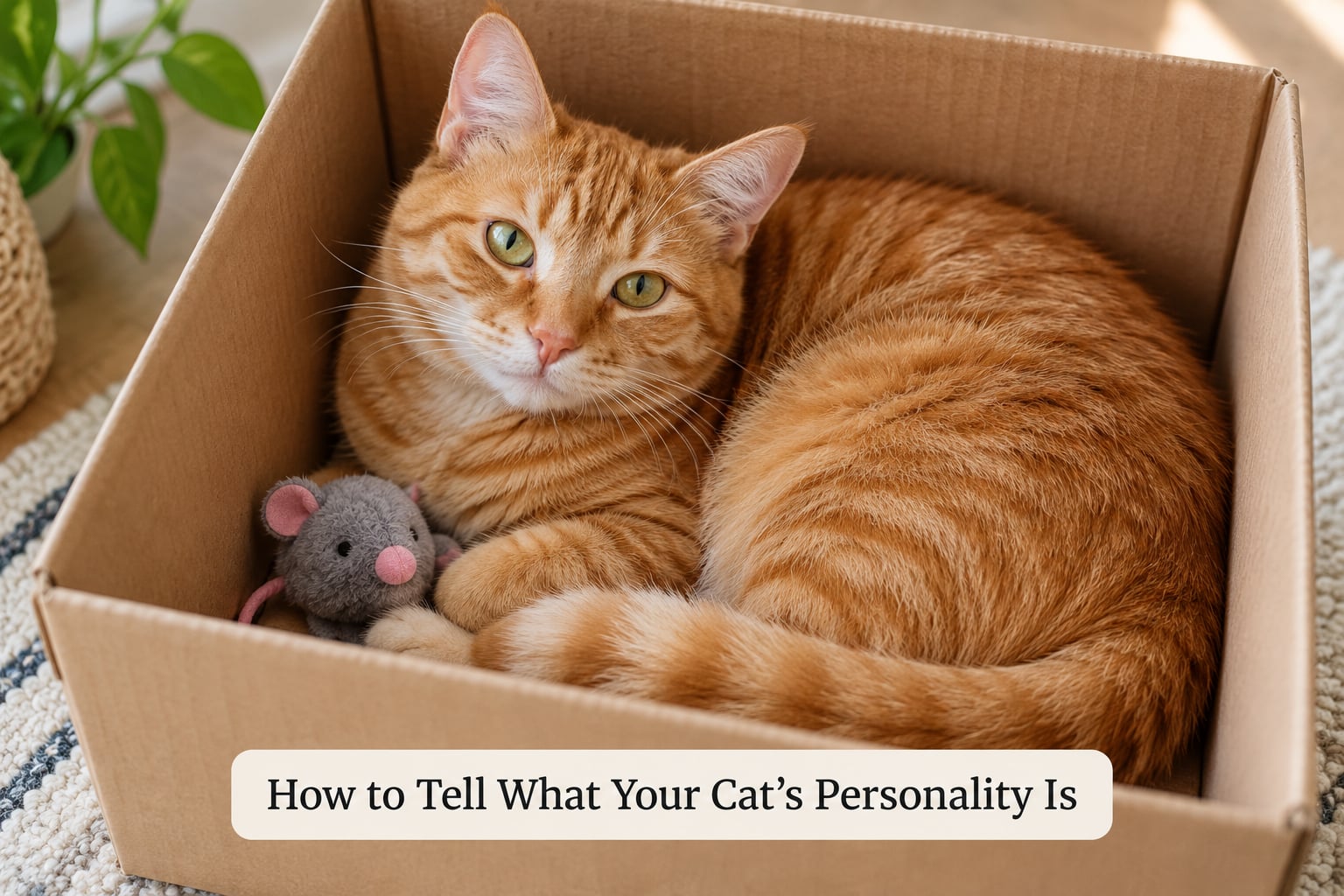
Judge a cat by repeated contact, not by first impression. One meeting shows you almost nothing useful. A dozen ordinary days show you most of what matters, and they cost you nothing but attention.
Watch the recovery, not just the reaction. A cat that bolts from a new cardboard box and comes back out within an hour is telling you more than one that hides for three days and then resumes normal life. Cats that recover quickly tend to handle change better overall.
Read the body before the behavior. Slow blinks, a loose tail tip and a body lying on its side point to a cat that feels settled. Ears flattened sideways, a twitching tail tip and a fast-moving cat point to one that needs more space. Watch what happens in the seconds after a greeting rather than during it.
Track the ordinary stuff. Does the cat come when called or pretend not to hear? Does it ask to be picked up, or tolerate it? Does it hunt? Does it vocalize, and how often? Does it use the litter box without complaint? Write a few lines a week for a month and the personality writes itself.
Then vary one thing at a time. Sit quietly in the same room for ten minutes without touching. Try a wand toy for five minutes. Try a harness on a carpeted floor. Cats who are hesitant often relax once they realize nothing scary follows, and a cat who refuses handling may simply prefer to be near you rather than held.
Health Facts Every Orange Tabby Owner Should Know
Orange coloring does not predict a specific disease. What it does is tell you the cat is likely male, and that shapes which routine checks matter as he ages.
Weight is the most common practical issue. Owners regularly report orange cats gaining weight quickly once neutered as adults, and body condition should be checked monthly from the side and from above by running your hands over the ribs. Your vet can set a target weight and decide whether a measured-calorie diet is needed. Treats count as a tenth of the daily total, which surprises people.
Male cats are more prone to urinary problems, including feline lower urinary tract disease and, in serious cases, urethral obstruction. Repeated trips to the litter box, straining with little output, crying while urinating, or licking at the genitals is an emergency, not something to watch overnight. Water intake helps, so several wide bowls in different rooms and a wet food portion each day make sense.
Book a vet visit for sudden behavior changes, hiding, appetite changes, vomiting, breathing trouble, limping, or any change in how your cat jumps or uses the litter box. Cats hide pain well, and owners usually notice a change in routine before they notice a symptom.
Never give human medication to a cat. Common painkillers such as ibuprofen, naproxen and paracetamol can cause serious or fatal injury in cats, and tablets left on a counter are a frequent emergency call. Keep lilies away from cats, including cut flowers and vases with lilies in them, and check any new plant before you bring it in.
How to Care for an Orange Tabby Cat
Feed a complete, balanced food appropriate for the cat’s life stage, measured rather than free-fed if the cat gains weight easily, and keep a steady routine. Cats are creatures of habit, and switching food suddenly causes stomach upset in a lot of them.
Water matters more than most owners expect. Wide shallow bowls, placed apart from food and away from the litter box, encourage drinking. A slow feeder or a puzzle feeder turns a fast eater into a cat that takes twenty minutes instead of two, which suits a food-motivated orange tabby very well.
Give litter-box access generously: one box per cat plus one, scooped daily. Small boxes and covered boxes are the two most common reasons cats avoid the tray and then have urinary problems.
Provide vertical space and scratching. A cat tree or wall shelves, a stable scratching post, and a couple of hiding spots let a cat choose its own distance from whatever is happening in the room. Rotating toys every week keeps novelty around without buying constantly.
Play daily with a wand toy, ideally two sessions of ten minutes. It burns energy, teaches hunting sequences and gives the cat a predictable outlet, which is one of the best ways to reduce furniture scratching and attention-seeking vocalizing.
Groom to the coat. A weekly brush handles a short coat and removes loose hair; long-haired orange tabbies need more frequent brushing and a bath only when dirty. Most cats do best when groomed in short sessions with a treat in hand.
Keep vet visits on a schedule set by your vet, and make sure your cat carries identification. A tagged or microchipped cat that slips out of an open door is far more likely to come back, and orange cats are noticeably escape-prone according to owner accounts.
Orange Tabby Cat Myths That Can Lead to Misunderstandings
Myth: orange cats are automatically fat. There is no gene for obesity and no link between orange pigment and body fat. Easy weight gain is common in neutered adult cats of every color, and it responds to food measurement and activity like any other case.
Myth: orange cats are lazy. Owners describe bold, energetic, nosy cats more often than anything else. A cat that sleeps a lot may simply be an adult cat in a warm room.
Myth: orange cats are aggressive. Some orange males guard food or react to other animals, as some cats of any color do. Sex, neutering, past experiences and pain all influence aggression. If your cat has become grumpy, have a vet rule out pain before assuming it is temperament.
Myth: orange cats are exceptionally intelligent. Clever cats exist in every coat. Tabby cats as a group do well on some puzzle studies, but the spread within the group is wider than the difference between tabbies and non-tabbies.
Myth: orange cats always prefer men. This one comes from the fact that most orange cats are male, plus a heavy stream of online jokes. Individual cats bond with individuals, sometimes several people, sometimes one.
Myth: orange cats always get along with other pets. Compatibility depends on socialization, sex, age and the resources in the home. Cat-to-cat introductions go far better when the animals can eat, sleep and hide separately at first.
Myth: a female orange cat is worth more. Female orange cats are the rarer genetic outcome, not a premium product. Claims that a female orange tabby is a rare and valuable commodity are a sales tactic, and they are worth challenging at the counter.
Frequently Asked Questions
Can female cats have orange tabby coats?
Yes. A female cat needs the orange variant on both X chromosomes, which is uncommon, so roughly four in five orange cats are male. Because of X-inactivation, most female orange cats also show patches of black and are called torbies. A few have no dark patches at all, which requires rarer genetics. A cat DNA test confirms color genes quickly and cheaply.
Why does my orange tabby cat eat so quickly?
Fast eating shows up often in owner accounts of orange cats, but no gene links orange pigment to appetite. Hunger rises after neutering, boredom and inherited body build all contribute, and cats differ in how strongly food drives them. Measured meals, a wet food portion, a puzzle feeder and daily play usually calm the behaviour without changing the cat’s nature.
Are orange tabby cats more aggressive than other cats?
There is no good evidence that orange cats are inherently aggressive. Some male orange cats guard food or react to other animals, but sex, neutering, past experiences, crowding and pain all play a bigger role than coat color. If your cat has become unpredictable, ask your vet to check for pain or illness first, then address the environment and the specific trigger.
Do orange tabby cats get along better with dogs?
Some do, and owners often describe orange cats as dog-like, following people around, walking on a harness and coming when called. None of that guarantees a good match. Temperament matters more than color, and introductions should be slow: separate feeding spaces, scent swapping first, then short supervised sessions. A confident cat and a calm, tolerant dog usually do better than two excited animals.
Should an orange tabby cat be kept indoors?
Indoor living is the safer choice, and it does not have to mean a dull one. Owners report escape attempts and wandering in orange cats often enough to plan for secure screens and doors. Indoor cats stay active with climbing furniture, daily play, hunting-style feeders and window perches. Outdoor access in a secure enclosure is a good compromise where the climate allows it.
Conclusion
The genetics behind an orange tabby are genuinely interesting: an X-linked color gene, a tabby pattern that can never be fully hidden, and a recently identified regulatory deletion that explains the whole thing at a molecular level. None of that predicts who your cat will be.
So start with your own cat. Watch how it recovers from small surprises, where it chooses to sleep, what it does when you walk in the room, and how its appetite and litter habits look day to day. Keep the vet visits regular, keep the food measured, and let the color be what it is, a good way to recognize your cat across the room.