How to care for a senior dog’s daily routine means keeping the same simple sequence every day: a bathroom trip soon after waking, water within reach, a measured meal, two or three short walks, a midday rest, and a calm evening wind-down. That predictability is the whole trick. Aging dogs lose hearing, sight, memory and stamina gradually, and a familiar rhythm makes all of that easier to manage.
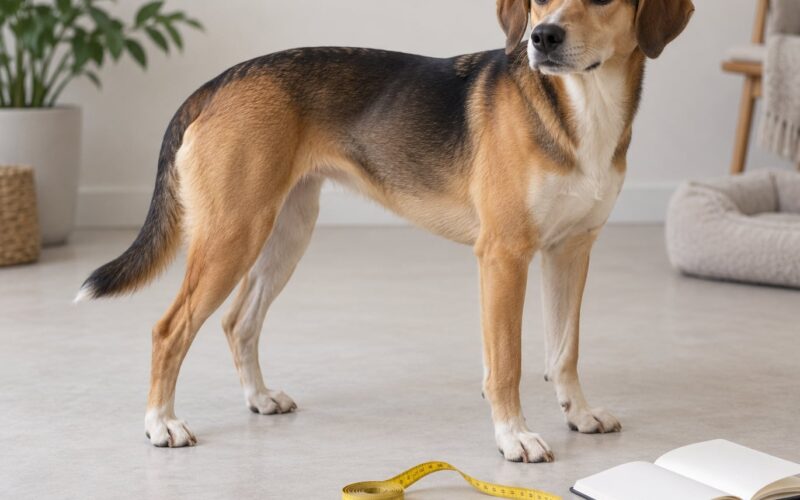
Here is the full-day schedule I built for my own twelve-year-old beagle mix, adjusted with our veterinarian for her hips. It takes about fifteen minutes of real work spread across the day.
- On waking: toilet opportunity first, then fresh water. Bladder and digestion start moving early, and going straight from the door avoids accidents.
- After the walk: measured breakfast with any prescribed medication. Regular digestion makes appetite changes easier to spot, and the same bowl spot every time helps.
- Mid-morning: short sniff walk or indoor enrichment. This maintains muscle mass and joint range. Follow the dog’s pace and stop early if he lags.
- Midday: water check, then quiet rest on a supportive bed. Conserving energy for the evening matters. No visitors, no doorbell, keep the room dim.
- Afternoon: a second short walk and a grooming touch-up. Spreading activity across the day is kinder to stiff joints. Non-slip surface, and a support vest if he slips.
- Evening: dinner portion, final bathroom trip, then medication. Settles digestion before bed. Dim the lights early and skip exciting games.
- Overnight: toilet access if needed in a quiet, dark room. Fewer pacing episodes. A floor night light, water and pads close by.
Table of Contents
- What You Need
- Step-by-Step: How to Care for a Senior Dog’s Daily Routine
- 1. Set a Simple Rhythm
- 2. Start the Morning with Toileting, Water and a Comfort Check
- 3. Feed a Consistent, Easily Accessible Meal
- 4. Provide Gentle Movement at the Dog’s Comfortable Limit
- 5. Add Mental Enrichment Without Requiring Heavy Exercise
- 6. Create a Safe, Comfortable Rest Area
- 7. Review Medication, Movement and Safety During the Day
- 8. End with a Calm Evening Check and Overnight Plan
- Common Mistakes
- Frequently Asked Questions
- At what age is a dog considered senior?
- How much exercise should a senior dog get every day?
- What should I do if my senior dog has a reduced appetite?
- Can I give my senior dog human pain medication or supplements?
- When should changes in a senior dog’s urination or bowel movements be treated as urgent?
- How can I tell whether my dog’s daily routine needs to change?
- Conclusion: Start with the Morning Check
What You Need
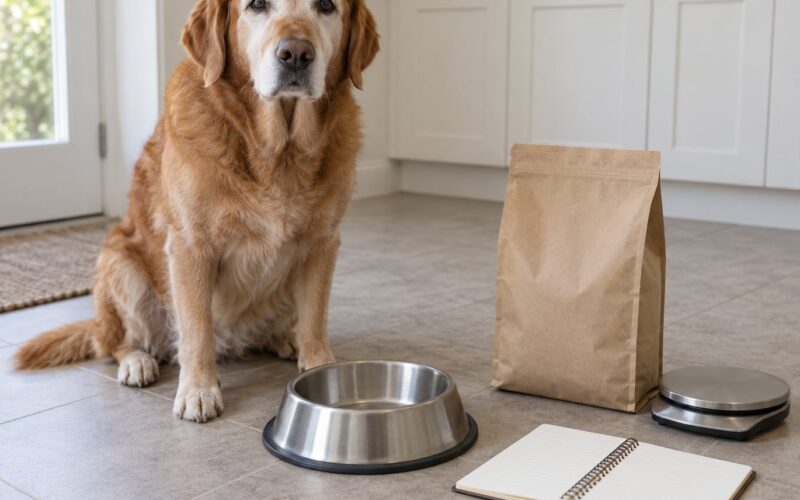
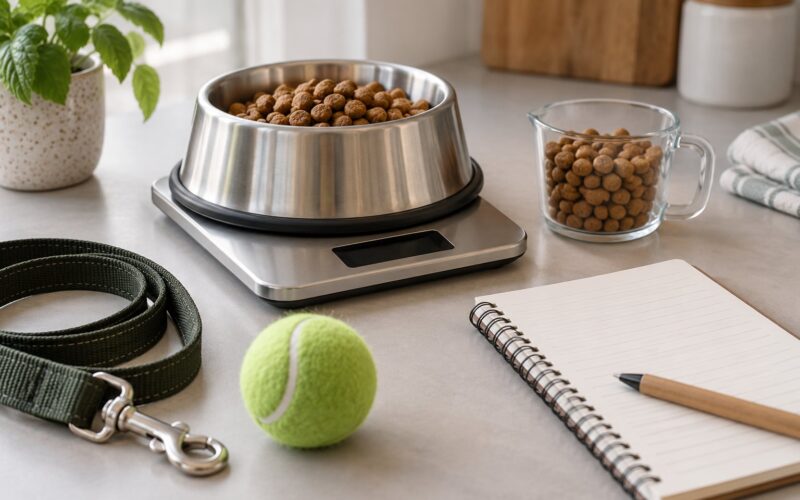
The gear list for this is short, and most of it you already own. Fresh water in a bowl heavy enough not to tip, your dog’s usual food, a measuring cup or kitchen scale, and any medication your veterinarian has prescribed.
Add a few household items that do more work than anything you can buy. Foam mats or runners along the route from bed to door matter more than most owners expect, because laminate and tile are slick for aging paws. A low platform or step helps if the dog struggles with a deep bed. A ramp covers stairs and the car.
- Fresh water, refreshed at least twice a day
- The dog’s usual food and a measuring tool for portions
- Prescribed medication, stored and given only as directed
- Supportive bedding with a low, firm edge for getting up
- Non-slip runners on every route the dog uses
- Current veterinary records and a written contact list
- Simple enrichment: food puzzles, a sniff mat, familiar toys
One warning belongs in this section. Chocolate, grapes, raisins, onions, garlic, xylitol and macadamia nuts are all dangerous to dogs, and lilies are deadly to cats, so if a senior dog shares a home with other pets, keep those out of reach. If your dog eats something on that list, or ingests a plant you are unsure about, call a veterinarian or an emergency animal hospital straight away rather than waiting to see what happens.
Step-by-Step: How to Care for a Senior Dog’s Daily Routine
1. Set a Simple Rhythm
Pick fixed times for waking, meals, outings, medication and bedtime, then hold them for two weeks before judging the schedule. Anchor them to your own day, since a routine you cannot keep is worse than no routine.
Match the times to what your dog already prefers and what their energy allows, rather than forcing a strict clock. Older dogs do not care about a 6 a.m. start; they care about the same order every day. When something must shift, change one block at a time over one to two weeks so the dog adjusts without stress.
You know it is working when toileting happens on a pattern and the dog settles without pacing. Write the schedule on a card on the fridge. Memory is exactly the thing you are helping with.
2. Start the Morning with Toileting, Water and a Comfort Check
Take the first bathroom trip within minutes of waking, before the bladder has time to fill and before the dog forgets there is a routine. Refill the water bowl right after. Keep it down while you eat too, because an aging dog that stays dry drinks more when the evening arrives.
Then run a quick comfort check, all of it in a minute of ordinary petting. Look at the eyes for cloudiness or discharge, feel the coat and skin for lumps, check the paws and nails, and watch how the dog stands. Note stiffness, limping, hesitation at the door, or any change in elimination from yesterday.
Urgent signs look different from slow aging. Trouble rising, repeated straining, sudden loss of bladder control, or repeated unproductive attempts to urinate all need a call to your veterinarian the same day.
3. Feed a Consistent, Easily Accessible Meal
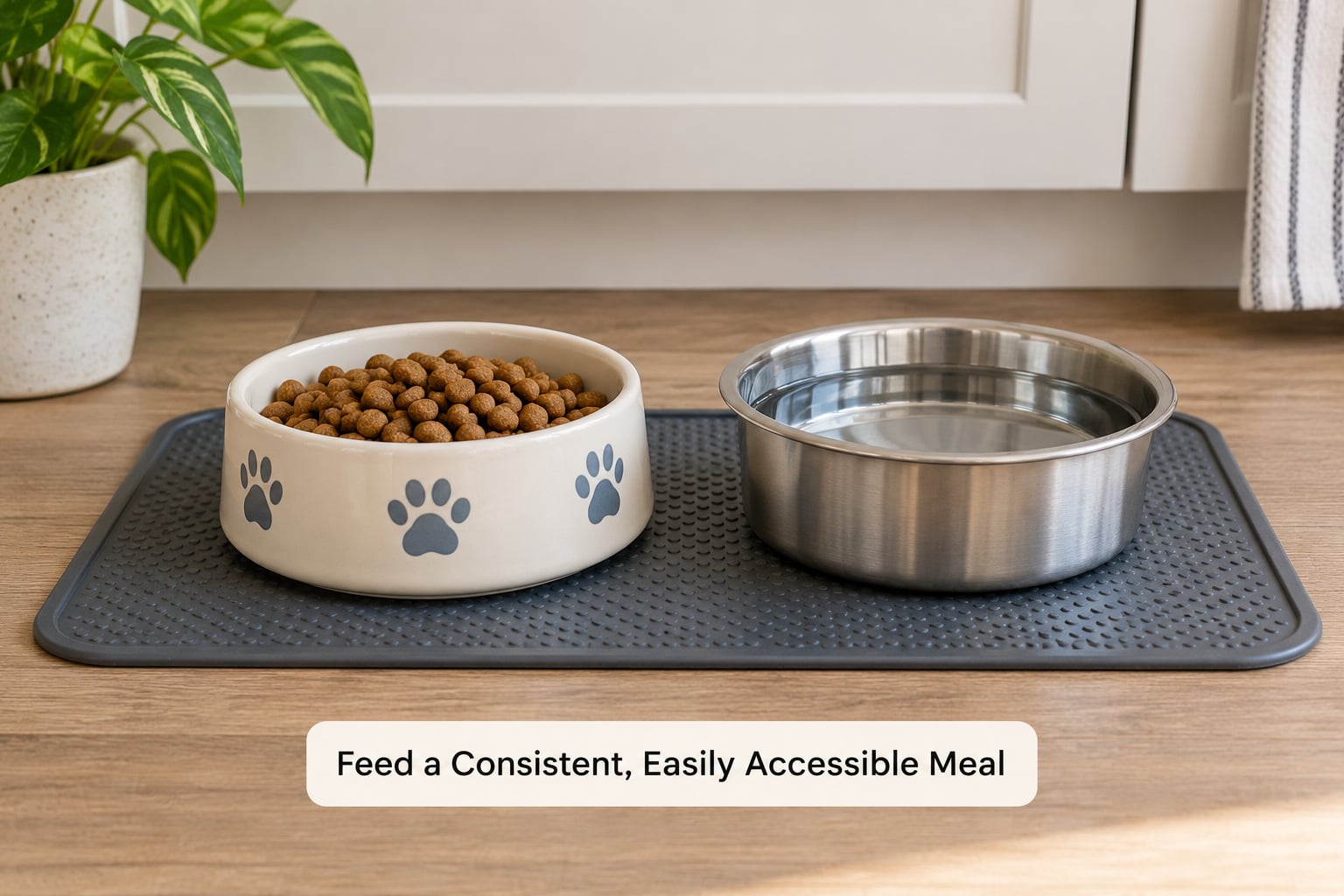
Serve the food your dog already eats, in the same quiet spot, at the same time. Use a measured portion unless your veterinarian has prescribed otherwise, because aging dogs lose muscle faster than owners expect and a few extra calories show up as joint strain.
Most older dogs do better with the daily amount split into two or three smaller meals. Softer, warmed food or a small amount of warm water mixed in solves the most common complaint I hear, which is an old dog turning away from dry kibble. An elevated bowl helps some dogs, but it is not automatically better for everyone, so try it and watch.
Reduced appetite, chewing difficulty and outright refusal are symptoms, not preferences. A refusal that lasts more than a day, or comes with weight loss, warrants a veterinary visit. And never give human medication or an unapproved supplement. Ibuprofen, acetaminophen and similar drugs are dangerous to dogs, and what helps a human joint is dangerous to theirs.
4. Provide Gentle Movement at the Dog’s Comfortable Limit
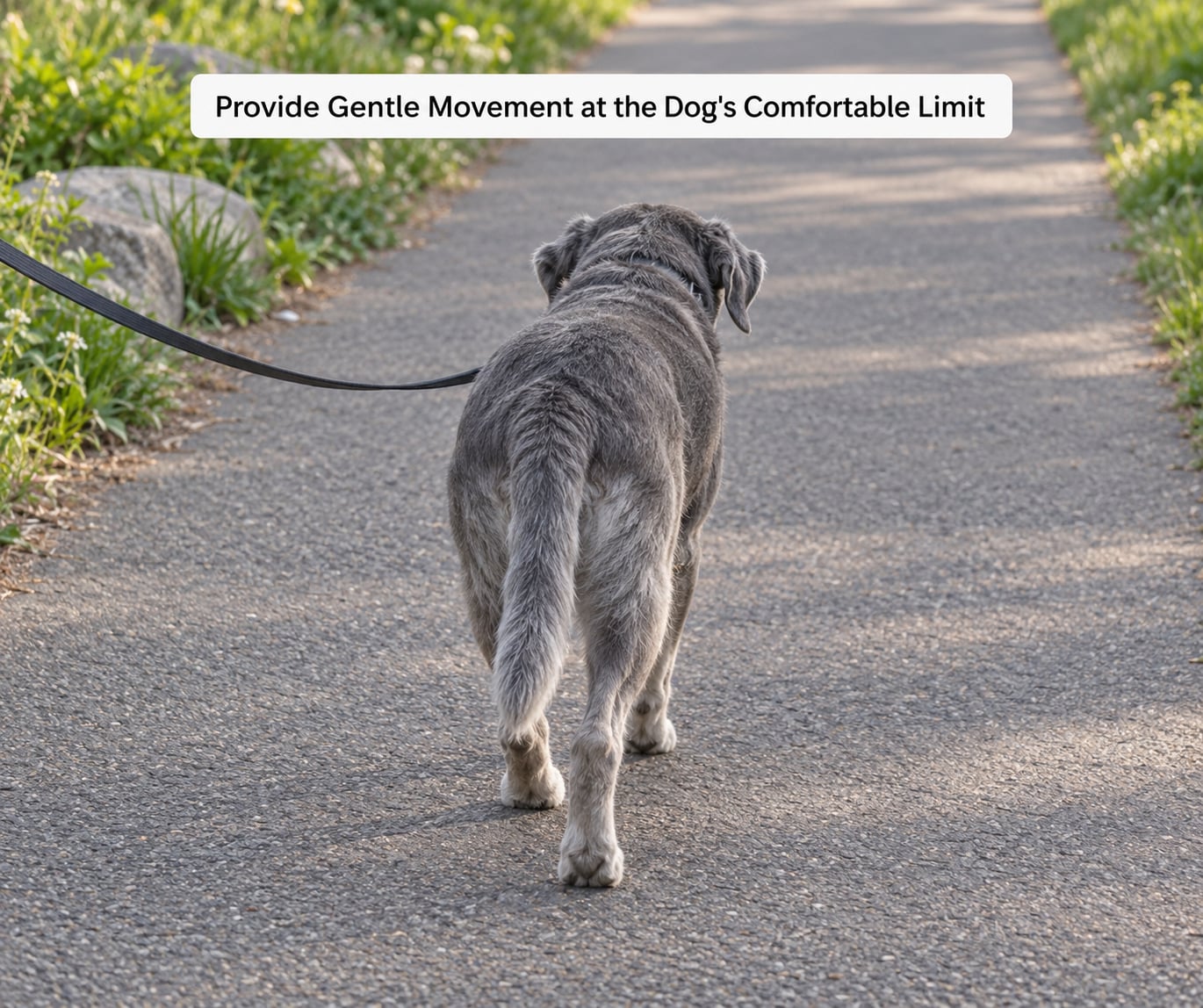
Most senior dogs do best with two or three short walks of five to ten minutes instead of one long outing, spread across the day. A slow leash walk counts. So does a sniff-heavy route, where the dog stops and smells at its own pace, because that mental work loads the muscles differently than distance does.
Build in a warm-up and a cool-down. Two minutes of slow leash movement or gentle range-of-motion handling before the walk, and a slower pace at the end, keeps joints comfortable. Start on level, non-slip ground and avoid steep hills and stairs.
Stop when you see lagging behind, a stiff gait, heavy panting, hesitation to continue, or a dog who looks back at you instead of ahead. Those are your signals, and the routine is working when the dog still walks the next day at the same pace. Arthritis, heart disease and other conditions mean the exercise plan needs your veterinarian’s sign-off, not a guess.
5. Add Mental Enrichment Without Requiring Heavy Exercise
A dog who cannot walk far still needs a working brain. Scent searches, a food puzzle, a snuffle mat, a short training game with treats, or the same familiar toy in a new spot all count, and they cost nothing but a few minutes.
Adapt for what has changed. Place a scent game on a non-slip surface so the dog does not have to balance. For reduced vision, keep the same floor spot every day so it is found by memory. For hearing loss, reward with a visible hand signal. For stiff joints, put treats within reach rather than asking for a sit or a down.
End the session while the dog is still enjoying it. Stop before frustration sets in, keep sessions in the cool part of the day, and watch for panting or restlessness that says the dog has had enough.
6. Create a Safe, Comfortable Rest Area
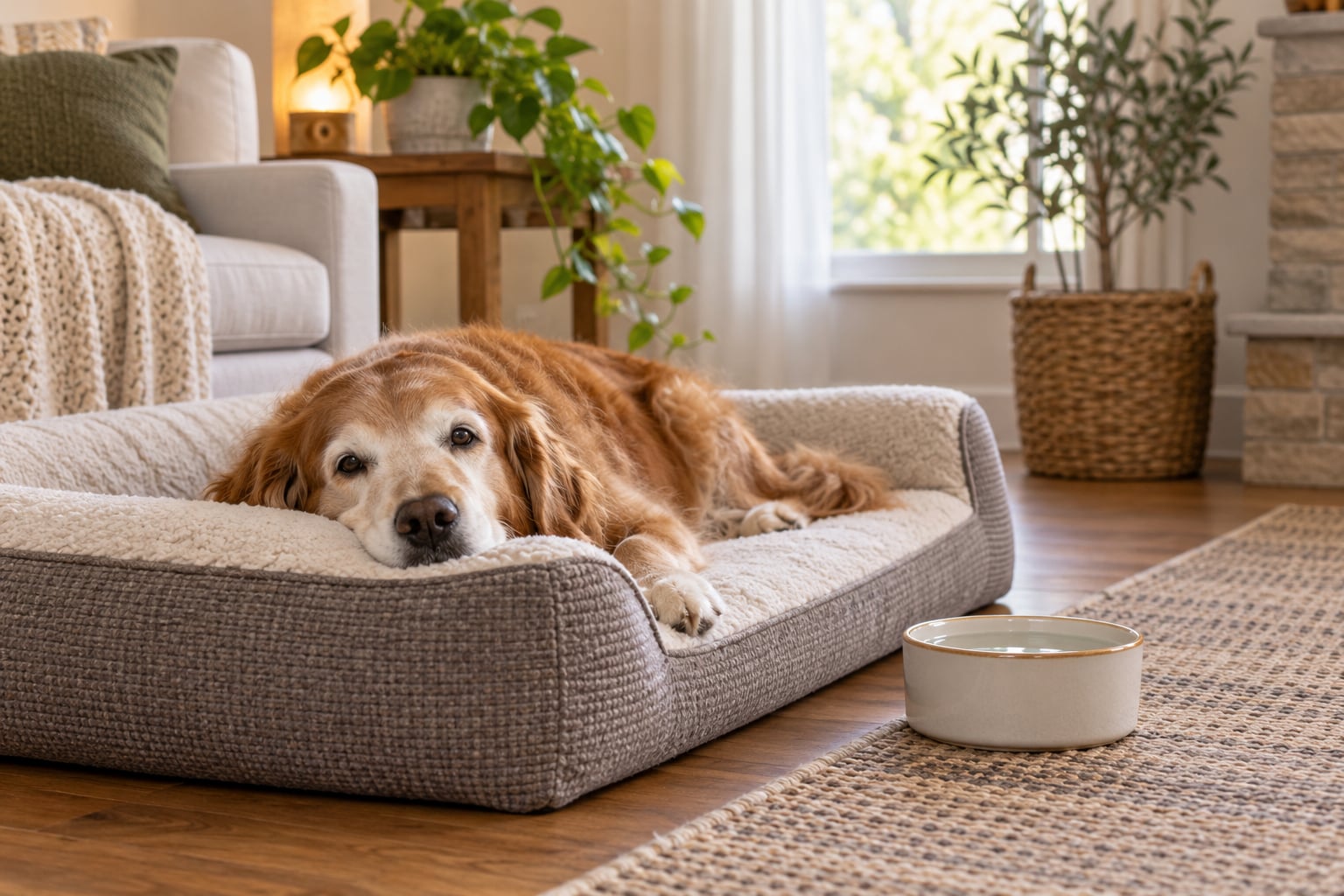
Pick one resting spot and make it good. A supportive orthopedic-style bed with a firm edge lets a stiff dog push itself up without launching into a fall, and a low profile means fewer stairs down at night. Keep water, food and the route to the bathroom within easy reach.
Walk the house and look for hazards: slippery tile by the bowl, a rug edge that catches a paw, stairs with no gate, cords to trip over. Runners and foam mats on the paths the dog uses daily fix most of this in an afternoon. Keep temperature steady, since older dogs feel cold and heat more sharply.
Daytime rest should be genuinely quiet. No visitors, no doorbell, lights dimmed. Sudden restlessness or an inability to settle usually points to pain, discomfort or illness rather than boredom, and that is worth reporting to your veterinarian.
7. Review Medication, Movement and Safety During the Day
Keep a short midday checklist on the fridge: prescribed medication given, water refreshed, bathroom opportunity offered, activity matched to the morning’s energy, and anything unusual written down. Five ticks takes about a minute.
Only a veterinarian should diagnose, prescribe, stop or change medication, including supplements. If a dose is missed, or your dog vomits after one, or you notice sleepiness, appetite changes or stomach upset, follow your veterinarian’s written instructions rather than improvising a second dose.
The log matters more than people expect. A short note each evening, covering appetite, energy, toileting, sleep and any medication reaction, gives your veterinarian a real picture instead of a vague memory at the next visit.
8. End with a Calm Evening Check and Overnight Plan
Offer a final bathroom trip after the evening meal, then give any evening medication exactly as prescribed. One short, gentle outing or a few minutes of sniffing is enough; skip the excited games. Dim the lights early and keep the household noise down so the dog settles while it is still light outside.
From there, observe rather than hover. Note breathing, posture, restlessness, thirst and toileting. If the dog paces, vocalises or cannot settle in the dark, try a low night light along the path to the door, a familiar blanket, and a quiet room that is easy to move through in the middle of the night.
Some senior dogs need a bathroom break overnight, so decide now where it happens: a night light leading outside, a padded area near the bed, or a door held ajar. Working that out at 2 a.m. in the dark is harder than planning it now. You know the evening plan is right when the dog is asleep before the household turns down, and stays asleep.
Common Mistakes
Most problems with a senior dog routine come from changing too much at once, or from waiting for a sign that should have sent you to the phone. These are the ones I see most.
Rewriting the whole day in one go. A new wake-up time, new meal times and new walk route in the single same week leaves an aging dog disoriented and anxious. Shift one block at a time over a couple of weeks.
Pushing exercise through pain. A limp that looks like enthusiasm to an owner is often a sore hip. If the dog lags behind, sits down mid-walk, or stiffens the next morning, shorten the walk and tell your veterinarian.
Switching to a new diet on your own. Senior formulas exist, but what a dog needs depends on kidney, liver, dental and weight status. Change food after a veterinary conversation, and change it slowly over a week.
Using human pain medicine. This is the most dangerous item on the list. Ibuprofen, acetaminophen, naproxen and similar drugs can cause serious harm in dogs. Call a veterinarian instead.
Letting hydration slide. Water bowls go stale and quiet. Refill them twice a day, and offer a bathroom opportunity after drinking, since some older dogs hold urine longer than they should.
Leaving slippery floors bare. One bad slip on laminate can turn into an injury that takes months to recover from. Runners and mats cost little and prevent the most common household accident.
Assuming slower is normal. Age explains gradual slowing down. It does not explain a new limp, a change in breathing, a dog that will not lie down, or confusion that appears over days. Sudden change deserves a call.
Ignoring night-time changes. New pacing, vocalising or accidents at night can point to pain, bladder problems or cognitive dysfunction syndrome. Ask about it at the next visit, or sooner if it is frequent.
Two habits fix most of the above. Track symptoms in writing daily, so gradual change becomes visible instead of debatable. And keep the routine boringly consistent, because that consistency is what makes your dog feel safe and what makes a problem noticeable when it appears.
Frequently Asked Questions
At what age is a dog considered senior?
It depends mostly on size. Small breeds are often senior around 10 to 12 years, medium breeds around 8 to 10, large breeds around 6 to 7, and giant breeds as early as 5 to 6. These are guidelines, not cutoffs, and a large dog showing signs at five deserves attention. Ask your veterinarian what age range to watch for based on your dog’s breed and size.
How much exercise should a senior dog get every day?
Most older dogs do best with two or three short walks of five to ten minutes each, spread across the day, rather than one long outing. Include a slow warm-up and cool-down on level, non-slip ground. Stop if the dog lags behind, stiffens, pants heavily or hesitates to continue. Your veterinarian should set the limit if your dog has arthritis, heart disease or joint problems.
What should I do if my senior dog has a reduced appetite?
Start by looking for a reason rather than offering treats. Dental pain is a common cause of an older dog refusing dry food, and softening or warming the meal often helps immediately. Reduced appetite can also come from nausea, constipation or illness. A refusal lasting more than a day, or any weight loss, needs a veterinary appointment, and new foods or supplements should be discussed first.
Can I give my senior dog human pain medication or supplements?
No human pain medication, including ibuprofen, acetaminophen and naproxen. Several are toxic to dogs and can cause serious liver, kidney or stomach damage. Supplements such as glucosamine, chondroitin, omega-3 fatty acids or SAMe may be appropriate, but only with your veterinarian’s guidance, because they interact with conditions and medications. Never add anything to your dog’s routine without that conversation.
When should changes in a senior dog’s urination or bowel movements be treated as urgent?
Repeated unproductive attempts to urinate, straining, sudden loss of bladder control, blood in the urine, severe constipation, no stool for more than a day, or any accident in a dog that has been reliable all count as urgent. Call your veterinarian the same day. These can point to a urinary obstruction, kidney disease, dehydration or pain, and waiting often makes the outcome worse.
How can I tell whether my dog’s daily routine needs to change?
Write down appetite, energy, toileting, sleep and mood every evening for a couple of weeks, then compare. A steady trend that flattens out is normal aging; a sudden change over days is not. Watch for a new limp, difficulty rising, refusal of familiar food, heavier breathing, disorientation or new night-time pacing. Share those notes with your veterinarian, who can judge whether the routine or the health needs adjusting.
Conclusion: Start with the Morning Check
Learning how to care for a senior dog’s daily routine comes down to a routine your dog recognises. Toilet first thing, water always within reach, a measured meal in the usual spot, two or three short walks, a comfortable bed, and a quiet evening with the lights dimmed early.
Start tomorrow with the first piece. Choose one wake-up time, keep water and the measured meal easy to reach, take a short comfortable walk, and write down anything that looks different in mobility, appetite, toileting or behaviour. Those notes are what turn a guess into a conversation your veterinarian can act on, and they catch pain, dental trouble and kidney changes while there is still time to treat them.
Slowing down is not the same as being unhappy. With a steady routine and a veterinarian guiding the medical side, an aging dog can still have good days, and a lot of them.