The method that works is gradual desensitization: you leave for a few seconds, come back before your dog shows any sign of stress, then add time only while he stays calm. Punishing the barking, shutting him in a crate for the workday, or stuffing a puzzle toy on the way out tends to backfire.
Expect weeks of short, boring repetitions rather than an overnight fix. Below is the whole plan: what to gather first, six steps that take you from the first signs of distress to leaving for a full day, the mistakes that cost owners weeks of progress, and when a veterinarian should take over.
Every dog moves at a different speed. Treat the timings here as a map, not a deadline, and let your dog’s behavior decide how fast you climb.
Table of Contents
- What You Need
- Step-by-Step: How to Help a Dog With Separation Anxiety
- Step 1: Identify the Signs and Triggers of Distress
- Step 2: Build a Calm Home Routine Before Training
- Step 3: Leave for a Few Seconds and Return Early
- Step 4: Gradually Increase the Time Away
- Step 5: Make Departures Calm and Predictable
- Step 6: Add Longer Absences Without Regression
- Common Mistakes
- Frequently Asked Questions
- Will my dog’s separation anxiety get worse over time?
- How long does it take to fix separation anxiety in a dog?
- Should I crate a dog with separation anxiety?
- When should I use a camera or pet sitter during training?
- How do I stop my dog barking or destroying things when I leave?
- Conclusion
What You Need
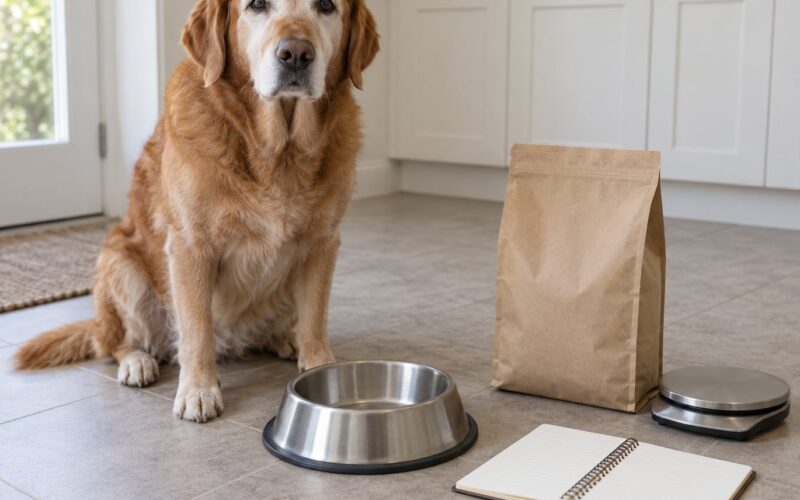
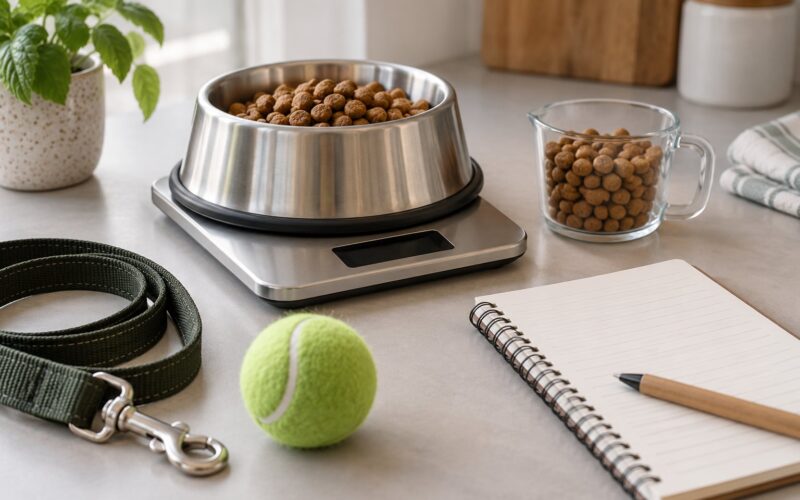
Six things, and most of them are free. Having them ready before the first repetition saves you from improvising halfway through a session.
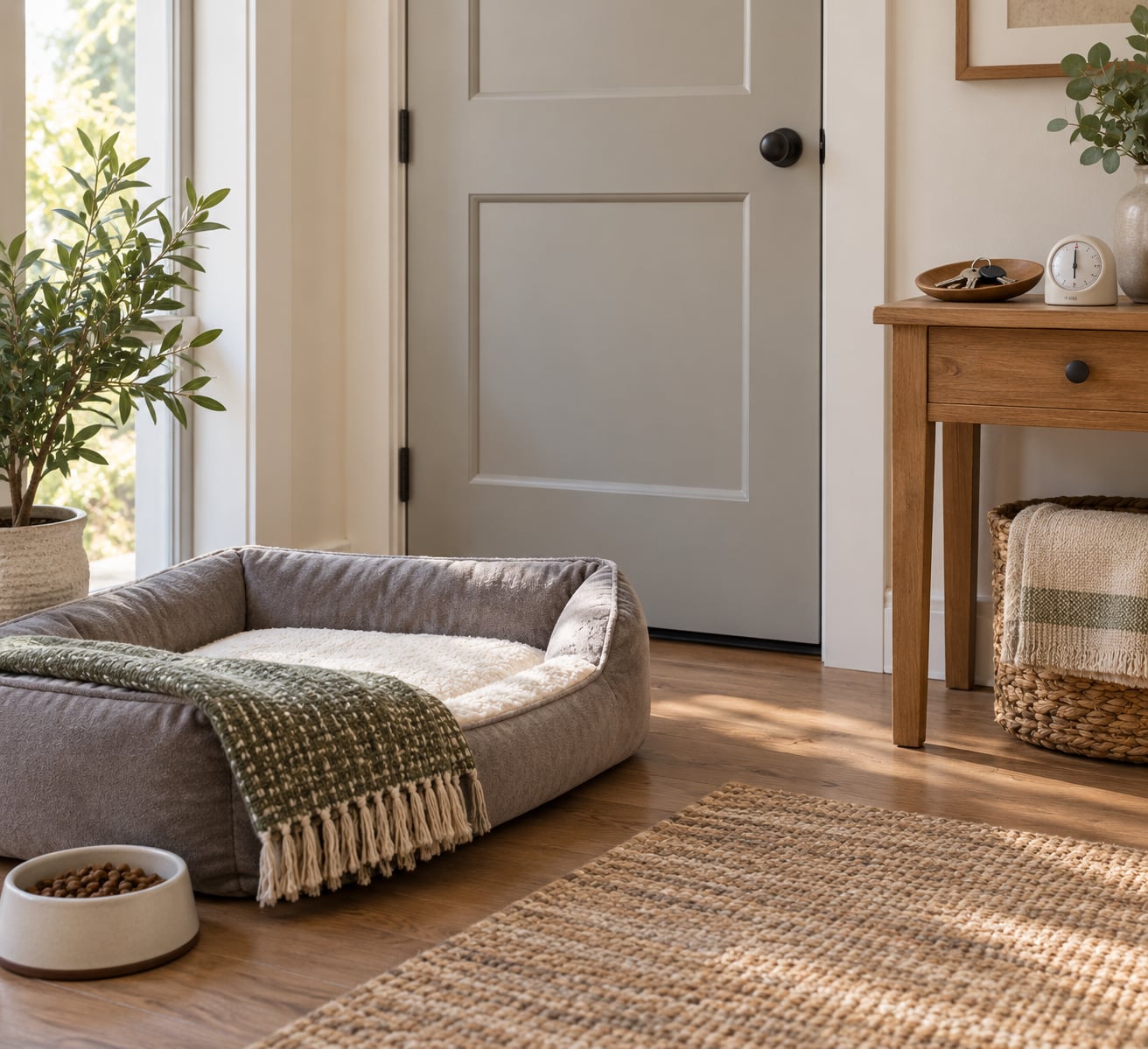
- A safe, quiet room. A spare bedroom, the bathroom, or a corner of the living room the household barely uses. Not a crate, not a kennel.
- Short absences you can supervise. Five or six brief trips spread through the day beat one long one.
- High-value treats. Something soft, smelly and unusual, kept only for training. Liver, cheese or a smear of peanut butter on a lick mat work well for most dogs.
- A record of progress. A notebook or a phone note: date, length of the absence, cues you used, what the dog did while you were gone. This is how you know whether you are moving forward or spinning in circles.
- A camera or a second person. Your phone on a stand, or a helper who can watch and text you what happened.
- Access to a veterinarian. For a health check and, later, for medication decisions.
One note before you start: this is general guidance about behavior and routine. It is not a diagnosis, and it does not replace a plan from your vet or a qualified behavior professional.
Step-by-Step: How to Help a Dog With Separation Anxiety
Step 1: Identify the Signs and Triggers of Distress
Start by knowing what distress actually looks like in your dog. The usual signals are pacing, whining, barking or howling, panting and drooling, scratching at the door, refusing food, house-soiling, and chewing at furniture, baseboards or window blinds.
Some dogs scratch until their claws bleed. That is a panic symptom, not stubborn chewing, and it needs faster help than the mild end of the scale.
Then find the trigger. It is rarely the door itself. Many dogs react to the cue minutes earlier: the alarm going off, the keys, shoes going on, the sound of a bag being packed, the jingling of a coat zipper.
For one week, write down three things after every departure: what happened in the two minutes before, what happened while you were gone, and what happened in the first two minutes after you got back. Patterns jump out within days, and those patterns are what you desensitize to.
Step 2: Build a Calm Home Routine Before Training
A dog that spends the day switching between chaos and excitement has nothing left to give you at 9 a.m. Regular meals at fixed times, a morning sniff walk, a proper toilet break before you leave, and a predictable daily rhythm give him a calmer baseline to work from.
Skip the frantic game of fetch in the ten minutes before a departure. High arousal carries over, and an excited dog finds it much harder to settle once the door closes. A calm ten-minute sniff is better than twenty minutes of sprinting.
Owners who ask how to help a dog with separation anxiety often overlook this step and go straight to the door. The routine is the foundation the later steps stand on, so give it a couple of weeks before you judge anything.
Step 3: Leave for a Few Seconds and Return Early
Your first exercises happen while you are still in the house. Sit down, pick up your keys, put on your shoes, walk to the far end of the room or step out the front door, wait three seconds, and come straight back.
The entire goal is to be back before distress starts. Three seconds is not a joke; it is the exact size of a piece of work your dog can actually succeed at. If he looks up and stays calm, that is a successful repetition.
Keep exits neutral and returns boring. No lingering at the door, no last hug, no loud greeting when you come back in. Emotional goodbyes teach a dog that leaving is a big event, and a big event is exactly what he is trying to avoid.
Step 4: Gradually Increase the Time Away
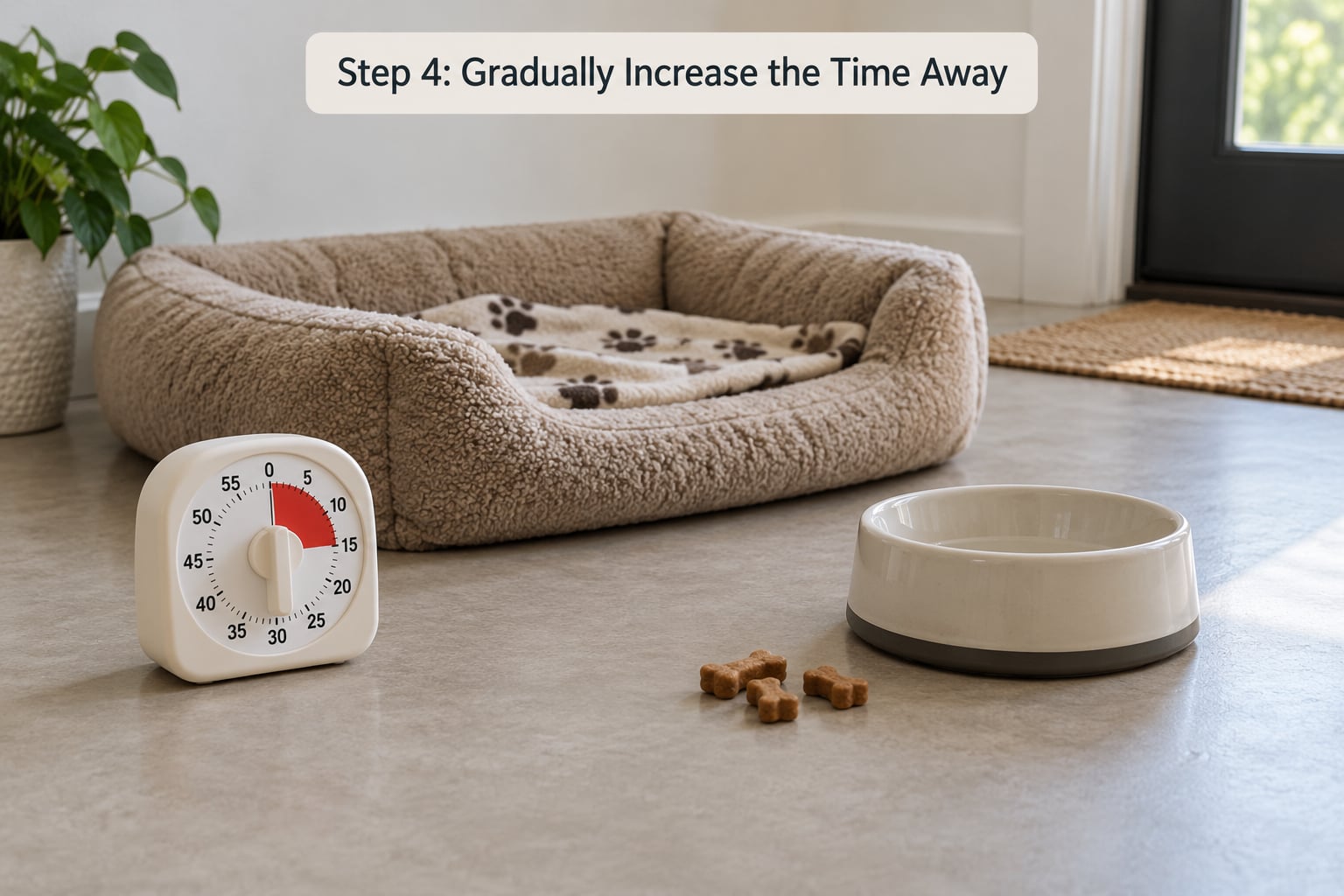
Build the ladder slowly: three seconds, thirty seconds, one minute, three minutes, five, ten, twenty, thirty, then an hour, then half a day, then a full workday.
Step up only after two or three calm repetitions at the current level. Calm means no barking, no pacing at the door, no whining, no scratching, and ideally a dog who settles within a minute or two of you returning.
If he does not settle after you come back, step down one rung and stay there for a few days. Backing up feels like failure, but it is how you find the level where he can genuinely relax.
Once you move past the door, a camera becomes the most useful tool you own. Set your phone up, start recording, leave, and review the footage when you get back. Owners are frequently surprised by how much barking starts in the first thirty seconds, and by how quickly it stops.
Step 5: Make Departures Calm and Predictable
One exit, low key, no looking back. The most common habit that keeps a dog anxious is the owner sneaking back to check on him two minutes after leaving, which restarts the whole clock.
Be careful with food. Tossing treats through the doorway works beautifully for some dogs because it gives them something to do. For many others it backfires: the treat becomes a predictor, and within a couple of weeks your dog hears the treat hit the floor and starts panicking before you reach the door.
Test it honestly. Do a few departures with no food at all, then a few with, and compare your recordings. If the food sessions look worse, drop it.
Desensitize the cues in a separate mini-protocol. Pick up the keys, wait for calm, treat, and sit back down. Repeat five or six times a day for about a week. Then do it with shoes, then the alarm, then the bag. You are teaching your dog that the whole departure sequence predicts nothing.
Step 6: Add Longer Absences Without Regression
Once he handles a couple of hours, start varying things. Leave at unusual times instead of only at 9 a.m. Use a different door or the back entrance. Mix durations inside a single week rather than climbing one ladder forever.
Watch for regression, because it is normal and it is not the end. Barking within a minute of your leaving, panting at the door, destruction, or taking much longer than usual to settle all mean you have pushed too fast. Drop back a level, repeat it until it is boring again, then move up.
A good end state looks unglamorous: your dog settles, eats, chews, sleeps, and greets you without drama. A second dog does not fix this. It often makes it worse, because the anxious dog follows the calm dog to the door and both end up distressed.
Common Mistakes
Most stalled training is not a training problem. It is one of these.
- Scolding the barking after you get home. Your dog cannot connect that with the absence he cannot control. What he learns is to hide the signs, which makes your camera work harder. Fix: review footage instead, and praise calm in the moment.
- Leaving for eight hours before training starts. Fix: suspend long absences entirely. Arrange a sitter, a midday walker or daycare for the first few weeks. This is the single biggest cause of owners giving up.
- Repeated dramatic departures. Long goodbye, three trips back to the door, hovering. Fix: one exit, walk out, stay out.
- Increasing time too quickly. Fix: two calm repetitions before every step up, and never more than one step per week once you pass a few minutes.
- Crating an anxious dog. Confinement adds stress rather than removing it. Fix: free roam in a safe room with a bed, or train a simple place cue such as a mat with a treat on it.
- Flooding. Repeatedly leaving for long stretches to “get it out of his system” teaches panic, not endurance. Fix: flood the opposite way, with many tiny successful repetitions.
- Buying a quick fix. Gadgets, sprays, collars and supplements marketed as instant cures rarely change the underlying association. Fix: spend that money on a certified trainer instead.
A few shorter notes. The 3-3-3 rule you hear about (three days, three weeks, three months) is an adjustment benchmark for a new home or a new routine, not a treatment protocol for separation anxiety. Rescue dogs are frequently the highest-symptom group, because their previous household sometimes disappeared suddenly. Older dogs that have suddenly started pacing at the door deserve a vet visit, since pain and cognitive changes can look like anxiety. If your dog is fine when your partner leaves but frantic when you do, that is a specific attachment pattern worth describing in detail to a professional. And if the barking is bringing complaints from neighbors, tell them what you are working on; most people will hold on for a few months.
Frequently Asked Questions
Will my dog’s separation anxiety get worse over time?
Left untreated, it often does. What starts as a few minutes of whining can grow into hours of barking and chewing, and repeated long absences teach your dog that the only way to escape is to destroy things. Many dogs are surrendered or returned to shelters over separation distress, so treating it protects both the dog’s body and its home. Starting with short, calm repetitions early is far easier than repairing a year of escalation later.
How long does it take to fix separation anxiety in a dog?
Mild cases often improve within four to eight weeks of consistent short repetitions. Moderate cases usually take several months, and severe cases with escape behavior or self-injury often need a professional plan plus medication and take a year or more. Progress is uneven, and a bad week is common. What speeds it up most is never jumping ahead of your dog’s threshold, because one bad absence can undo weeks of calm work.
Should I crate a dog with separation anxiety?
Usually no. A crate adds confinement on top of the stress of being left alone, and many anxious dogs scratch at the door until they injure their paws or nose. A small, safe, familiar room with his own bed, water and something to sniff is a better setup. If your dog already loves his crate, use it, but never introduce one as a punishment and never leave him in it for a full workday while you are still training.
When should I use a camera or pet sitter during training?
Use a camera as soon as you leave the room, because you cannot see what starts after you close the door. It also gives you an honest picture of when he actually settles. A sitter or midday walker is for the practical gap: if your workday is eight hours and your dog can only manage twenty minutes so far, you need cover until he gets there. Filling the gap keeps him safe and keeps you from rushing the training.
How do I stop my dog barking or destroying things when I leave?
You do not stop it in the moment; you change what the absence predicts. Start by suspending long departures, then work up the ladder in small steps and return before distress begins. Barking that starts only when you leave is not a training problem you can scold away. If the barking or destruction is intense, accompanied by self-injury, or sudden in a dog that was fine before, talk to your veterinarian and ask about a certified separation anxiety trainer or a veterinary behaviorist.
Conclusion
Start smaller than feels useful today. Pick your dog’s mildest trigger, step out of the room for three seconds, and come back before anything changes on his face. Do that a few times a day, boring and quiet, for a week before you touch a longer absence.
Then add time only while he stays settled, and keep a record so you can see the trend instead of relying on memory. Patience and gradual progress beat punishment every time, and a dog who learns that alone time is boring is a dog who gets to keep his home.
Call your veterinarian when the distress is severe, when there is self-injury or damage to escape, when it comes with illness or injury, or when it appears suddenly in an older dog. Your vet can rule out pain and discuss whether anti-anxiety medication, such as fluoxetine for longer-term use or trazodone for specific situations, would let your dog train comfortably. Never give a dog human medication, and never add anything to his diet without asking a vet first.