The signs of heat stroke in dogs and first steps are straightforward: heavy panting that will not settle, thick sticky drool, bright red or pale gums, weakness, vomiting, wobbling, and eventually collapse. Move the dog somewhere cool, start cooling with cool tap water and moving air, and call an emergency vet while you work.
This is a veterinary emergency. Do not wait for the signs to get worse before you dial, because the call takes a minute and you can make it on speaker from the car. Home first aid buys time and slows the damage; it does not replace an examination.
One thing worth knowing up front: dogs have almost no sweat glands, so they shed heat almost entirely by panting. That works until it does not. Once the air is hot and humid, or the dog is in a parked car, or has just finished hard exercise, panting can no longer keep pace and the body temperature climbs fast. If you want the mechanics, a vet, or how long recovery takes, the FAQ at the end covers those.
Table of Contents
- What You Need Before You Start
- Step-by-Step: Signs of Heat Stroke in Dogs and What to Do First
- Step 1: Recognize the warning signs of heat stroke in dogs and call a veterinarian
- Step 2: Move the dog somewhere cool and stop further heat exposure
- Step 3: Begin gradual cooling with cool, not icy, water
- Step 4: Monitor breathing, alertness, and gum color
- Step 5: Transport the dog promptly and follow the veterinarian’s instructions
- Common Mistakes When Helping an Overheated Dog
- Waiting to see if the dog collapses
- Using ice, ice packs or an ice bath
- Pouring or syringing water into a vomiting or disoriented dog
- Continuing the walk or the game
- Giving human pain relief or anti-fever tablets
- Assuming it is just a hot dog being a hot dog
- Frequently Asked Questions
- How can I tell if my dog is overheating rather than just panting?
- Should I give my dog water if I suspect heat stroke?
- Can I use ice or an ice bath to cool my dog?
- How long should I cool a dog with suspected heat stroke?
- Can a dog recover from heat stroke at home?
- When should I take my dog to an emergency veterinarian?
What You Need Before You Start
You will not have time to gather a lot. Everything on this list should already be within a minute’s reach in a home, a car, or a garden, and none of it is a reason to postpone the phone call.
- A phone with the number ready. Your regular vet if you have one, plus the nearest 24-hour emergency clinic. Put both in your contacts under names you can find one-handed.
- Cool drinking water. Tap water is the right temperature. No ice, no freezer bottles.
- Two or three towels. Any fabric that holds water works, including a tea towel or a pillowcase.
- A fan, or any way to get moving air across a wet body. A hair dryer on cool is fine for paws and the belly.
- Access to shade or air conditioning. A tiled or concrete floor indoors is much better than a carpet in a conservatory.
- A rectal thermometer if you own one. Useful, not essential, and never a reason to delay the call.
- A way to transport the dog without making them walk, plus a second person if one is available to drive while someone watches the dog.
Preparation is not the job. First aid is. If you suspect heat stroke, call the clinic first and gather what you need while the line is ringing.
Step-by-Step: Signs of Heat Stroke in Dogs and What to Do First
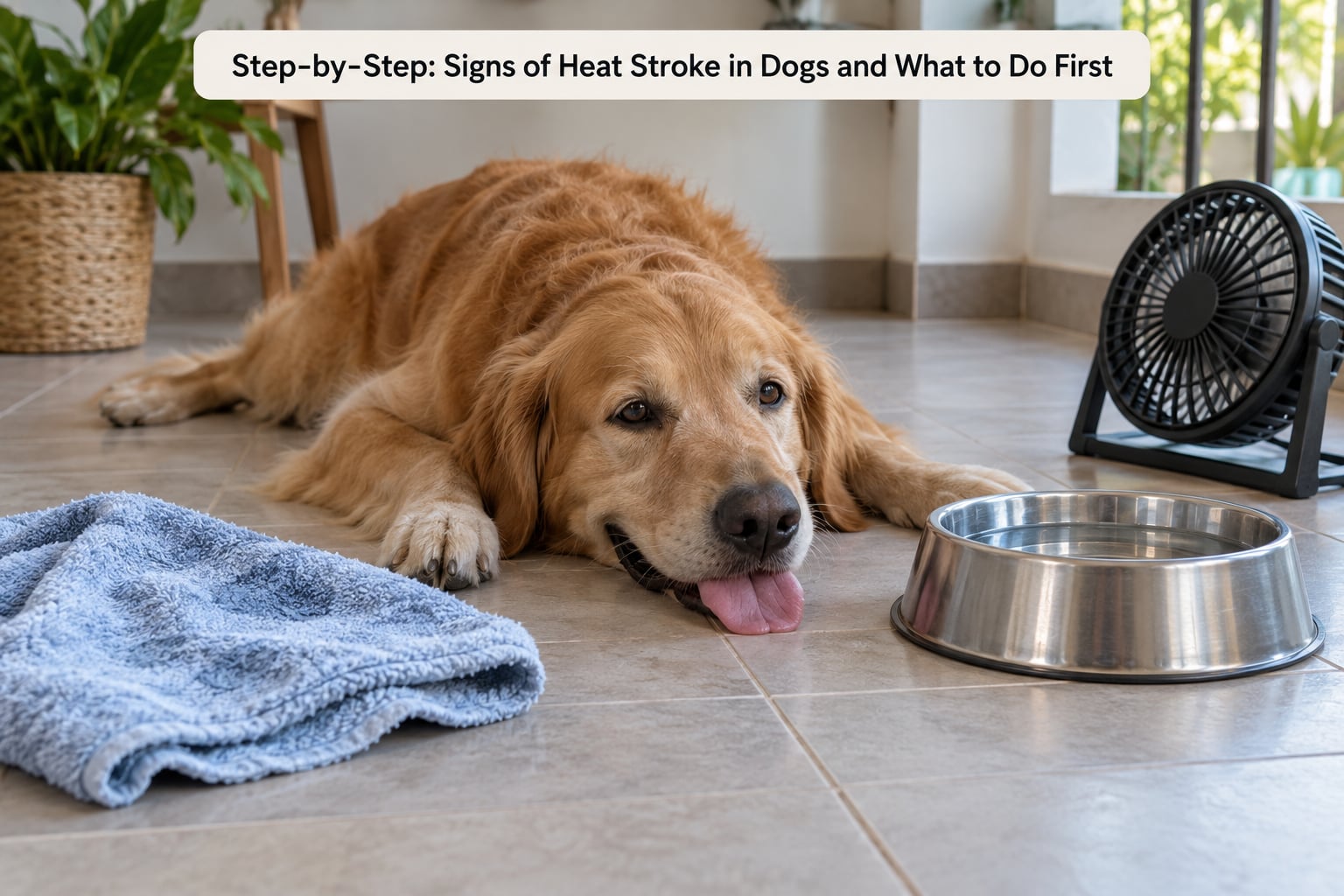
Step 1: Recognize the warning signs of heat stroke in dogs and call a veterinarian
Call your vet or the nearest emergency clinic and say the word heat stroke. Say what the dog was doing: exercise, a car, hot pavement, a warm house. Beats go faster when the clinic is ready for you.
The early signs to look for:
- Very heavy or unusually rapid panting
- Thick, sticky drool rather than normal watery drool
- Bright red, very pale, bluish or bruised gums
- Rapid breathing and a racing heart
- Weakness, heavy limbs, a wobbly or uncoordinated gait
- Drooling and vomiting, sometimes with blood
- Glazed eyes, confusion, disorientation, seeming not to know you
- Restlessness that turns into dullness and lethargy
Then the severe signs. Slower or irregular breathing, repeated vomiting or bloody diarrhoea, tremors or muscle twitching, seizures, collapse, unconsciousness, and gums that look bruised or grey. Any one of these and you stop reading and go.
There is a quick test most people find reassuring. Sit the dog in shade with water for five minutes. Ordinary summer panting eases noticeably in that time. Panting that stays frantic, with drool turning sticky or gums changing colour, is not ordinary panting, and that difference is the whole decision.
If you also want a number, a rectal temperature gives you one: normal adult dogs sit around 101 to 102.5°F (38 to 39.2°C), heat stroke is generally treated as anything above 104°F (40°C), and readings above 106°F (41°C) are critical, because that is where damage to organs and clotting becomes serious.
Here is the difference owners most often get wrong, because both look like a tired dog in summer:
| What you see | Heat exhaustion | Heat stroke |
|---|---|---|
| Onset | Gradual, over minutes of exertion or heat | Can collapse within minutes of exposure |
| Mental state | Tired but responsive, knows you | Confused, glazed, disoriented, unresponsive |
| Drool | Watery, normal for a hot dog | Thick, sticky, sometimes foamy |
| Gums | Normal pink | Bright red, pale, bluish or bruised |
| What to do | Move to shade, cool slowly, offer water, monitor closely | Emergency vet now, cool during transport |
Owners tell me the same thing after a scare: they wish they had known how small the gap is between the two columns. Treat anything on the right-hand side as a reason to drive, not a reason to observe.
Step 2: Move the dog somewhere cool and stop further heat exposure
Get the dog out of the heat immediately. Out of direct sun, out of the vehicle, out of the hot room, and into shade or air conditioning. Do not wait to see whether panting slows down first, because every minute in the heat is another minute of rising temperature.
If the dog can still walk, guide or carry them. If the dog is weak, staggering or collapsed, lift and carry them flat, supporting the chest and the back end, because the legs may give out mid-move. Stay with the dog after they are settled, and keep the room as quiet as you can, since panicked dogs generate more heat through muscle movement.
Move the water bowl with them. A dog that will drink on its own after ten minutes of rest is a much better sign than a dog that is still frantic once the movement stops.
Step 3: Begin gradual cooling with cool, not icy, water
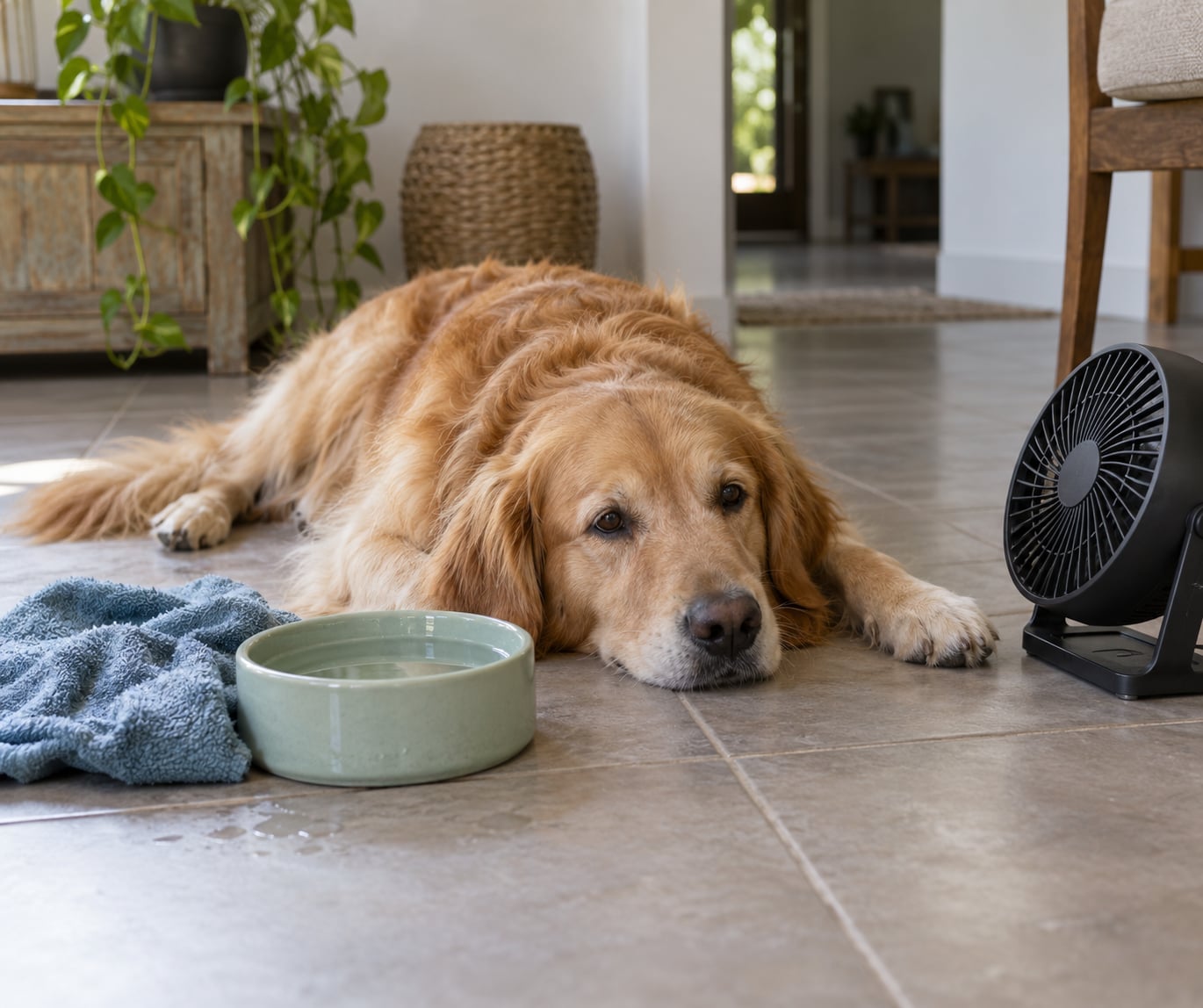
Soak a towel in cool tap water and lay it over the body, or pour cool water slowly over the areas that lose heat fastest: the belly, the paws, the armpits, the groin and the underside of the neck. Wet, cool towels beat cold towels.
Point a fan at the wet skin. Moving air across wet fur pulls heat off the body, which is the same principle a dog relies on with its tongue, just faster. Rewet the towels as they warm and keep the air moving.
Cooling the paws matters more than owners expect. Paws sit on hot asphalt and stone, and cool blood moving back up from them tells the body it can stop generating more heat.
Now the part people get wrong. No ice, no ice bath, no freezer pack applied directly to the skin. Cold water constricts the blood vessels at the surface, which reduces the heat the body can shed, and a chilled dog may start shivering. Shivering is heat production, and that pushes the temperature back up right after you worked so hard to bring it down. Cool and gradual beats cold and fast every time.
There is also a stop-rule. Aim to bring the dog back down toward normal, not below it. Stop active cooling if the dog starts shivering or shaking, or if the temperature on your thermometer enters the normal range. Overcooling is a real risk, and it is why cooling should never be the reason you sit at home longer instead of driving.
Step 4: Monitor breathing, alertness, and gum color
While you cool, watch the dog closely. Four things tell you the most: breathing rate, how responsive they are, gum colour, and whether they can stand.
Lift the lip and look at the gums every few minutes. Pink and moist is where you want to be. Bright red, pale, bluish or bruised means blood is not circulating the way it should, and you should say so on the phone to the clinic. Watch how breathing sounds. Loud, rapid breathing that slows as the dog cools is a good sign. Breathing that becomes slow, shallow or irregular is a serious one, and it is a reason to move faster, not slower.
Then the trap that catches experienced owners. A dog can start looking better, wag a bit, take interest in water, and still have heat stroke. The temperature may fall while the liver, kidneys and clotting system are already starting to fail, and that damage often shows up hours later, not now. Looking better is not the same as being safe, and it is not a reason to cancel the trip.
Step 5: Transport the dog promptly and follow the veterinarian’s instructions
Call ahead before you leave so the clinic can have a space, cooling equipment and fluids ready. Put the air conditioning on in the car before you lift the dog in, keep the journey short, and keep cooling going during the drive with wet towels and the fan on a low setting.
Take a mental note of what happened and when: how long the dog was exposed, whether there was exercise, what the temperature read, when the first sign appeared. Clinics use that history, and it takes ten seconds to remember and can change what they do on arrival.
Do not add home remedies on the way. No herbal remedies, no leftover medication, no second cooling technique you found at midnight. Never give human medication such as paracetamol, ibuprofen or aspirin, which are toxic to dogs. Follow the instructions the clinic gives you when you call, and let them take over from there.
Common Mistakes When Helping an Overheated Dog
Almost every avoidable death in this story comes from one of the following. Each has a straightforward fix.
Waiting to see if the dog collapses
The mistake is treating panting as a phase to watch rather than a sign to act on. The fix is to start cooling and make the vet call the moment you see heavy panting plus drool, gum change, or weakness, in that order. Waiting for collapse means waiting for the point where the damage is hardest to undo.
Using ice, ice packs or an ice bath
Cold on the surface narrows the blood vessels, reduces heat loss, and can set off shivering that produces more heat internally. Use cool tap water, wet towels and a fan instead, and stop cooling as the dog approaches a normal temperature rather than pushing the number down further.
Pouring or syringing water into a vomiting or disoriented dog
A dog who is vomiting, collapsed or confused may not swallow, and water can go into the lungs. Offer small amounts of cool water to a dog that is alert and able to swallow, and ask the clinic on the phone what they prefer, since some prefer to withhold water until the dog is settled.
Continuing the walk or the game
Exercising an overheating dog adds muscular heat to a body that is already losing the ability to shed it. Stop, move to shade, and do not resume until a vet has assessed the dog and given you a plan. A dog that overheated once heats up faster next time.
Giving human pain relief or anti-fever tablets
Paracetamol, ibuprofen and aspirin can cause serious liver and kidney injury in dogs, and the doses that people keep at home are not dog doses. There is no safe over-the-counter fix for a hot dog. Treatment belongs with the clinic.
Assuming it is just a hot dog being a hot dog
Regular panting settles within a minute or two of shade, water and a rest. It does not come with sticky drool, red or pale gums, vomiting or a dog who does not respond to their name. When in doubt, call. Emergency clinics would much rather hear from you at the early stage.
One more, on the emotional side. Owners who have been through this carry guilt for a long time, usually for the ten minutes before they noticed. Recognising the signs on paper before you need them is the only thing that reliably removes that feeling, which is why this guide exists.
Frequently Asked Questions
How can I tell if my dog is overheating rather than just panting?
Normal summer panting eases within a minute or two of rest, shade and water. Overheating shows panting that stays frantic, drool that turns thick and sticky, gums that look bright red, pale, bluish or bruised, plus weakness, vomiting or wobbling. A useful test is to sit the dog in shade with water for five minutes. Still frantic and drooling? Call a vet rather than watching further.
Should I give my dog water if I suspect heat stroke?
Offer small amounts of cool water to a dog that is alert and able to swallow, and keep a bowl nearby. Never pour or syringe water into the mouth of a dog that is vomiting, collapsed or disoriented, because water can pass into the lungs. Clinics differ on whether to withhold water until the dog is settled, so mention it on the phone and follow their preference.
Can I use ice or an ice bath to cool my dog?
No. Ice and ice-cold water constrict blood vessels at the skin, which reduces the heat the body can lose, and a chilled dog may shiver to generate more heat. Both push the temperature back up after you stop. Use cool tap water, wet towels and a moving fan, concentrating on the belly, paws, armpits, groin and neck, and stop before the dog drops below a normal temperature.
How long should I cool a dog with suspected heat stroke?
Most of the benefit comes in the first ten to fifteen minutes, and the goal is to bring the temperature back toward normal rather than to a specific number. Keep cooling while the clinic is arranged and during the drive, and stop if the dog starts shivering or the temperature enters the normal range. Never spend extra minutes cooling at home instead of leaving for the vet.
Can a dog recover from heat stroke at home?
Some mildly overheated dogs do recover at home, but you cannot tell at home whether you are looking at heat exhaustion or heat stroke, and heat stroke damages the liver, kidneys, heart and clotting system over hours rather than minutes. Owners who move the dog to shade or air conditioning, use wet towels and a fan, and go to the vet immediately report the most complete recoveries.
When should I take my dog to an emergency veterinarian?
Go now, without hesitating, if panting does not settle in shade, if the gums are bright red, pale, bluish or bruised, or if the dog is vomiting, disoriented, staggering, seizing or collapsed. A rectal temperature above about 104°F (40°C) is reason to leave immediately. Call the clinic while you are on the way so they can prepare, and keep cooling gently during the journey.
If your dog is showing any of the signs of heat stroke in dogs right now, do these three things in this order: move them into shade or air conditioning, start cooling with cool tap water, wet towels and a fan, and call your vet or the nearest emergency clinic on the way. Nobody regrets the call. Plenty of owners wish they had made it five minutes sooner, and reading this through once now is the cheapest insurance your dog will ever get.
This guide is general information and cannot judge your individual dog. Only a veterinarian can examine your dog, take an accurate temperature and decide what treatment is needed.