To stop a dog from jumping on guests, stop rewarding the jump: put your dog on a leash before the door opens, ask visitors to ignore him until all four paws are on the floor, and mark and reward that moment every single time. Most dogs need two to six weeks of short daily practice, and adult dogs with a long habit take longer.
Jumping up is not defiance. It is a greeting your dog has practised thousands of times, and it works because it gets exactly what he wants: your face, your hands, your voice. You are not training him to be bad. You are swapping one behaviour for another and paying for the new one.
The hard part is rarely the dog. It is the humans in the doorway, most of whom were told by their own grandmothers that jumping means happy, and who will pat your dog over your head while you are mid-sentence explaining not to.
So this plan spends as much effort on the room as on the dog.
Table of Contents
- What You Need
- Step-by-Step: How to Stop a Dog from Jumping on Guests
- 1. Choose a Calm Greeting Spot
- 2. Prevent Jumping Before Anyone Enters
- 3. Reduce the Doorbell and Guest Distraction
- 4. Teach Your Dog to Offer Four Paws on the Floor
- 5. Add a Person, Then a Longer Greeting
- 6. Practice With Real Visitors
- Common Mistakes and What to Do Instead
- Frequently Asked Questions
- Can I stop an adult dog from jumping on guests?
- How long does it take to stop a dog from jumping on people?
- Should I use a gate or leash to prevent jumping at the door?
- What should I do when my dog gets too excited around guests?
- How do I keep my dog from jumping after training has gone well?
- Conclusion: Start at the Door
What You Need
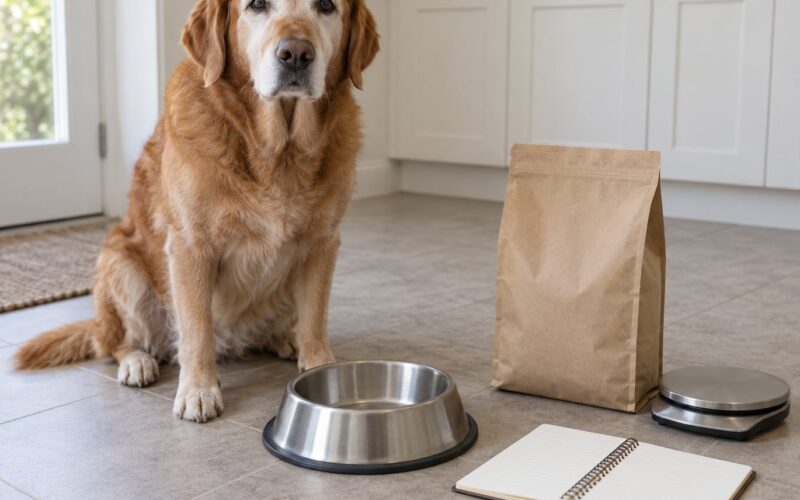
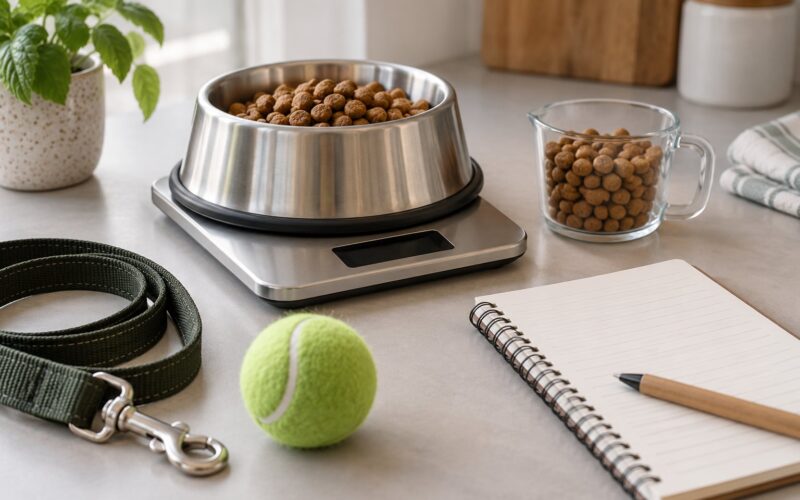
You need very little. That is the good news here, because almost everything people buy for this problem is a substitute for doing the boring part consistently.
- Treats or a treat pouch. Small, soft, and something your dog genuinely likes. A front-worn pouch keeps your hands free so you can hold the leash and manage the door.
- A secure leash and a well-fitted harness or collar. You will clip it on before the doorbell, not after.
- A helper. One person who will stand still and act like a visitor. Ideally a family member who can follow instructions.
- A mat, rug or bed. This becomes the designated spot where greetings happen. A doormat works.
- A clicker, if you like one. Optional. A word like “yes” marked sharply at the right instant does the same job.
Treats matter less than timing. A treat delivered two seconds late teaches nothing, while a stale biscuit delivered on the exact second your dog’s paws hit the floor teaches a great deal.
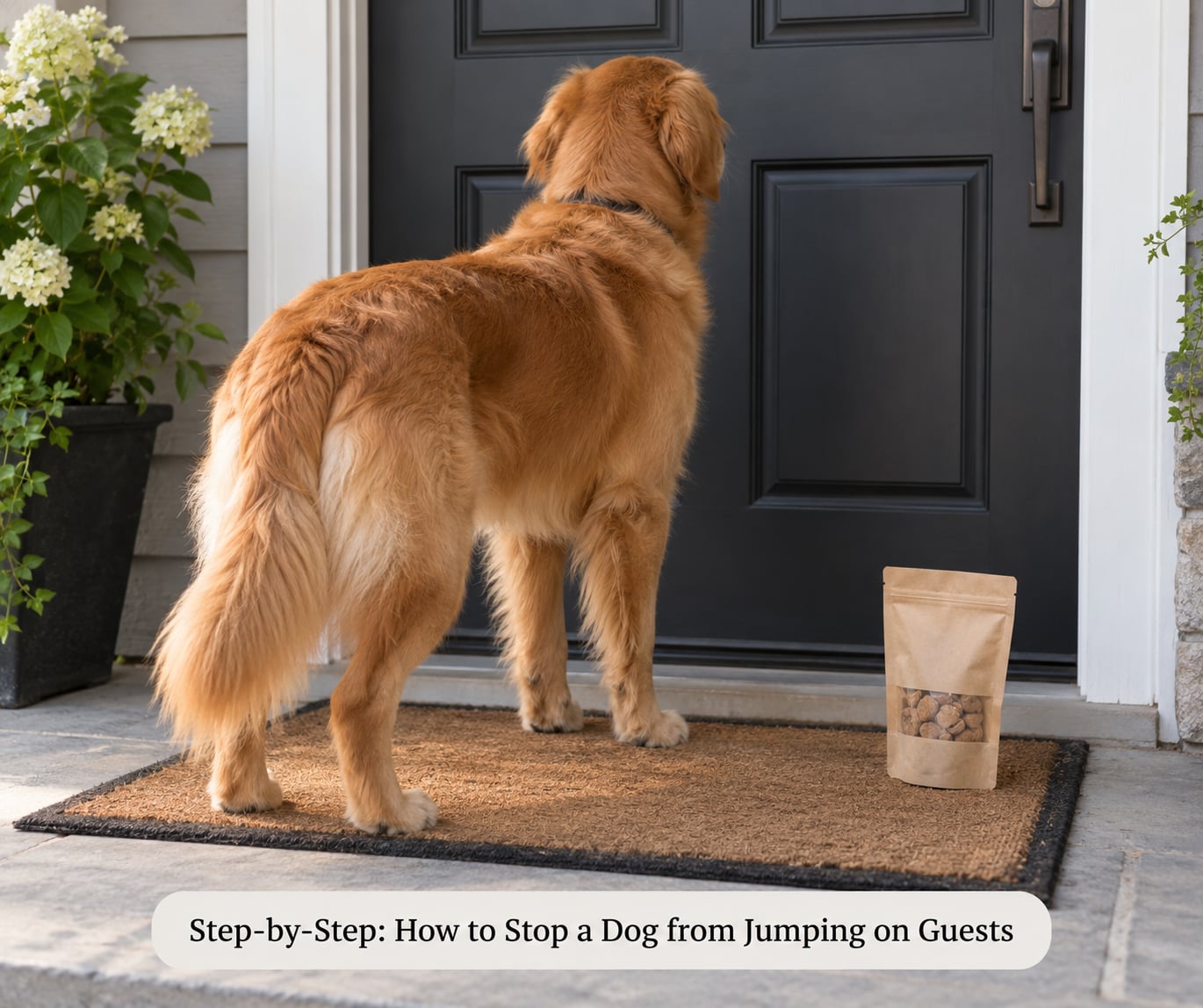
Step-by-Step: How to Stop a Dog from Jumping on Guests
1. Choose a Calm Greeting Spot
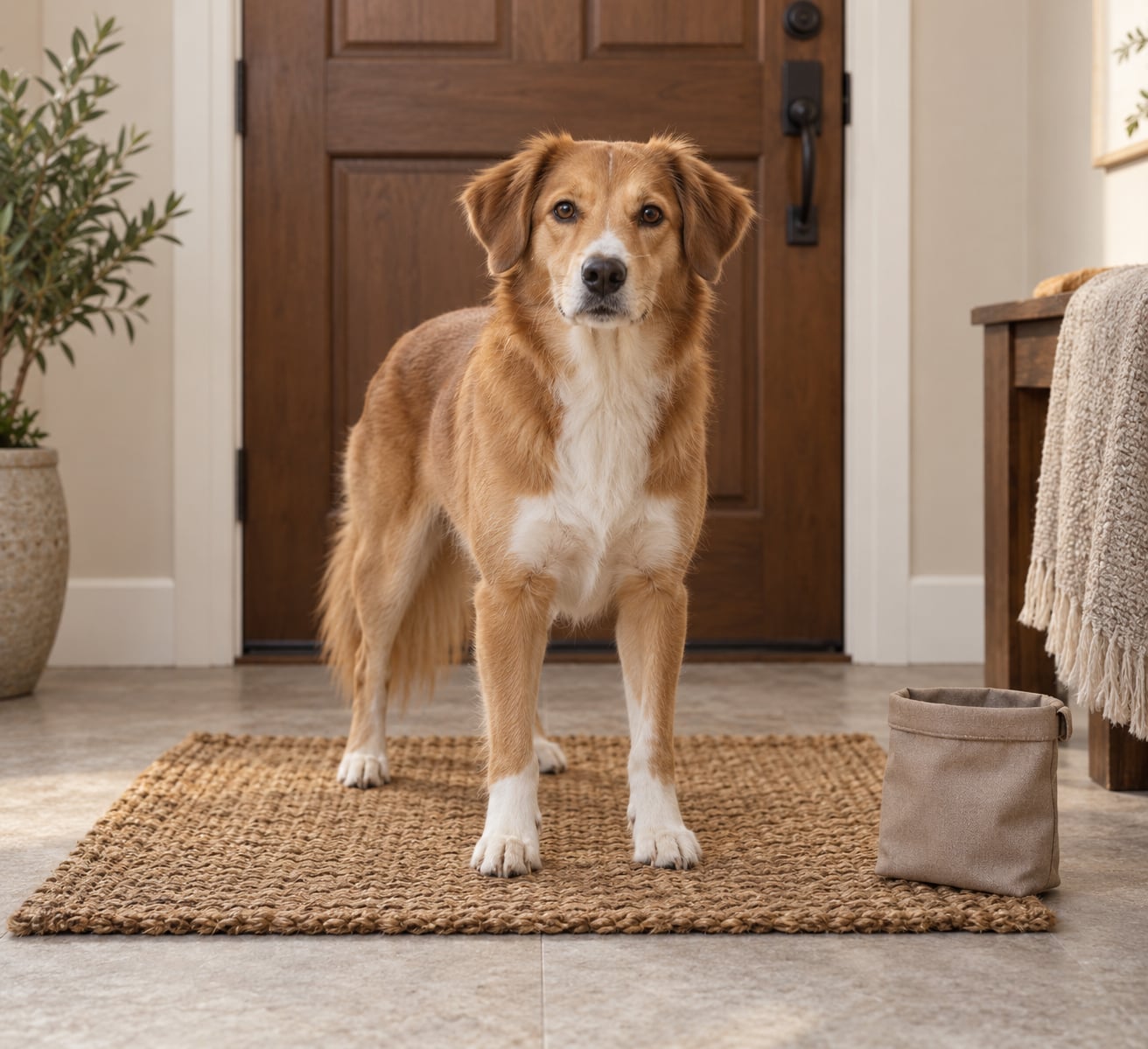
Pick one spot away from the front door, away from the kitchen, away from where people walk through. Put the mat there and keep the dog on leash in that spot for the first few weeks. A predictable location removes the decision from a dog who is too excited to think, and you cannot teach a rule in a place you have never rehearsed.
How do you know it worked? The dog starts looking toward the mat when the leash comes out, instead of planting himself at the door.
2. Prevent Jumping Before Anyone Enters
Clip the leash on and hold it, or loop it through a belt loop or a solid railing. Then have your visitor pause outside and step in slowly. If the dog lunges, step back or turn away rather than scolding.
That turn-away is the punishment. Your eyes, hands and voice are attention, and your dog will happily trade jumping for being told off.
Reward the moment he looks at the visitor, or stands, or stops pulling. Not the jump. Not the apology afterwards. The thing you want more of.
3. Reduce the Doorbell and Guest Distraction
Play the doorbell sound at low volume a few times before opening the door, rewarding a look toward you instead of toward the sound. Ask visitors to knock quietly or text you from the driveway so you can get the dog settled first.
Raise the difficulty only when the dog stays calm. Three hard repetitions in one session is plenty, and a tired dog who rehearsed jumping five times learned nothing useful.
4. Teach Your Dog to Offer Four Paws on the Floor
Choose one cue. Touch, sit, place or a hand target all work. Lure his nose toward the floor, and the instant all four paws are down, mark and reward. Then say a release word like “go say hi” before letting him move toward the visitor.
That release cue is what ties it together. It teaches him that calm behaviour is what buys him access, not jumping.
5. Add a Person, Then a Longer Greeting
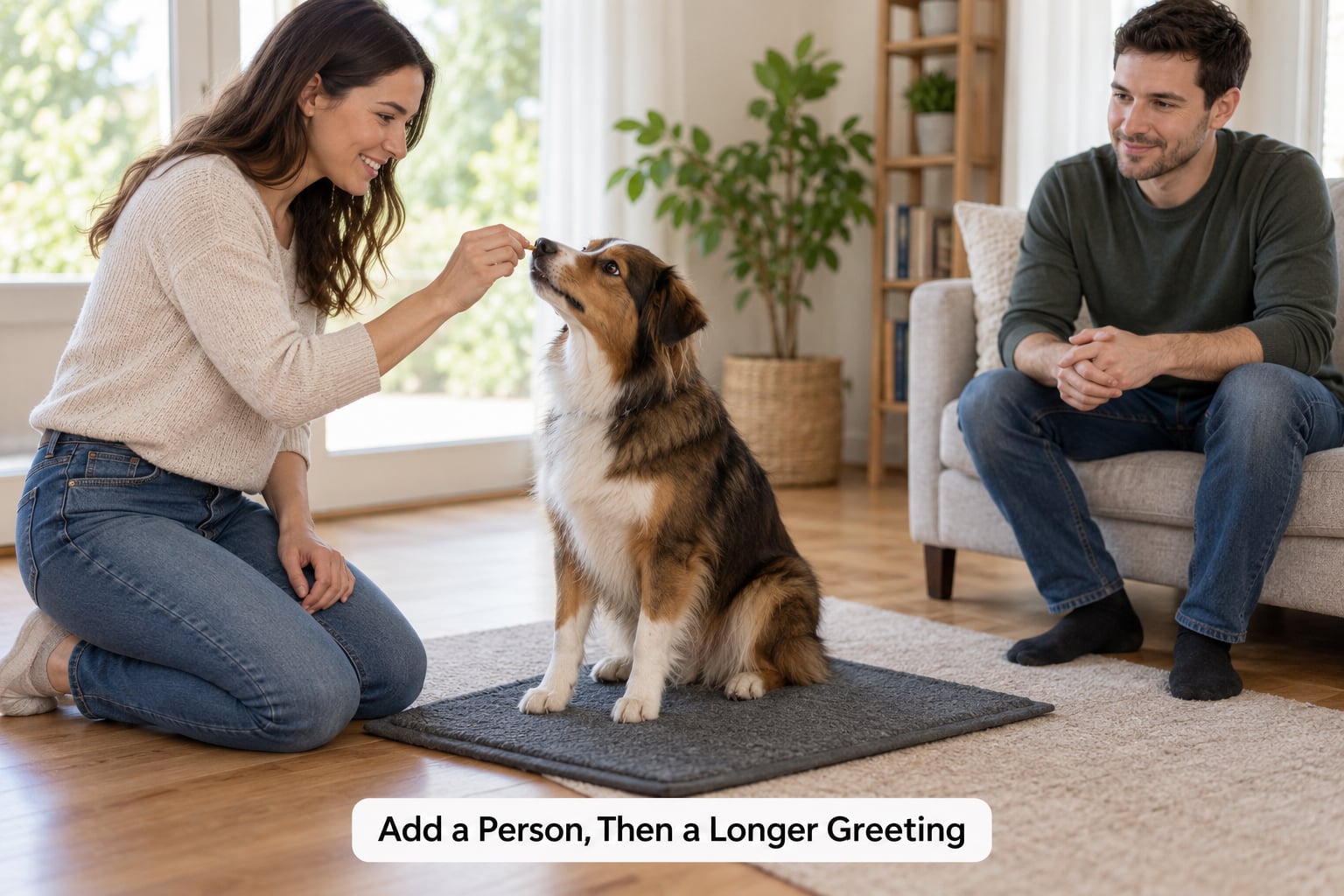
Start with a helper standing completely still at the far end of the room. Reward looking, reward four paws on the ground, reward relaxed movement. When that is easy, allow one step closer.
If he tries to jump, block gently, wait, and reset. Resetting is not failure. A two-minute session that ends calm teaches more than a twenty-minute wrestling match.
Build duration in stages: one step, three steps, ten seconds of standing still, then a pat on the chest from a neutral hand.
6. Practice With Real Visitors
Tell guests what you need before they arrive, not while your dog is already barking. Say it plainly: “Please ignore the dog until he gets all four paws on the floor, then you can say hello.” Most people follow that easily once they know.
If someone does not, use the fallback. Put the dog on leash and hold it, or move him to another room with a chew until the enthusiastic petting period is over. You cannot enforce a rule with a person who will not follow it.
Only drop the leash or the distance once he is reliable. Until then, leash on is not failure. It is management, and management is what makes training possible.
Common Mistakes and What to Do Instead
Most stalled attempts fail for one of these reasons, and none of them are about the dog being stubborn.
- Scolding after the jump. Fix: turn away and go silent instead. Attention is a reward in your dog’s eyes, even a stern one.
- Rewarding the excitement. Fix: reward the stillness, not the spinning. If he is still wiggling, the treat waits.
- Letting him jump on the way out. Fix: apply the same rule in both directions, including when you leave for work. Jumping at the door when you leave is often the harder habit.
- Practising only with strangers. Fix: rehearse with your helper first, then willing friends, then strangers met outdoors. Move up one step at a time.
- Asking for a greeting the second the door opens. Fix: ask for a sit on the mat, feed him there, then release him.
- Physical methods. Fix: drop them. Kneeing a dog in the chest, pushing, grabbing collars, alpha rolls and shock collars all teach avoidance of you rather than calm.
Three situations deserve their own note. If behaviour regresses after a quiet spell, go back one step in difficulty for a week rather than starting over. With more than one dog, train them separately at first, because two dogs bouncing reinforce each other faster than one. And if a guest is genuinely afraid of dogs, keep them apart entirely and tell that guest privately, so nobody gets ambushed at the door.
Frequently Asked Questions
Can I stop an adult dog from jumping on guests?
Yes. Adult dogs can absolutely learn this, and long-standing habits usually take weeks rather than days. Start by clipping the leash on before you open the door, so he cannot rehearse the jump even once. Then mark and reward four paws on the floor with a treat delivered on the exact second they land. Rescue owners often report slower progress, but the timeline is the same: consistent practice, daily, for several weeks.
How long does it take to stop a dog from jumping on people?
Expect two to six weeks for a dog who has jumped for a short time, and closer to three months for an adult dog with a long habit. Progress is not a straight line. Count the successful greetings per party rather than judging one bad evening, because a dog that manages four calm greetings out of five is genuinely improving even if the fifth was chaos.
Should I use a gate or leash to prevent jumping at the door?
Use both, in that order. A baby gate or a closed door buys you a calm dog at the start of a session, which is the only state in which learning happens. A leash clipped on before you open the door handles the doorway itself, where the greeting usually goes wrong. Neither tool teaches anything on its own, but together they let you practise without rehearsing the behaviour you want to remove.
What should I do when my dog gets too excited around guests?
Lower the difficulty instead of pushing through. Skip the doorbell, skip the helper, and go back to sitting on the mat in a quiet room. A dog that is over-aroused cannot eat, cannot listen and cannot learn, so treat the session as a failure of setup rather than of the dog. Try a long walk or a sniff game ten minutes before visitors arrive to bring his baseline arousal down.
How do I keep my dog from jumping after training has gone well?
Keep the greeting rule alive by still rewarding it. A few treats at the mat every single time keeps the behaviour strong after it has been learned, and it takes seconds. Practise in new locations too, since a rule trained only in the hallway collapses at the park or a friend’s house. Expect a relapse after holidays or illness, and drop back to leash management for a few days rather than assuming the training failed.
Conclusion: Start at the Door
If you do one thing this week, clip the leash on before you open the door and ask your visitors to ignore him until all four paws are on the floor. That single change removes most of the rehearsal that keeps this habit alive.
Then teach one alternative behaviour, reward it with sharp timing, and practise in two-minute sessions before you add real visitors. Patience and consistency do the work here, not equipment or clever tricks.
If the jumping comes with fear, growling, snapping, or if it appeared suddenly in an older dog, speak to your veterinarian. Pain and illness change behaviour, and a professional force-free trainer can help you work through a fear-based greeting safely.