
To choose a dog breed for your lifestyle, work backwards from your week rather than forwards from a breed list: write down when you are home, how much exercise you can genuinely deliver, who shares the house and what you can afford, then filter breeds against that. Most mismatches I see come from picking a dog on looks and discovering the exercise needs six months later.
Breed selector quizzes get blamed for bad matches, and they deserve part of it. A quiz tells you a Border Collie fits your lifestyle if you say you enjoy being active; it cannot check whether you work ten-hour days. Treat the quiz as a first filter, then do the slower work yourself.
This guide takes about twenty minutes to work through and needs nothing but a piece of paper. By the end you should have a shortlist of realistic breeds and a clear sense of what each dog will demand of you.
Table of Contents
- What You Need
- Step-by-Step: How to Choose a Dog Breed for Your Lifestyle
- 1. Map Your Daily Routine and Living Space
- 2. Set the Energy and Exercise Level You Can Sustain
- 3. Consider Your Experience and Training Priorities
- 4. Budget for Grooming, Food, Health and Care
- 5. Check Compatibility With Everyone at Home
- 6. Make a Shortlist of Suitable Breeds
- 7. Meet the Dog Before You Decide
- Common Mistakes
- Tips for a Responsible Match
- Frequently Asked Questions
- What is the best dog breed for a small apartment?
- Which dog breeds are easiest for first-time owners?
- Is there a hypoallergenic dog breed for allergy sufferers?
- How do I choose a dog breed when I have young children?
- Should I choose a purebred dog or a mixed-breed dog?
- What if I do not know how much time I can spend with a dog?
- Conclusion
What You Need
Before you look at a single breed, gather the raw material for the decision. I keep this on one page so I can look at it honestly instead of from memory.
- Space: floor area, stairs, whether there is a yard or shared outdoor space, and your landlord or housing rules on size and breed.
- A realistic weekly schedule: the hours you are actually out of the house on a normal week, not your best week.
- Activity level: how many walks, runs or hours of sport you can sustain in any weather, in any season.
- Noise tolerance: neighbours, close flat walls, quiet hours.
- Your experience: whether you have trained a dog before, and how much help you have nearby.
- Household profile: children and their ages, other pets, seniors, anyone with allergies.
- Grooming time: weekends included, and whether you would use a professional groomer.
- A recurring budget plus a one-off setup budget, and how far you can stretch for an emergency without borrowing.
- Veterinary access: a nearby clinic and a rough idea of what emergency care would involve.
Climate matters too and it is the one people skip. A heavy double-coated breed in a hot climate, or a short-coated dog in a hard winter, is a welfare problem before it is a preference problem. Check your local temperature range against the breed’s tolerance before anything else.
Step-by-Step: How to Choose a Dog Breed for Your Lifestyle
1. Map Your Daily Routine and Living Space
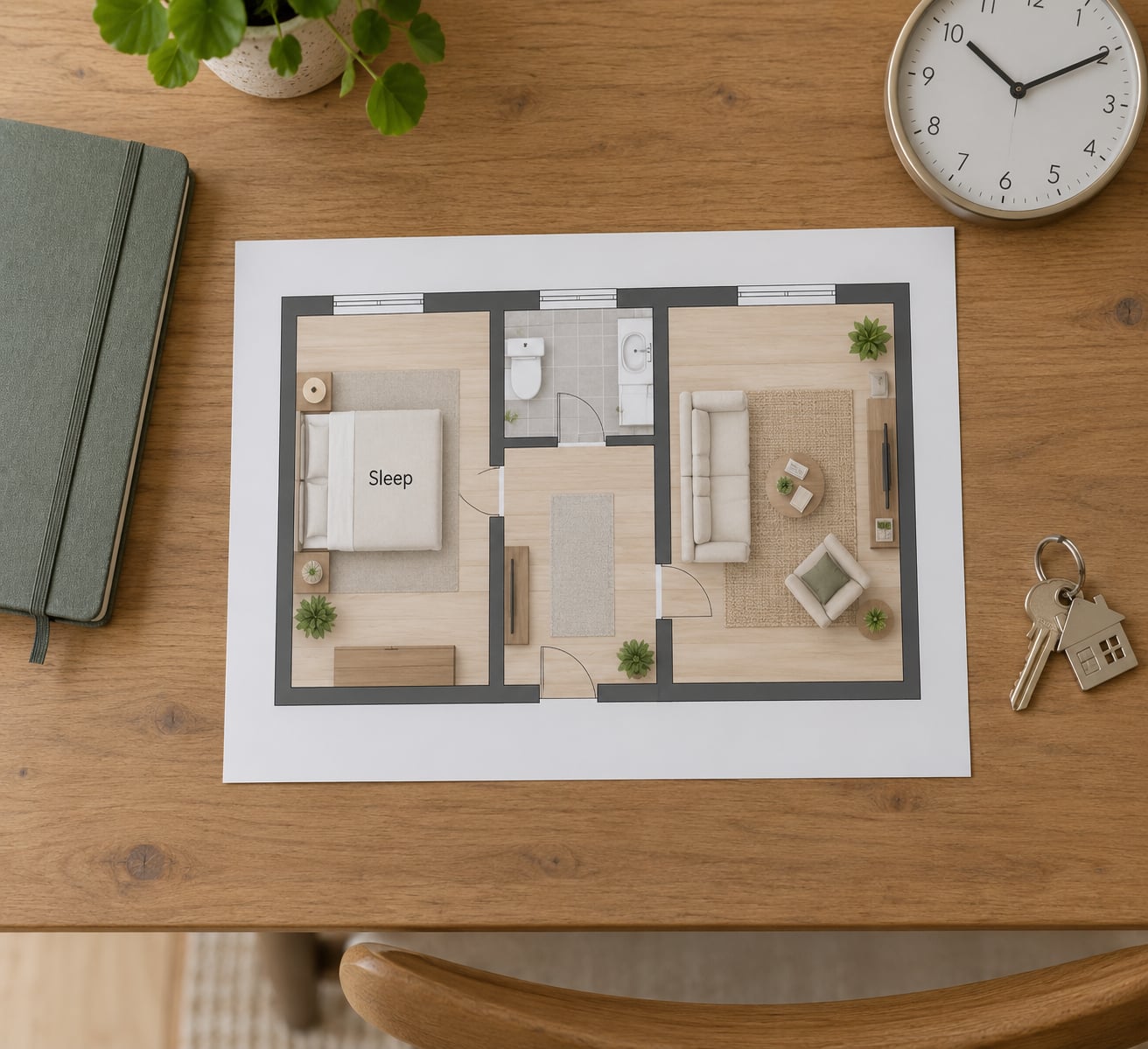
Start with a real week, not an imagined one. Write down the hours your door is locked and nobody is home, because that number rules out more breeds than any other factor.
Then add the constraints that a schedule hides: three flights of stairs with no lift, a neighbour who works nights, a commute that means eight hours in a car four days a week, or a building where large dogs are not permitted. If your alone hours run past six or seven, cross off breeds with a strong separation-anxiety tendency.
You know the step worked when you can say out loud, without hedging, the longest stretch the dog would be by itself.
2. Set the Energy and Exercise Level You Can Sustain
Match the breed to the exercise you will deliver on your worst week, not your average one. Low-energy breeds are content with short walks and indoor play. Moderate breeds want a proper walk most days plus sniffing and training time. High-energy breeds need hours of purposeful work daily, and boredom shows up as barking, digging or chasing.
Running breeds need more than a long walk. Most herding and sporting breeds chew, herd and pull unless their brain gets a job, so add a plan for training, scent games or sport on days you cannot get outdoors.
Bad weather is the real test. If your exercise plan collapses whenever it rains, choose a breed that can do two short outings indoors and still be satisfied.
3. Consider Your Experience and Training Priorities
Beginners do best with breeds that were selected over generations to read human cues and stay close to their people. Some working breeds were selected for independence, and that same independence shows up as selective hearing and an unwillingness to work for snacks.
What matters most in a first dog: how readily it trains, whether it is sensitive or forgiving about mistakes, how much it barks, and whether its prey drive is compatible with your cat, chickens or small children.
4. Budget for Grooming, Food, Health and Care
Split the money into two buckets. Recurring costs are food, routine veterinary visits, parasite prevention, grooming and training classes. Occasional costs are the setup basket, an emergency or a sudden diagnosis. Look at current local prices yourself before you commit; I am not going to quote numbers that will be out of date by next month.
Breed affects this more than people expect. Small dogs eat less but need dental care. Large and giant breeds need joint-friendly food and grow slowly on the wrong diet. Flat-faced breeds may need ongoing airway and eye attention. Double-coated breeds need professional grooming several times a year.
Ask an insurer for the breed exclusion list before you sign up, because some conditions are excluded by breed. For anything medical, your veterinarian is the only person who should advise your dog; nobody online, including me.
5. Check Compatibility With Everyone at Home
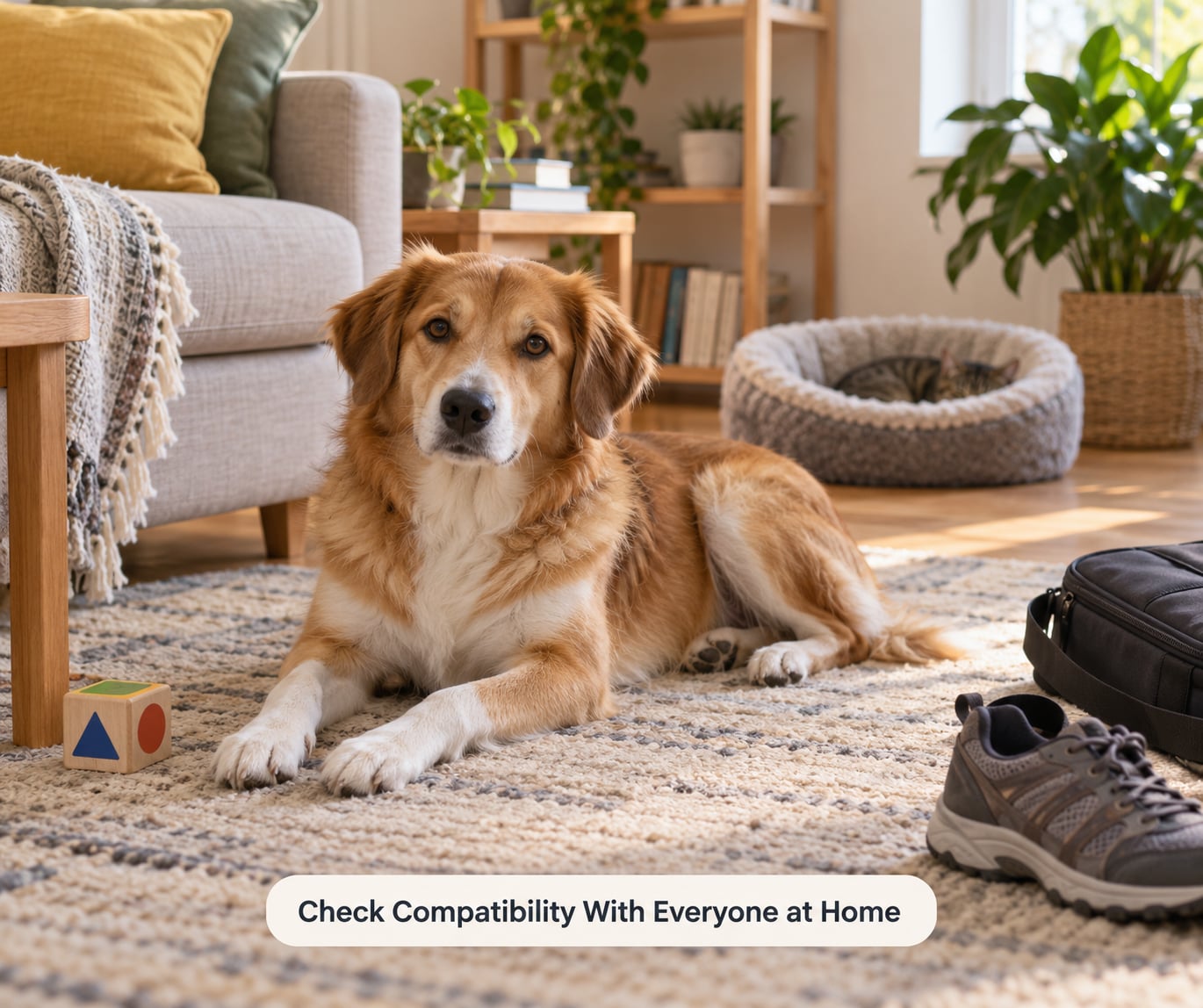
A breed that suits you can still be wrong for your household. Children change fastest between the ages of six and twelve, so tell the shelter or breeder the ages, not just the fact that you have kids. Ask what happens when the food bowl is contested, and how the dog reacts when a child hugs it.
Allergies deserve a blunt answer. No dog is truly hypoallergenic, because the allergen is in saliva and dander, not just fur. Low-shedding, single-coated breeds such as poodles, Portuguese water dogs, bichon frises and soft-coated wheaten terriers reduce the amount in the air, and a steady grooming routine reduces it further. Test an adult dog of the breed against your allergic person before you commit. Family members matter as much as the dog here, and their agreement is part of the decision, not a detail to be announced later.
6. Make a Shortlist of Suitable Breeds
Use kennel club and shelter breed profiles as your base, and cross-check every breed on at least two independent sources. They will disagree on temperament, which is useful: the overlap is the part you can rely on.
Keep mixes in the running. When no purebred fits your situation, a well-matched mixed-breed dog from a shelter is often the better fit, and owners of rescue dogs routinely report pleasant surprises about temperament. What you lose is predictability, and what you gain is a dog already matched to whatever the shelter has learned about it.
Include the quiet option. People searching “dog breed selector” results usually expect a lively retriever, but if you are at home with a nervous or elderly dog, a calm, low-energy companion may suit the household better.
Then narrow to three or four and read the breed-specific rescue organisation’s own description. Regulars on breed-specific forums are often the most honest source on what daily life with that breed is actually like, including the parts quizzes leave out.
7. Meet the Dog Before You Decide
Start with a shelter or a responsible breeder who lets you meet the animal, or several, in a calm setting. If a seller will not let you see the dog, walk away.
Ask directly about health testing for the conditions that breed is prone to, the age at which the dog can leave, what happened to dogs from earlier litters, and whether the sale comes with a written contract and a health guarantee. Ask about temperament testing and what happens if the dog does not work out. Ask what support exists after the sale, because that answer separates a careful breeder from everyone else.
Bring everyone who shares the home. Watch the dog recover from a small surprise, settle after a minute, and come to you unprompted. Then plan for the adjustment period. Many shelters describe it as three days, three weeks and three months: a few days of overwhelm, three weeks of learning the rhythm, and about three months until the dog feels fully at home.
Whichever path you take, choose the individual in front of you rather than the label on the paperwork. Breed tells you the odds; the dog in front of you is the fact.
Common Mistakes
Choosing on appearance first. The fix: pick your top three lifestyle constraints and check every breed against them before you look at photos.
Underestimating exercise. Owners on breed forums most often regret high-energy working breeds taken on by people with good intentions and no hours. The fix: write your exercise plan for February, not July.
Forgetting grooming. A coat that looks effortless is often groomed daily. The fix: time one week of grooming honestly before you decide.
Believing every dog of a breed has the same temperament. Breed predicts tendencies, not outcomes. The fix: meet two or three individual dogs.
Skipping the household check. The fix: get every adult in the house to agree on the constraints before you meet a dog.
Buying without a support plan. The fix: ask what help exists after you take the dog home, and have a trainer or your vet clinic on speed dial from week one.
Senior dogs are worth considering too, if your household suits an adult dog. They skip the destructive puppy phase, and their temperament is far easier to read.
Tips for a Responsible Match
- Rank your must-haves in order and refuse any breed that fails the first one.
- Prepare the home before the dog arrives: bed, food and water in a quiet corner, gates, cables out of reach.
- Budget for training and routine veterinary care in year one, not just the food bowl.
- Weight temperament and health above looks in your final ranking.
- Use a trial arrangement where one exists, so you and the dog both get a rehearsal.
- Check breed-specific rules in your area and in your rental before you sign anything.
Frequently Asked Questions
What is the best dog breed for a small apartment?
There is no single best breed, but small, low-shedding, calm breeds such as Cavalier King Charles Spaniels, French Bulldogs, Shih Tzus and Yorkshire Terriers fit apartment life better than large, high-energy breeds. Two things matter more than size: how much barking you can tolerate through thin walls, and whether you can commit to several short outings every day in any weather.
Which dog breeds are easiest for first-time owners?
First-time owners do best with breeds historically bred for human companionship and responsiveness to training: Cavalier King Charles Spaniels, Beagles, Basset Hounds, Poodles, Labrador Retrievers and Golden Retrievers. Avoid breeds selected for independent hunting or herding work as a first dog, because their independent streak makes training much harder to begin with.
Is there a hypoallergenic dog breed for allergy sufferers?
No breed is truly hypoallergenic, because the main allergen comes from saliva and skin dander rather than fur alone. Low-shedding single-coated breeds such as Poodles, Portuguese Water Dogs, Bichon Frises and Soft-Coated Wheaten Terriers keep far less allergen in the air. Regular professional grooming helps too, and the allergic person should spend time with an adult dog of the breed before committing.
How do I choose a dog breed when I have young children?
Tell shelters and breeders the ages of your children, not just that you have kids, and ask how the dog behaves around food and around being grabbed or hugged. Pick a breed with a documented history of calm tolerance for children, and insist on meeting the individual dog with your children present. Check the breed’s typical maturity span too, since some stay puppy-like for two years.
Should I choose a purebred dog or a mixed-breed dog?
A purebred gives you a predictable size, coat and temperament range, and predictable breed health risks. A mixed-breed dog from a shelter gives you a dog whose real temperament is often clearer to the shelter than the pedigree suggests, at the cost of guessing adult size and coat. If no purebred fits your lifestyle, a well-matched mix is usually the more realistic choice.
What if I do not know how much time I can spend with a dog?
Ask yourself two questions honestly: how many hours a day can the dog be alone without distress, and what happens on the days when your plan fails. If you cannot answer, a trial arrangement such as a short foster placement with the option to adopt is the honest way to find out. Start with a breed known for tolerating alone time rather than one prone to separation anxiety.
Conclusion
Start on paper, not with a breed list. Write down your weekly exercise schedule, your space, your recurring budget and the household constraints, and let those four things narrow the field. Then meet individual dogs and pick the one whose temperament suits the life you actually live.
That is how to choose a dog breed for your lifestyle: filter on lifestyle first, verify with health and temperament information, then let a real dog show you which one it is.