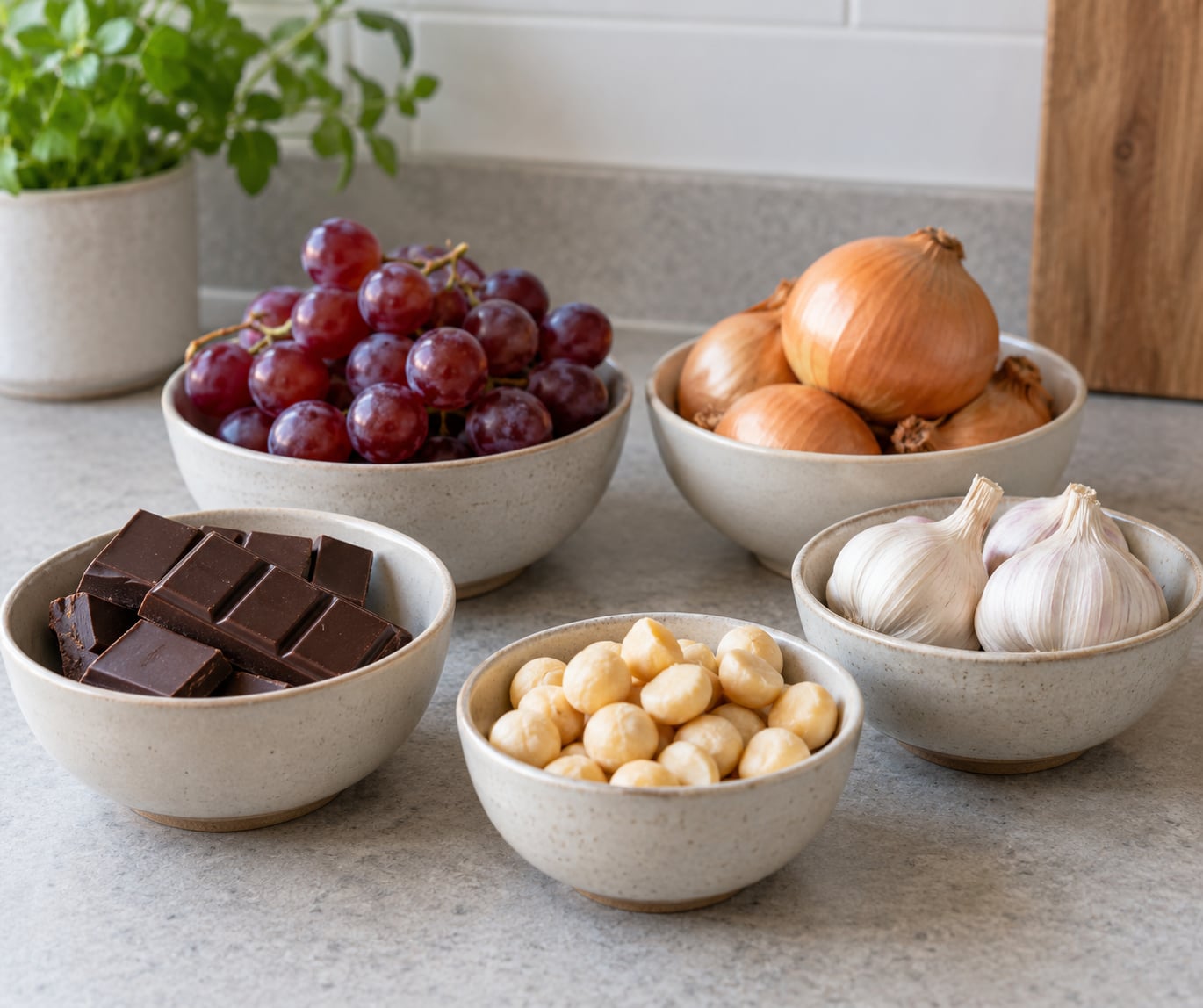
Chocolate, grapes and raisins, xylitol, onions and garlic, and macadamia nuts are the everyday foods that are most likely to send a dog to the emergency room, and all five are probably sitting in your kitchen right now. Dogs process many of the same foods differently than we do: they clear theobromine from chocolate slowly, they lack the machinery to handle xylitol, and allium compounds in onions and garlic attack red blood cells directly.
This guide walks through 12 common pantry and fridge hazards, what each toxin actually does inside a dog, and how urgently you need to act. It is written for the person who just watched their dog swallow something off the counter and is wondering whether to wait and see. Last reviewed for 2026.
Nothing here replaces your veterinarian. For any suspected poisoning, call a vet or an animal poison control service before you do anything else, even if your dog looks completely fine.
Table of Contents
- Foods That Are Toxic to Dogs You May Have at Home: Quick Guide
- When to call a vet immediately
- 1. Chocolate and Baking Chocolate
- 2. Xylitol in Sugar-Free Gum, Candy and Baked Goods
- 3. Grapes, Raisins and Currants
- 4. Onions, Garlic, Leeks and Chives
- 5. Avocado
- 6. Alcohol and Alcoholic Drinks
- 7. Coffee, Tea and Caffeinated Products
- 8. Macadamia Nuts
- 9. Raw Dough That Contains Yeast
- 10. Bones, Cooked Bones and Fatty Foods
- 11. Fruit Pits, Seeds and Apple Cores
- 12. Salty, Spicy and Heavily Seasoned Foods
- Common myths about what is safe
- Frequently Asked Questions
- What’s the most toxic food for dogs?
- What should I do if my dog eats something toxic?
- How much chocolate is toxic to a dog?
- How long after eating chocolate will a dog get sick?
- Is garlic really toxic to dogs?
- What foods can dogs eat safely?
Foods That Are Toxic to Dogs You May Have at Home: Quick Guide
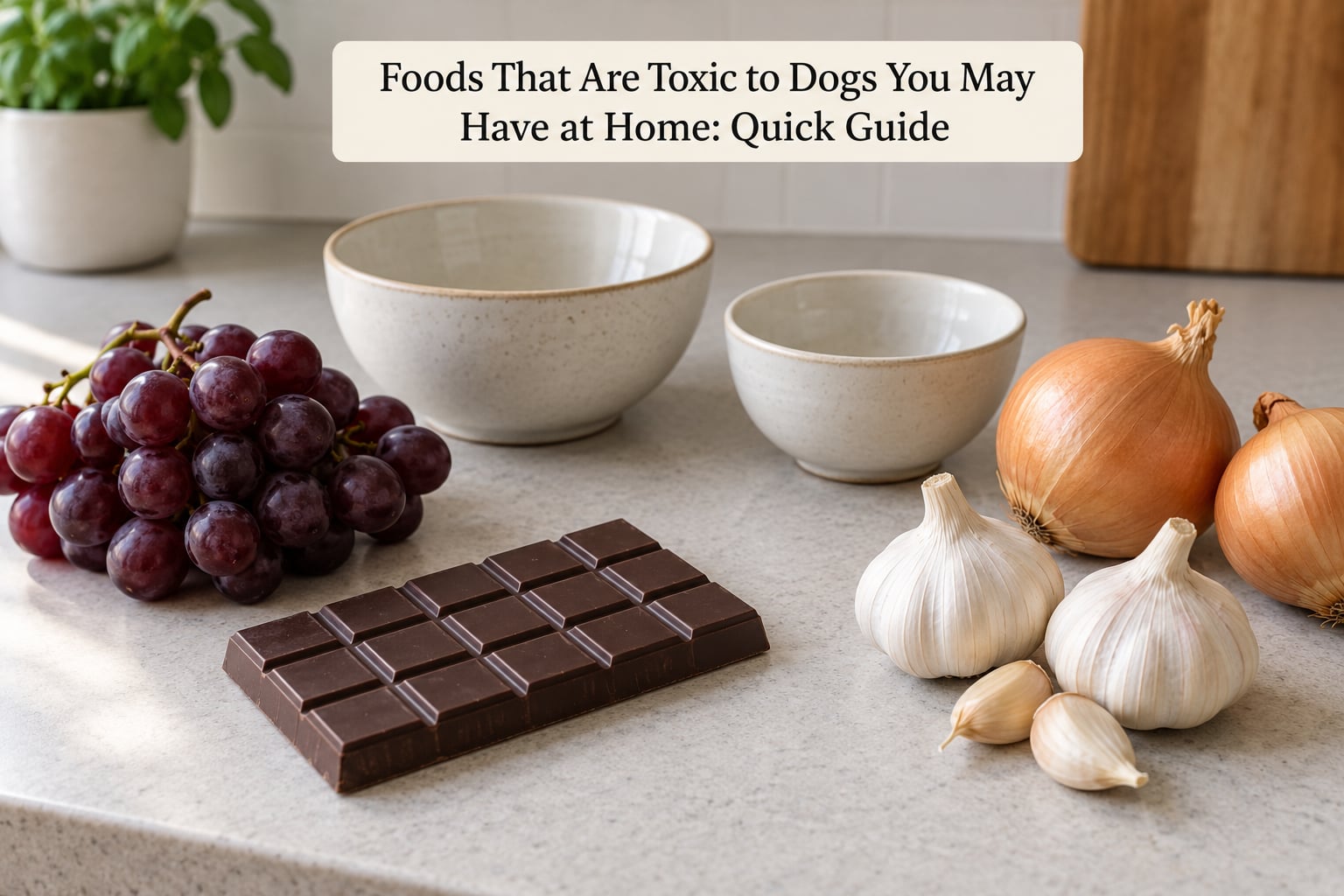
Below is the short version. Severity is graded Emergency (call now, do not wait), Urgent (call today, symptoms may be delayed) or Monitor (call and describe what happened, let the vet decide).
| Food | Toxin | What it damages | Severity | Typical onset |
|---|---|---|---|---|
| Chocolate, cocoa, baking chocolate | Theobromine and caffeine (methylxanthines) | Heart, brain, nervous system | Emergency | 1 to 6 hours |
| Sugar-free gum, candy, some peanut butters | Xylitol | Pancreas and liver, blood sugar | Emergency | 30 to 60 minutes |
| Grapes, raisins, currants, juice | Unidentified; suspected tartaric acid | Kidneys | Emergency | 12 to 24 hours |
| Onion, garlic, leek, chive, shallot | Organosulfur compounds | Red blood cells | Urgent | 24 hours to 5 days |
| Macadamia nuts | Unknown | Nervous system, weakness | Urgent | 12 to 48 hours |
| Avocado | Persin | Heart, GI tract; pit causes obstruction | Monitor to urgent | 1 to 12 hours |
| Alcohol | Ethanol | Brain, liver, blood sugar, temperature | Emergency | 30 to 60 minutes |
| Coffee, tea, energy drinks, grounds | Caffeine and methylxanthines | Heart, nervous system | Emergency | 30 to 60 minutes |
| Raw yeast dough | Expanding dough plus ethanol | Stomach, blood sugar, temperature | Urgent | 1 to 3 hours |
| Cooked bones, rich fatty scraps | Physical fragments; high fat | Teeth, gut, pancreas | Urgent | Varies |
| Fruit pits, seeds, apple cores | Cyanogens; physical obstruction | Airway, intestine | Emergency if swallowed whole | Minutes to hours |
| Very salty, spicy or heavily seasoned food | Sodium; irritants | Brain, kidneys, GI tract | Monitor to urgent | 1 to 24 hours |
When to call a vet immediately
Call now if your dog is vomiting repeatedly, has tremors, seizures, difficulty breathing, pale or blue gums, extreme weakness, heavy salivation, or a swollen face. Those signs point at the heart, the nervous system or the blood, and none of them improve with waiting.
Then call even though your dog seems fine. Onion poisoning can take three to five days to show signs, and grapes can damage kidneys a day later. A quiet dog is not a safe dog on the allium list or the grape list.
1. Chocolate and Baking Chocolate
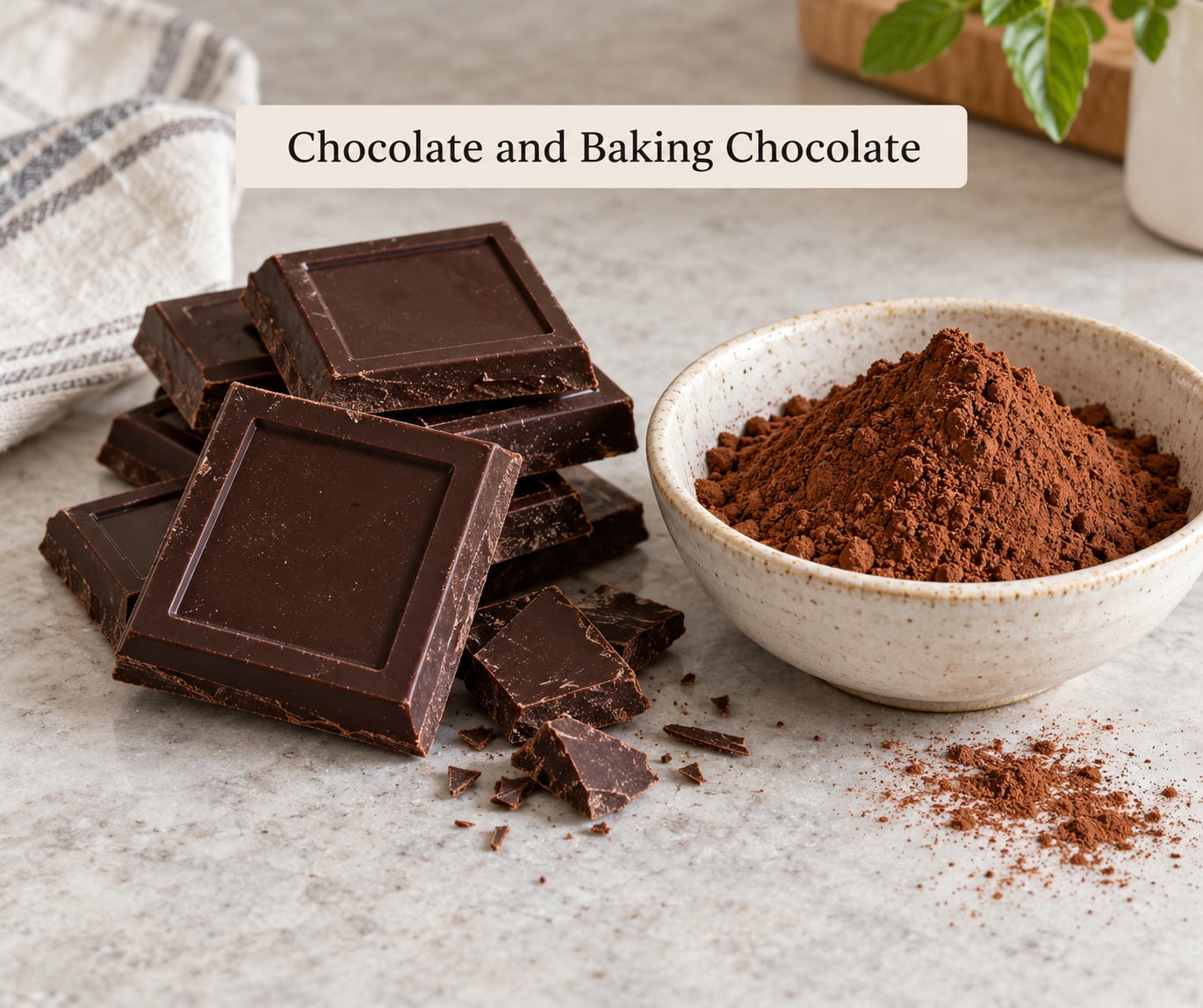
Chocolate is dangerous to dogs because of theobromine, a methylxanthine they break down far more slowly than humans, plus the caffeine it also contains. What it hits first is the nervous system and the heart, which is why you see restlessness and a racing pulse, then vomiting, tremors and potentially seizures.
The darker the chocolate, the more theobromine per gram. Baking chocolate and unsweetened cocoa powder are by far the most concentrated. Milk chocolate bars are weaker, but a dog can eat an enormous amount of them, and holiday baking turns this into a real risk: brownies, cookies, chocolate chip muffin batter and chocolate-covered pretzels all count.
Risk scales with two numbers: the weight of the dog and the amount and darkness of what it ate. A small puppy who finds a square of baking chocolate is in a completely different situation from a large dog with a bite of a milk chocolate cookie, and only a vet or poison control service can do that math with your specific numbers.
2. Xylitol in Sugar-Free Gum, Candy and Baked Goods
Xylitol is an alcohol sugar that shows up under several names on ingredient lists: xylitol, birch sugar, and E955. Read the small print on sugar-free gum, mints, breath sprays, peanut butters marketed for diabetics, and some protein bars and baked goods, including many labeled sugar-free or low-sugar.
Dogs cannot metabolize it, and insulin floods in response. Blood sugar crashes, the pancreas and liver take the damage, and the whole thing can move fast. Reports of serious decline often start within half an hour of ingestion.
This is the one on the list where a small piece of gum matters enormously. If you suspect xylitol, do not wait for symptoms, and do not assume a product is safe because it does not say xylitol in large letters on the front. Call and read the ingredient list to whoever answers.
3. Grapes, Raisins and Currants
Fresh grapes, raisins, currants, grape juice, and anything with raisins baked into it, including trail mix, granola bars, fruitcake and some bagels, have all been linked to acute kidney injury in dogs. The exact toxin has never been isolated and the toxic dose is genuinely unknown.
That uncertainty is the important part. There is no known safe number of grapes for a dog, and individual dogs react differently to the same handful. Owners often ask whether one grape is enough. Nobody can promise it is not, and nobody can promise it is.
Grapes also turn up in less obvious places: salad bowls left on the counter, juice glasses during a weekend, and trail mix carried in from a hike. Call the vet after any known ingestion rather than cleaning up and moving on.
4. Onions, Garlic, Leeks and Chives
Onions, garlic, leeks, chives and shallots contain organosulfur compounds that damage red blood cells. The result is hemolytic anemia: red cells break down faster than the body can replace them. Cats are far more sensitive to this family than dogs are, which is worth knowing in a multi-pet home.
Here is where the hidden-ingredient problem is worst. Onion powder and garlic powder appear in soups, stocks, gravy, seasoning blends, curry powders, pot roast seasoning, stuffing mixes, and prepared sauces. Powdered forms are more concentrated than the chopped vegetable, so a spoonful of broth powder can matter more than a slice of onion.
Cooking does not make any of it safe. Raw, cooked, dried and powdered all carry the risk, and many prepared pet-friendly-looking foods, including some commercial jerky and chew treats, list onion or garlic in the fine print.
The timing is what trips people up. Signs of onion poisoning can appear anywhere from a day to five days later, so a dog that seems fine on Monday can be lethargic and pale by Thursday. That delay is why watching for symptoms is the wrong strategy here.
5. Avocado
Avocado contains persin, a fungicidal compound that is toxic to many animals. In dogs the risk is generally mild to moderate: vomiting, diarrhea, abdominal pain, and in some cases fluid build-up in the chest or neck.
The bigger danger is physical. The pit is a genuine foreign body that can lodge in the esophagus or intestine and require surgery, and the skin is notoriously hard to digest. Avocado oil and avocado-based dog treats concentrate persin even further.
The everyday rule of thumb is that a small bit of plain avocado flesh usually causes nothing more than an upset stomach, while the pit, the skin and concentrated products deserve a phone call. Skip avocado entirely if your dog is on a fat-restricted diet, since it is high in fat.
6. Alcohol and Alcoholic Drinks
Beer, wine, spirits, liqueurs, cocktails and unattended glasses from a party are all emergencies. Ethanol depresses the nervous system and disrupts blood sugar and body temperature at the same time, and a small dog can reach serious levels from a surprisingly small amount.
Watch the kitchen, not just the party table. Cooking wine, sherry in a sauce, liqueurs in a dessert, and unbaked rum or brandy batter are easy to miss, and raw batter is a repeated offender for dogs who counter-surf.
Signs include wobbling, drooling, vomiting, low body temperature and breathing trouble. Alcohol is fast-acting, so call the moment you know, before any of that starts.
7. Coffee, Tea and Caffeinated Products
Coffee, tea, energy drinks, caffeine tablets and chocolate-covered espresso beans all deliver caffeine and related methylxanthines that dogs handle poorly. Beans, grounds and tea leaves are far more concentrated than brewed drinks, and a kitchen trash can or compost bag is the usual source for grounds.
The effect is on the heart and the nervous system: agitation, a rapid or irregular heartbeat, restlessness, tremors and, at higher amounts, collapse. Vaping liquids are worth a mention too, because the nicotine in them is extremely toxic to dogs and an open bottle or a spill is an easy accident.
Strength and amount decide the outcome, so call with the type of drink, roughly how much went in, and your dog’s weight. If you are not sure what was in the cup, describe what you can see.
8. Macadamia Nuts
Macadamia nuts cause weakness, vomiting, tremors, lethargy and a wobbly hind end in dogs, usually within a day or two. The mechanism has not been established and the safe quantity is not known, which is another reason not to test it with a small dog.
Anything flavored counts. Macadamia cookies, chocolate-coated nuts, and salted mixed nuts sold in bowls on the counter have all caused trips to the vet, and the sugar and chocolate in those mixes bring their own problems on top.
Cashews, peanuts and almonds are not in the same category, though all nuts are calorie-dense and choking on a whole one is always possible. The specific concern belongs to macadamias.
9. Raw Dough That Contains Yeast
Raw yeast dough is dangerous for two separate reasons. It expands in the warm stomach, which can cause discomfort, gas and in severe cases pressure on the stomach wall, and the yeast itself ferments and produces alcohol, dropping blood sugar and lowering body temperature.
This is the reason for the rule about no raw dough, whether it is bread, pizza or biscuit dough, and whether or not it contains chocolate. The danger comes before the baking. Dogs also help themselves to the proofing bowl more often than anyone expects.
Signs of alcohol poisoning, including weakness, wobbling and lowered temperature, can show up within a few hours. Call early, and tell the vet whether the dough was raw or baked, and whether there was chocolate or xylitol in it.
10. Bones, Cooked Bones and Fatty Foods
These are two different problems that often get filed together. The first is bones: cooked bones, whether beef, pork or poultry, become brittle and splinter when chewed, and those fragments can tear the mouth, throat or intestine. This is not a myth about raw diets either. Large raw bones can fracture teeth under the same force.
Keep cooked bones entirely out of reach, and never give a bone that is hard enough that the dog cannot bend it with a mouth rather than a vice grip. Bones from cooked poultry are the worst offenders because they are hollow and snap cleanly.
The second is fat. Greasy scraps, fatty meats, butter, and large amounts of oil can trigger pancreatitis, an inflamed pancreas that causes vomiting and abdominal pain and can be serious. Large breeds such as German Shepherds and Labradors seem more prone to it. A rich holiday meal is the classic setup, so watch the table during meals and clear leftovers promptly rather than feeding them to the dog.
11. Fruit Pits, Seeds and Apple Cores
Pits and stones are choking and obstruction hazards before they are toxic. A peach pit, plum stone or apricot stone swallowed whole can block the esophagus or intestine, and an apple core is a tough ring that some dogs manage to swallow without chewing.
Apricot, peach, plum and cherry pits contain cyanogenic compounds that can release hydrogen cyanide when chewed, so the flesh is fine but the stone is not a food. Cherry and apple seeds are lower risk, but the quantity a dog would need to eat is small enough that no one should test it.
If you see a pit go down, treat it as urgent rather than waiting to see whether it passes. The flesh of these fruits, without the pit, is generally fine in small slices with the skin removed.
12. Salty, Spicy and Heavily Seasoned Foods
Large amounts of salt can cause sodium poisoning, with symptoms ranging from thirst and vomiting to tremors, confusion and seizures. This matters more than most people expect because heavily salted snacks exist in almost every home: salted butter, pretzels, chips, and the thick crust left on a heel of bread or a piece of meat.
Spicy seasoning, chili, curry and strong flavorings irritate the gastrointestinal tract even when they are not toxic, producing vomiting and diarrhea. Many prepared gravies and sauces also carry onion and garlic, which brings you back to item 4.
A heavily seasoned dish is not poisoning in the chemical sense. The concern is quantity and preparation, and the sensible habit is to keep seasoned human food off the dog menu and keep guests from feeding the dog directly.
Common myths about what is safe
A few things get repeated often enough to be worth correcting directly. Garlic in tiny amounts is genuinely debated, and that debate is not a reason to feed it deliberately; the safe dose has not been established, and the risk is concentrated onion and garlic powder, not a whisper of seasoning.
Milk is not poison. Most adult dogs are mildly lactose intolerant, so a small amount causes no harm and a large one causes diarrhea and gas. Raw eggs, raw meat and raw bones are a matter of a feeding philosophy, not an acute toxin list, though each carries its own risks, including bacterial infection and fractured teeth. Corn and corn on the cob are not toxic either, though the cob husk can lodge in the gut.
The pattern worth keeping is that most of what people worry about daily is fine in small amounts, and most of what kills dogs is concentrated, hidden or accidental.
Frequently Asked Questions
What’s the most toxic food for dogs?
Chocolate and xylitol products top the list because they act fast and the dose needed is small, with grapes and raisins close behind because they can cause acute kidney failure and no safe dose is known. Onions and garlic follow, because their effect on red blood cells can take several days to appear. If you are trying to triage a single incident, chocolate, xylitol and grapes are the three that justify an immediate call.
What should I do if my dog eats something toxic?
Call your veterinarian or an animal poison control service right away rather than waiting to see symptoms. Have the product or ingredient list open, and know your dog’s approximate weight, when the food was eaten, and how much is missing. Do not induce vomiting unless a veterinary professional specifically instructs you to, and do not give milk, oil or hydrogen peroxide on your own idea. Keep the packaging, since the vet may want the ingredient panel.
How much chocolate is toxic to a dog?
There is no single number, because the amount of theobromine depends on how dark the chocolate is and how much your dog weighs. Baking chocolate and cocoa powder are the most concentrated, dark chocolate is next, and milk chocolate is the weakest, though a large dog can still eat a dangerous quantity. Give the type of chocolate, the estimated amount and your dog’s weight to the vet or poison control line and let them calculate the risk.
How long after eating chocolate will a dog get sick?
Signs of chocolate toxicity usually appear within one to six hours, and many dogs show restlessness, vomiting or excessive salivation early. That timing is not a green light to wait, because the amount eaten and the dog’s weight determine the real risk, and a dog who seems fine at hour one can deteriorate later. If the ingestion is confirmed, call before symptoms appear rather than monitoring for them.
Is garlic really toxic to dogs?
Garlic and onion belong to the allium family, which contains organosulfur compounds that damage red blood cells and can cause hemolytic anemia. Whether a very small amount of garlic is harmful is debated, because no firm safe dose has been established, but onion and garlic powder are more concentrated than the fresh ingredient and are the usual culprits in prepared food. Cooking does not remove the risk. Treat any known ingestion as a call to your vet.
What foods can dogs eat safely?
Plain, unseasoned items work best: cooked lean meat with no salt, sauce or onion, plain cooked rice, plain pumpkin in small amounts, carrot and cucumber sticks, blueberries in moderation, and small pieces of apple with the core and seeds removed. Keep treats to roughly ten percent of daily calories, since dogs gain weight fast on scraps. Anything new deserves a small taste first and a day of watching for stomach upset.
Most of the foods on this list are already in your house, and most dog poisonings happen when someone was not looking. Keep the highest-risk items, chocolate, sugar-free products, grapes and raisins, and anything with onion or garlic powder, on high shelves and out of bins dogs can reach.
When something does get eaten, the first move is the same in every case: call your vet or an animal poison control service before you treat, induce vomiting or wait. Give them the product, the amount, the time and your dog’s weight, and let them tell you whether this is an emergency or a watchful wait.