Urinary blockage in male cats emergency signs are hard to miss once you know them: repeated trips to the litter box, straining with little or no urine, crying, and licking the genital area. A male cat who strains and produces nothing is in a medical emergency, and without treatment the outcome can turn within 24 to 48 hours. Call an emergency veterinarian now.
If you are reading this at two in the morning, here is the short version. Do not wait until morning. Do not watch him for another hour to see if it settles. Do not give him anything from the cupboard.
Go to the emergency vet now if your male cat shows any of these:
- Runs to the litter box repeatedly and produces little or no urine
- Cries, meows loudly, or grunts while trying to urinate
- Spends unusual time in the litter box with nothing produced
- Constantly licks his genital area
- Hides, stays still, or seems weak and unresponsive
- Vomits, stops eating, or sits hunched over
One more thing, because this is the mistake owners tell me they wish someone had warned them about: a blocked cat can still eat, still greet you at the door, and still jump on the sofa. Cats hide pain well, and a cat who looks fine in the morning can be barely responsive by the evening. Normal behaviour does not rule out a blockage.
Medical note: this article is general information for pet owners and cannot diagnose or treat your cat. Every decision about testing, medication, diet and surgery belongs with a veterinarian who has examined your cat. If you suspect a blockage, treat this page as a reason to make a call, not as a substitute for one.
Table of Contents
- What Is a Urinary Blockage in Male Cats?
- Urinary Blockage in Male Cats: Emergency Signs to Watch For
- How urgent are urinary blockage in male cats emergency signs?
- Repeated trips to the litter box with no output
- Straining, crying and vocalising in pain
- Excessive licking of the genital area
- Blood-tinged urine or a strong smell from the box
- Hiding, weakness and a change in behaviour
- Vomiting, refusing food and a hunched posture
- Other Medical Problems That Can Look Similar
- What To Do If You Suspect a Blockage
- When To Call Ahead And What To Have Ready
- What Not To Do While Waiting for Veterinary Care
- Why Urinary Blockage Is an Emergency
- How Veterinary Teams Investigate and Treat the Problem
- Aftercare and Prevention Questions for Your Veterinarian
- Frequently Asked Questions
- How long can a cat go with a urine blockage?
- Can a urinary blockage clear itself on its own?
- What is the survival rate for male cats with urinary blockage?
- How can I tell the difference between constipation and a urinary blockage?
- Will a cat with a urinary blockage still eat?
- Is it appropriate to put a male cat down for a urine blockage?
- Conclusion
- Sources And Further Reading
What Is a Urinary Blockage in Male Cats?
A urinary blockage, medically called a urethral obstruction, is a partial or complete stoppage of urine flow through the urethra, the narrow tube that carries urine from the bladder out of the body.
Male cats are especially vulnerable because of that tube. A male urethra is long, thin and sharply curved. A female cat’s urethra is short and wide, so the same kind of debris passes far more easily.
What actually blocks the tube is usually a plug made of crystals, mucus and inflammatory cells that clump together, often with mineral deposits called uroliths around them. Crystals such as struvite or calcium oxalate form when urine becomes concentrated, which happens when a cat is dehydrated or eating a dry, mineral-rich diet. Owners whose cats have blocked describe the litter-box trip lasting ten to fifteen minutes with nothing produced at the end of it.
That is different from ordinary urinary changes. A cat that pees a bit more often for a day, or that leaves a smaller amount in the box, may simply be stressed, constipated or adjusting to a diet change. A cat that strains hard and passes nothing is a different situation, and it needs an urgent veterinary assessment rather than a guess at home.
Urinary Blockage in Male Cats: Emergency Signs to Watch For
Here is how each sign looks in a real home, how serious it is, and what to do about it.
| Sign | What you actually see | Severity | Action |
|---|---|---|---|
| Repeated litter box trips | Three or more visits in an hour or two, often right after finishing one | Emergency | Go now, do not observe |
| Little or no urine | Clumps that are tiny, unusually hard, or missing entirely | Emergency | Go now |
| Vocalising while straining | Crying, swearing, low groaning, sudden yowling in the box | Emergency | Go now |
| Excessive genital licking | Frequent, focused licking under the tail, sometimes to the point of bald patches | Urgent | Call a vet immediately |
| Blood-tinged or strong-smelling urine | Pink or red clumps, or a sharp ammonia smell around the box | Urgent | Same-day veterinary call |
| Hiding, stillness, weakness | Not moving, unresponsive, unable to jump, pale or dry gums | Critical | Go now, transport carefully |
| Vomiting, no appetite | Refuses food, vomits, sits hunched and still | Critical | Go now |
How urgent are urinary blockage in male cats emergency signs?
Very urgent. A partial obstruction may keep a trickle of urine moving for hours while pressure builds, which is why early signs are easy to talk yourself out of. A complete obstruction stops flow entirely and can cause life-threatening changes in a matter of hours.
Owners frequently report the first sign was loud crying near the litter box, followed by repeated visits with no output. That sequence is the classic one, but cats do not always follow it. Some block quietly, some pass blood, some simply stop eating.
Repeated trips to the litter box with no output
This is the single most reliable sign. What you see is a cat going to the box, positioning itself, straining, and leaving with nothing or with a pinpoint clump.
Owners often describe a ten to fifteen minute visit that ends in no urine at all. In a multi-cat household you may not be able to tell who produced what, so look for a sudden drop in total clump volume, or ask your other cats’ owner whether the box has felt normal.
Straining, crying and vocalising in pain
A blocked cat hurts. You may hear a strained cry, a low grunt, or a yowl that stops when you enter the room. Some cats sit hunched over the edge of the box rather than squatting normally.
Straining alone is not proof, because constipation causes straining too. Straining combined with no urine is what turns this into an emergency.
Excessive licking of the genital area
Pain in that region makes cats groom it constantly. Look for damp or matted fur beneath the tail, or small bald patches from licking.
This sign is easy to miss because it looks like normal grooming until the frequency changes. A cat that suddenly spends far longer cleaning himself than he used to is telling you something.
Blood-tinged urine or a strong smell from the box
Blood in the urine, called haematuria, shows up as pink, red or rust-coloured clumps, and it often happens early in a blockage. A sharp ammonia smell in the room or litter is another warning that urine chemistry has changed.
Blood is not a “wait and see” symptom here. It still needs to be seen by a veterinarian the same day.
Hiding, weakness and a change in behaviour
A cat with an obstruction often becomes still rather than restless. He stops greeting you, stops jumping, and lies in one place. Pale or dry gums, a fast heart rate and a flaccid or unresponsive cat are signs of a critical state.
This is also the stage owners describe retrospectively as sudden. A cat that was eating breakfast was found barely responsive later the same day. That pattern is why the 24 to 48 hour window is not something to treat as theoretical.
Vomiting, refusing food and a hunched posture
These signs often appear later, once the cat’s system is affected. Owners commonly report a cat that still ate in the morning and ate nothing by the afternoon.
A cat with a urinary blockage can still eat early on, which is exactly why food is a poor comfort signal. Eating does not mean the problem is mild.
Other Medical Problems That Can Look Similar
Several conditions produce the same outward signs, and none of them can be reliably separated from a blockage in a living room.
| Condition | Typical pattern | How it differs |
|---|---|---|
| Urethral obstruction | Straining, almost no urine, crying, licking, deterioration over hours | The most urgent of the group; needs immediate care |
| Urinary tract infection | Frequent urination, blood, litter-box accidents, sometimes discomfort | More gradual; output is still present, though it can be small |
| Crystals or stones without full obstruction | Straining, gritty or bloody urine, licking, mild discomfort | Flow is reduced, not stopped; a vet still needs to check it |
| Feline idiopathic cystitis | Straining with normal output, often during or after stress | Urine is produced; this is inflammation without infection |
| Constipation | Straining in the box, dry stool seen later, hunched posture | Owners cannot reliably tell this from straining to urinate |
| Kidney disease | More water drinking, more volume, weight loss, dull coat | Produces more urine rather than none; different timeline |
The trap most owners fall into is the constipation assumption. Constipation is real in cats, and it produces almost the same posture in the litter box. The difference is what lands in the box, and by the time you are checking that, you have lost hours.
Only a veterinarian can identify the cause, because the deciding information comes from a physical examination, a urine sample and blood tests.
What To Do If You Suspect a Blockage
Work through these in order, and start at step one now rather than after you have finished reading.
- Call a veterinary clinic or emergency animal hospital. Say the words “male cat” and “straining to urinate with little or no urine” in your first sentence. That phrase changes how fast the phone is answered.
- Ask whether they want you to come directly or call ahead from the car. If it is overnight, the clinic may tell you which hospital is open and taking cases.
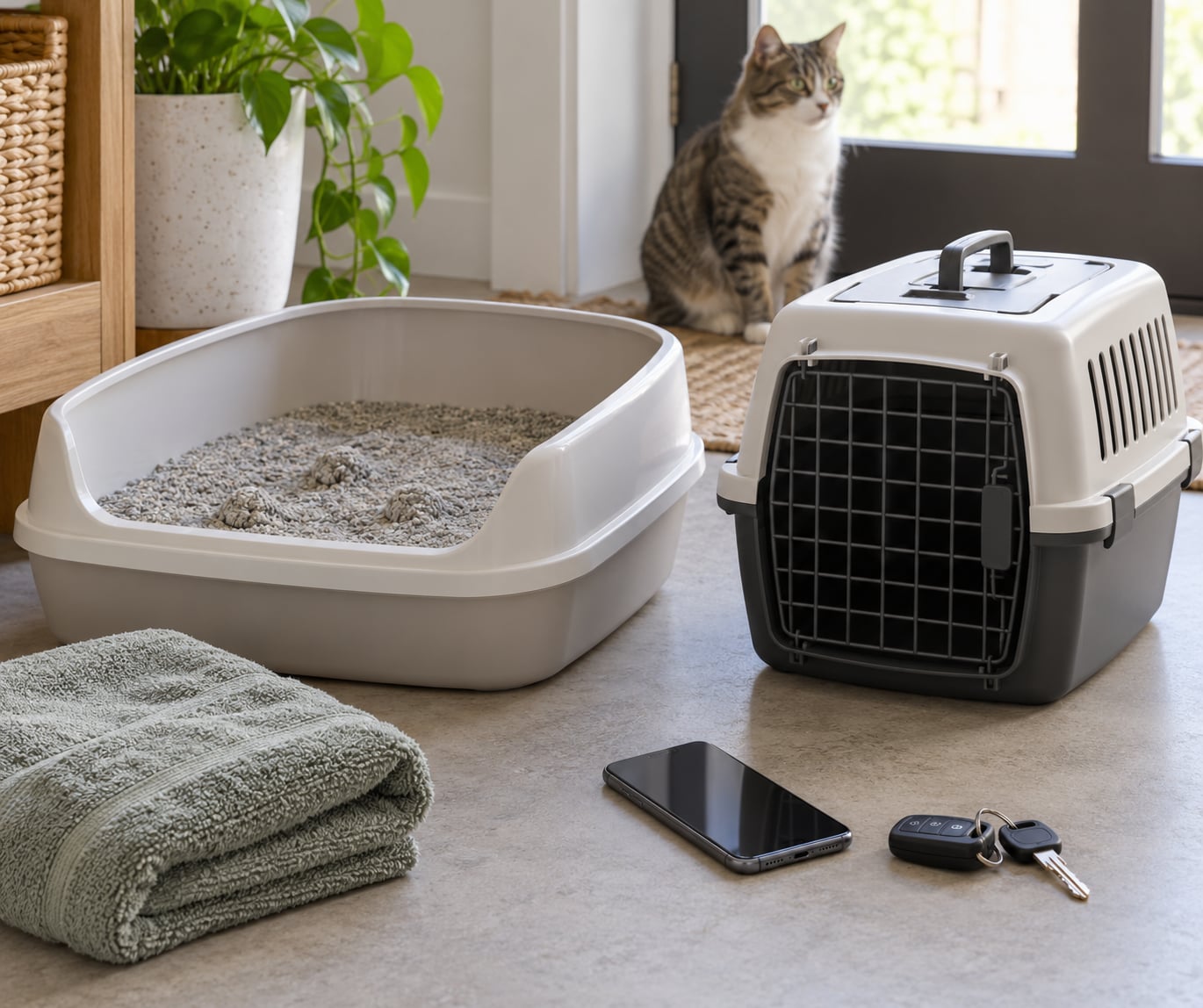
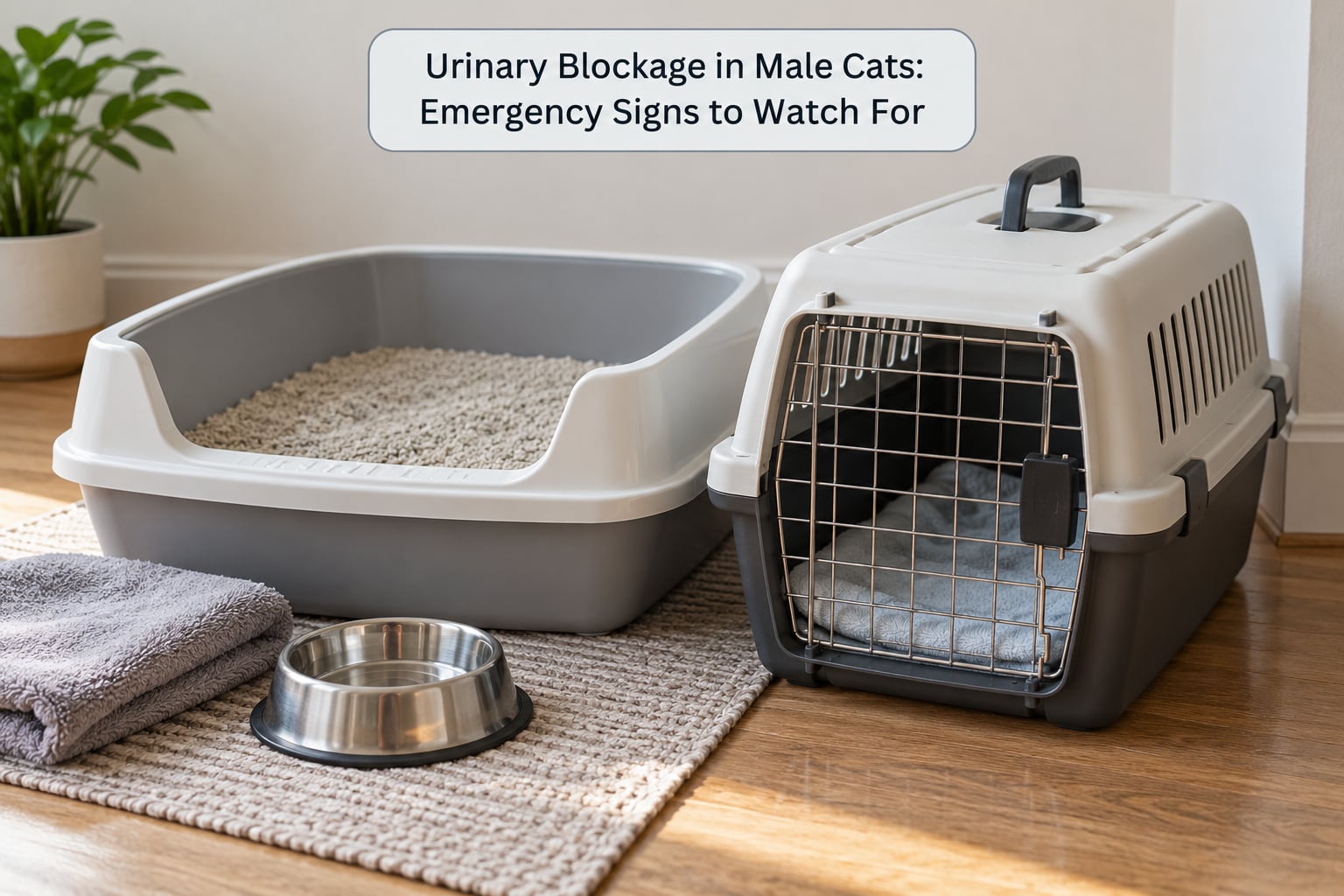
- Transport the cat safely. Use a secure carrier with a familiar towel or blanket inside. Cover it partly with a light cloth if he is distressed, and drive calmly. A cat in pain in a loose carrier is a hazard to itself and to the driver.
- Bring useful information. A short video of the straining, the time you last saw urine, a note of how many litter box trips you have counted, and any current food or medication. If the clinic asked for a video, send it on the phone before you set off.
- Expect an assessment first, not a home fix. Arrival normally means a hands-on examination and blood and urine tests, and only then a treatment plan from the vet.
When To Call Ahead And What To Have Ready
Call ahead whenever you can, and always after hours. A clinic can tell you in thirty seconds whether they are staffed, whether they need a deposit before you arrive, and whether a different hospital is better placed to take your case.
Have these ready before you dial: how old the cat is, whether he is neutered, when he last urinated normally, how many times you have seen him strain today, and whether there is blood in the box. Write it down. At two in the morning nobody remembers details, and those details are exactly what the triage nurse needs.
What Not To Do While Waiting for Veterinary Care
These are the actions that cost time. Skip them.
- Do not give human medication. Painkillers such as paracetamol and ibuprofen are toxic to cats. Antibiotics meant for people do not clear a plug, and giving them delays the decision you need to make.
- Do not try home remedies or urinary remedies from a pet shop. Nothing unblocks a urethra, and several over-the-counter urinary products add to the problem rather than removing it.
- Do not force water. Syringe water into a cat who cannot urinate does not reach the bladder and may create aspiration risk. A cat in pain may bite, and the delay buys nothing.
- Do not repeatedly squeeze or press his lower abdomen to release urine. Manual attempts to empty the bladder can injure the cat and are not something to attempt without veterinary training.
- Do not wait to see whether it passes. Owners who assumed it was constipation and waited until morning are the ones who describe the same story repeatedly. Waiting is the failure mode, not the treatment.
- Do not use a wait-and-see attitude because he seems brighter. Cats with a partial obstruction can look better and still be building pressure.
Why Urinary Blockage Is an Emergency
A blockage is dangerous because the body cannot empty what it has already filtered, and the consequences climb quickly.
Urine backs up into the bladder, which swells and becomes painful. Pressure pushes back toward the kidneys, and the kidneys begin to struggle. Meanwhile, the substances the kidneys normally clear, including potassium and nitrogenous waste, build up in the bloodstream. A raised potassium level can disturb the heart rhythm, which is why a blocked cat can collapse rather than simply feel unwell.
Many veterinary sources describe a critical window of roughly 12 to 24 hours and an overall prognosis that changes over a period of about 24 to 48 hours from the onset of a complete obstruction. A bladder can also rupture when pressure builds severely, which turns an urgent problem into a surgical one.
That timeline is the reason speed matters more than anything else you could do at home. Owners sometimes tell me the hardest part was not the drive, it was realising they had lost the morning. Bring the cat in as soon as a sign appears, even if the signs still seem mild.
How Veterinary Teams Investigate and Treat the Problem
Veterinary teams work through a fairly consistent sequence, though your cat’s condition decides how fast each step happens.
- Examination and bladder palpation. The vet feels the abdomen to check whether the bladder is full, hard and painful. In a blocked cat it often feels like a firm, distended ball. A cat with a hard bladder that suddenly seems to improve is a bladder rupture until proven otherwise.
- Blood tests and urinalysis. Bloodwork shows kidney function, electrolytes and blood sugar. A urine sample, when it can be obtained, reveals crystals, blood, cells and infection. Urinalysis is what separates a crystal plug from an infection.
- Imaging when needed. X-rays or ultrasound show stones and help rule out other causes of straining, such as a mass or a prolapsed rectum.
- Stabilisation. A cat that is in a critical state gets fluids, pain relief and management of electrolytes before anything else. This is often IV fluids, and the vet decides the rate and what goes in them.
- Relief of the obstruction. A urinary catheter is passed to clear the plug and drain the bladder, then the catheter stays in so the urethra stays open. The bladder is flushed, and the cat is hospitalised, commonly for a few days, while urine output, kidney values and appetite are monitored.
- A plan for repeat blockages. If a cat blocks again and again, a surgeon may recommend a perineal urethrostomy, a procedure that shortens the distance urine has to travel by creating a new opening. It is usually discussed when obstruction keeps recurring despite diet and management. Your vet decides whether it fits your cat’s case.
If the prognosis turns out to be poor, ask the vet to explain it plainly, including what quality of life looks like for your cat. Owners facing that conversation are often relieved to hear it framed as a medical judgement made alongside them, based on pain, kidney function and recovery chances, rather than a decision made quickly without them.
Aftercare and Prevention Questions for Your Veterinarian
Recurrence is common enough that the conversation after discharge matters as much as the emergency itself. Owners of cats that have blocked two or three times say the biggest relief came from having a written plan rather than guessing.
Useful questions to put to your vet include:
- How long should I watch for re-blocking, and exactly which signs mean I come straight back? The period from the first 48 hours out to about two weeks is when owners are most anxious.
- What should I feed him, and how do I transition to it if he refuses it? Owners report that gradual changes over two to three weeks work better than a sudden switch, and that a prescription urinary diet is one part of a plan rather than a cure on its own.
- How much wet food should make up his daily intake, and does a water fountain help? Many vets suggest that a large share of daily calories come from wet food, because urine volume is the point.
- Should I weigh him, and how does weight affect his urinary health?
- How many litter boxes should a multi-cat household have, and does litter hygiene matter? One box per cat plus one is the rule of thumb most practices give.
- Could stress be part of this? Moving furniture, new pets, conflict between cats and outdoor threats are all recognised triggers for flare-ups.
- How often should we recheck urine and kidney values?
Worth saying plainly: no single product prevents an obstruction. Diet, hydration, litter habits, weight and stress management work together, and the plan has to fit your cat and your household.
Frequently Asked Questions
How long can a cat go with a urine blockage?
A complete obstruction can become life-threatening in roughly 12 to 24 hours, and most veterinary sources describe the window from first symptoms to irreversible organ damage as about 24 to 48 hours. Cats that still eat and act normally early on can deteriorate sharply later the same day. That is why a male cat straining with little or no urine is treated as an emergency now, not something to monitor until morning. Call a veterinary clinic or emergency animal hospital as soon as you notice the signs.
Can a urinary blockage clear itself on its own?
Rarely, and you cannot tell the difference from the outside. A partial obstruction where a trickle of urine still passes can resolve, but you cannot confirm at home that flow is adequate or that pressure is not building. If a plug does clear, the causes that formed it are usually still there, so the same cat blocks again. No home remedy, supplement or urinary product unblocks a urethra. If you suspect a blockage, call a veterinarian rather than waiting to see what happens.
What is the survival rate for male cats with urinary blockage?
Most cats treated promptly do well, which is the reason to act fast. The figures that circulate online vary widely because outcomes depend on whether the cat is a first-time or repeat case, how long the obstruction lasted, and how well the kidneys were working at arrival. Cats that block repeatedly, or that have underlying kidney damage, have a more guarded outlook. Your veterinarian is the only person who can give you a realistic prognosis for your cat, because they have the blood values and the examination findings.
How can I tell the difference between constipation and a urinary blockage?
You often cannot, and this is the most common and most dangerous misunderstanding among owners. Constipation makes a cat strain in the litter box with dry stool appearing later, while a blockage produces straining with little or no urine at all. Straining, hunching and vocalising occur in both. The deciding information comes from examining the bladder and testing the urine, which only a veterinarian can do. If you are unsure which it is, treat it as a blockage and go in.
Will a cat with a urinary blockage still eat?
Often yes, at least early on, and that is part of what makes this condition dangerous. Cats commonly keep eating and greet their owners normally in the first hours while a partial obstruction builds, then stop eating, hide and become weak later. Owners often say the cat ate breakfast and was found barely responsive that evening. Eating and normal behaviour are not reassurance, and no sign of a blockage should be explained away by the fact that your cat still seems fine.
Is it appropriate to put a male cat down for a urine blockage?
That decision is a conversation to have with your veterinarian, not one to make at home, and it is rarely the first option. Most cats treated promptly recover well, and even repeat cases can be managed with a plan. If a vet gives a poor prognosis, ask them to explain it in plain terms, including what pain level and quality of life look like for your cat and what each option means. Asking to be part of that decision, and to understand it, is completely reasonable.
Conclusion
If a male cat is straining to urinate, producing little or no urine, crying in pain or becoming weak, contact an emergency veterinarian immediately rather than waiting or treating it at home. A urinary blockage in male cats is a medical emergency with a 24 to 48 hour window, and the single most useful thing you can do is make the call now.
Sources And Further Reading
This article draws on general guidance from recognised veterinary bodies and references, including the American Veterinary Medical Association, the Cornell Feline Health Center, the American College of Veterinary Surgeons, the MSD Veterinary Manual and International Cat Care. They are good places to read more once your cat is being treated, and your own veterinary team remains the best source for anything about your cat specifically.
Reviewed for accuracy by a veterinarian. Last updated in 2026. This article is educational and does not replace veterinary care. If your cat may be blocked, call your vet or an emergency animal hospital now.