Most healthy cats never need a bath. So the honest answer to how often should you bathe a cat is: only when there is a reason. Self-grooming handles almost everything, and the cats that do need regular washing — hairless breeds, long-haired cats, senior cats that can no longer reach certain areas — fall into a much smaller group. This guide covers the frequency numbers, the signs that a bath is due, and a calm step-by-step method for the day you do wash your cat.
That last part matters more than people expect. A bath is one of the few routine handling jobs that can genuinely scare a cat, so how you do it decides whether the next one is easier or harder.
Table of Contents
- How Often Should You Bathe a Cat?
- Do Cats Need Baths at All?
- How Often Should You Bathe Different Types of Cats?
- Bathing a hairless cat on a schedule
- Senior cats and kittens
- What Signs Mean Your Cat May Need a Bath?
- How to Bathe a Cat Safely and Calmly
- Bathing Alternatives for Cats
- Frequently Asked Questions
- How often should I bathe an indoor cat?
- Do cats necessarily need baths?
- How often should I bathe a Sphynx or hairless cat?
- Can I use dog shampoo or human shampoo on my cat?
- How do I bathe a cat that hates water?
- Are cats happier after a bath?
- A Simple Bathing Routine for Your Cat
How Often Should You Bathe a Cat?
For a healthy adult cat that grooms itself well, rarely — most never need one at all. Hairless breeds such as the Sphynx need roughly weekly baths, long-haired cats about every few months, and senior, overweight or unwell cats need whatever schedule keeps their skin clean. Otherwise, bathe on reason, not on a calendar.
Online advice contradicts itself constantly. One source says never bathe, another says every four to six weeks, a third says monthly, and forums add “not more than four times a year”. They are not all wrong; they are answering for different cats. A fixed rule cannot apply to a seven-kilo Persian that mats behind the ears and an eight-year-old with arthritis who cannot turn around.
The table below is the quick version. Read your cat’s situation, not the average of somebody else’s cat.
| What the situation looks like | What to do | How often |
|---|---|---|
| Coat and smell normal, cat grooms daily | Nothing at all | No schedule |
| Greasy ears, paws or tail base; dull coat | Damp cloth or cat-safe grooming wipes | Spot clean weekly until it clears |
| Strong smell, matted fur, bald patches, heavy licking | Vet visit first, bath only on advice | Decided by your vet |
| Grease, paint, skunk, antifreeze, oil or a faecal accident | Bathe immediately, and call a vet about toxins | One bath, then reassess |
| Outdoor cat back from dirt, plants or other animals | Check for fleas and ticks instead of washing | Vet-issued parasite treatment |
| Senior or overweight cat leaving areas unclean | Partial wash, brushing help or a groomer | Every few weeks, if needed |
Do Cats Need Baths at All?
Usually not. A cat’s tongue is covered in tiny backward-facing papillae, and when it drags through the coat those barbs spread saliva and natural oils through the fur, loosen dead hair and act like a comb. That grooming spreads the sebum your cat’s skin produces, which keeps the coat waterproof and the skin at a stable pH.
It also means the coat stays cleaner than most dogs’ does. Cats groom several times a day, and owners on cat forums routinely report that their cats have never had a full bath in their lives. Nothing is wrong with that.
Bathing works against that system. Water plus shampoo strips the natural oils, and a coat that has lost its oils looks dull, feels rough and can start flaking. Repeated baths can also push a cat into over-grooming, because irritated skin triggers more licking, which leads to bald patches and hairballs. The risk is real but it comes from frequency, not from the occasional necessary bath.
For most cats, brushing does more good than bathing. Regular brushing removes loose hair before it becomes a hairball, spreads those natural oils, and lets you notice lumps, fleas, mats or skin changes weeks before they become a problem. Long-haired cats generally benefit from a few minutes several times a week; short-haired cats need less.
One exception is worth naming: persistent skin problems, strong odours, matting, parasites or sudden coat changes should go to a veterinarian first, not to a tub. Shampoo can mask the thing you actually need to diagnose.
How Often Should You Bathe Different Types of Cats?
These are starting points rather than instructions. Any cat that behaves differently from its normal self, or that suddenly stops grooming, deserves a vet appointment rather than a new bathing schedule.
| Cat type | Typical frequency | Why |
|---|---|---|
| Healthy short-haired indoor adult | Rarely, often never | Self-grooming covers the whole coat and keeps oils distributed |
| Long-haired adult (Persian, Maine Coon, Ragdoll) | Every few months at most, or never | Dense coat; daily or several-times-weekly brushing matters far more |
| Hairless breeds (Sphynx, Devon Rex) | About once a week | No coat to absorb oil, so skin turns greasy and flaky quickly |
| Senior or arthritic cat | As needed, agreed with your vet | Reduced mobility means the back, hips and rear go ungroomed |
| Overweight cat that cannot reach its back | Partial washing, every few weeks if needed | Unreachable areas stay dirty no matter how often the cat grooms |
| Outdoor cat with free access | Only after a specific incident | Dirt and odours are better handled with parasite treatment and brushing |
| Kitten under 8 weeks | Do not bathe at home | Drowning risk is high; a damp cloth is the safer clean-up |
| Cat on vet-prescribed medicated treatment | Exactly as prescribed | Too much or too little changes the outcome |
Bathing a hairless cat on a schedule
Hairless cats are the clearest exception. With no fur to trap sebum, the skin gets greasy and the pores can block, which shows up first on the back, around the tail base and inside the ears. A warm damp cloth between baths keeps it manageable, and a cat-specific shampoo about once a week usually does the rest. Skin that flakes or reddens is a vet question, not a shampoo strength question.
Senior cats and kittens
Older cats groom less because they hurt, stiffen or simply cannot reach. If your cat is licking less and its coat is duller than it used to be, arrange a check rather than assuming it needs washing. Kittens under eight weeks should not be bathed at home at all; they can chill quickly and cannot get out of water safely.
What Signs Mean Your Cat May Need a Bath?
Read the coat and the smell rather than a calendar. Common signs that something needs attention:
- Grease building up on the ears, paws, tail base or rump
- A coat that has gone dull, stiff or patchy when it used to be glossy
- A strong, musky smell that returns days after a clean-up
- Matted fur, especially behind the ears, on the rump or under the collar
- Fecal or urine contamination, or a paw that has walked through something sticky
- Exposure to grease, paint, oil, gasoline, antifreeze or skunk spray
- A patch of missing fur with skin visible underneath
- Heavy licking or chewing at the skin, which often points to fleas or dermatitis
Some of those need a small clean, not a bath. Wiping muddy paws with a damp cloth or trimming fur stuck to a pad solves most everyday accidents and keeps the stress bill at zero.
Others need a professional. Mats that pull on the skin and grease that has hardened around the tail base are kinder to a groomer’s clippers than to a kitchen sink. Severe matting close to the skin can pull hard enough to hurt, and a cat in pain will not cooperate.
Finally, some need a vet and not a groomer. A strong smell that comes back within a week, bald patches, weeping or crusty skin, constant licking and scratching point to parasites, ringworm or dermatitis. In those cases, bathing treats the symptom while the cause keeps going.
How to Bathe a Cat Safely and Calmly
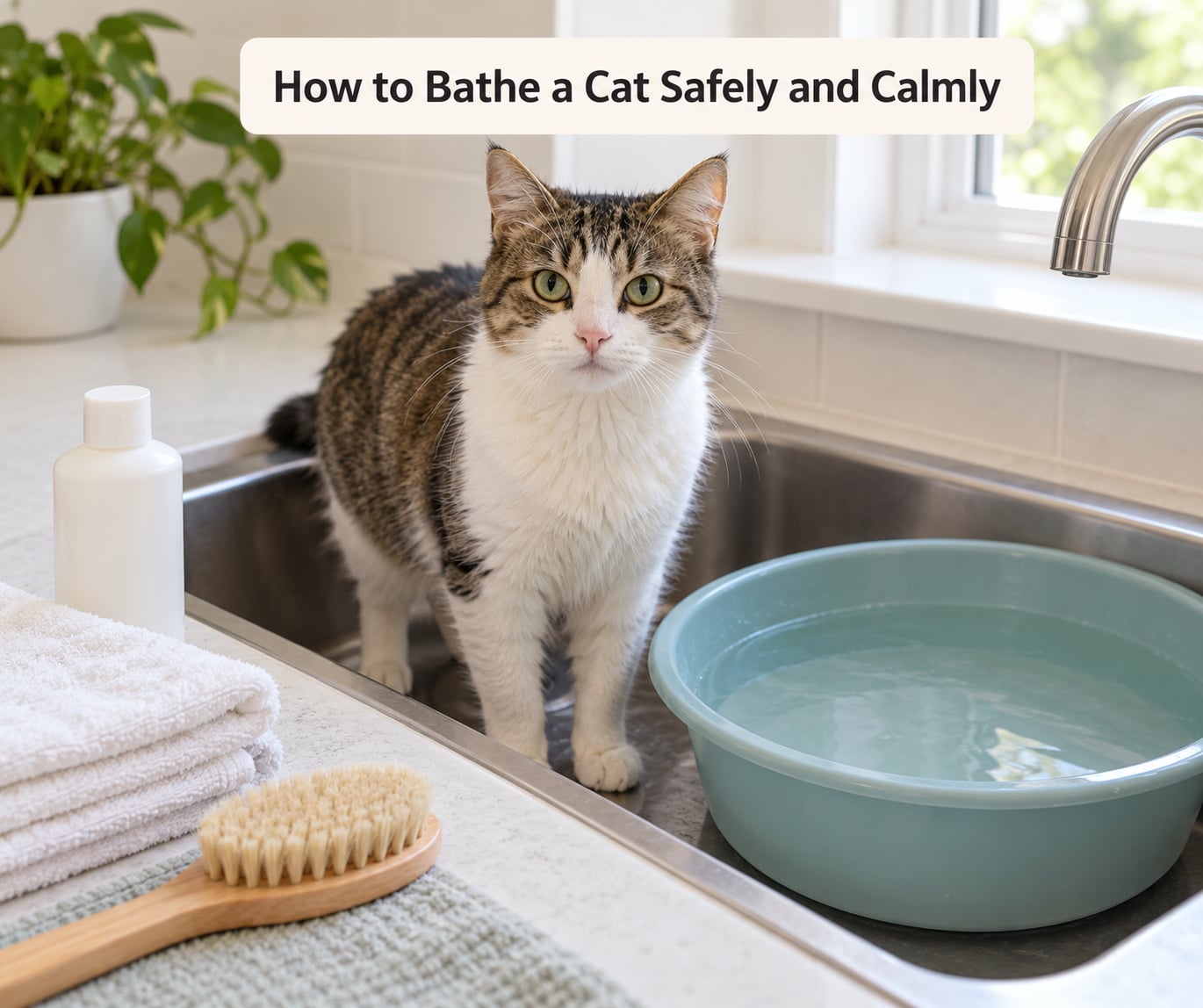
Prepare everything before the cat enters the room. A bath assembled halfway through is a bath where your cat wins.
- Set up the space. Use a bathroom or utility sink, not a bathtub. Lay a rubber mat or folded towel on the bottom for traction. Fill the basin with a few centimetres of lukewarm water and test it with your inner wrist first.
- Gather towels and shampoo. You need two or three dry towels within arm’s reach, a gentle cat brush, a plastic cup or handheld showerhead, and a shampoo labelled for cats.
- Brush out loose hair before wetting. Wet coat mats far faster than dry coat, and brushing first means you handle the coat once instead of three times.
- Let the cat settle. Put the cat in the basin standing, talk calmly, and offer a treat or two. Never lift a struggling cat and never dunk it.
- Wet the coat slowly. A handheld showerhead held above the cat is usually less frightening than water rising from below. Work from the shoulders towards the tail base.
- Shampoo and rinse thoroughly. A small amount is enough. Rinse until the water runs clear, because leftover shampoo is a common cause of post-batch itching.
- Towel dry, then finish in a warm room. Squeeze water out gently rather than rubbing. Let the cat air-dry somewhere warm and draught-free, brushing as it dries.
Safety rules worth keeping on one line: never use human or dog shampoo, never use essential oils or human skin medication on a cat, and never use a dog flea shampoo containing permethrin, which can be fatal to cats.
On products, cat-specific shampoo is the only safe default. A medicated shampoo belongs to a vet and a diagnosis, not to a bad coat day. If you are unsure which you have, read the label and ask the clinic before the bath, not after.
Bathing Alternatives for Cats
For most situations that prompt the question “does my cat need a bath?”, something gentler does the same job. The trade-off is coverage: alternatives clean an area, not the whole cat.
| Method | Best for | Lasts | Stress level |
|---|---|---|---|
| Brushing | Whole coat, loose hair, mats, hairball prevention | Ongoing | Low |
| Damp cloth | Paws, belly, face, minor dirt | A day at most | Very low |
| Cat-safe grooming wipes | Localized grease or paw mess on a cat who hates water | A few hours | Very low |
| Waterless shampoo or dry foam | Oily coats when water is not an option | One clean, then grooming again | Low |
| Professional groomer | Long-haired, matted or water-fearing cats | Every six to eight weeks | Low, cat is secured |
| Vet-directed medicated bath | Dermatitis, dandruff, fungal skin infection | On the vet’s schedule | Moderate |
Pet wipes and waterless shampoos are the two options cat owners reach for most, and they suit different problems. Wipes handle a dirty paw or a smear of grease. Waterless products handle a whole oily coat and need proper massaging in and a brush-out afterwards, so they are less of a quick fix than people expect.
Anything persistent belongs with a veterinarian. Flakes, redness, itching, hair loss and recurring odor usually mean parasites, a fungal infection or dermatitis, and no household product treats the underlying cause. If your cat is on a medicated plan, follow the clinic’s timing rather than the table above.
After any bath, watch the cat for the rest of the day. Shivering, hiding or a quiet appetite are common and usually pass. Retained warmth matters in older cats, so keep them somewhere warm and dry. Call your vet if the cat stays hunched or vocal, refuses to eat for more than a day, licks at the skin obsessively after the bath, or seems painful to touch.
Frequently Asked Questions
How often should I bathe an indoor cat?
A healthy indoor cat that grooms itself normally does not need scheduled baths, and many never have one. Bathe only when there is a visible reason: grease, a faecal or urine accident, a strong smell, matting, or contact with something sticky or toxic. If your cat stops grooming or its smell changes, book a vet appointment rather than reaching for shampoo.
Do cats necessarily need baths?
No. A cat’s tongue is covered in tiny backward-facing papillae that comb saliva and natural oils through the coat and pull out loose hair, so self-grooming covers most cleaning needs. Bathing is reserved for what grooming cannot fix, and for breeds such as the Sphynx that produce little coat oil of their own and need washing on a schedule.
How often should I bathe a Sphynx or hairless cat?
Hairless cats generally need a bath about once a week because they have no coat to absorb oil, so the skin becomes greasy and flaky between washes. A warm damp cloth in between keeps the build-up manageable. Watch for redness, flaking or a strong smell, since skin problems in hairless cats show up early around the back and tail base.
Can I use dog shampoo or human shampoo on my cat?
No. Dog flea shampoos containing permethrin can be fatal to cats, and human shampoo has the wrong pH, which leaves skin dry and flaky. Use a shampoo labelled for cats, or the medicated product your veterinarian prescribes. Never apply human skin medication or essential oils to a cat’s coat.
How do I bathe a cat that hates water?
Most of the work happens long before the water does. Use reward-based desensitisation from kittenhood, short calm handling sessions, a rubber mat for traction, lukewarm water, a handheld showerhead and plenty of treats, and bring a second pair of hands if you can. If your cat panics rather than fusses, stop and book a groomer.
Are cats happier after a bath?
Not for the day itself. Bathing raises stress, and many cats hide or sulk for hours afterwards. Once they are dry, warm and settled, most return to normal within a day. A cat that keeps hiding, refuses food, or seems painful after a bath should be checked by a veterinarian, because cold, stress or an underlying skin problem are all possibilities.
A Simple Bathing Routine for Your Cat
Start with the honest assessment: if your cat is healthy, bright and grooming itself, the routine is brushing, weekly checks for fleas and no bath at all. That answer surprises people who assume a clean-smelling cat must be a washed cat.
The exceptions are short: hairless breeds weekly, long-haired cats every few months at most, and cats that cannot groom themselves getting the help they need to stay clean. Everything else is a response to grease, a mess, matting or a toxin, not a date on the calendar.
Contact your veterinarian for skin irritation, a strong odor, parasites, hair loss, pain, or any sudden change in how your cat looks or behaves. That conversation will tell you more in five minutes than any bathing schedule.
Reviewed for accuracy in October 2026. This guide is general information and does not replace an examination by a veterinarian.