Arthritis in older dogs is managed rather than cured, and most of the comfort comes from a short list of small changes: a non-slip route through the house, a bed that supports the joints, a warm and dry resting spot, short gentle walks, and whatever pain relief your veterinarian prescribes. Owners who change one or two things at a time usually see a difference within a few weeks.
The awkward part is that dogs are good at hiding pain. A dog can trot to the park and then limp for two days afterwards, and the limp arrives too late to warn you. That is why the plan below starts at the clinic and works outward to the hallway, the sofa and the food bowl.
This is general guidance, not a diagnosis or a treatment plan. Only your veterinarian can examine the dog, take radiographs and decide what medication is safe.
Table of Contents
- What You Need
- Step-by-Step: Build a Comfort Plan for Your Older Dog
- 1. Confirm the Diagnosis With Your Veterinarian
- 2. Follow the Vet’s Pain Management Plan
- 3. Create a Warm, Supportive Resting Place
- 4. Reduce Slips, Jumps, and Awkward Movements
- 5. Add Short, Gentle, Low-Impact Movement
- 6. Keep Weight and Daily Care Steady
- 7. Track Comfort and Adjust With the Vet
- Common Mistakes to Avoid
- When to Contact Your Veterinarian
- Frequently Asked Questions
- Is heat or cold better for an older dog with arthritis?
- Can massage help an older dog with joint pain?
- Should I give my dog joint supplements for arthritis?
- How long does it take to help a dog with arthritis?
- Can a dog be comfortable without veterinary treatment if the arthritis is mild?
- Conclusion: Start With a Vet Visit and Small Changes
What You Need
Everything below is either something you already own or something you can pick up this week. None of it needs a big purchase to start.
- Veterinary confirmation and guidance, including a written pain plan you can follow at home.
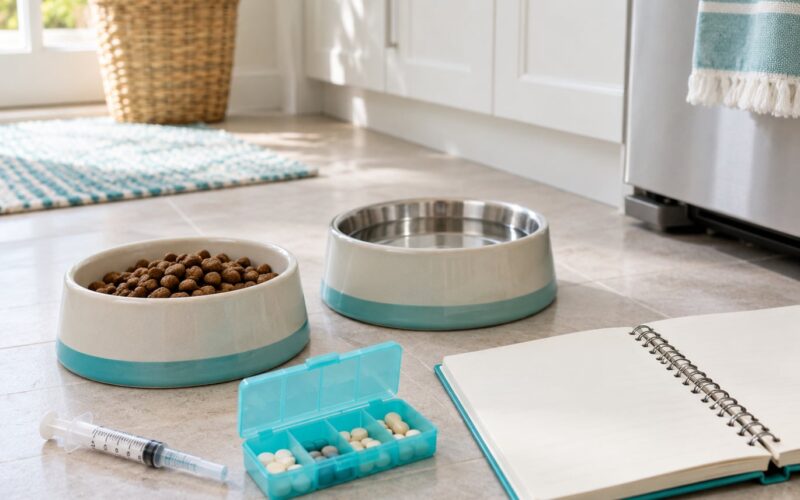
- A current medication list, so you know exactly what is being given and when.
- Nonslip runners or mats for the routes your dog uses most, plus anti-slip tape for stairs if you have them.
- A supportive bed with a firm, cushioned base, positioned away from draughts.
- Nonslip footwear, if your dog tolerates it and your vet agrees it fits well.
- Your dog’s normal food, measured out in the usual portions.
- Time for two or three short, low-impact walks rather than one long one.
- A notebook or phone note for a daily observation record.
Step-by-Step: Build a Comfort Plan for Your Older Dog
Arthritis cannot be diagnosed or treated from an article, and nothing below replaces what your veterinarian has already prescribed. It is the home half of the plan, and it works best when you change one or two factors at a time so you can actually tell what helped.
1. Confirm the Diagnosis With Your Veterinarian
Stiffness after resting, a reluctance to rise, difficulty with stairs or the car, a narrower stance in the back legs, or a dog who seems slower and less enthusiastic than last year all deserve an examination. The appointment is more useful if you bring short video clips of the dog walking, lying down and getting up.
Your vet will combine the history, a physical exam and usually radiographs to separate arthritis from injury, nerve problems or joint conditions that need different treatment. Not every stiff dog has arthritis, and starting treatment on your own risks masking a problem that needs something else entirely.
2. Follow the Vet’s Pain Management Plan
Prescribed pain relief and any other treatment must be given exactly as directed, at the same times each day. If a dose is missed, or your dog vomits, seems off, or stops eating after a dose, call the clinic rather than adjusting the dose yourself.
Never give human painkillers. Ibuprofen, naproxen, acetaminophen and aspirin, including baby aspirin and enteric-coated varieties, can cause stomach ulcers, kidney failure and death in dogs. This is one of the most common ways a well-meaning owner causes an emergency, because the tablets are already in the house.
3. Create a Warm, Supportive Resting Place
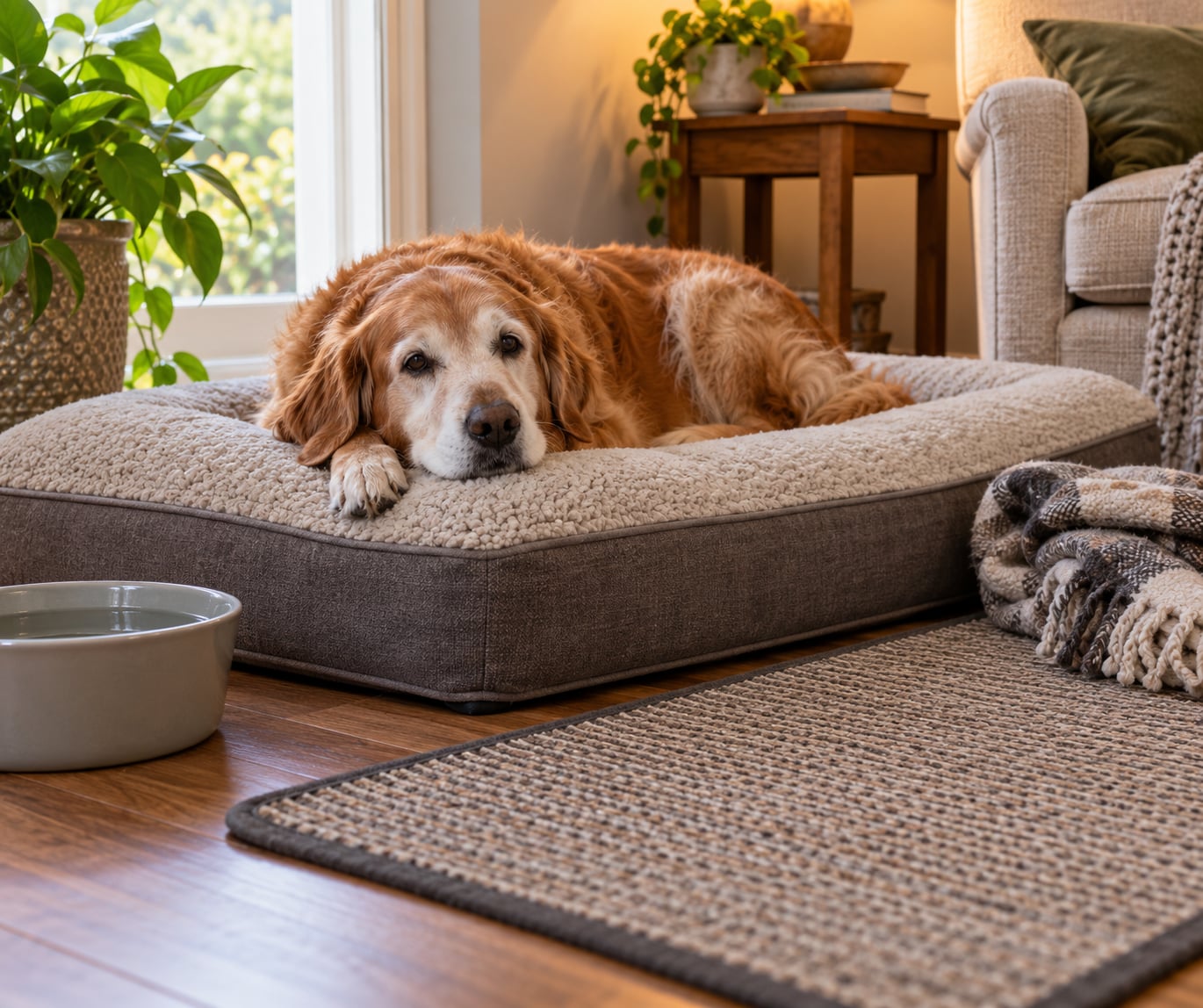
Choose a bed with a cushioned, supportive base that keeps the spine level, and put it where the dog can settle without being disturbed. Older arthritic dogs do better in one consistent spot than moving between rooms.
Keep the sleeping area warm and dry, away from draughts and direct heat, and put water, food and medication within easy reach so a painful dog does not have to stand up and cross a slippery floor in the middle of the night. A low step or ramp beside the bed also helps with the 2am shuffle. If you are working through arthritis in older dogs how to make them comfortable, the resting surface is usually where owners notice the first clear change.
4. Reduce Slips, Jumps, and Awkward Movements
Sliding on tile or laminate causes repeated small injuries inside the joint, so cover the routes the dog actually uses with secured nonslip runners. Loose rugs slide and trip, so tape down the edges or replace them with rubber-backed ones.
Block access to high stairs with a baby gate and add a ramp where the steps are shallow enough for one. Keep the floor between the sofa, the door and the bed clear of toys, bowls and cables, and lift the dog with both hands under the chest and hindquarters when stairs or the car are not an option. A support harness can help with short assisted walks, and a buggy or wheelchair keeps a dog that cannot manage a walk involved in the world.
5. Add Short, Gentle, Low-Impact Movement
Arthritic joints do better with regular easy movement than with rest, but the movement has to be gentle. Leash walks on flat ground, slow pace work, and, where your vet agrees, swimming or hydrotherapy are the usual building blocks.
Start below what the dog can currently manage: two or three short walks of around fifteen minutes rather than one long one, and increase only if the next morning is normal. Watch for lagging behind, stiffness on rising, panting at rest, a reluctance to continue or a walk that gets slower as you go. In practice, short walks and runners laid around the house tend to help far more than the longer routes the dog used to insist on.
6. Keep Weight and Daily Care Steady
Keep your dog on the food they already eat in the portions they already get, and ask your vet about weight before changing anything. Every extra pound is carried by sore joints, and gradual weight loss is often the change that most improves comfort. Do not start a restrictive diet, a supplement or a therapeutic food without veterinary advice.
Stick to the usual toileting routine, handle the dog gently when lifting or drying, and check paws and joints once a week for cuts, redness or swelling. Apply nothing to a sore joint unless your vet has told you to.
7. Track Comfort and Adjust With the Vet
Keep a short weekly log: how the dog rises in the morning, how long the walk lasted, appetite, bowel habits, sleep, which medication was given and when, plus any stiffness episode and what preceded it. Even five lines a day gives you something useful to bring to the next appointment.
Note what changed and when. A week of notes before a change, then a week after, usually shows more than memory does, and it is the fastest way to spot whether a ramp, a new bed or a different walk time is helping.
Common Mistakes to Avoid
- Pushing through pain. A stiff dog on a walk is accumulating damage, not building fitness. Shorten the walk, slow the pace, and let your vet set the limit.
- Using human medication. Ibuprofen, naproxen, acetaminophen and aspirin belong in the human medicine cabinet, not a dog’s bowl.
- Adding supplements on your own. Glucosamine and chondroitin, omega-3 fish oil, green-lipped mussel, turmeric and CBD are all discussed constantly, and the evidence is mixed. They can also interact with prescribed medication, so start with your vet.
- Expecting quick results. Strength comes back over weeks, not days. Judge changes over a couple of weeks, not one good afternoon.
- Switching food abruptly. Sudden diet changes cause stomach upset, which adds pain rather than removing it. Any change belongs in a conversation with your vet first.
- Using loose rugs. A rug that shifts underfoot is worse than bare floor. Non-slip backing or anti-slip tape fixes it.
- Reading one bad day as a crisis. Dogs have good and bad days with arthritis. Look for the pattern in your log before reacting to a single morning.
Start with the two changes that cost nothing: a runner along the dog’s usual route and a warmer, more supportive bed. Then give each change a week before deciding.
When to Contact Your Veterinarian
Some signs should not wait for the next routine appointment. Book a same-day or emergency call if your dog:
- Cannot stand or walk, or suddenly loses the use of a back leg.
- Seems to be in sudden or worsening pain, crying, yelping or refusing to be touched.
- Develops new weakness, or drags a hind leg rather than stepping on it.
- Vomits repeatedly, refuses food or water, or reacts badly to a medication.
- Is suddenly reluctant to go outside, and you cannot find an obvious reason such as weather.
- Seems to have injured a joint after a slip, a fall or awkward jumping.
A limp that appears the day after a walk and clears by itself is worth mentioning at the next appointment. A limp that gets worse over days, or a dog who cannot settle at night, is a reason to call sooner rather than later.
Frequently Asked Questions
Is heat or cold better for an older dog with arthritis?
Warmth usually relaxes the muscles around a stiff joint, so a warm room, a dry bed and a coat for cold, wet outings tend to help. Owners report dogs seeking sun-warmed flooring and shallow warm water on bad days. Never use direct heat on a sore joint, and check the skin afterwards, since arthritic dogs cannot move away from a pad that gets too hot.
Can massage help an older dog with joint pain?
Gentle massage can ease muscle tension around a sore joint and give you time to notice swelling, heat or a spot the dog guards. Keep it light, stop if the dog pulls away or stiffens, and never press on a joint that is hot, swollen or recently injured. Ask your vet first if the dog is on pain medication or has a spinal condition.
Should I give my dog joint supplements for arthritis?
Many owners use glucosamine with chondroitin, omega-3 fish oil, green-lipped mussel or turmeric, and the research is genuinely mixed. Supplements are not a replacement for veterinary pain relief, and some can interact with prescribed medication. Bring the product label to your appointment and let your vet decide whether it is worth the cost for your dog.
How long does it take to help a dog with arthritis?
Environmental changes such as a nonslip route or a ramp usually show up within days, because the dog slips less. Strength and mobility take longer, usually several weeks of consistent gentle activity, and medication often brings relief within the first days. Judge progress over two to three weeks of notes rather than on a single morning, and review it with your vet.
Can a dog be comfortable without veterinary treatment if the arthritis is mild?
A dog diagnosed with mild arthritis still benefits from a treatment plan, because pain tends to creep upward without anyone noticing. Home changes and weight control support comfort, but only your vet can confirm how mild it really is and whether medication is needed. Skipping the check means carrying on without a baseline to compare against later.
Conclusion: Start With a Vet Visit and Small Changes
The priorities are simple. Confirm the problem with a veterinarian, follow the prescribed plan exactly, remove the slipping hazards in your dog’s path, give them somewhere warm and supportive to lie, and add only the gentle activity they tolerate. Keep human painkillers out of reach, always.
Then make one change you can manage this week, write down what happened over the following days, and take those notes to your next appointment. That is usually where the real gains start.