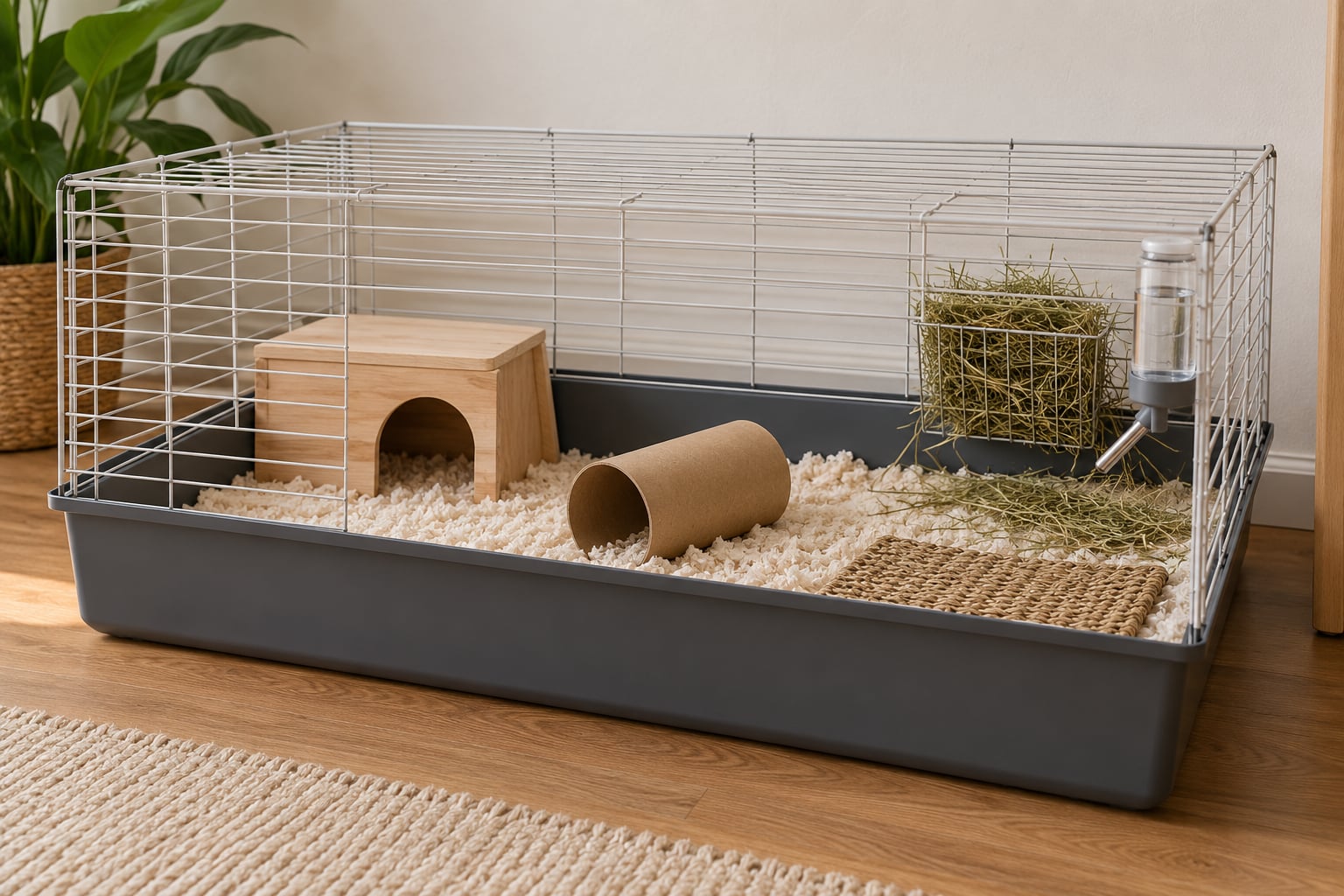
A properly set-up guinea pig cage gives you a solid floor, safe bedding, unlimited hay, constant clean water and enough open space to run. Getting those things right before the animal arrives takes about an hour of arranging and is far easier than rearranging a nervous guinea pig later.
This guide walks through exactly how to set up a guinea pig cage properly, in order, from picking the spot to running the final safety check. If you want the short version: measure the space, put the enclosure somewhere quiet and draft-free, line the floor with washable non-toxic bedding, add one hide per guinea pig plus one spare, spread hay across more than one area, and secure a water bottle before anything goes in.
Guinea pigs are prey animals built for running, not for sitting still. A cramped or poorly furnished cage is one of the most common reasons owners end up at the vet with foot injuries, weight problems or respiratory illness, and it is also the easiest problem to prevent.
Table of Contents
- What You Need
- Step-by-Step: How to Set Up a Guinea Pig Cage Properly
- Choose the Right Location
- Add Safe Bedding and Flooring to Your Guinea Pig Cage
- Place Shelter, Food and Water
- Add Enrichment and Exercise Space
- Test the Cage Before Introducing Your Guinea Pig
- Common Mistakes
- Frequently Asked Questions
- How big should a guinea pig cage be for two guinea pigs?
- How many hides does a guinea pig need?
- What is the best bedding to put in a guinea pig cage?
- Should you cover a guinea pig cage at night?
- How often should I change the fleece in my guinea pig cage?
- How do I know my guinea pig is stressed in a new cage?
- Conclusion
What You Need
Assemble everything before the guinea pig comes home. A cage emptied and rebuilt while an anxious animal is inside it is a much worse afternoon than a flat-packed setup on an empty living room floor.
- An enclosure with a solid floor. Wire mesh floors cause bumblefoot, a painful condition where sores form on the feet, so skip anything sold as a wire-bottom cage.
- Washable bedding. Fleece liners with an absorbent layer underneath, paper bedding or kiln-dried wood shavings that are not scented.
- Hides. One solid hide per guinea pig, plus one spare, so nobody has to share while the others are asleep.
- A heavy food bowl. A ceramic or stoneware bowl that stays put when the pig leans on it.
- A hay feeder or hay box. Metal racks with a solid base, or a wooden hay box that catches dropped hay.
- A capped water bottle. Mounted outside the bars with the sipper valve inside at a comfortable height, plus a ceramic dish as a backup.
- Exercise and foraging items. A fleece forest, a cardboard tunnel, an untreated wooden chew toy, a foraging mat.
- Cleaning supplies. A pet-safe disinfectant, a small scoop, a stiff brush for bars and a vacuum with a hose attachment.
None of this is complicated. The only items people genuinely regret skipping are the extra hide and a second water source.
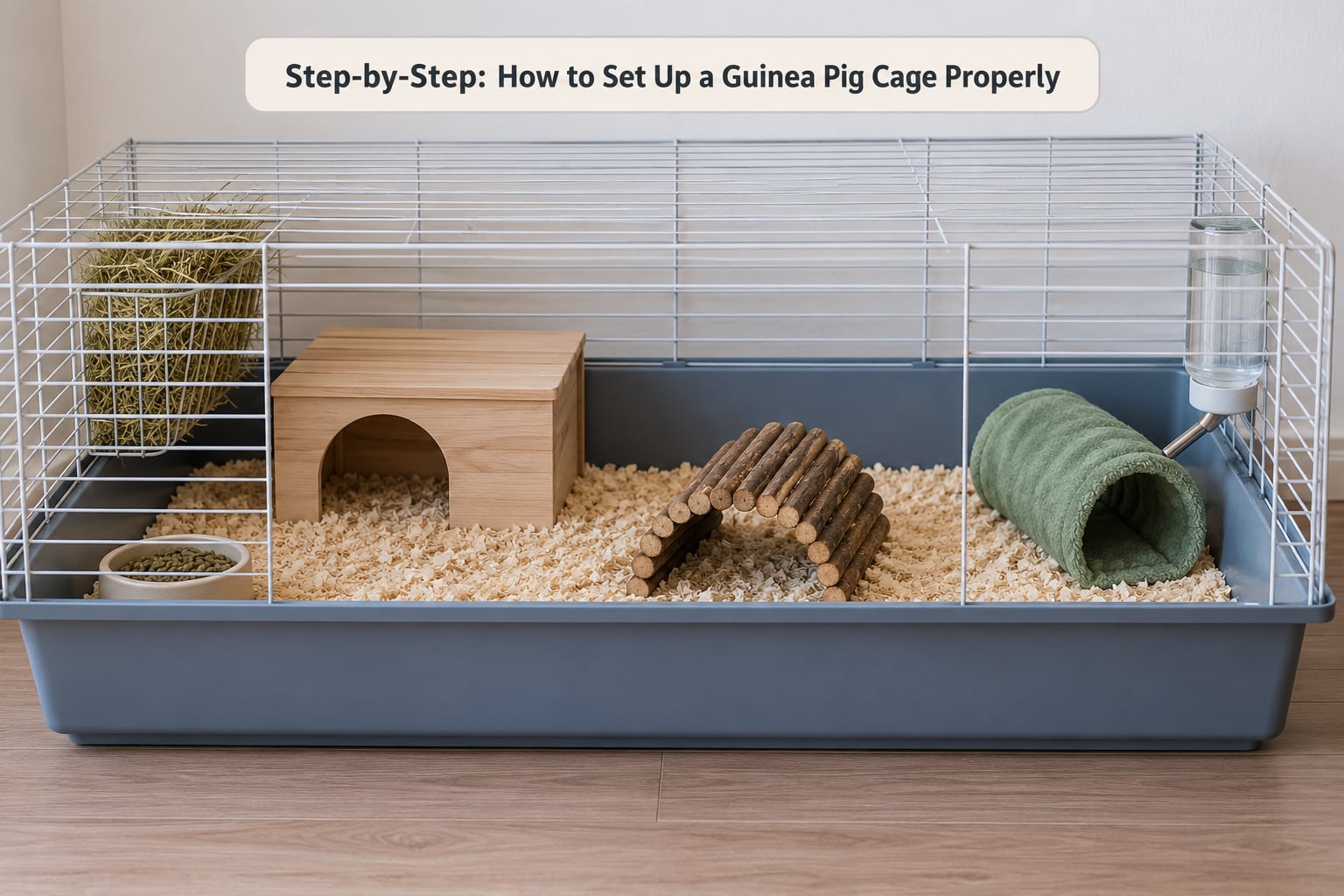
Step-by-Step: How to Set Up a Guinea Pig Cage Properly
Work through these steps in order, and leave the cage empty and ventilated for a few hours after cleaning before the guinea pig goes in. Setting up a cage properly is mostly about decisions you only get to make once, so it pays to do them carefully.
Choose the Right Location
Put the cage somewhere quiet, out of direct sunlight and away from drafts. Keep it at a comfortable viewing height so you can check on the guinea pigs without bending to floor level all day, but keep it out of reach of other pets.
Aim for a room that stays between 65 and 73F (18 and 23C) with humidity around 40 to 70%. Owners on Guinea Pig Cages report standard practice of 12 to 14 hours of light a day, with none of it shining directly into the cage, and that rhythm matters more than the brightness.
Avoid the kitchen, the laundry room and anywhere near scented products. Aerosol cleaners and overheated non-stick cookware produce fumes that are dangerous to small animals, and a cage sitting under a window picks up both drafts and direct heat.
Add Safe Bedding and Flooring to Your Guinea Pig Cage
Line the floor with something washable and non-toxic, then check that your guinea pig can walk, stretch out fully and reach its food without climbing over a pile. Most owners on r/guineapigs and GuineaLynx run an absorbent layer such as a pee pad or fleece-backed pad underneath, with fleece on top, because that combination stays dry and odour-free far longer than a single layer.
Stay away from cedar and aromatic pine shavings, scented or dyed bedding, and newspaper with heavy ink. Skip loose newspaper, scattered wire and any bedding deep enough to bury an animal in.
One technique experienced keepers use is a separate liner under the hay box. That small patch becomes the kitchen area, catching hay, droppings and urine so the main fleece under the rest of the cage stays clean longer.
Fabric needs care too. Owners have reported guinea pigs chewing through fleece corners, towels and puppy pads, and swallowed fabric is genuinely dangerous. Use fleece only as an intact liner, cut fringes away, and inspect seams weekly.
Place Shelter, Food and Water
Position hides at more than one point in a large enclosure, ideally at opposite ends, so a nervous animal always has a route to cover without crossing the whole cage. Guinea pigs are prey animals, and a single hide in the corner of a long cage still leaves one end exposed.
Set the heavy ceramic bowl on the solid floor so it cannot tip when a pig climbs on the rim. Fill the hay feeder with unlimited grass hay and place a second pile elsewhere in the enclosure, because owners on The Guinea Pig Forum repeatedly stress that hay belongs spread across several areas rather than in one rack.
Mount the water bottle outside the bars so your guinea pig cannot chew the plastic, and set the sipper valve about one inch above the floor for adults. Fill it, test it into your hand, and watch it for a day. If the bottle slowly drains, the seal or the cap needs tightening before you rely on it.
Add Enrichment and Exercise Space
Leave the largest share of the floor empty. The running and bouncing burst that owners call popcorning needs open run space, and furnishing every corner leaves nowhere to go full speed.
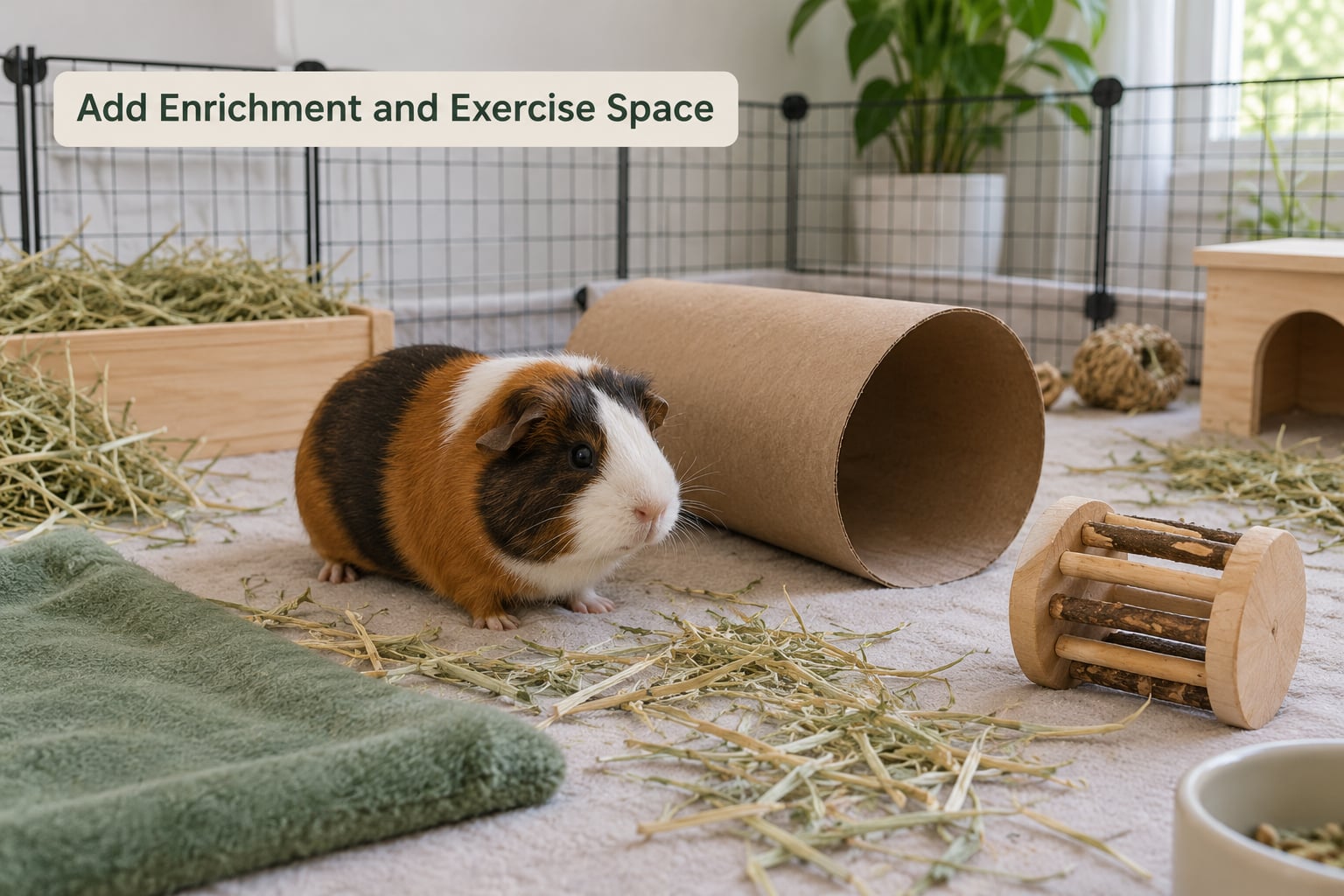
Fill the rest with a few safe items: a cardboard tunnel, an untreated wooden chew castle, a foraging mat scattered with hay, and a fleece forest cut from an old blanket. Experienced keepers rate the DIY fleece forest as the single best enrichment item, and it costs nothing.
Remove anything with sharp edges, small detachable parts, strong suction cups or loops that could snag a leg. Cardboard is fine as long as no tape, staples or printed ink are exposed, and if your cage has a ramp, keep the angle shallow and add raised edges because guinea pigs have poor depth perception.
Test the Cage Before Introducing Your Guinea Pig
Run through a final audit with the animal still outside. Check bar spacing, confirm doors and latches hold, make sure there is no wire floor and no gap a head could wedge into, verify ventilation, and confirm the bedding is clean and dry.
Bar spacing is the detail people miss. Spacing wider than about half an inch, or an open grid without added bars, lets a smaller or younger guinea pig push its head through and get stuck. If you have babies under 8 weeks, add panels so the gaps are smaller.
Leave the freshly cleaned cage aired out for a few hours, then watch your guinea pig closely during the first day rather than the first hour. Sit nearby, keep handling minimal, and do not rearrange furniture again once the animals start settling in.
Common Mistakes
Nearly every problem owners hit during setup comes down to one of these.
Starting with a pet store wire cage. Owners regularly over-buy one of these and replace it months later. The fix is simple: measure your guinea pig’s full body length, add the length of a full run, and build above that minimum.
Using scented or aromatic bedding. The smell is pleasant to you and harsh to a small animal with a sensitive airway. Use unscented paper bedding, kiln-dried shavings or fleece.
Putting the cage in sun or a draft. Direct sun causes heat stress and cold floors trigger the kind of illness that shows up as a sick-looking, hunched pig. Choose an interior wall and check the floor temperature by hand.
Providing too few hiding places. One hide for two guinea pigs means constant competition. The fix is one hide per pig plus one extra, spread apart.
Using a lightweight water container. Plastic bowls tip and flood the bedding. Use a bottle with a working sipper valve, or a heavy ceramic dish refreshed at least twice a day.
Overcrowding the space. Owners describe crowded cages as losing their enrichment over time because there is nowhere left to sit and eat undisturbed. If you are short on space, take the pigs out for floor time in a playpen rather than cramming the cage.
Adding chew toys that can be swallowed. Rope, fabric strips and small plastic fittings can be chewed and ingested. Untreated wood, cardboard and hard plastic are safer.
Skipping a cleaning routine. A smelly cage usually means trapped ammonia, not just leftover mess. Remove droppings daily, strip and replace bedding weekly, and wash fabric liners weekly so they dry fully before they go back in.
Forgetting the first day. Newcomers get nervous in a new space and this is not the moment to reorganize. Quiet room, familiar hide, steady food and water, low handling.
Frequently Asked Questions
How big should a guinea pig cage be for two guinea pigs?
At least 10.5 square feet of continuous floor space for one or two guinea pigs, which is the Humane Society minimum, and 16 square feet or more for larger groups. Bigger pairs do better, and owners regularly suggest 10 by 2 grids for two males and 8 by 2 grids for two females. Count usable floor space only, not the total footprint of a loft or ramp.
How many hides does a guinea pig need?
One hide per guinea pig plus one extra, spread at opposite ends of the enclosure. Guinea pigs are prey animals and feel safer with a retreat they can reach without being seen. A single hide in a long cage leaves the far end exposed, which produces the hiding-all-day behaviour new owners often mistake as a happy pet.
What is the best bedding to put in a guinea pig cage?
Layered fleece with an absorbent pad underneath works well for odour and dryness, while unscented paper bedding suits owners who want to avoid laundry. Avoid cedar and aromatic pine shavings, scented bedding and heavy newspaper ink. Whatever you choose must stay dry, since soggy bedding is what causes the smell most new owners complain about.
Should you cover a guinea pig cage at night?
Leave the cage uncovered. A blanket over the top blocks the airflow that keeps ammonia from building up and can cause the respiratory illness small animals are prone to. If your room gets genuinely cold at night, move the cage away from the window instead, and use a heating pad designed for reptiles rather than a heat lamp aimed at the animal.
How often should I change the fleece in my guinea pig cage?
Spot-clean droppings and damp spots every day, then strip and replace the whole layer about once a week. Wash fleece liners and pads in the washing machine on a warm cycle and dry them fully, since damp fabric returns odour fast. If one area stays wet, usually under the water bottle or hay box, add a second liner there and change it more often.
How do I know my guinea pig is stressed in a new cage?
Look for freezing in one corner, teeth grinding, loud repeated wheeking, hiding almost continuously, refusal to eat hay, or a hunched posture with puffed fur. Keep the room quiet, minimize handling, and do not move furniture around for several days. If a pig stops eating entirely or produces no droppings, that is urgent and needs an exotics veterinarian.
Conclusion
Start by choosing the location and measuring the space, since those two decisions set everything else. A quiet wall away from sun and drafts, a solid floor at 10.5 square feet or more for a pair, and washable bedding cover most of what matters.
Then build the four foundations in order: accessible food and water, comfortable flooring, one hide per pig plus a spare, and enough clear floor to run across. Add enrichment last, keep the cleaning routine from day one, and give your guinea pig a few quiet days to settle before you change anything again.
If anything in the setup looks off after the guinea pig arrives, a chat with an exotics vet is worth it early. Foot sores, tooth problems and respiratory illness all show up faster in guinea pigs than in most pets.