What to feed a pet bird besides seeds? A formulated pellet as the base, chopped fresh vegetables every day, small portions of fresh fruit, cooked legumes, plain cooked egg and a little unsalted nuts or seed as training rewards. Seeds stay in the bowl, but as roughly 5-10% of the intake rather than all of it.
That is the short answer, and it matters more than most owners expect. A companion bird on seed alone usually eats a diet that is very high in fat and short on vitamin A, calcium and protein variety, and the result shows up years later as fatty liver disease, poor feathers or reproductive problems. Swapping a seed bowl for variety is the single biggest health change you can make from home.
One thing to clear up first. Much of what ranks online for this question is about backyard feeders, not companion birds. Bread, suet, nyjer seed and a potato wedged into a feeder are wild-bird feeding practices, and some of them are actively wrong for a pet bird living indoors. Everything below applies to budgies, cockatiels, finches, lovebirds, conures, African Greys, macaws and cockatoos kept as pets.
Table of Contents
- What to Feed a Pet Bird Besides Seeds at a Glance
- Foods to never offer a pet bird
- 1. Formulated Bird Pellets
- What to feed a pet bird besides seeds when pellets are hard to find
- 2. Leafy Greens and Dark Vegetables
- 3. Fresh Fruit in Small Portions
- 4. Cooked Legumes
- 5. Whole Grains and Plain Cereals
- 6. Sprouted Seeds and Sprouted Legumes
- 7. Plain Cooked Egg
- 8. Cooked Lean Meat for Omnivorous Birds
- 9. Softened or Soaked Complete Food
- 10. Small Treats Made from Safe Everyday Ingredients
- Frequently Asked Questions
- Can pet birds eat food if they refuse seeds?
- What vegetables are safe for pet birds?
- Should I replace my bird’s seeds with fruits and vegetables?
- How often should I offer treats to a pet bird?
- What should I do if my bird suddenly stops eating?
- Conclusion
What to Feed a Pet Bird Besides Seeds at a Glance
Ten food groups fill the space seeds used to occupy. Here is what each one contributes, how to prepare it safely, and the one thing to watch out for.
| Food | Nutrients or benefits | Safe preparation | Important caution |
|---|---|---|---|
| Formulated pellets | Balanced vitamins, minerals and protein in one food | Serve dry in a separate dish; chop or moisten for small birds | Birds often sort the plain ones out and eat the coloured ones first |
| Dark leafy greens | Vitamin A, calcium, folate and fibre | Wash well, chop finely, offer raw | Introduce slowly; a sudden pile of greens often causes diarrhoea |
| Other vegetables | Beta-carotene, vitamin C, variety | Raw or lightly steamed, chopped to bird size | Remove uneaten pieces after two to four hours in warm rooms |
| Fresh fruit | Vitamins and hydration | Remove every seed and pit, cut small | Keep to about 5-10% of the diet; it is sugary |
| Cooked legumes | Plant protein and fibre | Boiled plain with no salt or seasoning, cooled fully | Raw beans are toxic; canned beans carry added salt |
| Whole grains | Complex carbohydrate and fibre | Cooked plain: quinoa, brown rice, oats, whole-grain pasta | No added salt, sugar or raisins |
| Sprouts | Nutrient density without added calories | Rinse under cold water, drain, serve same day | Not a full diet; discard anything that smells sour |
| Plain cooked egg | Complete protein, useful during molt | Boiled or softly scrambled with no salt or oil | No raw egg, no seasoning, no fried egg |
| Cooked lean meat | Protein for omnivorous species | Plain cooked, skin and fat removed, shredded | Cook poultry to 165F (74C); confirm with an avian vet first |
| Small treats | Training rewards, foraging enrichment | Break into tiny pieces no larger than the bird’s beak | Keep treats under 10% of daily intake |
Foods to never offer a pet bird
These are not occasional treats. They cause real harm and there is no safe amount worth experimenting with.
- Avocado – persin in the flesh, skin and pit causes cardiac and respiratory distress.
- Chocolate and cocoa – theobromine and caffeine are toxic to birds in small amounts.
- Coffee, tea and energy drinks – caffeine affects the heart and nervous system.
- Alcohol – even a small amount can be fatal.
- Onion and garlic – allium compounds damage red blood cells.
- Apple seeds and fruit pits – crushed seeds release cyanide compounds; stone fruit pits must go entirely.
- Salt, sugary snacks and processed human food – chips, salted crackers, cake, candy and sweetened cereal.
- Raw dried beans – uncooked beans and lentils contain phytohaemagglutinin and must be boiled.
- Raw egg and raw egg whites – risk of salmonella and avidin binding biotin.
- Wood and plants from the home – some houseplants and any wood from treated or painted timber are unsafe to chew.
1. Formulated Bird Pellets
A formulated extruded pellet is the closest thing to a complete diet you can buy, and it is where most of the nutritional work happens. Each pellet carries added vitamins and minerals in a consistent ratio, which is exactly what a seed mix cannot do: seed is high in fat while missing vitamin A, D and K and most calcium.
Look for a plain, uncoloured pellet with no added sugar or dyes listed in the ingredients. Well-known lines include Harrison’s Bird Foods, Roudybush, ZuPreem, Lafeber and TOP’s Parrot Food, and the Association of Avian Veterinarians recommends choosing a formulated diet rather than improvising. Match the pellet size to the bird: finches and budgies need small pellets, while macaws and cockatoos handle large ones and are more prone to overeating on a calorie-dense diet.
What to feed a pet bird besides seeds when pellets are hard to find
This comes up constantly on bird forums, where owners in some regions say they simply cannot source pellets locally. Options in order of preference: buy a plain fortified pellet online through a specialist retailer, ask a vet clinic or rescue organisation near you whether they sell a small bag, or switch from loose seed to a plain extruded seed-and-grain product as a short-term step while you source a real pellet.
What not to do is build a DIY mix from kitchen ingredients and hope it covers everything. That is how birds end up with nutritional deficiencies that show up as weak bones or poor plumage years later.
Introduce pellets slowly. Many owners convert a long-term seed eater over six to eight weeks, offering a little pellet alongside the usual seed and tracking body weight weekly. If the bird sorts out the coloured pellets and ignores the plain ones, some owners then pick out the coloured pellets for the next few days until the bird has to eat the rest.
2. Leafy Greens and Dark Vegetables
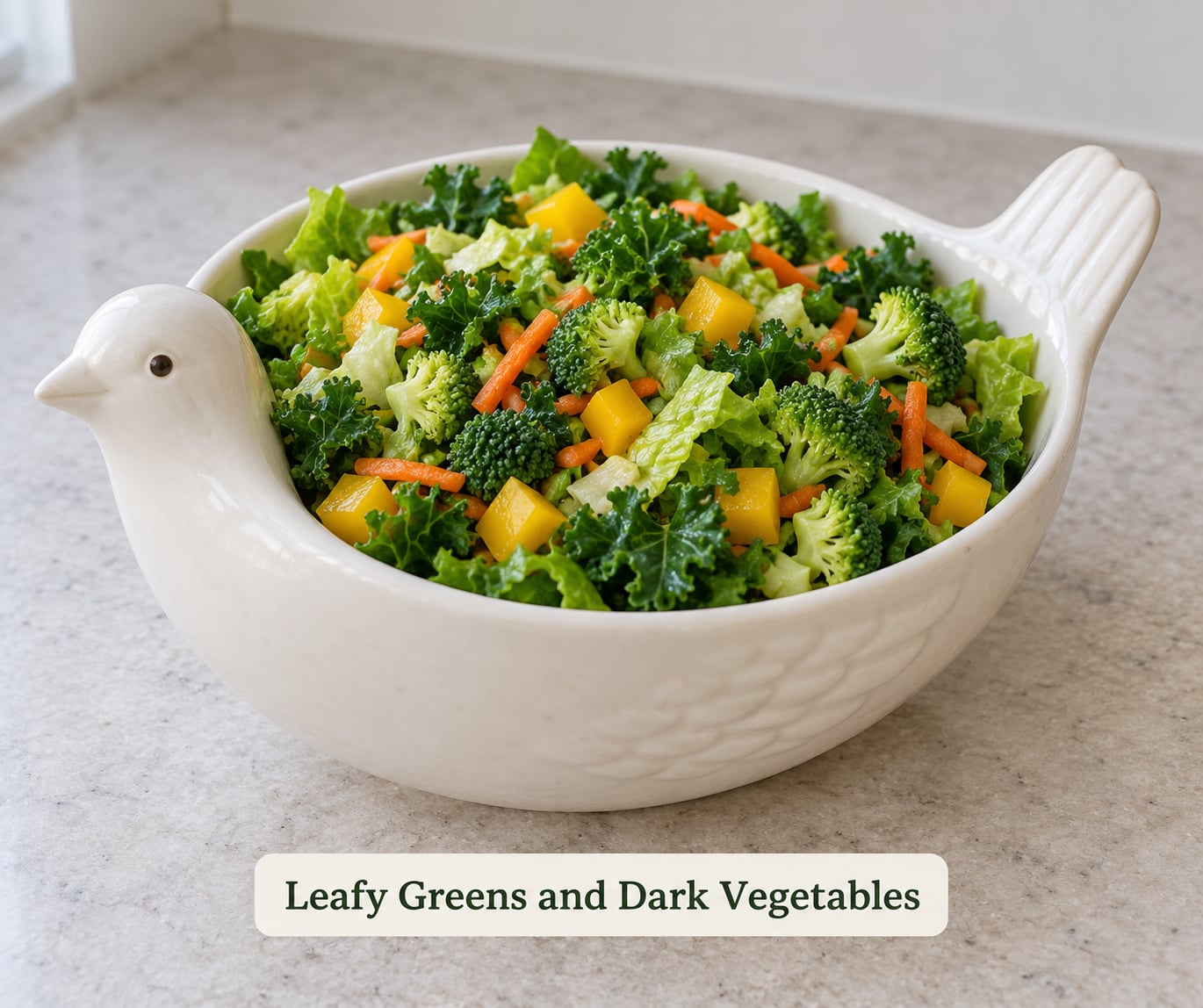
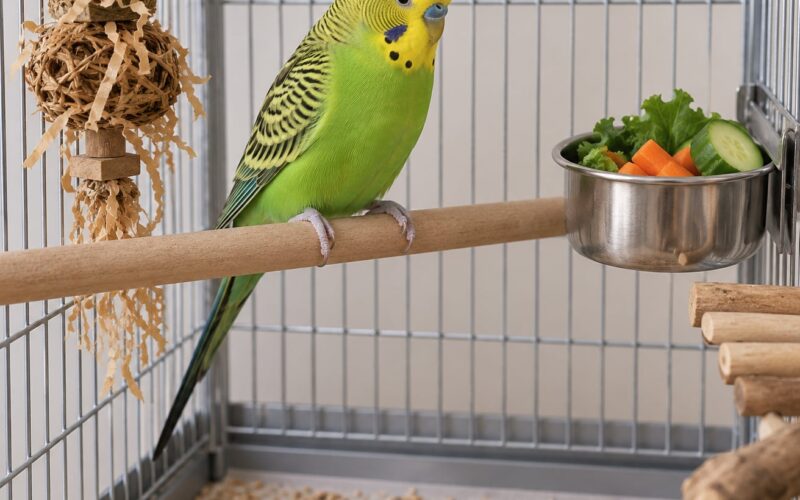
Dark leafy greens are the closest thing a pet bird has to a wild diet of tender shoots and leaves, and they supply vitamin A and calcium in the form most seed-based diets lack. Romaine, kale, dandelion greens, collards, mustard greens, broccoli florets, shredded carrot and red or yellow bell pepper are all everyday, inexpensive and safe choices.
Wash everything under running water and chop it to roughly the size of the bird’s head, which for a budgie means pieces you could halve with a fingernail. Serving style matters more than most people expect: owners on r/budgies and r/parrots report the greatest success with batch-prepped vegetable chop, a mix of a few chopped vegetables kept in a sealed container in the fridge for several days and portioned into a small dish each morning.
Other tricks that work: hang a leaf off the cage bars, thread chopped broccoli onto a skewer, or warm a small piece of carrot in plain water and serve it slightly warm, which brings out the aroma. Introduce one new vegetable at a time and keep the total to about a quarter to a third of the daily diet.
3. Fresh Fruit in Small Portions
Fruit is safe and birds enjoy it, but it is the most common diet mistake after seeds because it is sugary and low in protein and calcium. Most avian guidelines put fruit at roughly 5-10% of intake, which for a medium parrot looks like a few small cubes a day rather than a fruit bowl.
Good options include apple with every seed removed, banana, blueberries, strawberries cut small, raspberries, blackberries, mango, papaya and melon. Grapes and cherries should be cut in half so nothing large can be swallowed whole.
Remove pits, stones and seeds from anything stone fruit, and skip anything dried or candied. Raisins are a particular trap because they are sticky, concentrated and easy to overfeed; they belong in the treat column at most, and many owners simply leave them out entirely. Softened fruit spoils quickly in a warm room, so remove uneaten pieces within a couple of hours.
4. Cooked Legumes
Lentils, chickpeas, black beans, cannellini beans and green peas are a genuinely useful protein source, and they are among the few non-seed foods finches and budgies tend to try. Boil them in plain water with nothing added, then let them cool completely before serving.
Mash larger beans slightly so a small bird can manage them, and keep the portion modest: a teaspoon to a tablespoon mixed into the daily vegetables rather than a bowl of beans. Canned beans need rinsing and even then carry added salt, so plain cooked or no-salt canned is the better option. Never serve dried beans raw.
5. Whole Grains and Plain Cereals
Cooked quinoa, brown rice, barley and whole-grain pasta give carbohydrate and fibre in a form a bird can work at. Plain oatmeal, cooked without milk or sugar, is another reliable option, as is an unsweetened whole-grain cereal with no raisins or chocolate added.
Everything should be cooked soft and served cool or lukewarm. Watch portion sizes here too: rice and pasta are filling and easy to overdo, and birds will happily ask for seconds of something starchy.
6. Sprouted Seeds and Sprouted Legumes
Sprouted seed is the closest thing to a seed replacement that still uses seed. Soaking and sprouting brings a dormant seed up in water content and makes its stored nutrients more available, so a small quantity goes further than the same seeds dry. Owners across bird forums treat sprouts as one of the easiest ways to add fresh food to a bird that refuses vegetables.
Millet, sunflower, lentil, chickpea, mung bean and quinoa all sprout well. Rinse thoroughly under cold running water, drain, and keep the container ventilated so nothing sits in standing water. Serve the same day and wash the container each time; discard anything with a sour smell, since sprouted food can carry bacteria and mould quickly.
Sprouts are an addition, not a replacement. They do not cover a full diet on their own.
7. Plain Cooked Egg
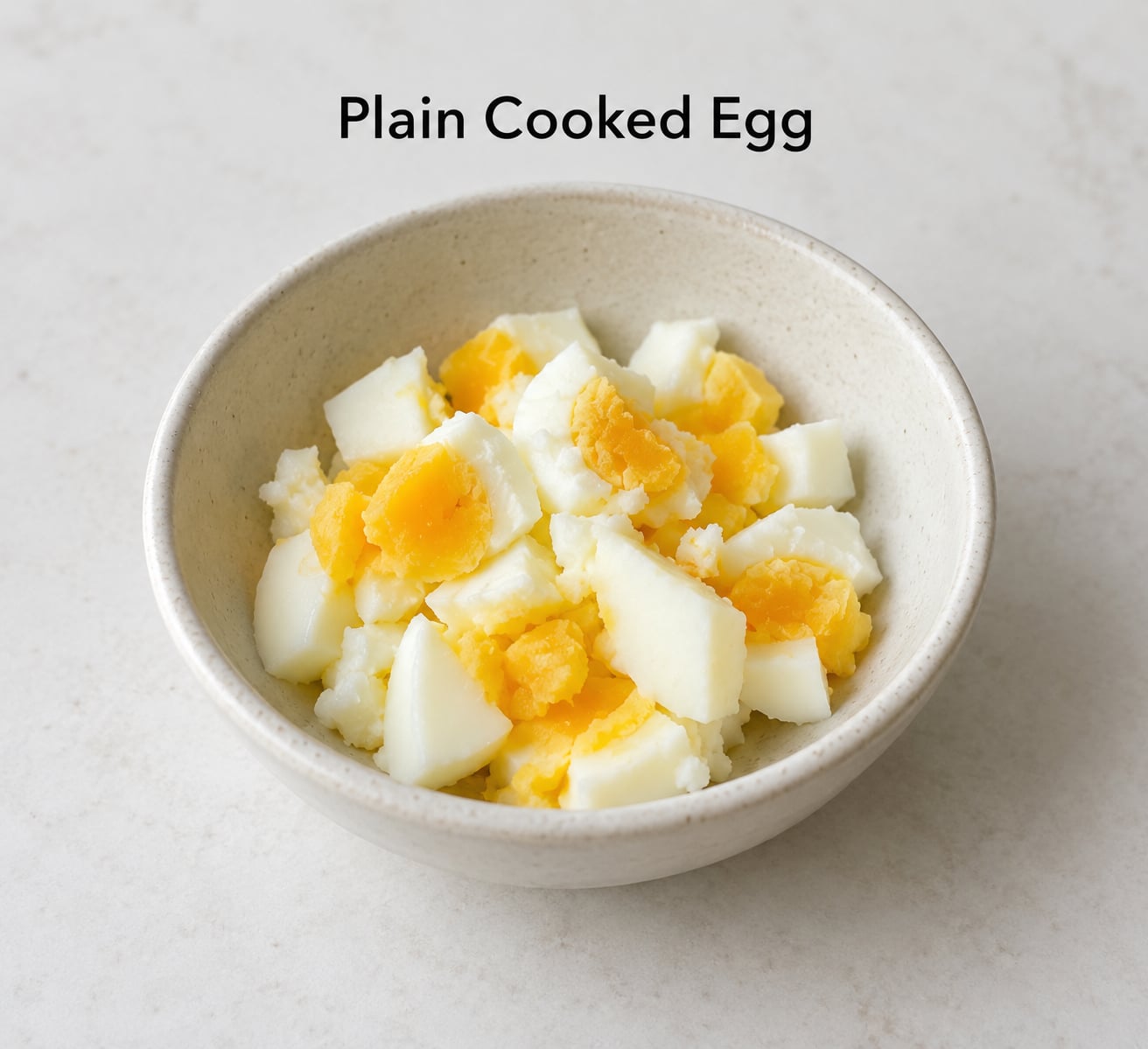
Softly cooked egg is a complete, easily digested protein and it is genuinely useful for a bird going through a molt, recovering from illness, or raising chicks. Hard-boiled is simplest: boil it, cool it, chop it finely, and offer a small amount mixed into the morning vegetables.
Scrambled is fine as long as it is cooked plainly, with no butter, oil, salt or onion. Skip fried egg, which is both fatty and seasoned, and skip raw egg and raw whites entirely. Offer egg a couple of times a week rather than daily unless a vet has told you otherwise, and treat the shell as a separate item rather than something to chop into the dish.
8. Cooked Lean Meat for Omnivorous Birds
Not every companion bird is a strict seed and plant eater. Some species eat animal protein in the wild, and owners of certain parrots report that plain cooked chicken, turkey or very lean unseasoned meat is accepted and tolerated.
Preparation is where problems start. Remove all skin and visible fat, discard bones, and cook poultry to a minimum internal temperature of 165F (74C), ground meat to 160F (71C). Shred the meat finely and offer it only as an occasional addition.
Before you start, ask an avian veterinarian whether your specific species needs animal protein at all. For most budgies, cockatiels and African Greys, the answer is that they do not, and pellets plus vegetables cover the requirement more safely.
9. Softened or Soaked Complete Food
Some owners cannot get their bird to eat a dry pellet at all. For those birds, a bird-specific complete food that can be softened in warm water is the practical compromise, and there are formulated moist and semi-moist products made for exactly this purpose.
Follow the product directions rather than guessing at the water-to-food ratio, use water that is safe for drinking, and prepare only enough for one or two meals. Warm moist food is a good growth medium for bacteria, so discard leftovers rather than refrigerating and re-serving them. Never leave soaked food in the bowl overnight.
The same principle applies if you soften pellets yourself. Fresh, made daily, discarded after a few hours.
10. Small Treats Made from Safe Everyday Ingredients
Treats are how you train, how you encourage a bird to step onto a hand or into a carrier, and how you keep a short training session positive. The rule that matters is simple: under 10% of daily intake.
Good low-sugar treats include tiny pieces of bell pepper, chopped parsley or basil, a small portion of cooked lentil, freeze-dried fruit with no added sugar, and plain chopped nuts such as walnut, pecan or almond offered in very small pieces. Keep them tiny so a bird cannot swallow one whole and choke on it.
Many owners on forums have moved away from millet sprays because the shells shatter and litter the cage. Safflower seed, chopped nuts and freeze-dried fruit are the lower-mess alternatives, and a piece of the bird’s own pellet works well for a bird that has already learned the routine.
One more daily habit is worth keeping: fresh water changed at least twice a day, and bowls washed with hot soapy water rather than rinsed and left.
Frequently Asked Questions
Can pet birds eat food if they refuse seeds?
Yes, and the reverse is more often the problem: many birds eat only seed and refuse everything else. Introduce one new food at a time, offer it alongside the familiar seed rather than replacing it, and keep sessions short. Chop vegetables finely, serve them warm or on a skewer, and repeat for weeks. A bird that has eaten seed its whole life can take months, and some never fully convert, so a veterinary check along the way is sensible.
What vegetables are safe for pet birds?
Romaine, kale, dandelion greens, collards, mustard greens, broccoli florets, shredded carrot, bell pepper, green beans, snow peas, zucchini, cucumber and cooked corn are all safe choices. Wash everything under running water and chop it to the size of the bird’s head. Introduce one new vegetable at a time and remove leftovers after two to four hours in a warm room.
Should I replace my bird’s seeds with fruits and vegetables?
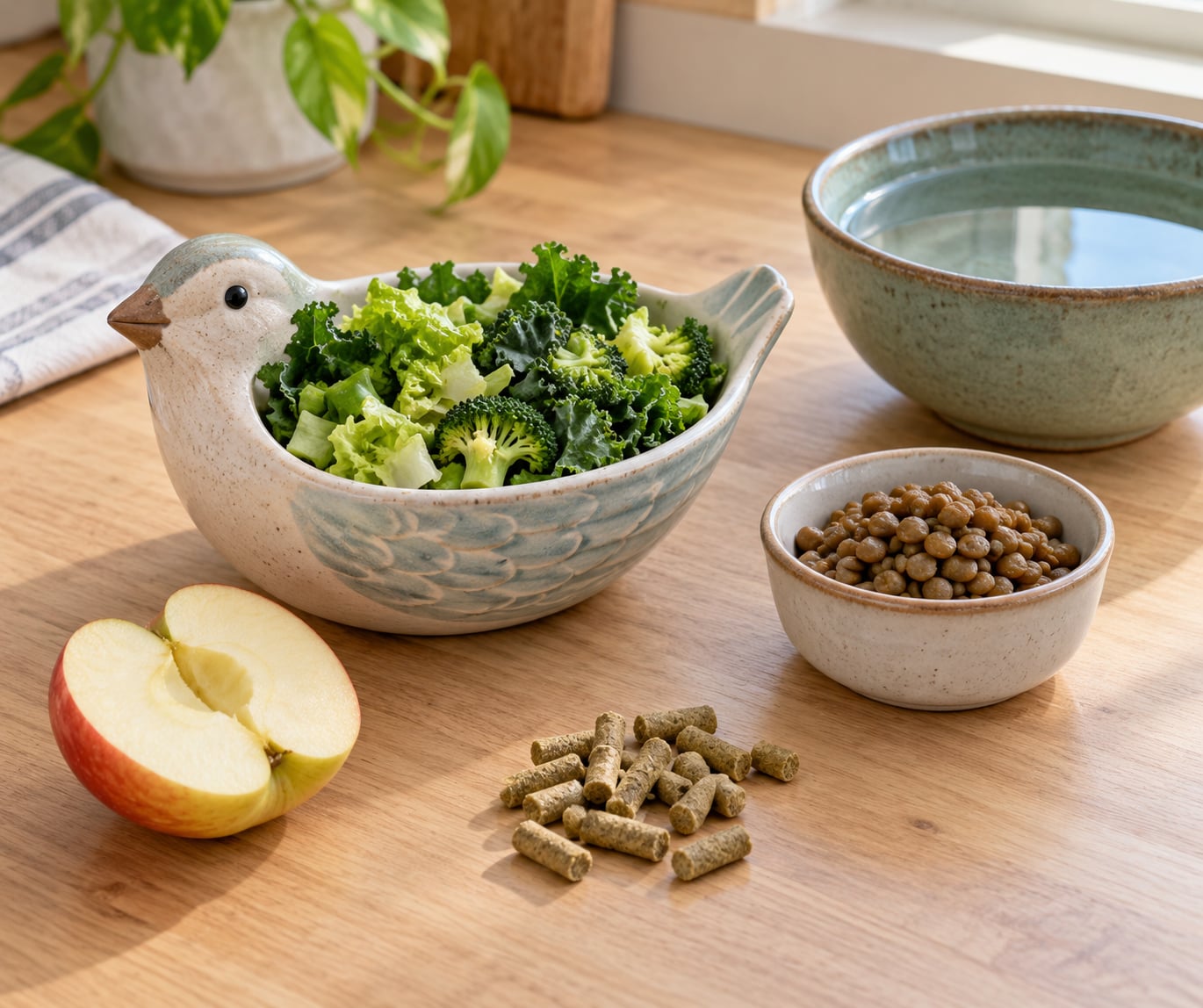
Do not replace seeds with fruit alone. A healthy diet is roughly 50-70% formulated pellets, 20-30% fresh vegetables, 5-10% fresh fruit and 5-10% seed, nuts and other treats. Fruit is sugary and cannot carry a diet on its own. Many birds also eat only seed by habit rather than by choice, so the change usually takes a gradual six to eight week conversion with weekly weight checks.
How often should I offer treats to a pet bird?
Treats should stay under about 10% of what your bird eats in a day. That usually means a few small pieces for training rather than a treat toy left in the cage, since a bird with free access will eat far more than it needs. Train with tiny fragments of what the bird already likes, and offer vegetable-based rewards such as chopped pepper or a piece of softened pellet whenever you can.
What should I do if my bird suddenly stops eating?
Treat a sudden appetite change as urgent rather than as a preference. A pet bird that skips meals can dehydrate quickly, and seed-only birds in particular are at risk of liver problems. Call an avian veterinarian the same day, keep the cage warm and quiet, offer the bird’s usual food rather than new foods, and do not force-feed or give human medication. Fluffiness, lethargy, a swollen crop or droppings that change colour and smell all need a same-day appointment.
Conclusion
Start by naming your bird’s species, because a finch and a macaw do not share a portion size or even a food list. Keep a stable base of formulated pellets in a separate dish, add one chopped vegetable at a time, and let the bird refuse a few meals before you assume it dislikes something. Track weight weekly while the diet changes, since a bird losing more than about 10% of its body weight during a conversion is a reason to call a vet.
Before making a major change, or if appetite shifts suddenly, talk to an avian veterinarian. A plan built around your bird’s actual weight and species is what makes the change stick, rather than a series of experiments that end with a stressed bird and a bag of uneaten seed.