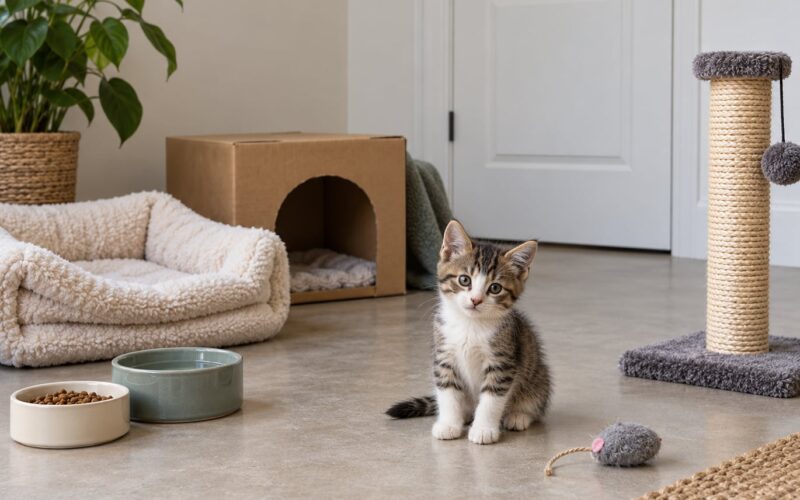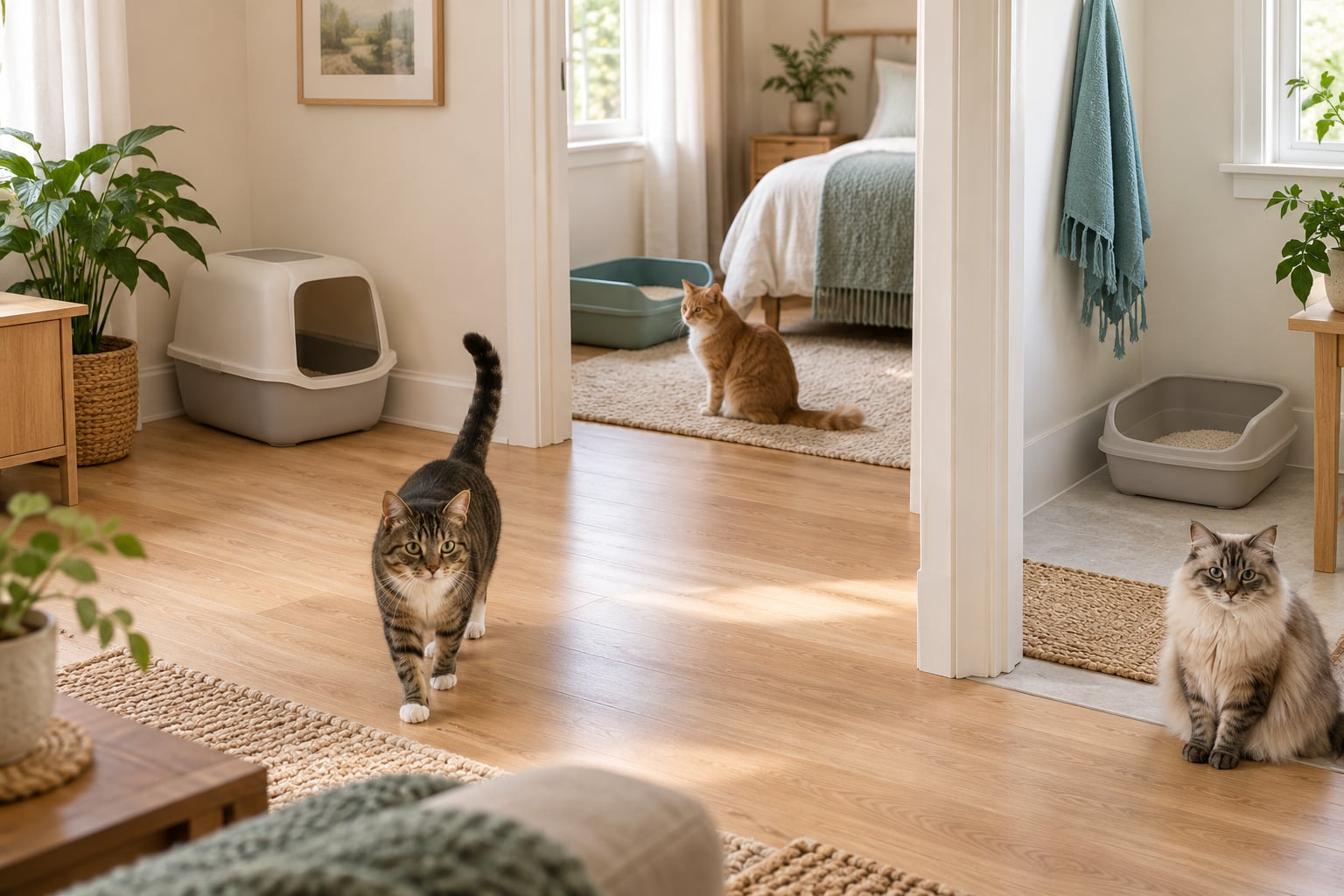
The best litter box setup for a multi-cat home follows one rule: one box per cat, plus one extra, spread through the house instead of grouped together. Two cats means three boxes, three cats means four, and no two of them should sit in the same room. Spread them across quiet corners, keep every box at least one and a half times your cat’s body length, and scoop daily.
That sounds obvious until you notice that most homes run one or two boxes and wonder why someone is peeing on the rug. Cats do not queue politely. They are territorial animals that treat a litter box as a shared resource, and a shared resource with three cats and one box is a conflict waiting to happen.
What follows is the setup I would build from scratch, including the number to count on, where each box goes, which style works for which cat, and what to change when one cat starts avoiding the whole arrangement. If anything stops working, your first stop for anything medical is a veterinarian.
Table of Contents
- What You Need
- Step-by-Step: How to Build the Best Litter Box Setup for a Multi-Cat Home
- How many litter boxes does a multi-cat home need?
- Which litter box type works best for multiple cats?
- Where should litter boxes be placed in a multi-cat home?
- What litter and cleaning routine should you use?
- How do you introduce or improve a litter box setup?
- Common Mistakes
- Frequently Asked Questions
- Is it safe for multiple cats to use the same litter box?
- Should litter boxes be side by side or in separate rooms?
- How far apart should litter boxes be placed?
- Why is my cat suddenly avoiding the litter box?
- What is the best cat litter for a multi-cat household?
- Conclusion
What You Need
Start with the count, not the shopping list. Add one litter box for each cat in the home and then add one more. That spare is the one that prevents a bathroom queue.
Then gather the basics:
- Boxes. Number one per cat plus one, each at least one and a half times the length of your largest cat from nose to base of tail. A box that feels cramped gets used for a moment and then abandoned, usually on your carpet.
- Variety in style. At least one large open-top box, one high-sided box for scatter-prone cats, and one low-entry box if you have a senior, a kitten, or a cat with mobility issues.
- Clumping, unscented litter. Unscented is the safe starting point. Strong perfume added to litter is an extra scent on top of something cats already find powerful, and some will refuse it.
- A scoop and a lined or washable box. Non-porous surfaces matter. Stainless steel resists urine odor and staining better than plastic over months, and owners who switched report noticeably less smell.
- Cleaning supplies. A mild unscented detergent, an enzymatic cleaner for accidents outside the box, and a litter mat at each high-traffic exit.
- Optional placement aids. A small folding screen between two boxes in the same open area, a rubber mat for grip on hard floors, and a pheromone diffuser near, not inside, a stressed cat’s favorite box.
A note on self-cleaning boxes: they save cleanup time, and in a busy household that is real. They are also bulky, expensive, and the noise or movement can spook a cat that has never used one. If you buy one, it does not replace your real boxes. It sits alongside them until every cat is using it willingly.
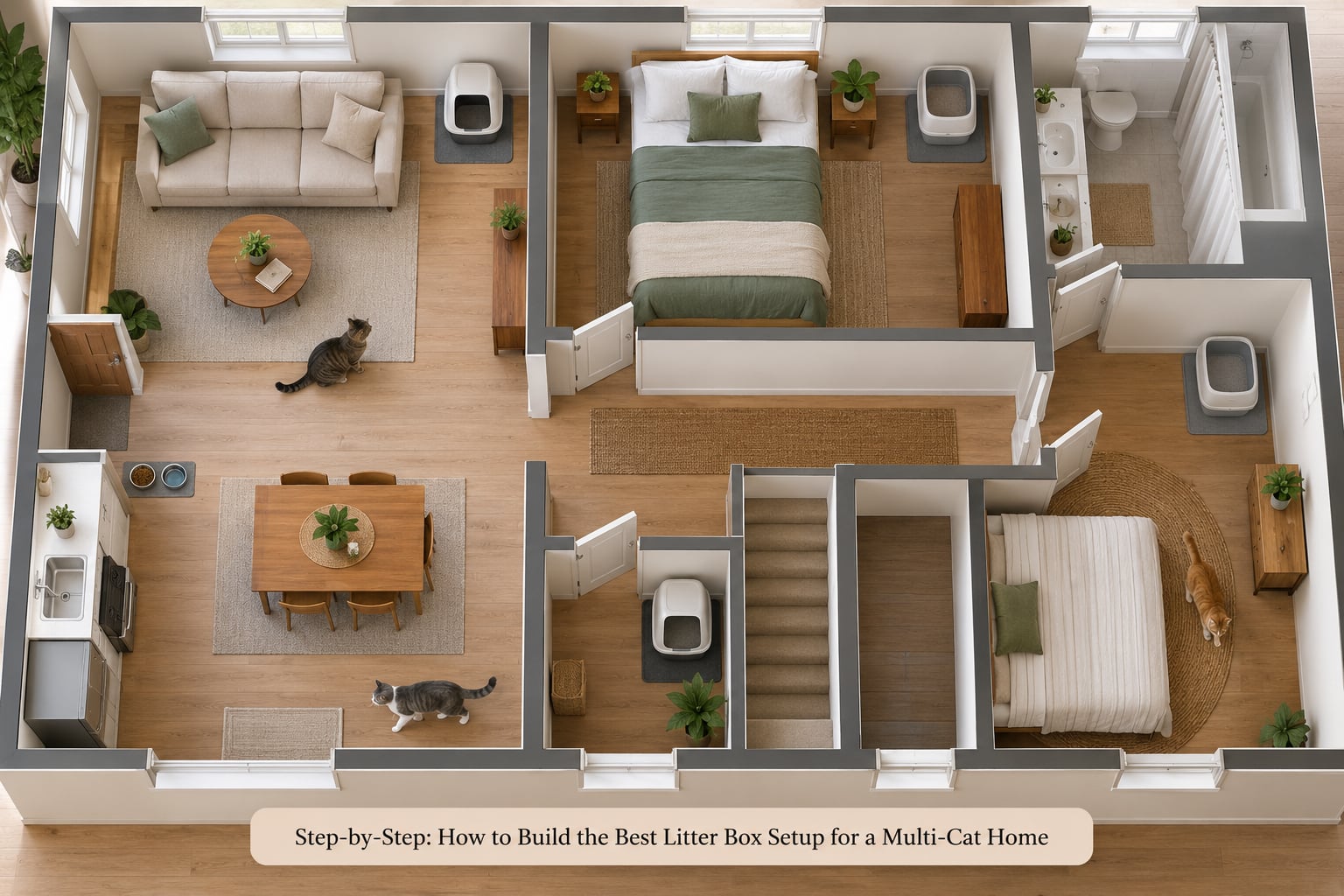
Step-by-Step: How to Build the Best Litter Box Setup for a Multi-Cat Home
How many litter boxes does a multi-cat home need?
One box per cat plus one. That is the technical rule, and it scales simply.
| Cats in the home | Boxes to run | Where they go |
|---|---|---|
| 2 | 3 | Two in separate rooms, one on another floor or in a far corner |
| 3 | 4 | One per floor plus two spread across the main level |
| 4 | 5 | One per floor, plus one extra for the most timid cat |
| 5 or 6 | 6 or 7 | Spread across every level and every quiet corner, not grouped |
The spare box is not waste. It guarantees that a cat using a box never has to wait for it, which removes the ambush that drives avoidance. Households running fewer boxes do exist. Cat owners on r/CatAdvice report that two well-cleaned boxes can work for two bonded cats that genuinely get along, and owners in r/homemaking run one large open pan plus one in a separate room for three cats in a small apartment. That works as a deliberate, monitored exception.
Add boxes rather than removing them when a household changes. A shy cat, a senior, a large Maine Coon, or a pair that feuds over territory each justify an extra spot. A single cat using only one of three boxes is not a problem, as long as the other cats have options too.
Which litter box type works best for multiple cats?
There is no single winning style, and that is exactly why variety matters. Cats differ in body size, litter preferences, and how much they hate feeling cornered.
Open-top boxes give the clearest sightlines and the easiest escape, which makes them the safest default in a house with more than one cat. High-sided boxes contain scatter, and they help when a cat throws litter across the floor on the way out. Low-entry boxes matter for older cats or kittens that cannot step over a tall wall. Self-cleaning boxes handle volume well but are the most likely to be refused at first.
You will see strong advice to avoid covered boxes entirely in multi-cat homes, and you will also see roundups where the top pick is a hooded box. Here is the reconciliation. The objection to covered boxes is not odor control, it is the trap effect: a cat cornered inside a hood cannot see an approaching cat, and some will bolt over the wall or simply stop coming. A covered box is fine when a cat chooses it voluntarily, when it is large enough to turn around in, and when it is not the only option. It is a problem when it is the only option for a timid cat.
On material, stainless steel or other non-porous surfaces win on longevity. Plastic eventually holds odor in the scratches that form around the rim, which is why owners who switched report less smell over time. Keep the box stable on the floor. A box that slides or wobbles when a cat leans into the wall is a box some cats will not use.
Where should litter boxes be placed in a multi-cat home?
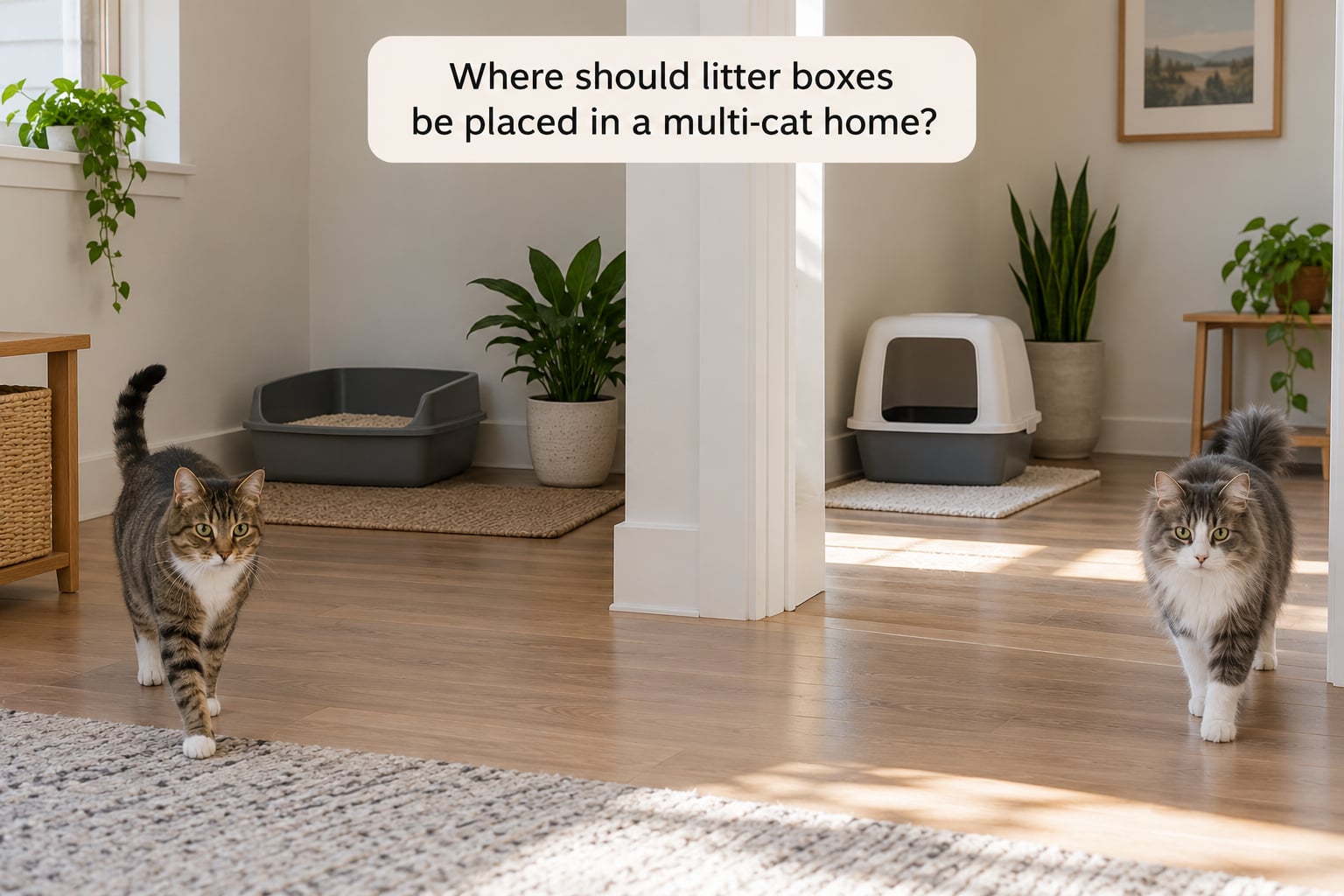
Spread them out. Two boxes in the same room read to a cat as one large toilet with two entrances, which is worse than a single well-placed box. Across a two-level home, that means one box per level at minimum, and never all of them in the basement.
Use this eight-step placement checklist:
- Pick quiet, low-traffic rooms. A guest bathroom, a laundry room corner, or the far end of a hallway works better than a spot beside the front door.
- Keep every box away from food and water bowls. Cats do not want to eat next to where they eliminate, and some will start refusing one over proximity to dinner.
- Leave clear escape routes. No dead ends, no corner that forces a cat to back out past whoever is waiting.
- Avoid loud appliances, washing machines, dryers, and central vacuum stations.
- Skip rooms with heavy scented products, air fresheners, and essential oil diffusers.
- Avoid cold drafts and heat vents, which push some cats away from open boxes.
- Aim for enough distance that one cat cannot hear another’s scratching in the next room. In open-plan homes, a folding screen between two boxes preserves privacy without isolating the cats.
- Add one more location than you think you need. That spare spot usually becomes the favorite of whichever cat nobody expected to like it.
In a small apartment where quiet rooms are scarce, treat vertical and peripheral space as inventory: the end of a hallway nobody uses, beside a washer in a utility nook, or a corner of a bedroom the cats already claim. A home with three cats and four boxes in tight quarters works better than three cats and two boxes spread wide.
What litter and cleaning routine should you use?
Clumping, unscented litter is the practical starting point for a multi-cat home. Clumping lets you remove waste daily without stripping the whole box, which matters more when you have four boxes than when you have one.
Change litter gradually rather than all at once. Mix the new litter in at roughly a quarter of the old volume, then raise the proportion over a week or two, and keep the old litter available in a second box if a particular cat is fussy. Switching brands suddenly is one of the most common reasons a cat suddenly stops using its box.
The routine that keeps a multi-cat setup working:
- Daily, or twice daily with more than three cats. Scoop solid waste and clumps. A box that is full of urine-soaked litter by evening is a box cats will avoid.
- Weekly. Top up fresh litter, wipe the rim and walls, and check for litter sticking to textured surfaces.
- Every two to four weeks. Empty and wash the box with mild unscented detergent. Never use ammonia-based or citrus cleaners, which cats find offensive and which can make a box smell worse rather than better.
- Odor layering. A thin layer of baking soda under the litter, unscented litter, an enzymatic cleaner for accidents outside the box, and a litter mat at the exit all help. Skip spray deodorizers aimed into the box.
For litter scatter, a mat or a covered-but-open-sided box solves most of it. For a cat that always exits the same way, place the box along a wall so the scatter lands outside the main traffic path.
How do you introduce or improve a litter box setup?
Add boxes one at a time, never all at once. Put the new box in its final location with litter already in it, and leave the old boxes exactly where they are. Most cats investigate within a day or two, and some take a week. Removing the old boxes during the transition undoes the whole point.
When you add a new cat, run the extra box before the cat arrives. When you switch to a self-cleaning box, set it switched off beside the familiar box for several days, activate it only once the cat has used it, and keep the old box for another one to two weeks.
If a cat starts avoiding the boxes, check the signals before you change anything. Look for a box that is suddenly too small, too close to a noisy appliance, or cleaned with a scented product. Then look for another cat blocking or watching the entrance. Address what you find, and keep your existing setup stable rather than reshuffling everything at once.
Response to an accident outside the box should be neutral. Clean it with an enzymatic cleaner so the scent history is gone, and never scold or rub a cat’s nose in it. Punishment teaches hiding, not litter box use.
Common Mistakes
Running too few boxes. The fix is arithmetic, not opinion. Count the cats, add one, buy the difference. This is the single most common failure and the easiest to correct.
Clustering boxes in one room. Cats read a group as a single resource with multiple doors. Move them apart, or screen them.
Using a small or difficult-to-enter box. A box narrower than one and a half times your cat’s body length is a box for sitting briefly, not turning around. Size up, and add a low-entry option.
Relying on a hooded box as the only box. Fine if a cat chooses it. Problematic for a timid cat who feels trapped. Give every cat a visible open option.
Changing litter abruptly. Transition over one to two weeks instead, and never add strong scent to a box that already works.
Under-scooping. With several boxes, cleaning gets deferred until every box is dirty at once. Scoop once a day, put the scoop back where it belongs, and set a weekly wash reminder.
Punishing accidents. It does not correct the behavior and it makes the cat avoid the box area even harder. Clean it, change the setup, move on.
Two more warning signs worth knowing. Persistent avoidance, urine marking, or hiding after a setup change points to stress, and repeatedly holding urine raises the risk of urinary problems. If a cat strains in the box, visits it frequently with little output, cries, or shows blood in the urine, call your veterinarian the same day.
Frequently Asked Questions
Is it safe for multiple cats to use the same litter box?
Cats can share a box without physical harm, but sharing is not good for behavior. A single box in a multi-cat home usually means one cat waits, watches, or guards, and the cat on the bottom stops using it and eliminates elsewhere instead. Run one box per cat plus one, placed apart from each other, so no cat ever has to share. If your cats are a bonded pair that never guards and you clean daily, one box can work, but watch for blocking and for any cat that starts avoiding it.
Should litter boxes be side by side or in separate rooms?
Separate rooms, ideally on separate floors. Two boxes placed next to each other read to a cat as one large toilet with two entrances, so a timid cat still has to pass the spot where another cat is eliminating. Side by side only works in an open-plan home when a folding screen between them gives visual privacy without cutting the cats off from the room. The point of spacing is that a cat should never be able to hear or smell another cat using a box.
How far apart should litter boxes be placed?
Far enough that one cat cannot see or hear another using a box. In practice that means different rooms, or different floors in a multi-level home. In an open-plan space where you cannot achieve real separation, use a divider screen between boxes and turn them to face away from each other. Distance matters more than decoration here. If you can only offer two boxes in one room with no way to separate them, one large open pan in a genuinely quiet corner usually works better than two boxes competing side by side.
Why is my cat suddenly avoiding the litter box?
Common causes are a box that is too small after your cat gained weight, litter you changed without a gradual transition, a box moved next to food or a noisy appliance, another cat blocking the entrance, or a box cleaned with a scented product. Check those five things first, then look at stress elsewhere in the home, since cats that are already uneasy avoid the box first. Clean any accident outside it with an enzymatic cleaner and never scold. Persistent avoidance warrants a vet visit.
What is the best cat litter for a multi-cat household?
Unscented clumping litter is the safest starting point for most multi-cat homes. Clumping means you can scoop daily without stripping the whole box, which matters more when you run four boxes than when you run one. Avoid heavily perfumed litter, since some cats treat added scent as a reason not to enter. If odor is your main complaint, fix the cleaning cadence and layer baking soda under the litter rather than switching to a stronger scent. Transition to any new litter over one to two weeks.
Conclusion
Count your cats tonight and add one box to whatever you have running. Then spread those boxes apart, one per quiet room or floor, with at least one open-top option and one low-entry option, and scoop daily with a wash every few weeks. Watch which boxes actually get used and add capacity where a cat is choosing not to compete.