Hyperthyroidism in cats happens when a usually non-cancerous growth in the thyroid gland produces too much of the hormones T3 and T4, pushing the whole body into overdrive. The classic picture is a cat that eats constantly and still loses weight, drinks more, pees more, and stops looking like itself. Most cats are over eight years old when it shows up.
This guide walks through hyperthyroidism in cats symptoms and treatment basics: what owners can spot at home, how a veterinarian confirms it, how the four treatment options compare, and which signs mean you should skip the wait and go in today. It is general information, not a plan for your cat, so treat anything here as a starting point for a conversation with your vet.
Table of Contents
- Hyperthyroidism in Cats: Symptoms to Watch For
- The early signs most owners notice first
- What happens as it progresses
- The quiet form: apathetic hyperthyroidism
- When Does a Cat With Hyperthyroidism Need Urgent Care?
- How Is Hyperthyroidism in Cats Diagnosed?
- Why the kidney results matter so much
- Other conditions that get ruled out at the same time
- What Are the Main Treatment Options?
- Medication: methimazole
- Radioactive iodine (I-131)
- Surgery: thyroidectomy
- Diet management
- What Happens During Long-Term Management?
- Rechecks and repeat blood tests
- Weight, coat and appetite
- Hydration and nutrition support
- Heart and kidney checks
- Can Hyperthyroidism in Cats Be Prevented?
- Frequently Asked Questions
- Is hyperthyroidism in cats contagious?
- Can a cat with hyperthyroidism eat normally and still lose weight?
- Can hyperthyroidism in cats be cured rather than managed?
- Can I give my cat human thyroid medication?
- Does a special diet treat hyperthyroidism in cats?
- Where should a cat owner go for a diagnosis and treatment plan?
- What to Do First
Hyperthyroidism in Cats: Symptoms to Watch For
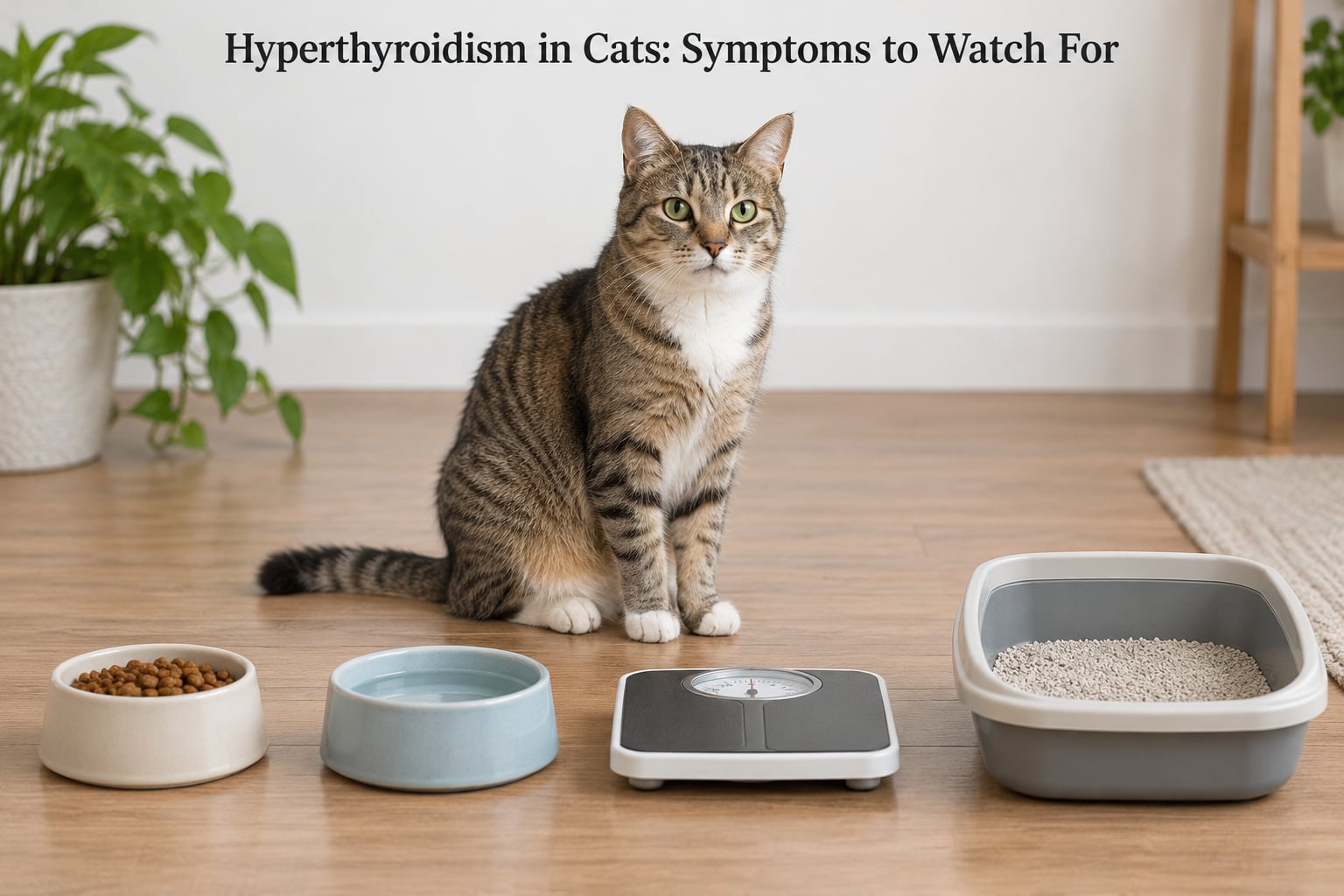
The single most recognisable sign is weight loss despite a healthy or enormous appetite. Owners often describe the classic skinny glutton look: the cat devours dinner and then wonders about it an hour later, yet the scale keeps dropping.
The early signs most owners notice first
- Weight loss despite a big appetite
- Increased thirst, drinking more often or seeking bowls that hold more water
- Increased urination, including accidents outside the litter box
- A matted, greasy or unkempt coat that no amount of brushing fixes
- Vomiting or diarrhoea, sometimes more often than before
- Restlessness or night-time yowling, and sometimes new irritability
- Panting or heat intolerance, seeking cool floors and shade
- A small firm lump under the skin in the neck, felt when you stroke the throat
What happens as it progresses
Later on, muscle wasting shows in the hind legs, the cat gets thinner through the back and shoulders, and the heart works harder than it should. Owners notice a faster pulse, a heart murmur, or a cat that tires quickly on a normal jump.
Kidney strain is another later concern. A hyperthyroid cat burns through protein and water so fast that kidney function can quietly deteriorate along with the thyroid problem.
The quiet form: apathetic hyperthyroidism
Roughly one cat in ten has the opposite presentation. Instead of hyperactivity, the signs are extreme lethargy, weakness, hiding, and a cat that stops eating. Veterinary conference proceedings describe this apathetic form, and it is easy to mistake for a cat simply getting old.
One warning about all of this: these symptoms are not unique to hyperthyroidism. Kidney disease, diabetes, intestinal disease and even dental pain can look similar, which is why diagnosis belongs with a veterinarian rather than a symptom checklist.
When Does a Cat With Hyperthyroidism Need Urgent Care?
Some symptoms justify same-day contact with a vet clinic, and a few mean you should go to an emergency service straight away.
- Laboured or rapid breathing, open-mouth breathing, or blue-tinged gums
- Collapse, extreme weakness, or a cat that cannot stand normally
- Refusing food and water for more than about 24 hours
- Signs of serious dehydration, such as sunken eyes, sticky gums, or very little urine in the litter box
- A very fast or irregular heartbeat at rest
- Blood in the stool or vomit, or repeated vomiting
Anything on that list can also be an emergency for reasons other than the thyroid, so treat breathing trouble and collapse as urgent regardless of what you suspect.
For everything else, severity is a judgement call your veterinarian makes. A mildly overweight cat with slightly increased thirst is not the same situation as a cat that has dropped from 11 pounds to 7.5. If you are unsure how urgent it is, describe the change in a phone call and let the clinic decide, which is exactly what they are there for.
How Is Hyperthyroidism in Cats Diagnosed?
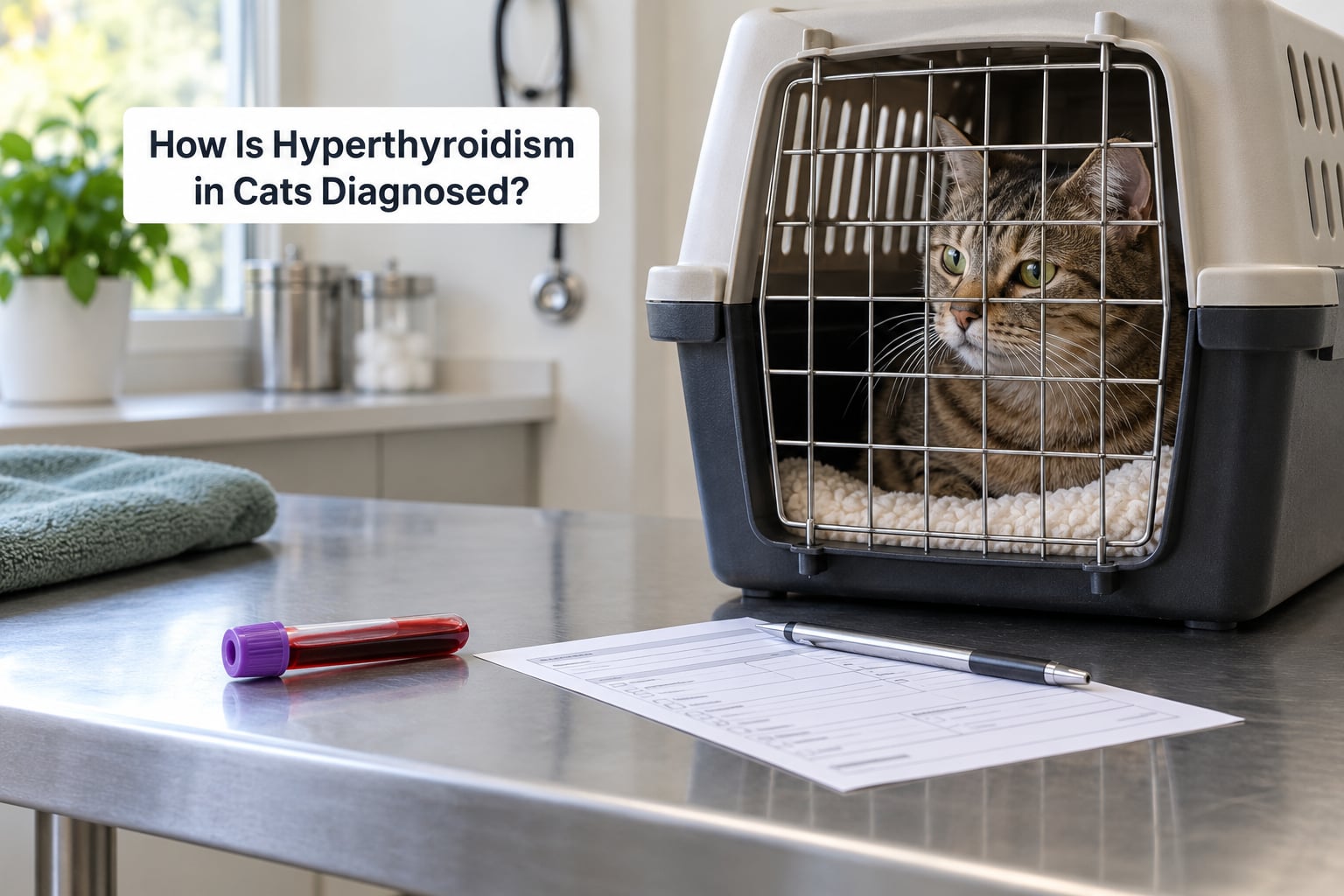
Diagnosis is a straightforward process once a cat is in the consulting room, but there is no home test and no way to confirm it from symptoms alone. A veterinarian builds the picture from four things.
- Physical examination. The vet weighs the cat, listens to the heart, checks pulses and blood pressure, and feels the neck for a thyroid nodule. A visible or palpable goiter is a strong clue.
- A total T4 blood test. Elevated thyroid hormone level is the main confirmation. A small number of cats with real symptoms have a normal result on the first test, so the vet may repeat it.
- Kidney screening. Blood urea nitrogen, creatinine and urine values are checked before any treatment, partly because an abnormal result changes the plan.
- Heart assessment. An ECG or heart imaging is added if a murmur, arrhythmia or high blood pressure is detected.
Why the kidney results matter so much
Extra thyroid hormone raises blood pressure and pushes more blood through the kidneys, which can make kidney function look better than it really is. When the thyroid settles down after treatment, previously hidden kidney problems can show up at the next blood test. That is expected and manageable, but it is why your vet keeps rechecking rather than assuming everything is fixed.
Other conditions that get ruled out at the same time
Bloodwork commonly screens for kidney disease, diabetes and intestinal disease alongside the T4 value, because all of these occur in older cats and several produce the same weight loss and thirst. Your vet may also recommend imaging of the chest if the breathing changes.
What Are the Main Treatment Options?
There are four standard approaches to feline hyperthyroidism. One is usually chosen as a bridge while a more definitive option is arranged, and your vet will explain which fits your cat’s age, kidney values and home situation.
| Option | How it works | Time to results | What to watch |
|---|---|---|---|
| Methimazole (anti-thyroid medication) | Reduces thyroid hormone production; given by mouth, often as a small tablet | Weeks to a few months as levels adjust | Lifelong treatment, regular blood tests, side effects in some cats, easy to stop and start again |
| Radioactive iodine (I-131) | A single injection of iodine-131 that selectively destroys the overactive thyroid tissue | Most cats normalise within a few weeks | Needs a licensed facility and several days of hospitalisation, with radiation-safety rules for the home afterwards |
| Thyroidectomy (surgery) | Removal of the overactive thyroid tissue | Improvement within days to weeks | Anaesthetic risk in older cats and possible damage to nearby parathyroid glands |
| Low-iodine prescription diet | Iodine-free food starves the abnormal tissue of its fuel | Improves over two to six months | Works only if nothing else is fed; many cats are picky, and it suits a minority |
Medication: methimazole
Methimazole is the most common starting point. It is inexpensive, reversible, and does not require a hospital stay. The catch is that it controls the disease rather than curing it, and it is a lifelong commitment.
Side effects are the reason owners ask so many questions. The most commonly reported are vomiting, a poor appetite shortly after starting, and facial changes such as hair loss around the face and ears, crusting or sores. Owners on cat forums describe the pill itself as the practical headache: it is very small and bitter, and some cats spit it out or vomit it back up. Pill pockets, a pill gun, or a compounding pharmacy are the usual answers.
Never give a cat human thyroid medication, and never adjust or stop a prescribed dose on your own. Human products differ in strength and formulation, and an overdose in a cat can be fatal.
Radioactive iodine (I-131)
I-131 is the closest thing to a cure. A single injection of radio-iodine is taken up only by the abnormal thyroid tissue and destroys it while leaving the rest of the gland functioning. Published figures put the cure rate at roughly 95 percent, which is why so many clinics treat it as the preferred option.
The trade-off is logistics. The treatment has to be given at a licensed facility, your cat stays there for several days, and there are temporary radiation-safety rules at home afterwards, including keeping other pets and people away from the cat for the period the centre specifies.
Surgery: thyroidectomy
Surgery removes the overactive tissue and can resolve the problem permanently. The risks are the ones any geriatric anaesthetic carries, plus the chance of disturbing the small parathyroid glands that sit next to the thyroid, which can affect calcium levels afterwards. Your vet will check those values after the operation.
Diet management
A strict low-iodine prescription diet works by removing the raw material the abnormal tissue needs. It only works if the cat eats nothing else at all: no treats, no table scraps, no chew, no second pet’s food. Owners on forums describe that as the hardest part, because most cats consider anything not in the bowl a personal insult.
In a multi-pet household, the diet cat has to be fed separately, and many vets advise against a diet that depends on one animal eating perfectly for the rest of its life. It can be a useful option for a cat with mild disease or where the other choices are not suitable.
What Happens During Long-Term Management?
Hyperthyroidism in cats symptoms and treatment basics are only half the story. Once treatment starts, the work is mostly monitoring, and that part is where owners notice the biggest change.
Rechecks and repeat blood tests
With medication, blood tests usually repeat every few weeks at first, then settle into a schedule once levels stay steady. For I-131, your vet re-tests thyroid and kidney values after a few weeks to confirm the result held and to see how the kidneys are coping with the change.
Weight, coat and appetite
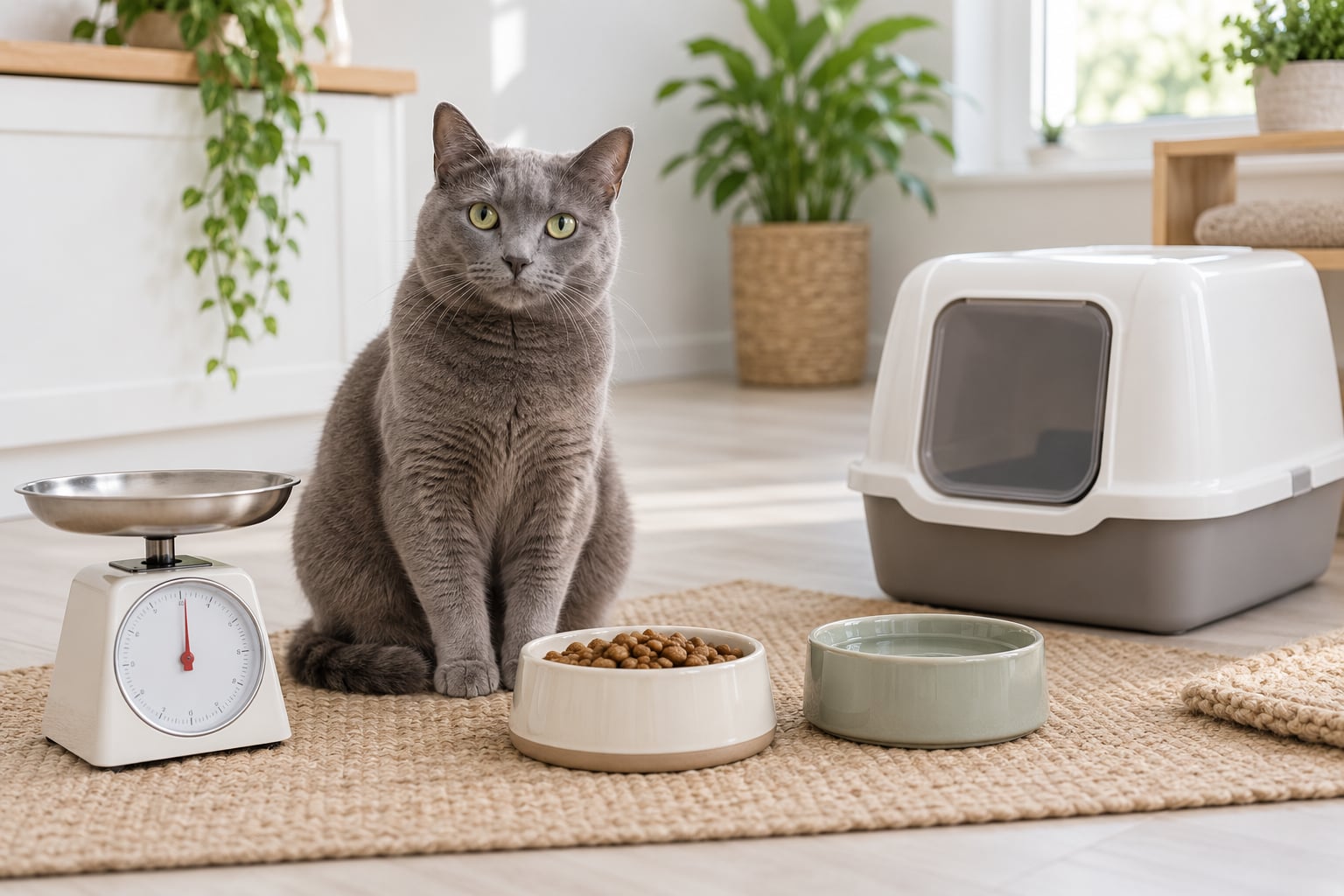
Weighing the cat at home once a week catches problems early, and keeping the same scale in the same spot makes the numbers comparable. A coat that was dull and matted often takes weeks to months to recover. Appetite, activity and drinking usually normalise too, and owners regularly report the change within the first month of treatment.
Hydration and nutrition support
Cats who were drinking heavily and losing weight often need help catching up. Wet food and extra water bowls help some owners get more fluid in. A cat on a prescription diet needs that diet fed consistently, while a cat on medication usually has no special diet restriction beyond what the vet advises.
Heart and kidney checks
Regular heart and kidney assessments matter because both systems are strained by the hormone excess. Catching a murmur or an early kidney change early is what keeps a treated cat comfortable for years rather than months.
Can Hyperthyroidism in Cats Be Prevented?
No. There is no proven way to prevent feline hyperthyroidism, and for most cats the age-related change in the thyroid tissue is not something an owner caused or could have avoided.
Routine care still matters. Feed a balanced diet appropriate for a cat’s life stage, keep water available, maintain a steady weight record, and keep up with regular veterinary visits. For a cat over eight, those senior visits usually include bloodwork, which is where early thyroid changes tend to surface.
Environmental stress and poor nutrition have not been shown to cause hyperthyroidism. Environmental safety and comfort do help a cat live well while you are managing the condition, especially heat intolerance in a restless cat that seeks cool surfaces.
Where an owner declines treatment, a quality-of-life conversation with a vet is genuinely useful. Palliative care, pain and comfort management, and a plan for the signs you expect are all reasonable, and they are better discussed early than in an emergency.
Frequently Asked Questions
Is hyperthyroidism in cats contagious?
No. Hyperthyroidism in cats is caused by a non-cancerous growth in the thyroid gland itself, not by anything passing between animals. It cannot spread through litter boxes, food bowls, or contact with an infected cat. Other cats in the same home can be checked by a vet, but they will not catch it.
Can a cat with hyperthyroidism eat normally and still lose weight?
Yes, and that is the signature sign. A cat burning through calories at an accelerated rate can eat enthusiastically and still lose weight over weeks or months. Owners often notice the collar sitting looser or the ribs and spine becoming visible. If your cat is eating well and dropping weight, book a vet visit rather than changing food.
Can hyperthyroidism in cats be cured rather than managed?
Often, yes. Radioactive iodine cures roughly 95 percent of treated cats, and surgery can also resolve the problem permanently. Medication controls the condition instead, which usually means lifelong tablets and regular blood tests. A low-iodine diet manages it without drugs but depends on the cat eating only that food. Your vet explains which is realistic for your cat.
Can I give my cat human thyroid medication?
Never. Human thyroid products differ in strength and formulation, and an accidental overdose in a cat can be fatal. Cats on methimazole need a veterinary prescription and regular blood tests to keep the dose right. Never start, stop or change a dose yourself, and keep all human medication out of reach.
Does a special diet treat hyperthyroidism in cats?
A strict low-iodine prescription diet can work for some cats, usually alongside monitoring, because it removes the iodine the abnormal thyroid tissue depends on. It only works if the cat eats nothing else, so no treats, no table food and no sharing with other pets. Many cats refuse it, so it suits a minority and takes patience.
Where should a cat owner go for a diagnosis and treatment plan?
Start with your regular vet for an examination and thyroid blood work. Radioactive iodine is offered at licensed specialist centres, and your vet can refer you and tell you what to expect during the stay and afterwards. For urgent signs like laboured breathing, collapse or refusing food for a day, go straight to an emergency clinic.
What to Do First
Start a simple log: dates, weight, appetite, how much water goes into the bowl, litter box output, and anything that looks different. Photographs of your cat at the same spot each week are more useful than memory, and they give your vet something concrete to look at.
Then stop guessing and get an examination. Do not start any medication, and never give a cat anything prescribed for a human. If your cat is breathing hard, has collapsed, is extremely weak, or has not eaten or drunk for about a day, skip the appointment and go to an emergency clinic today.
Once hyperthyroidism in cats is confirmed, this guide’s four options give you a framework for that conversation with your veterinarian, who can tailor the plan to your cat’s age, kidney values and home.