The aquarium nitrogen cycle explained step by step comes down to three jobs: bacteria turning toxic ammonia into nitrite, more bacteria turning that nitrite into nitrate, and you removing the nitrate. Your tank is cycled when ammonia reads 0 ppm, nitrite reads 0 ppm and nitrate is detectable — until those three numbers line up, no fish goes in.
This guide follows what I have watched happen on my own tanks and what beginners repeatedly report on aquarium forums like r/Aquariums and r/PlantedTank. Updated for 2026.
Table of Contents
- The cycle in five steps
- What Is the Aquarium Nitrogen Cycle?
- Why the Nitrogen Cycle Matters for Fish Health
- Aquarium Nitrogen Cycle Explained Step by Step
- Step 1: Set the tank up properly
- Step 2: Test your tap water first
- Step 3: Dose ammonia to 2 ppm
- Step 4: Keep feeding the bacteria lightly
- Step 5: Keep conditions in range
- Step 6: Test ammonia, nitrite and nitrate every two to three days
- Step 7: Watch for the milestones
- Step 8: Confirm the finish line and stock slowly
- What Happens During Each Stage?
- How Long Does Cycling a New Aquarium Take?
- How Do You Test and Maintain the Cycle?
- Common Cycling Mistakes and How to Fix Them
- Frequently Asked Questions
- How many days should I give my tank to complete its nitrogen cycle?
- Why isn’t my ammonia level dropping?
- Why won’t my nitrite level go down?
- If I have nitrates, does that mean my tank is cycled?
- Do I need to keep feeding the bacteria after the cycle is complete?
- Conclusion: Start With a Tested, Stable Tank
The cycle in five steps
- Waste — uneaten food, excreta and decaying plant matter release ammonia.
- Ammonia (NH3/NH4+) — the most toxic stage, dangerous above roughly 0.25 ppm.
- Nitrite (NO2-) — Nitrosomonas bacteria oxidise ammonia into nitrite.
- Nitrate (NO3-) — Nitrospira bacteria finish the conversion; far less harmful.
- Removal — partial water changes and live plant uptake take nitrate out of the water.
Some explanations count seven stages instead of five by listing the bacterial conversions as separate steps. Both numberings describe the same chain.
What Is the Aquarium Nitrogen Cycle?
The aquarium nitrogen cycle is nitrification: a two-part bacterial conversion that turns the ammonia your fish produce into a compound you can actually remove. Nitrosomonas bacteria oxidise ammonia into nitrite, and Nitrospira bacteria then oxidise nitrite into nitrate.
Both groups of bacteria live on surfaces, not floating loose in the water. They colonise filter media, the substrate, gravel, and the biofilm on hardscape and pipework. More surface area means a larger colony, which is exactly why a canister filter full of porous ceramic media cycles faster than a small box filter with smooth plastic media.
The process consumes oxygen as it works, which is one reason a heavily stocked tank with a weak aeration system can stall. Ammonia is also what feeds the cycle, so a filter with nothing to eat will slowly lose its colony.
| Bacteria | Converts | Lives in | Best conditions | What kills it |
|---|---|---|---|---|
| Nitrosomonas | Ammonia into nitrite | Filter media, substrate, hardscape biofilm | 25-28C, pH 7-8, oxygenated water | Chlorine, chloramine, antibiotics, overcleaning |
| Nitrospira | Nitrite into nitrate | Filter media, substrate, hardscape biofilm | 25-28C, pH 7-8, oxygenated water | Chlorine, chloramine, antibiotics, overcleaning |
| Nitrobacter | Nitrite into nitrate | Same surfaces, usually in smaller numbers | Similar range, slower to establish | Same as above |
Textbooks often name Nitrobacter as the nitrite-converting group. In practice Nitrospira usually dominates established aquaria, which is why bottled cultures that contain both tend to work better.
Why the Nitrogen Cycle Matters for Fish Health
Every animal in your tank produces ammonia, and so does every uneaten pellet decomposing in the substrate. Without a mature biological filter, that ammonia and its by-product nitrite build up fast, and both are genuinely poisonous.
Ammonia damages gill tissue and interferes with oxygen transport across the gill membrane. Fish exposed to it gasp at the surface, swim oddly, and can die over a few days. Nitrite is sneakier: it binds to haemoglobin in the blood and stops red cells carrying oxygen, a condition sometimes called brown blood disease.
Nitrate is the good news. It is much less toxic, and while a permanently high level still causes chronic stress, poor growth and faded colour, most fish tolerate it without visible harm under roughly 20-40 ppm.
The practical thresholds worth memorising:
- 0 ppm ammonia and 0 ppm nitrite — the safe target, and the only numbers that decide when you stock.
- Above 0.25 ppm of either — the tank is not ready, no matter how good it looks.
- Nitrate present alongside zero ammonia and zero nitrite — the finish line.
When a new tank fails, the cause is almost always new tank syndrome: livestock added before the filter is ready. If a fish is already showing symptoms in a cycled tank, treat it as a health problem and see a vet rather than cycling your way out of it.
Aquarium Nitrogen Cycle Explained Step by Step
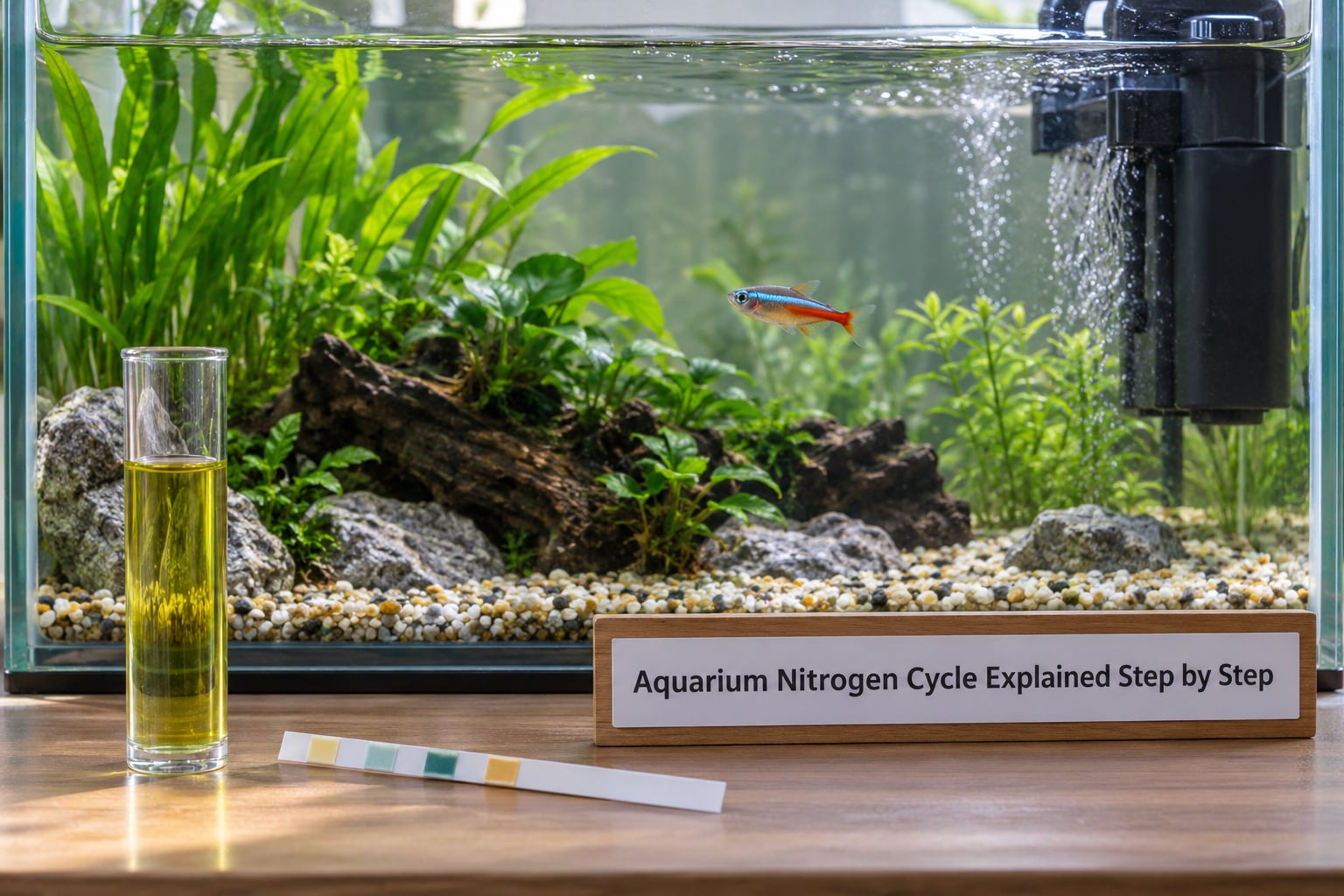
The following is the protocol I would hand a friend setting up their first tank. Eight steps, and the finish line is a test result rather than a date on the calendar.
Step 1: Set the tank up properly
Install your filter, heater and substrate before you add anything biological. The filter must run from day one, because the bacteria you are about to grow need flowing, oxygenated water and a wet surface to colonise.
Step 2: Test your tap water first
This is the step almost everyone skips, and it explains a surprising number of confusing readings. Test the raw tap water for ammonia, nitrite and nitrate before you add any conditioner. Nitrate already present in tap water is the single biggest reason beginners wrongly believe their tank is cycled.
Also check whether your water supply uses chlorine or chloramine. Chloramine is not removed by letting water sit overnight the way chlorine is, so it needs a conditioner that specifically binds it.
Step 3: Dose ammonia to 2 ppm
Use pure liquid ammonium chloride if you can get it. Food-based ammonia such as pure fish food or a pinch of a human cereal works, but you have less control over the dose, and uneaten protein in a filter is a recipe for a slow, uneven cycle.
Dose to 2 ppm measured. Some planted-tank hobbyists push to 5-6 ppm, but a heavy dose takes much longer to clear and makes the tank feel stuck when it is simply working through a large ammonia load.
Step 4: Keep feeding the bacteria lightly
Every two to three days, test and top ammonia back up to 2 ppm if it has fallen. Many hobbyists on planted-tank forums prefer two small doses a day rather than one big one, which keeps the food supply steadier for the colony.
Never let the ammonia hit zero while you are still waiting. A colony that runs out of food stops reproducing, and you can end up waiting far longer than a consistent dose would have cost you.
Step 5: Keep conditions in range
Hold the water at 25-28C and a pH around 7-8. Below pH 6.5 the ammonia-to-nitrite bacteria slow to a crawl, which is one reason an apparently stalled cycle in very soft water takes weeks to move. Add an air stone or extra outflow if the filter outlet does not break the surface.
Step 6: Test ammonia, nitrite and nitrate every two to three days
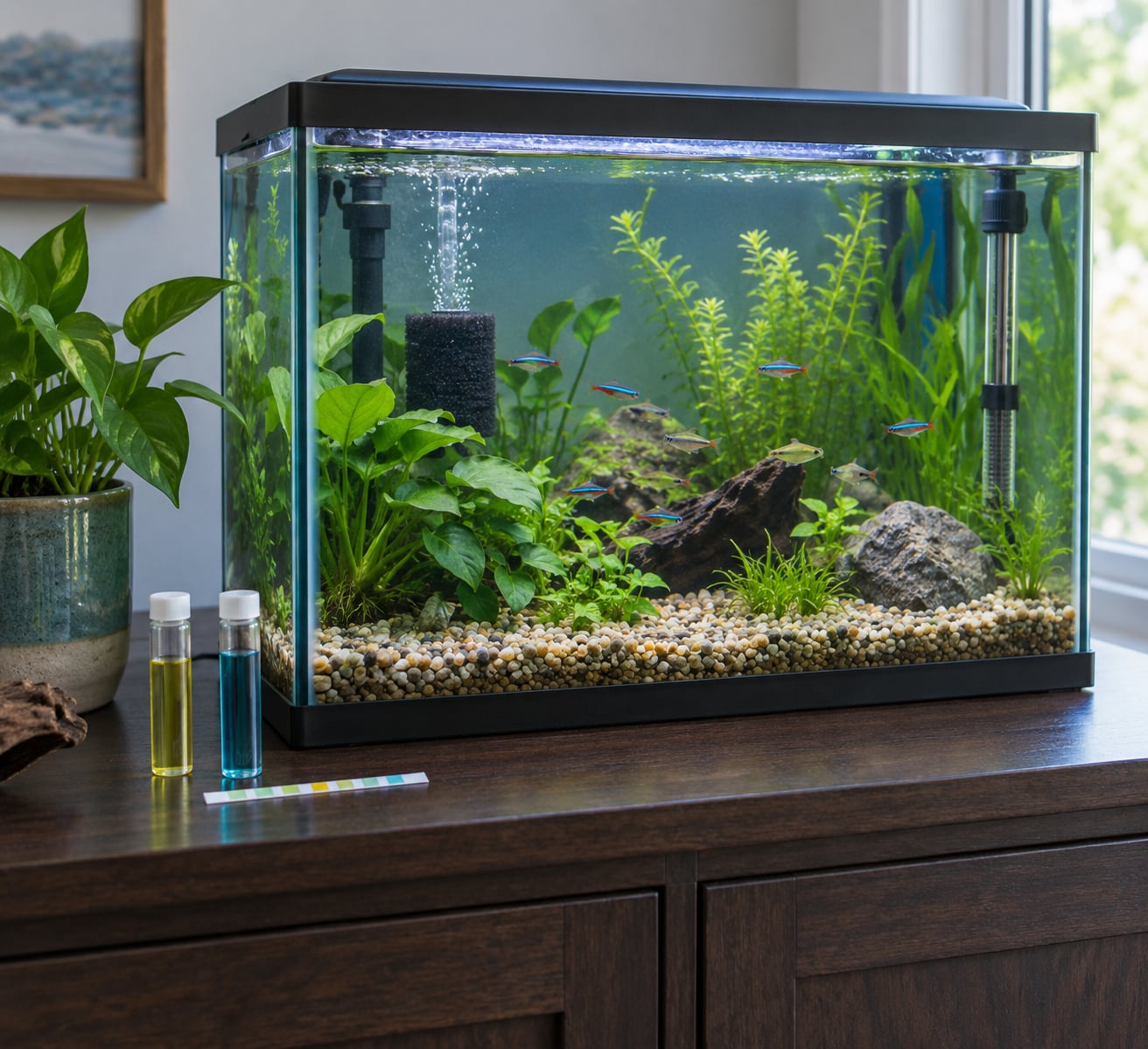
Shake each bottle hard before you use it, follow the test directions exactly, and compare colours in daylight rather than under a warm lamp. Liquid kits are more reliable than strips at low concentrations, which matters at the 0.25 ppm level where the decision is being made.
Step 7: Watch for the milestones
Ammonia starts to drop, nitrite appears and climbs, then nitrite falls while nitrate rises. Those three movements in that order tell you the cycle is genuinely progressing rather than sitting still.
Step 8: Confirm the finish line and stock slowly
You are ready when ammonia reads 0 ppm and nitrite reads 0 ppm on a test done 24 hours after your last ammonia dose, with nitrate present. Stock far fewer fish than the shop suggests, and add them in stages over a couple of weeks rather than all at once.
What Happens During Each Stage?
Each stage has a signature reading, and learning to recognise them tells you where you are in the aquarium nitrogen cycle without guessing.
| Stage | What you measure | Bacteria at work | What you see | What to do |
|---|---|---|---|---|
| Ammonia | 0.5-2 ppm | None established yet | Cloudiness, rising ammonia | Keep dosing to 2 ppm, check temperature and pH |
| Nitrite | Nitrite rising as ammonia falls | Nitrosomonas converting ammonia | Ammonia stuck near 0.25-1 ppm | Wait, dose top-ups, keep the filter running |
| Nitrite falling | Nitrate rising | Nitrospira converting nitrite | Nitrate detectable, nitrite dropping | Stop adding ammonia, keep testing daily |
| Complete | 0 ppm ammonia, 0 ppm nitrite, nitrate present | Both colonies at carrying capacity | Clear water, stable daily readings | Add livestock gradually |
A typical unseeded fishless cycle runs along these lines:
| Point | Action | Target ammonia | Expected readings |
|---|---|---|---|
| Day 1 | Set up, dose ammonia | 2 ppm | Ammonia 2 ppm, nitrite 0, nitrate 0 |
| Days 2-5 | Test every 2-3 days, top up | 2 ppm | Ammonia holds near 2 ppm |
| Week 2-3 | Same routine, watch pH | 2 ppm | Nitrite appears, ammonia slows dropping |
| Week 3-5 | Test daily near the spike | 2 ppm | Nitrite climbing, ammonia near zero between doses |
| Week 5-8 | Test daily | Last dose, then stop | Nitrite falling, nitrate rising |
| Finish | Confirm 24 hours after last dose | 0 ppm | 0 ammonia, 0 nitrite, nitrate present |
How Long Does Cycling a New Aquarium Take?
A fishless cycle on pure ammonia takes four to eight weeks in a typical home setup. Seeded or bottled-bacteria cycles run far shorter, and the difference comes down to how much bacteria you start with, not how hard you wish it were.
| Method | Typical time | Fish in the tank? | Best for |
|---|---|---|---|
| Fishless, pure ammonia, unseeded | 4-8 weeks | No | Reliability and full control |
| Fishless, seeded with mature media | 1-3 weeks | No | Borrowing a sponge from an established filter |
| Fishless with a bottled bacterial culture | 2-4 weeks | No | Convenience |
| Silent cycling with live plants | 6-8 weeks or longer | No | Planted aquascapes, natural-looking set-ups |
| Fish-in cycling | 3-6 weeks | Yes | Shops that refuse to help; carries real risk |
These are honest ranges, not promises. A tank seeded with a mature sponge from a friend’s filter can be ready in under two weeks, while a cold, very soft or very acidic tank can drag on past two months. Planted-tank hobbyists often report faster cycles because the substrate and plant roots host early nitrification, which is why a planted setup can look cycled before the filter media has caught up.
Silent cycling, where you add live plants and no ammonia, is the gentlest route and the slowest. Plants release a little nitrogen as they grow, enough to sustain a colony, but not enough to finish quickly. Choose it for the tank you want, not the tank you want this weekend.
Bottled bacteria do not cycle a tank instantly. They speed things up meaningfully when the bacteria arrive alive and the water is within range, but they are still growing a colony from a small population.
How Do You Test and Maintain the Cycle?
Testing is the whole job. A cycle you do not measure is a cycle you are guessing about, and the readings are what tell you whether to wait, dose more, or change something.
- Test every two to three days during cycling, then daily through the nitrite spike. Once stocked, weekly ammonia and nitrite checks catch problems long before fish show symptoms.
- Use a dechlorinator every time, including for water-change replacements. Untreated chloramine is a leading cause of bacteria dying off in new and established tanks alike.
- Do 25-30% weekly water changes on a stocked tank. This is how nitrate leaves the system; nothing else does it reliably, and plants only supplement it.
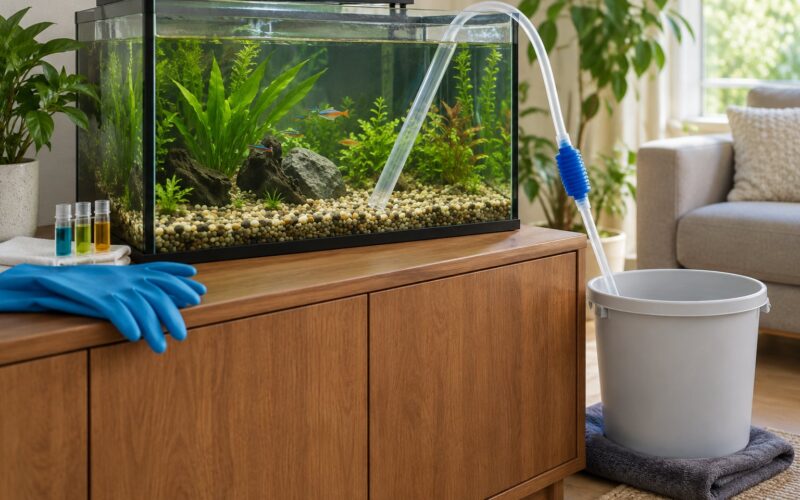
- Never rinse filter media in tap water. Rinse sponges and dirty media in a bucket of removed tank water, and only when flow is reduced. This is the most repeated piece of advice across every aquarium forum, and for good reason.
- Never replace all your media at once. If the sponge is falling apart, run old and new media side by side for a month so the bacteria have somewhere to transfer from.
- Keep feeding the bacteria after the cycle completes. If you cycle a tank and then leave it fishless for weeks, the colony shrinks without an ammonia source. Either add a very small ammonia dose periodically or add the fish sooner.
- Avoid antibiotics and copper medications in the main tank. They do not kill nitrifying bacteria reliably, but they stress fish badly, and fish under stress produce more ammonia on top of everything else.
Keep an eye on oxygen too. A surface-agitated filter outlet, a modest air stone and avoiding a tank stuffed past its filtration capacity all help the bacteria work and the fish breathe.
Common Cycling Mistakes and How to Fix Them
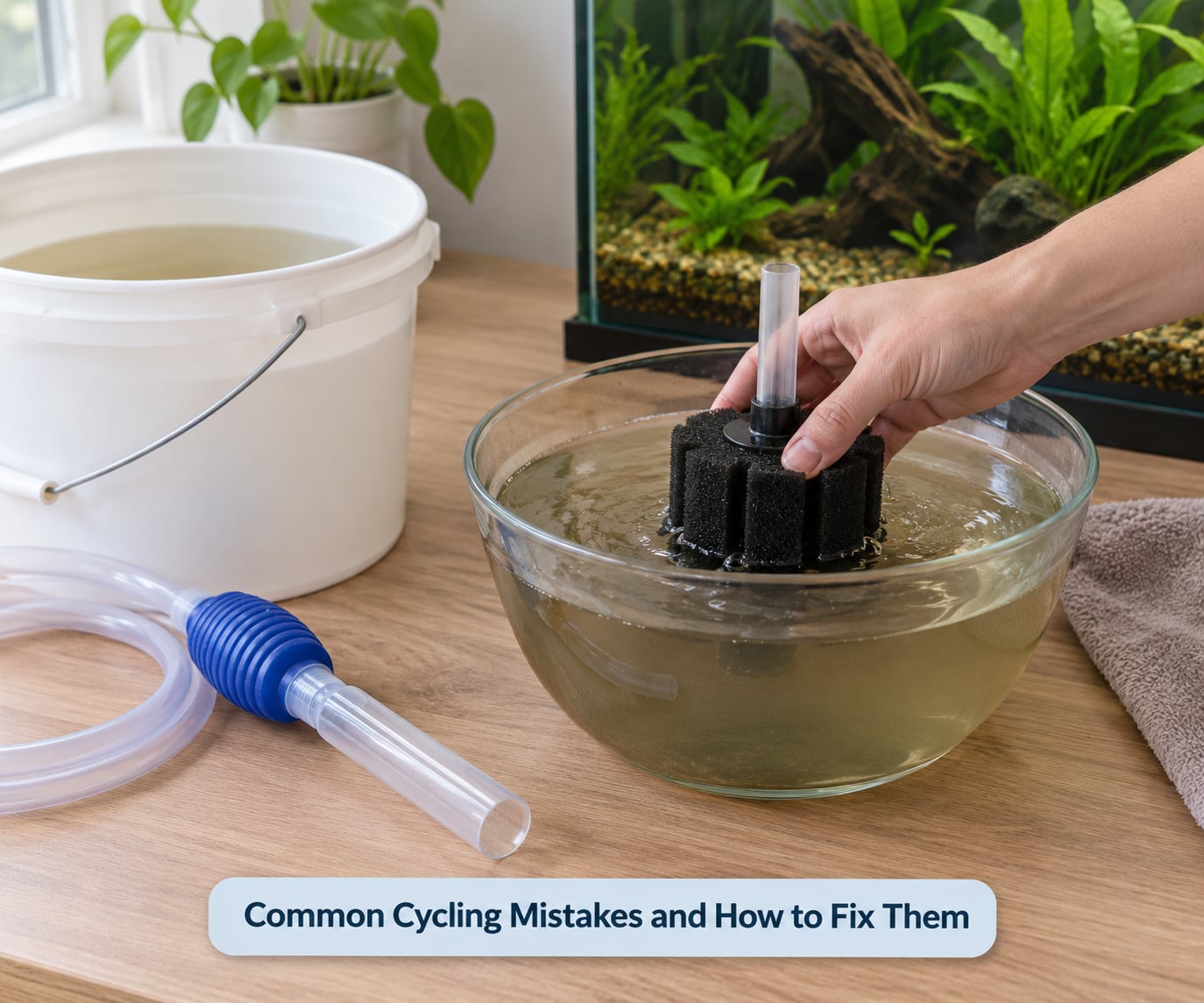
Almost every failed first cycle comes down to one of a handful of mistakes, and all of them are fixable.
- Adding fish too early. “Just a couple of hardy ones” is the classic way to burn ammonia and get new tank syndrome. Cycle fishless and the problem disappears entirely.
- Overdosing ammonia. A dose heavy enough to hit 5-6 ppm takes a very long time to clear. Dosing lightly and consistently beats one big dose.
- Rinsing or replacing filter media. Tap water and bare new media both reset the colony. Rinse dirty media in removed tank water instead.
- Skipping tests and using dates. “Week three, so it must be done” is how fish end up in an ammonia spike. Tests decide, not calendars.
- Ignoring the tap water. Untreated chloramine, or nitrate already in the supply, can produce readings that make a dead filter look alive and a finished tank look unfinished.
- Using soap or household cleaners anywhere near the tank, substrate or filter parts. Residue kills bacteria and poisons fish.
- Abandoning a fishless tank after cycling. With no ammonia source the bacteria slowly decline, and the tank may need a re-cycle before livestock goes in.
| Symptom | Likely cause | Fix |
|---|---|---|
| Ammonia stuck at 0.25 ppm | Your tap water already contains ammonia, or the dose is below the test’s readable range | Test raw tap water as a baseline, raise the dose to 2 ppm, verify the kit is fresh |
| Ammonia not dropping at all | Temperature too low, pH too acidic, bacteria killed by chloramine, or no oxygen | Warm to 25-28C, raise pH toward 7-8, add a dechlorinator, aerate the filter |
| Nitrite not going down | Nitrospira colony is still small, or the tank is very soft and low in alkalinity | Keep dosing ammonia, keep the filter running, be patient, consider seeding mature media |
| Nitrate present, ammonia and nitrite zero | Usually a finished cycle, but possibly nitrate from tap water | Compare against your tap water baseline, then confirm with a test 24 hours after a small ammonia dose |
| Ammonia appears in a stocked, established tank | Overstocking, filter failure, medication, or a dead colony after a crash | Water changes, feed sparingly, check equipment, reseed with mature media |
Frequently Asked Questions
How many days should I give my tank to complete its nitrogen cycle?
Give a fishless cycle on pure ammonia four to eight weeks. Seeding with mature filter media from an established tank can cut that to one to three weeks, and a bottled bacterial culture typically takes two to four weeks. Treat any number as a range, not a deadline, and let your ammonia and nitrite tests decide when you are finished.
Why isn’t my ammonia level dropping?
Most often the tank is too cold or too acidic, the tap water contains chlorine or chloramine that killed the bacteria, or your dose is simply too low to read reliably. Test your raw tap water as a baseline, warm the water to 25-28C, aim for a pH near 7-8, and dose pure ammonia to 2 ppm before deciding the cycle has stalled.
Why won’t my nitrite level go down?
Nitrite falls once the nitrite-oxidising bacteria, mainly Nitrospira, catch up with what the tank is producing. Until then, keep the ammonia source steady so the first colony keeps feeding, keep the filter running and aerated, and hold the water between 25-28C. Very soft, low-alkalinity water can slow this stage considerably.
If I have nitrates, does that mean my tank is cycled?
Not on its own. Many municipal water supplies already contain nitrate, so a nitrate reading can appear in a brand new tank with a dead filter. The finish line needs all three: 0 ppm ammonia, 0 ppm nitrite, and nitrate present. Test your tap water first so you know what your baseline looks like.
Do I need to keep feeding the bacteria after the cycle is complete?
Yes. Nitrifying bacteria need ammonia to survive and reproduce, so a tank left empty with no fish and no ammonia source slowly loses its colony. Once livestock are in, the fish waste feeds it automatically. If you have cycled a tank and plan to wait before adding fish, dose a small amount of ammonia occasionally or add the fish sooner.
Conclusion: Start With a Tested, Stable Tank
Run your filter from day one, dose pure ammonia to 2 ppm, and test ammonia, nitrite and nitrate every two to three days until a test done a day after your last dose reads 0 ppm ammonia and 0 ppm nitrite with nitrate present. Add the fish slowly after that, and your new tank has a real chance of being trouble free for years.