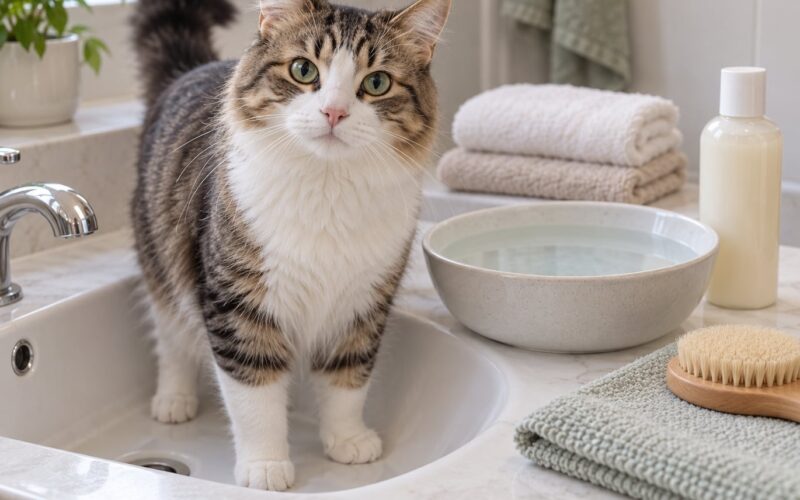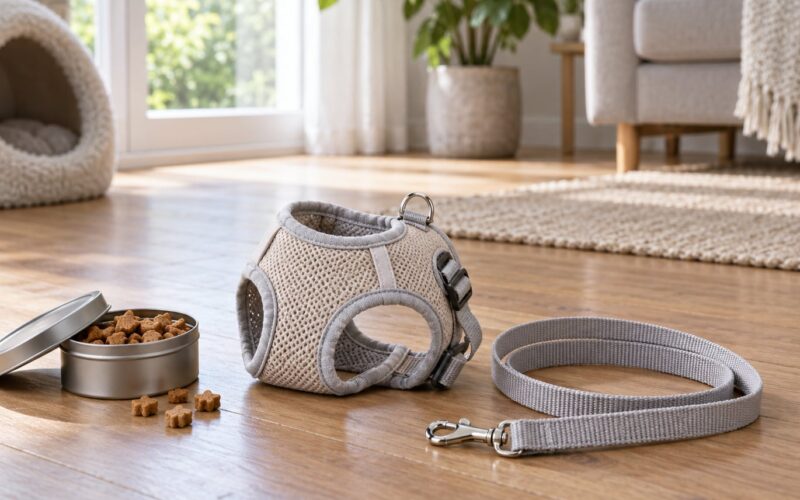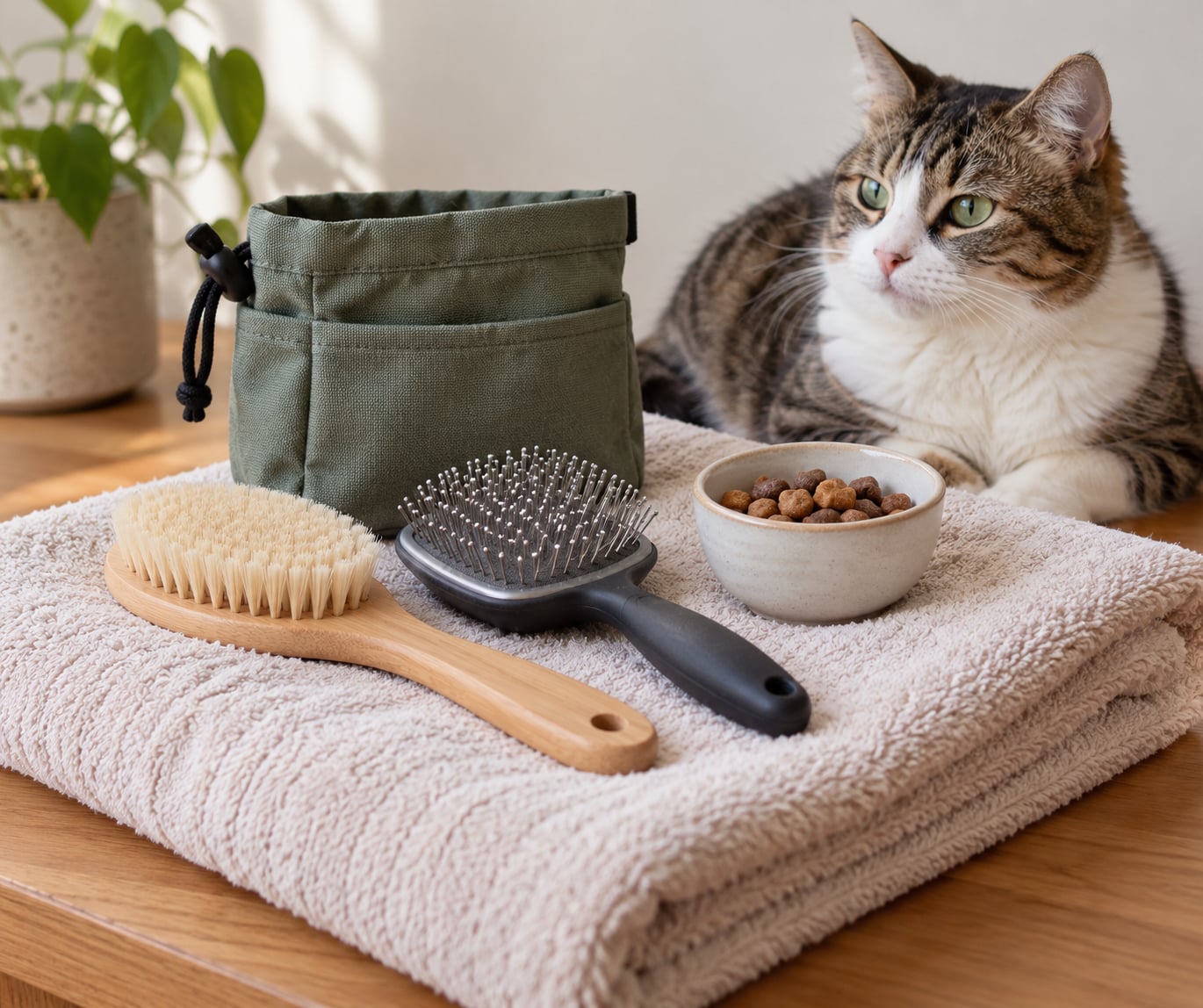
You can brush a cat that hates brushing, and you do not need to hold it down to do it. The method that works is slow desensitization: pick the softest tool for the coat, let the cat sniff it, reward every calm moment with a tiny treat, and brush in bursts of a few seconds. Most cats that bolt from the brush accept short sessions within a few weeks, and many settle into a routine given a couple of months.
I have two cats with opposite opinions about grooming. One climbs onto the blanket on his own and falls asleep mid-brush. The other treats the sight of a comb like an evacuation warning. What changed things for the reluctant one was not a better brush, it was doing less. Three strokes, a treat, done. That is the whole idea behind this guide, and it works whether the cat is nervous, overstimulated, or genuinely uncomfortable.
There is one exception worth naming up front. If your cat flinches at the brush but also scratches at its own skin, limps, has bald patches, or cries when a specific area is touched, this is not a dislike. That is pain, and a vet should look at it before you groom again. Everything below assumes the cat is physically healthy.
Table of Contents
- What You Need
- How to Brush a Cat That Hates Brushing: Step by Step
- Step 1: Set Up the Right Tools and Space
- Step 2: Let the Cat Explore the Brush
- Step 3: Start With One Gentle Touch
- Step 4: Brush for a Few Seconds
- Step 5: Build Up in Very Short Sessions
- Step 6: End on a Positive Note
- Troubleshooting How to Brush a Cat That Hates Brushing When It Bolts
- Common Mistakes
- Success Tips
- Frequently Asked Questions
- Should I force my cat to be brushed?
- How long should I brush a cat that hates being brushed?
- What brush is best for a nervous cat?
- How do I brush a cat with matted fur safely?
- Can I use human sedatives or essential oils on my cat?
What You Need
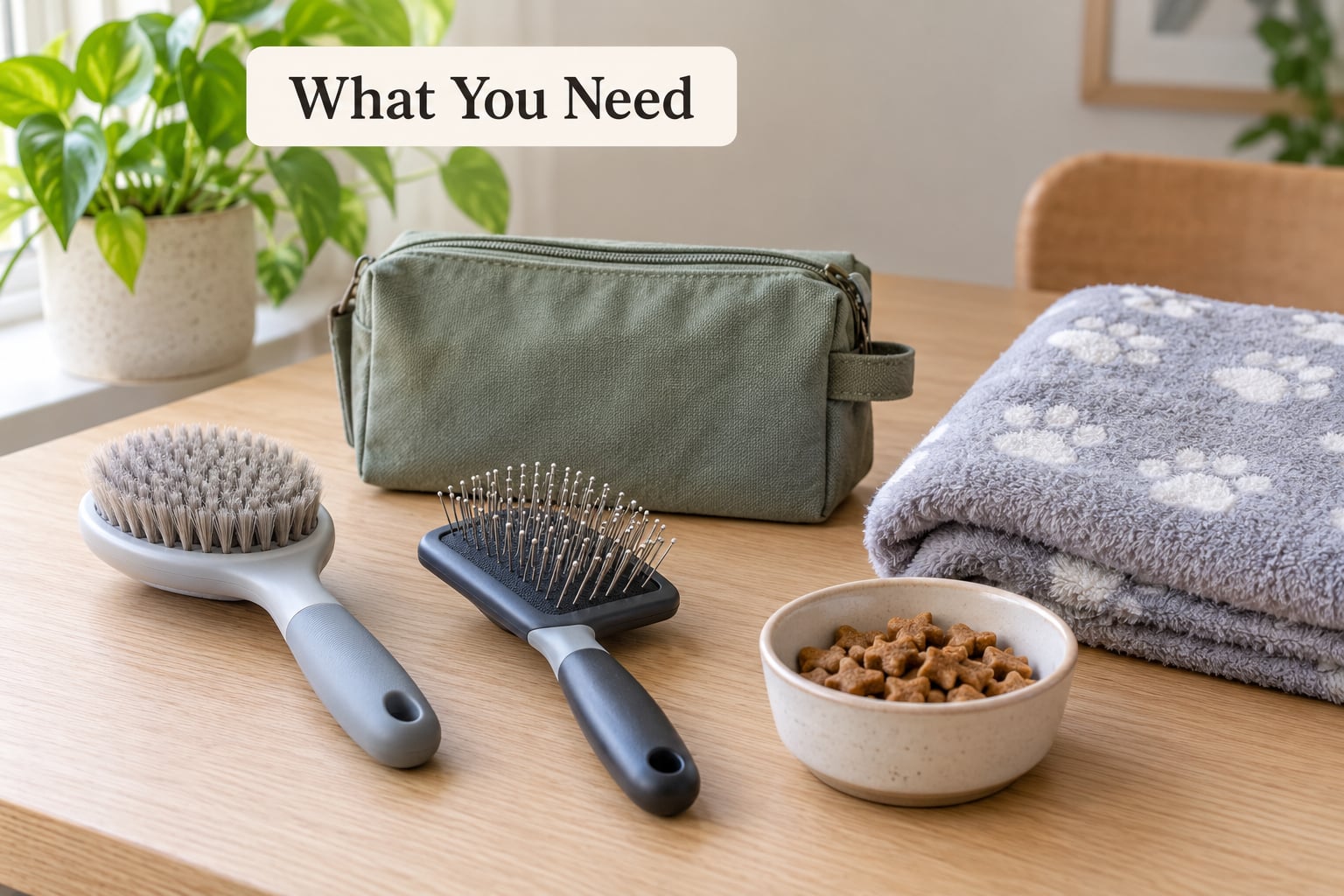
Gather everything before the cat notices. Reaching for a second treat mid-session is how most sessions end early.
- A brush matched to the coat. Short-haired cats usually tolerate a rubber-bristle grooming glove or a soft pin brush. Long-haired cats need a wide-toothed comb and a slicker with blunt, flexible pins, used gently.
- A quiet room with a non-slip surface. A bath mat on the floor or a folded towel on your lap beats a slippery table every time.
- Small, high-value treats. Use pieces your cat would normally not get. Tiny bits count as treats; a chunk of kibble is not a reward.
- A grooming pouch or towel. A loose pouch the cat can climb into and out of on its own terms makes handling far easier than a cat who feels trapped.
- Optionally, a second person who can keep a hand near a treat or a toy, not on the cat.
- Optionally, a calming aid. A pheromone spray applied to the brush itself 15 minutes beforehand can take the edge off, though results vary cat by cat.
How to Brush a Cat That Hates Brushing: Step by Step
Work through these in order and repeat each stage until it is boring rather than exciting. Rushing to stage four is what teaches a cat to hide.
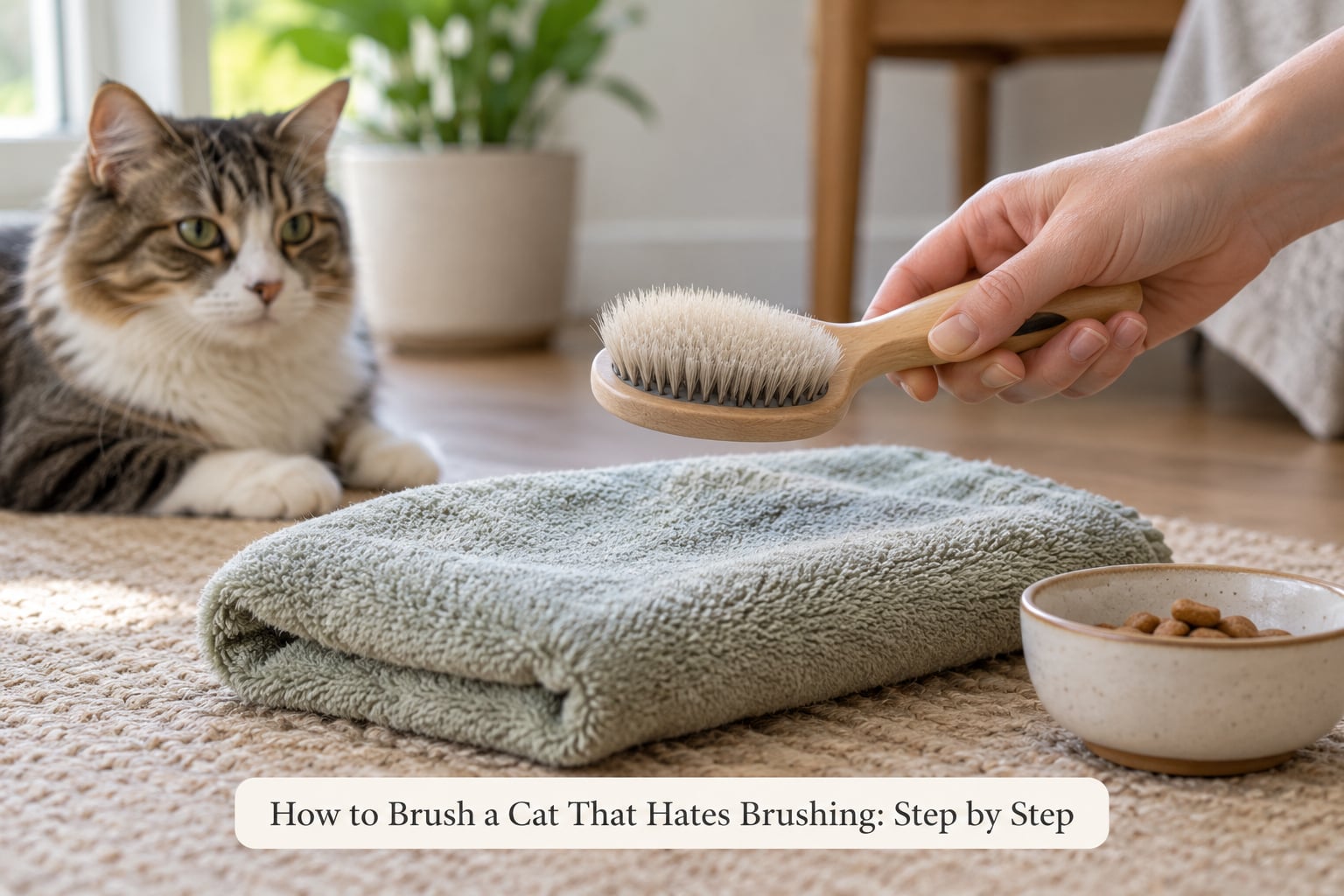
Step 1: Set Up the Right Tools and Space
Choose a room the cat already likes and that has an easy exit, not the one with the door shut. Lay the towel or pouch down, put the brush within arm’s reach, and keep one hand free for treats.
How you know it worked: the cat walks in, sniffs around, and stays for more than a few seconds instead of parking itself in the doorway.
Step 2: Let the Cat Explore the Brush
Put the brush on the floor, not in your hand. Let the cat sniff it, bat it, walk away and come back. Every time the cat shows calm interest, say something cheerful and offer a treat right next to the brush so the two sit together in the cat’s mind.
Do not bring the brush to the cat. Owners who pick the cat up and hold it near a tool usually end up with a cat that bolts at the sight of your hand.
How you know it worked: the cat touches the brush with its nose or paw and takes a treat near it without flinching. That single association is the foundation of everything else.
Step 3: Start With One Gentle Touch
Stroke the cat with your hand in an area it already enjoys being petted, usually the shoulders, the top of the head, or along the back. Then make one light stroke with the brush, lift it away, and give a treat within a second.
Learn to read the calm signals: ears forward or neutral, tail loose, body still, slow blinking, head up. Stop at the first stress signal, which is usually a tail flick, ears rotating back, skin rippling along the back, or a sudden freeze.
How you know it worked: the cat accepts the touch and looks up for the treat. One stroke is success today. Repeat this on several days before adding more.
Step 4: Brush for a Few Seconds
Now do three to five short, light strokes over a small familiar area, always with the grain of the coat. Reward between attempts, not only at the end, so the cat learns that strokes predict treats.
End while the cat is still calm. This is the part almost everyone gets wrong. If you push through a swat to reach a better result, the last thing the cat remembers about brushing is the swat, and you have moved backwards.
How you know it worked: five seconds without a stress signal, followed by a cat that does not leave the room.
Step 5: Build Up in Very Short Sessions
Add a few seconds at a time and stop before the cat asks to stop. Two short sessions a day beat one long one, and for many nervous cats a single session a day is plenty at first.
Move to a new area or a new tool only when the current one is easy. If a slicker works on the back, keep it on the back for a week before trying the flanks. Weeks, not days, is the normal pace, and plenty of cats take a couple of months.
How you know it worked: the cat comes toward the brush, or settles in before you have finished the treat.
Step 6: End on a Positive Note
Offer a few treats as the cat leaves, and let it go. Do not follow it around with the brush to squeeze in extra strokes. The session you finish early gets repeated; the session you force gets avoided.
Book a vet visit if the fear is severe, if your cat swats hard enough to draw blood, if mats keep forming faster than you can remove them, or if the behaviour changed suddenly in an adult cat that previously tolerated grooming.
How you know it worked: the cat leaves relaxed and the next session starts faster than the last one did.
Troubleshooting How to Brush a Cat That Hates Brushing When It Bolts
If the cat runs, drop the brush entirely and let it go. No chasing, no calling its name in a disappointed tone. When it settles, go back one stage rather than repeating the one that failed.
If the cat freezes or starts swatting, you have gone past its limit. Go back to hand petting only for a few days, then rebuild from the treat-on-the-floor stage. Cats who freeze are often overwhelmed rather than stubborn, and repeatedly brushing through that reaction is what turns a nervous cat aggressive.
If a specific spot always causes a reaction, check that area for mats, fleas, a wound or a tender patch before you try again. Senseless pulling through tangles teaches avoidance faster than any bad memory you can invent.
Common Mistakes
Most stalled grooming routines fail for the same handful of reasons, and each one has a straightforward correction.
- Forcing the cat to stay. Cradling it in your lap or pinning it down costs you the trust you spent weeks building. Fix: brush wherever the cat chooses to be, and let it walk away at will.
- Chasing the cat around the house. Being cornered turns grooming into a chase. Fix: do the sessions in one quiet room, on the cat’s schedule, not yours.
- Sessions that run too long. Twenty minutes of brushing ends in a battle every time. Fix: start at three seconds and add time only in small increments.
- Punishing the swat. Yelling, spraying water or pushing the face away teaches hiding, not calmer behaviour. Fix: stop the session, wait, and treat the calm behaviour you want instead.
- Pulling through mats. A brush through a tight mat pulls hair from the root and hurts. Fix: work the mat apart by hand with conditioner or a detangling spray, in tiny sections, from the outside in.
- Brushing an already stressed cat. A cat that is hiding, hissing or has a clamped tail will not learn anything useful. Fix: wait until it is relaxed, then start over with a treat.
Never cut a mat out with scissors. Cats have thin skin that stretches like elastic, and scissors slide easily into a living animal. Tight mats need a vet or a professional groomer, and clippers are safer than blades.
Success Tips
- Pick the calmest time of day. Many cats are most settled right after a meal or during a drowsy stretch in the afternoon. Skip sessions right after play, when the cat is wired.
- Keep treats tiny. A few pea-sized pieces are enough, and small treats mean you can reward often without ruining dinner.
- Use a grooming pouch for the early weeks. A loose pouch lets a cat feel contained without being held, and many cats settle into it within a session or two.
- Skip human medication. Never give a cat human sedatives, sleeping pills or over-the-counter calming products. Ask your vet about anything medicated instead.
- Keep expectations realistic. A cat that has never been brushed may need a couple of months of short sessions. Progress that stalls for a week is normal, not failure.
- Write down what works. Note which tool, which room and how many seconds. Most owners are surprised by how much the same routine beats a new tool every few days.
Frequently Asked Questions
Should I force my cat to be brushed?
No. Holding a cat down, cradling it in your lap or pinning it to get a full grooming done usually destroys the trust you spent weeks building, and many cats respond to force with swatting or biting. Brush wherever the cat chooses to be, let it leave whenever it wants, and accept that a three-second session is a complete session on a bad day.
How long should I brush a cat that hates being brushed?
Start with one to three strokes, then three to five seconds, and only add time when the cat stays relaxed. Two short sessions a day are usually more productive than one long one, and some nervous cats do best with a single brief session. Expect weeks of mini sessions and possibly a couple of months before a full grooming fits in one go.
What brush is best for a nervous cat?
A grooming glove or mitt with soft silicone or rubber bumps is the safest starting point for most nervous cats, because it feels like petting. Short-haired cats often tolerate a soft pin brush well. Avoid wire slickers and deshedding rakes at first: they pull and scrape, and a single painful stroke can undo weeks of treats.
How do I brush a cat with matted fur safely?
Never pull a brush through a tight mat, and never cut one out with scissors, because cat skin stretches easily and cuts easily. Soak the mat with a detangling spray or conditioner and separate it by hand in small pieces from the outside in. Mats close to the skin need a vet or professional groomer, who can clip them safely with clippers.
Can I use human sedatives or essential oils on my cat?
No to both. Human sleeping pills, sedatives and doses of pain medicine can be dangerous or fatal for cats, and no over-the-counter calming product should be given without veterinary advice. Essential oils are a separate risk: tea tree, lavender, eucalyptus, diffusers and scented sprays can cause poisoning, breathing problems and skin irritation in cats.
Here is the whole method in one line: less time, more rewards, no restraint. Pick the calmest part of the day, put the brush on the floor with a treat beside it, let your cat choose to approach, and do a single stroke before it can object. Repeat that for a few days. That is how to brush a cat that hates brushing, and it is slower than forcing for exactly one session, but it keeps working after the first few minutes.