Low shedding dog breeds have coats that either grow continuously, trap loose hair inside curls, or have almost no undercoat, so far less fur ends up on your floors than with a Husky or a German Shepherd. No breed is truly shed-free, and low shedding is not the same as hypoallergenic, which surprises a lot of people only after the dog is home.
Before you pick a breed, it helps to know what is actually happening in the coat. Hair growth cycles, undercoat density and coat structure decide how much hair ends up on your sofa, and those same factors decide how much brushing, bathing and professional trimming you are signing up for. Get that trade-off clear first, and the breed list becomes much easier to narrow down.
This guide covers what low shedding really means, why certain coats shed less, what the major low shedding dog breeds ask of you week to week, and where allergies actually come from. I have kept it to the practical side: coat feel, grooming time, exercise needs and how each one behaves in an ordinary home.
Table of Contents
- Low Shedding Dog Breeds Explained: Quick Comparison
- What Does Low Shedding Mean for Dogs?
- Why Do Some Dog Breeds Shed Less Than Others?
- How do low shedding dog breeds stay manageable?
- Low Shedding Dog Breeds and Their Coat Types
- Portuguese Water Dog
- Standard Poodle
- Labradoodle
- Goldendoodle
- Bichon Frise
- Basenji
- Kerry Blue Terrier
- Soft-Coated Wheaten Terrier
- Afghan Hound
- Italian Greyhound
- How Much Grooming Do Low Shedding Dogs Need?
- Are Low Shedding Dog Breeds Good for People With Dog Allergies?
- How to Choose the Right Dog for Your Home
- Frequently Asked Questions
- Are low shedding dog breeds completely shed-free?
- Which low shedding dog breeds are easiest for first-time owners?
- Is a Poodle considered low shedding?
- Do low shedding dog breeds still trigger allergies?
- How often should low shedding dogs be brushed?
- Does a curly coat mean a dog is hypoallergenic?
- What to Do First
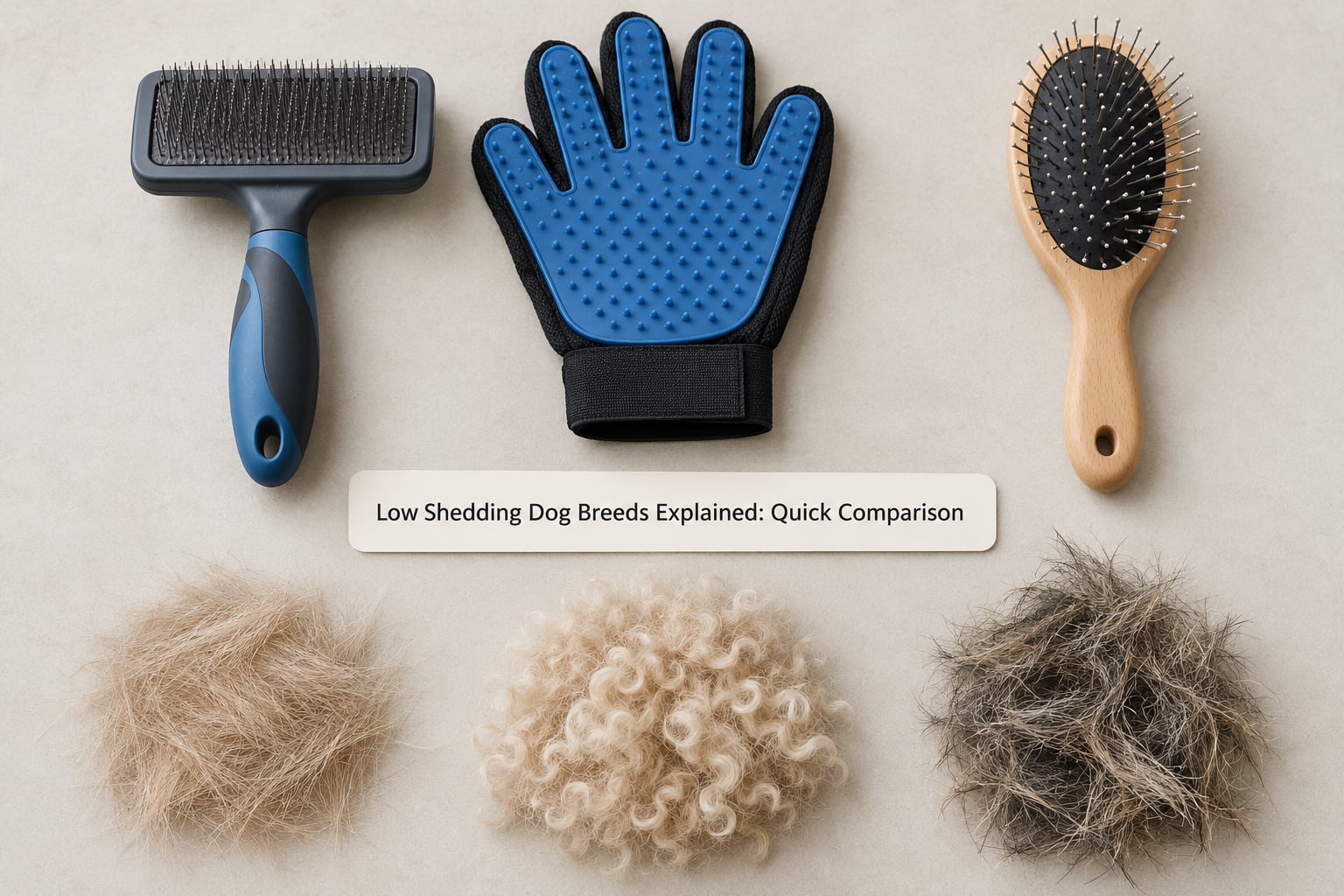
Low Shedding Dog Breeds Explained: Quick Comparison
Here is the short version. Low shedding means the coat releases little loose hair into your home, usually because the coat is curly, wiry, hair-like or hairless, and because the dog has little or no dense undercoat to blow out.
Nobody sells a genuinely shed-free dog. Every dog loses some hair every day, and every dog drops more when the seasons change or when a dog is stressed, ill, pregnant or nursing. What changes between breeds is the volume.
| Coat type | How it handles loose hair | Expected shedding | Grooming rhythm | Allergy caveat |
|---|---|---|---|---|
| Curly or wavy (Poodle, Bichon Frise, Labradoodle) | Loose hair curls inward and stays in the coat | Low, year-round | Brushing several times a week plus regular professional cuts | Traps dander in curls, so washed regularly |
| Hair-like single coat (Portuguese Water Dog, Soft-Coated Wheaten Terrier) | Hair keeps growing and has to be cut | Very low | Frequent trims to keep length workable | Holds more dander than a short smooth coat |
| Wiry or wire (Kerry Blue Terrier, Schnauzer-type) | Dead hair stays wired into the coat until stripped or clipped | Very low | Clipping or hand-stripping on a set schedule | Sheds more once the coat is clipped short |
| Smooth single coat (Basenji, Italian Greyhound, Afghan Hound) | Short hair falls out normally but there is no undercoat layer | Low to moderate | Quick weekly brushing, minimal trimming | Low dander output, but no coat to hold allergen |
| Hairless (Chinese Crested, Xoloitzcuintli) | Nothing to shed | None from hair | Skin care: bathing, sunscreen, lotion | Dander still present, so skin and saliva matter more |
If you want the shortest possible answer to “what dog sheds the least”, start with hairless breeds, then the Basenji and the Italian Greyhound, then wiry terriers. If what you actually want is the least time holding a brush, a smooth-coated dog like the Italian Greyhound is hard to beat.
What Does Low Shedding Mean for Dogs?
Low shedding means the amount of loose hair your dog releases into the environment is well below average. It says nothing about how much care the coat needs, and it does not mean the dog produces fewer allergens.
Three terms get mixed up constantly, and keeping them apart makes everything else easier.
Low shedding describes loose hair. A double-coated breed drops its undercoat in heavy clumps twice a year; a low shedding breed leaves a small amount of hair behind most days and a modest amount when the coat turns over.
Low dander describes skin flakes and skin oil. Short smooth coats tend to carry less of it, while thick double coats and long coats hold a lot inside the hair, where it stays airborne when the dog moves.
Hypoallergenic is a marketing word with no official meaning in dog breeding. All dogs produce allergenic proteins in their saliva, urine and dander, so no breed is safe for someone with a diagnosed dog allergy.
Individual variation matters more than the breed average. Two Poodles from the same litter can shed differently, and a dog that sheds heavily in spring may barely drop hair in August. Coat length, age, health and stress all shift the numbers, so treat every shedding claim on a breeder’s page as a description of that line rather than a rule.
Why Do Some Dog Breeds Shed Less Than Others?
Shedding follows the hair growth cycle. Hair grows in a growth phase, rests in a transition phase, then sits in a resting phase before coming out and starting again. Dogs with a strong seasonal cycle dump a lot of hair at once, which is what people mean when they talk about shedding season.
Double-coated breeds carry a dense undercoat under a layer of longer guard hairs. Twice a year, often as the weather turns, that undercoat loosens and comes out in sheets, and the guard hair follows. Huskies, Malamutes, German Shepherds, Akitas, Shibas, Corgis, Retrievers and most Collies and Samoyeds are all built this way.
Low shedding coats are arranged differently. Some breeds grow hair at a steady rate much like human hair, so the length you see has to be trimmed rather than shed off. Some coats are curly, so a loose hair that does drop gets caught in a neighbouring curl instead of reaching the floor. Some are wiry, so dead hair locks into the outer coat and stays there until it is stripped or clipped.
Hairless breeds sit at the extreme end. With no coat to release, there is nothing to shed, and the trade is skin instead: bathing, moisturising, sun protection and attention to the skin folds some of them have.
How do low shedding dog breeds stay manageable?
They stay manageable through routine, not through the coat being maintenance-free. Regular brushing, a bathing schedule that keeps the coat and skin in good condition, and haircuts on a calendar rather than a crisis schedule are what keep a low shedding dog comfortable.
In practice that means booking the groomer in advance. Owners on dog forums describe the same pattern repeatedly: hair that does not shed keeps growing, so it has to be cut, and the dog still needs its daily or twice-weekly brushing on top of that. A smooth-coated dog like the Basenji needs a fraction of the brushing, but no amount of brushing will stop a Bichon from matting behind the ears.
Environment counts too. A dry heated house pulls more hair out of an undercoat, while a dog that spends hours outdoors in cool weather often keeps more of it. Dogs that are stressed, underfed or unwell can shed in patterns that have nothing to do with their coat type.
Low Shedding Dog Breeds and Their Coat Types
Ten breeds come up again and again when owners search for a dog that keeps hair to a minimum. Here is what each one actually asks of you.
Portuguese Water Dog
A medium-sized dog, roughly 35 to 80 pounds, with a single water-resistant curly coat. Shedding is very low, but the hair grows fast and mats easily when wet, so this is a dog that needs professional grooming every six to eight weeks and regular brushing in between. Exercise needs are high: this is a working breed that wants to swim, run and carry things. First-time owners can manage it, but not without accepting the grooming calendar.
Standard Poodle
The benchmark. A Standard Poodle is usually over 45 pounds, has a dense curly single coat, and sheds about as little as any breed in common ownership. The catch is grooming time: a full show cut is a lot of work, and most owners settle on a shorter clip that still needs professional attention every four to eight weeks. Intelligent, energetic and social, the breed suits an owner who will exercise it daily.
Labradoodle
A Labradoodle ranges from small to large depending on which parent it takes after. The coat is usually wavy to curly and sheds less than a Labrador’s, but coat type is the gamble: some puppies end up with a Labrador’s straight, heavier-shedding coat and others with a tight poodle curl. Ask a breeder for the coat type of the specific litter, not the breed name, and expect professional grooming several times a year.
Goldendoodle
A larger, easier-going dog, usually 50 to 90 pounds. Shedding is low to moderate and unpredictable, again because the coat can range from wavy to loosely curled to nearly straight. Many owners report more hair than they expected, particularly in a double-coated line. Temperament is the draw: affectionate, eager to learn and usually good with children.
Bichon Frise
A small dog under 20 pounds with a curly, very dense coat that sheds little. Owners pick it for the fluffy white coat, and that coat is a daily commitment: it mats behind the ears, in the armpits and around the tail, and it needs a professional groom every four to six weeks. Small breeds also mean more frequent nail trims. A poor fit for anyone who wants a dog they can leave unbrushed for a week.
Basenji
The underrated option for owners who care more about hair than fluff. Basenjis are small to medium, around 20 to 65 pounds, with a short single coat, no undercoat blowout and a self-cleaning habit that keeps them tidy. Shedding is low and brushing takes minutes. What they want instead is patience, because they are independent, clever and famously unwilling to do anything they have not decided to do.
Kerry Blue Terrier
A medium-sized dog, roughly 18 to 40 pounds, with a soft, wavy, wiry coat that does not blow out. Shedding is very low, and the coat needs clipping or hand-stripping on a regular schedule to stay in shape and keep skin healthy. The coat does collect dirt and holds moisture, so owners who dislike grooming smell should know that before choosing.
Soft-Coated Wheaten Terrier
A medium to large dog, around 30 to 55 pounds, with a soft wavy single coat that grows long. Shedding is low and there is no undercoat, but the coat needs regular brushing to stop tangles and a trim every few months to keep length under control. Wheaten owners often say the coat is the single biggest factor in whether they keep the dog.
Afghan Hound
A large sighthound with a long, fine, silky single coat that sheds very little and produces remarkably little dander. The coat can grow several inches between trims and needs regular brushing to keep it from tangling on its own. Grooming is the cost of the breed; the coat is not low maintenance, it is just low shedding. A calm dog indoors with a strong chase instinct outdoors.
Italian Greyhound
The easiest coat to live with. A small sighthound, usually under 15 pounds, with a very short single coat and no undercoat. Shedding is low, brushing takes a minute or two, and there is no trimming and no professional grooming routine. The catch is temperament: they are delicate, fast and often nervous around rough handling, so an owner who wants a sturdy dog for running and climbing will be disappointed.
How Much Grooming Do Low Shedding Dogs Need?
Low shedding status tells you almost nothing about maintenance. It is entirely possible to have a dog that never leaves hair on the sofa and still schedule a grooming appointment every six weeks.
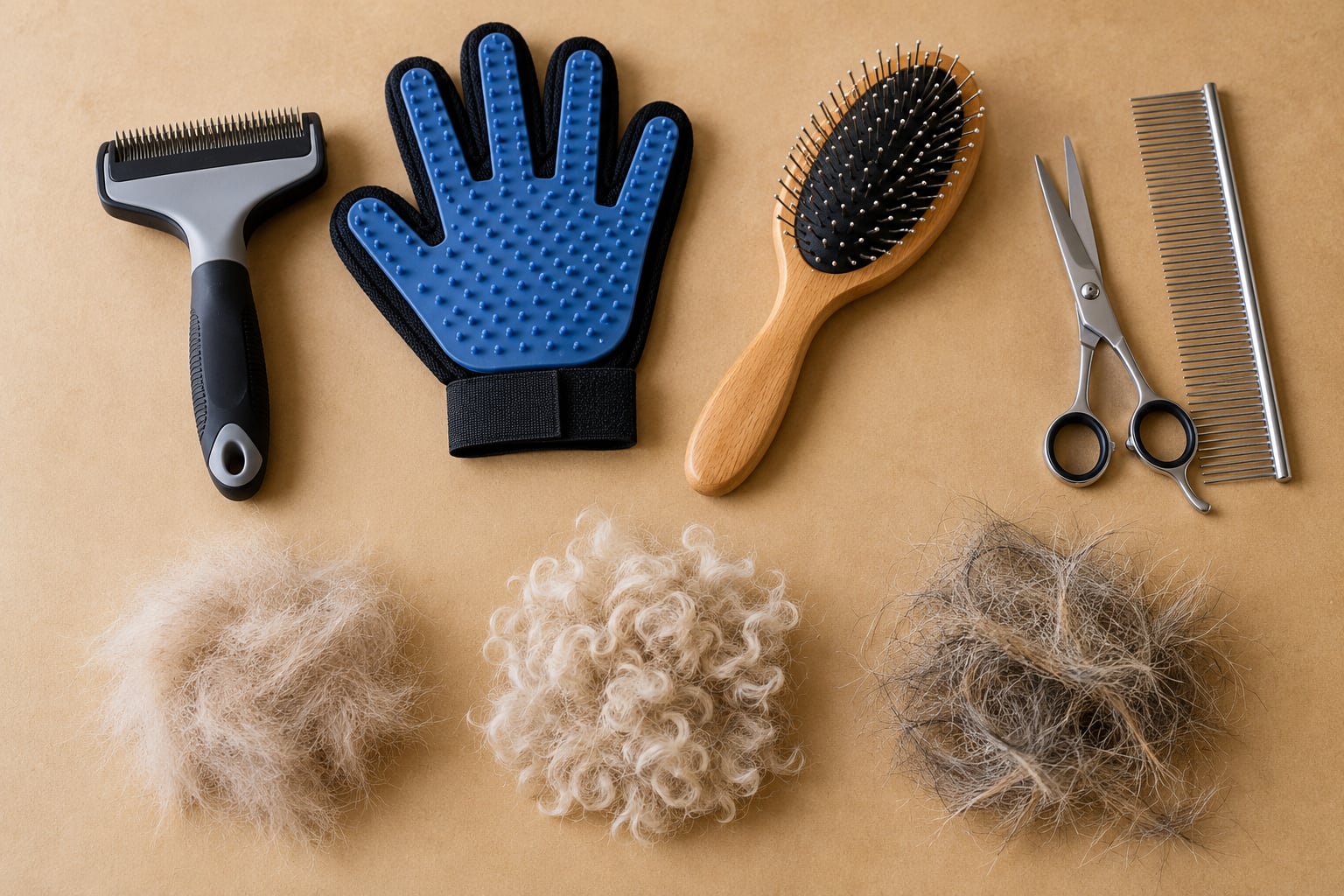
Brushing. Curly and wavy coats need several sessions a week at minimum, more during a seasonal change. Wiry coats need brushing to keep dead hair moving out. Smooth coats need a quick weekly pass and little else.
Professional grooming. Expect this for any breed with hair long enough to mat: Portuguese Water Dog, Standard Poodle, Bichon Frise, Kerry Blue, Wheaten and Afghan. Four to eight weeks between full grooms is a realistic rhythm, and the cost adds up across a year. Owners on forums who budgeted for grooming up front report far less frustration than those who did not.
Bathing and drying. Curly coats hold water and hold dirt, and a damp mat is where skin problems start. Drying properly matters more than the bath itself. Hairless breeds need regular bathing too, but for skin rather than coat.
Nails, ears, teeth. Small breeds such as the Bichon need nail trims every few weeks; large breeds usually manage on their own through wear. Ears should be checked and cleaned on a schedule your veterinarian can set, and dental care is the same for every breed regardless of coat.
Before you commit to a coat type, ask a breeder or adoption organisation some direct questions. How often do dogs in this litter actually get groomed, and can you speak with an owner who has had this dog for two years? Do you hand-strip or clip this coat? How do you deal with mats, and what does a matting-prone area look like on this breed? What is the expected adult size and coat length at one year old? And will the breeder let you meet a mother, or an adult dog, before you decide?
The last question is the one that changes minds most often. Coat descriptions describe a breed. Meeting the individual dog tells you whether it fits your household.
Are Low Shedding Dog Breeds Good for People With Dog Allergies?
They help many people, and they are not a cure. Dog allergies are triggered by proteins, not hair itself. The main culprits are Canis familiaris 1 and Canis familiaris 3, produced in saliva, urine and skin dander, and they become airborne from dander and from saliva drying on fur.
That matters because reducing loose hair reduces one transport route for those proteins but not the source. A Poodle with a freshly washed coat and a Poodle with a week-old coat are different experiences for an allergic person. Regular bathing, keeping fur short, washing bedding often and using a HEPA air purifier all reduce what stays in the air.
How much help you get depends on how sensitive you are. People whose symptoms are mostly sneezing around a dog often do well with a low shedding breed combined with consistent grooming and cleaning. If you wheeze, cough, get tight chest or have trouble breathing around dogs, breed choice alone is not a plan. Talk to your doctor or an allergist about your options, and to your veterinarian about your dog’s skin health, since irritated skin produces more dander.
Breeders who describe a dog as hypoallergenic are telling you what they have heard, not what has been demonstrated. Treat it as a marketing claim rather than a medical fact.
How to Choose the Right Dog for Your Home
Work through your household’s constraints before the coat. A dog that fits your life and your time will be easier to live with than the perfect-looking breed picked from a list.
Time and budget. Be honest about grooming. If a professional groom every six weeks is not workable, choose a smooth-coated breed. The calmest, lowest-effort coat options sit with hairless dogs, the Italian Greyhound and the Basenji.
Space and exercise. Size follows coat energy. A Standard Poodle and a Goldendoodle are large, energetic dogs that need real daily exercise and a secure yard. An Afghan Hound needs room to run. Apartment living suits a Bichon or an Italian Greyhound far better, provided either gets its walks.
Children and other pets. Calm, sturdy breeds tend to suit young families better than nervous sighthounds. Any dog needs teaching to be around children, and a child’s age and temperament matter more than the breed label.
Climate. Thick curly coats trap heat and need drying after rain or swimming. Hairless breeds need sun protection and often a sweater in winter. Double coats, which you are avoiding, handle cold far better.
Allergies. Decide whether reduced shedding is a preference or a health requirement, and if it is the second, plan the cleaning and grooming routine alongside the dog rather than after.
Coat unpredictability in mixes. If you are considering a Doodle, ask about the coat type of the litter, and remember that coat type can vary between puppies from the same pairing. Owners regularly report being surprised by how much hair a supposedly low shedding mix leaves behind.
Finally, weight temperament and age above appearance. A calm adult dog that suits your routine will make you happier than a fashionable breed that needs two hours of exercise you do not have.
Frequently Asked Questions
Are low shedding dog breeds completely shed-free?
No. Every dog loses some hair every day and more during seasonal coat changes. Low shedding means the daily amount and the seasonal amount are well below average, not zero. Breed is only part of the picture: coat length, age, health, stress and whether the dog is spayed or pregnant all change how much hair a given dog releases. Expect loose hair, just far less of it.
Which low shedding dog breeds are easiest for first-time owners?
The smooth single-coated options are the gentlest start. An Italian Greyhound needs a couple of minutes of brushing a week and no trimming, and a Basenji has no undercoat to blow out and grooms itself. The Bichon Frise and Standard Poodle shed less but are among the highest-maintenance coats, so read carefully before choosing one as your first dog.
Is a Poodle considered low shedding?
Yes, the Poodle in all three sizes is one of the most established low shedding breeds, and its curly coat traps loose hair instead of letting it fall. The catch is maintenance: the coat keeps growing, so it needs regular brushing and professional clipping, usually every four to eight weeks depending on the cut you choose. Low shedding, yes. Low grooming, no.
Do low shedding dog breeds still trigger allergies?
They can. Dog allergies are caused by proteins such as Canis familiaris 1 and 3, which are found in dander, saliva and urine rather than in hair itself. Reducing loose hair reduces one way those proteins travel through the air, but does not remove them. People who wheeze or have chest tightness around dogs should speak to their doctor before choosing a breed.
How often should low shedding dogs be brushed?
It depends on the coat. Curly and wavy coats such as the Poodle, Bichon Frise and Portuguese Water Dog usually need brushing several times a week, and more during a seasonal change, to stop mats forming behind the ears, in the armpits and around the tail. Wiry coats need brushing to move dead hair out. Smooth coats such as the Basenji and Italian Greyhound need a quick weekly pass.
Does a curly coat mean a dog is hypoallergenic?
No. A curly coat means loose hair tends to stay trapped among the curls rather than landing on your floors, which is why the breed ranks as low shedding. That is a coat fact, not a medical one. All dogs produce allergenic proteins in dander, saliva and urine, so a curly coat lowers the amount of hair in the room without making the dog safe for an allergic person.
What to Do First
Start with your own constraints rather than a breed list. Work out how much time you can genuinely give to brushing and grooming, how much money you can put aside for professional trims, and whether reduced shedding is a household preference or an allergy-related health question. Then narrow the field by size, energy and temperament.
Before bringing a dog home, talk to your veterinarian about any allergy concerns, and speak with a reputable breeder or adoption organisation about the coat type of the individual dog or litter. Meet an adult dog if you can. That one conversation usually answers more than any breed description will.