If your dog just had a professional dental cleaning, expect a wobbly, sleepy, slightly awkward animal for the rest of the day. Most dogs go home the same afternoon, eat a soft meal that evening, look close to normal within 24 to 48 hours, and are back to themselves within about a week. This guide explains what to expect after a dog’s dental cleaning, hour by hour, and which changes are normal healing versus a reason to pick up the phone.
A quick note before you read on: this is general information, not a substitute for the discharge instructions from your own clinic. If your veterinarian gave you specific timings for food, medication or activity, those always take priority over anything written here. When in doubt, call them. Nobody minds that call at 9pm.
Reviewed for accuracy against mainstream veterinary post-operative guidance. Last updated 2026.
Table of Contents
- What to Expect After a Dog’s Dental Cleaning Right Away
- How Long Does a Dog Take to Recover From Dental Cleaning?
- When Can My Dog Eat or Drink After Dental Cleaning?
- What Should the Dog’s Mouth Look Like After Cleaning?
- How to Help Your Dog Heal After Dental Treatment
- What Medicines Are Safe After a Dog’s Dental Cleaning?
- Dental Cleaning Recovery Timeline: What Is Normal?
- When Should I Call the Vet After My Dog’s Dental Cleaning?
- Frequently Asked Questions
- Will my dog be in pain after dental cleaning?
- How long will my dog act groggy after anesthesia?
- Why might my dog refuse food after dental treatment?
- Is a little bleeding from my dog’s mouth normal?
- When can my dog resume brushing and normal chews?
- How do I know whether my dog needs urgent veterinary help?
- Conclusion: What to Do First
What to Expect After a Dog’s Dental Cleaning Right Away
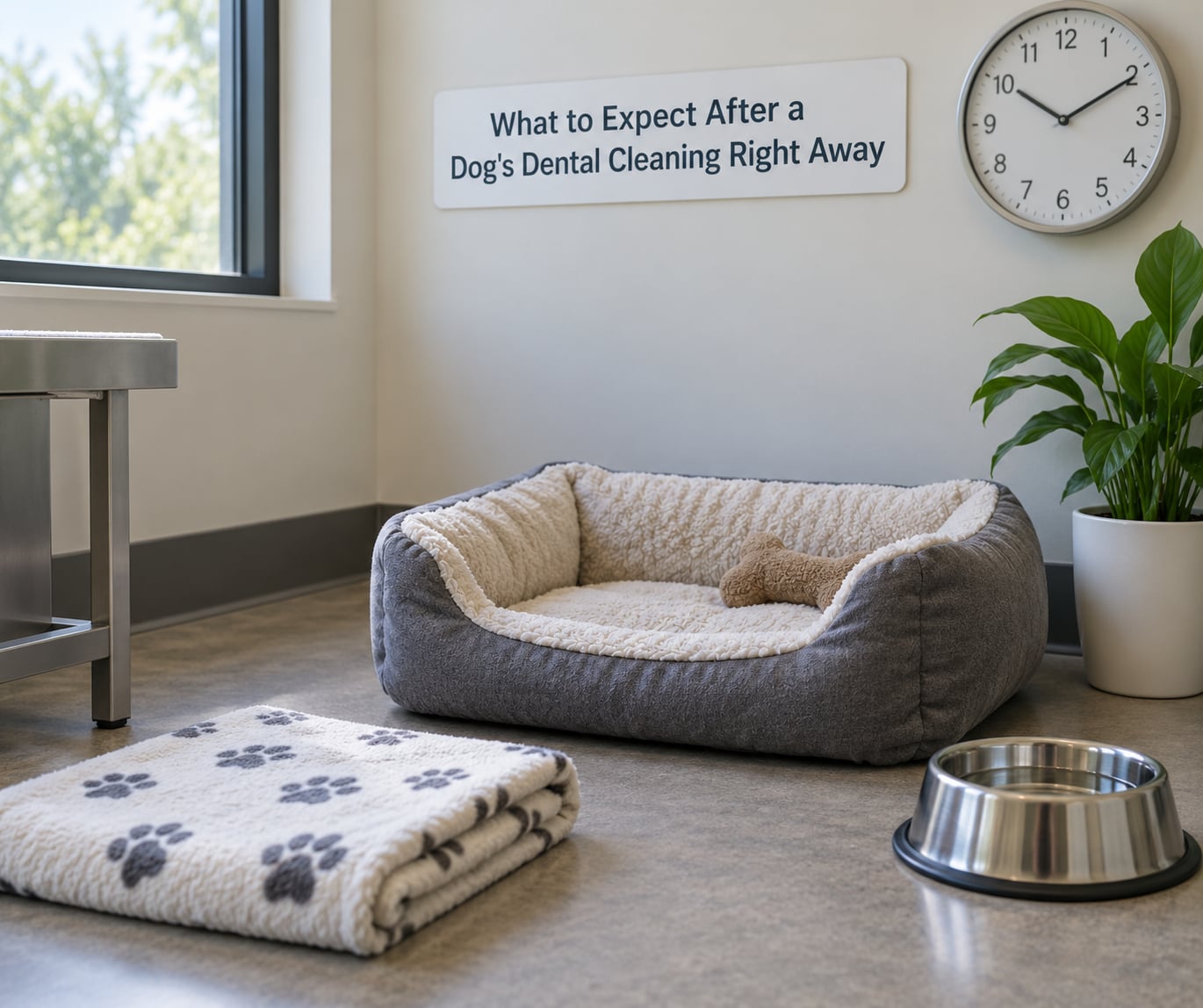
A scale and polish usually means a general anesthetic, intubation with an endotracheal tube, ultrasonic scaling of the teeth above and below the gum line, a polish, and often dental radiographs. Extraction of one or more teeth with dissolvable sutures may be added. On top of all that, your dog has had a general anesthetic, and that is the part most owners are not ready for.
Expect grogginess, incoordination when they try to stand, and a lot of sleep. Many dogs stumble on the first walk to the car and sleep most of the way home. The throat may be sore from the breathing tube, so a dry cough, a gag, or mild throat irritation in the first day or two is common.
Some dogs come home oddly bright instead. Owners describe this post-anesthetic euphoria as a dog who is restless, vocal, wandering at night, or unusually clumsy, sometimes for a day or two afterwards. It settles as the anesthetic clears fully.
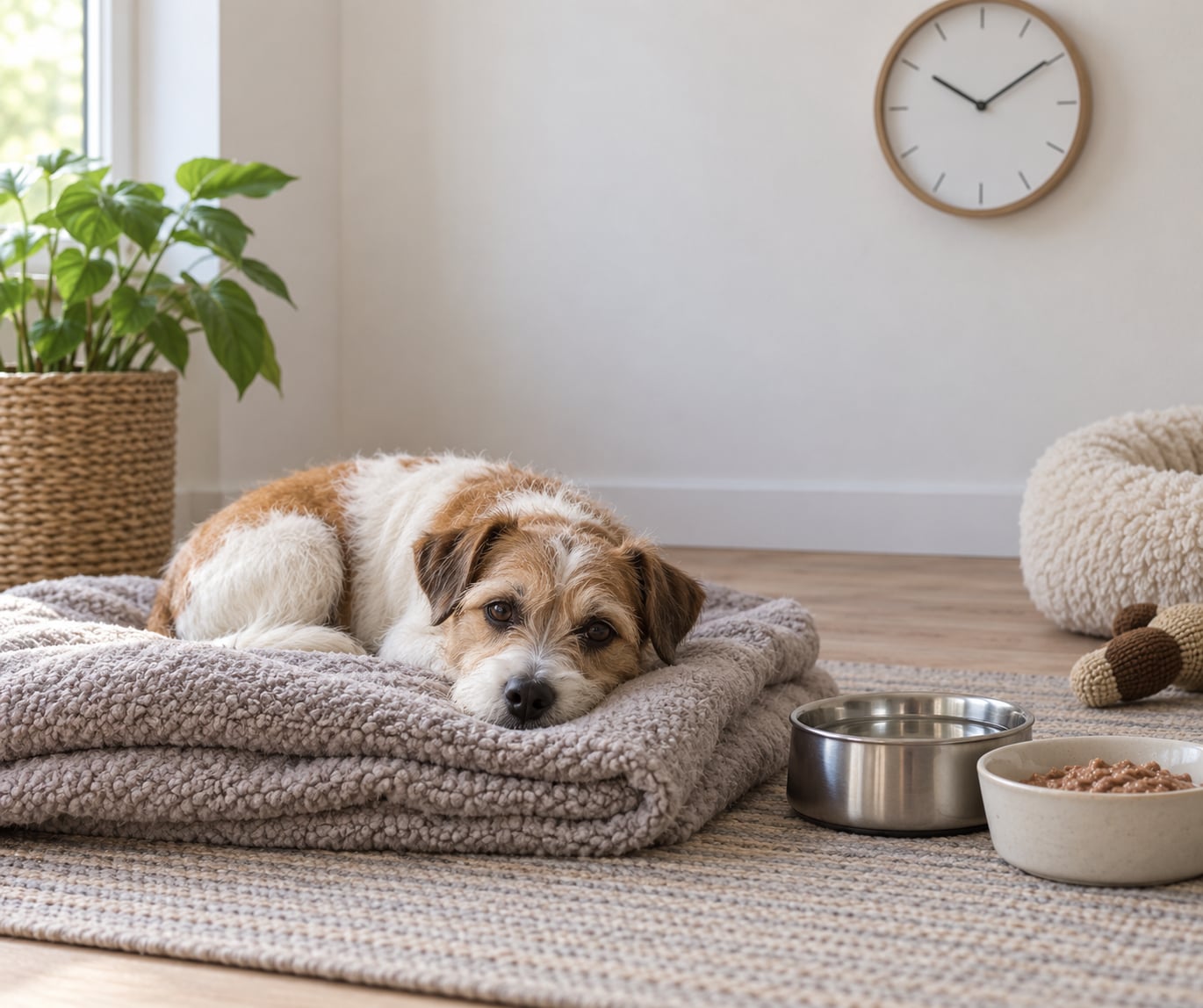
Set up before you leave the clinic. A warm, quiet room, a towel or blanket, water nearby, and no stairs or slippery floors for the first night. Remove the IV catheter bandage about two hours after you get home if the clinic told you to, and keep activity calm and short over the next day or two.
How Long Does a Dog Take to Recover From Dental Cleaning?
For a cleaning with no extractions, most dogs are bright and eating within about 24 hours, and fully back to normal in two to three days. After extractions, expect a quieter dog for two to three days, with the mouth still tender in the second week.
Recovery time depends on how long the anesthetic lasted, how many teeth came out, your dog’s age, weight and general health, and whether there were complications. Senior dogs routinely take a day or two longer. If you are worried at any point, call your clinic rather than searching.
When Can My Dog Eat or Drink After Dental Cleaning?
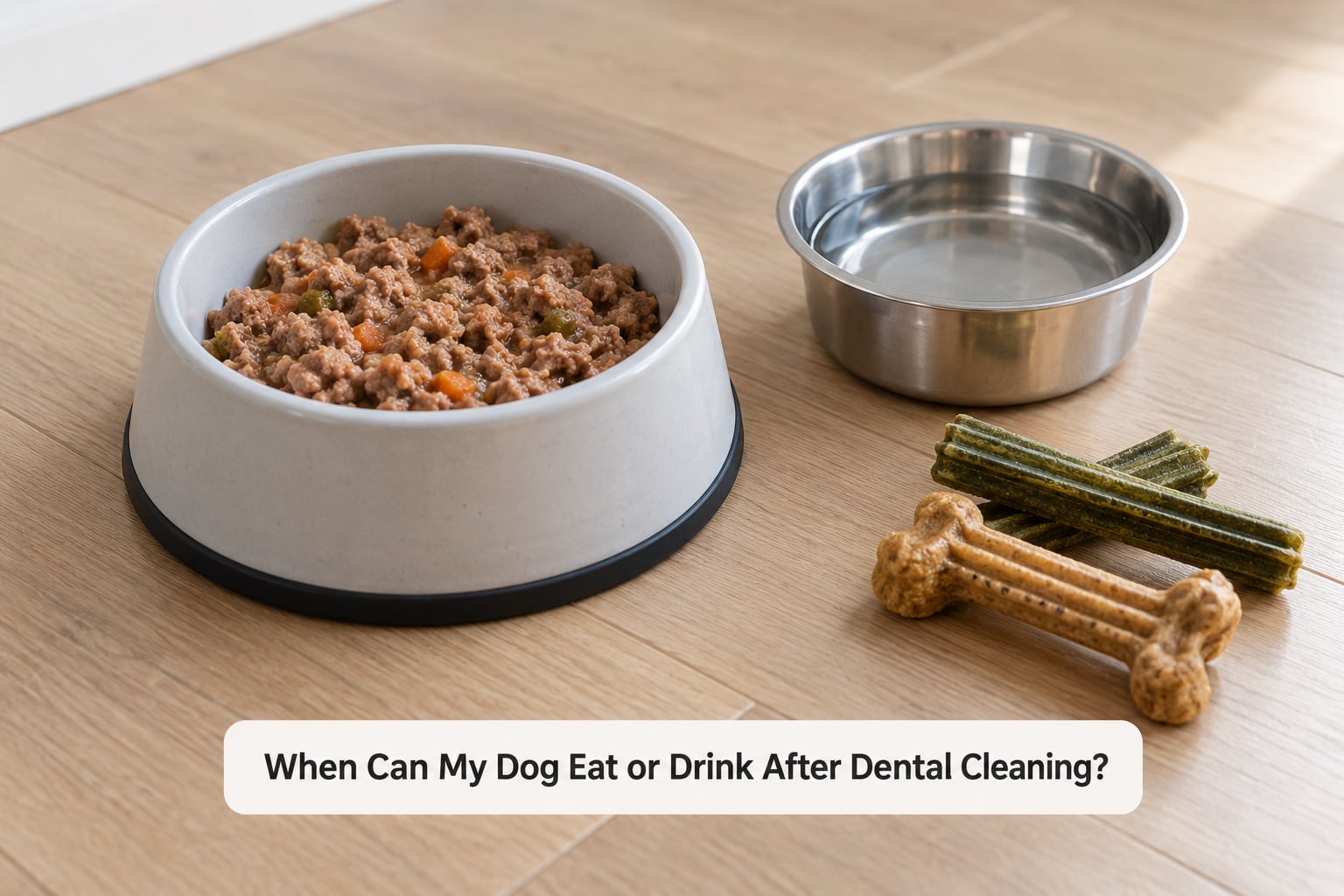
Most clinics ask you to wait 30 to 60 minutes after arriving home before offering water, then offer half the normal evening meal. Water is usually available on request after that first rest, but food is gentler in small amounts, not a full bowl.
If no teeth were removed, many dogs can eat their normal kibble that same evening. Softened kibble does the job well: soak it in warm water for 15 to 20 minutes until it collapses. Warmed canned food, plain scrambled egg, or boiled chicken and rice are the other reliable options, and heating canned food slightly makes a sore mouth a lot easier to manage.
If teeth were extracted, plan on soft food only for around 10 to 14 days, following your clinic’s timing. Skip hard chews, bones, rawhide and dry treats the whole time. Hard food over a fresh extraction socket is what turns a routine recovery into a painful one.
What Should the Dog’s Mouth Look Like After Cleaning?
Expect mildly red or tender gums for a few days, a tender gum line where plaque was removed, and a slight change in how your dog chews because the bite feels different. After extractions you may see a small amount of blood-tinged saliva, and the sutures can look blue or purple before fading as they dissolve.
Dry, pale gums are worth noticing, as are a bad smell, discharge, or swelling that grows instead of settling. Also watch for anything unusual if the front of the mouth feels wrong to your dog. A tiny crack in the jaw is rare, but it appears most often in small breeds and older dogs with severe dental disease, and it shows up as not eating plus a swollen face. Rare things still matter when they happen.
Ask for the dental radiographs and the tooth-by-tooth chart when you pick your dog up. The X-rays are the only reliable way to see what is happening under the gum line, and knowing which teeth were removed makes the next two weeks much easier to manage.
How to Help Your Dog Heal After Dental Treatment
Keep the first day quiet. No stairs, no rough play, no jumping onto sofas, and keep the door closed on other pets if your dog is still disoriented or limping from the catheter site.
Stick to the discharge schedule for pain relief and any antibiotic, even on the days your dog seems completely fine. That is what keeps inflammation down and allows the extraction sockets to close properly. Give the medication with a small meal if the label allows, which also makes it far easier to swallow.
Do not brush the teeth straight away. After a cleaning with no extractions, most clinics say to wait about 48 hours. After extractions, wait until the sutures have dissolved and the gums have healed, usually around 14 days. Rinsing the mouth with anything, including chlorhexidine unless your vet prescribes it, is not a good idea before that.
Track what you see in a short note each day: appetite, stool, energy, and how the gums look. Ten seconds of attention is plenty, and it gives your clinic real information if you need to call.
What Medicines Are Safe After a Dog’s Dental Cleaning?
Only what your vet prescribed. Human painkillers such as acetaminophen, ibuprofen, naproxen and aspirin are toxic to dogs, and leftover medication from another pet is a poor substitute. Do not add anything extra, including supplements, dental additives or mouth rinses, without asking the clinic first.
If you are struggling to get a tablet down, work down this list in order: hide it in a smear of wet food or a spoonful of pâté, try a pill pocket, mold it into a soft chewy treat or wrap it in a small piece of cheese, and as a last resort ask the clinic for a liquid form or a syringe. Never force a tablet into a sore mouth, and never hold the mouth shut while the dog struggles.
Loose stool or diarrhea in the days after dental work often comes from the pain medication or from a change in diet, and it usually settles. Loose stools with vomiting, or a dog that refuses both food and water, is a different conversation. Call the clinic before you add anything.
Dental Cleaning Recovery Timeline: What Is Normal?
| Time | What you will probably see | What to do |
|---|---|---|
| First hour home | Very sleepy, wobbly, disoriented, little interest in anything | Warm quiet room, water after 30 to 60 minutes, no food yet |
| 1 to 4 hours | Waking up, standing unsteadily, first urination likely here | Take the IV bandage off if told to, help with stairs and walks |
| 4 to 24 hours | Grogginess easing, interest in food, mild sore throat, licking at the mouth | Half meal of soft or warmed food, first pain dose on schedule |
| Days 2 to 3 | Eating properly, softer stool possible, still quieter than usual | Keep activity gentle, stay on soft food, keep medication going |
| Days 4 to 7 | Near normal, less licking at the mouth, gum line healing | Start building activity back up, log how the gums look |
| Around day 14 | Sutures dissolved or nearly gone, mouth comfortable | Resume brushing if extractions were done, confirm recheck appointment |
Two situations need a shorter version of this plan. With a cleaning only, you may be back to normal kibble within a day and brushing after 48 hours. With extractions, you are looking at 10 to 14 days of soft food, no hard chews, and no brushing until the mouth has healed.
When Should I Call the Vet After My Dog’s Dental Cleaning?
Call your clinic the same day, and go straight in or to an out-of-hours emergency service, if you see:
- Difficulty breathing, or noisy breathing that does not settle
- Repeated attempts to swallow, gagging or retching that will not stop
- Bleeding from the mouth that does not stop after gentle pressure with a clean cloth, or bleeding that gets worse over the day
- Swelling of the face or jaw that is increasing, or a face that looks puffy on one side
- Collapse, extreme weakness, or a dog who cannot stand or walk properly
- Persistent vomiting, or diarrhea with vomiting or no energy
- No urine passed within 24 hours of coming home
- A marked lethargy that is not improving day to day, especially in a senior dog
- A refusal to eat beyond 24 hours, and in any case within 48 hours. Dogs can deteriorate fast when they stop eating, particularly small ones
- Discharge from the mouth, a foul smell, or one eye watering after an upper tooth extraction, which can indicate an infection or a dropped root
If you are unsure whether something counts, describe it to your clinic in specific terms: how long, how much, what color. That is far more useful than trying to diagnose it at midnight.
Frequently Asked Questions
Will my dog be in pain after dental cleaning?
Most dogs are uncomfortable rather than in pain, because the anesthetic is still working for several hours and pain relief is usually given before your dog leaves the clinic. From that point on, the medication handles it. Watch for signs the dose is not holding: refusing food, pawing at the mouth, drooling more than expected, or hiding. If you see those, call your clinic before the next dose rather than doubling up yourself.
How long will my dog act groggy after anesthesia?
For a healthy adult dog, the grogginess usually lifts within 12 to 24 hours, and normal behavior returns within two to three days. Senior dogs, small breeds, and dogs with heart, liver or kidney conditions can take a full day or two longer. A restless, unusually bright, clumsy night or two afterwards is also normal and passes as the anesthetic clears fully. Contact your vet if lethargy is not improving day to day.
Why might my dog refuse food after dental treatment?
A sore mouth is the usual reason, and it is not always obvious because dogs often eat through pain. Softening kibble in warm water, warming canned food slightly, or offering plain scrambled egg often works. If teeth were extracted, the gums may be tender for several days. A refusal lasting more than 24 hours, or any refusal in a small or underweight dog, needs a call to your clinic because dogs can decline quickly.
Is a little bleeding from my dog’s mouth normal?
A small amount of blood-tinged saliva or a pink tinge in the water bowl for the first day or two is normal after an extraction, particularly if sutures were placed. It becomes a concern when bleeding is heavy, does not slow after gentle pressure with a clean cloth, or increases instead of tapering off. Dark stool in the first day can happen from swallowed blood and usually resolves. Ask your clinic if you are unsure which one you are seeing.
When can my dog resume brushing and normal chews?
After a cleaning with no extractions, wait about 48 hours before brushing, and keep your dog off hard chews, bones and rawhide for several days. After extractions, most clinics ask for around 14 days before brushing and for soft food throughout that time. Build brushing back up slowly with short sessions, and ask your clinic to show you the technique for your dog’s mouth.
How do I know whether my dog needs urgent veterinary help?
Treat difficulty breathing, uncontrolled bleeding, facial swelling that is growing, collapse, repeated failed attempts to swallow, persistent vomiting, or no urine within 24 hours as emergencies. Outside clinic hours, go to the nearest out-of-hours service rather than waiting for the morning. For everything else, call your own vet and describe what you see, how long it has been happening and how much has changed since you got home.
Conclusion: What to Do First
Read the discharge sheet, set up a warm quiet room, offer water after 30 to 60 minutes, and give half a soft meal in the evening. Keep activity gentle for a day or two, stick to the medication schedule, and hold off on brushing and hard chews. If anything looks worse rather than better, call your clinic the same day, and treat breathing trouble, heavy bleeding, growing facial swelling or a dog that will not eat past 24 hours as urgent.