Updated for 2026. To potty train a puppy in an apartment, you need three things: a fixed schedule based on your puppy’s age, constant supervision indoors, and one designated bathroom spot you never move. Everything else follows from those three. Apartments add friction, not difficulty. Most puppies are housebroken by 4 to 6 months, and the elevator ride is not what holds them back.
There is one honest warning before we start. Apartment training means many short trips, and the first few weeks can mean ten elevator rides a day. Owners in r/puppy101 keep saying the same thing: the puppy who gets carried down the stairs is the puppy who stops having accidents.
Table of Contents
- What You Need
- How to Potty Train a Puppy in an Apartment: Step-by-Step
- Establish a Bathroom Spot
- Set a Frequent Potty Schedule
- Reward Going in the Right Place
- Handle Accidents Without Punishment
- Expand Access Gradually
- Common Mistakes
- Tips for Apartment Living
- Frequently Asked Questions
- How old should a puppy be before starting apartment potty training?
- Can I use pee pads instead of taking my puppy outside?
- How often should an apartment puppy go out during the day?
- Why is my puppy having accidents after potty training?
- How do I potty train a puppy in an apartment when it is too cold or rainy outside?
- When should I call a veterinarian about my puppy’s bathroom habits?
- Conclusion
What You Need
You need less than you think. Here is the working kit I would put together before day one.
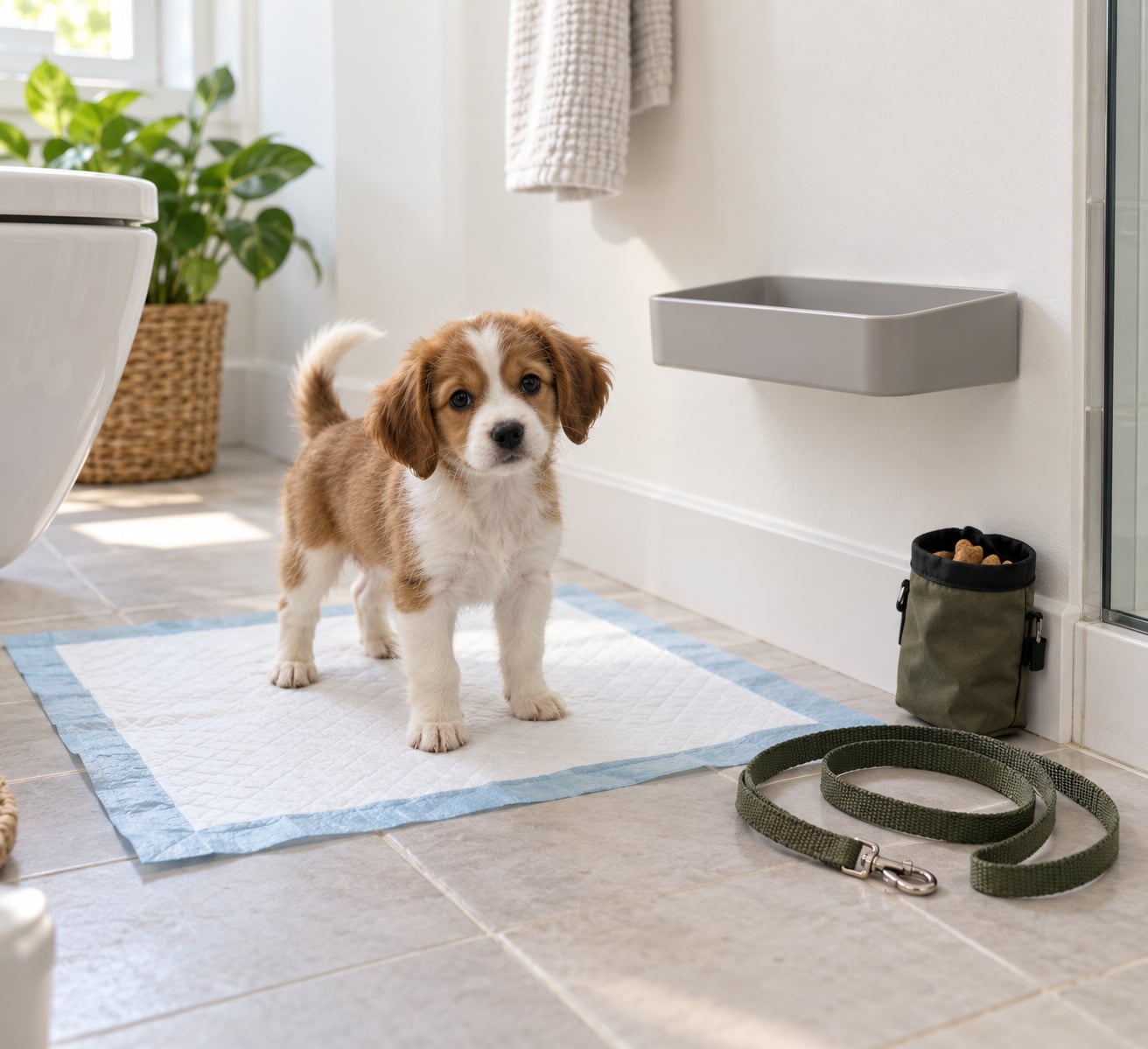
- One designated toilet area. A pee pad, a litter box with a dog tray, or a small artificial grass patch, all in the same corner every time. If you have a safe balcony or patio, that corner can be outdoors.
- A leash and a well-fitted harness. Indoors the leash is a safety tool, not a walking tool. It keeps the puppy from vanishing behind the couch mid-accident.
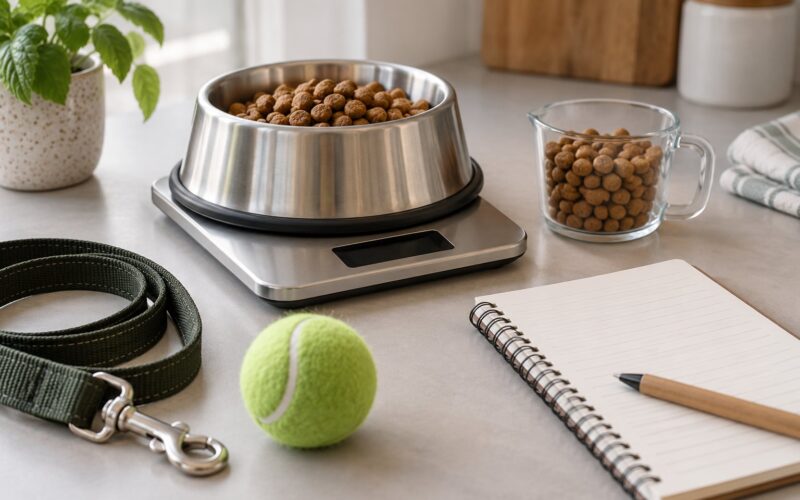
- Small, high-value treats. Use training treats or pieces of your puppy’s regular kibble. Keep them in a pouch by the door so you can reward within seconds.
- A cleaning kit. Paper towels, a plastic bag for waste, and an enzyme-based cleaner. Ammonia-based products make urine smell stronger to a dog’s nose and invite repeat accidents in the same spot.
- A written log. A notebook or a notes file on your phone. Write down the time, whether it happened, and whether it was right or wrong. You cannot fix a pattern you never recorded.
- A crate or washable playpen if the puppy can stay safely supervised nearby. Skip this entirely if you are away from home for long stretches, because a puppy left alone in a crate longer than its bladder allows will learn the opposite lesson.
How to Potty Train a Puppy in an Apartment: Step-by-Step
Establish a Bathroom Spot
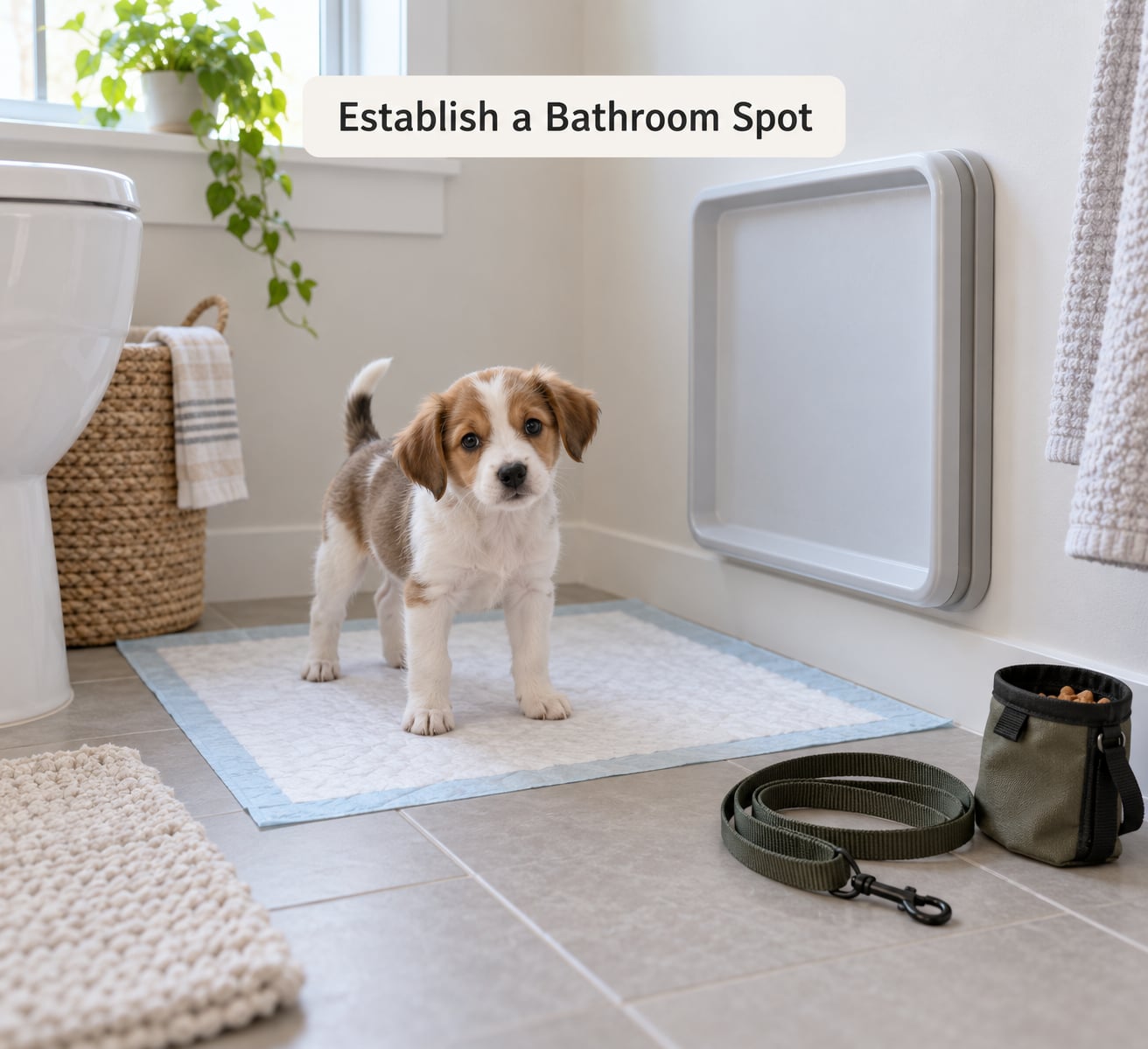
Pick one spot today and use it every single time. Outdoors, choose a quiet patch away from the building door so the puppy is not startled mid-potty. Indoors, put the pad or tray in one corner, ideally on a washable surface like a tile or a plastic mat.
The rule most owners learn the hard way is simple: never move it. If the spot changes weekly, the puppy has to relearn the location every time. If the spot works, it stays.
You will know this step is working when the puppy starts heading toward that corner on their own before you pick up the leash.
Set a Frequent Potty Schedule
Write down your puppy’s age in months, then add roughly that many hours as the maximum time between trips. An 8-week-old puppy has about one hour. A 4-month-old has about four.
| Puppy age | Daytime trips | Overnight between trips |
|---|---|---|
| 8 weeks (2 months) | Every 1 hour | 2 to 3 hours |
| 3 months | Every 2 to 3 hours | 4 to 5 hours |
| 4 months | Every 4 hours | 5 to 6 hours |
| 6 months | Every 5 to 6 hours | 7 to 8 hours |
| 9 months and up | Every 6 to 8 hours | 8 to 10 hours |
Those are ceilings, not goals. A puppy who holds to the limit every time is a puppy heading for an accident, so subtract an hour when your building has an elevator, an elevator wait, or six flights of stairs.
Then layer the triggers on top of the clock. Go out after waking, after eating, after drinking, after play, after naps, and within 30 minutes of arriving home. These trigger-based trips catch most accidents, because they happen far more often than the average owner expects.
You will know the schedule is right when accidents cluster around a specific trigger, usually drinking water or waking from a nap, rather than appearing randomly.
Reward Going in the Right Place
The first 30 seconds after success decide how fast this goes. Stay outside until the puppy finishes, then mark it. Say “yes” or your chosen cue in a calm voice and hand over a treat within three seconds.
Keep the reward boring and immediate. No clapping, no phone call, no jumping around. A puppy that gets lots of attention the moment it finishes learns to go, and a puppy that gets attention mid-potty learns to stop and come back to you.
Attach a cue to the location and use only that one word, like “potty” or “outside.” Repeat the same cue every time, and you will be able to send this puppy to its spot in a year or two. Owners in r/Dogtraining report that switching between two cue words is one of the biggest reasons progress stalls.
You will know this step is working when the puppy finishes faster each trip and starts looking back at you before it even starts.
Handle Accidents Without Punishment
Catch the puppy in the act and say nothing. A single sharp “no” interrupts the behavior, but scolding after the fact only teaches your puppy to hide from you when it needs the bathroom. Owners who punished consistently report slower progress and a puppy that sneaks off to eliminate in another room.
Instead, interrupt calmly, carry the puppy to the spot, and reward there if it finishes. If you find a puddle after the fact, clean it without the puppy in the room so there is no association with scolding.
Then treat the cause. A puppy returning to the same indoor spot over and over is almost always reacting to smell residue, not defiance. An enzyme cleaner breaks the scent down at the source.
Call your veterinarian if accidents come with straining, blood, very loose stool, or sudden loss of housebreaking in a puppy that was already clean. Those are medical, not behavioral.
You will know this step is working when the same spot stays dry for a full week.
Expand Access Gradually
Add freedoms in small, boring increments. If the puppy has had a clean day, allow five extra minutes before the next scheduled trip. If the week is clean, open up one more room.
Watch for the classic regression: a puppy who suddenly has accidents after gaining access to a new room. That is not defiance, it is an over-freedom problem, and the fix is going back to the leash indoors for a few days.
You will know this step is working when the clock stretches on its own. Keep the log anyway for another month.
Common Mistakes
Changing the toilet location. Fix: pick the spot during week one and leave it alone. Moving pads around the apartment is why some puppies soil every room in turn.
Rewarding too late. Fix: treat within three seconds of finishing. A treat given five minutes later in the kitchen teaches your puppy nothing about where the treat came from.
Gaps in the schedule. Fix: for a puppy not yet fully vaccinated, carry the puppy down to the outdoor spot rather than letting them walk through a shared hallway, where other dogs have been.
Punishment. Fix: no scolding, no nose in the mess, no raised voice. Punishment buys nothing and costs trust.
Confusing cues. Fix: one location, one door, one word, every time.
Expecting a 2-month-old puppy to hold for six hours. Fix: aim for the age-in-months rule above and let the timeline stretch with the bladder.
Expecting overnight to follow daytime. Fix: a puppy who is clean during the day can still wet the crate at night. Daytime and nighttime capacity are separate skills.
Tips for Apartment Living
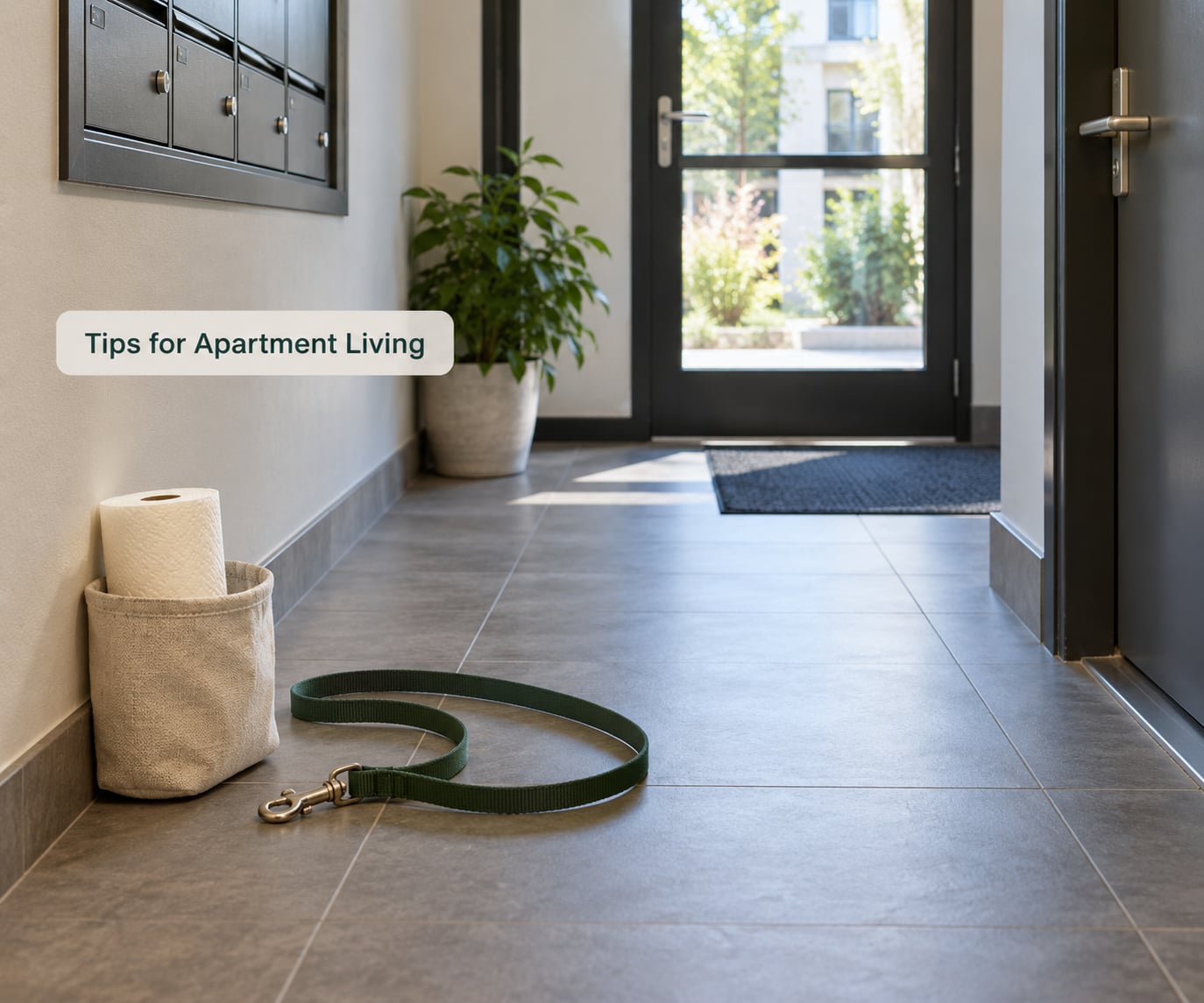
Carry the puppy on the way out. This is the single highest-impact tip for high-rises. It prevents the hallway and elevator accidents that apartment training guides usually skip, and it is free.
Keep a supply pouch with you. One r/Dogtraining poster carries paper towels, waste bags, and a spare pad in a small bag on every trip. When a bathroom is missing or occupied, you have what you need.
Have a backup for bad weather. When it is too cold, too hot, or pouring, go to the indoor spot and tell the puppy the same cue. Owners report that running a pee pad on a balcony solved the urgency problem while still building the location association.
Plan for a workday. For eight hours alone, you need a dog walker, a neighbour, or a fully reliable indoor system. Do not stretch the crate hours past what the age table allows.
Mind small bathrooms. In a tiny half-bath, keep the door open and the leash short, because most accidents there happen while you are the one going to the toilet.
Go easy on the elevator. Leash the puppy before you press the button, not in the lobby. A startle in a metal box is a fast path to a puddle.
Watch small breeds for marking. Tiny dogs often scent-post indoors by the door or on furniture rather than emptying their bladder, so redirect those specifically and reward heavily.
Be a good neighbour. Quiet hours, a leash in shared corridors, and picking up after your dog in the courtyard take an afternoon of habit and prevent most friction.
Frequently Asked Questions
How old should a puppy be before starting apartment potty training?
Start the day your puppy comes home, usually at 8 weeks. There is no benefit to waiting, because the routine itself is the training. A young puppy has a small bladder, so begin with trips every hour, keep a written log, and expand the gaps as age in months catches up.
Can I use pee pads instead of taking my puppy outside?
Yes, and in an apartment they are a reasonable bridge for a puppy under 12 weeks, during bad weather, or during a workday. Keep pads in one fixed spot and say the same cue over them. To transition outside, move the pad a few inches toward the door each day, then carry the puppy outdoors after they finish on it.
How often should an apartment puppy go out during the day?
Use the age rule: hours in the age in months, then subtract for elevator time and stairs. An 8-week-old puppy goes out roughly hourly, a 3-month-old every 2 to 3 hours, and a 6-month-old every 5 to 6 hours. Add trips after waking, eating, drinking, and playing, since most accidents follow those triggers.
Why is my puppy having accidents after potty training?
Common causes are a schedule that grew too fast, new access to a room, a change in feeding or water intake, and leftover urine smell in an uncleaned spot. Drop back to a tighter schedule and leashed supervision indoors, and re-clean any repeat area with an enzyme cleaner. If accidents bring straining, blood, or loose stool, call your vet.
How do I potty train a puppy in an apartment when it is too cold or rainy outside?
Use your indoor spot with the same verbal cue so the puppy links the word to eliminating. Short, frequent trips still count as training. Once the weather improves, go back outside using the identical cue, and reward outdoors every time. If your puppy is not fully vaccinated, this is the safest arrangement for a shared courtyard.
When should I call a veterinarian about my puppy’s bathroom habits?
Call your vet if accidents come with straining, blood in the urine or stool, very frequent small amounts of urine, diarrhea, or a sudden loss of habits in a puppy that was already clean. Those signs point to a urinary, digestive, or infection issue rather than a training gap. A sudden pattern change in an adult dog deserves the same call.
Conclusion
Start with one decision: pick your puppy’s bathroom spot today and do not move it again. Take the puppy there on a schedule built from age in months, reward within three seconds of success, and clean any accident with an enzyme cleaner without a word of scolding.
Then adjust the plan as the puppy grows. If accidents are climbing, shorten the gaps before changing anything else. Most apartment puppies are reliably clean somewhere between 4 and 6 months, and the elevator will keep working the whole way there.