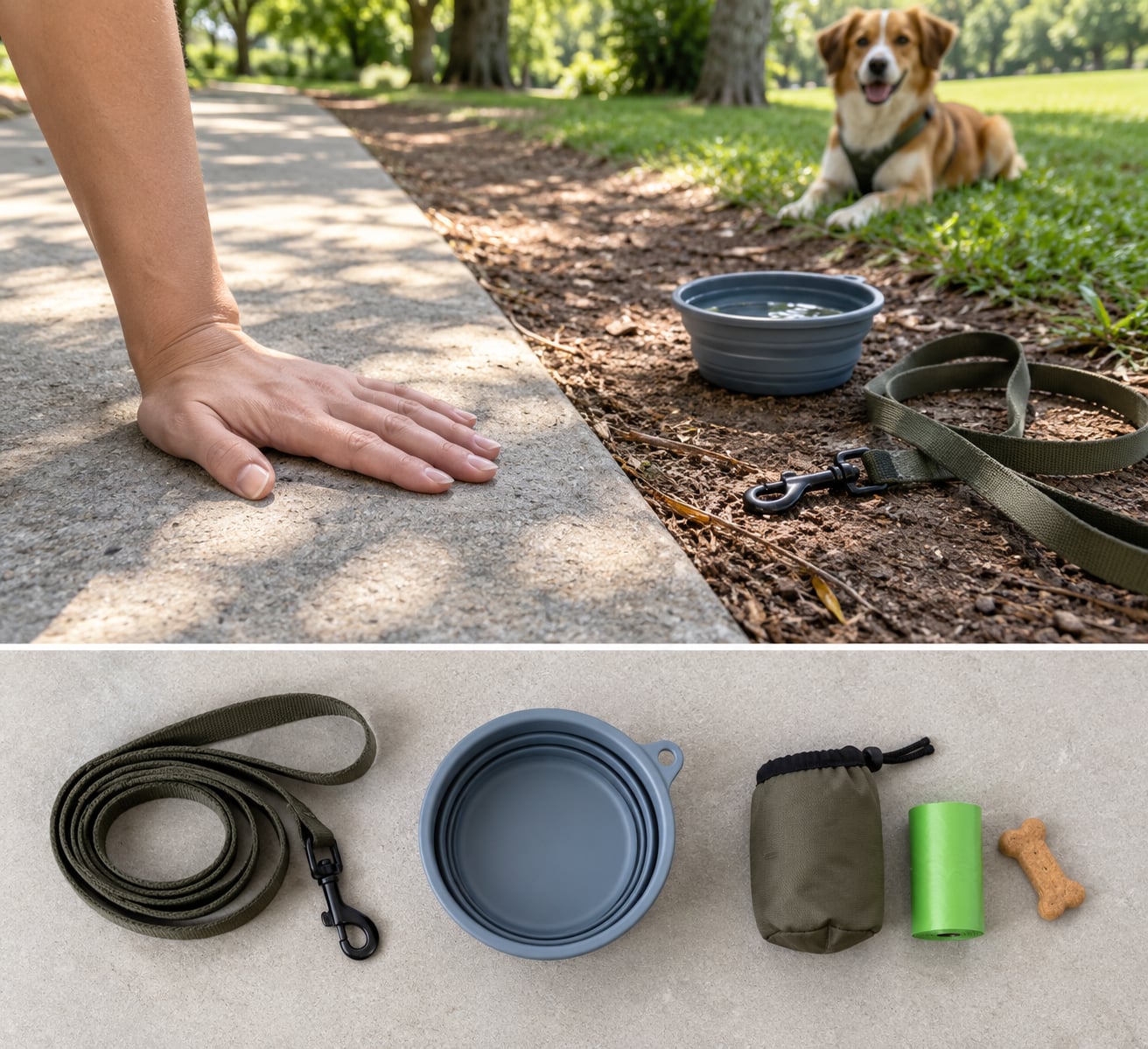
To protect dog paws from hot pavement, press the back of your hand flat against the surface and hold it there for seven seconds. If you cannot keep it there without pain, the ground is hot enough to burn your dog’s paw pads, and you should walk on grass or shade instead. This takes about a minute to do properly and it is the single most reliable test you have.
It matters because pavement temperatures routinely run 40 to 60 degrees Fahrenheit above the air temperature. On a day when the air reads a mild 86 degrees, dark asphalt can sit around 135 degrees, hot enough to burn thin paw pads in under a minute.
Below is the routine I use: test the ground, pick the gear, time the walk, then check the paws when you get home.
Table of Contents
- What You Need
- Step-by-Step: How to Protect Dog Paws from Hot Pavement
- 1. Check the Pavement Before You Go
- 2. Choose Protective Paw Gear
- 3. Time and Route the Walk to Protect Paws from Hot Pavement
- 4. Inspect and Care for the Paws
- Common Mistakes
- Frequently Asked Questions
- Do dog boots help with hot pavement?
- How do I test if the ground is too hot for my dog?
- What do burned paw pads look like?
- Is paw wax enough for hot pavement?
- What should I do right after a hot walk?
- Final Advice for Hot-Pavement Walks
What You Need
You do not need a full kit. Most of the work is done by timing and routing, not by gear.
- The back of your hand. Free, and the only measuring tool you truly need.
- A shaded route in mind. A grass strip, a dirt trail, or the shady side of a street beats open asphalt every time.
- Water and a collapsible bowl. Overheated dogs pant heavily even when their paws are fine.
- Dog booties. Optional, but useful for short, low-slung dogs and for unavoidable hot surfaces.
- Dog-safe paw balm or wax. Optional barrier for dry, cracked pads and for rough or chemically treated ground.
- Your vet’s phone number. Save it in your contacts before the hot months start, not after a walk goes wrong.
Anything you put on a paw has to be made for dogs. Human sunscreen, human pain creams and human wound ointments are not safe for an animal that licks its feet, and neither is butter, hydrogen peroxide or toothpaste.
Step-by-Step: How to Protect Dog Paws from Hot Pavement
1. Check the Pavement Before You Go
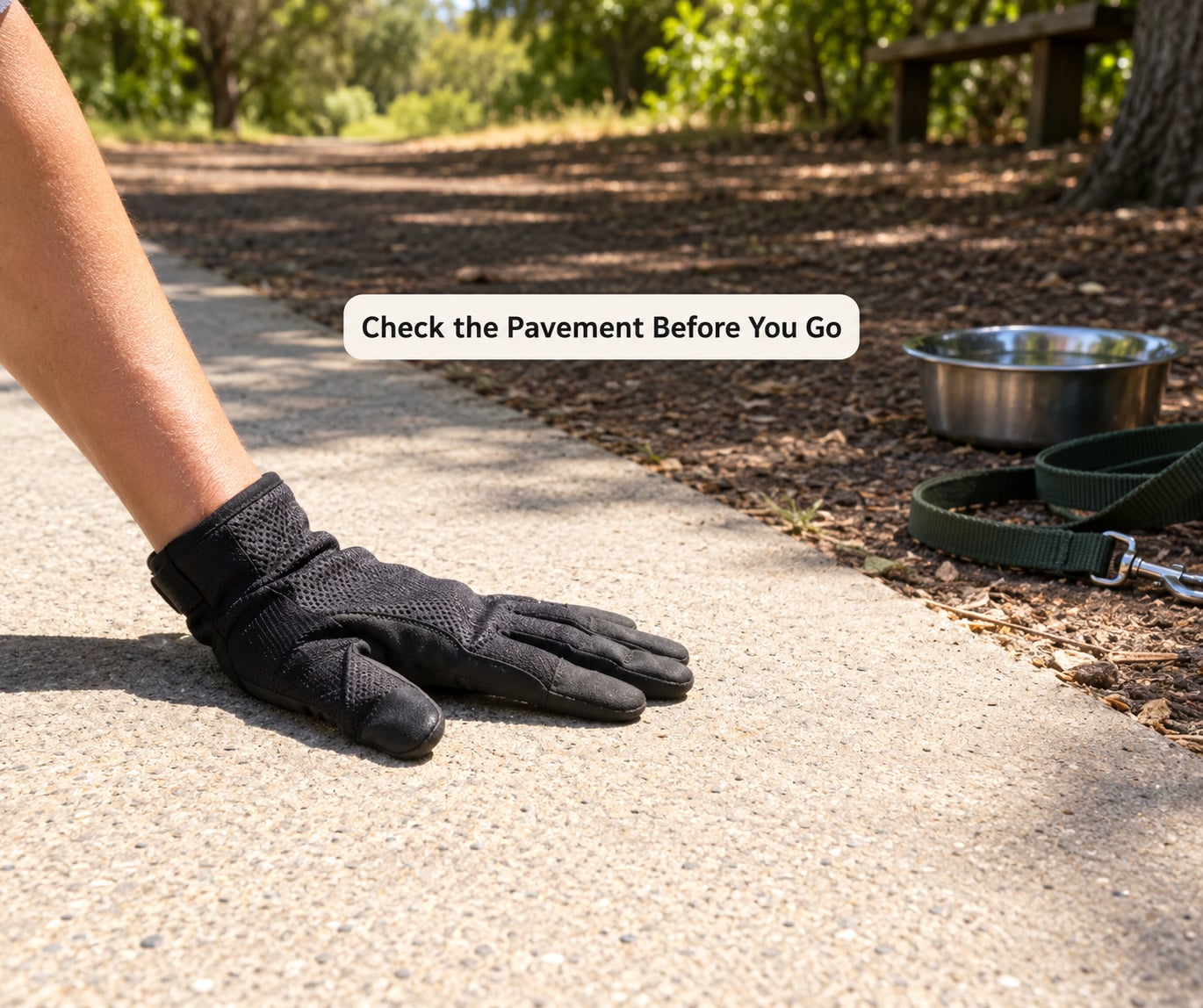
Press the back of your hand against the pavement and count to seven. The back of the hand is the right test surface because it is thin, unpainted and less callused than the palm, which makes it about as sensitive as a paw pad. If you flinch before seven seconds, treat that surface as off limits.
Surface temperature is the number that matters, not the forecast. Sunlit surfaces run far hotter than shaded ones, and different materials store heat differently.
| Surface | Typical peak on a hot sunny day | Burn risk |
|---|---|---|
| Dark asphalt | 130-140 F in full sun | Severe, burns in about 60 seconds |
| Concrete sidewalk | 120-130 F in full sun | Severe, holds heat after sunset |
| Dark metal (deck ramps, grates) | Very hot to the touch | Severe, thin surface conducts heat fast |
| Sand | 130-140 F in full sun | Severe, and dries out the pads |
| Artificial turf | 120-130 F in full sun | High, heats like asphalt |
| Shaded dirt or gravel | Moderate | Low, usually comfortable |
| Grass in shade | Close to air temperature | Very low |
How to tell whether this step worked: you should be able to finish the full seven seconds, and the spot you touched should not feel noticeably warmer than the shaded ground beside it. If it fails, change the route rather than shortening the walk, because a short walk on the same hot asphalt still burns.
2. Choose Protective Paw Gear
Booties are the option that most people ask about, and they work best on short walks over short stretches of unavoidable hot ground. They also need more commitment than most owners expect.
What to look for: a breathable upper, a grippy sole, a stay-put fastener that closes at the ankle, and a size you can measure rather than guess. Measure the width of the paw at the widest point and the length from the heel to the longest nail, then compare with the maker’s chart. Two fingers should fit between the boot and the leg.
Introducing them gradually is the part people skip. Leave the booties out on the rug for a few days so the smell is boring rather than strange. Put them on indoors for one minute with a treat, then five minutes, then a short walk on grass. A dog who is forced into unfamiliar footwear on a hot day will kick it off, and owners on r/dogs and r/service_dogs describe exactly that cycle taking days to break.
Poor fit causes its own injury. Boots that rub leave hot spots behind the dewclaw and between the toes, and snow-rated boots often lack ventilation for summer. If a bootie causes redness, take it off and let the skin settle.
Paw balm and paw wax are the second layer. A dog-safe balm conditions dry, cracked pads and adds a thin barrier over rough ground, salt and mild heat. Apply a small amount to clean, dry pads before the walk, and stop using it immediately if the skin becomes red, damp or itchy. Wax alone is not enough for genuinely hot asphalt; owners walking in Phoenix and Tucson say plainly that it buys comfort, not protection.
What to tell for this step: your dog walks normally in the gear, no rubbing marks appear within a few minutes, and no redness shows up after the walk.
3. Time and Route the Walk to Protect Paws from Hot Pavement
Timing beats gear. Walking before 10am or after 7pm removes most of the problem before any product enters the picture.
Evening is not automatically safe. Concrete and asphalt store heat all day and release it slowly, so a street that was fine at 8am can still be uncomfortably warm at 9pm on the same block. Test the ground again at the new hour, at least for the first week, and note the difference. People with daytime work schedules often assume sunset fixes everything, then discover their usual loop is still hot.
Change what you walk on before you change how long you walk. Grass, packed dirt, shaded gravel and indoor floors all cut heat exposure more effectively than any product. If the pavement test fails and there is no cool route, shorten the walk to a few minutes on shade, or replace it with indoor scent work, a lick mat, a snuffle mat or a training session.
Walk length matters less than people think on extreme days. Ten minutes of repeated walking on a surface at 130 degrees is worse than one slow minute of walking on grass.
Some dogs need a shorter leash on heat. Puppies, senior dogs, overweight dogs and flat-faced breeds such as pugs and bulldogs overheat faster. Dogs that live indoors on carpet have never built calluses, and neither do many service dogs that spend their working hours on pavement. Those dogs deserve shorter routes, more shade and closer watching, not tougher gear.
Bring water on every warm walk. Heavy panting, drooling, slowing down, seeking shade and bright red or very pale gums are all signs to head straight home. A dog showing those signs on a 100-degree day needs shade, water and a vet if they do not settle quickly.
4. Inspect and Care for the Paws
Look at the paws every time you get back from a warm walk, before you unclip the lead. Lift each foot and check the pads, the spaces between the toes, the nails and the skin around the paw.
Here is how the damage usually presents itself:
- Mild. Redness on the pads, licking or chewing at the feet, a slight reluctance to continue the walk. Skin is intact.
- Moderate. Blistering, peeling or cracked pads, clear limping, sensitivity when you touch the paw.
- Severe. Open or weeping blisters, missing skin, bleeding, swelling, or a dog that will not put weight on the foot at all.
For mild redness, rinse the paws with cool water, let them air dry fully, and skip the next hot walk. Any broken skin needs a veterinarian rather than home treatment, because pad wounds get infected easily and dogs put weight on them without complaining.
If you treat a minor case at home, cool running water for about ten minutes works, then a thin layer of a vet-recommended paw balm. Do not use ice, which can add tissue damage, and skip human burn creams, which can be toxic if the dog licks them.
Between walks, keep pads conditioned and nails trimmed, since long nails push the pad down onto hot ground. Check between the toes for grit, seeds or thorns after walks on grass and sand.
Common Mistakes
Assuming bare paws are always fine. Many owners judge by air temperature. Check the surface instead.
Testing with the palm of your hand. The palm is callused and gives you a falsely reassuring result. Use the back of the hand.
Forcing the walk through a limp. A dog who is limping has already been hurt. Carry the dog to the car if you can. Owners on dog forums warn specifically against making a limping dog walk the block back.
Relying on butter, hydrogen peroxide or toothpaste. None of these treat a burn, and all of them can make a paw worse.
Using human sunscreen or medication on paws. Zinc oxide and pain-relieving creams are meant for human skin. A dog that licks a treated paw can get sick.
Applying balm too thickly. A heavy layer traps heat and moisture. Use a thin coat and let the paw dry before the walk.
Fitting loose or oversized booties. Flapping boots twist and rub. If you can pull the boot straight off without unfastening it, it is too loose.
Buying snow boots for summer. Winter boots are built for cold and moisture, not for ventilation on hot asphalt.
One safety reminder to keep in mind: paw damage is often treated at home, but the dog overheating beside you is the emergency. Watch the whole animal, not just the feet.
Frequently Asked Questions
Do dog boots help with hot pavement?
They help, but only when they fit well and when the walk is short. Good booties add a real barrier over hot, rough or sharp ground and are useful for low-slung breeds such as dachshunds and greyhounds. They cannot make a long midday walk on 135 degree asphalt safe, and poorly fitted boots cause rubbing of their own.
How do I test if the ground is too hot for my dog?
Press the back of your hand flat against the pavement and hold it for seven seconds. The back of the hand is thin and sensitive, much like a paw pad. If you cannot keep it there, the surface is too hot for your dog’s paws. Walk on grass or shade, or postpone the walk until later.
What do burned paw pads look like?
Mild burns show redness on the pads, licking or chewing at the feet and a slight limp. Moderate burns blister, peel or crack. Severe burns leave open or weeping skin, bleeding and swelling, and the dog may refuse to put weight on the foot. Any broken skin needs a veterinarian rather than home treatment.
Is paw wax enough for hot pavement?
Paw wax and dog-safe balm condition dry pads and add a light barrier, which helps with roughness, salt and mild heat. They are not a substitute for booties or for changing the route. Owners walking in genuinely hot climates report that wax buys comfort, not protection, on asphalt above 120 degrees.
What should I do right after a hot walk?
Rinse each paw with cool running water for about ten minutes, pat the fur between the toes dry, and check the pads for redness, blisters or cracks. Do not apply ice or human burn cream. If the skin is broken, weeping or the dog is still limping after a few hours, contact your veterinarian.
Final Advice for Hot-Pavement Walks
Start with the seven-second test. If the ground fails it, change the surface rather than the schedule, choose a shaded or grassy route, and keep the walk short. Check the pads when you get home and again a couple of hours later.
Dogs with existing mobility, vascular or skin problems, and any dog showing a limp or broken skin, need individual guidance from a veterinarian rather than a general routine.