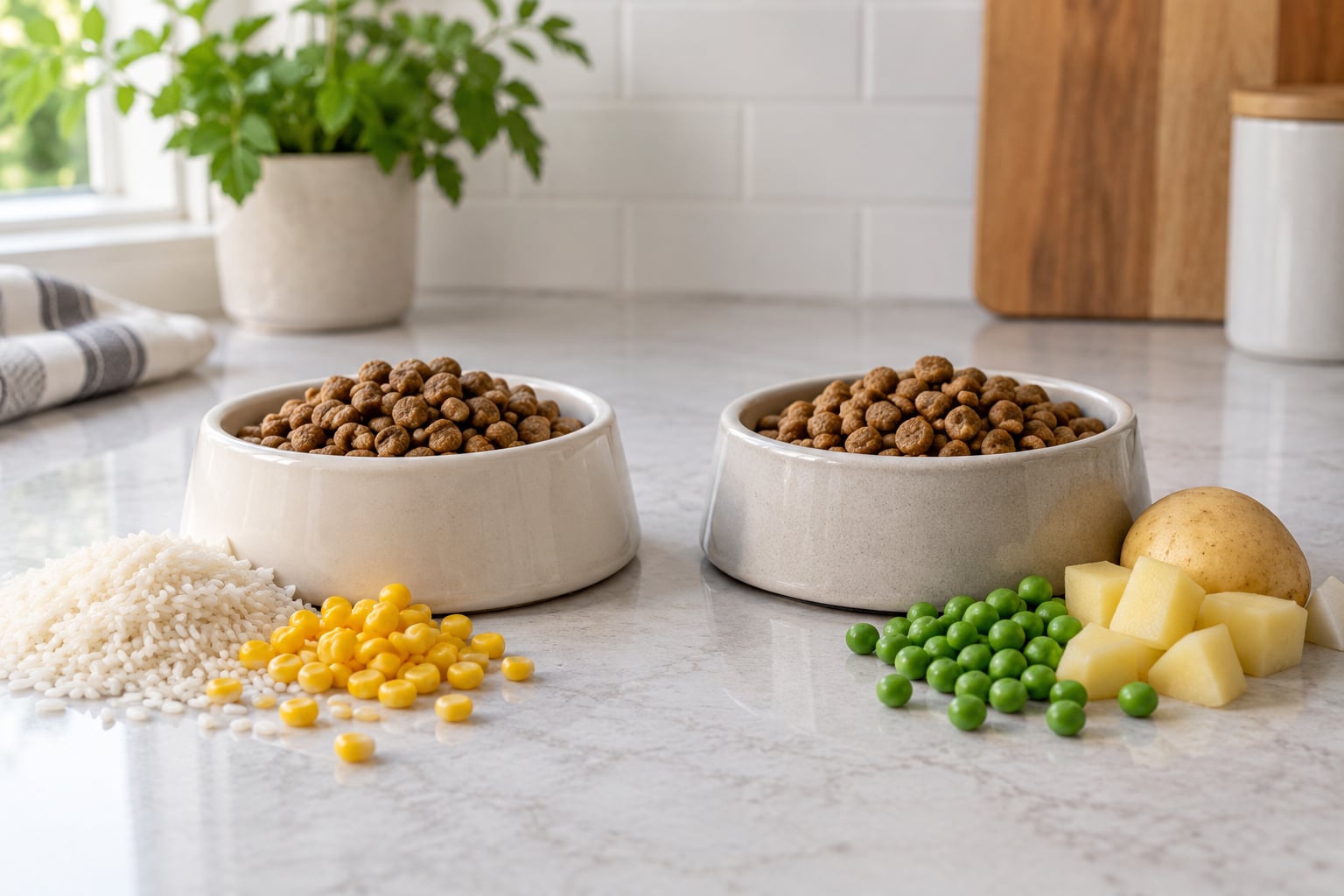
For most healthy dogs, regular grain-inclusive kibble is the better default. Grain free food earns its place only when a veterinarian has found a real reason: a confirmed grain allergy, celiac-like gluten intolerance, or a dog that plainly tolerates one style over the other. Everything else is marketing at a premium.
Grain free vs regular dog food for dogs is not a question with a universal winner, which is why the aisles feel so loud. Dogs digest cooked grains like rice, oats and barley efficiently. What matters more is whether the food is complete and balanced, whether your dog thrives on it, and whether the manufacturer has qualified nutritionists behind the formula.
This is general information, not veterinary advice. Talk to your veterinarian before changing your dog’s diet, especially if your dog has heart, skin or digestive symptoms.
Table of Contents
- Grain Free vs Regular Dog Food for Dogs at a Glance
- What Is Grain Free Dog Food?
- What Is Regular Dog Food?
- How Do Grain Free and Regular Dog Foods Compare Nutritionally?
- How to check the nutritional adequacy statement
- What replaces the grain, and what that costs nutritionally
- Taurine, legumes and the heart question
- Grain Free vs Regular Dog Food for Dogs: Allergies and Digestion
- What real owners report on forums
- Which Dog Food Is Easier to Digest?
- Grain Free vs Regular Dog Food: Ingredients, Price, and Convenience
- Which Should You Choose?
- How to switch between diet types in 7 to 10 days
- Frequently Asked Questions
- Do vets recommend grain-free food for dogs?
- What is the downside of grain free dog food?
- Can grain-free diets cause dilated cardiomyopathy in dogs?
- Is rice or corn bad for dogs?
- Is grain-free better for dogs with sensitive stomachs and itchy skin?
- How do I switch my dog from grain-free to regular food, and when should I call a vet?
- The Best Choice Depends on Your Dog
Grain Free vs Regular Dog Food for Dogs at a Glance
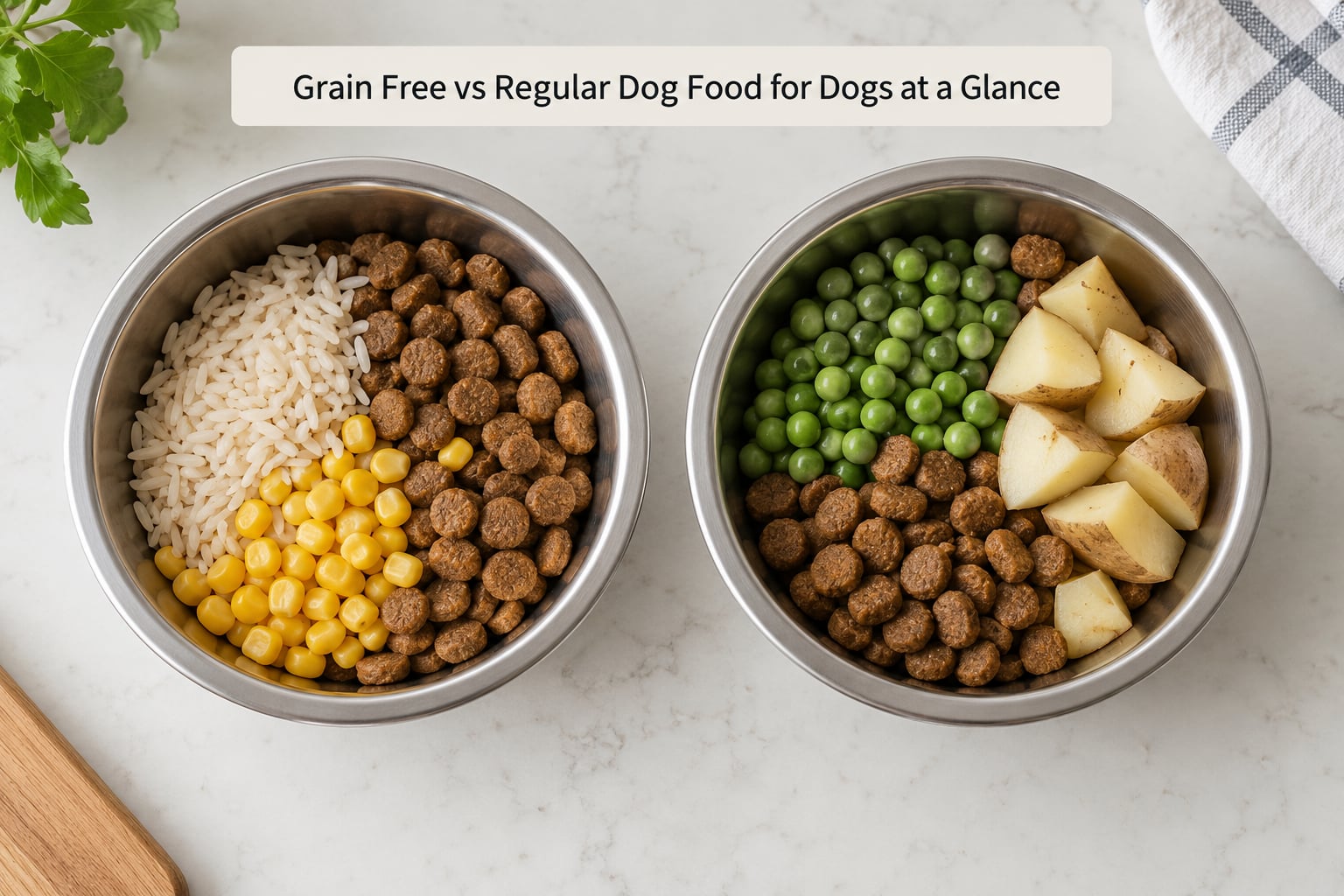
| Criterion | Grain free dog food | Regular (grain-inclusive) dog food |
|---|---|---|
| Grain content | No wheat, corn, rice, barley, oats or soy | Cooked grains such as rice, oats, barley or corn |
| Main carbohydrate source | Peas, chickpeas, lentils, lupins, potato flour, tapioca | Brown rice, oats, barley, corn, sorghum |
| Typical protein profile | Often higher in meat, plus plant protein concentrates | Meat meal plus grain-derived amino acids |
| Fiber type | Mostly legume fiber, which ferments fast | More mixed cereal fiber, slower fermentation |
| Digestibility for most dogs | Good, but can cause gas or loose stool in sensitive dogs | Well digested when the grains are cooked |
| Heart-health context | Investigated by the FDA for a link with dilated cardiomyopathy in some dogs | No such reported association |
| Cost per pound | Typically a fifth to a third more, and more again for canned or fresh | Usually the cheaper end of the shelf |
| Best suited for | Diagnosed grain allergy, confirmed gluten intolerance, or a dog doing better on it | The large majority of healthy dogs at every life stage |
| Risk if chosen without medical need | Higher cost, no proven benefit, possible digestion upset | Few concerns beyond individual ingredient sensitivity |
That table is the whole argument in miniature. Regular food wins on cost and on the evidence base; grain free food wins only in a narrow set of medical situations, plus the simple fact that some dogs genuinely feel better on it.
What Is Grain Free Dog Food?
Grain free dog food is made without cereal grains. That means no wheat, corn, rice, barley, oats, millet or soy in the recipe. Nothing about it is carbohydrate free, though, and that misreading causes most of the confusion in this debate.
What replaces the grain is usually a legume blend: peas, pea protein, chickpeas, lentils, or lupins. Potato flour and tapioca show up often too. Those ingredients are starches, so a grain free kibble still delivers a meaningful carbohydrate load, just from different plants.
The marketing angle is worth naming plainly. A bag that says grain free does not mean carb free, allergen free, or higher quality. It tells you one thing only: no cereal grains, and something plant-based has taken their place.
What Is Regular Dog Food?
Regular dog food is simply kibble or canned food that contains grains. On most shelves this is the majority of what is sold, and grains such as brown rice, oats, barley and corn are standard carbohydrate sources in it.
Regular does not describe a quality tier. You will find coarse, low-grade grocery kibble and tightly formulated research-grade diets on the same shelf. The word tells you what is in the bowl, nothing about how well it was made.
Grains contribute calories, some fiber, and a meaningful slice of B vitamins, iron and magnesium. Cooked starch is also easy for dogs to break down. Domestic dogs carry more carbohydrate-digestion genes than their wolf ancestors, which is one reason vets push back on the idea that grain is foreign to them.
How Do Grain Free and Regular Dog Foods Compare Nutritionally?
Both can be complete and balanced. The AAFCO nutritional adequacy statement is what tells you, not the front of the bag and not the presence or absence of grains. Formulas made with a board-certified nutritionist and manufactured to a defined profile sit at the top; small-batch brands with no named nutritionist sit much lower.
How to check the nutritional adequacy statement
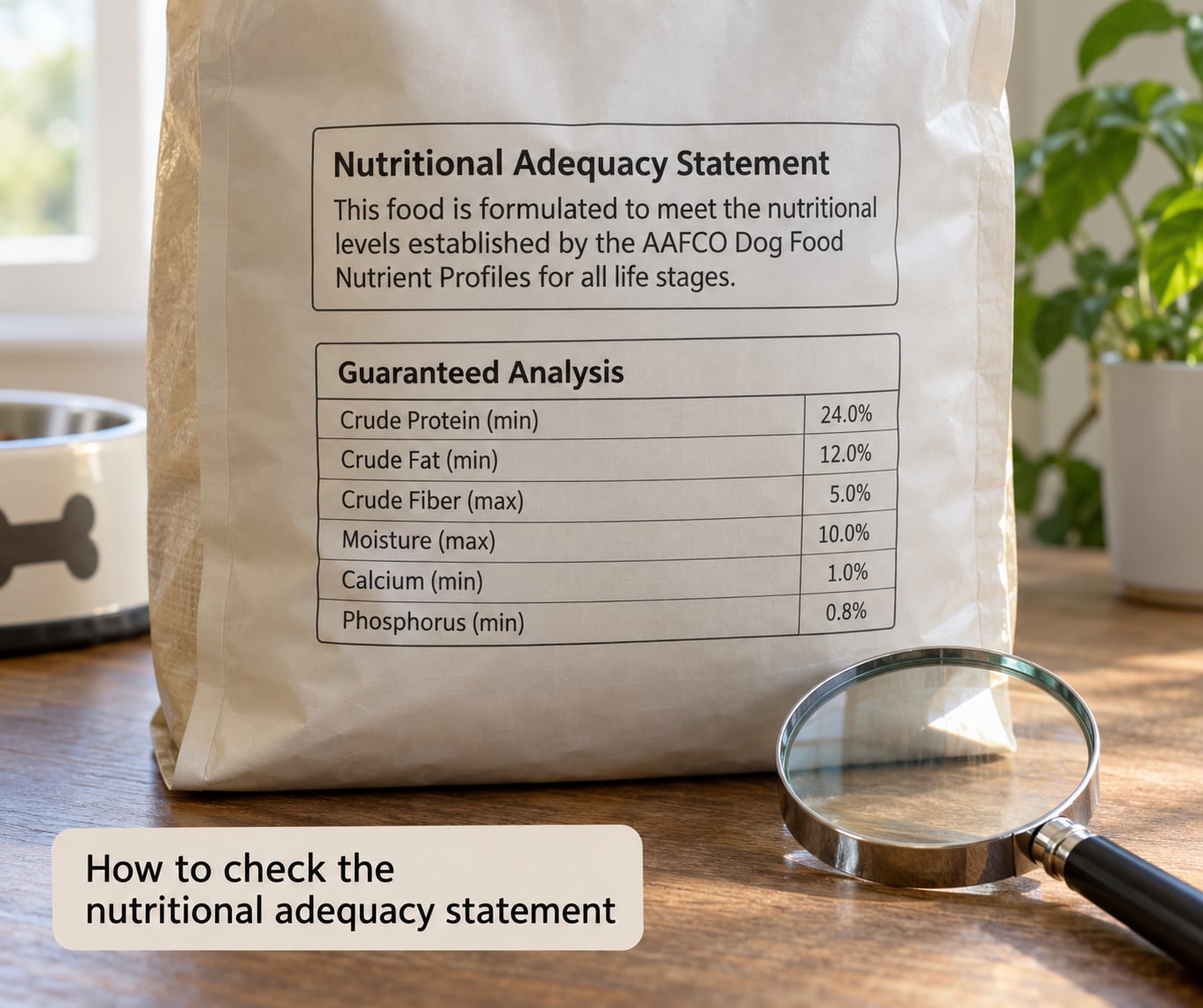
Turn the bag over and find the adequacy statement. It should say the food is complete and balanced for a specific life stage: growth, adult maintenance, all life stages, or a therapeutic diet such as urinary or renal. If the statement is missing, or the bag only says meant for supplemental feeding, the food is not a complete diet no matter how clean the ingredient list looks.
Next to it sits the guaranteed analysis: protein, fat, fiber, moisture, and ash, with a guaranteed minimum and maximum. It is useful but vague. A number like 12 percent protein tells you almost nothing about digestibility or which ingredient supplied it, which is why comparing ingredient lists still matters.
Do not read too much into ingredient names. The list is ordered by weight before cooking, so a named meat listed first may still contribute fewer grams of protein once processing removes water. Legume-heavy grain free foods often split plant protein across six or eight lines to make the list look meat-forward.
What replaces the grain, and what that costs nutritionally
Legumes bring protein and fiber, but plant compounds such as lectins and phytates can bind minerals and reduce their absorption, particularly when a food is processed poorly. Legume fiber also ferments quickly in the gut, which is the usual reason a dog on a pea-heavy kibble becomes gassy.
Grain-inclusive formulas get fiber from cereal grains, which ferments more slowly and tends to be gentler on the gut. The trade-off runs the other way too: a dog that reacts to grains may tolerate a legume-based formula perfectly well. Individual tolerance beats category rules.
Taurine, legumes and the heart question
Taurine is a sulfur-containing amino acid that dogs build from methionine and cysteine, and it is not always built fast enough for their needs. It supports heart muscle function, bile salt formation, immune regulation and nerve development. Diets relying heavily on plant protein can supply less taurine or fewer usable precursors, particularly in breeds with lower synthesis capacity.
Dilated cardiomyopathy, or DCM, is a condition in which the heart muscle stretches and thins and can no longer pump normally. In 2026, the US FDA has reported well over 200 cases, largely in dogs with no genetic predisposition, eating legume- and potato-heavy grain-free diets. That is an association, and the investigation is ongoing. Causation has not been established, and many affected dogs were also eating other things.
What the evidence supports right now is a practical stance: if your dog eats grain free food and has no symptoms, talk to your vet before panicking. If your dog has a new murmur, has fainted, tires abnormally, or pants at rest, get that checked with an echocardiogram before you change a single ingredient.
Grain Free vs Regular Dog Food for Dogs: Allergies and Digestion
Most dogs with itchy skin or a sensitive stomach do not have a grain allergy. True food allergy in dogs is uncommon overall, and when it exists, chicken, beef, dairy and egg are the usual suspects rather than wheat or corn. Confirmed gluten intolerance in dogs is rare and clusters almost entirely in Irish Setters.
What real owners report on forums
Owner experience adds a layer the studies do not. Across r/DogFood, r/dogs and the DogFoodAdvisor forums, a recurring theme is dogs that moved onto a grain-free kibble and developed gas, bloating, softer stool or a yeasty odor, then settled again on a grain-inclusive food. Long-standing forum consensus there is blunt: corn, wheat, soy, rice and barley are not inherently harmful to dogs.
There is the opposite camp too. Some owners say their dog flourished for years on grain-free food and see no reason to change, and if that dog is bright, weight stable and passing normal stool, a veterinary nutritionist may agree there is no urgency. A dog that feels better on a diet is not a marketing failure.
The important caveat: improvement after a switch does not prove grains were the cause. Something else changed too, because switching food almost always changes protein source, fat level and additives at the same time.
An online ingredient list cannot diagnose anything. If a dog has chronic itching, recurring ear infections, vomiting, chronic soft stool, bloating or a weight change, the reliable route is a veterinarian-supervised elimination diet trial lasting eight to twelve weeks with no treats or flavored chews, followed by a deliberate reintroduction challenge.
Which Dog Food Is Easier to Digest?
Digestibility depends on the whole recipe and the individual dog, not on whether grains are present. A well-cooked grain-inclusive kibble with a named meat source is easy for most dogs to break down, and so is a well-made grain-free formula.
Common causes of upset are more ordinary than the grain debate suggests: a fast transition, a new fat level, overfeeding, table scraps, rich treats, an underlying gut condition, or simply a food that sits in the pantry too long. Owners who blame grain often find the real culprit was one of those.
Legume-heavy formulas deserve an honest note. Their fiber ferments rapidly, so gas and borborygmi in the first weeks are not unusual, and dogs prone to sensitive stomachs sometimes do better with the slower fiber profile of a cereal-grain formula. Some dogs do the opposite.
Changes should be gradual. A seven to ten day transition protects the gut and, if symptoms appear, leaves you one clear suspect rather than five. If you see vomiting, blood in the stool, marked lethargy or a dog that will not eat for more than a day, stop guessing and call your vet.
Grain Free vs Regular Dog Food: Ingredients, Price, and Convenience
Price is the most reliable difference between the two. Grain-free kibble commonly costs a fifth to a third more per pound than a comparable grain-inclusive formula, and canned or fresh grain-free lines can run double. Across a year of feeding, a two-dog household on the premium end notices that gap every month.
Free-from labels do real work on the shelf and none in the bowl. A food can be free of grain and still contain a long ingredient list of pulses and starches, and a food containing corn can be complete, balanced and made by a company employing veterinary nutritionists.
Convenience favors grain-inclusive food in one respect: it is what nearly every veterinary clinic, pet shop and large manufacturer stocks, so substitutions during a supply hiccup or a clinic stay are far easier. Grain-free ranges turn over more slowly and often come in fewer sizes.
Choose on nutritional adequacy, a named nutritionist at the manufacturer, your dog’s condition and your dog’s response to it. Marketing claims on the front of the bag are the least reliable signal available.
Which Should You Choose?
Regular grain-inclusive food suits most healthy adult dogs, and puppies on a complete growth formula. It costs less per pound, is better studied, and carries no reported heart-health signal. Make sure it states an AAFCO adequacy statement appropriate to your dog’s life stage.
Grain free food is the right call when a veterinarian has confirmed a grain allergy or gluten intolerance, when your dog is on a veterinary elimination trial, or when a grain-inclusive diet has been tried and properly ruled out as the cause of symptoms. It is also a perfectly reasonable choice for a stable dog who thrives on it, after a chat with your vet.
Ask your veterinarian, or a veterinary nutritionist, before choosing for a puppy, a senior dog, a dog with diagnosed heart, kidney, liver or digestive disease, or a dog with a family history of cardiomyopathy. Those cases involve calcium-to-phosphorus ratios, taurine levels and sodium restrictions that a bag on a shelf cannot tell you about.
How to switch between diet types in 7 to 10 days
Changing from grain free to regular, or the other way round, is where a lot of avoidable stomach upset comes from. Slow it down.
- Days 1 to 3: 75 percent of the current food, 25 percent of the new food, at separate meals if your dog is a gulper.
- Days 4 to 6: half and half.
- Days 7 to 9: 25 percent of the old food, 75 percent of the new food.
- Day 10 onward: the new food only.
- All the way through: no treats, chews or table scraps for at least two weeks, because anything else is a variable you cannot control.
Track stool, appetite and coat condition during the change, and take body weight readings monthly rather than weighing daily. If your dog is thriving and the vet has no objection, keep doing what you are doing rather than switching for its own sake.
Frequently Asked Questions
Do vets recommend grain-free food for dogs?
Most veterinarians do not recommend grain-free food as a routine choice, because the same nutritional goals are met by complete and balanced grain-inclusive formulas at lower cost and with a longer safety record. They may recommend it when a diagnosed allergy, gluten intolerance or an elimination diet trial calls for it. The exception matters more than the rule: a vet who has worked up your dog’s symptoms knows what your dog needs and yours does not.
What is the downside of grain free dog food?
The main downsides are cost, since grain-free formulas typically run a fifth to a third more per pound, and an unsettled heart-health picture. The FDA has reported well over 200 cases of dilated cardiomyopathy, mostly in dogs without genetic risk eating legume-heavy grain-free diets, and the investigation continues. Legume fiber also ferments quickly, which causes gas and softer stool in some dogs. Removing grains rarely helps, because protein sources are the usual allergy trigger.
Can grain-free diets cause dilated cardiomyopathy in dogs?
Dogs eating certain grain-free diets have developed dilated cardiomyopathy, and the FDA opened an investigation in 2018 that remains open. The relationship is an association, not proven causation, and no single ingredient or brand has been established as the cause. Owners of stable dogs on grain-free food do not usually need to panic, but a new heart murmur, fainting, collapsing or unusual fatigue should be checked with an echocardiogram before any diet change.
Is rice or corn bad for dogs?
No. Cooked rice and corn are well-digested carbohydrate sources that many dogs eat happily, and corn in particular is a common ingredient in established complete and balanced diets. Whole grains do carry nutrients, including B vitamins, iron and magnesium. A grain allergy is genuinely rare in dogs, and when dogs have food allergies it is usually chicken, beef, dairy or egg rather than wheat or corn.
Is grain-free better for dogs with sensitive stomachs and itchy skin?
Sometimes, but rarely because of the grain itself. Switching to grain free usually changes the protein, fat and fiber all at once, so improvement often credits the wrong ingredient. If your dog has itching, recurring ear infections, gas or chronic soft stool, the useful step is a vet-supervised elimination diet trial of eight to twelve weeks with no treats, followed by a reintroduction challenge. That is the only reliable way to identify the actual trigger.
How do I switch my dog from grain-free to regular food, and when should I call a vet?
Transition over seven to ten days: 75/25 old and new food for three days, half and half for three, then 25/75 for three, then the new food alone. Keep treats and chews out for two weeks so the change is the only variable. Call your vet before switching if your dog has a heart murmur, fainting, collapse, unusual fatigue, blood in the stool, repeated vomiting, or is refusing food, and before any diet change for a puppy, senior or diagnosed medical case.
The Best Choice Depends on Your Dog
Start with your dog’s health, life stage, symptoms and what it actually tolerates. Check the nutritional adequacy statement on the back of the bag, pick a complete and balanced formula from a manufacturer with qualified nutritionists, and change food over seven to ten days without treats.
Regular grain-inclusive food is the sensible default for most dogs. Grain free food is justified when a veterinarian has given you a reason, and if your dog is stable and healthy on one right now, there is no urgency to change. Bring any suspected allergy or heart symptom to your vet before you act on an ingredient list.