To switch dog food without upset stomach, mix the old and new food in one bowl over about seven days: 75/25 for the first two days, an even blend for days three and four, then more new food until the change is complete. Watch your dog’s stool every day, and step back one step if it softens.
The whole process takes about a week and takes maybe ten minutes of planning. Most owners who get this right never think about it again.
Your dog’s gut bacteria are tuned to the food it has been eating for weeks. Swapping the bag overnight gives them no time to adjust, and that shows up within a day or two as loose stools, gas, vomiting or a dog that picks around the bowl and eats only the familiar kibble.
Table of Contents
- What You Need
- Step-by-Step
- How to Switch Dog Food Without Upset Stomach Over 7 Days
- How to Adjust If Your Dog Has a Sensitive Stomach
- Common Mistakes
- Common Mistakes and Tips for a Smoother Change
- Frequently Asked Questions
- How long should I switch my dog to a new food?
- Can I switch puppy food the same way as adult dog food?
- How do I switch from wet food to dry food?
- Should I stop giving my dog treats during the food change?
- What do I do if my dog gets loose stool while changing food?
- Can I abruptly switch dog food in an emergency?
- Conclusion
What You Need
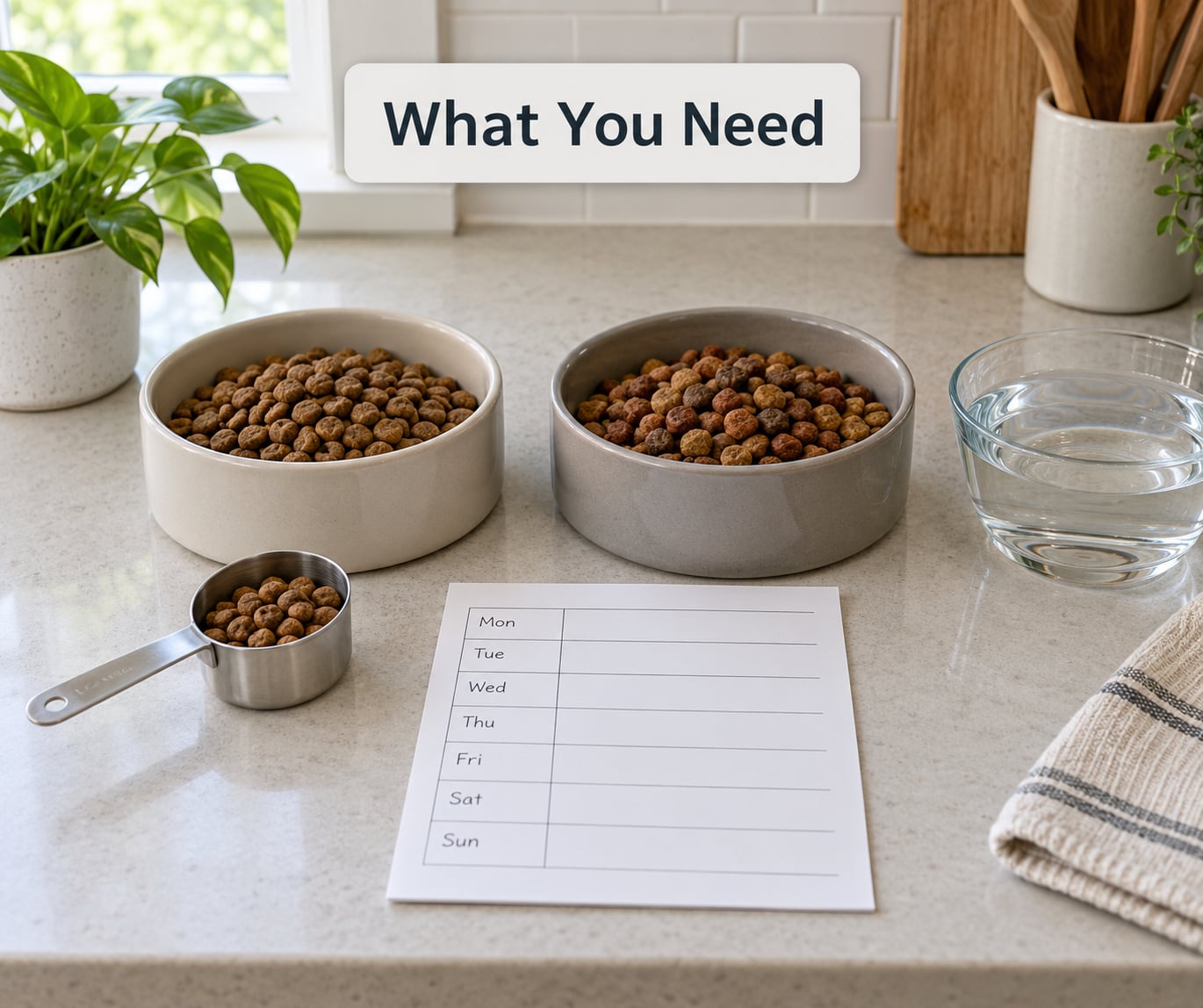
Have these ready before day one, because the middle of a transition is the worst time to be hunting for a measuring cup.
- The new food, in the amount the label suggests for your dog’s weight. Buy the smallest bag you can find first, so you are not stuck with a large bag your dog refuses.
- Enough of the current food to last the full schedule. Running out of the old food halfway through is the single most common reason transitions get rushed.
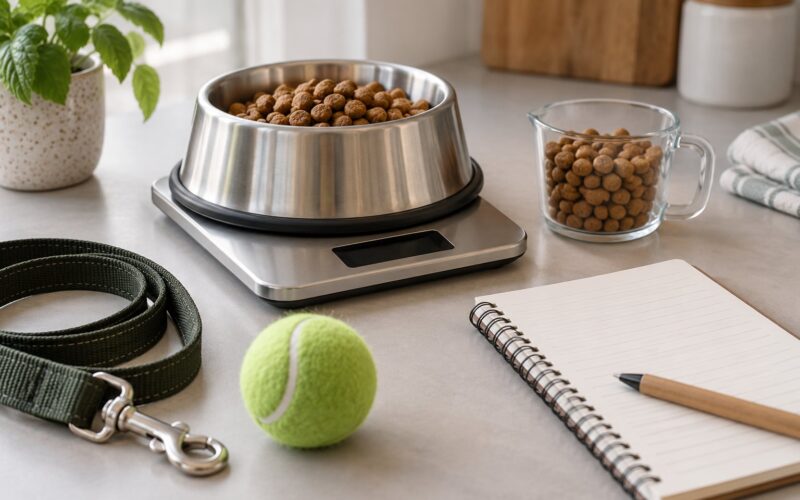
- A kitchen scale or the same scoop for every meal. Ratios only work if the measurements are consistent.
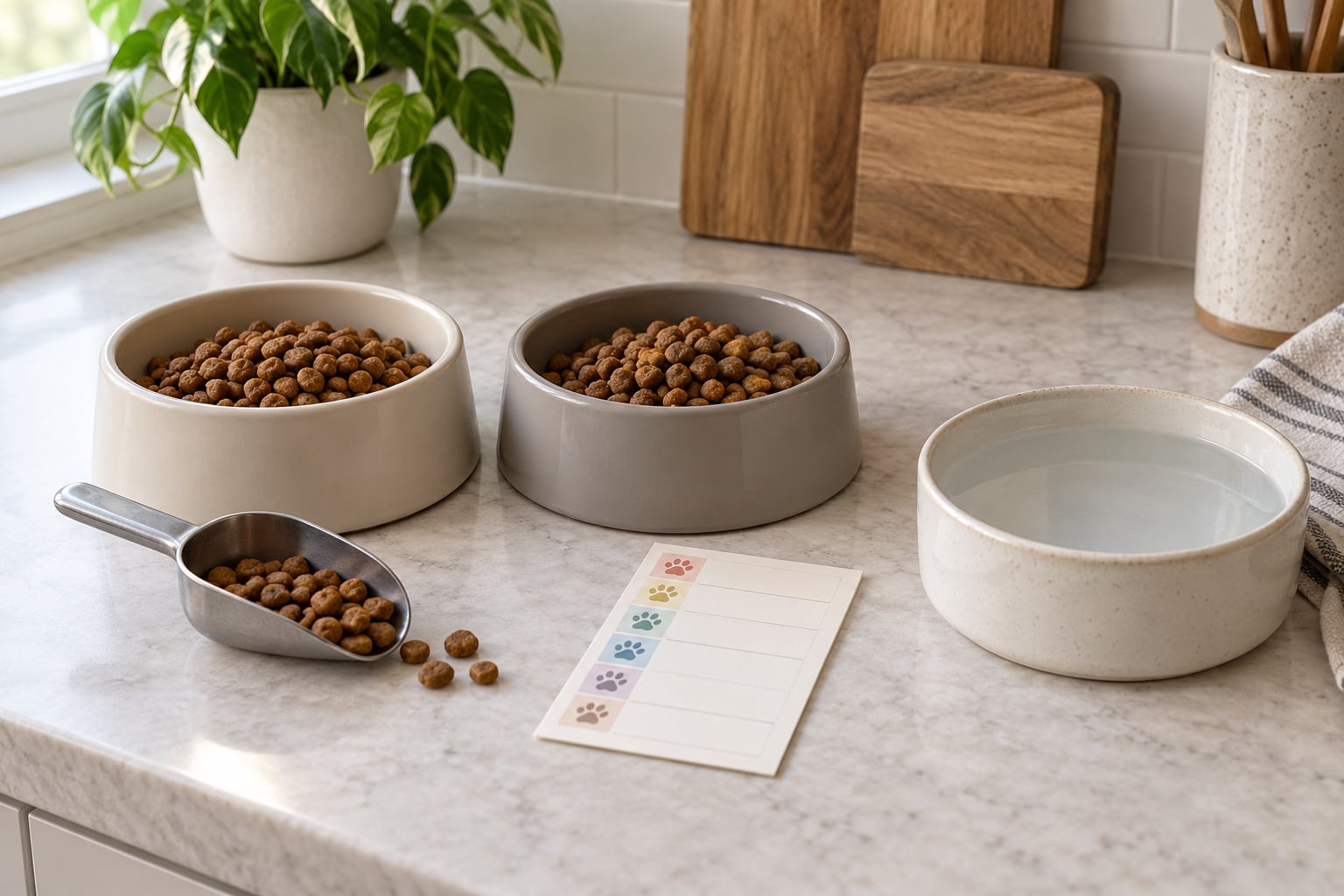
- A feeding schedule that lists the two meal times and what each meal contains that day.
- Fresh water within reach at all times, especially in warm weather or when stool loosens.
- A symptom log, even a notes file on your phone. Three lines a day is enough.
Before you start, read the new food’s ingredient list and its own transition instructions. Manufacturers often print a suggested schedule, and it is worth following if it differs from the plan below.
If your dog has a diagnosed digestive condition, is on a prescription or elimination diet, or has a known food allergy, talk to your veterinarian first and follow their timeline instead of a chart from the internet. Changing a therapeutic diet on your own can undo months of work.
Step-by-Step
How to Switch Dog Food Without Upset Stomach Over 7 Days
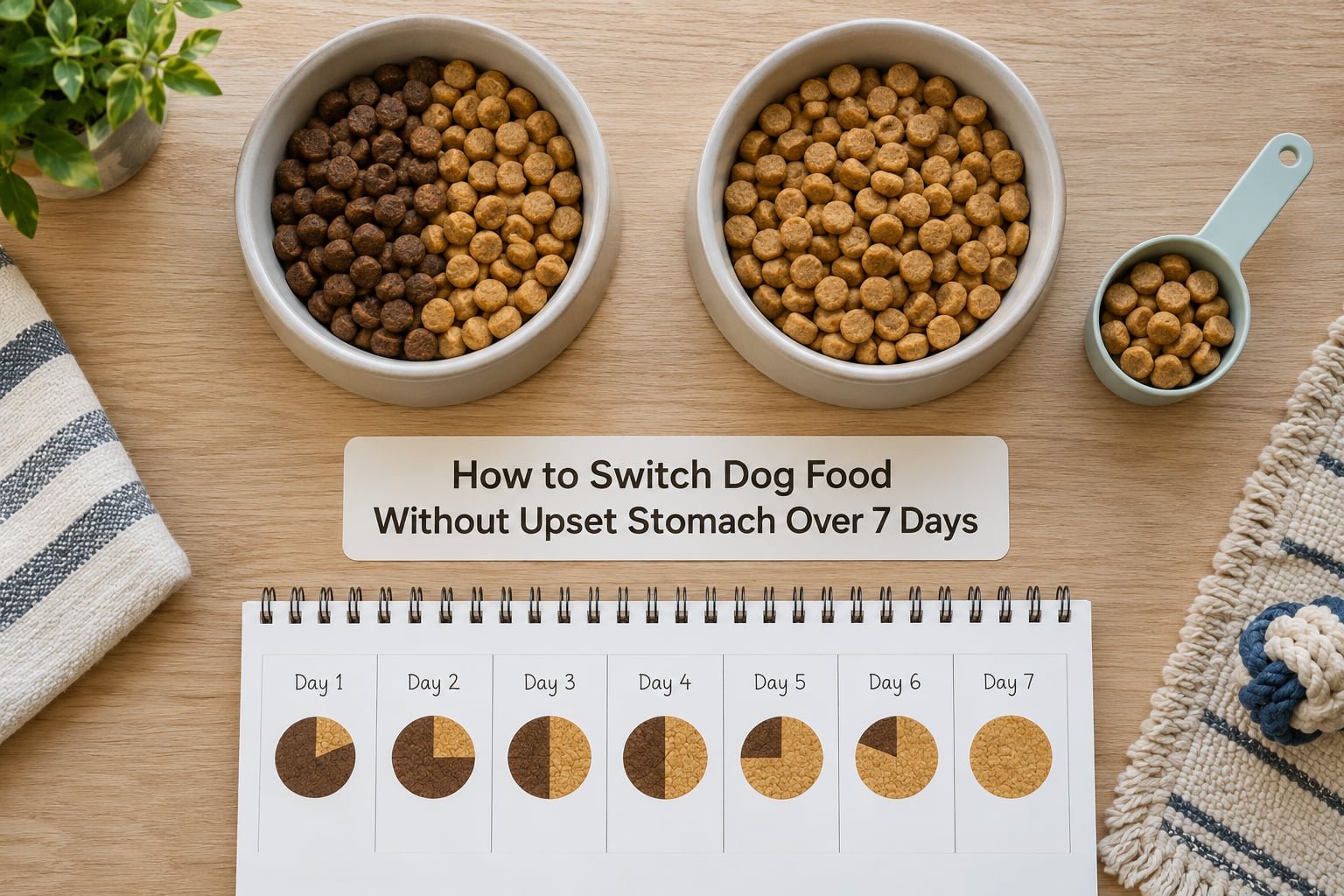
The schedule below assumes two meals a day and works for dry kibble, wet food or a mix of both. Each day’s percentages refer to the total amount of food your dog eats that day, not to an extra scoop on top.
| Day | Old food | New food | What to watch |
|---|---|---|---|
| Days 1-2 | 75% | 25% | Stool firm and normal, full appetite, no gas |
| Days 3-4 | 50% | 50% | Stool still formed, interest in the meal, energy normal |
| Days 5-6 | 25% | 75% | Watch closely, looseness often shows up here |
| Day 7 onward | 0% | 100% | Return to normal portion of the new food |
The same schedule as a list, if you prefer to follow it on paper:
- Days 1 and 2: three quarters old food, one quarter new food.
- Days 3 and 4: half old, half new.
- Days 5 and 6: one quarter old, three quarters new.
- Day 7: all new food.
Mix both foods together in the same bowl so your dog cannot sort the pieces and leave the new kibble behind. This is the fix that forum owners keep landing on: separate portions in the same bowl get picked over and the transition silently stalls.
The portion math. Work out your dog’s total daily calories first, then split that number between the two foods. If he currently eats one cup of kibble a day and the new food’s label suggests a little more volume per calorie, measure the new food on the scale and work out the remainder by subtracting from your dog’s daily total. The total amount does not change during a transition. Only the split does.
Do not let portion sizes creep upward because the new food is richer or because your dog finishes the bowl in thirty seconds. Extra food during a transition is extra stress on the gut you are trying to protect.
Adjust for the individual. A 7-day schedule suits most adult dogs on a standard complete diet. Puppies, small breeds, senior dogs, dogs with a history of diarrhea or dogs moving from puppy to adult formula usually do better on a 10 to 14 day version: hold 25% new food for four days, then increase in smaller steps.
Different types of change, different lengths.
| Type of change | Suggested length | Note |
|---|---|---|
| Same brand, different recipe | 3 to 5 days | Ingredients are similar, so a shorter ramp is usually fine |
| Different brand, same format | 7 days | The standard schedule above |
| Dry food to wet food | 7 to 10 days | Wet food is more moisture, so go slowly and watch weight |
| Wet food to dry food | 7 to 10 days | Add warm water to the kibble to ease acceptance |
| Prescription or elimination diet | Vet-directed | Do not run your own schedule |
After every meal, look at three things: how the stool looks the next morning, whether the bowl was finished, and whether the dog is behaving normally. A single soft stool is not a failure. Two or three in a row is a signal to hold.
How to Adjust If Your Dog Has a Sensitive Stomach
Slow down at the first sign. Mild looseness, a little gas, softer stool than usual or a dog who sniffs the bowl and walks off all mean the same thing: hold the current ratio for two or three more days before moving up.
If stool is already loose, step back one stage rather than holding in place. Going from 50/50 back to 75/25 usually calms things within 24 to 48 hours. Repeat the day after that and move forward again once you have seen two or three formed stools.
Split meals into three or four smaller servings while the gut settles. Smaller portions mean less pressure at each sitting, and they often help a dog with no appetite finish at least part of the meal.
If you already switched too fast, a recovery plan works better than waiting for things to settle on their own. Go back to the last food your dog handled well and feed only that for two to three days. Keep water available at all times. Then restart the schedule at 25% new food, even though it feels like going backwards.
Owners on dog forums frequently ask whether to skip meals entirely when diarrhea appears. Short fasts are something your veterinarian should advise on for your dog, so ask before you do it, especially for puppies, toy breeds and dogs with diabetes. Plain cooked pumpkin is the most repeated home remedy in owner threads, often mixed a spoonful at a time into the meal, but it is a mild soother rather than a treatment. Keep it plain with nothing added, and check with your vet first if your dog has other conditions.
Call your veterinarian the same day if you see blood or black tarry stool, repeated vomiting, a swollen or hard belly, marked lethargy, refusal to eat for more than a day, or a puppy with watery stool. Those signs go past transition discomfort.
Common Mistakes
Most failures come down to a handful of repeatable mistakes. Each has a simple fix.
- Switching on day one with no plan. Fix: start the ratio schedule before you open the new bag, not after the old bag runs out.
- Changing the food and the portion size at the same time. Fix: keep total calories identical for the whole transition so you know which change caused what.
- Feeding treats, chews or table scraps during the change. Fix: pause extras for the week. Toppers are a second change hiding inside the first.
- Serving the two foods separately. Fix: combine them in one bowl so the dog cannot eat only what it likes.
- Pushing forward through loose stool. Fix: hold or step back one stage. Two solid days before you increase again.
- Not reading the new label. Fix: check protein sources, fat level and whether the food is meant for a different life stage.
Common Mistakes and Tips for a Smoother Change
Some dogs need longer than a week. That is not a failure of the plan, it is the plan working correctly, since the schedule is a guide rather than a rule. If your dog has reacted badly to food changes before, start at 25% and stretch every stage to four days.
Tell everyone who feeds the dog. This is where a lot of good transitions fall apart. Family members, dog walkers and pet sitters keep offering treats, different kibble or bigger portions without knowing what you are doing. Write the meal plan down, put it on the fridge, and say plainly that no extras for the next seven days.
Keep mealtimes steady. Same times, same bowls, same room. Digestion likes routine, and changing the schedule at the same time as the food is harder on a dog than the food itself.
Hold steady with pickiness. Smell drives most refusals. Wetting dry kibble with warm water, or stirring a spoonful of the wet food in, usually solves it faster than any other trick. Remove the bowl between meals so the pattern resets, and offer the next meal on schedule regardless of what happened at the last one.
Know when a fast switch is unavoidable. If the current food has been recalled or is no longer available, you cannot run a seven-day ramp. Switch to a similar complete food and watch closely for 48 to 72 hours, feeding smaller frequent meals. Keep the transition slower than you would like and call a veterinarian if anything beyond mild looseness appears.
Some dogs get a bit of loose stool every single time their food changes, even at the slowest pace. That pattern is worth mentioning to your vet at your next routine visit, because it can point at a dietary intolerance rather than a transition problem.
Frequently Asked Questions
How long should I switch my dog to a new food?
Most adult dogs do well with a seven-day transition: 75% old food for days 1-2, an even blend for days 3-4, then 75% new food for days 5-6 and all new food from day 7. Puppies, seniors and dogs with sensitive stomachs often need 10 to 14 days. The length matters less than watching the stool and holding or stepping back whenever it softens.
Can I switch puppy food the same way as adult dog food?
You can use the same 75/25 to 25/75 method, but puppies usually need a slower ramp because their digestive systems are still developing. Stretch each stage to four days and keep the same food type rather than shifting from wet to dry. Very young puppies can dehydrate quickly with loose stool, so contact your veterinarian early if anything changes.
How do I switch from wet food to dry food?
Plan on seven to ten days and add warm water to the kibble so it softens and smells more familiar. Start at 25% dry food, then move to an even blend, then mostly dry by days 5-6. Dry food is less moist than wet food, so keep fresh water available and check your dog’s weight and coat over the following weeks.
Should I stop giving my dog treats during the food change?
Yes, pause table scraps, chews and training treats for the length of the transition. Extra food is a second dietary change hiding inside the first, and it makes it impossible to tell what caused a problem. Keep dog-appropriate training treats under ten percent of daily calories once the transition is done, and tell everyone who feeds the dog about the plan.
What do I do if my dog gets loose stool while changing food?
Hold the current ratio for two or three days, or step back one stage if the stool is already loose, and split meals into three or four smaller servings. Return to the last food your dog tolerated well if the upset continues. Call your veterinarian the same day for blood in the stool, repeated vomiting, a swollen belly, marked lethargy or no eating for over a day.
Can I abruptly switch dog food in an emergency?
If the current food has been recalled or is no longer available, a gradual ramp is not possible, so switch to a similar complete food and feed smaller, frequent meals while watching the dog closely for 48 to 72 hours. Keep the change minimal and call a veterinarian if you see anything beyond mild looseness. This is the one situation where a fast switch is justified.
Conclusion
Start today by weighing what your dog eats in a full day, then splitting that amount 75/25 for the first two days. Mix both foods in the same bowl and check the stool each morning.
Hold or step back one stage at the first sign of looseness, and keep treats and extras off the table for the week. If symptoms persist or you see blood, repeated vomiting or a dog that will not eat, contact your veterinarian rather than pushing the schedule forward.